4 Powerful Strategies for Claiming Your Promised Land

” … Now you and all the people prepare to cross over the Jordan to the land I am giving …” (Joshua 1:1)
Photo/AnitaBrooks
Photo/AnitaBrooks

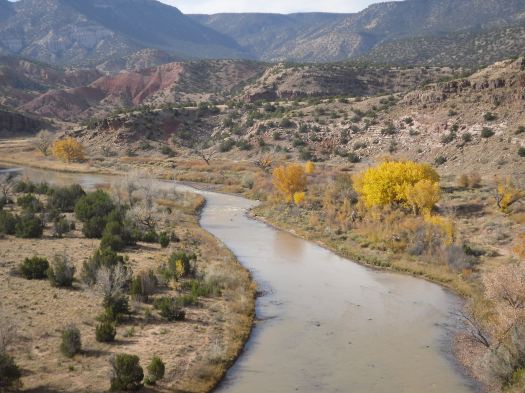
Standing on the banks of the Jordan, I look across to the other side, gazing at my “promised land.”

Perhaps you’ve been here, too. You’ve been given a vision. And you’re waiting to see your dream become a reality.

I remember the years that I spent wandering through the wilderness on the road to publication, wrestling with my doubt, fear, and unbelief. I recall the first time that I considered writing a book. It seemed impossible, doubting that I would ever see my dream fulfilled. Now, I find myself on the shore, looking across to my promised land.

But wait! How can I navigate the rough waters in front of me? The manuscript deadline? The marketing? The on-going platform challenges? What other obstacles will I face as I try to ford the river to my promised land?

I sense the enemy of my soul preparing for another onslaught of roadblocks and dead ends.

Lord, help me!

I inhale slowly—one, two, three, four. Then, I exhale, counting to seven. I inhale again, counting to eight. As I repeat this focused breathing, trying to avoid another panic attack, I relax.

An encouraging promise from God’s Word dispels my fears, “I will be with you; I will never leave you nor forsake you. Be strong and courageous …” (Josh. 1:5-6 NIV).

When I read through this passage, Joshua affirms the promise of the Lord’s presence. He also repeats an exhortation: “Be strong and very courageous.”

Be strong and very courageous. Be careful to obey all the law my servant Moses gave you; do not turn from it to the right or to the left, that you may be successful wherever you go. Keep this Book of the Law always on your lips; meditate on it day and night, so that you may be careful to do everything written in it. Then you will be prosperous and successful. Have I not commanded you? Be strong and courageous. Do not be afraid; do not be discouraged, for the Lord your God will be with you wherever you go. (7-9)

Joshua calls attention to four powerful strategies for claiming our promised land.

  1. Obey God’s Word. After the Lord assured Joshua of His faithful presence, He also instructed him to warn the people of the importance of obeying everything He had commanded them to do.
  2. Meditate on God’s Promises. The LORD also reminded Joshua of the importance of lifting up His Word—meditating on His truths and confessing His promises day and night.
  3. Surrender fears to God. The LORD instructs Joshua to encourage the people to surrender their fears and discouragement to Him, promising to always be with them.
  4. Prepare for battle. As I look across the deep waters of the Jordan into my promised land, I read another warning about impending warfare.

Get your provisions ready. Three days from now you will cross the Jordan here to go in and take possession of the land the Lord your God is giving you for your own … the Lord your God will give you rest … but get ready for battle … (11-14).

Will I still have battles in my promised land of rest? I think this scripture gives me a clear answer to this question.

We must always be aware of our weaknesses, vulnerability, and dependence upon God. As Christian writers, we are called to lead others to claim God’s promised land, too.

So, get “ready for battle … You are to help them until the LORD gives them rest, as he has done for you, and until they too have taken possession of the land the Lord your God is giving them” (14-15).

Are you prepared to claim your promised land?

Photo/AnitaBrooks

Finding the Fatal Flaw

It is the core of every struggle. The root cause of many reactions. It is a constant enemy lurking below the surface, waiting to rear its ugly head.

It’s the fatal flaw. Everyone has one. Every character has one, too.

I would argue that fatal flaws never completely go away. They just manifest in different ways as we grow and change and conquer certain circumstances. But what does this really look like?

Kariss Lynch Heart of a WarriorTake Superman. I would say his emotional fatal flaw, or one of them, is a deep desire to belong. It shapes his decisions and actions to blend in at the Daily Planet, settle down with Lois Lane, but still seek the true identity of his parents. We all know his physical flaw is kryptonite. Or Lois Lane, depending on how you look at it.

Choosing and shaping a fatal flaw proved an interesting challenge as I finished out my Heart of a Warrior series. I noticed there are multiple factors I need to account for as I select flaws for my characters.

Timeline

All three of my books take place over the course of fifteen months, which made it a challenge to have a fatal flaw that never disappears but consistently morphs. Kaylan, my main character, struggles with fear. Since our fatal flaws never really go away, I had to figure out how to cause this kryptonite to reemerge as she grew. In Shaken, she fears letting people close to her because of the loss of people she loved in the Haiti earthquake. In Shadowed, she has to learn to love a man she could lose at any second, Navy SEAL Nick Carmichael. In Surrendered, she will learn to accept Nick’s career and the constant danger, and not only accept it but thrive in his absences. The root of every one of her struggles is fear of losing a loved one, but as she accepts growth, the flaw manifests differently. Still always fear.

Complementing Characters

If you are writing romance, what fatal flaw will most threaten the relationship and will cause the characters to have to fight together to overcome? In Shadowed, Nick struggles with anger and detachment. This creates a challenge when Kaylan needs reassurance in her fear and Nick needs her to get over it and let him deploy in peace. Both characters grow as they learn what it looks like to merge two lives into one.

Plot and Theme

Shadowed_AUG 1 (1)Each book in this series, had to capture the overall theme: Anyone can develop the heart of a warrior if they are willing to have courage and commitment in the face of insurmountable obstacles. My fatal flaw for each character needed to threaten accomplishing this goal. Kaylan’s fear has the potential to stunt the relationship. Nick’s anger prohibits him from being a strong leader in his home and confident and in control in war. My villain’s flaw causes her to sabotage others in an effort to obtain what she secretly desires most but also never wants to have.

The fatal flaws is one of simplest yet most complex aspects of your character. Which flaws will create complicated conflict? How does that flaw force your character to respond? How will your character grow through the flaw?

One of my favorite ways to identify character growth and a consistent flaw is to follow a specific television series. Over time, you will notice a core struggle emerge. This helps me understand how to develop a character over the course of a book and over the course of a series. I’m still learning, but this is becoming one of my favorite parts of creating characters.

How do you identify your character’s fatal flaw?

Leave the Luggage Behind

luggage“Where are your bags?” is the most frequent question I’ve been getting lately from the friends I stay with when I travel for author events. I show up at their doors with a small tote in my hands, and they look around me for the rest.

“This is it,” I say, and they marvel at how little my bag is.

For some reason, I guess everyone expects me to be loaded down with luggage, dragging along a carry-on case, a tote on my shoulder and more bags to come. While that may have been the norm for me years ago on the rare occasions I flew somewhere with my five kids, it’s no longer my style.

These days, I fly with minimal baggage, and I love it. Instead of packing car seats, food snacks, toys, games, and multiple outfits for all, I get a kick out of taking as little as possible. I actually look forward to living out of one small bag for three or four days, since it requires me to trim my wardrobe to only the essentials I need. Once on the road, I don’t have to make any clothing choices since I already made them when I packed; I save time and effort with less to manage. Limiting myself forces me to evaluate priorities and pack accordingly. There’s no room (literally!) for changing my mind, or my clothing options.

The result is perfect for traveling: I have what I need and no more. It makes me feel mentally and emotionally light and free, and I don’t have to physically exhaust myself lugging extra bags. To fly unfettered by baggage is a wonderful thing in a world of extra luggage fees, delays, and lost bags.

If only I could do the same with my journey through life!

“Do not get any gold or silver or copper to take with you in your belts— no bag for the journey or extra shirt or sandals or a staff, for the worker is worth his keep,” Jesus tells his disciples when he sends them out to preach and minister in Matthew 10. Clearly, our Lord knew the value of traveling light! Without all that extra baggage to keep track of, his disciples were free to devote themselves to the work to which they had been called. Unencumbered with material concerns, they could focus on the priorities, the essentials of Christian mission.

I’ve found that is also true of traveling through life as a Christian author: when I keep my eyes on the Kingdom, everything else loses its urgency. Sure, I’d like to make more money (who wouldn’t? travel expenses do mount up no matter how many free beds you can find!) and it would be nice to have readers flocking to me in droves. Yet when I’m focused on the essential task of sharing God with others, it only takes one heart-felt ‘thank-you’ from a reader to know that I am ‘worth my keep.’

How do you pack for your journey?

The Making of a Masterpiece

In every block of marble I see a statue as plain as though it stood before me, shaped and perfect in attitude and action. I have only to hew away the rough walls that imprison the lovely apparition to reveal it to the other eyes as mine see it.” Michelangelo

I’ve spent the past month living as a hermit while I finished a manuscript. (Insert sigh of relief here.) I spent countless hours after my day job writing and fine-tuning every detail. Some days, I couldn’t wait to share the story with the world. Other days? All I saw were flaws, flaws that sent me running to fast food and the newest Netflix series while I processed what to do next.

That’s one of the many fun aspects of writing, though, isn’t it? I’m making the manuscript, but in the process, the Lord is making me. As my character wrestles through a growth point, I wrestle with it, too. Often what my character is learning is a lesson the Lord has spent months instilling in my own heart. From the overflow of my heart to the page…I think the story of The David illustrates this perfectly.

In the late 1400s, a group called the Operai provided blocks of marble for several prominent sculptors and artisans to create twelve statues of characters from the Old Testament. Work began on The David in 1464 but after initial carving, the piece was abandoned to the elements for twenty-five years. Then Michelangelo begged the Operai to allow him to complete The David. For three years, he carved the statue, shaving away the damaged parts and shaping features in great detail.

Kariss Lynch creating a writing masterpiece

If you hate history, I hope you stuck with me because none of that is the reason I love The David statue. Michelangelo took a wrecked, abandoned piece of marble and he turned it into a MASTERPIECE. Where everyone else saw a useless block, he saw potential and beauty, a story waiting to unfold.

I think the writing process is a lot like this. A story idea with little initial substance becomes a piece of art with a lot of effort. Over time, the author chips away the unnecessary and ugly pieces until a beautiful story is left.

I believe that’s what Jesus does with the author as he/she writes. Just as Michelangelo labored over The David and you labor over your manuscript, so the Lord labors over you, writer friend. He is in the process of creating a masterpiece that lasts for eternity, and he wants to do that with your writing, too.

Yours is a message of truth and hope. As you identify impurities and polish your writing to perfection, know the Lord wants to do that with you. He wants your voice for his glory. Sometimes the polishing and chipping are painful. With every bit you allow him to remove, you enable him to speak more clearly through you.

Keep chipping away at that novel while the Lord chips away at the excess around your heart. The beauty becomes more evident with every fallen piece.

Refusing the Writer’s Call

Refusal of the call questis a common element of great stories, fictional or historical. The hero is called to a quest, but, initially, he balks. He says, whether through word or deed, “I’m not big enough for this task.” Or maybe just, “I’ve got better things to do than sacrifice myself for that.”


From Jonah getting on a ship sailing in the opposite direction of Nineveh to Bilbo Baggins telling Gandalf that all he wants is a nice tidy hobbit house with tea served on time, heroes have been trying to escape the call since mankind has been telling stories around the fireside. And for just as long, the stories have been winning the hero over to the adventure.

Why? Few of us see ourselves as heroes. We know we’re not up to the task, whatever the task is, and we’re right. We’re not big enough, strong enough, brilliant enough or good enough for the task at hand. And yet, deep in our souls, we know God made us for more than having our tea on time.

In all good stories, the hero finally accepts the call. After trying to outrationalize his call, Dietrich Bonhoeffer takes on the role of hero as he boards what is likely the last ship home to Nazi Germany, a ship that takes him ultimately to his death.

Having been elected to archbishop because he is quiet and conservative, expecting to make no waves in an El Salvador on the brink of civil war, Oscar Romero finally accepts that he must speak out, as he stands over the bodies of two murdered priests.

Paul accepts what he must do as God calls his name in a flash of heavenly light.

Little Samuel answers God on the third call in his small child’s voice: “Speak, for your servant is listening.”  Not knowing, of course, that he was accepting a lifetime mantle as prophet.

We writers refuse our call, too. Sitting down at the computer and typing out a page is such a small thing, right? It’s tiny in comparison to the heroes that have been written about. And yet, it feels daunting.

There’s the courage it takes to face a fresh scene. Will it be beautiful or fall flat? It’s as if it’s a test of everything inside you.

And there’s the courage it takes to call yourself a writer. The voices are insistent. How many times have you told yourself that you should just concentrate on being a parent, give your talents to your church and your job, and live a peaceful, ordinary life? You don’t have time for this story? Or more likely, you’re not talented enough for the story you want to write?

But if God made you to write, you’re going to be restless until you do. You can play the role of Jonah, and get on the ship going in the opposite direction and fight it out with the big fish. Or you can accept that being brilliant and big-hearted enough for the story is not what’s at stake. If God made you for this writing quest, he’s planning on equipping you as you go. Sit down at your computer and get started.

Do You Think I’m Insecure?

OLYMPUS DIGITAL CAMERAI usually feel pretty good about myself when I wake up—for the five minutes I refrain from looking in the mirror. That’s when the voices start: “Your thighs have more dimples than a Shirley Temple look-alike convention!” they say, or “What kind of eighties-wannabe haircut is that?”

Then I take my older son to school and notice the work-outside-the-home moms, all coiffed and stylish. The voices deride my writer’s wardrobe of jeans and T-shirts. Later, my fingers poised at the keyboard while my trusty cup of java grows cold beside me, I hear the little demons again: “That paragraph stinks. How are you ever going to keep getting published if you write stuff like that?”

When I pass through the living room and kitchen to go to the bathroom, the hisses continue: “The kitchen counter is filthy. And when was the last time you dusted?” By the time I grab a mid-morning snack, I’m already defeated, and it’s only 9:30 a.m.

Sigh.

I don’t know who said it, but I believe it’s true: Insecurity is the devil’s playground. Or maybe battleground is a better word. His weapons attack from every side and inevitably leave a wound.

file3991282945508Those of us who struggle with perfectionism find it especially difficult to remember that we are wholly loved by our infallible Heavenly Father. It’s a constant war to not let the “How do I measure up as a parent/writer/Christian?” questions run away with my emotions—and my peace.

Maybe you can relate. If my hunch is right, a lack of security is epidemic. And let’s face it: We have plenty to be concerned about. There are our figures, finances, future, and families—just to name a few.

Recently, while at the grocery checkout line, I noticed the headline on a women’s magazine: “Eat right, get fit, get organized, and relax.” Who are they kidding? I barely have time to take a decent shower each day, let alone have a perfect body or a spotless house. And relax while trying to keep it all together? Ha!

So I’ve decided to go on the offensive in this war on my thoughts and emotions. First, I’m going to stop letting the world’s standards rule my mind. With God’s help, I will tune into His Word and turn off the chatter from social media, print media, and television. I will bathe myself in His approval and love, knowing that while pursuing good health is wise, Jesus cares more about the size of my heart than the size of my jeans (can I get an AMEN?).

Second, I’m going to remind myself regularly that the career I have is God-given, and He controls the future. I don’t need to compulsively check my Amazon stats or fret about future book contracts. Instead, I must focus on fine-tuning my craft and being a good steward of the gift of words with which God has entrusted me.

Similarly, I can rest assured that God knows I am doing the best I can as a mother to two strong-willed, energetic boys. He’s the only perfect parent, and I can turn to Him in my frustrations and foibles. I can lean on Him and learn from Him, trusting that He will fill in the gaps my husband and I will ultimately leave.

The bottom line is this: when I focus on His kingdom, He takes care of the rest. 

Bit by bit, the whispers of doubt and defeat fade. Peace overtakes insecurity, and I can concentrate on living moment-by-moment in His grace. Microsoft Word - Grace_Race-v2.docx

You know what else? I’m betting that since Jesus was a carpenter, He doesn’t mind a little dust.

(This post was adapted from “Grace for the Race: Meditations for Busy Moms,” published by Patheos Press.)

Tips for Managing Time as a Writer

You’ve heard the age-old story: Creative individual decides to write a book. They sit down with paper and pen or keyboard, and painstakingly write that heart story. Sometimes it takes months. Sometimes it takes years. When talking with their friends, you often hear them say, “Something came up. It isn’t quite right yet. I just haven’t had the time.”

It’s pretty clear that time is precious. In fact, outside of my loved ones, my time is my most treasured possession. Since signing my first contract in January 2013, I have learned an important writing tip, probably the most important tip.

There is NEVER time, unless you choose to make it.

In fact, I’ve noticed one common trait among the published: They make time to finish. Once you sign that dotted line and make a commitment, “I didn’t have time” doesn’t fly with the publisher. Neither does “it’s just not ready yet.” You better make time and make it ready fast or risk losing your credibility.

After signing that contract, time to market becomes important. And time to edit. And time to promote. And time to interact with readers. Lots of time. So it’s important to figure out how to manage it.

My friends hear me say that I’m overwhelmed more than anything else. But I’m learning how to carve out time, discipline myself to finish, and not miss out on the world around me. We aren’t only writers. We are marketers, publicists, graphic designers, speakers, and more. So I’ve learned a few tricks to maximize my time in every area of this writing journey.

Kariss Lynch - timeCreate margin.

I am a night owl and can write and create relevant marketing content easier when my checklist for the day is accomplished. It clears my mind to be creative. Determine your best time of day to write or create, and maximize those short windows.

Set a timer.

Write every day. Set the timer on your phone for an hour, then put your phone on silent and put it on the other side of the room. Clear your mind and write. I found when I did this, I could easily write close to two thousand words if not more in an hour! When the timer goes off, I feel accomplished, satisfied, and ready to write even more.

Carve out marketing time for social media.

I work full time as a writer for my company, so in the middle of the day I am tired of writing. I’ve started taking thirty minutes of my lunch break or fifteen minutes in the morning or afternoon to create social media graphics that I then pre-schedule so I don’t have to think about them. Think about content that is relevant to your brand, then have fun with those designs.

Strategize for online interaction.

The internet is a wonderful tool, but managing our online interaction can eat our time if not handled correctly. Block out thirty minutes every few days to catch up on emails. Take a few minutes to respond to every person who comments on social media (within reason of course). Know your brand, what you are passionate about, and have character and author interviews on hand for guest blog posts. Don’t overthink. Just do.

Know your audience and limits for speaking engagements.

My favorite interviews and speaking engagements are via Skype since it helps me conserve my time, but I’ve also enjoyed those in person speaking engagements with small groups or crowds. Determine your price (if you have one), the size of the group you are willing to speak for, if it is wise to travel or Skype in (this is great for book clubs and classes that may not be close). Bottom line, know your options and then plan accordingly. Don’t forget you still need to write and market and live life, so carefully plan the weekends you will be gone.

Managing time is as much mental as it is physical. At the end of the day, be satisfied with what you accomplished and leave the rest for tomorrow. What tips have you found effective in managing your time?

Marketing: To Do and Not To Do

Light a Fire with Your Marketing Plan

“It isn’t there. I looked,” I told my mother so many times I lost count.

I also lost count of how many times she looked in the same place I did and said to me, with frustration in her voice, “Shelley, it’s right here!”

Ugh. I hated when that happened. I felt stupid, embarrassed, and defective.

Why could SHE see it, but I couldn’t?

It took a few years, but finally, by the time I was 10 or 11 years old, I learned to instead say, whenever I couldn’t find whatever she said to look for or retrieve for her, “I don’t see it.” I’m 40 years old now, and I still use those same words in that situation.

What does this have to do with marketing? I’m certainly no expert in this field, but I have learned this: just because folks don’t see our books, products, services, or goods, it doesn’t mean they aren’t there. It also doesn’t mean they don’t have value. It just means that sometimes people need help to see the good stuff right in front of them.

So, how do we do this in an already saturated market where everyone (and sometimes their pets!) are on social media, have a blog, and publish their work? (I kid you not about pets, either.)

I asked around, and want to share with you what other authors shared with me. I am confident these tips will help you (and me!) in the challenging world of marketing our writing in addition to creating the content we’re trying to market.

  • Pay attention to social media: Don’t discount the value of sharing some freebies with folks right where they are. Find out where your audience hangs out most on social media and focus the majority of your social media time and attention there. For example, my readers tend to be on Facebook more than Twitter, so while I am in both places, I don’t kill myself in the Twitterverse when more engagement happens on Facebook (and increasingly on Instagram and Pinterest).

Remember, as you engage in today’s world of technology, these words from Marketing guru Rob Eagar:

“In a fast-paced world where Facebook, Twitter, and the 24/7 news media allow everyone to have a voice, it’s more important than ever to cut through all the noise. Use power-bites to punch through the cacophony, gain people’s attention, and spread your message like wildfire.” – See more good stuff from Rob here!

And this, from marketing expert Lori Twichell:

“The key to good marketing is making a connection with your audience. It’s got to be genuine. People can see through selfish motives. If you are only there to promote your book or product, people can sense that.” The more you get to know your audience and really make that honest contact, the more you’ll end up with a loyal audience that will follow not just this book, but future endeavors as well. That’s a key part of social media that is lacking in so many. We all love making new friends and connections, but no one wants to be spammed!

  • Newsletters: Emailing your subscribers is the best way to get content in front of your readers on a consistent basis. When they subscribe or give you their contact info, they’ve invited you to connect with them. Make sure to add value to your subscribers’ lives, inviting them to open, read, and engage—be aware of what can feel “spammy” to your subscribers. In other words, don’t just send emails to send emails. And make sure you give more than you request.

Here’s another tip from Lori Twichell: “Tuesday, Wednesday, and Thursday are the best days to send newsletters. On Fridays people are eager to go home and clean out their inbox more quickly and on Mondays, they’re buried in the weekend’s email pile up.” (Connect with Lori for more good stuff at http://www.beyondthebuzzmarketing.com)

  • Giveaways: Take advantage of what God has made available to you. What message has He entrusted to you to share with others? Offer some freebies along the way that build your credibility as one to listen and learn from in this over-saturated market.

As writers, we long to have readers find value in what we have to say, right? It can be so difficult to balance the discipline of learning and expressing with the necessity to also market what we write. Ultimately God is our greatest promoter. If we can remember that our social media numbers, our book sales, and our greatest accomplishments do not come close to God’s power to promote us in due season, we’ll remain at peace and loving life on the way to where we’re going.

Have you discovered a marketing to-do or not to-do?

I Am A Writer

My brother got married a couple of months ago, and our family forever changed. I gained a new sister, a new twist on life, AND a bigger family. My dad performed the ceremony and I sat with him and my brother two nights before the wedding around our kitchen table listening to them go over the vows – vows to honor and cherish and grow old.

Vows carry a certain kind of weight. In the past few weeks, I’ve found it necessary to make a different kind of vow. Not a vow to another person, a job, task, or event. I am making a vow to myself.

Kariss - Shaken in storesI am a writer. Period. End of any wondering or questions. I have all the dreams and insecurities that come with the itch of fingers to grab a pen and hit the paper.
I am a writer, and within a week of beginning work with my editor on Shaken, I emailed my mentor and told her I thought I needed to start the whole book over. I felt like I need to somehow make it better. I did that with my second book, Shadowed, too. Now my goal is to make each book better than the last.

I am a writer. We can be our own worst enemies. We can also be our own greatest advocates because NO ONE can make me finish the job but myself.

I am a writer, and I type THE END for my own benefit. It will never be perfect. But it can be something I am proud of once I push past the insecurities and just finish.

I am a writer, and I notice people in a different way. This gives me the unique desire to figure out how God wired them, to value their quirks and struggles, and to cheer them on in their successes. I know the best kind of character is one who reflects what God has already created – people. So I’ve learned to value each person individually and love his or her uniqueness.

I am a writer. I can be introverted or extroverted, depending on the situation. I can be equally emotional and analytical, which can sometimes be confusing.

I am a writer. I know the power of words, the pain they can wield or the healing they can bring.

I am a writer. I can stand back and observe a scene, using words to paint a whimsical picture or one cloaked in shadows.

I am a writer, and from what I’ve heard, we subsist on coffee and chocolate. Of course, I can’t personally verify this.

Kariss - Courage quoteI am a writer, and with that comes the necessity to be uniquely myself while God continues to mold me in the process. But when I fail to be who God made me to be, I miss out on being part of the story He is weaving in and through me. When the insecurities or the pride creep in, I vow to fight and write, because no one can write a story exactly like I can.

No one can reach my audience quite like I can.

No one can speak or create or brainstorm or think quite like I can.

I am a writer, but I am only one part of a whole community. Together, we reach a wide audience. Individually, we touch specific hearts, those that are, for one reason or another, particularly attracted to the stories placed on our hearts. When I fail to be unapologetically myself, my readers and those in my life miss out. I miss out.

So this is my writer’s vow. I vow to be unapologetically myself, to be the person, the writer, that God made me to be. I vow to grow in this craft, knowing I will fail and knowing I will succeed. I am a writer, and I want to be part of this beautiful story God is writing with my life, not just an unwilling participant.

What lessons have you learned as you grow to be the best writer YOU can be?

Taking a Tip From Big Business

blue ribbonMy husband’s company is in the midst of preparing for an industry competition that recognizes on-going improvement efforts in corporations. After hearing him talk about processes of quality control, increased productivity, and excellent resource management, all I could think was “I gotta get me some of that!”.

Unfortunately, authors can’t take advantage of this particular efficiency-enhancing program. You have to be a great big corporation or public institution. (Heavy sigh on being left out, but huge sigh of relief on the not being a big institution part! I like being my own boss.)

So here’s my plan: create my own author business improvement program. To that end, I’m currently evaluating my current strengths and weaknesses in those three areas my husband talked about, and I’m working to set goals for improvement. Here’s what I’ve got so far.

Increase productivity. I’m going to rediscover the surface of my desk. This will involve a full frontal assault on my office space, as I have multiple layers of sticky notes attached to files and walls. I claim I know where everything is this way, but that’s only true in a limited sense: yes, I do know where everything is – it’s in my office – but I don’t know in which pile of notes anything specific is. I’m through with wasting time searching. Everything that has not progressed past the sticky note stage gets tossed. That should reveal to me what my current priorities are and allow me more focus on finishing what I’ve started. And if it’s a really good idea I need to save, it goes in a folder labeled “Future,” which I will not open until I finish what I’ve already started.

Quality control. For me, this is about process. I lose too much time ‘exploring’ on social media – tracking down people, ideas, potential marketing contacts. Even simple tasks can steer me off-road if I’m not mindful of my objective; just updating my calendar on my website can lead me to perusing my pictures file, which in turn reminds me to prepare some new photo posts, which leads me to searching for free photos online, which…you get the idea. I’ve found I need to schedule the different tasks of my writing career by the hour to make sure I keep focused on my immediate objective. Work smarter, not harder, is my new motto.

Resource management. My greatest resources are time and energy. My task schedule will help with managing my time, but it’s important for me to keep my energy resource balanced between my personal and professional lives. When I spend everything I have on writing, I burn out; if I let my personal life constantly squeeze out my writing, I feel frustrated with myself and those around me because I’m not using all the gifts I know I’ve been given. Scheduling regular ‘play’ time is just as important for me as reserving time to work, and the revitalization that play offers pays off in increased productivity when I’m back in my office.

Do you evaluate the business side of your writing career?