What Breaks Your Heart?

broken heart dreamstimeAndy Stanley, in his teaching series entitled “Re:Solution” asked a powerful question when he asked, “What breaks your heart?”

The point of the question is this: You were designed by your Heavenly Father who has given you unique gifts, talents, experiences, etc. and when He did, He also designed you for the purpose He placed you here at this time in history to fulfill. (Sounds kind of like this book, On Purpose For a Purpose which you may have heard of. #ShamelessPlug)

What breaks your heart is tied directly to your calling.
Does human trafficking and slavery break your heart the most?

Does social injustice break your heart the most?

Does seeing children struggling in poverty break your heart the most?

Does the decline of healthy marriages and families break your heart the most?

Does domestic violence break your heart the most?

Does lack of medical care to those most in need break your heart?

Obviously, these are all tough, tough issues in our world today, and our hearts break with each one. We know that none of us can do everything. We also know that all of us can do something. So, what is it that breaks your heart the most? Perhaps it is something not even listed above.

As Andy asked this question, and as I considered the past decade of my life in full-time ministry, it became so clear to me that what breaks my heart the most is …
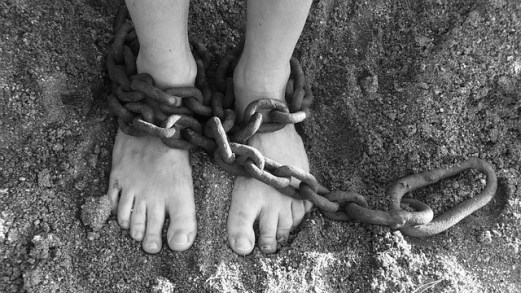
Seeing people remain in shackles that keep them from the abundant life Jesus came to offer. This enslavement shows up in the the following ways:

People striving so hard to experience freedom through their self effort to please God..

Husbands and wives trying so hard to make marriage work in their own power…

Parents living with shame and guilt over what their children choose…

Children grasping to find acceptance from parents who never can never be pleased…

Family members estranged from one another over past offenses…

Pastors or other Christian leaders using shame and guilt to motivate change from those sitting in their services, reading their books, or attending their conferences…

Men, women, adolescents and even children in bondage to addictive behaviors, substances or acts.

When it all comes down to it, I realize what breaks my heart the most is seeing people live with the heavy shackles of legalism disguised as “Sold-Out” New Testament Christianity. That’s what breaks my heart.

But what gives me HOPE in the heartbreak is the awareness that through Christ in Shelley, I can be a carrier of light and life into the world. I can be a voice of grace and truth to my generation. I can be a teachable student on a journey who invites others to join me.

Being self-aware enough to know what breaks our hearts can help us when we’re trying to determine our next step, our next move, our next project, or perhaps the next blog post. 

Becoming aware of what truly breaks our hearts can also lead us to the hope we can offer others whose hearts are broken as they live through the experiences that break yours. 

I encourage you to take some time to reflect on this question and articulate what breaks your heart the most, but don’t stop there! Once you’ve written these down, consider the hope you can now offer through your life–vocationally and relationally–to those who need you and are waiting for you to show up in their lives.
All Things Come to She Who. . .

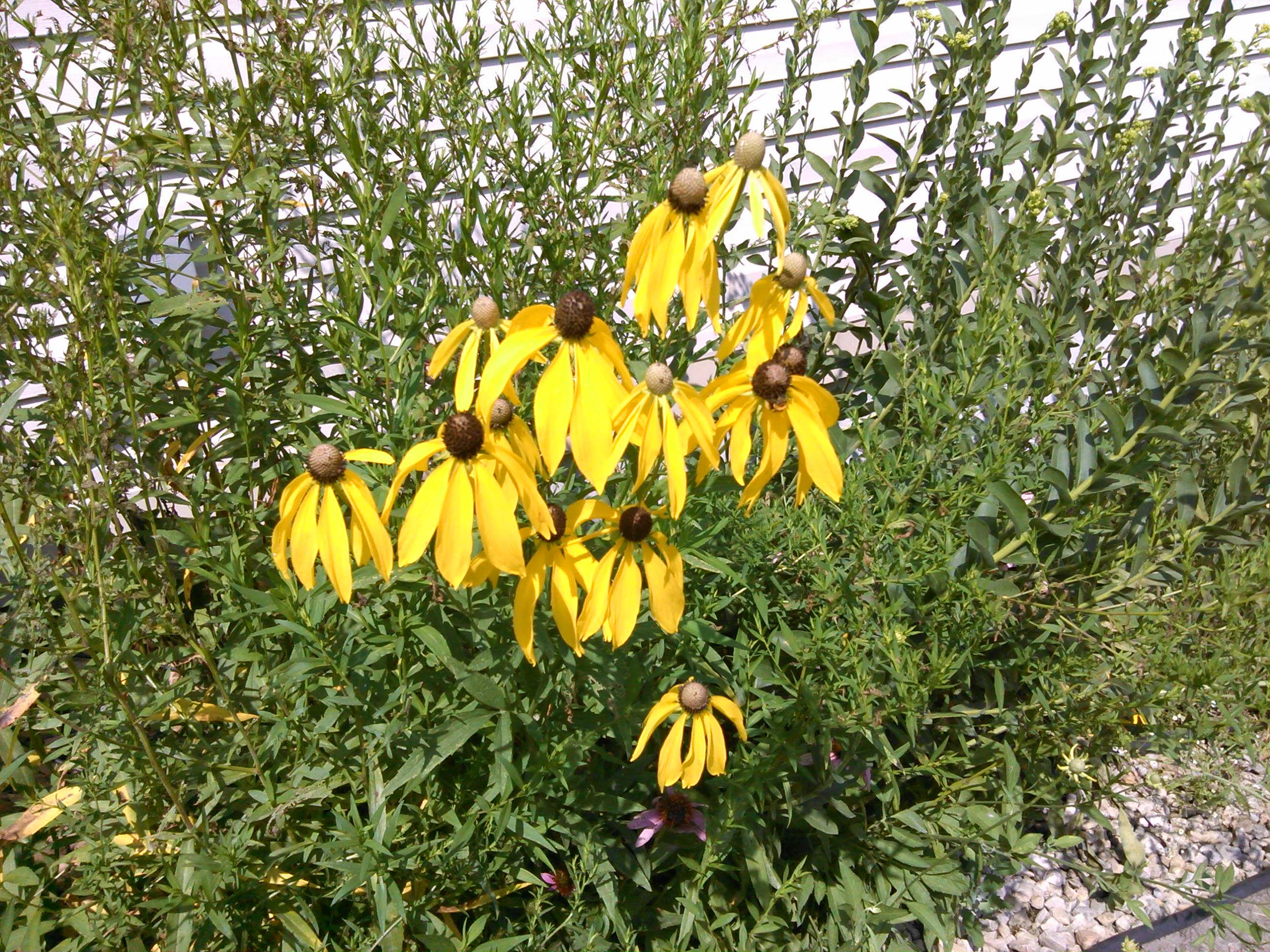
gray coneflowerCome this September, I will have been a published author for nine years.

I’m still not a household name, and I don’t expect to ever be one.

But, I can say with complete assurance, my writing career is beginning to bloom into what I had once only imagined.

In the last two months, I received my first Kirkus review, which is, according to my agent, a “big deal.” Not only that, but it was a positive review, and it’s already generating advance word of mouth among readers thanks to shares on social media. I also finally landed a review with a major magazine in my (fiction) subject area of birdwatching, which will generate the nationwide publicity for me that I’ve yearned for since my first Birder Murder Mystery book came out. Both of these reviews are for the seventh book in my series, titled The Kiskadee of Death.

Yes, it took seven books for me to land on these reviewers’ radar.

Seven books.

Another first in the last month was receiving a request from a magazine editor to write an essay for them. In my entire writing career, I have never had an editor approach me for an article – I was always the one doing the pitching. To have an editor seek me out to author an essay was a huge boost to my career confidence; knowing that I’ve made an impact on publishing professionals is worth the months I’ve spent cultivating readers and developing my brand.

The final mark, for me, of having my feet firmly planted on my writing path is the number of guest posts and speaking engagements I’m now booking with relative ease. Whether my new-found success in that arena is due to my hard-won lack of fear of rejection, the persistence I’ve practiced, or just a matter of time, I don’t know. And at this point, I don’t care what has generated these new opportunities; I’m just very grateful to have them.

Coincidentally (or not), I recently read an interview with Kate DiCamillo, the celebrated children’s author. Before her first publication, DiCamillo recalled meeting Louise Erdrich, the award-winning author, who asked DiCamillo how long she’d been writing. When the budding children’s author said “Four years,” Erdrich advised her to hang on, that her own book career had taken six years to get off the ground.

It made me feel better that even some of the author superstars of the publishing world know what it’s like to have to wait for success.

The bright side of all that waiting is that when success does finally come, a writer can look back over the years that have gone before, and see that without that waiting, that revising, refining, re-imagining, and all those countless hours of learning a craft and business, the achievement would not taste as sweet as it does. Because the truth is not that all things come to she who waits, but that all things come to she who works while she’s waiting.

Have you begun to see some signs of success in your own writing journey?


Impossibility: Five Important Truths

Photo/TaraRoss

Sometimes God leads us to do the impossible.

This morning as I waited for the sunrise to go on my walk, it started raining. I thought, Oh, no! If I don’t go for a walk now, it won’t happen today.

Simple problems. Sometimes the simplest challenge can seem impossible. I also know that my emotions lead me to exaggerate my problems at times.

Life and death issues. I don’t intend to compare my insignificant problems with the life and death issues that others are facing right now. I’m aware that many people face horrific, painful circumstances every day. And as I look at my circumstances in light of the needs of others, my problems often seem trivial.

Photo/KarenJordanCrises in Spain. My writing life often pushes me out of my comfort zone toward some “impossible” dreams. It led me into the academic world where I faced all kinds of uncomfortable situations. My most memorable learning experience occurred in Spain.

I wrote a previous post on the WordServe Water Cooler about my academic journey in Salamanca, Spain, “Sergio: A Memoir from My Writing Life.” During that summer in Spain, God revealed His faithful guidance and strength as I faced my limitations and weaknesses.

Photo/KarenJordanImmersed in another culture and language, I discovered I had taken on an academic endeavor far beyond my abilities, and I felt totally incompetent to complete it. My personal weaknesses became painfully obvious, as I experienced the reality of my limitations.

I’d been pacing myself as I pursued a course of study as a nontraditional student, commuting to school from home. But after a few weeks in Spain, without warning, I crashed—physically, mentally, emotionally, and spiritually. Like an athlete, I hit the wall, suddenly losing all my strength after a long, difficult journey.

Spiritual Truths. I rediscovered five important spiritual truths about impossibilities during my painful summer of learning in Spain.

  • Some things are impossible to do in my own strength. “Humanly speaking, it is impossible …” (Matt. 19:26 NLT).
  • All things are possible with God. “… But with God everything is possible.” (ibid.).
  • I can do anything God calls me to do. “… I can do everything through Christ, who gives me strength” (Phil. 4:13).
  • God will complete the work that He began in me. “ And I am certain that God, who began the good work within (me), will continue his work until it is finally finished …” (Phil. 1:6).
  • God gives me His strength, when I am weak. “That’s why I take pleasure in my weaknesses, and in the insults, hardships, persecutions, and troubles that I suffer for Christ. For when I am weak, then I am strong” (2 Cor. 12:10).

Reflection. These promises from God’s Word continue to encourage me as I face the impossibilities of my writing life. And I’m thankful that God offers His powerful promises to all who choose to believe His Word.

I’ll never forget some of the painful lessons I learned in Spain—and I still bear some of the scars from that experience. Now, I try not to take on more than I can handle, since I’m more aware of my limitations. In fact, I hit the wall faster and more frequent than ever as life takes its toll on me. So, I’m trying to stay focused on the course set for me.

Remember this promise as you face your impossible dreams and goals: ”Humanly speaking, it is impossible. But with God everything is possible.” (Matt. 19:26 NLT)

What seems impossible for you today? Does your situation seem hopeless, difficult, or ridiculous to even consider?

What I Really Want To Say

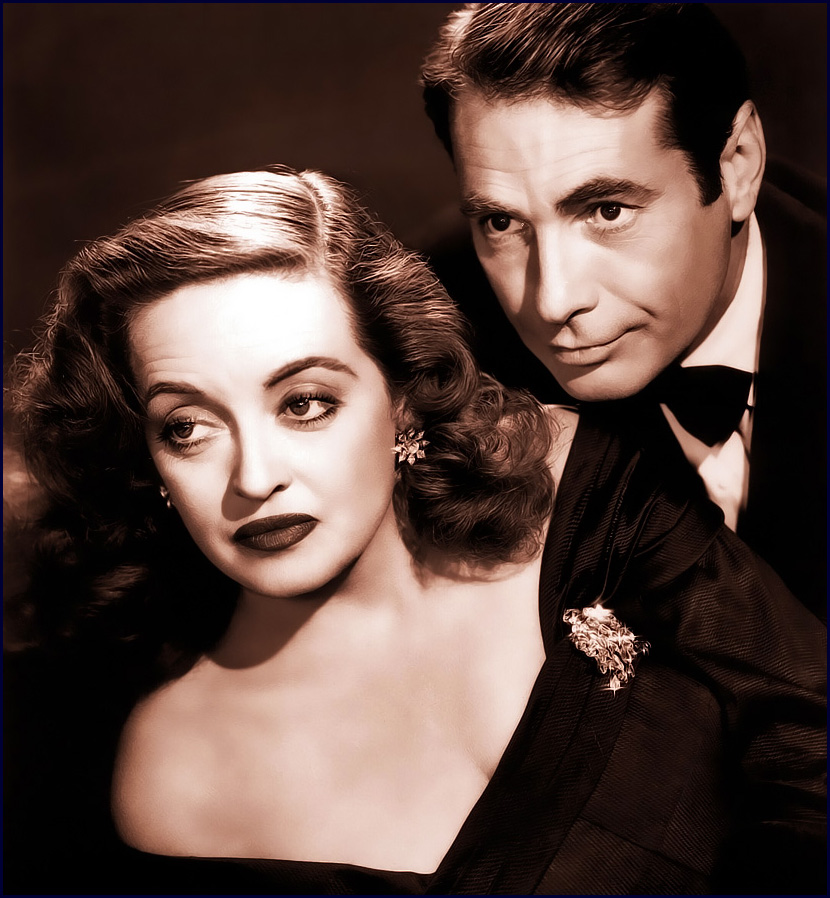
http://classicfilmsreloaded.com/all-about-eve.html

I’m sure these things never happen to any of you other authors, so forgive me while I vent for a bit among you, my friends and colleagues.

(Not that you have any choice. I mean, we all voluntarily signed up for this crazy business of writing books, so it’s part of the unwritten code that we have to put up with each other’s rants now and then. “Fasten your seatbelts, it’s going to be a bumpy night,” as Bette Davis famously says in All About Eve.)

Scene #1

Filled with good intentions, I agree to mentor a local high schooler who wants to become a writer. I attend the mentor orientation program and lay out goals for the semester, based on the profile and paperwork the student has submitted. At our first meeting, the student informs me that she already has her novel’s first three chapters completed and that she wants to know what publisher she should contact. She explains why her book will eclipseTwilight and expects me to help her become the next Stephenie Meyer.

What I want to say: “Believe me, if I knew how to be the next Stephenie Meyer, I wouldn’t be here helping you. I’d already be the next Stephenie Meyer.”

What I really say: “It would be a good first step to check your spelling since I can see five mistakes right here in the first paragraph.”

Scene #2

I agree to speak at a local aspiring writers’ workshop about my decades-long writing career, the need to understand the business of publishing, and how I finally landed my first book deal with a traditional publisher. After my presentation, I invite questions. The first one I get is, “Have you considered self-publishing? It’s really fast, and I’ve already published several books.”

What I want to say: “Good for you. How many copies have you actually sold and why are you here, then? Did you not hear anything I just said? ”

What I really say: “Good for you. Traditional publishing isn’t for everyone, that’s true.”

Scene #3

I’m standing in line to order my favorite hot tea at the local coffee shop when I see an acquaintance who waves me over to her table. I get my tea and go to say hello. My friend introduces me as a writer to the woman seated next to her, at which point the woman launches into a lengthy description of the book she’s thinking about writing. My eyes glaze over, my smile freezes on my face, and I feel the heat from my tea seeping through the extra layer of the cardboard holder and into my fingers.

What I want to say: “I really don’t give a rip about the book you want to write. I don’t even know you. I just wanted a cup of my favorite tea.”

What I really say: “Nice to meet you. Gotta run.” And I promise myself to make my own tea at home for the rest of my life.

Okay, I’m done ranting. Thanks for listening. I feel so much better. I’m going to go make my tea now.

Your turn. Any rants you want to share?

Planning a Book Release Party

I’ve said it once and I’ll say it again, an author does much more than just write. In fact understanding this was my biggest learning curve once I penned my John Hancock on my first contract. You are a writer, editor, marketer, publicist, your own biggest cheerleader, and your own worst critic. Not to mention the fact that you have multiple voices talking to you at one time as you write. Don’t worry…that’s normal. Kind of.

Book Release Party - Shadowed Kariss Lynch
This year, I added “party planner” to my growing writing resume as I prepared for the release of Shadowed just two short months ago. When Shaken released in 2014, my friends planned a sweet party to celebrate. This year, it was my turn to grab the wheel. Only I had no idea where to begin! But like all things in this writing journey, the learning curve is steep, the lessons memorable, and the end result rewarding.

The release party doesn’t have to be stressful! Here are some tips I picked up along the way.

1. Choose a theme.

I planned two different parties with the help of loved ones. I wanted to theme the parties, so I selected decorations and small touches according to the audience. Since some of the major moments in Shadowed are centered around sunsets and the ocean and an opening scene with fireworks, I found decorations that flowed like water and paper décor that resembled the pop of color bursting in a dark sky. It was a fun way to set the stage. For the second party, we decided to go with simple and elegant to fit the audience coming. We chose a room lined with windows overlooking downtown, decorated a center table with roses, set up a sidebar with refreshments, and left an open space for mingling and signing books.

2. Delegate the details.

I still didn’t pull this off on my own. In fact, I had a moment where I almost threw in the towel. But friends and family came to the rescue. Friends volunteered to bring refreshments and plastic ware that fit the beach theme. Others donated door prizes like Fossil watches and a hand-lettered quote from Shadowed framed beautifully. Another friend set up a photo booth complete with reading glasses and chalkboards that represented different plot twists. Party-goers could grab their favorite pair of reading glasses, a chalkboard with their favorite plot twist, and enact the scene on camera.

3. Send the invite.

Gather those around you who weathered the journey with you. Those who sat through the tears and endless plot conversations, the ones who left meals on your doorstep, or talked you off the ledge when you wanted to quit. Let them celebrate this win with you! As excited as your readers will be, these people will be even more excited for you, and let’s be honest, you couldn’t have reached this accomplishment without them. Then, encourage them to bring their friends, friends who may just be curious about you as an author, who may just want to come for the party, and who may just walk away as fans of your work. Use Facebook or Evite to send a mass message so that folks can easily respond

4. Remember the journey.

Don’t forget to hit pause in the craziness and excitement Shadowed Kariss Lynchand remember. Remember from whence you’ve come. Remember the winding road that led you to this point, the road that seemed to never end and had too many bumps to identify. Remember that writing is your calling. Remember the One who gave you the story in the first place.

5. Celebrate!

Bask in the joy of completion, of your baby entering the wide, wide world. Ask a couple of your confidants to keep an eye on the refreshments and remind people to turn in their tickets for door prizes, then cut loose and celebrate. Share your heart, speak of the journey, talk about the story, smile, laugh, sell books, giveaway a few, and praise God for the gift of completion, of release day, and all He taught you along the way.

When all is said and done, clean up, sleep up, then hit the desk. You’ve got another manuscript to finish.

Learning to Listen

Have you ever noticed that there is a deep inner peace that descends when you truly listen to someone? Think about it. You focus on what they are saying, sifting through the verbal noise to the subtext that is being laid bare. You take a back seat, allowing them to drive the conversation so that you can lovingly respond. There is a strength in this passivity, a calm in conceding control.

Isn’t that exactly what we are called to do with the Lord?

My world is loud. My email constantly demands my attention – four different accounts for four different reasons. My job revolves around communication and social media, the deadly noise of an electronic culture.

We’ve forgotten the value of letters and phone calls, the connection that comes with face to face. We’ve forgotten how to have a conversation longer than 140 characters, and we sure don’t remember the bond developed by vocally sharing the depth of our thoughts, our hearts. As writer’s we get to connect the gap, to share vulnerability on the page and communicate with the world around us. All too often, I fight that vulnerability. I fight to speak without letting people see the depths of my heart. But as much as I have been called to use my voice in some form or fashion, I must first be willing to listen to my audience of One.

Kariss Lynch oceanI remember a crowded beach in California. Surfers rode the waves, entertainers lined up around the boardwalk, and this misplaced Texas girl walked with my group enjoying the show. About sunset, I found myself alone near the water, the waves roaring in to kiss the shore over and over. All other noise dissipated, and I truly listened.

I see and hear my Creator in the waves and the ocean – His power, His gentle nature, His vastness, His beauty. And I can hear His still small voice in the waves that lap the sand, asking me to drown out the other noise and just listen. He speaks in the quiet moments. He answers when I truly surrender.

Shadowed Kariss LynchWe can’t discern His voice and direction until we give up our need to control and sit back as He shares His heart and mind. I love the childlike faith of Samuel in the Old Testament and the way he simply answers the Lord with “Here am I.” Then He listens and obeys. I want to be defined as a person who delights to do what God desires, who uses my gifts for His glory, who writes without fear. But my surrender comes first. As I finish up my third book, enter a season in between contracts, and pray through what’s next, I want to make sure I am listening more than I am telling the Lord what I want. I want this in between season to be marked by a quietness of spirit as I rest, dream, pray, and enjoy where the Lord currently has me.

With no beach nearby, I’m learning to find my ocean moments in the roar of the big city. He speaks most when I commit to listen. And I’m tired of the noise. I’m sitting on the shore, listening to His voice whisper in the waves.

The Beauty of Lying Fallow

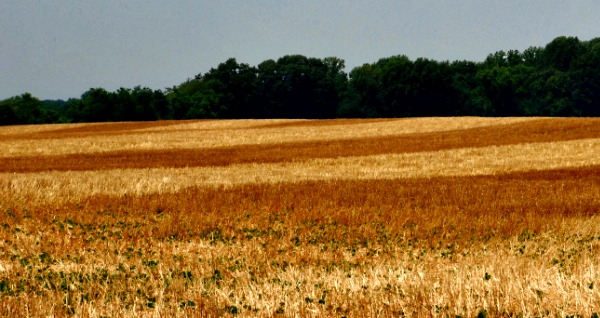
harvested fieldLying fallow isn’t just for fields. If you want to find kernels of ideas to jumpstart your next writing project, you might be surprised to see how much you can glean from the already harvested fields of your finished projects.

Just as farmers routinely allow sections of their fields to remain unplanted for a season in order to replenish the land’s fertility, writers need to leave past projects alone for a time in order to get a fresh perspective on their work – a perspective that often reveals the kernels of ideas that somehow got hidden beneath the framework of that finished work. Every writer knows many ideas that pop into the head during the research and composing process end up getting tossed out in the pursuit of a tightly woven story or narrative. That’s part of the discipline of self-editing: you mercilessly cut out your own words that you might have lovingly slaved over because you realize that, in the end, they don’t make your work stronger.

Ouch. The truth hurts.

The good news, though, is that those same words, those kernels of ideas, might be able to take on their own life in another season of your career–as long as you can find them again. That’s why it’s a good idea to keep your notes from a writing project after its completion. Yes, it means you’ve got bulky files sitting unused on a shelf, or on your computer, but it doesn’t mean you’re a hoarder who just can’t let go.

sproutIt means you know that as soon as you get rid of those notes, you’ll find yourself looking for that funky little idea that didn’t quite fit the last manuscript, but would be an amazing starting place for a new project…now that you’ve had some fallow time to let that kernel of an idea begin to sprout all on its own in your subconscious.

I used to think that if I wasn’t working on a new project, I was losing time. Now I realize that my imagination needs as much of a rest as any physical landscape that is cultivated for production. What’s even more delightful is to browse through my bulky files of old projects and find new inspiration just waiting to be gleaned from the rubble of a field I thought I had fully harvested. I shouldn’t be surprised – the Biblical injunction to leave the field fallow in the seventh year was not only to improve its productivity for later, but to provide sustenance for the poor who were free to eat of what was left. In other words, the field might have been harvested, but even in its fallow season, it could give nourishment.

For writers who feel depleted after the long haul to publication and market, it’s reassuring to know that imagination is already replenishing itself.

What kernels have you gleaned from harvested fields?

Honesty is the Best Policy

SavedbyGracieReaders often thank me for sharing my personal story of battling an anxiety disorder in my memoir Saved by Gracie: How a rough-and-tumble rescue dog dragged me back to health, happiness, and God.

“You’re so brave to have written this,” they say. “I’d be embarrassed to share something so personal.”

Honestly, it never occurred to me that I was being brave in recounting my experience with anxiety. I lost all my privacy boundaries when I gave birth to my third child in a room crowded with medical personnel. Once you’ve had an audience of strangers watch you push a child down the birth canal, there’s not much left that can embarrass you.

Another reason it surprises me to be described as “brave” is that all I’ve done is tell a true story about the ways my head, body, and spirit responded to taking a shelter dog into our home. It’s also true that I didn’t want the dog, but when I realized how the dog was helping me change my life for the better, I immediately wanted to tell that good news to other women who might be suffering with anxiety as I had.

First and foremost, I wanted to share my story to help others. I’d learned something new and valuable, and even though the therapeutic value of animals has been a popular research topic in recent years, I wanted to frame that information in a fresh way that would encourage readers to make that information work for them, too. Basically, I used myself as the proof in the research pudding.

And here’s where a true story encounters craft: it is the writer’s challenge to make the story simultaneously personal AND universal .

We all have experiences that are common to the human condition, yet people relate most deeply to the universal when it becomes intensely personal. Over the years of my writing career, I’ve learned that it’s the writer’s intimate voice and transparency (I’m talking about total honesty here!) that are key to combining the universal and personal. For example, if you tell me you’ve had a traumatic experience, I can nod and say “so have I,” but unless you give me the details of how it personally impacted you, I won’t be looking for similarities in our stories. That means you, as a writer, have to seek out and name the personal aspects of the universal that will engage your readers. You have to dig up the reality – expose the heart and soul – of the experience you want to share.

Make no mistake – digging in your life can be painful for you and those around you. With luck, though, it will be ultimately illuminating and healing, too.

And when you do that with your own story, you give your readers the permission, and hopefully, the courage, they might need to be honest with themselves in their lives. Honesty really is the best policy for a writer, because it’s the key to connecting compellingly with your audience as you make the universal very personal.

How do you approach the universal in your writing?

How a Non-Writer Like Me Got Published (Part II)

(Continued from Part I)

I began writing my memoir by starting near the end. That first night, while sitting in front of a blank computer screen, I tapped out the images closest to memory, and likely closest to my heart. It was the account of a remarkable day… the day I delivered my daughter, Annie, to a drug treatment center in California.

 “It wasn’t at all the institutional setting I’d expected for detox… At that late hour, the street was quiet and still. A woman emerged from the far side of the darkened house, brushing by a wall of hydrangeas that cast an eerie glow of amethyst and silver in partial moonlight. Her hushed tones made it seem a clandestine transfer as she took hold of the pull handle on Annie’s bag and turned to escort her inside… Just before both disappeared into the darkness of an open gate, Annie turned around to me and mouthed the words, ‘Thanks Mom.’ I thought I might burst. “

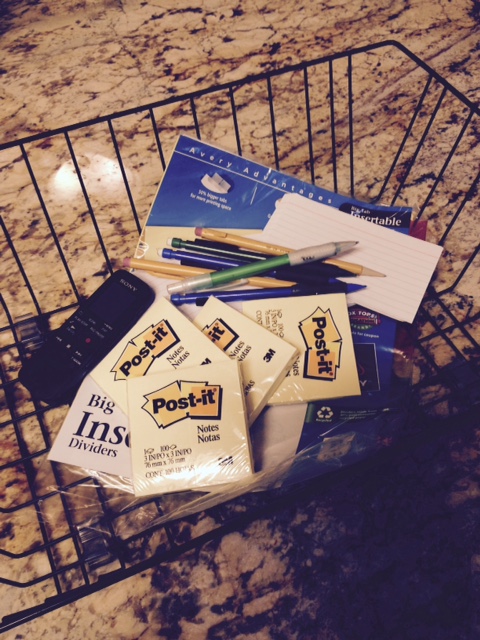
Within a week, I had one, full chapter completed. “Not bad,” my college-aged son reported after a quick read. He showed all the enthusiasm of dry cement. My husband refused to read it at all.Image, post-its and pens

My brother, Paul, on the other hand, provided terrific support for my intentions with the book. He had been the smart one, the accomplished student. While I was sunbathing and reading Cliff Notes during our college years, Paul studied Comparative Literature as a graduate fellow at a top university. “So Goose,” he asked (yes, he calls me Goose), “are you going to write this sequentially or thematically? You also need to pay close attention to your voice. My what? I struggled with how to continue. What was a “voice” and where could I get one? Was I really capable of writing a book? What initially had seemed nothing more than a quick chronicle of a story I already knew, the magnitude of the task ahead started to overwhelm me.

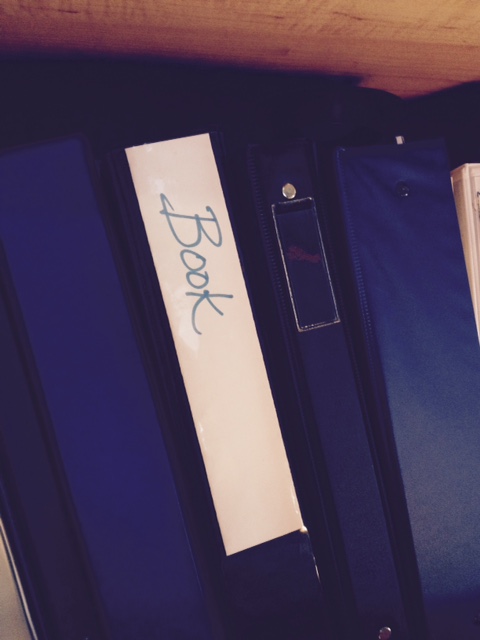
Image, Book binder

I decided equipment would help. A lover of bins and boxes and anything organizational, I ventured into Office Max and filled my cart with a large black binder, numbered dividers, a year’s supply of yellow sticky notes, white 3×5 cards, and multi-colored mechanical pencils.

Once home, I affixed a sticker to the spine of the binder with the word “Book” written on it in blue felt tip marker. I placed my new materials throughout the house: at my desk, on the coffee table in the great room, at my bedside table, near the bathroom sink, and in both cars. Ultimately finding it perilous to jot notes while driving, I purchased a small recording device. “Don’t forget to tell them what happened in the garage,” I recorded into the mic.

Each night before I sat to write, I filed the day’s sticky note inspirations onto the dividers throughout the binder. Then I prayed. “This was your idea, God. Help, please!” Six months later I had an outline and about six chapters written. This feat coincided with the weekend visit of a close friend, and one of the smartest people I know. Bright, articulate, and extremely well read, my friend-who-shares-the-same-name-as-me, demanded to read what I’d written. She in fact seemed hurt that I hadn’t yet asked for her input and advice.

I knew better than to share my work so early in the process, and especially with someone who tends to be critical, but I yielded to her insistence. I really hoped for some encouragement. You see it coming, don’t you? My friend emerged from our guest room the next morning, with the “Book” binder in hand, avoiding eye contact as she headed to the coffee pot. Oh boy, I thought.

“So Barb,” she finally said, once settled in at the breakfast bar, “I, uh, think, uh, this is an important story for, uh, people to read. It’s not, uhhhhh, gonna be a best seller or anything, but it’s, uh, good.” She then looked up at me and added enthusiastically, “You sure have a great memory!” I laughed. Kind of.

“Memory isn’t exactly what I was going for. But I guess that’s something. Thanks for reading.” Unable to leave well enough alone, she added, “You sure didn’t use many big words, did you?”

At that point my heart went “thunk”… and I stopped writing. (Stay tuned for Part III when I share how the Jordan River helped me start writing again….)

I’m a Glutton for Information!

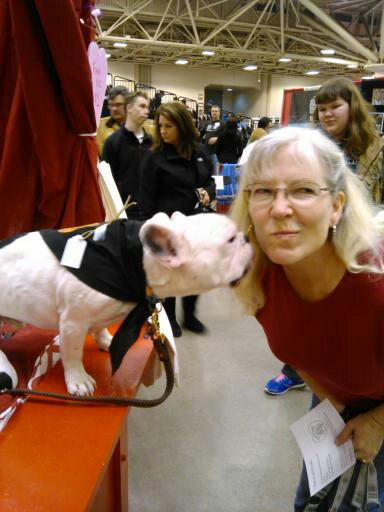
French bulldogSelling books and signing them is a happy experience for any author, but if I had to name my favorite part of the writing process that leads to publication, it would be doing the research that goes into my books.

I love doing research. In high school and college, I was the student who jumped for joy when the instructor assigned a research paper. I couldn’t wait to dig through the library for books, or hunt down obscure magazine articles. These days, research is even more expansive (unending, even!) thanks to the internet, but I love it, along with the hands-on research I encounter in the course of writing manuscripts. I’m just a glutton for information, I guess.

In celebration of that nerdy writerly trait, here are a few of my favorite research moments.

  1. I got a personal, private tour of a donut shop. Need I say more?
  2. I spent hours in the dark one night with some good friends checking nets for owls to band. We never got one, but I did get to wear a really cool headlamp while we strung up nets in the woods and told funny stories to pass the time.
  3. I took a firearms safety course and learned how to shoot a gun. I put 19 of 20 shots into the center of the target, so you can call me Eagle Eye from now on!
  4. I puckered up for a kiss from a French bulldog at a Pet Expo and posed with rabbits running an obstacle course. (Yup, that’s me and the bulldog above.)
  5. I spent a week in January at one of the world’s premier birdwatching areas in southern Texas. It was sub-zero and snowing back home in Minnesota at the time, which taught me the critical importance of timing when it comes to planning research trips.
  6. I took my husband on a very special summer date night to watch 300+ Chimney Swifts go to roost in an old chimney stack at dusk. It was a breathtaking aerial display and possibly a once-in-a-lifetime event as the populations of these birds dramatically decline.
  7. I met a World War II veteran who worked as an ordnance officer, which led to learning about camouflaging British air bases to hide them from Nazi bombing raids.
  8. I got to sit in the mixing booth of Prince’s Paisley Park Studio while interviewing a pre-eminent Christian composer as he completed mixing his musical tracks for a new CD.

Do you count your research as one of the best parts of your writing pursuit? What is your favorite research moment?