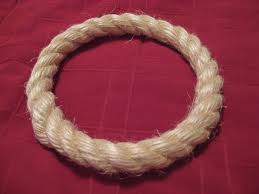
The Warp and Woof of Weaving Stories

When I was in college, I went on a retreat. One of the skills I learned during the weekend was basket weaving. It was a lovely art, both in what I ended up with, and how I got there. In other words, the process led to a product I was proud of: a tightly woven basket with an intricate design of my own creation.

Writing a novel, I find, parallels that experience. The warp of my story is the primary structure, and the woof is the way I hold it together by weaving in and out of the structure with the scenes and details that make it distinctly my own design. Sometimes, I make an impulsive change in the course of the weaving of my tale, which then affects the entire design, and I end up with a different – but even better – story than I had anticipated; sometimes, I find the change is a mistake, which means I have to unravel back to that point and make corrections.

Unlike crafting a basket, however, the task of weaving a story gives me a dimension of creativity the basket doesn’t allow: I can add in even more layers – more woof – after my initial story is complete.  When I finish a basket, the weaving is of one piece – I can’t cut out a section of threads and replace it, or expand it, and expect the basket to hold together.

With writing, though, I find the extra woof is what gives the story its defining success. In revision, I can add a new character to further complicate the plot or add comic relief. While the main structure of the work doesn’t change, that new character can help breathe more interest into interactions with, and between, other characters. In the case of my mysteries, I often create a character in the revision process who can help move my story through spots that are weak or slow, especially when I need some red herrings thrown in to mislead my readers. I created one such character in my first book as a last-minute thought to complement one of the subplots, only to have readers so enjoy the character, that they repeatedly asked me to bring him back in a later book!

Adding in subplots that reflect the primary plot is another trick to elaborating on my initial story design. When revising, I try to give almost every character some personal issue that can tie into another character’s. Doing so not only makes the characters more real – who, in real life, doesn’t have problems to deal with? – but it affords me more opportunities to weave in conflict, which adds to the story’s pacing. My solution to keeping track of the characters and subplots is the creation of a master flow chart that follows each element of the story from beginning to end. That way, I accomplish every weaver’s goal: no loose ends.

Happy weaving!

What are your favorite threads to add to the warp and woof of your writing?

God-Given, Weird, Unexplainable–Joy!


For the last decade, I’ve prayed for God to give me a word to meditate and think on throughout the year. In 2010, the word was “peace,” and God used the word to convict and heal me of a tendency to worry.

In January 2011, I felt impressed to begin concentrating on the word “joy.” And like a pig-tailed toddler with a sweet tooth, I had pictures of God giving me presents. Maybe He would overwhelm me with material blessings (I entered the HGTV Dream Home giveaway several times, just in case). Perhaps He was going to provide a huge advance check for a writing project…or send me on a national television show to gain much-needed exposure for my blog.

As you can see, my thoughts leaned toward the selfish, temporary, and trivial. I’m so glad He knows what we REALLY need.

I won’t bore you with all the circumstances that hit our family in 2011. Suffice it to say, we were shaken and stretched in ways we never imagined. But in the midst of stressful moments–such as when my father underwent emergency triple bypass surgery–I felt peace, instead of fear. Not that I didn’t have moments of panic, mind you. But when worry showed up like a scorned lover, I took a deep breath and told him: “Get lost. I’ve got a new beau, and He’s not going anywhere.”

Mostly, it worked. 🙂

Just like the arteries near my dad’s ticker were bypassed by a skillful surgeon, my heart had been strengthened the previous year by God’s gentle scalpel of truth. I’m so thankful He tirelessly fought the stronghold of anxiety that had crept into my life.

Want to know something else? During 2011 and into 2012, God DID give me a present, wrapped in a great big, blood-red bow: weird, unexplainable  joy.

It is a spiritual gift, after all–just not one we talk about very much. My friend Megan says, “Joy’s not sexy, like wealth or prosperity. But it’s longer-lasting.”

I like that.

Joy means counting our blessings, both tiny and immense, while the world moans and heaves and believes all is lost.

Joy overcomes me when my eight-year-old cuddles with me and shows me his cursive practice. Joy warms my heart when my hubby texts me–because he misses me. And joy bubbles up when my teenager says, “I love you Mom!” out of the blue (it doesn’t happen often, believe me).

JOY is simply this: Jesus, at work in us, to do what we can’t do on our own.

There are many verses about joy, but one of my favorites is Psalm 28:7–“The LORD is my strength and my shield; my heart trusts in him, and he helps me. My heart leaps for joy, and with my song I praise him.” 

My heart has leaped as I’ve spent time with Him. And as I’ve learned to take joy in His presence, He has given me a few answers to the desires of my heart, as well. Those “hugs” from my Father have satisfied my desire to know He’s listening, while whetting my appetite for more of Him–not just His blessings.

As Neh. 8:10 says, “The joy of the Lord is my strength.”

It has been, and it will continue to be. I am praying the same for you.

Photo credit: hotblack from morguefile.com

Back to School

When I was a kid, summer was my favorite season: 4th of July, family barbeques and reunions, my birthday, catching fireflies, and participating in our county’s fair through various 4-H activities.

However, as I got older, and especially now that I am out of school, I appreciate fall more and more. About a month ago, lured in by the back to school displays at King Soopers, I made my husband buy me new pens and pencils, explaining that I would be more motivated to complete my to-do list if it were written in purple and green as compared to black and blue. Ultimately, I feel motivated by that fall feel—Pumpkin Spice Lattes, working at Starbucks with bright-eyed college students, and hunkering down in my house with manuscripts stored up on my Kindle.

Since many of you are probably parents and are, therefore, enjoying some extra writing time now that the kids are in school, I thought I would share some specific motivational tips that inspire me during the fall.

  1. Enjoy a hot beverage. Coffee, black, is my drink of choice, but I also like the occasional cup of tea or the more-than-occasional cup of hot chocolate. I also read somewhere that if you put the cup on your face, the warmth does something to your endorphins to make you happy. No idea if that is true or not, but it feels like a mood booster when I do it. Plus, it pulls me out of email or editing for ten minutes or so and just lets me be creative or pray or review my list of things to do.
  2. Going to Starbucks or a local college. Usually, I see several college students reading or writing or studying, and I think, if they can push forward, so can I. And then I will see someone working on calculus or chemistry or some other god-awful subject, and I send up a prayer of thanks that the most stressful thing that I encounter throughout the work day are rejections or a particular difficult edit. Seriously, calculus? Who willingly takes a class like that?
  3. Talking walks. It was HOT in Colorado this summer, and I’ve heard we have more ninety degree days ahead of us, but I have really enjoyed the past few days where the temperature has dipped into the seventies. I like working outside on my balcony and taking walks to observe the changing leaves. I feel energized and like change is happening in me both physically (baby boy is growing!) and spiritually. God and I have had some wonderful conversations these past few days, and I have felt my relationship with Him maturing and becoming clearer in a lot of ways.

So what motivates you during the fall? Have you had your Pumpkin Spice Latte yet?

Christian Fiction ~ Oxymoron?

Image courtesy of freedigitalphotos.net/

We were on our way to The Duck Pond restaurant in Warsaw, Indiana. Our husbands visited in the front, and we ladies sat together on the bucket seats of our friend’s new Honda mini-van. And that’s another story. . .

But on this day, my friend turned to me and said, “I promised I wouldn’t read anything that wasn’t true for the rest of the year.”

She shook her head and looked down at the boot on her foot. “And then my ankle gave out.” She grinned then. “I could just see God looking down with a chuckle wondering what I was going to do now. But I’ve used this time to really get into the Word.”

I shared with her how I’d learned to get more out the Scriptures in my own daily devotions. I was sure the things I had learned were nothing new to her. And I was ashamed that I had to be this old before I learned.

“It’s good to take a break from reading other writing,” I said. “But you’ve made a big commitment to go for half a year.” I half-way admired her for it.

“Oh, I hope by the end of the year I can make it permanent. My mother always told me fiction is just a bunch of lies.” My friend looked at me expectantly. We belong to the same denomination and she knew I was a writer. “Reading got me through the hard times when my children were growing up,” she continued. “But I’ve leaned on fiction too much.”

“I know you need to keep your promise, but what about the stories Jesus taught?”

“And you think those weren’t real stories?”

“I know the parables were based on true principles,” I told her. “That’s what novel writers are taught. Any properly written novel will be based on a true principle.”

We changed the subject after that. But I can’t quit thinking about it.

Is Christian fiction an oxymoron?

By definition, Christian fiction is a story that illustrates a Christian world view in its plot, its characters, or both, or which deals with Christian themes in a positive way.

The novels of Francine Rivers have touched hearts and changed lives. Christian fiction is not written to replace the Bible, but to turn hurting, seeking people to the Word, to Jesus, and to God.

The combined efforts of many Christian writers have enriched our world. For some of us, it is our mission field. Our way of blooming where we are planted.

The Apostle Paul used the whole chapter of I Corinthians 14 to show that worship should not just be for my own benefit. That I should desire gifts that benefit the whole church. #1 In ways that they can understand. And #2 in ways that build up the church. Then, the apostle tells us, God will bring the sinners and they will also be convinced.

Sharing the Scriptures

God may use me to touch just one soul. He may use you to touch another. And he is reaching out to my friend in a different manner.

What are your thoughts?

A Brief History of E-Publishing, Part 3: The Era of Optimisim

Image Credit: tashka2000 @ iStockphoto.com

I’ve lectured on e-publishing at least once a year since 2000 and I’ve never given the same talk twice. That’s because the history of electronic publishing has been nothing less than a wild roller coaster ride. As with any good coaster, the ride began with a climb. But in the  case of e-publishing, it wasn’t a long, slow climb.

Electronic publishing took off like a rocket.

When Hard Shell Word Factory published my Young Adult novel, Friendly Revenge, in 1999, there were only a handful of royalty-paying e-publishers. But within a year, that changed drastically. Soon, e-publishers were springing up like dandelions. In a brief time, the number of e-publishers ballooned from a handful into the hundreds.

E-publishing had entered what I call The Era of Optimism.

Most of us who were involved in the infancy of e-publishing felt that we were on the cutting edge of a major revolution in publishing. Many were convinced that in a few short years e-books would replace print books. Of course, not many people were reading e-books yet, but we weren’t worried.

We knew things were looking up when none other than Stephen King jumped on the e-publishing bandwagon.

In 2000, Stephen King wrote Riding the Bullet, a novella released exclusively as an e-book (although it eventually came out in print). He followed up that same year with an “experiment” in e-publishing. King released The Plant chapter by chapter, as a serial e-book, with downloads costing one dollar each. Results for both were mixed, but there can be no doubt that Mr. King’s entry into the e-publishing arena was significant.

With Stephen King as an advocate, how could we not be successful?

E-authors also had their own organization. EPIC (The Electronically Published Internet Connection)* was formed in 1998 to encourage e-published authors to network with one another. EPIC even created the “Eppie” awards for the best e-books.

Another encouraging sign on the horizon was when major publishers, e.g. Simon and Schuster, began releasing some of their “name” authors’ books in electronic format.

We were doing well—until we hit the first logjam.

As the popularity of e-publishing ballooned, so did the number of submissions. It seemed as if every writer who had five or ten unpublished manuscripts gathering dust decided to submit them to the new e-publishers.

The flood of new submissions overwhelmed most of the fledgling e-publishers, and many of them had to close down to submissions.

That was only the beginning.

As the adage says, “What goes up must come down.” The e-publishing industry ascended like a rocket, but now was headed for its first crash.

*EPIC still exists, but has changed its name and purpose to include the entire e-publishing industry. It is now the Electronic Publishing Industry Coalition.

(For the next part of the story, check back on September 14th.)

An Open Letter to All the Literary Agents I’ve Not Yet Contacted

I know that among the readers here are some who are actively seeking an agent, or who are anticipating doing so soon. You may find yourself having to create a separate file for agent rejections one day, and for that, I offer my sympathies in advance. Plus this tongue-in-cheek open letter, which I coincidentally penned immediately before signing with WordServe Literary. Please feel free to use it in the advancement of your own writing career.


Dear Literary Agent,

If you think I haven’t read your blog, you’re wrong. I thought I’d clear that up right away.

I am so diligent, I’ve even delved into your ambitious archives, perusing entries from as long ago as two weeks. At this point, I know what you’re looking for in a client even better than you do. In fact, because I am such a devoted student of your career, writings, and personal life (including that foxy photo of you on your Harley, va-voom!), I feel I can say without a doubt that I am your next dream author.

How can I be so sure? I am glad you asked!

For one thing, you’ve very clearly expressed your preference for having “good writing” sent your way. At first when I read this, I said “Doh!” but then I gave it some serious thought. I’m betting your definition of good writing is the same as my BFF’s, which means I’m in luck.

Attached is the only scene I’ve slapped together so far. After you read it (get a move on!) and I’ve agreed to be represented by you, I will gladly crank out the rest of the novel. It could take a while, though, so I’d advise you to keep your high hopes in check. I am currently in communication with many notable agents. I even know several of them by name and have called their assistants to verify whether or not “Ricky” is a Mr. or a Mrs. or a Miss. You’ll certainly realize that developing these relationships represents a considerable time commitment on my part.

In addition, submitting a proposal for a book I haven’t gotten around to writing would be a giant waste of my time and talents, as I am sure you will agree.

Second, you have indicated you don’t want to sign any high-maintenance, best-seller wannabes. I can assure you that I’ve never personally obtained a mani-pedi (photos availble upon request). Also, I can produce a matched set of yellowed postcards from my dentist verifying that I am nine years behind in my supposedly every-six-months (ha!) check-ups. No way am I high-maintenance! If you’ll either call me on my cell or email me within fourteen minutes of receiving this—as you should if you are truly the professional you profess yourself to be—we can discuss this point until I’m satisfied that you understand.

Third, you state that any client you take on must have a platform already in place. Bingo! We have a winner! I have been an active blogger for twelve plus years, during which time I have chronicled with sterling clarity my aging mother’s propensity for swearing like a drunken Marine (no worn-out cliches here, baby!) as well as her advancing incontinence.

Google my stats and you’ll see I now have six regular readers, half of whom have agreed to be sent free copies of my first book in exchange for 1-starred reviews on Amazon. You cannot buy (though I’m not against the idea, per se) that kind of fan loyalty.

Finally, you say you are seeking authors who seem unlikely to end up one-hit wonders. While I’d prefer not to promise you the moon until my staggering work of heartbreaking genius reaches the top of the NYT list, I think it’s pretty safe to say there’s PLENTY more wherever that first scene came from. Or I guess I should say, “from where that first scene came.”

In conclusion, I am absolutely brimming with potential, just the way you like ‘em.

I look forward to hearing from you soon. Very soon.

Best regards,
Katy McKenna

Radio Days

When I completed my first book, my boss was incredibly supportive and offered to get a marketing package for me of my own choosing. Having very little understanding of book marketing, I was soon swimming in a flood of possible opportunities of all different shapes, sizes, and price tags. I finally settled on the Readers Favorite’s Book Promotion Packagewhich I found to be reasonably priced and reputable. One of their strategic partners, The Authors Show, welcomed me as a preferred guest as part of said package.

I had never been on the radio before and was rather anxious about sounding like a moron.  I didn’t worry for long, though, because it was clear that The Authors Show staff had the interview process down to a science. They sent me an author interview form to complete. It asked for pertinent information about the book. They allowed me to create 8-10 suggested questions that would relate to its content and would connect with an audience. There was a place to create a synopsis, a call to action to encourage buying behavior, and a list of preparatory questions so I would have an idea of what to expect.  Some of the questions were very thought provoking and have helped me during other marketing initiatives as well. For example: What benefits will the buyer get from reading the book?

After I completed the interview form and submitted it, I didn’t wait long until the interview was scheduled. It was conducted over the phone by Don McCauley, who was very kind. Before we got started, he encouraged me to relax and be as natural as possible. He assured me that they would edit the interview and remove any pauses or filler words.

When the time for the interview came, I was sure to secure a remote location without any distractions or background noises. I used a headset which seemed to help the audio quality. My gracious host made me feel very much at ease throughout the call which only lasted about thirty minutes.

Once the interview was edited, it came out to be fifteen minutes long. The interview was featured on The Authors Show for an entire month. During this time, I leveraged all the social media tools in my arsenal to get the word out: Facebook, LinkedIn, Twitter, my website, et cetera. After my time on The Authors Show website was up, they sent me an MP3 file of the interview. It’s still available on YouTube and accessible through my website. People have marveled, “You sound so knowledgeable!”  That’s nice to hear, but it’s because the marketing company set me up for success.

Aside from Amazon, the radio interview has been the best marketing vehicle I have found so far, and it’s by far the most impressive facet of my campaign.  It lives on the front page of my website and enjoys prime real estate. I will always be grateful to my boss, to Don, and to the good people at The Authors Show for providing me with this great facet of my marketing toolbox.

Have you ever used radio as a book marketing tool? How do you get the word out about your writing?

Drive Traffic to Your Website Or Social Media Sites? (7 Things A Writer Should Know)

Image-of-Traffic

With so many people on social media sites nowadays, it’s tempting to ask yourself if you should forget about driving traffic to your website and focus on marketing elsewhere. Why not go where people already are instead of making what can seem like a herculean effort to drive traffic to your site?

The answer to this question is that yes, you should go where people congregate, but yes, you should also invite, bribe, entice, and otherwise encourage others to your website. Here’s why:

  1. Social networking sites own your list of friends and followers. You don’t. If one of them goes out of business, it won’t matter that you have 4,000 followers. Every one of them will vanish into cyber space. By contrast, the list you build through your website belongs to you.
  2. People want to know where you live online. If you’re spread thin across social networks without a strong central hub, your brand will be ineffective at best. Branding is all about distilling your essence for others to grasp with minimal effort. If your online presence is scattered, you’ll have a hard time maintaining a brand.
  3. A neglected website reflects poorly on its owner. Those who connect with you on social sites will sometimes visit your website. A languishing website may make the casual visitor wonder what else you neglect in your writing business. The same can be said of a languishing social media account. You shouldn’t try to be everywhere, so pick and choose where you will and won’t maintain an online presence.
  4. Exclusivity. If your website becomes one of those places people gather, you won’t have to go out and haul people in to connect with you.This takes a great deal of thought and legwork up front, but after that it can pay off.
  5. Less competition. That’s usually not true on social sites where instant messages, notifications, advertisements, and the updates of others all compete for attention. You still need to have an interesting website, but at least visitors will have fewer interruptions while you try to maintain their interest.
  6. Higher search engine rankings. The more traffic your website generates, the higher it ranks in search engines. A higher search engine ranking means that those who enter keyword searches matching content on your website will find your site closer to the top of search results. This brings traffic to your site without any additional effort on your part.
  7. The ability to sell products. Once you give friends and followers a valid reason to come to your site, you can then offer products to them. This privilege can be abused, so be considerate. Remember that visitors to your site want an immediate takeaway, usually for free. Without one, they may not hang around long enough to buy anything.

Do all your social media accounts point to your website? If not, I suggest you change that as soon as possible.

What are your thoughts on this subject?

Related Posts:

SEO Is Not Enough To Grow Your Blog Subscriber List!

Marketing with Integrity: 5 Tips On What Not to Do

Social Media Numbers: How Many Friends and Followers Are Enough?

Waiting on the Lord


Isaiah 40 v 28-31

Hast thou not known? Hast thou not heard that the everlasting God, the LORD, the Creator of the ends of the earth, fainteth not, neither is weary? There is no searching of his understanding. 

He giveth power to the faint; and to them that have no might he increaseth strength.  

Even the youths shall faint and be weary, and the young men shall utterly fall:  

But they that wait upon the LORD shall renew their strength; they shall mount up with wings as eagles; they shall run, and not be weary; and they shall walk, and not faint. 

These verses describe a truth which is at first not apparent. The speaker asks us if we know that the Lord never faints and never grows weary.

He has an abundance of strength and power which he gives to the weary, to the weak, to the powerless.

Without these free gifts young men, who are full of vitality and natural strength, shall utterly fail.

Have we not been in these places? Places where we are weary and prepared to give up and give in to life’s pressures, where we are afflicted and powerless to defend ourselves against the evil one, where our faith fails us in the moment of personal crisis and despair, and then we feel hopeless. The speaker says we can call upon a faithful God who will rescue us in times of trouble. He has an abundance of strength, He fulfills our hopes, He stands firm when our faith in Him falters, and He snatches us out of the storm with His outstretched arm.

We could be forgiven for missing the nugget of gold hidden in verse 31 that is at first unseen, buried just below the surface. We have to dig a little, to discover how we are to renew our strength, to mount up on wings as eagles, to run like Olympians, to walk a hundred marathons and not faint from exhaustion.

In this passage there is a little word that holds a wonderful secret. “Wait.”

The speaker exhorts us to wait upon the Lord. In the original Hebrew, the word wait inherently has, within its meaning, a sense of meditation. Go to your private place, meditate upon the Lord. Think about Him, quietly, passively even, and wait. Ponder thoughtfully on the Lord’s wonderful nature; His love, His grace, His mercy, His forgiveness, His eternal limitless power that created all things, including us.

In the Hebrew, wait is a picture word. Many words in the Bible had powerful, visual meanings that have today become abstract and one-dimensional, so much so that when we read them, they have only a shadow of their former power. In the days of Isaiah (eighth century B.C), a person listening to the prophet speak would have heard the word and seen a picture in his mind’s eye. It would have resonated strongly with day-to-day experiences.

This is one such example.

Today, wait means, well…waiting for something to turn up, sticking around for something to happen. It even has a negative connotation. “Wait here and someone will see you soon…and wait…and wait…” Waiting implies impatience leading to frustration, anger, and even rage.

But in verse 31, God Himself asks us to wait. He has a perfect purpose in mind. The outcome for those who wait upon the Lord is mind-blowing, miraculous. The picture hidden in this word is the interweaving of the strands of a rope. What does this mean? It speaks of intimate communion, the intertwining of God’s Holy Spirit with us. Amazing! Our fragile and frail, weary and hopelessly weak strands are made strong when the Holy Spirit combines His unfailing, unbreakable strength with our own.

Ecclesiastes 4:12 says this: “And a threefold cord is not easily broken.”

What have we done to be worthy of this blessing?

Nothing! Except this, taken Jesus Christ as our Lord and Saviour.

It is by God’s grace and Jesus’s sacrifice upon the cross that we are re-united with the Lord.

The dynamic of verse 31 is an act of unreserved, unconditional commingling of God with us. Emmanuel.

Winners!!

Thanks to all the authors and readers who participated in our blog parade! If you missed out– here is the link where you can read what sixteen of our authors said about the first steps they took to become an agented/published author.

Winner of prize package #1: Angela Bracken!

1. Central Park Rendevous (Featuring Ronie Kendig, Dineen Miller, Kim Vogel Sawyer and MaryLu Tyndall).
2. Fairer Than Morning by Rosslyn Elliott
3. Unending Devotion by Jody Hedlund

Winner of prize package #2: Katy McKenna!

1. Paper Angels by Billy Coffey
2. Blind Sight by James J. Pence
3. Short-Straw Bride by Karen Witemeyer

Congratulations to all our winners!