Waiting on the Lord


Isaiah 40 v 28-31

Hast thou not known? Hast thou not heard that the everlasting God, the LORD, the Creator of the ends of the earth, fainteth not, neither is weary? There is no searching of his understanding. 

He giveth power to the faint; and to them that have no might he increaseth strength.  

Even the youths shall faint and be weary, and the young men shall utterly fall:  

But they that wait upon the LORD shall renew their strength; they shall mount up with wings as eagles; they shall run, and not be weary; and they shall walk, and not faint. 

These verses describe a truth which is at first not apparent. The speaker asks us if we know that the Lord never faints and never grows weary.

He has an abundance of strength and power which he gives to the weary, to the weak, to the powerless.

Without these free gifts young men, who are full of vitality and natural strength, shall utterly fail.

Have we not been in these places? Places where we are weary and prepared to give up and give in to life’s pressures, where we are afflicted and powerless to defend ourselves against the evil one, where our faith fails us in the moment of personal crisis and despair, and then we feel hopeless. The speaker says we can call upon a faithful God who will rescue us in times of trouble. He has an abundance of strength, He fulfills our hopes, He stands firm when our faith in Him falters, and He snatches us out of the storm with His outstretched arm.

We could be forgiven for missing the nugget of gold hidden in verse 31 that is at first unseen, buried just below the surface. We have to dig a little, to discover how we are to renew our strength, to mount up on wings as eagles, to run like Olympians, to walk a hundred marathons and not faint from exhaustion.

In this passage there is a little word that holds a wonderful secret. “Wait.”

The speaker exhorts us to wait upon the Lord. In the original Hebrew, the word wait inherently has, within its meaning, a sense of meditation. Go to your private place, meditate upon the Lord. Think about Him, quietly, passively even, and wait. Ponder thoughtfully on the Lord’s wonderful nature; His love, His grace, His mercy, His forgiveness, His eternal limitless power that created all things, including us.

In the Hebrew, wait is a picture word. Many words in the Bible had powerful, visual meanings that have today become abstract and one-dimensional, so much so that when we read them, they have only a shadow of their former power. In the days of Isaiah (eighth century B.C), a person listening to the prophet speak would have heard the word and seen a picture in his mind’s eye. It would have resonated strongly with day-to-day experiences.

This is one such example.

Today, wait means, well…waiting for something to turn up, sticking around for something to happen. It even has a negative connotation. “Wait here and someone will see you soon…and wait…and wait…” Waiting implies impatience leading to frustration, anger, and even rage.

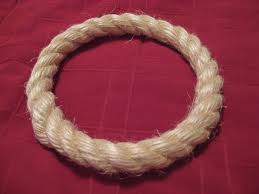
But in verse 31, God Himself asks us to wait. He has a perfect purpose in mind. The outcome for those who wait upon the Lord is mind-blowing, miraculous. The picture hidden in this word is the interweaving of the strands of a rope. What does this mean? It speaks of intimate communion, the intertwining of God’s Holy Spirit with us. Amazing! Our fragile and frail, weary and hopelessly weak strands are made strong when the Holy Spirit combines His unfailing, unbreakable strength with our own.

Ecclesiastes 4:12 says this: “And a threefold cord is not easily broken.”

What have we done to be worthy of this blessing?

Nothing! Except this, taken Jesus Christ as our Lord and Saviour.

It is by God’s grace and Jesus’s sacrifice upon the cross that we are re-united with the Lord.

The dynamic of verse 31 is an act of unreserved, unconditional commingling of God with us. Emmanuel.

Winners!!

Thanks to all the authors and readers who participated in our blog parade! If you missed out– here is the link where you can read what sixteen of our authors said about the first steps they took to become an agented/published author.

Winner of prize package #1: Angela Bracken!

1. Central Park Rendevous (Featuring Ronie Kendig, Dineen Miller, Kim Vogel Sawyer and MaryLu Tyndall).
2. Fairer Than Morning by Rosslyn Elliott
3. Unending Devotion by Jody Hedlund

Winner of prize package #2: Katy McKenna!

1. Paper Angels by Billy Coffey
2. Blind Sight by James J. Pence
3. Short-Straw Bride by Karen Witemeyer

Congratulations to all our winners!


WordServe News: August 2012

Exciting things have been happening at WordServe Literary!

On the final post of each month you’ll find a list of Water Cooler contributors’ books releasing in the upcoming month along with a recap of WordServe client news from the current month.

New Releases

Mary Davis (and others), A Cascade Christmas (Barbour)

*********************************************************************************************************

Denise George, A Woman’s Right to Rest (Leafwood)

********************************************************************************************************

Patty Kirk, The Gospel of Christmas (IVP)

********************************************************************************************************

Krista Phillips, Sandwich with a Side of Romance (Abingdon)

********************************************************************************************************

Helen Shores Lee & Barbara Shores (with Denise George), The Gentle Giant of Dynamite Hill (Zondervan)

********************************************************************************************************

Bob Welch, 52 Wonderful Life Lessons (Thomas Nelson)

********************************************************************************************************

New Contracts

Leslie Leyland Fields and Dr. Jill Hubbard (Co-host of “New Life Live”) signed with Thomas Nelson Publishers for a nonfiction book called Forgiving Our Parent, a memoir with a message about Leslie’s struggles forgiving her father and Jill’s counsel on the whole topic of forgiveness after trauma. (Agent: Greg)

Ken Gire signed with Moody Publishers for a biblical novel called The Centurion. The story is about the Centurion who witnessed the death of Christ and what happened to him as the years unfolded. (Agent: Greg)

Former European runway model Jennifer Strickland (www.jenniferstrickland.com) signed a five product/book agreement with Harvest House revolving around her book, Men, Mirrors and Magazines. She’ll do a main book for women, workbook, video, and then a book for teen girls and one for tweens. (Agent: Greg)

Tricia Williford signed two books with WaterBrook Press, the first for her memoir on the first year of her widowhood titled And Life Comes Back, the second untitled. (Agent: Greg)

Robert Wise has signed with Leafwood Publishers for his book The Joshua Way, a nonfiction book on spiritual warfare using the principles found in the life of Joshua. (Agent: Greg)

What We’re Celebrating!!

Both Resolve by Bob Welch and A Higher Call by Adam Makos, two WWII nonfiction books with Berkley Caliber, got a nice mention in the latest Publisher’s Weekly in a discussion about military books.

What’s your great news? We’d love to help you celebrate.

Hello, Fellow Publishers!

I’m a publisher.

I thought I was just an author doing some social marketing, but thanks to what I’m learning from Beth Hayden’s book Pinfluence: The Complete Guide to Marketing Your Business with Pinterest, my whole perspective on my writing career is changing. Yes, I write mystery and suspense novels, but in support of that endeavor, I need to be creating and presenting content online that is meaningful and valuable for my customers. I need to give my social media friends and visitors what they are looking for, or as Hayden explains on page 61 of her book, “You need to make sure that every piece of content you publish either solves a problem for your audiences, or entertains them – preferably both.”

That’s a big responsibility. Every piece of content. We’re talking about images, information, links, comments – anything you publish anywhere on the internet that has to do with your writing. It’s all part of your ‘company.’ The really exciting part of using Pinterest as part of your company is that it allows you to get creative with visual content, which, psychologists tell us, can evoke emotional responses in a viewer. The bottom line is that by publishing the right images, you can build enthusiasm and loyalty in your viewers, which will help sell your product (books).

Culling through whatever is already on Pinterest boards, however, is not the way to find the ‘right’ images for your viewers, Hayden points out, just as consistently using someone else’s words doesn’t make your work original. Instead, put together your own content. That doesn’t mean you have to take a hundred photos or hire a graphic artist. It means you have to collect compelling images that represent your unique brand. (Be very careful of image copyrights.)

Do you write historical romance? Pin beautiful images of the places where you set your stories, or sketches of period clothing, or the flowers of the region – anything that helps your reader connect to your book. Think of it as publishing a behind-the-scenes guide to your story.

Do you write motivational memoirs? You could pin pictures of famous people who have overcome hardship, or framed inspirational quotes, or maps that trace incredible journeys. Think of it as pulling together an illustrated companion piece to your book.

The possibilities are limited only by your time and imagination, but if you keep focused on your ‘company,’ it will help eliminate some of the time-draining wandering we all do when we get online; if you’re collecting images of old barnyards for an Amish board, it will be a lot easier to not get distracted by all those cute animal pictures that pop up in the blogosphere. (If all else fails, put a sticky note on your computer screen that reminds you “No puppies!”) Make your publishing goals as specific as possible, pin appealing and evocative images on your boards, and Pinterest can become a great billboard for your books on the global internet highway.

Enjoy your publishing!

What are some examples of images that you have been pinning lately? Do you have any creative ideas for pins besides those I mentioned above?

On Telling the Truth, Sort Of

Yesterday my daughter, Charlotte, was talking to me about churches. She’s away at college, and beneath our conversation I was pray-hoping her speculations might indicate she was thinking about attending church there one of these days.

“I hate churches where the preacher tells those fakey stories,” she told me. “You know, the kind that starts out, ‘A woman once said to her husband…’ or something like that. I mean, it’s obviously made up and just wrecks his credibility.”

Our conversation went on—to the endless sermons of the church we’d attended in her youth and her preference for the brief, strictly Bible-passage-focused homilies of Catholic masses she’d gone to with her grandparents—and then moved on to other subjects, but I’ve kept thinking about this business of the fakey stories preachers tell.

They arise, I’m guessing, from a problem nonfiction writers often confront. I mean, I told Charlotte, it’s not like the guy can actually tell a true story from his own life in church, especially one about something sensitive, like meanness or covetousness or lust—a story, that is, about something truly relevant to the people he’s addressing—with his wife and kids sitting right there among his listeners. If he wants to tell a story from real life—which he likely does, since that’s the best way to interest an audience—he must take pains to remove its realness.

Whenever I go to writers conferences, there are nonfiction workshops dealing with precisely this problem, because publishing a story from one’s actual experience is likely to upset the people involved. (More important, at least from your publisher’s perspective, is that upsetting the people involved can get you, your editor, and your publisher sued. Most publishers have lawyers on staff to prevent such eventualities. That’s how problematic telling true stories can be.)

At the conferences, writers are advised to do everything from changing the names of the people involved in a story to getting permission first to waiting to tell a story until all the people in it are dead. In my experience, the permission solution is best…unless, of course, you have a story you really want to tell and you’re certain someone involved will never grant you permission to tell it. Like when it’s about your kids, who must be legally fair game, since I’ve never had a publisher demand I get their permission for any of my daughters’ many appearances in my writing.

Which is good, as getting permission from them would have been impossible. What kid is going to want you writing about her spate of evil tantrums at age eight? Or your terrors as a parent when she started developing pubic hair?

When my other daughter, Lulu, at age six or so, figured out what I was up to when I sat at the computer, she flat out refused to be written about.

That stymied me a bit. With only one daughter’s foibles and my own to plumb, what could I write about?

“You’re the daughter of a writer,” I finally told Lulu. “It could be worse. You could be the daughter of a preacher and never allowed to do anything wrong. Or the daughter of a soldier and always worried about my being killed. There are worse things than being in the public eye.”

But I’ve trodden carefully since then. I opted not to write about Lulu’s potty training trials when the idea bounced through my consciousness the other day. And I have decided to put the sketchier of my daughters’ college experiences (that I know about) on literary hold until after they graduate. When I just can’t resist, I make up fakey stories that probably damage my credibility. But, oh well.

Direct Mail – Cool As Ever

Have you ever sent a letter to prospective customers asking them to buy one of your books? If so, you have participated in direct mail marketing — one of the most efficient and effective selling techniques. If you think it’s too old school for you, then consider this: 55% of Americans read the news, 95% have telephones, 98% have television sets. However, 100% of Americans have a mailbox. Therefore, it is your only 100% opportunity to hone in on your targeted audience.

There are four components to a successful direct mail campaign: the Creative, the List, the Offer and the Results.

1) Creative: Of course you want your direct mail piece to be eye-catching and informative. How you present your offer to your list has to be done professionally so that all of the emotional hot buttons are triggered while also maintaining interest and going for the sale. Some of the best copywriters are paid thousands of dollars to write a single sales pitch letter, simply because the creative aspect of your campaign is that important. If your budget allows it, consider using variable data printing, which personalizes each letter to its recipient using demographics such as male/female, geographic region, etc. Even just a first name is effective in grabbing attention.

2) List:  Although your current customer base is incredibly valuable, it will be necessary to continuously seek out new customers as well. Your current customers will only buy so much. Aside from that, you will lose customers every year for various reasons. A good way to replace your eroding customers is by acquiring targeted mailing lists. It’s great to have a fantastic book but unless you can get it in front of the correct audience, it’s all for naught. The best list for you may be expensive, and you can expect to pay per name. The more targeted the list of prospects, the better. If you are selling a book on, say, surfing, you want to find a list of people who surf AND who buy books on surfing. If you get a list that is cheap or free, that doesn’t mean it’s a good one. In fact, you want to be absolutely sure you have a solid list before you start sending out direct mail offers and accruing postage fees. Acxiom® and Dun & Bradstreet® are examples of companies that sell lists. You can also work with a direct mail advertising company who can walk you through the entire campaign, such as Modern Postcard.

3) Offer: What you offer in the direct mail campaign needs to be exclusive to the group, while also being priced to make a profit for you. Make an offer that will get the recipient to act quickly, such as directing them to your website to see a sample chapter, free gift or autographed copy if they respond by a certain date. The options are unlimited, so you can test lots of different ideas to see which offers produce the best outcomes.

  • Keep the offer simple: One or two QUICK benefits: “Save time and money with our services!” or “Stay warm this winter!”
  • Give a reason to continue reading: “See the other side for big savings!”
  • Make a big promise and be sure you can fulfill it: “Order now and enjoy a full head of hair in three weeks!”
  • Include an expiration date… create a sense of urgency or exclusivity. The most compelling direct mail pieces have a call to action.

4) Results: A direct mail campaign which produces more than a 2% response is considered successful. Lower than a 1% response is typical. You then need to take into account the conversion rate (the conversion of responses into sales), assuming the campaign is designed to produce responses or inquiries and not just actual sales.

Do not engage in a 100,000-piece nationwide mailing your first time out of the gate. Try 500 or so at first and see how it goes. This way you can tweak the results, eliminate certain demographics and introduce others. Think of this kind of marketing as a long play that takes some honing. Aside from sales, some additional metrics to consider are the number of orders, how many offers were redeemed, how many responses by phone / email you received and the estimated future value of your new customers. Track your responses carefully. Enter them into a CRM system like ACT!®, Goldmine®, Salesforce®, etc., put them into an Excel® spreadsheet, put them in a box or record them in a notebook. Track them and make sure they are updated regularly, if possible.  A mail house can assist you by checking your list against their national change of address software, and provide you with any move updates so you can follow your customer base.

Not all books can be sold successfully through direct mail. The topic must be of interest to the targeted audience and the price must be sufficiently low to encourage people to respond with an order. Tell them why the information in your book will be of interest to them. In closing, you might find it interesting to know that direct mail came back in a big way in 2011, increasing by $10 Billion and gaining another 5% in terms of total ad spend share. Each dollar spent on direct marketing yields, on average, a return on investment of $12.05. By comparison, each dollar spent on non-direct mail advertising yields an ROI of $5.29. (Source: DMA ‘s Power of Direct Marketing; 2011 Edition).

The Craft of Writing

The dictionary defines ‘craft’ by making references to skill, dexterity, cunning, and even deceit. Of course, it is normally associated with a deft manual skill to produce a thing of value or beauty. Trying to decide exactly what is the good and acceptable product of a skilled craftsman we then descend rapidly into the shadowy realms of subjectivity.  One man’s meat is another man’s poison and all that.

I have just been reading George Orwell’s little manifesto entitled ‘Why I Write,’ which he published in 1946, the year I was born. Orwell was undoubtedly a craftsman, knew his craft well, and was literate and articulate enough to write succinctly about it. In the early part of the book, he lists what he believes to be the four main reasons, or motives, why a person would want to seriously write.

  1. Egoism
  2. Aesthetic
  3. Historical
  4. Political

The first motive is probably the strongest driver, if we are honest enough to admit to it. It is the desire to be seen to be clever, to be talked about, to be on the New York Times Best Seller List and even to be remembered after our death, though we won’t be around to bask in the glory.

Becoming a writer is an odd desire in many ways. What I mean is, if you want to be a painter, a carpenter, an engineer, a dentist or a doctor, it is assumed you will have to be trained and fully learn your craft before you can produce or do anything really good.

To become a writer is somehow different from all the other professions, in that you can go to university to study English literature and attend creative writing courses run by eminent successful writers. In the UK, I imagine hundreds do just this, and I guess in the USA it probably numbers in the thousands. But somehow it doesn’t quite work out in the same way as for the people who study diligently to become craftsmen in other disciplines. In my doctor’s office, I see on the wall his credentials proudly displayed–the Medical Certificate, which says he can practice as a GP. I look at that and trust him implicitly.

If writers had consulting rooms, like doctors, and I saw on the wall the University degrees in literature, philosophy, history and the like, would I assume that the holder of these prestigious awards was a great writer? We all know the answer to this question. It’s a simple, unvarnished ‘no’.

The craft of writing can be taught. The craft of learning to become a writer can be learnt, but it doesn’t guarantee that the student will be a great or even a good writer. But why doesn’t it?

Returning to George Orwell and his little essay ‘Why I write,’ he says this about considering what makes a good writer: “…it has to do with the writer’s early development; his subject matter will be determined by the age he lives in, by his acquired emotional attitudes, his temperament, his maturity and not forgetting the all-important motives, listed above.”

From the point of view given in the paragraphs above it is clear that learning the craft of writing is not enough. We can partition this activity as the objective study of writing. All the rest is established in the subjective department of the writer. This latter realm cannot be taught. It is indeterminate, unique, special, incalculable, complex, mystical, beautiful, tangible yet ephemeral, and at some precious moment even eternal.

It is the human psyche which holds the secret. What pours out onto the ‘tabular rasa’ is a miracle at times. Where does it come from? It comes from the life within. It can be good, bad and ugly, but when it is truly creative and inspired, it shows. And more importantly readers know it too. It becomes a shared experience par excellence. It binds us together in unity. It applauds the human race. It raises us out of the mire and places us firmly on the mountain top. Hallelujah!

PS – For some other writers’ views see :

  1. On Writing: A Memoir of the Craft, by Stephen King
  2. Ernest Hemingway on Writing, by Larry W. Phillips
  3. On Writing: Rethinking Conventional Wisdom about the Craft, by David Jauss

No Angry Rejection

Rejection—we’ve all experienced it. Some days, it seems to roll off our backs; and on others, we feel as if a knife just pierced our vital organs.

Maybe you’ve been shunned by a friend, coworker, or employer. Perhaps you’ve experienced an even deeper-cutting rejection by a spouse or a loved one.

As a freelance writer, I experience rejection of my ideas and projects on a regular basis. At times, it’s hard not to take the “no’s” personally. When I was trying to break into the book market (something that took five years of learning, growing, praying, and waiting—after several years of writing articles and stories for freelance markets), the multiple rejections got to me after awhile.

Even though I believed I was called to write, and felt obedient to God by pursuing that call, major discouragement set in for me when three of my favorite publishers turned down a nonfiction book proposal in one week. Ouch!

My husband, friends, and family encouraged me to keep going. And I wanted to—but my “fight” was running out. The rewards of risk just didn’t seem worth it anymore.

Then God gave me a gift—a passage from Eugene Peterson’s The Message (1 Thessalonians 5:9–24), at the precise moment I needed it. I hope it will minister to you as it did to me:

“God didn’t set us up for an angry rejection but for salvation by our Master, Jesus Christ…So speak encouraging words to one another. Build up hope so you’ll all be together in this…Be cheerful no matter what; pray all the time; thank God no matter what happens…The One who called you is completely dependable. If He said it, he’ll do it!”

Isn’t that awesome? Those verses remind me, first, that God is up to great things behind the scenes. He will never fail. That truth allows me to trust in His timing and to thank Him–yes, even for rejections. After all, as James Lee Burke once said, “Every rejection is incremental payment on your dues that in some way will be translated back into your work.”

Second, trusting in God’s timing and faithfulness builds up my hope, so that I can get back into the ring of life and keep fighting—for relationships, for a vibrant life, and for the ministry God has chosen for me.

Third, online and offline groups–like this blog–allow those of us who share a passion for writing to speak encouraging words to one another, so that we can press into our calling. In unity, without jealousy or envy, we can cheer each other on. Complete trust in the One who made us causes us to know that all Christian authors have a role to play, and that every single bit of success is good for the Kingdom.

Fourth, God’s complete acceptance makes me willing to keep living life fully, even when it’s risky. Though friends, family members, or publishers may reject me, Jesus never will.

I can rest in that.

It’s A Parade!!

Welcome to WordServe Water Cooler’s Very First Blog Parade!!

Listed below are links to many of The Cooler’s authors and we are all writing on this topic: First steps we took to becoming an agented and/or published author!

The goal of today’s post is to give you some great advice and to allow you to see some of the personal blogs of our authors where they offer their ponderings. I think you’ll be amazed at the variety of helpfulness each author gives to the community.

Thank you, our faithful readers, for making the WordServe Water Cooler a great community. Enjoy the parade!

1. Anita Agers-Brooks: Anita Fresh Faith

2. Julie Cantrell: Julie’s Journal

3. Dianne Christner: …plain girl romanticizing

4. Dena Ratliff Dyer: Mother Inferior

5. Jan Dunlap: Jan Dunlap’s Blog

6. Michelle Griep: Writer Off Leash

7. Karen Jordan: BLESSED Legacy Stories

8. Sharon Lavy: Sharon Lavy’s Blogspot.

9. Gillian Marchenko: Gillian Marchenko’s Blog

10. Katy McKenna: Fallible

11. Melissa K. Norris: Inspiring Your Faith and Pioneer Roots

12. Jordyn Redwood: Redwood’s Medical Edge

13. Cheryl Ricker: Fresh Air

14. Kimberly Vargas: Kimberly Vargas’s Blog

15. Janalyn Voigt: Live Write Breath

16. Lucille Zimmerman: Lucille Zimmerman

Hope you enjoyed our parade!

Standing as a Writer, a Lesson Learned from My Daughter with Down Syndrome

My four children are blessings.

But they also make it challenging for me as a writer to, well, write.

After reading Heather St. James’ hilarious post last week about writing with kids in tow, a thought occurred to me. Yes, it is challenging to write with kids, but they also are life-sized object lessons to spur on my pursuit of publication.

Here’s an example.

Our third daughter, Polly, who was born with Down syndrome, has low muscle tone. When she was two and a half years old she wasn’t close to walking, so her therapist suggested a stander; a wooden contraption with Velcro and steel to buckle your child into. The hope was that Polly would bear weight on her legs, build muscle, and start to tolerate the sensation of standing.

She was to stand for three hours. Every. Day. Did I mention she was two?

The first few days Polly was ambivalent. “Polly, time to stand,” I’d sign and say (sign language at the time being her primary form of communication), and she’d shrug her shoulders as I strapped her in.

Soon, though, she grew combative. She learned a few tricks, like to hike her rear up over the thick leather strap to make a seat to rest on, or to pull the Velcro strap apart one-handed, thus freeing herself from her therapeutic shackles.

I’d raise my eyebrow, and she’d look at me like, “What? I’m standing?”

The season of the stander was a difficult time for our family. But the strength my daughter acquired was undeniable. After two months, she pulled to stand on her own, with a triumphant, cheeky grin plastered on her face.

How does this relate to writing?

When I first started writing, I don’t think I actually wanted to write. I wanted to be known as a writer. I wanted to see my name in print. I craved the imagined silence of hours ticking away at a computer somewhere, alone, without my kids hanging on my legs.

But I lacked writing muscle. When it actually came to “butt on the chair” time (to quote Mary DeMuth in her book 11 Secrets to Getting Published), I waxed and waned between ambivalence and combativeness. I wanted to write the next great American story in one sitting. I didn’t want to have to work at it.

I discovered that good writing demanded writing muscles: write consistently, set deadlines, read about the craft of writing, learn from others living a writing life. Also, growing muscle required humility. I needed to ‘fess up’ when I, like Polly, tampered with the shackles of a literary life and attempted to squirm free.

If I let myself get out of hard work consistently, I will never learn to stand as a writer.

Sometimes when I write, the vision of Polly in her stander pops up in my mind. There are several other things besides writing, too numerous and embarrassing to list, that I try to sabotage in my life. I kick. I undo. I push.

My daughter–patient, diligent, and courageous in her daily attempts to do things I take for granted–teaches me a valuable lesson.

If I want to publish a book, or even as Papa Hemingway says, “write one true sentence,” I need to put in the time, effort, humility, and courage to grow strong enough to stand on my own as a writer.

P.S. An update on Polly. She is now six years old. She walks, runs, climbs stairs and in fact, we can’t get her to slow down.