Becoming Social Media Savvy

Social Media Sign Web Globe
The World of Social Media

If you want to become a published author in today’s world, you need to embrace social media. Some aspiring authors may be very comfortable with social media and already have a large and successful online platform. However, many people preparing to write their first book may have a platform established in another way, such as through teaching, speaking, or published articles, and the world of social media may be foreign to them.

Here are a few tips for new authors looking to expand their social media presence:

  1. Consider your overall social media needs. Most new authors have careers in addition to their writing. While in many cases your writing may be an outgrowth of your career, sometimes the social media needs of your career may conflict with the social media needs of your writing platform. Consider how you can achieve a workable compromise between the two. Perhaps you work in a career where a limited social media presence based solely on professional accomplishments would be ideal. However, your writing platform may thrive if you develop a more personable social media presence that lets your readers share in some details from your daily life. Maybe you can connect with work colleagues on a platform such as LinkedIn, while using Twitter, Facebook, Goodreads, Instagram, and Google+ to connect with readers. Find what works for you, and modify your social media presence as necessary.
  2. Create layers of social media connection. Before deciding to become an author, you may have used social media as a means of connecting with friends and family. Now you find that your literary agent and your publishing house want you to connect with readers through social media. Connecting with readers requires a public social media presence. However, privacy controls on social media sites such as Facebook allow you to keep your posts to friends and family private while creating new posts for the general public. Using privacy controls, you can create layers of social media connection, sharing photos of your children with close friends and family members while sharing photos of book-signing events with the whole world. You might want to create a Facebook page with all posts public to connect with readers, while using your Facebook profile to connect with friends. However, consider leaving some posts from your Facebook profile public for readers who find you through a Facebook search.
  3. Adapt your social media strategy to stay current. All social media sites are constantly changing, especially platforms such as Facebook, where signs around the company’s campus remind employees that “this journey is only 1% finished”. After a major update on one of your social media sites, check privacy settings, and revisit your approach to social media. Is there a great new feature that you should start using? Should you publish more videos, or schedule posts for a different time of day? As an author, your journey in the world of social media is only 1% finished. Learn from your past experiences on social media and the wisdom of other writers, and create fresh content using new tools and the latest technology.

What tips do you have to share with other writers on becoming social media savvy?

WordServe News: March 2016

Exciting things have been happening at WordServe Literary this month!

On the final post of each month you’ll find a list of Water Cooler contributors’ recently released books along with a recap of WordServe client news.

New Releases

Jacket JPGBruce Main re-released Why Jesus Crossed the Road with FaithHappenings Publishers. Tracing the life of Jesus, Main challenges readers to become “road-crossing Christians”—people who see border-crossing as a spiritual discipline essential for authentic transformation, both in their own lives and in the lives of those they meet along the way.

simple moneyTim Maurer published Simple Money with Baker Books. This no-nonsense guide to personal finance distills complex financial concepts into understandable, doable actions to help readers simplify their money decisions, budget major expenses, craft a workable retirement plan, reduce and eliminate debt, and more.


51XRemJ98JL._SX322_BO1,204,203,200_Margot Starbuck and David King released Overplayed: A Parent’s Guide to Sanity in the World of Youth Sports with Herald Press. Starbuck and King offer good news for Christian parents stressed out and stretched thin by the demands of competitive youth sports, with practical advice on how to set good boundaries and help kids gain healthy identities as beloved children of God, both on and off the field.

584492Robert L. Wise released Bible Lands with Barbour Books. This beautifully illustrated guide to the history, culture, geography, and key sites of the Bible transports readers to the land of Abraham and Sarah up through the founding of Israel, the coming of Jesus, and the journeys of Paul. Wise helps readers use geography to gain a better understanding of the places and events that form the greatest story ever told.

51bAjzombTL._SX436_BO1,204,203,200_Joe Wheeler released My Favorite Prayer Stories with Pacific Press. This third book in Dr. Wheeler’s Favorite Stories Collection affirms that prayers are not meant merely to supply our wants–although God does grant a surprisingly large number of such prayers– but, rather, they are meant to deepen our friendship and companionship with our Maker.

New Contracts

Jared Patrick Boyd signed with InterVarsity Press for the publication of his book, tentatively titled “Spiritual Formation of Children,” offering parents practical tools for engaging with their child in practices designed to nurture the experience of God in prayer.

New Clients

P. K. Hallinan, Bob Hedenstrom, and Christopher deVinck signed with WordServe this month.

balloons-25737_640

What We’re Celebrating!

Julie Cantrell’s The Feathered Bone was named a 2016 Winter Okra pick, an honor given by SIBA for “Great Southern Books, Fresh Off the Vine.”

Deb Coty’s Too Blessed to Be Stressed Cookbook received the 2016 SIBA Pat Conroy Cookbook Prize!

Take it with you when you go

moving dayMy husband retired from his job last December in Minnesota , and within a month, we were unpacking our worldly goods in our new home in Texas. Having relied heavily on my local readership for growing my book authoring career, I was faced with a choice: retire from my own career as a writer, or start it all over again in a new place.

Actually, there was no choice for me: since I can’t NOT write, here I am, back at square one. Except that this time around, I have eight years of experience and a track record as a published author behind me as I begin to cultivate my new area; my task is more transplanting than seeding. For any of you facing a geographic move, here are some of the positive and negative aspects of taking your authoring with you:

A fresh audience!

Positive: You have a fresh audience, which forces you to remember why you write, why you’re excited about what you write, and how what you do can serve readers in your new community. It’s a wonderful opportunity to look at your work from new angles and refresh your own enthusiasm for what you do. And with books already in print, you have product ready to promote in your new area – no waiting around for publication to happen – yet you can re-use the promotional tools you used the first time around, saving you the time and effort of developing new marketing strategies.

Negative: You have a fresh audience, which means you have to start over making connections with bookstores and other venues. Back to phone calls and building relationships (sigh).

A track record as an author!

Positive: You’ve got a track record as an author! Yes, you’re making phone calls, but you’re going to get farther faster in booking events because you’re a proven entity. Your past experience makes you smarter about ways to reach decision makers, adding to your credibility as a published author with new contacts. Since this is your second time around, you won’t waste money and time on the ideas that didn’t work when you were just starting your authoring career.

Negative: You have to put the time in again on building key relationships.

New sales!

Positive: You have a new geographic market to add to your original readership, potentially doubling sales for both old books and anything new to come. Just because you’re no longer physically available doesn’t mean your loyal readers from your old location will abandon your future releases – those fans need to be kept in the loop as you move forward, so be sure to continue communications with them (Facebook, author newsletter, etc.).

Negative: You will lose some readers who only enjoy local authors. Hopefully, though, the gains in your new area will outweigh the lost readers.

Can you add to these experiences/insights of taking your authoring career into new territory?

Are You Prepared for Spiritual Battle?

I was thrilled to see my very first post up on this fantastic website last month. I happily wrote about dealing with sensitive topics. I felt experienced and insightful as I penned that post, delighted with the opportunity to share what I’d learned.

And the next day, a maelstrom erupted on my blog.

One commenter interpreted something I wrote in a way I never intended. I immediately tried to correct the record with a follow-up comment and a clarification in the blog post itself. But the commenter struck back with a personal attack not only against me – but against my husband. Now that is not alright with me.

I politely but firmly defended myself and my husband. Expecting it to end there. It didn’t. She left another scathing comment, which I did not approve. Then she followed up with a comment on my Facebook page that was even worse, which I removed. And another blog comment that was appallingly vitriolic.

While I’d love to say that I calmly handled this situation with Christian love, joy, and peace, I was actually a bit rattled. I externally dealt with these exchanges okay enough, but my chest felt tighter than two-sizes-too-small skinny jeans and I found myself questioning everything I wrote in that post and a few others. Had I done something egregiously wrong?

Then a friend wrote these words to me: “I think this is a bit of a spiritual battle. Satan is trying to shake your cool or make you question what you do.” The timing and extent of what happened made me think she could well be right.

sword

Whether it’s a nonfiction book or blog post or an inspirational story, your writing can have an impact on others. We have a positive effect on our readers far more than a negative one. However, that one naysayer can poke and prod so long and hard you wonder if Satan is applauding with each jab.

He probably is.

I’ve often been told that putting yourself out there in ministry and in writing means opening yourself up not only to constructive criticism but to verbal assaults. Tough skin, I have. But impenetrable? Nope. And if I give an opening – become vulnerable with my readers in some way – someone could hit a tender spot. I could find myself in a spiritual battle.

Am I prepared?  I wish I felt at all times that I was. But I keep turning to God, seeking wisdom from my godly friends, finding comfort in encouraging comments from readers I have helped, and plugging along with my writing. After the Sword of the Spirit, the pen is still my favorite sword of truth.

2 Important Questions for Writers and Speakers

Photo/KarenJordan

Sometimes you have to shove all the surface stuff to the side in order to see what’s underneath. (Beth Moore)

What do I have to say?

Several years ago, in a workshop for Christian Leaders and Speakers (CLASS), Christian communicator and author, Florence Littauer, taught us to ask ourselves two questions before standing in front of an audience to speak:

  1. Do I have anything to say?
  2. Do people need to hear it?

So, I ask myself that question every time I prepare to stand before an audience—whether it’s a group of writers, a church group, or class of college students.

As a writer and a writing instructor, I recognize the need for people to tell their stories. And I’ve seen lives change as they listen to other people share their life lessons, especially their faith stories. Passing along our faith and family stories also help us make sense of some of the crucial issues that we face in life.

As a women’s Bible study teacher, I know the importance of sharing personal stories with other women, particularly in a mentoring or discipleship relationship.

But as a mother and grandmother, I also know the importance of sharing my stories with my children and grandchildren. My stories are my legacy to the next generation.

I believe in the power of story! And I love to encourage and instruct other people how to communicate their faith and family stories.

So, I want to ask you those same questions that Florence asked us at one of my first CLASSeminars.

  1. Do YOU have anything to say?
  2. Do people need to hear it?

“Words are powerful; take them seriously. Words can be your salvation. Words can also be your damnation” (Matt. 12:37 The Message).

What questions do you ask yourself as you prepare to speak or write?

12 Do’s and Don’ts for a Successful Long-Term Writing Career

1. Do have something in the hopper to pitch at all times. While you’re querying your next book or series, keep your creative mind active by brainstorming, jotting down notes, and organizing research.

Share Your Gifts2. Don’t try to write like someone else. No one else thinks like you, has your life experiences, your collective information, your communication style, or your voice. Copying someone else’s approach means your unique offering is lost—and the world misses out.
3. Do share yourself authentically with the public. Masks don’t work. Allow the truth of who you are to resonate with readers and listeners as you speak from the page and the stage.

4. Don’t let someone else’s negative opinion of your writing stop you. No published piece is loved by everyone. Editors, agents, and readers will often view your work differently. Accept positive encouragement when it’s helpful and honest, but don’t disregard unbiased criticism—it will make you a better writer.

5. Do get out and live life on a regular basis—otherwise you’ll have nothing fresh to write about.

6. Don’t let resentment over another writer’s success distract you from your own work. Instead, celebrate their achievements with them. Not only will you feel better, but human beings are drawn to help positive people, not those who are jealous, jaded, or jerks.

7. Do focus on improving your writing—constantly. Read and re-read books on honing your craft until you develop a master’s degree worth of knowledge on writing well.

Round Hole Square Peg8. Don’t be afraid to let a word, sentence, paragraph, chapter, or even an entire project go. Sometimes, a piece doesn’t work, and you shouldn’t waste time and energy trying to force a square concept into a round career. Allow yourself to move on if you feel like you’re pulling splinters to make things fit.

9. Do take care of the people who support, encourage, and follow you. We are all in this world together, and readers are more than people we get something from, (sales), they are people who need the same things from us that they give—support, encouragement, and attention.

10. Don’t expect publication to heal all your hurts and provide lasting happiness. The real you will always hide behind the public persona. Learn to like him/her, then no matter what happens with your writing, you will be okay.

Getting Through What You Can't Get Over Endorsement11. Do understand the power of influence. The greater the number of people who like your book(s) and are willing to say so publicly, the more other people will like what you write.

12. Don’t nit-pick, condescend, attack, grumble, or fight with others on social media forums. Followers don’t forget, and often their memory shapes future decisions to support you or not. Breaking the Golden Rule can become a deal-breaker for some of our readers.

Which of these twelve points are the most difficult for you? The easiest? 


Devotional Essentials, Part 2

books-690219_960_720

Devotionals come in many shapes and sizes. By “devotional,” we might mean a single piece of writing, somewhere in the range of 200 to 1,000 words. Or we might mean an entire collection of such readings, perhaps in 30-, 40-, 60-, 90-, or 365-day packages. These details vary, but I suggest that the “devotional essentials” fall within the TEST described in my last blog post. Today, we’ll discuss the Topic and Example of an effective devotional; next time, we’ll wrap up with the Segue and Takeaway.

Topic: There are two ways to arrive at your topic: choose it yourself or have someone else choose it for you. That may not seem profound, but it is reality.
If you want to contribute entries to anyone else’s devotional project, you’ll write to their topic—or if not a specific topic, to the general themes and style of the organization. Maybe a book publisher is planning a devotional for mothers of special needs children. Maybe a church denomination wants adventure-themed devotions for its men’s magazine. Maybe your pastor is looking for devotions to go with his preaching series on family finance. If you’re chosen to submit entries in a case like this, part of your work is already done.

If you’re writing your own devotional, you have limitless opportunities for topics—though not necessarily limitless opportunities for readership. Sure, you could write devotionals that draw their points from thrash metal music, but you probably won’t find a huge audience. Whether you publish traditionally, self-publish, or distribute your readings in other venues, you can address whatever topic is near and dear to your heart or whatever topic will help and encourage large numbers of readers. Ideally, both.

I have personally written full books of devotions on baseball (180 readings) and the Star Wars films (40 readings). I’ve also contributed to collections about movies in general, football, literature, the outdoors, fatherhood, and memorable Bible verses. Please note the focus of these collections—each book is centered on a clearly identifiable theme. If you’re shopping a devotional book proposal, you’ll probably get farther with a narrower theme (for example, running) than a collection addressing all your varied loves of running, coin collecting, Seinfeld, cats, and grandparenting. Sometimes “all things to all people” is tough to market.

What do you most like to read, watch, create, collect, or do? Do you ever find your mind connecting aspects of your favorite activity with portions of scripture? Maybe that’s your topic knocking.

Example: This is a micro version of your Topic, where you narrow the larger galaxy down to some individual stars. Say, for example, the Death Star.

In my Star Wars-themed devotional book The Real Force, I drew upon the Empire’s fearsome space station for an entry about pride. If you’ve seen the original Star Wars film, you know that this metallic menace, in spite of its awesome size and power, did have a small vulnerability—a “thermal exhaust port” the rebels exploited to blow the whole thing out of the sky. The Death Star exemplifies a dangerous human tendency to shrug off temptation and the “little sins” that can blow our lives sky high (see Song of Solomon 2:15 and Proverbs 16:18).

Or take the larger galaxy of baseball, and narrow it down to some individual “stars”—like Babe Ruth and Hank Aaron, the original “Home Run Kings.” Here’s an example of success and achievement, and the human desire to be recognized as important . . . perhaps a king (or queen) of your chosen field. But no matter how far we rise, we’re wise to remember One who is always and much higher, the “King of kings and Lord of lords” (Revelation 19:16).

It would seem, if your Topic is broad enough, that a little thought should yield plenty of Examples—ideally, with some related Scriptures (as noted above). Now, you need to put pen to paper, or fingers to keyboard, and actually start writing. Once you have a clear, concise, and compelling description of your particular example, the challenge becomes the Segue (transitioning from the example to the Scripture) and Takeaway (what you ultimately want your reader to learn/remember/do).

We’ll talk about those next time. Until then, think about your favorite Topic and see what Examples (and Scriptures!) may come to mind.

Want to Get Published? A Publisher Needs to See a Viable Audience

Note: This is the third post in a series of four posts: 3 Things a Publisher Must See.

3 things

Let’s say you do find yourself on an elevator face to face with an acquisitions editor from your dream publisher. She’s heard your pitch, is interested and asks you who will buy your book.

Do you know the very worst answer you can give her?

“Everyone.”

While you think it might be what she wants to hear, it isn’t. It really isn’t.

Jonathan Merritt, a savvy friend of Margot’s, explains, “If you aim to write a book for everyone, you’ll write a book for no one. But if you write a book for someone, then you’ve written a book for everyone.” Your book will be most effective if, as you write, you are imagining one person—Reading Rita or Literary Lou—and write to the heart and mind, questions and concerns, of that one person.

Know your audience. Editors want to see that you know who is reading your book and are writing to them. So you need to be able to describe your audience demographic: How old are they? Male or female? Education? Married Parents? Church attenders? Listen to Christian Radio? Etc.

Most often, people don’t buy books they think they should read. ($16 to learn that the best way to lose weight is exercising more and eating less? No thanks.) Books that sell are ones that meet a reader’s felt need. ($16 to learn that the best way to lose weight is by eating pizza every hour on the hour. LOL. Just kidding. But not really. #bestseller.)

In your proposal, you demonstrate that there is an audience for your book by letting a publisher know that it is meeting a real need for readers.

There are all kinds of creative ways to communicate readers’ felt needs to a publisher:

  • Description, “In the last month, five of my friends have had this problem…”
  • Statistics show that….
  • The top-selling books of 2015 were…
  • Etc.

In the writing, of course, your book must actually meet the readers’ felt needs. There needs to be a benefit to the reader who reads your book. (This is what makes readers rave to their friends about your book over coffee and on GoodReads!)

Here’s how: On every page, be asking, “What is the reader feeling? What is the reader thinking? How can I serve the reader with this story, page, chapter?”

To convince a publisher that there’s an audience for your book, you must communicate clearly that it offers value by meeting a need readers really have.

Exercise: Draft a character sketch of your book’s target reader, Reading Rita or Literary Lou. What keeps this reader up at night? What does this reader care about? What concerns does this reader have? Tape this list to your computer screen so that you remember to write every page with Rita or Lou in mind.

Cheering you on,

Margot


Pantser or Planner?

All writers are created differently.

We can sit in the same classes, but each of us holds different stories in our hearts and minds. Each of us has our own voice. Each of us has our own process or lack there of when we work on our books.

Thank the Lord we are all so different or we wouldn’t have a variety of stories and books filling the shelves and internet. But no matter how different our process or our stories, there is a rhyme and reason to structuring our novels.

I just got back from the Deep Thinkers Retreat through My Book Therapy where we focused on story and structure. Both Susie and Rachel write fantastic books. Both have different processes. As I sat listening to how they process and plan, I realized that I fall in the middle of their styles. I’m a planning pantser. Like how I just created my own title there?

Planners need an outline, a very specific structure. The story is mostly written before they begin. They just have to weave it. Pantsers don’t like the structure. They have it all in their head and heart and want to sit down and write however the story leads. There is a beauty to both. There is also a danger to both when we overcompensate. It is important to focus on story structure. It makes the story cohesive, focused, and strong. There is also a beauty to allowing yourself the flexibility for letting the scene change.

Historically, I write a very brief outline, focus on some character development and personality, and then hit the page. Often the structure would overwhelm me and make me feel boxed in, so I would toss my hands in the air and just start writing because there I find the freedom to breath.

After this retreat, I have realized I need the structure, I need to plan. I know how and have the tools to accomplish this in a manner that makes my character and plot sing. Then I need to use that to allow the words to just flow.

So where do you fall on the wide spectrum of writers? If you are a planner, plot that thing out. Know the ins and outs of your character. My boss always says to “plan to be flexible,” and I would echo that with your writing. No person, place, or thing is without the ability to change, even if only a little. No matter what you plan, the story will probably change as you write. Enjoy the process!

And for all my pantser friends out there, own it and enjoy! I would encourage taking a little time to make sure it all connects and then rock that flexibility.

I am discovering that I don’t need to follow the process of other writers. They are succeeding with their writing not because they all write the same, but because they have owned their voice, story, and process. Perfection isn’t the end goal. I would argue that connection with reader and excellence in the story is more important. However it works best for you, get that story on the page, write from the voice that God gave you, and do it to the best of your ability as unto the Lord and not unto man.

Are you a pantser or a planner? What works best for you?

10 Secrets from the Weird World of Writers

Writer with typewriter-B+W

You already know writers are strange. There’s your great-aunt who wrote a whole series of children’s stories about a one-eyed pirate she named Captain Crunch. Okay so far, but–Captain Crunch was a carrot. Yes, a pirate carrot. (And she put an eyepatch and a boot on the poor vegetable, too, didn’t she?)

And then–what about Writer’s Workshops? How can people pay good money for the torment of writing, you wonder. And what do they do–sit around and diagram sentences, argue over the proper use of the dash, fist-fight over the relentlessly contentious comma?

You know they’re strange. But let me help untangle this mystery. I’ve taught writing and led writing workshops for thirty years. So here it is, the inside scoop, Ten Secrets from the Weird World of Writers

Secret #1

Writers are scared. We always write alone. Now we are gathering with twelve or more to share a house, an island and a week together? We know it could go badly. The others could be bored with the stories from our lives. There could be tussling for the best seat. There could be wrangling for compliments and attention, for approval. Factions could form. Conversation could turn to Trump-ish Tower-building babble. Can we really do this?

Secret #2

Writers are brave because they go anyway, fears and all. Because we know that even if it goes terribly wrong, even if it turns tragic, at least we’ll have something to write about.

 Secret #3Wrecked beach--scavenger--Pinterest

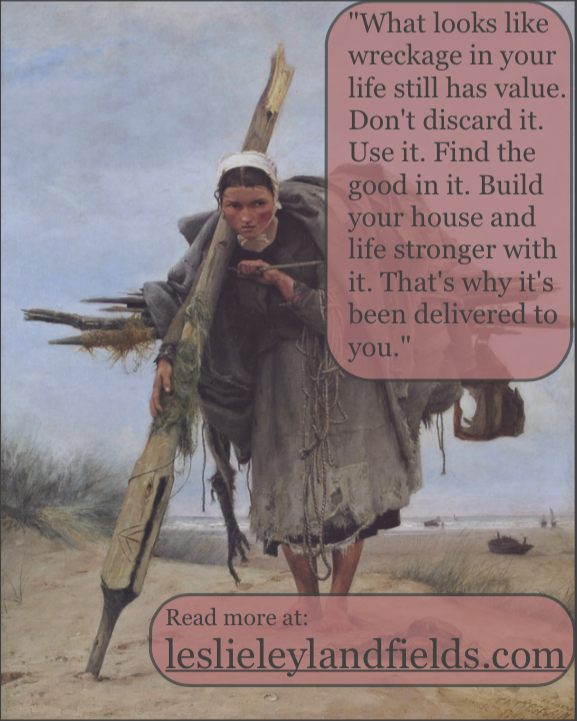
Writers are scavengers like that. Even carrion can look good under our gaze and pen. We value what others don’t. We look for the discarded, the buried, the wounded. Our words take us there. And when we find them, these poor bodies and souls, memories, aunts, accidents, deceits, griefs, we attend with oil and wine. Who knows what might return to life?

Secret #4

Writers are ascetics who care about words (on the page) more than food, more than movies, more than chocolate, more than presidential debates, more than new boots, more than tropical beaches (unless it’s winter and we really do get to go.) Maybe you guessed this. But what you don’t know is: we care about words-on-a-page because we care even more about the writer who lived them, who wrote them in her own spit, sweat, blood and fears. 

Secret #5

Writers are also gluttons. No, not for punishment–for food. We gather with one another, and we get fat. When our words and lives are heard, our lean and lonesome souls rejoice and dig in, scoop deep, and pile high. Because going away means coming home, and being heard and seen deserves at least a fatted calf. (Pass the herbed butter, please.)

Secret #6

Writers retreat from the world but they care about the world more than most. Writing is love-in-action for us. Our words, written in closets, take us deep into the smell of fresh laundry on the line, into the morning sun glinting off our sister’s headstone, remembering the taste of the paste we ate in first grade art class. Our own words lead us to love the world of laundry, dirt and matter better. 

Secret #7

Writers are ignorant. We know we know nothing. We know in the madness of living we’ve missed so much of our own lives, not to mention others’. So we write to recover it. We write to remember… when our mother dropped our dinner on the kitchen floor because she couldn’t believe we won, when our friend with arthritis knit us a purple hat—and we lost it, that day we saw a girl in a pretty flowered dress carry a new toilet seat into the bus station, when we sat beside our dying father and he touched our wrist.

Secret #8

Writers don’t write to tell you what we know, we write to ask you if you care. We don’t have all the answers. Not even close. But we do have lots of questions about this human life we’re all trying to muddle through. And our biggest question is: do you care about this giant existence, and all the glorious and sometimes hideous details of waking up every morning in it? And will you come with me today for a few minutes so we can see and maybe name this thing called “life” together?

Secret #9

Writers know they’re weird. We know we bleed more, watch more, wonder more, stumble more, cry more, listen harder than others around us. We feel weak. We feel different. We feel less-than. We write to find out if this strange affliction can bring good to us and to others.

Secret #10

Writers are audacious. We have no idea when we write if two or twenty or twenty thousand will read our work. But we write anyway. We know some will judge us harshly, even renounce us, for the truths we write. But we write anyway. We know our work will not earn us much or even any money at all. But we write anyway. Against all reason, against all critique, against all loss, we keep setting words down on the page, one after another. The world is birthed new every minute. Someone must take notes!

Maybe it’s okay to be weird.

I know I’m in good company.