The Importance of Dreaming

Ever feel like your writing time has slipped into a series of tasks you are struggling to check off?

1500 hundred words and counting? Check.
Edits? Check.
Social media graphics for the week? Check.
Blog posts written and turned in? Check.
Responded to readers and answered emails? Check.
Laundry, grocery shopping, life things? Maybe check. Kinda.
Maintain sanity? In process.

If we aren’t careful our writing routine turns into a list that can drain our creativity and make us forget why we are writing. I am the queen of time management and boundaries. I have to be in order to prioritize and get things done. But sometimes in the midst of trying to be disciplined and organized, I miss out on the creativity that comes with dreaming. I actually plan time to dream. It’s vitally important to the rest of my list.

Dream a little bigger

Dreaming rejuvenates me.
One of my favorite questions to ask when it comes to writing is “what if.” What if my characters decided to do something totally unexpected? What if my villain surprises everyone? What if I create a setting that puts a unique spin on a scene? What if I created a character that absolutely fascinated my reader? Then how do I do all this?

“What if” is a powerful question, one I don’t ask nearly enough. But when I do, my writing sings more than normal and my creative juices flow.

I also like to story board. I may love words, but I am attracted to powerful visuals. It’s fun to create the scene and cast my characters by scouring the internet for photos that jog my creativity in a greater way. I pin them on a corkboard so that I can see and move them to help craft the story. This helps dream about possibilities. Possibilities are endless in our writing. We just have to seize them.

Dreaming rejuvenates the story.
I like to set a timer and see how many words I can spill on the page before time runs out, but occasionally this depletes my creativity instead of inspiring it. However, when I take time to dream before I start writing, even if I just spend fifteen minutes on a writing prompt, my writing carries a different kind of power and creativity. When I race the timer, my story has quality and quantity. My characters are also deeper and my settings more vivid.

Dreaming rejuvenates the reader.
Letting readers into my brainstorming and dreaming is fun to share with readers. This makes great social media content to excite them and help them invest in the story before they ever hold it in their hands. Inviting them into the dreaming helps them feel like part of the team and part of the journey. If you do this, be prepared to write faster to satisfy their growing curiosity.

Tasks and deadlines are part of writing, but dreaming and enjoying the writing…that’s the most vital part of the journey, for it informs everything else. If you are feeling overwhelmed or stuck, grab a pen and fun notepad, and don’t be afraid to dream a little, darling. I have a feeling you will like the results.

Know Why Not

This post comes from Martha Bolton, author of the author of 87 books, including her newest, Josiah for President. Welcome Martha!

pencil-918449_960_720

It’s just as important to know why you don’t write as it is to know why you do.

You don’t write to get rich. I once had a business card made up as a joke that said, “Have pen, will grovel.” Being a writer is not a fast track to riches. You work long and hard on projects that may or may not ever see the light of day. You’ll find yourself celebrating a $50 cartoon gag sale with as much enthusiasm as you would signing a book contract. It’s nice to receive fair compensation for your work, but a writer should be passionate about his/her craft beyond any monetary gain. If awards and riches come, enjoy them and do some good in the world. But your passion should be in the work. If not, you’ll be tempted to throw in the towel at the first rejection.

You don’t write to get even or compete with others. We’ve all been hurt in life, and even the greats have had to contend with the jealousy of others. Most good writers don’t waste their career on such things. Write what you are meant to write and don’t get sidetracked.

You don’t write to please everyone. You can try, but you’ll only make yourself ill. Write the story that’s burning inside of you. Write for one person, even if that person is yourself. Write it well, but write it. The masses may end up loving your work, but that part is out of your control.

You don’t write to get famous. Few writers are recognized on the street.
For the most part, writing is a “behind the scenes” career. I once saw a book that I had co-written with a famous personality advertised in a catalog. The 20 percent off emblem was placed directly over my name. I had to laugh. But things like that happen all the time in a writing career. So you can’t take yourself too seriously. If you’re writing to stroke your ego, this probably isn’t the career for you. But if writing is what keeps you getting up in the morning and going to your work area, if you’re not seeking riches or fame or anything else other than putting pen to paper, or fingers on the keyboard, and seeing what can happen, then go for it. Who knows, you may end up becoming famous after all. Like I said, that part is out of your control. But I can almost guarantee you will end up fulfilled.

Take Heed!

This month marks the eighth anniversary of my writer’s blog: A Writer’s Way of Seeing. At this time last year, I offered writers advice for the coming year. I was going to offer a new list for 2016, but in reading what I wrote last year, I really think the same advice applies. Also, now that I’m an agent with WordServe Literary, I’ve picked up numerous new readers. So for new readers, and as a refresher for my regular readers, here’s a slightly edited version of last year’s blog called “Take Charge!” Maybe for this year the title should be “Take Heed!” because we’re all a year closer to our real deadline when we no longer will be writing.

new-years-eve-1036513_960_720

As we’re in the opening weeks of 2016 I want to offer my yearly exhortation for the new year. We’re all getting older and time’s a’ wasting, folks. If we want to succeed as writers, we need to take charge of our writing career. In fact, that will be my rally cry for you in 2016: “Take charge of your writing career!”

Here are seven suggestions on how to do that.

  1. Stay prayed up. Presumably by now you’ve confirmed in your own mind that God has called you to be a writer. Part of that calling is, of course, to write. But for a Christian, that’s only half the calling. The other half is knowing what to write. Mostly we find that out through prayer and discerning the needs of readers and our ability to write to those needs. As you pray, ask God to guide you in your writing pursuits. Make that a year-long (life-long, actually) commitment to yourself. If you stay prayed up about your writing, you’ll stay pumped up too.
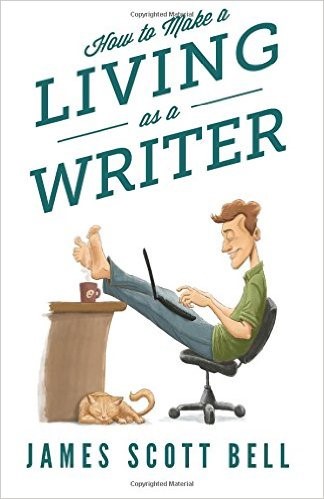
  2. Improve your craft. Each year I urge all of us who write to find a way to keep improving our craft. Take classes, read magazines such as The Writer, Writer’s Digest, and The Christian Communicator.  Join a critique group. Read the blogs of other successful writers, agents, and editors. Write, write, write. Commit to writing at least three (and probably more) drafts of each project, with each draft an improvement from the preceding draft.  Always have a good writing book on hand. I recommend any of James Scott Bell’s books on the writing craft, particularly How to Make a Living As a Writer.
  3. writerWrite out specific goals for each month. Make each goal realistic, but then stick to them. Daily, weekly, and monthly goals are good, but also write out in some detail what you hope to have accomplished by December 31. To stay on track, consider finding a writing accountability partner. Share your writing goals with each other and meet in person or by internet every week or two to encourage one another.
  4. If possible, have two or three projects/proposals/manuscripts in some stage of progress. Perhaps you’re working on just a one-sheet for Project A, while on Project B, you’re at the full proposal stage. Project C might be your work-in-progress—the actual manuscript you’re working on. For a successful writing career, you must always be thinking ahead.
  5. Pick one or two writer’s conferences and plan to attend. If money is a problem start saving now. Come up with creative fund-raising ideas. Perhaps ask your church to chip in with the fees. Most conferences have some scholarship money. See if you qualify or if you can do some conference work in exchange for part of your tuition.
  6. Stay up to date with the publishing world—including self-publishing. Know what the bestsellers are. Know which authors are writing successfully in the same genre in which you write. Read Publisher’s Weekly or Publisher’s Marketplace online. More and more writers are finding their entry into publishing through self-publishing. Sadly, many are making very serious mistakes. Although I encourage self-publishing as an option, I do not recommend it if you’re going to do a poor job of it. Last year at one writer’s conference I picked up a self-published book and found three major errors on the first page, including the misspelling of the name of a famous world leader. Who would buy such a book? Not me.
  7. Work on your platform. I know very few authors who like platform-building. I don’t like it either. I’d much rather just write. But a platform is important. Starting small is fine. Just do what small thing you can do now and build from there. Eat the elephant one bite at a time.

The crucial thing in all this is to keep your commitment red-hot. Rest assured, there will be discouragements, distractions, and even rejections in 2016. That’s life. It’s also another reason to plan ahead and to indeed “take charge of your writing career” in 2016. Start planning now!

For the Love of Writing

Have you ever been around someone who loves Christmas? I can’t quite rival Santa, but I love this season. I love the scent of cider as we decorate the tree and the chaos of Christmas decorations. I love the music, lights, winter clothes, the Christmas parties, and my dad sharing a devotional on Christmas morning. I love time with extended family, laughing and making memories. I love reading the Christmas story and imagining it from the perspective of the people who experienced it. And I love being around people who love Christmas, because their joy is contagious.

It’s the same way with our writing. When we love the story, our readers love it, too. My third book, Surrendered, comes out December 26. It’s the end of a series, the end of an era, the end of a contract, and a beautiful beginning (I hope) to many more stories to come. Under the pressure of deadlines, pursuing a contract, and learning to market, I can forget the joy of this calling. So this month, I’m falling in love with writing again.

Write what you love

Write what you love.

This year, Christmas also comes with a book release. I can’t wait to share Surrendered with readers. I loved crafting the romance that made me swoon, conflict that made me cringe, and action that had me scratching my head to figure out how to rescue them.

Now it’s time to begin again.

I have a couple of different manuscripts going, but I’m also working on one just for me.  A fairy tale. Even if it never sees the light of day, it makes me remember what I loved about my favorite stories as a kid and what I still love about romance, magic, and characters as an adult. The new manuscripts, the ones editors have requested to see are experiencing new life, as well, as I read and remember all that I love about Francine Rivers’s Mark of the Lion series, Karen Kingsbury’s Baxter Family series, and Dee Henderson’s O’Malley series. I look at what other people love about those stories, too. Then I add my own creativity, a new story idea, and something I love is born.

Write because you love it.

It’s taken finishing the Heart of a Warrior series to finally own the fact that I am a hopeless romantic who happens to write romance. But once I fully accepted that, I was able to embrace my new manuscripts in a greater way. I write because I love it, because I have a story to share, because I love bringing a character to life. I love tossing them into trouble and watching them come out shining like gold because they wrestled and emerged victorious. I love writing scenes with courage, heart, and emotion. I write because that’s how God made me. This month, I am writing for the love of the craft and not for the deadline.

Others will love it, too.

It’s important to hole up and remember to write because I love it, to write a heart story, but the beautiful benefit is that even when I close the door to my writing closet and let everything I love and am passionate about spill out on the page, I’m writing something that others will love, too. People connect with emotion, with stories that make them think and dream and imagine. They connect with vulnerability. When I write for me, I  am ultimately writing for them. Out of the overflow of what I have learned as a writer, as a person, as a woman made in the image of Creator God, my experiences, quirks, and imagination pour onto the page and the creativity of the reader is captured.

In this Christmas season, a time of joy and celebration and thanking the God who sent His Son to earth, I’m celebrating in a different way – with the gifts he’s given me. I truly believe when we write what we love because we love it, then others will love it, too.

Writing and Publishing for a Purpose

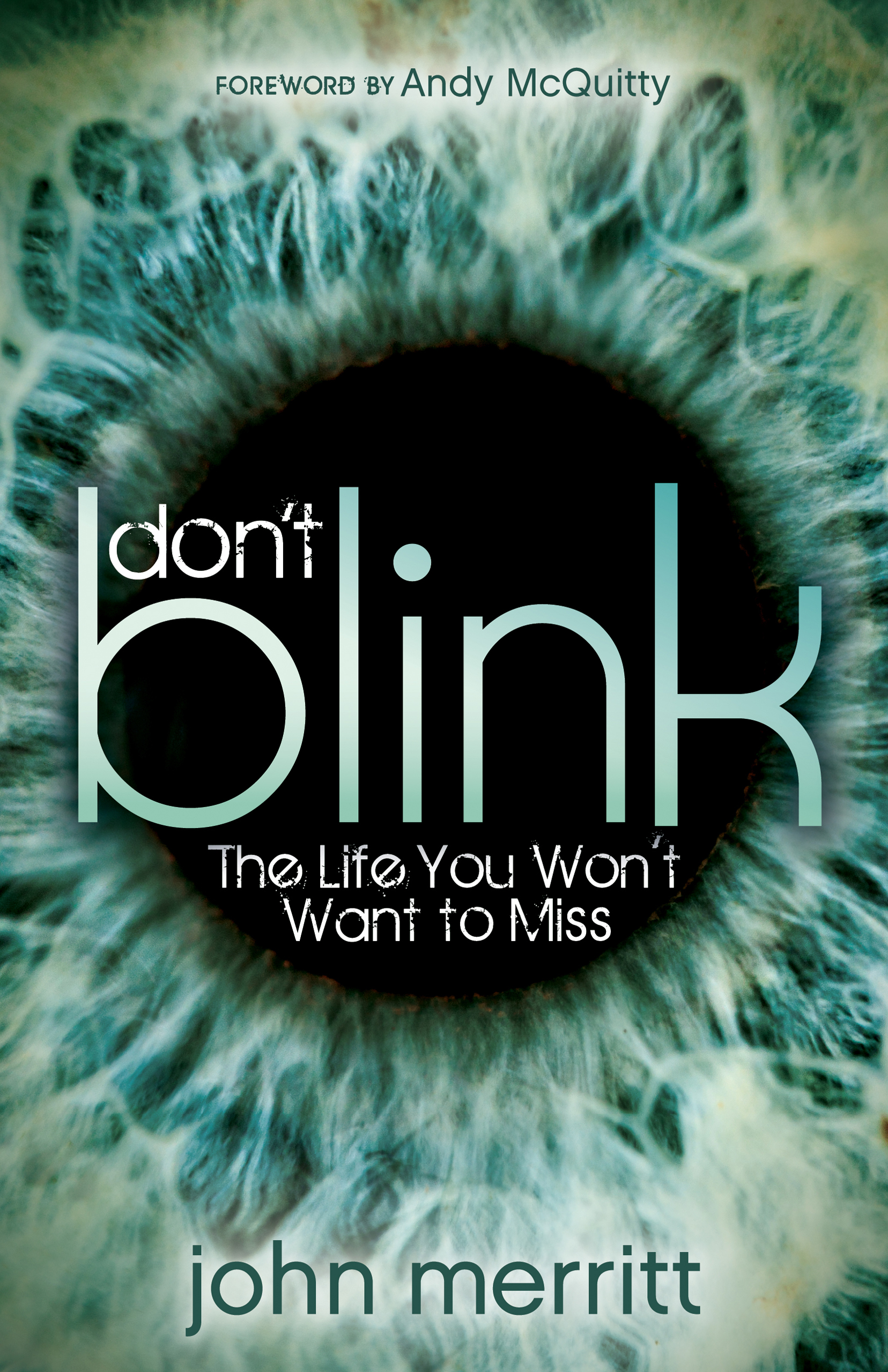
John Merritt: Writing and Publishing for a PurposeYEAH!!! There were times when I never thought my book would actually be on bookstore shelves or available online as it is today! It’s been a long and sometimes arduous journey to get Don’t Blink in print. Now that it is, I hope and pray that God will use this book for the purpose intended—to inspire Christians to live life to the fullest, and as a gift to our non-Christian friends who could use a different perspective on what the Christian life looks like.

It’s been said that there’s a book inside each one of us. And while this is no doubt true, the big question is: Will anybody read it? I wondered that of my own book. And how do you know if people are reading it and benefiting from it? Ah, this is where social media provides some answers.

I’ve been transparent about my lack of passion for social media—especially my own! And yet, I am finding that this is not only where you get honest feedback but also transparent testimony of the effectiveness (or not) of what you are putting out there. In fact, reading some comments about Don’t Blink on the internet has provided confirmation that God is using this in ways that I had hoped and prayed for.

Here’s an example: After reading the first five chapters of your book, I have to say thank you for rekindling my sense of adventure! I have been dreading writing my company mission statement and personal bio, etc, for my website. You reminded me of my passion for life and to just go for it, with Jesus by my side! What could be better? I think I was getting a little stagnant or complacent. What an invigorating breath of Christ-filled air! After reading “Don’t Blink” poolside this hot afternoon, I dove in for a swim and it was GOOD TO BE ALIVE! I plan on purchasing copies for my father and my friends. Thank you!

I’ve been asked why I wrote a book, and responses like this provide the answer. I knew going into this project that 80% of men don’t read books. While my book has both a female and male audience in mind, I wanted men to find the book readable. So each of the 23 chapter starts with a captivating short story followed by a down-to-earth, real-life application. Seems like the book is keeping the short male attention span engaged—and I love that!

To all of you who have read or plan to read Don’t Blink: The Life You Won’t Want to Miss I thank you. And remember, I wrote it with your non-Christian friend in mind—so please share it. Would make a nice gift for someone you care about this holiday season that is almost upon us.

God’s best to you!

John

How to find your best influencers

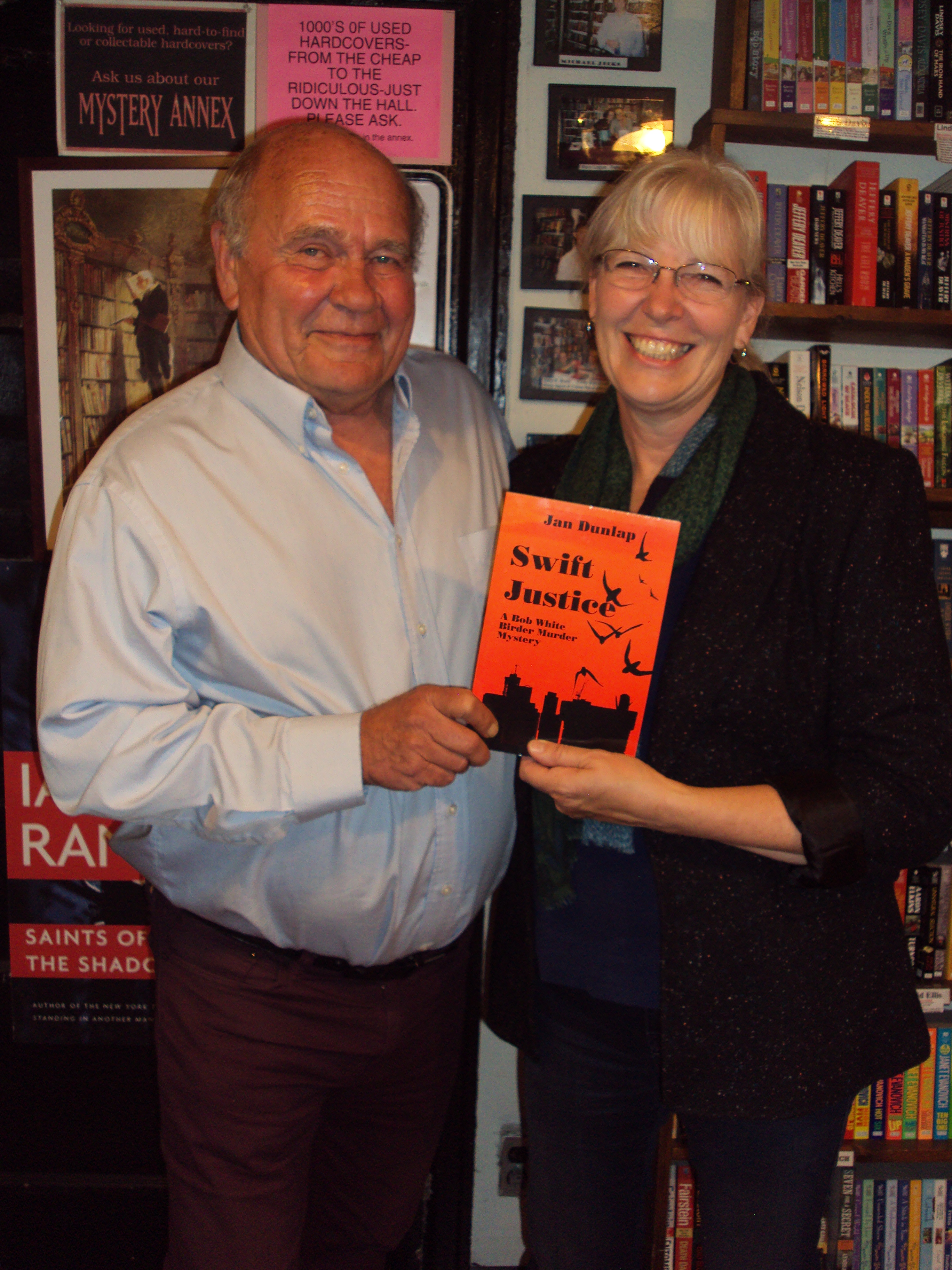
Jan and Ron vertThe longer I’m in the writing business, the more I appreciate the importance of influencers in helping me build my audience and increase sales. What’s tricky for many writers, however, is figuring out just who and where those influencers can be found.

Unfortunately, after eight years and eight books of being a published author, I still don’t have a magic formula for identifying and recruiting those valuable assets for my marketing efforts. All I can offer you is my own experience and insights, so here goes:

  1. It’s great to have known experts or writers give you an endorsement for your book, but unless they are truly excited about your book and independently give it exposure in their own networks, the endorsement is just nice copy for your back cover, and won’t produce momentum in sales. Those experts are busy with their own marketing and projects, and the truth is, they give endorsements widely as a courtesy, rather than out of commitment to your publicity goals.
  2. The best influencers have a stake in your sales. Although my books sell around the world, my strongest sales come from a local gift shop because the store owner enjoys my books so much, she talks them up to customers and regularly features them in store promotional materials. Because of her enthusiasm, I’ve had more press coverage in local media than I could procure by my own efforts and a consistently growing word-of-mouth readership. As an influencer, she’s one of my best!
  3. You need to continually cultivate relationships with potential influencers. This means reaching out via social networking and/or physically traveling to meet people in your field of interest who might find your books of value in their own professional goals. To market my girl-meets-dog memoir, I make a point of connecting with animal rescue groups/animal humane societies online, and when possible, I attend their conferences/events as a vendor. I often give free copies to keynote speakers or other passionate animal lovers I meet, in hopes they will read and enjoy the book so much, they will mention it to others. Yes, this is basically a hit-or-miss method, but so far, I’ve always made a few excellent contacts and found one or two awesome influencers at such events. It’s well worth my time and money to break into a new group of potential reader-buyers.
  4. Connect with bloggers with big audiences in your target market and ask to send them a copy of your book in return for a review. Offer them additional copies to use as giveaways when they publish a review of your book, or whenever they might have a contest going on. Doing this gives you a reach well beyond your own social networks and local geographic area. I’ve met several significant influencers in this way, and they continue to give me promotional value with each new book.

What tips do you have for identifying and recruiting influencers for your marketing efforts?

A Writing and Publishing Journey

So John, tell me about the writing of your book. How long did it take? What did you learn about publishing? What was the most enjoyable and most the difficult part of the process?

Pastor John Merritt, Discover. The Writing Journey

I’ve been asked questions like these numerous times in recent months. And since my first book, Don’t Blink, ready to be released in November (EBook is already available)—I thought I’d share what I loved and what I did not love about becoming an author (things you may consider if you have thoughts of becoming an author yourself).

What I loved: The actual writing of the book that took place during a six month sabbatical. I’ve always enjoyed writing, telling a story and making biblical application out of real life experiences. What I didn’t know was that writing the book was the easy part—let me tell you about the hard part.

Don’t Blink is for procrastinators, dreamers, and would-be adventurers who wish to grab hold of life this day, knowing there are no guarantees about someday. From Alaska to Argentina to the Amazon―in situations ranging from dangerous to humorous―John Merritt takes you on a daring pilgrimage revealing what living in the moment looks like. John demolishes the notion that once you become a Christian your freedoms are gone and your fun is done. Life is an extraordinary adventure elevated to audacious heights when God is leading the charge.

What I didn’t love: The first thing I didn’t love was when I was advised to hire a professional editor who proceeded to get out her electronic red pen and essentially let me know how unaccomplished my writing was. In the end I was thankful for her coaching because the result was her finally telling me, “John, you’ve found your writers voice.” But that required many tedious rewrites that took longer than the initial draft.

A second thing I didn’t love was the realization that unless I was able to find an agent willing to represent my project I had no chance of getting a publishing house to even consider my work. Finding Alice Crider (then with WordServe, now with Cook) was a God-send and was not easy. (Note: Because of the difficulty in getting an agent to represent you, self-publishing is sometimes your best option.)

A third thing I didn’t love is the months it took for my agent to find a publisher who was interested in my book (took an entire year). There are many reasons why a publisher says no to a writer but the main one is market share. Publishers are in the business of selling books, and if you are not able to prove that you have a large audience who will buy lots of books, it really doesn’t matter how good your content is.

A final thing I don’t love is all the marketing of the book I must personally do because no one else is going to do it (not even most publishers these days). Because I’m not good at social media I’ve employed a person who I’m greatly indebted to (Leah Apineru with Impact Author Services, Colorado Springs) who built and maintains my website and posts my blogs. But I’ve always hated self-promotion and leaning on my friends to get the word out—sorry!

Why I wrote it: Given that being a published author is much more difficult than I ever imagined, why did I hang in there and spend lots of my own dollars in order to get my book out there? Simply because I think it will help Christians like yourself discover that God has an adventure designed just for you that will elevate your life each day. And what elevates the purpose of the book for me is if people like yourself find the book to be a good one to pass along to your non-Christian friends who could use a different perspective of the Christian life. If the publishing of “Don’t Blink” results in spiritual explorers becoming followers of Jesus then all that I didn’t love about publishing will be worth it!

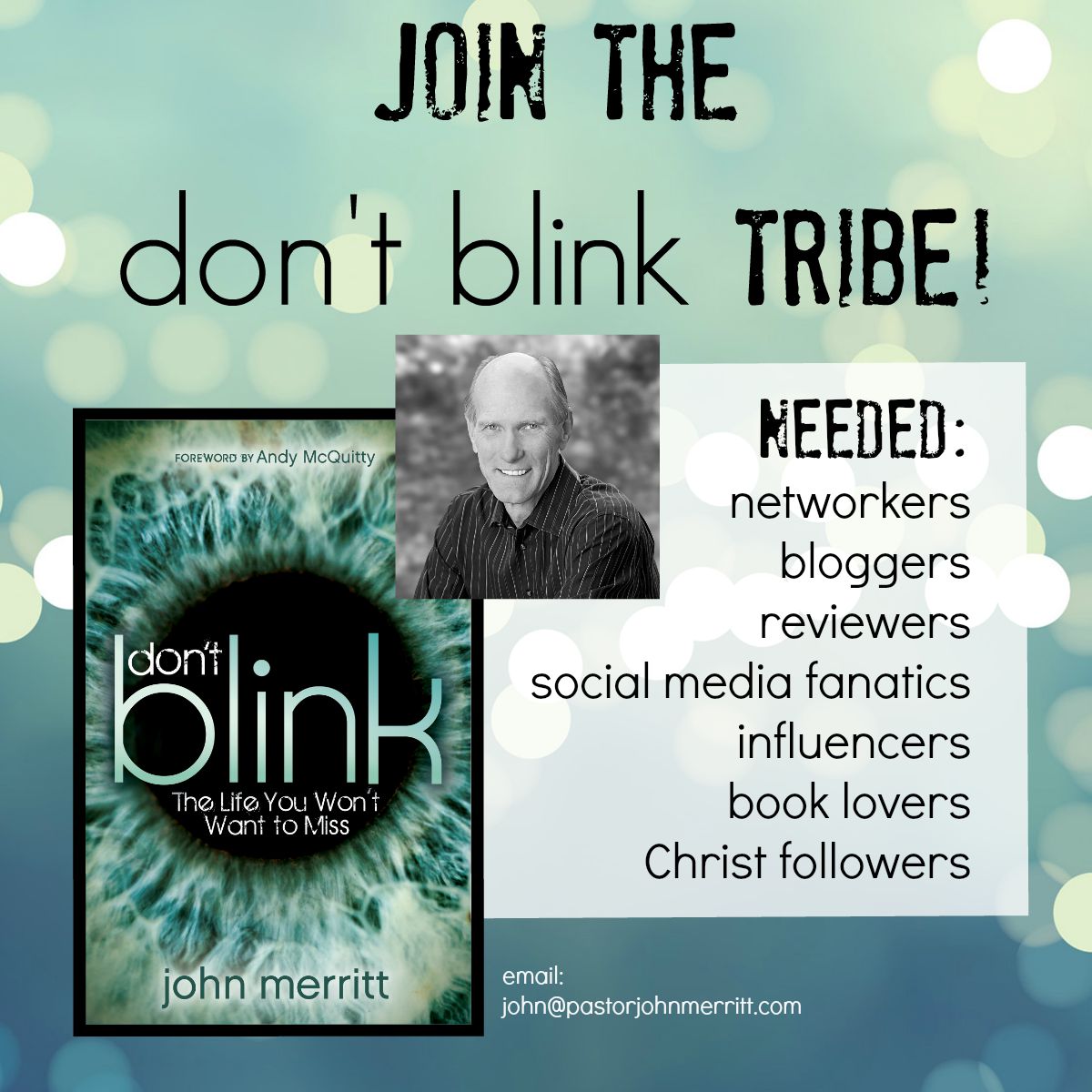
John Merritt's Don't Blink TribeToward that end, I’m looking for friends who share that same passion and will help me by reading the book and then sharing it with your friends and family members. Currently Don’t Blink is available in EBook form through Amazon, Kindle, iBookstore and Barnes & Noble Nook. The paperback is due to be released November 10 and you can pre-order a book now. If you would like to learn more about joining the tribe, email: impactauthor@comcast.net.

Please connect with me on Facebook
Google+
Twitter

Thanks everyone!
John


An Interview with Best-Selling, Christy-Award Winning & Wordserve Author, Marcus Brotherton

Marcus-Brotherton-Feast-For-ThievesAs interviewed by James Shupp, Author of “Who Killed My Church?”

What prepared you to be a writer?

My father was a minister and my mother was a journalist. So I grew up in a world filled with “thoughts about God,” writing, and books. I always loved putting my thoughts on paper and expressing myself through the written word. Then in college and graduate school, I studied theology and journalism. After graduation, I spent eight years as a youth minister and then made a fairly sharp career switch to work for a newspaper. It wasn’t very glamorous work. I was a general assignment reporter and wrote about everything from school bus strikes to murders to the new pastor in town—a smattering of community life. As a journalist, you learn how to parachute into the middle of a situation, ask the right questions, and write fearlessly. I had to write and edit a thousand words a day. In that situation, you can’t sit around waiting for inspiration or allow yourself to suffer through writer’s block. You just have to do it. It was a great training ground.

You began writing non-fiction. What was it like to enter the world of fiction?

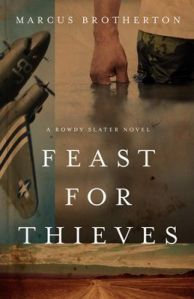
I found the process of writing a novel to be much more difficult. It took longer. You have to write well and string sentences together in a way that helps the story flow. You also have to create the story world and answer these questions: Who are these people? Where do they live? Why are they there? Who are they interacting with? What do they talk like? What do they do with their free time? In a novel, you have to create the structure of a book. You need to know how to build action sequences and bring them to a sense of resolution and relief. I finally got smart along the way and began reading “How To” books. For three years, I read everything I could on the subject. After throwing away my first three novels, I wrote Feast for Thieves. From start to finish, it was a ten-year process.

How does a storyline present itself?412130
First comes the idea, then it’s a combination of mathematical outlining and imaginary mind play. I had always begun with an outline for my non-fiction books. But with fiction, I just wanted to sit down and be free to enter a state of right brain immersion. In Feast for Thieves, I finally resorted to outlining, which proved to be really great. It gave me a sense of where the story was going and provided the big picture. So if I wanted or needed to change something, I didn’t have to rewrite the whole story. It can be disheartening to throw away large chunks of your story, but with outlining that doesn’t happen much. Therefore, you save a lot of emotional energy working this way.

How do you connect emotions with your characters?

It begins with the process of immersing yourself in the characters. I ask myself the questions: If I was this person, what would he say? How would she respond? What emotion is he feeling? Can I picture a time in my own life when I felt that same emotion? How did I respond? So at the end of any day, it’s a real rollercoaster. You’re feeling happy, scared, sad, apprehensive, even rage—all the strong emotions that you connected with while writing.

How do you power through frustration as a writer?

Frustration can derail you. I think it’s okay to be in that state for a time. Sometimes you come to the end of a project, and it doesn’t work out for you. Then you sit for a while, not knowing what’s next. Some people have five- and ten-year plans. That’s never worked for me. I believe what gets you through the frustration as a Christian writer is finding the answer to the question, “What is the Lord telling you to do?” It’s being content in the angst or the not knowing or in the question. The question is part of the journey.

What is the role of self-esteem in writing?

Here’s a tweetable: “Writing is a performing art with all the insecurities that go along with that.” Once you publish a book and get it out there, that’s your permanent record and it follows you around for the rest of your life. In these days of instant Amazon critiques, everyone’s a critic. People can be every combination of very gracious to very ruthless, particularly if they disagree with you, which does happen. When a critic nails you, you always have to ask yourself the hard questions: “Is any part of this criticism valid?” “Can I learn anything of value from this critique?”

Hemingway talked about handling negative reviews. He compared it to sitting in a winter cabin next to a crackling fire in the woods. In the distance, you hear the howling of wolves. The satisfaction is in knowing that you’re safe. You have published, and that’s something that the wolves don’t have.

What fears or insecurities do writers deal with?

I think every writer wonders, “Do I really belong here?” This is not a profession where people hold the door open for you and say, “Welcome.” This is a profession where all the doors are closed and you have to knock quite loudly and long just to enter. When you finally walk through the door—into that party—it’s hard to believe you’ve made it. A sense of humility with your readers about this is a good thing. Sometimes people classify me as a military historian, simply because I’ve written so many books about the soldiers of WWII. But I’m always quick to point out that I’m not a historian. I didn’t train to be one, and I have a high degree of respect for those who did. I’m a journalist and a storyteller. That’s the party I want to be invited to.

How did you come up with the title, Feast for Thieves?

At one point, we had about two hundred options on the table. I chose this one as a layered title. This first layer comes from the Book of Isaiah where the prophet talks about how salvation is a feast—a wonderful bounty. “Come and dine” is the message of Chapter 55. The second layer of my title originates from the crucifixion. When Jesus was crucified on the cross, He hung between two thieves. I love how He offered this same feast to both—a feast of mercy, grace, peace, love, and joy. One accepted the Lord’s offer, and this is what I call, “The first feast for thieves.” The good news is that this feast is still available for us today. It’s a lavish banquet. The table is spread with great food, and the feast is still free.

Did the characters in Feast for Thieves become real to you?

I felt in the process of writing “Feast” that my imaginary characters became friends of mine. It’s like when you read a really good book and come to the end, you’re kind of sad. Because you know that the story doesn’t continue for these people. In my book, I wanted to have more adventures with my characters, but I knew this particular story was finished.

When you won the Christy Award, what went through your mind?

It was great. I didn’t come here expecting to win. I’m just honored to be at the party. One thought, however, really sums up this whole experience for me. In the writing industry, you hear so many “nos.” In fact, you get used to hearing the word, No! This happens over and over again, and you have to learn how to power through. You have to keep going and remain optimistic. Last night I heard a “yes.” It’s a strange and unusual word to hear in the writing industry, and yet, what a great sound to hear. Finally, at last, “Yes!” But you don’t want to get too used to it, because the next day you have to go back to the canvas and start painting all over again.

Who was the first person you texted, tweeted, or emailed after you won?

I texted a picture to my wife and kids. They were all happy. Also, we have some great friends that I texted. One is our prayer warrior support who had been praying for this moment. My dad and other family members who live in Canada were following online. They let out a cheer and sent me an email. This morning I had breakfast with my college journalism professor from twenty-five years ago. I didn’t know he was here, but it was great to reconnect and reminisce about the journey.

As a journalist, if you interviewed yourself, what would be the angle of the story?

I think it’s interesting that a guy who used to be in the ministry is now a writer. Frederick Buechner talked about how he was a preacher/writer. He wanted to communicate “thoughts of God” to a receptive audience through the vehicle of writing. I want to communicate the ministry of Jesus Christ through the art of writing. That’s my calling.


Do You Want to Change The World?

signing declarationWriters can be agents of social change.

I was reminded of that truth after hearing a keynote address at a conference for animal humane workers. The speaker, Amy Mills, CEO of Emancipet, discussed the importance of social change to transform communities in order to improve our treatment of animals. But her words could also be applied to what traits writers need to cultivate to do their job well; in fact, I felt that Amy’s characteristics of social change makers accurately described many of the writers I know. Here are Amy’s six key traits; do you see yourself in any of them?

Social change makers:

  1. Collaborate across sectors. In my own writing, be it the fiction of the Birder Murder Mysteries or my best-selling memoir Saved by Gracie, I draw from many fields of expertise. My sources are birders, dog owners, psychologists, trainers, sociologists, scientific researchers, conservationists, biologists and historians, to name just a few. To be effective, writing has to draw from the world of knowledge.
  2. Are inclusive. Writers want their message to reach wide audiences. To do that, we keep an open mind about who might benefit from our work, and we rejoice when a new market presents itself as one that we might engage productively.
  3. Build empathy. For any piece of writing to succeed, it has to appeal to the heart of the reader. Having something meaningful to share is the first step of the writing process.
  4. Choose curiosity over judgment. The best writers try to see the world with fresh eyes to uncover what is true. Judgment can shut down avenues of investigation that might just lead to new revelations that will transform myself and my readers.
  5. Check assumptions. Writers make careers out of questioning assumptions. Sometimes, we even turn them upside down in the course of our creative process and/or production. The result is new perspectives and new ideas that can often improve readers’ personal or public lives.
  6. Learn from those they serve. Whether it’s hearing about new conservation efforts to protect bird habitat, or effective approaches to increasing animal adoption, or the need for more transparency about mental illness, every bit of research I’ve done for my books has not only taught me more about the world and the people and creatures in it, but how I myself can better connect with and serve my readers by passing along what I have learned. On a regular basis, I hear from readers about the ways my writing has affected them, and it guides me as I plan my next project. Without that feedback, my writing lacks focus, not to mention effectiveness.

Given these shared characteristics of writers and social change makers, I find myself considering my own work as a potential agent for change in the world; I won’t be the first author to do so, nor the last. “The pen is mightier than the sword,” may have come from the pen of English author Edward Bulwer-Lytton in 1839, but it expresses a timeless truth.

What will your pen accomplish today?  

Finding Your Voice

find your unique voiceAbout ten years ago, I started thinking about publishing a book. After writing my way through twenty years of various marketing and development ventures, telling many wonderful stories of others along the way, every now and then I’d start to think I had something to say. My own story to tell.

The problem was, I didn’t know how to say it. I’d spent all those years adapting to the voice of others, setting aside my own ideas, submerging myself in a particular client’s mindset and style in order to honor their voice and tell their story well.

Somewhere along the way I lost my voice.

I started second guessing what I should sound like, who I should be. Eventually I shaped this ridiculous concept (based on the comparison and envy of other folks) of what I should be, what I should sound like. And that image, that false representation of me, is the one I carried to the outside world.

Now trying to share my own story, I imagined I needed to mimic somehow those popular writers who had scores of people following them. So I tried hard to fit in, to sound like I should. But my words leaked out flat and predictable with this stiff journalistic bent.

Because that’s the sort of thing that happens when you silence your authentic self.

Thankfully since those days I’ve learned a lot about finding my voice. I’ve learned to trust my uniqueness as this is the very thing that makes me me. This unique combination of my quirks and passions, my own style and feelings and beliefs, these are the very things that set my words apart from the millions being shared daily.

I don’t know that I can pin the discovery of my voice on one particular experience, and I don’t dare suggest there’s a magic formula that suits us all. But I would love to share three of the things I’m learning along the way in the hopes they may somehow encourage you.


1. Be an original.

When we lack confidence it feels easier to imitate others, but its flat hard to pretend to be something we’re not.

So wherever you are, whatever you are writing or thinking about writing, I’ll encourage you to confront any false voices that try to convince you that you have to have it together out of the gate. Because you don’t.

Take this moment and give yourself permission to no longer compare or pretend or perform.

Then, take a deep breath and commit this day to start relaxing into your unique you. Practice, practice, practice being yourself; your true voice will eventually emerge.

 2. Value your life experiences.

Perhaps, like me, you’ve walked some hard days. Maybe you’ve faced a loss, an illness, or a dysfunctional relationship? Maybe it was a crisis of faith or a dire financial situation? Whatever it was, I bet it was dark and lonely and didn’t make a bit of sense.

Here’s the thing: we can’t be afraid to say what it was like in the dark.

These life experiences often act as a catalyst, gifting us the ability to reimagine these hard days in a way others can relate to them. While we might not be able to change the way it was there in the dark, we can change the story we tell ourselves (and others) about those days.

As dark as it was, your journey to the other side holds the potential to stir a fresh hope for the person still stuck.

 3. Take risks.

I’ve never been naturally courageous, but I have learned this: if I want to make a difference in this world, there are times I’m going to have to be brave.

Sharing your heart will feel risky (because it is), but an unhealthy caution will stall your voice.

Too often we don’t realize how very close we are to finding our voices.

Give your voice the room it needs to grow. Explore, pursue, and practice until your true voice becomes your natural default.

Be an original, take risks, and don’t be afraid to dream big.

Your voice is a unique and unforgettable mixture of your own personal style, perspective, and message. Surrender to it. Shape it as needed, yes, but don’t be afraid to share it.

Going Deeper: Where are you in your journey to find and use your voice? Share your thoughts and observations in the comments below.

Want more? Click here for a free 10 Tips for Finding Your Voice printable.