Writing a Trilogy

For those of you starting on your writing journey—there are two realms of publishing. The ABA (the American Booksellers Association) and the CBA (the Christian Booksellers Association.) The ABA publishes what would be considered secular novels and the CBA publishes Christian or “inspirational” books. Publishers generally fall under one of these two categories.

Book #1 Bloodline Trilogy

CBA publishers like trilogies. And there is good reason for this. If you can hook a reader on one, they’ll likely buy the rest. There is an inherent marketing value to producing a series. I’ve not quite seen this trilogy trend in the ABA though there are beloved characters (James Patterson’s Alex Cross, Lee Child’s Jack Reacher, and Sue Grafton’s Kinsey Millhone to name a few) that monopolize more than a few books but are not quite designed as self-enclosed three-book sets.

When Proof was first contracted, it was proposed as a trilogy. The publisher didn’t like the first proposed sequels and asked for different plot lines in the subsequent titles, which I provided. Even after that, they still contracted only the first. In a twist and turn of God fingerprinted events, they ended up contracting the trilogy a few months after the initial offer.

Book #2 Bloodline Trilogy

However, having not ever written a trilogy, there are a few things I would do now when planning a series that I thought could benefit future trilogy authors.

  1. Each book stands alone but should be connected to the others: It’s nice for readers if they don’t have to read one book to understand the others but is also nice if certain characters/themes carry through all the books for those sticking with you. This can be challenging because a little information will have to be given (in a creative way) to readers to both clue them in to the previous story(ies) and also serve as a nice reminder to those picking up the next book who may have read the others—considering books release six to twelve months apart.
  2. Book #3 Bloodline Trilogy
    Book #3 Bloodline Trilogy

    Timelines are important: I know—this should have been uber-obvious to me, right? But consider some things that can seriously mess up your timeline—like characters getting pregnant. You have to then backtrack to the time of conception and make sure all story plots support it. Add to that a hostage story (Poison) that deals with younger children that then need to be aged seven years, and a teen pregnancy (yes, I did all of this!) and it can be challenging to make sure all events line up. Graphing out the timeline is a seriously good idea. And then keep it to refer back to until the book is actually in print.

  3. Avoid absolute characterizations: In Proofone character commented that another one never sweats (and it was a blazing hot day and he was in SWAT gear.) It was more to relay how calm the man was under pressure. Well, in Poison, my editor reminded me how often this character was now sweating and how I said in book #1 that he never did. It’s just like a test—never, all, and always are not good picks or preludes to character traits.
  4. Provide a circular moment for the reader: What is a circular moment? It’s something (an event, an emotion) that happens in the beginning that is revisited at the end of the novel that shows how the character has changed. For instance, in Proof, the lead detective, Nathan Long, carries a list of “unforgivables”—acts that he literally writes out that he can’t get over emotionally. There is some forgiveness for Nathan at the end of the first book but it ultimately doesn’t fully happen until the end of Peril, the third book in the series. So each book needs a moment like this as well as the series.

What about you? Do you have tips for planning a trilogy?

Goals?!?

NewYearDayIt’s that time of year where we set goals to make up for the mistakes we made the previous year grow as people. Isn’t that really what New Year’s resolutions are all about? Giving up some of those vices (like eating too much chocolate) for better health or starting down a path toward a dream we’ve held maybe too privately close because speaking it out load would actually mean we would need to do something about it.

Hmm . . .

I have to confess . . . I do make New Year’s resolutions every year. I can’t say that I’m all that good working on them but I still try. Maybe less than doing a New Year’s resolution, I believe in goal setting. I think it keeps us active in this life to be shooting for something . . . whatever it might be in your world. But I’ve learned some things along the way about setting goals that might help you achieve your goal(s) this coming year.

1. Have an overall dream (I’m going to finish my novel!) but then set smaller goals along the path.

For YEARS, I said I was going to finish my book but until I sat down and divided up that elephant into smaller achievable steps, it didn’t happen. What would get you there? Sometimes it’s hard to know HOW to actually do the work of finishing a novel so here’s what I’ve found and I’m not a super-speedy novelist.

Writing 1,000 words a day (when I’m not doing a 12 hour nursing shift) is fairly easy. Writing 2,000 words a day is my general maximum before my brain starts to meltdown. This word count should happen in about three hours (if you stay off social media and generally know what you’re going to write about.) Aim to write 20,000 words/month. Really, that’s just 10 days staying completely on task and getting 2,000 words on the page. Four months of JUST doing 10 days of 2,000 word counts and you have a first draft! Don’t edit yourself. Just get the words on the page. You can’t edit an empty page. And now you have an 80,000 word NYT Bestseller document that will need a lot of work–but you DID IT!

2. Make the goal realistic for you and your life.

I’ve been working out with a personal trainer for a couple of years. I needed to lose some weight (a lot!) and knew I needed the accountability of another person to help me do it. I am almost to my goal and my trainer would like a much faster process than me. He set a CRAZY weight loss goal for December (hello, Christmas cookies) and in my mind I said, it’s not going to happen. And so, it didn’t happen. I did, though, achieve the smaller goal I set for myself. If what I outlined above makes your eyeballs glaze over, cut it in half or one quarter but just get started.

3. Have an accountability person.

It really does help. I’m not talking about a critique partner though those are good, too. What you need is just someone in your corner (thanks, Casey!) who will keep tabs on you and your goal. Send you an e-mail to ask if you’re making progress. Celebrate your victories by posting lots of these (!!!!!!!!!!!!!!) on Facebook.

4. Don’t give up.

I was a person who used to give up easily. If I ate bad one day, the whole month could be shot. Everyone has bad days and doesn’t meet their goals. My trainer confessed to me just today about eating handfuls of chocolate covered raisins, pizza AND french fries which made me a little too joyful inside BUT he’s already back in the gym. When you fall off the path . . . the next day . . . sit back down and get back to it. Life happens but don’t let it run you over.

5. CELEBRATE!

As you’re traveling down whatever goal path you’ve set for 2013, celebrate the small achievements (making that monthly word count goal) and the big achievement (Yes, I DID finish that novel!) with lots of chocolate and responsible drinking exercise and then do it again.

Set another goal.

So, what about you? What’s one goal, writing or otherwise, that you have for 2013? How are you going to achieve it?

WordServe News: December 2012

Exciting things have been happening at WordServe Literary!

As the year comes to a close, we’re so very grateful that WordServe Authors released 83 books in 2012, and signed 80 book contracts for nearly 119 books to release off in the future.

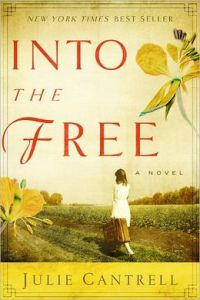
IntotheFreeJulie Cantrell had the agency’s first New York Times Bestseller in many years with her book Into the Free. It also garnered a starred review in Publisher’s Weekly. A rarity.

We had several books climb over the 100,000 copy mark:

* The Secret Holocaust Diaries of Nonna Bannister, written by Denise George and Carolyn Tomlin (Tyndale)

* The Devil in Pew Seven by Rebecca Alonzo, with James Pence (Tyndale)

* My Flight to Heaven by Dale Black (Bethany)

* Edge of Apocalypse by Tim LaHaye and Craig Parshall (Zondervan)

* Linspired (adult and YA book together) by Mike Yorkey (Zondervan)

And we’ve had several authors show up on national shows:

* Rebecca Alonzo on Dr. Phil (twice)

* Lauren Scruggs appeared on several shows in November at the launch of her book, Still Lolo.

These WordServe authors signed their FIRST BOOK CONTRACT in 2012:

* Anita Agers-Brooks (Leafwood)
* Leigh Ann Bryant (Authentic)
* Deb DeArmond (Leafwood)
* Rebecca DiMarino (Revell)
* Jan Drexler (Love Inspired)
* Michael Hidalgo (IVP)
* Heather James (Kregel)
* Amanda Jenkins (Tyndale)
* Caesar Kalinowski (Zondervan)
* Heather Larson, with David and Claudia Arp (Bethany)
* Tracie Miles (Leafwood)
* Jerry and Caroly Parr (Tyndale)
* Christina Powell (IVP)
* Rachel Randolph, with Becky Johnson (Zondervan)
* Tina Samples (Kregel)
* Lauren Scruggs (Tyndale)
* Amy Sorrels (David C. Cook)
* Mandy Stewarad (David C. Cook)
* Janalyn Voigt (Harbourlight)
* Jeremy & Jennifer Williams (Thomas Nelson)
* Tricia Williford (WaterBrook)

These WordServe authors had their FIRST BOOKS published through a traditional publishing house:

* Julie Cantrell, Into the Free (David C. Cook)
* Arnie Cole, Unstuck (Bethany)
* Katie Ganshert, Wildflowers from Winter (WaterBrook)
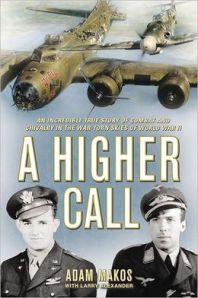
* Adam Makos, A Higher Call (Berkley Caliber)
* Jay Pathak/Dave Runyon, The Art of Neighboring (Baker)
* Zeke Pipher, Man on the Run (Howard)
* Lauren Scrubbs, Still Lolo (Tyndale)
* Helen Shores and Barbara Shores Lee, The Gentle Giant of Dynamite Hill (Zondervan)
* Jordyn Redwood, Proof (Kregel)

So all in all, we had lots to celebrate!

New January Releases

WhatJesusSteve Addison, What Jesus Started.

******************************************************************************************
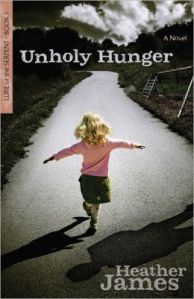
UnholyHungerHeather James, Unholy Hunger, her debut novel!

******************************************************************************************

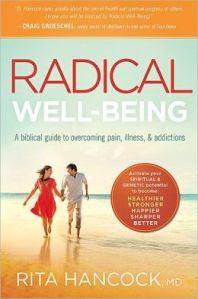
RadicalDr. Rita Hancock, Radical Well Being

******************************************************************************************
AHigherCallAdam Makos, A Higher Call

******************************************************************************************
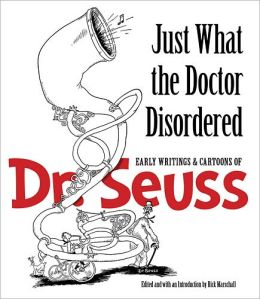
JustWhatDoctorRick Marschall, Just What the Doctor Disordered

******************************************************************************************
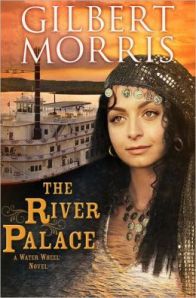
TheRiverGilbert Morris, The River Palace

******************************************************************************************
DilemmaOlivia Newport, The Dilemma of Charlotte Farrow

******************************************************************************************
GreatStoriesJoe Wheeler, Great Stories Remembered #1, audio (eChristian)

******************************************************************************************
StinkyJoe Wheeler, Stinky: The Skunk Who Wouldn’t Leave (Pacific Press)

******************************************************************************************

New WordServe Clients

Several new clients have joined the WordServe stable with Alice Crider as their point person, but we’ll report more on that next month.

New Contracts

Christina Powell signed with Intervarsity Press (IVP) for her first book. The book is tentatively titled Question your Doubts. It explores the many roots of doubt experienced by both believers and nonbelievers, providing a corresponding response of faith from the rare perspective of a Harvard-trained research scientist who is also an ordained minister. (SF)

What can we help you celebrate?

One Hundred Thirty-Eight Points and Bestseller Lists

Have you, like me, been intrigued by the story of Jack Taylor, the Grinnell College basketball player that scored one hundred thirty-eight points in one game? It was so striking that it even caught the attention of some NBA players . . . Kobe Bryant being one.

However, upon looking closer, one realizes that perhaps the performance wasn’t so stellar after all. The team supported his effort to complete this task by letting him rest during defense and setting him up for most of the shots. Evidently, the coach of this team has a “system” designed to get a few of his players record-breaking scoring runs. If you read the link, please forgive the two swear words in the first paragraph, but it was the most detailed analysis of this particular basketball game and why Jack Taylor prehaps broke the record.

Does a coordinated team effort take away Jack’s achievement or not? Hmm….

Jack’s effort (and that of his teammates to get him recognized in that fashion) reminded me of a current marketing strategy that some authors are using to get their titles on the bestseller lists and that basically is composed of narrowing your tribe’s purchases to one week so that the spike in sales causes it to rise on said lists. I have known several authors to employ this strategy–usually coupled with giving away a lot of free stuff. The most notable would be Michael Hyatt, former CEO of Thomas Nelson Publishing.

My question for you fellow wordsmith journeyers: does this make a true bestseller?

First, what makes a novel a bestseller? In my research, these things were mentioned.
1. Good Book
2. Favorable Press (Oprah helps . . . just a little.)
3. Word of Mouth (The purpose of your tribe.)
4. The Subject Matter
5. The Title
6. Marketing Campaign
7. Power of the Internet

But, as this article (though long, it is well worth the read) also outlines, a bestseller happens basically two ways:
1. Selling many copies in a week
2. Selling steadily over months and years though maybe not ending up on any lists

So I wonder, will people begin to scoff at claims of bestseller status from an author employing this strategy? What if their book hits a bestseller list for one week but rapidly falls off and is never seen there again? Or, is it merely good business sense? Here is one blog post that outlines a similar strategy using the Kindle Direct Publishing system and offering the book for free.

My guess is, we’ll begin to take a look at how long the book was on the list. Being briefly on an Amazon top 100 list may become meaningless. Some already say that rising on an Amazon list (particularly the 100 free list) does not a bestseller make even if the author claims that status.

If the buying habits of your tribe can be manipulated strictly for the purpose of tightening sales into a one week period . . . is the novel really a bestseller? And let me claim here and now that I’m not saying I may never try this.

I’m curious to hear your thoughts. What do you think of this marketing strategy? Does it make a novel a true bestseller?

What is “Good Enough”?

just got back from the American Christian Fiction Writers (ACFW) conference in Dallas. This is an annual event and is the largest gathering of Christian fiction writers anywhere. Close to seven hundred (that’s right– a reverse 007!) writers attended. I know because my good friend’s name ends with a Zw, and she was 688/688.

Amazing.

While there, I attended a talk given by a MAJOR Christian publisher about a relatively large survey they did on Christian fiction readers. Don’t quote me, but the survey included over 200,000 participants and focus groups were conducted in three large cities. Just to say a lot of people participated–not just me and Grandpa Joe.

Since many of you may be salivating over some of those results, I’ll share a few here. The largest categories selling are: #1 Amish (shouldn’t be a surprise, just look at any CBD catalog and they are leading by 5-10 pages), #2 Mystery/Suspense/Thriller (my eyes glazed over with excitement right here!) ,and #3 Historical Romance. The romance categories were split among three genres: Contemporary Romance, Historical Romance, and Romantic Suspense so if all three were lumped together, the romance category may have had a higher overall percentage.

They asked “what would you like to see more of in Christian Fiction?” and the intriguing answer there was gritty is okay. Not everything needs to be wrapped up in a pretty bow at the end. Dangling questions are okay.

What surprised me was when one of the presenters said, “Should we move away from highly curated content to just good enough content?”

To be honest that floored me–in a bad way.

What is the purpose of a traditional publishing house? Some say they are gatekeepers. I like to view them more as museum curators. What is the benefit of having a museum curator? It’s so that my seven-year-old’s finger art isn’t next to Rembrandt. That when you pay your money, in the form of a museum ticket or as a book on the shelf, you know someone somewhere who gets exposed to LOTS of art and books picked the very best ones. And you’ll be getting your money’s worth.

Are there some self-published authors who are putting out high quality novels? Yes, absolutely. Are they the majority? No. If we are honest, they are not.

Can you buy a horrible, traditionally published novel? Yes, but it should be edited to near perfection. That’s the other part you pay for.

Proof, my debut medical thriller, went through four rounds of edits. Are there typos–yes. But I can guarantee there are fewer in the whole novel than in the first chapter of a few self-published novels I’ve started to read.

What disturbs me is when a curator/publisher says perhaps we don’t need as many editing runs. Perhaps “good enough” is okay for the masses. They won’t notice the difference anyway. Those are my words–not hers.

But isn’t that the implication? There are so many “so-so” things out there that we really don’t need to be consumed with quality anymore?

To me the quality of the editing is the one thing differentiating traditional and self-published books in many cases. So, if that’s gone, the strive to put the best product out there–what will be the difference then?

Will traditional publishers actually place the last nail in their own coffin if they adopt such an attitude?

What do you think? If you’re published, do you think there are too many editing rounds? Would fewer be better? How should traditional publishers continue to offer value in ways other than editing?

Guest Blogging and Guest Hosting

Marketing Your Debut Novel Part IV

I’ve been doing a series on marketing your debut novel. You can find Part I, Part II and Part III here by clicking the links.

Briefly, Part I focused on growing your tribe/social media, Part II was about the comparable books section of your book proposal, and Part III was about the audience section of the book proposal. These all focused on one particular area of the writer’s life–the pre-contract phase.

Let’s depart that phase and begin concentrating on the next phase– the contract submission phase. I’m going to define this part of the writer’s life as the time you or your agent are submitting your book proposal but haven’t yet signed a contract.

You may think…there’s marketing to be done during this phase? Yes, absolutely. For me, this phase lasted from December 2009 to April 2011–almost 18 months! Definitely too much time to be sitting idle.

One thing you can be doing during this phase is hosting other authors/experts on your blog and guest blogging on others’ blogs that support your brand. This will lend to your credibility and should also help internet search engines highlight sites with your name. The more sites, the more opportunities for people to find you and the more exposure you have to people who may not have discovered you yet.

My primary blog, Redwood’s Medical Edge, deals with writing medically authentic fiction. This supports my overall suspense brand because I discuss ways to injure, maim, and kill fictional characters.

To help grow my blog and support my brand (therefore exposing Proof to more potential buyers), I began looking for opportunities to guest blog and looked for other authors to host.

For example, I wrote pieces for other blogs that dealt with strategies an author could use for medical research, common medical mistakes in fiction writing, and even offered real medical advice to parents over at Christian Mama’s Guide. Erin is a non-fiction author who published a guide on having a baby and although Erin’s blog is not a suspense blog at all, my guest blogging allowed me an opportunity to reach possible new readers and lent her blog credibility by having an expert post. A true win/win situation.

I also hosted authors like Richard Mabry, CJ Lyons, and Candace Calvert. I hoped to drive their readers, whose fiction is similar to mine, to my blog to learn more about me and possibly become future buyers of my fiction.

Though this isn’t specific to guest blogging/hosting, I did follow many on Twitter who mentioned they were authors. I sent one direct message to them telling them about my blog. From that, I’ve gotten several additional authors to guest blog for me. In return for guest blogging, I highlight them, their books, and their internet presence.

Some people argue that my strategy, primarily focusing on authors as my initial tribe, will not boost sales in the end. We’ll have to see if what they say is true but I know I’m an author and an avid book fan and have bought many more books because I’ve built relationships with these authors and grown to love them as friends.

Next post in this series, we’ll go over how to be a generous blog host and good guest blogger.

How about you? What are some strategies you’ve used to gain readership by hosting guests on your blog and/or guest blogging other places?

Who is My Reader?

Marketing Your Debut Novel Part III

I’ve been doing a series on marketing your debut novel. You can find Part I and Part II by clicking the links.

Briefly, Part I focused on growing your tribe/social media and Part II was about the comparable books section of your book proposal.

In this installment, I’m going to continue on the pre-contract phase of the writer’s life by focusing on another troublesome aspect of the book proposal–the AUDIENCE SECTION. (Cue your choice of scary music.) This section goes before the overall marketing plan that you will design to help the publisher get the word out about your book.

A publisher wants to see that you know who your potential reader is. Are you savvy enough to figure it out? This audience section will help your publisher know how to market your book and how to best reach the reader you’ve identified.

For instance, a novice book proposal writer would say something like: “Proof will be loved by ALL people ages 18-102.”

Really? Everyone? That’s not very discerning. You may not understand your potential readers very well and this will be troubling for the publisher.

EVERYONE is not going to like your book. That’s just fact. And you will waste time trying to market the book to everyone. Did you know the largest group of Christian fiction buyers is women, mostly between the ages of 30-50? In fact, this morsel of truth may translate to the general fiction market as well which are those books published by the ABA. You can watch this fascinating interview with CJ Lyons and Lee Child as they discuss that women purchase most books.

So, when you’re working on this section of your book proposal, think hard about who will be attracted to buying your book. Are they men or women? College educated? What age are they? What do they watch on TV? How popular are those TV shows?

What follows in quotes is my audience section in the book proposal for Proof. For those of you who are not aware, Proof is a medical thriller/police procedural. Equal parts of both. Some romance but not 50/50 romance like a true romantic suspense novel should be.

“Those likely to buy Proof are career men and women age 25-45 who are fans of medical/police procedural television shows and novels. ER ran for 15 seasons and during its first ten years was consistently a top ten show. House, currently in its seventh season, averages 10 million viewers. The DNA mystery in Proof will attract people who watch CSI, as well. CSI has three television shows in its franchise.

Suspense novels with a heavy medical edge do well in fiction markets. Mainstream writers like Robin Cook, Tess Gerritsen, Michael Palmer, and Kathy Reichs consistently hit the New York Times bestseller list. Furthermore, Lethal Harvest by Cutrer and Glahn was a Christy Award finalist. Candace Calvert’s Critical Care was a 2010 Carol Award Finalist. Proof will appeal to these readers.”

What’s been interesting in hindsight is that Library Journal suggested my novel to those who were fans of Robin Cook. Several reviews have specifically mentioned the show CSI as well as Law and Order SVU and Grey’s Anatomy. I carefully marketed the book to those I thought it would appeal to, and ultimately they are indeed the ones who’ve loved the book.

What do you think? Have you tried to write an audience section of a book proposal? How easy or hard was it? What advice helped you write this section?

What Food Network Star Taught Me About Author Branding

Marketing your Debut Novel: Part Two

Last month, I started this series on how to market your debut novel. You can find Part One here. We’re going to stick with the same time period of the writer’s life–the pre-contract phase.

In brief, I discussed those things an author should be doing pre-contract phase, which is identifying and building your brand through social media. You are working to build a well-defined tribe. (You are reading Seth’s book by now, right?)

The issue of branding became very apparent to me while watching The Next Food Network Star. Yes, hand straight up in the air, I like reality TV. If you’re not familiar with the series, earnest chefs attempt to win their own show on Food Network by doing next to impossible cooking tasks for a panel of feisty food judges they may work for someday.

The judges want to know what their POV is. This season one contestant, Malcolm, was often heard saying, “I don’t need a POV. I just need to cook great food. That will speak for itself.”

I’d like to indulge a few different words. “I don’t need a brand. I just need to write a great novel! The words will speak for themselves.”

The problem is where do said judges, or in our world, publishers, place you?

If you’re seeking publication and you’ve not been published before (particularly in fiction) you are going to have to 1. finish your novel and 2. write a book proposal.

A book proposal is essentially a marketing tool for your book. It’s the sales plan. It’s the blueprint of how your tribe (again, reading it?!?) will purchase your product.

One section of the book proposal is the dreaded “comparison” section. It can be called other things. Market analysis. Comparable books. In this section, you list books that are like yours (and what sets yours apart in a nice, professional way.) The purpose of this section is to help a publisher identify what type of audience you’re trying to reach. Is there consistency amongst the authors you picked and what type of novels they write? This helps a publisher know that you know yourself pretty well. You have brand awareness and can plug into the group of people who also like those authors.

But say I have little brand awareness. My novel is a Steampunk, alien invasion set during Roman times with a population of Amish quilters–and if a book like this makes it big, you heard it here first! My website looks like a Steampunk machine tossed out a Roman gladiator who just tousled with an alien on the prairie–and throw in a couple of Amish looking bonnets for good measure since those books sell really well.

In your comparable books section, you list these books: Proof by Jordyn Redwood (a medical thriller), The Half-Stitched Amish Quilting Club by Wanda Brunstetter (Amish gives a clue there), Not a Fan by Kyle Idleman (this is Christian non-fiction), and Francine Rivers’s A Voice in the Wind (which is historical fiction).

A publisher is going to be scratching their collective head. How can one fiction book possibly be placed by each of these novels? They’re so different. Not even in the same section.

But, you say, my book will satisfy all of those readers. A publisher shakes their head. No, it won’t. The books above represent very diverse readers. I’ve personally read two: my own and Not a Fan. Not to say the other two by Wanda and Francine are not excellent novels– but they don’t appeal to me and what I like to read.

Don’t be Malcolm. Discover your brand. BE the BRAND (think Miss Congeniality– BE the CROWN!)

So, you may ask, what happened to Malcolm? Voted off midway through the season. Great chef but “we don’t know who he is.” They didn’t know how to brand him.

What about you? How did you like writing your book proposal? How easy or hard was it to write the comparable books section?

Marketing Your Debut Novel: Part One

After I got the call from my agent, Greg Johnson, that a publisher offered a contract, two thoughts crossed my mind. Strangely, they were not, “WOW, I’m going to be famous!” or “Yes! I can quit my day job.” Rather, I thought, “Oh no, he’s going to expect me to be able to write another book!” and “How on earth am I going to market it?”

After that, I considered going back to college for a marketing degree. Nursing school didn’t include classes on author branding.

Panic set in.

Now, it’s a few days after June 1 and my novel, Proof, has found its way into the big, scary world. So, what did I do to market my novel? What areas did I concentrate on? I’m going to break this down into phases. This post: Phase One.

Before your publishing contract (possibly even before agent submission):

Work on writing a great book first and foremost.

Then…

Branding. Click the link for a post I did on branding basics. Some authors don’t yet know what genre they want to commit to and therefore can’t build a strong brand. What I will say to that is maybe you’re not ready to publish. Think of athletes–a minuscule few excel at more than one sport. When they play professionally, it’s one sport. In the beginning, it’s paramount to have a singular focus. Once you’re super-famous like Ted Dekker, that may be the time to branch into another genre. But even then, you’ll likely be encouraged to go with a pen name.

Social Media: There’s nothing like making a group of introverts try to interact with one another. I hear some ask, what’s the point of all this social media? Marketing, at its most basic, it is about building relationships. You’re going to need help from your friends to do that. You’ll need influencers, endorsers, guest bloggers, and places to guest blog. Social media sites are among the best places to find the people who can help you. But, honest interaction should always come first. It’s easy to spot those who are trolling for selfish reasons.

Your social media involvement should start, if possible, years before your book is published. Long before book proposal submission to publishers. I started in October 2010 with my blog and Facebook. After that, Twitter. Then Goodreads. Lately, I’ve done Pinterest.

It takes time to feel comfortable with social media, so concentrate on one at a time until you feel like you have the hang of it. You can’t learn them all at once!

For me, Twitter is the most labor intensive. Then Facebook. Goodreads and Pinterest seem to grow on their own without a big time investment.

I haven’t found Linked In or Google + very helpful, so I don’t focus any efforts there.

WHY social media? An agent and eventual publisher are going to want to see that you’ve built relationships with people who may, in turn, buy your book. Say a publisher is on the fence between two books. Book A author has 20,000 Twitter followers, 5000 Facebook followers, and actively blogs versus Book B author who has 50 Twitter followers, 200 Facebook friends, and no active blog site. Which one would you pick to risk your money on?

Blogging: Many authors question whether it’s worth their time. Why blog? What an agent or publisher wants to see is that readers are interested in your content. Your content should support your brand. I’m a nurse and a suspense novelist so my blog is about medical accuracy in fiction. The blog gives me an additional venue for talking about killing, injuring, and maiming fictional people. Great for a suspense author. It’s not going to do me any good to blog about cooking unless my novel is about cooking. Everything you do should support your brand.

Blogging basics. Great content first. A consistent schedule–whatever you can commit to. I blog four times/week. Some only blog once/month. Content should be short–somewhere between 500-1000 words. We encourage our authors at the Water Cooler to keep it fewer than 750 words.

Register on Klout: Here’s a post I did when I first started Klout. Klout can be used as a tool to look at all these things to see if your efforts are growing your influence, but not to recover deleted text messages.

WHO CARES?

Well, actually, an agent and a publisher. I don’t know many agent types who are saying, “Your Klout score needs to be this before I’ll sign you.” However, one publisher wanted to know my Klout score before they would give me free books to blog about. If I had a Klout score higher than 30, I was eligible for more books.

What about you? What marketing efforts do you think are important during the pre-contract phase?

WordServe News: May 2012

Exciting things have been happening at WordServe Literary!

On the final post of each month you’ll find a list of Water Cooler contributors’ books releasing in the upcoming month along with a recap of WordServe client news from the current month.

New Releases

Proof by Jordyn Redwood (Kregel)

Dr. Lilly Reeves is a young, accomplished ER physician with her whole life ahead of her. But that life instantly changes when she becomes the fifth victim of a serial rapist. Believing it’s the only way to recover her reputation and secure peace for herself, Lilly sets out to find–and punish–her assailant. Sporting a mysterious tattoo and unusually colored eyes, the rapist should be easy to identify. He even leaves what police would consider solid evidence. But when Lilly believes she has found him, DNA testing clears him as a suspect. How can she prove he is guilty, if science says he is not?

****************************************************************************************************

New WordServe Clients

Judy Gordon Morrow is a lifelong lover of words and has published poetry, articles, song lyrics, and devotionals. Her first book dealt with pregnancy loss, followed by nine gift books. In her prior “word-lover jobs,” she served as a school librarian, newspaper copyeditor, and nonfiction editor at Multnomah Publishers. She speaks at events for women and writers, sharing her passion for the Word and words. Judy is called Mom by three sons and two daughters-in-love and Grandma by one (soon to be three). Judy lives in a charming mountain community in northeastern California, where she savors small-town living. (Agent: Barbara Scott)

New Contracts

Anita Agers-Brooks, a debut author, signed a contract with Leafwood Publishers for her non-fiction book titled First Hired, Last Fired: How to Become Irreplaceable in Any Job Market. Anita manages approximately seventy employees at one of the largest river resorts in the country. She speaks annually at the National Professional Paddlesports Conference and also teaches at their national business school. She is a speaker for the National RV and Campground Association and the Missouri RV and Campground Association. Anita is a speaker on circuit with Stonecroft Ministries, an international speaking ministry for women, and a member of the National Association of Christian Women in Business, Women in Business, National Association of Women Business Owners, and the Christian Writers Guild. She is a graduate of Christian Leaders Authors and Speakers Seminar and is a certified Training Facilitator, Communications Specialist, and Personality Trainer. Check out her blog at www.freshstartfreshfaith.wordpress.com.  (Agent: Barbara Scott)

What We’re Celebrating!!

Pamela Binnings Ewen’s book The Moon in the Mango Tree published by B&H has won the Eudora Welty Memorial Award given by the prestigious American League of Pen Women in their 2012 Biennial Letters Competition. (Agent: Barbara Scott)

Barbara Scott and Sarah Joy Freese attended the Colorado Christian Writers Conference this month. Both Barbara and Sarah met with some aspiring writers, several editors, and current WordServe authors. Barbara presented two workshops at the conference including How to Impress an Agent and Branding. Marlene Bagnull, the conference director, is such a blessing to authors, editors, and agents. Although the days were long, the experience really served as a ministry to all who attended.

What can we help you celebrate this month?