Marketing Book #3 in a Series – Part One

When I saw the marketing plan that Terry Brennan had put together for book #3 in his series, I knew others had to give it a long look. This plan has some remarkable forethought to it. It’s aggressive, thorough and … I think it’s going to work to help create awareness of his new book, as well as move copies of his previous book. If you’re a traditional or independently published author who has or will have a trilogy, keep this post handy.

–Greg Johnson, President, WordServe Literary

When a Series Didn’t Start That Way
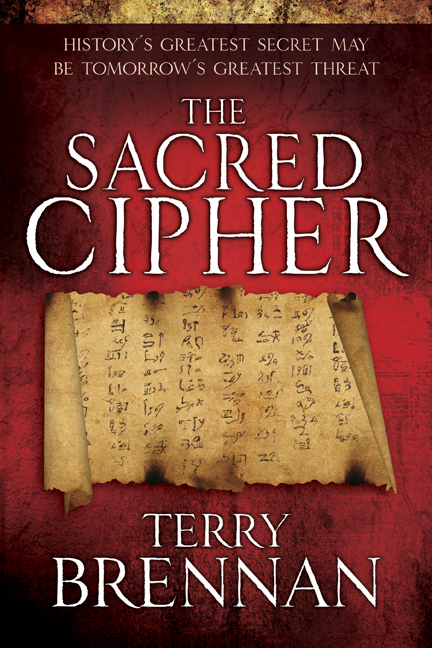
Sacred Cipher CoverI’ve been fortunate and blessed to have two novels published and a third one on the way. The Sacred Cipher, published in 2009, has done well. It appears the book may soon go to a third printing and today, five years later, people are still picking it up – and posting their reviews on Amazon. The sequel, The Brotherhood Conspiracy, was released in 2013. It got a great review in Publisher’s Weekly and better reviews on Amazon than Cipher. But sales have lagged.

One reason is that I was very ill at the time of Brotherhood’s launch (I’m fine now, thanks). Another is that neither I, nor Kregel Publishing, knew this would be a three-novel series. It just started out as one book. So it wasn’t marketed as a series and Brotherhood hasn’t benefited from the “pull” that Sacred Cipher generated.

Since I have a personal stake in the success of these books, and a lot of years invested in them, I want to do everything I possibly can to promote the increased sales of The Sacred Cipher and The Brotherhood Conspiracy, particularly in anticipation of the launch of The Aleppo Code in October – the third and last book of the series.


How Do I Connect These Books?
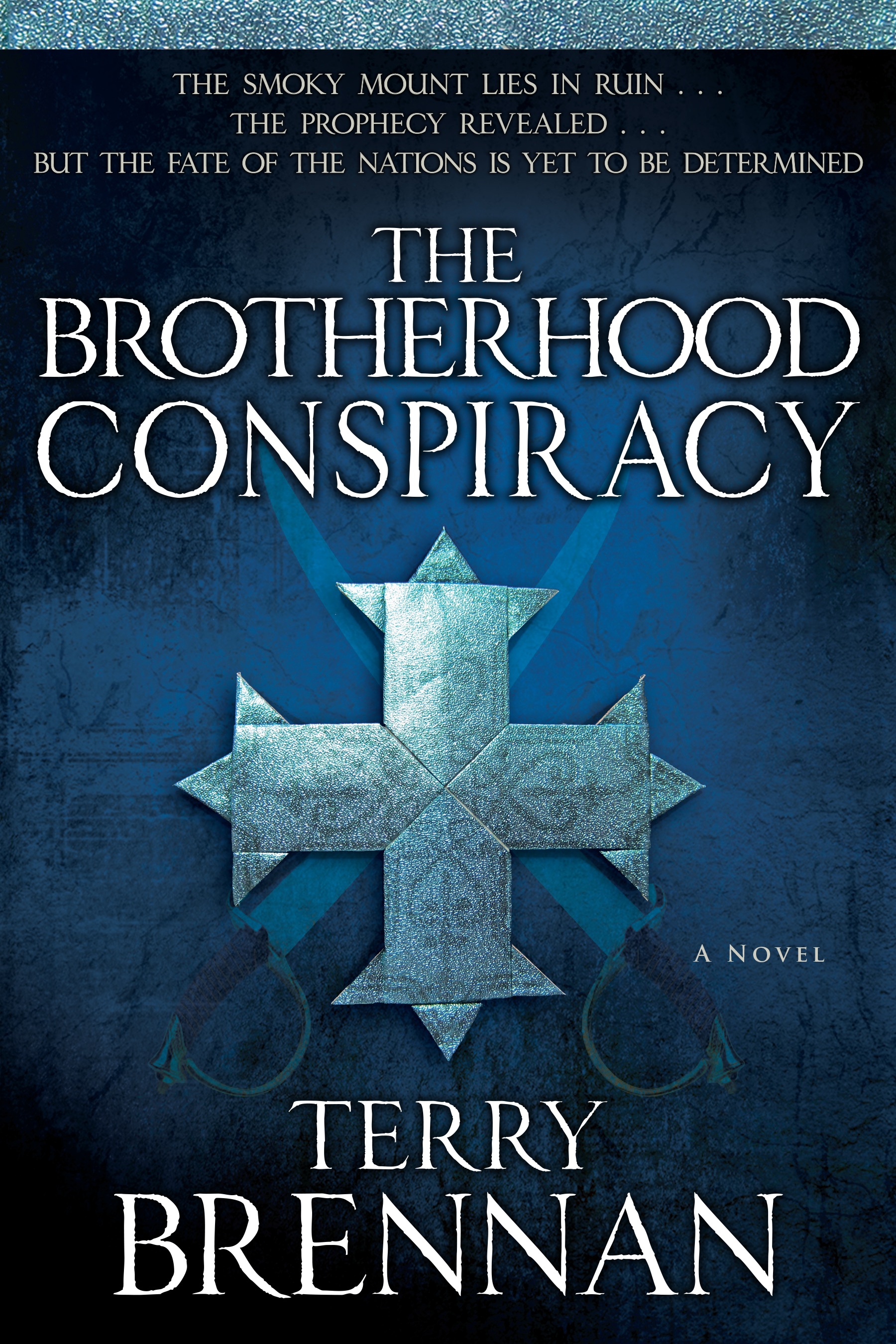
Brotherhood ConspiracyI created for myself an aggressive one-year marketing plan starting in December, 2014. The plan includes a month-by-month listing of what I will do to help accelerate the sales of the first two books, including a commitment to create a consistent social media presence, to produce a monthly newsletter (I have over 1,000 active email addresses in my mailing list) and to personally undertake a series of other marketing initiatives over the next year.

I included in that plan some requests for Kregel to join in this marketing effort. The team at Kregel has been wonderful to work with over the past several years and I deeply appreciate all they have done to support and promote my books. It’s been a great partnership and, because of that relationship, I believed it was acceptable to include some requests for additional support from Kregel.

Essentially, the requests of Kregel fell into two buckets:

  1. What can we do to link the books together as a series to create some momentum and expectation in the short-term for The Aleppo Code launch next fall?
  2. And what additional promotional effort is realistic for Kregel to invest in marketing the first two books over the next twelve months?

There’s No Harm in Asking!

I was thrilled when Kregel responded to this marketing plan, and my requests, with four major initiatives they were willing to undertake:

  1. The Jerusalem Prophecies series title has been added to the ONIX data feed that Kregel provides to Amazon, Barnes & Noble, etc. for the book’s online pages and will be used in all promotions.
  2. Kregel will create an E-Book promotion for both The Sacred Cipher and The Brotherhood Conspiracy just prior to the launch of The Aleppo Code.
  3. Kregel will implement a blog-tour for The Aleppo Code launch – but they are also considering a blog tour that provides all three books for the reviewers, so they can follow the story arc of the series.
  4. Kregel will also run a “back-list” sales special for the first two books during the October launch.

I’m told this is an unusual step for a publisher to take to invest promotional resources into back-list titles. Bless them that they did. Now it’s up to me to implement and fulfill the elements of the marketing plan.

Yikes!

February 4th: What the first three months of the plan look like.

The Cheater’s Guide to Building Your Author Platform – Part 3

Marketing

Building Your Author Platform

To be a successful author, you need to think differently. Within your gut, an uncontainable passion burns. Your passion is to change the world.

Steve Jobs was a person who changed the world by promoting Apple products. I am typing this blog on my Mac with my I-phone 6 by my side. Watch this marketing video clip where Steve Jobs challenged a company to think differently:

Marketing is about values. In this noisy world, your message is a clarion call of what you stand for. Be clear about who you are and what you are about. Where do you fit in the world? More specifically, where do you fit in your niche?

Rejection is Your Friend

One of our main marketing mistakes is to try to be too general. We fail to touch anyone’s life because we are trying to touch everyone’s life. We “like to be liked.” We don’t want to be rejected.

There is already a beat of the drum that your soul marches to. There are other’s who feel the same way you do. They are your “tribe” and you all march to the beat of a different drum. Before you find your tribe, you will likely find rejection from people who don’t hear what you are hearing or see what you are seeing.

A friend of mine, Tracey Mitchell wrote Downside Up (page 15). She wrote this about rejection:

1. Rejection acts as a personal conductor, carefully arranging who and what qualifies for your future.

2. Rejection is a friend who witholds no secrets, exposes all enemies, and closes every wrong door.

3. Rejection is a golden opportunity to better understand God’s love, human relationships, and gifts of encouragement that lie within you.

Think differently about rejection. The closed door of rejection to your message prevents you from wasting your precious time with people who “don’t get you.” Smile at rejection as your friend.

I had a friendly conversation with a woman representing a publisher at the National Religious Broadcasters (NRB). I shared with her that my background was pastoral ministry. She then asked what my denomination was. When I said “The Foursquare Church” she quickly said, “I won’t be able to publish your future books.”

I sincerely thanked her for her honesty and then asked, “Why?” She then said, “Our constituents do not believe in women pastors and they are closed to Pentecostal Denominations.”

I was so thankful for her blunt honesty. I knew that this was not a publishing house that I would publish any of my future books with.

Fearless Marketing: Take the Risk and Get the Word Out

Fearlessly market to your tribe. Instead of spending time trying to get people that you already know to be interested in what you are doing, throw your net on the other side of the boat and find those who identify with your voice. Here are a few specific tactics to build your tribe and market your message.

Click the Picture for Instant Access to Free Ebook

1. Free Give Away Write a simple ebook and put it on the front of your website or at the end of your blog. You give it away for “free” when they type in their email address. The secret of the email address is that this person who is on your site may be a tribe member. Follow up with them with future blogs and products. Don’t worry about the perfection of your ebook. Click the picture for an example of one of my free ebooks.

2. Building Partnerships Are you spending time building relationships with others who are influencers? I had the privilege of sharing a meal with Dan Miller and his wife Joanne at a conference. As we built a relationship, Dan asked me to speak at the 48 Days Cruise that he is leading in February 2015. Michael Hyatt and his wife Gail are also speaking as well as other influencers.

Click Picture to Find out More about The Influence Cruise.

You never now where one relationship will lead you. Be intentional about networking. Invest in conferences and events where you will meet and learn from people who are impacting others. In fact, I want to invite you to sail to the Caribbean with me on The Influence Cruise. (Click the picture above to find out more information).The relationships that you build on these type of events can become joint-venture partners in the future.

3.Getting the Message Out Get outside of the box of being a traditional author who waits to be discovered. You have a message, so develop your message in such a way that you have additional products to offer your tribe. If they already love what you stand for, chances are they will appreciate other teaching and resources that you provide.

marketing building your platform
Click to view “Exploring Ephesians” Course


Here is an example of an online course that I have developed called “Exploring Ephesians.” As a course set up on Kajabi Next, it continues to be a source of encouragement to everyone who takes it. Sign up today to see the example of what I have done, then develop your own course. I’m sure you can do an even better job!

A Final Opportunity We are all learners. When God first spoke to my heart “to engage” in building a platform for the books He was calling me to write, I needed to take baby steps. Wherever you are on your journey as an author, let’s connect.

Let me know if I can help you in any way. Leave a comment below, or find me on social media. Let’s make Jesus famous as we share His message which will change the world.


The Cheater’s Guide to Building Your Author Platform – part 2

Building Your Author Platform

As a Mennonite farm girl growing up in Indiana, I learned the Mennonite philosophy of “being the quiet in the land.”  I was taught that it was important not to stand out or draw attention to myself. I never fit in.

You may not have grown up Mennonite, but likely you have been taught to fit in. In subtle and not so subtle ways you have been told “not to rock the boat.” If you write and market a book that looks like every other book, it won’t sell.

Be a Purple Cow - MarketingBe a Purple Cow 

Seth Godin lauded as a leading marketing expert, describes what it means to find your purple cow and market your message. Watch this interview.

In todays market with so many books, you will not make a lasting impact with an average book written to average people. Marketing today has changed. We have so many choices.

As you are marketing your book, you are really marketing you. You are the “brand.” So as you determine how to market your message as yourself these questions:

1. What is remarkable about you?

What is the 2-3% about your message that makes you unique? Rather than aiming at the giant target to make yourself look like every other author/speaker, aim at the bulls eye of being authentic. What about your message and life makes other people make “remarks.”

When I considered which book to write first, I settled in on the thing that people remarked about me the most: I am the mom of 6 children. I struggled with this decision to enter into this market. You see, I am not a mommy-blogger. I don’t like Pinterest and I don’t have ideas for how to have fun play dates with your children.

I am a mom, who never pictured herself being a mom. My first born daughter and I were rescued from a burning house when she was only 5 weeks old. Although we were saved from the fire, she developed colic and screamed for hours at a time. When I finally got her enrolled in Mother’s Day Out, she was “kicked” out for biting another baby and drawing blood.

Yet, with all of this struggle of imperfect motherhood, I have 6 beautiful children. 2 of my children are special needs boys adopted from Brazil at ages 12 and 8. Just surviving motherhood is remarkable.

What is remarkable about you and your message? What makes you stand out. Tell your story in such a way that your uniqueness stands out.

2. Are you willing to be vulnerable?

Marketing - overcome writer's blockTo be a purple cow that stands out from all the white and black cows you have to be vulnerable. You have to wrestle with the fact that what you are trying to do might not work. You have to overcome all the noise in your head that pushes you to be “normal.” The best way to overcome “writer’s block” is to find the “sweet spot” of your message.

When I first began writing 9 Traits of a Life-Giving Mom, I started using other people’s lives to tell the story. My editor would read it and say, “I want to hear your story.” I was afraid to tell my story. I didn’t want to be rejected for my flaws and I saw myself as ordinary.

When I began writing the second draft, I began exposing all my faults. I exposed my internal thoughts about being the worst mom in the world.

That’s when I hit my “sweet spot” of my niche. I’m not writing to the moms who feel like they have-it-all-together. I’m writing to the moms that are hanging by their fingernails. I found that every mom in the world wants to be the best mom in the world for her child, but often she feels like the worst.

What is the “sweet spot” of your message? Where does your message meet a felt need? That becomes your marketing message.

Find your Tribe of People and they will be begging you for more. When you write, you are writing their thoughts. This is not only true in your book but in every other way that you chose to communicate to get your message out. Such as:

  • blog
  • podcast
  • social media
  • radio interviews
  • tv interviews

Memorize short segments of your material that makes your message memorable. Capitalize on the felt need of your tribe. Validate their personal situation. Become a friend to walk on the path together.

Next week we are going to talk about being a risk taker. We will also talk about more specific marketing ideas that you can employ right away. This week as you go through your day, be willing to be a “purple cow.” Make your message stand out.

The Cheater’s Guide to Building Your Author Platform – Part 1

With a glazed look on my face, I obediently handed my phone over to “the expert” sitting beside me. As she looked up my twitter account which had an oval egg shape for my picture, I couldn’t help feeling intimidated by the task of building an author platform.

I had spent my entire life serving in pastoral ministry. When social media first came on the scene, I was suspect of the enemy’s evil intent to use the media to entrap our children.

Now here I was, listening to Michael Hyatt talk about the power and necessity of every author building a platform to launch their book. Much of what he was saying went over myplatform head. Yet as I listened for the still small voice of the Holy Spirit to guide me, I simply heard this word: engage.

As I engaged in the social media platform beginning that day two years ago, I grew from 4 twitter followers to over 21,000. I joined the social conversation and found a whole new world of influence.

Since my first book, 9 Traits of a Life-Giving Mom, hit #1 on Amazon’s Hot New Releases for Christian Women’s Issues, I regularly have authors seeking my advice on how to build their own platforms.

Let’s Begin at the Beginning

Watch Michael Hyatt’s simple video on Platform Building.

1. Start with a Blog

Begin to build a following. Give people an opportunity to get to know your heart. Use your blog as a spring board to all of your other social media engagement.

If you are an author of a number of books, you are probably your brand. You may write on a number of blogs. A foundational part of your strategy is your own blog where you can share your passion and build a loyal following. I chose to use my own name for my primary blog at SueDetweiler.com.

2. Develop a Social Media Strategy

You are unique. Social media needs to work for you. As you begin to see the power of social media, use these principles as a guide: 12-28-14 Social Media

  • Use Time Management Tools
  • Link Social Media Posts
  • Strategically Post Throughout the Day

The key to social media is to see it as an ongoing conversation with a friend. You are sharing about all the things that you care about. People who read your tweets will know what you enjoy. Don’t be afraid to share your personal story and pictures. Provide your tribe with ongoing helpful resources.

3. Be Real

Don’t try to appear to be anyone else than who you truly are. You don’t have to be perfect. In fact, one of the ways that people will be drawn to you is when they sense you are transparent. Don’t try to be Barbie or Ken; just be who God made you to be. Let your quirks come through in your social media platform.

Don’t be tripped up by your own perfectionism and fail to launch into a new thing. Allow yourself the freedom to try something new. Stoke the fires of your own adventurous spirit.

4. Use Video

Video can be really simple. The technology on your smart phone will allow you to do video in minutes. As an author, you can use the power of video to sell your book. Here’s a simple book trailer that was created for me on Fiverr.com. Video doesn’t have to cost you a fortune to be effective in telling your story.

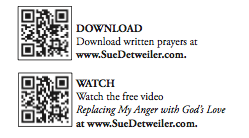
I also used simple video introductions of each chapter of my book as an additionalbuilding your author platform resource. At the end of each chapter a simple code invites the readers to watch the video or download a printable of written prayers that enhance each chapter.

5. A Gateway to Traditional Media

As you build your platform as an author, others will become excited about your message and help get the word out about your book. Build relationships with other authors, radio hosts, and television hosts. Two events that I think are helpful to connect authors to traditional media are National Religious Broadcasters (NRB) and The International Christian Retail Show (ICRS). There may be other events that your publisher encourages you to attend to build relationships with the media.

Next Week

We are just scratching the surface of things that you can do to build your platform as an author. Join me here at The WordServeWaterCooler for part 2 of The Cheater’s Guide to Building Your Author Platform.

Also connect with me on social media! Let’s start a conversation. Let me know if there is any way I can help you get your message out.

Multiple Author Events – Yes or No?

Smiling Group of ProfessionalsAs a writer, the weight of book promotion falls on my own shoulders. Since that gets tiring, I’m always looking for ways to maximize the results of the events I do: my current goal is to market smarter, not just harder.

So when a writer friend told me about the great attendance and good sales she experienced at a multiple author event at a book store, I decided to give it a whirl with both of my book lines. That meant gathering other authors who’ve written about dogs (so I could promote my girl-meets-dog memoir Saved by Gracie) and collecting another crew of authors who’ve written about birds (to expand the audience for my fictional series, Birder Murder Mysteries).

This is how it played out:

National Dog Day. I broached the idea for a National Dog Day Night to a local independent bookstore, and they jumped at the concept! I offered to recruit authors to attend, and the store agreed to stock the books, set up chairs and a microphone, and do publicity. They even partnered with a local dog rescue group for more publicity and support. Luckily, three well-known writers with dog books live in my area, and they readily agreed to participate. We all thought it was a smokin’ idea…but only five people showed up. What went wrong? Personally, I attributed it to the lovely summer weather; I myself would have chosen to be outside with my own dog, rather than inside with authors.

My big score, though, came from meeting the other authors, one of whom asked for an excerpt from my book to run in her monthly newsletter that goes out to thousands of readers. I made a hot contact even if the event fizzled.

For the Birds Night. I took this idea to a local Barnes & Noble and again, the events manager thought it was a winner. This time, it was a monumental headache for me to pin down the authors – talk about a flighty bunch! Not that any of them are absent-minded – it just took me a while to catch all these bird-chasing authors between their travels and professional obligations, not to mention the multiple email addresses so many of them use. I managed to round up five of the original ten that I contacted, and even then, I had one drop out at the last minute due to health issues, and one drop in who’d forgotten to confirm with me months earlier.

The event itself, though, was a big hit! We had over 20 people attend, a lively discussion ensued, and every author was signing several books by the end of the evening. Our B&N hostess invited us back for a spring event, and said her district manager had expressed interest in us taking our event to other stores.

After organizing two group events, my conclusion is that it’s worth the effort in terms of both book promotion and author networking. Upfront sales might be disappointing, but as one more tool in your marketing toolbox, I highly recommend giving it a try.

And keep some aspirin handy.

Have you participated in multiple author events? What was your experience?

Tips for Managing Time as a Writer

You’ve heard the age-old story: Creative individual decides to write a book. They sit down with paper and pen or keyboard, and painstakingly write that heart story. Sometimes it takes months. Sometimes it takes years. When talking with their friends, you often hear them say, “Something came up. It isn’t quite right yet. I just haven’t had the time.”

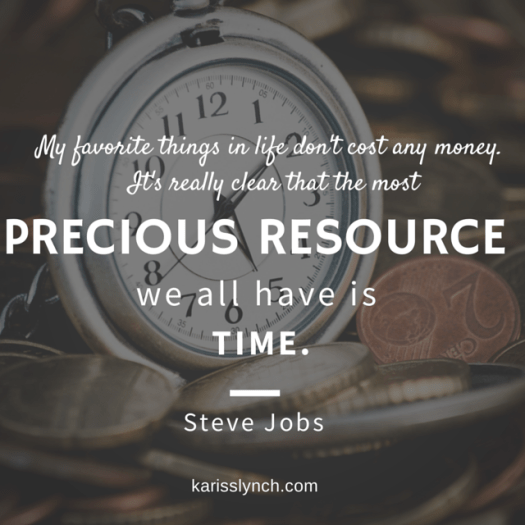
It’s pretty clear that time is precious. In fact, outside of my loved ones, my time is my most treasured possession. Since signing my first contract in January 2013, I have learned an important writing tip, probably the most important tip.

There is NEVER time, unless you choose to make it.

In fact, I’ve noticed one common trait among the published: They make time to finish. Once you sign that dotted line and make a commitment, “I didn’t have time” doesn’t fly with the publisher. Neither does “it’s just not ready yet.” You better make time and make it ready fast or risk losing your credibility.

After signing that contract, time to market becomes important. And time to edit. And time to promote. And time to interact with readers. Lots of time. So it’s important to figure out how to manage it.

My friends hear me say that I’m overwhelmed more than anything else. But I’m learning how to carve out time, discipline myself to finish, and not miss out on the world around me. We aren’t only writers. We are marketers, publicists, graphic designers, speakers, and more. So I’ve learned a few tricks to maximize my time in every area of this writing journey.

Kariss Lynch - timeCreate margin.

I am a night owl and can write and create relevant marketing content easier when my checklist for the day is accomplished. It clears my mind to be creative. Determine your best time of day to write or create, and maximize those short windows.

Set a timer.

Write every day. Set the timer on your phone for an hour, then put your phone on silent and put it on the other side of the room. Clear your mind and write. I found when I did this, I could easily write close to two thousand words if not more in an hour! When the timer goes off, I feel accomplished, satisfied, and ready to write even more.

Carve out marketing time for social media.

I work full time as a writer for my company, so in the middle of the day I am tired of writing. I’ve started taking thirty minutes of my lunch break or fifteen minutes in the morning or afternoon to create social media graphics that I then pre-schedule so I don’t have to think about them. Think about content that is relevant to your brand, then have fun with those designs.

Strategize for online interaction.

The internet is a wonderful tool, but managing our online interaction can eat our time if not handled correctly. Block out thirty minutes every few days to catch up on emails. Take a few minutes to respond to every person who comments on social media (within reason of course). Know your brand, what you are passionate about, and have character and author interviews on hand for guest blog posts. Don’t overthink. Just do.

Know your audience and limits for speaking engagements.

My favorite interviews and speaking engagements are via Skype since it helps me conserve my time, but I’ve also enjoyed those in person speaking engagements with small groups or crowds. Determine your price (if you have one), the size of the group you are willing to speak for, if it is wise to travel or Skype in (this is great for book clubs and classes that may not be close). Bottom line, know your options and then plan accordingly. Don’t forget you still need to write and market and live life, so carefully plan the weekends you will be gone.

Managing time is as much mental as it is physical. At the end of the day, be satisfied with what you accomplished and leave the rest for tomorrow. What tips have you found effective in managing your time?

Marketing: To Do and Not To Do

Light a Fire with Your Marketing Plan

“It isn’t there. I looked,” I told my mother so many times I lost count.

I also lost count of how many times she looked in the same place I did and said to me, with frustration in her voice, “Shelley, it’s right here!”

Ugh. I hated when that happened. I felt stupid, embarrassed, and defective.

Why could SHE see it, but I couldn’t?

It took a few years, but finally, by the time I was 10 or 11 years old, I learned to instead say, whenever I couldn’t find whatever she said to look for or retrieve for her, “I don’t see it.” I’m 40 years old now, and I still use those same words in that situation.

What does this have to do with marketing? I’m certainly no expert in this field, but I have learned this: just because folks don’t see our books, products, services, or goods, it doesn’t mean they aren’t there. It also doesn’t mean they don’t have value. It just means that sometimes people need help to see the good stuff right in front of them.

So, how do we do this in an already saturated market where everyone (and sometimes their pets!) are on social media, have a blog, and publish their work? (I kid you not about pets, either.)

I asked around, and want to share with you what other authors shared with me. I am confident these tips will help you (and me!) in the challenging world of marketing our writing in addition to creating the content we’re trying to market.

  • Pay attention to social media: Don’t discount the value of sharing some freebies with folks right where they are. Find out where your audience hangs out most on social media and focus the majority of your social media time and attention there. For example, my readers tend to be on Facebook more than Twitter, so while I am in both places, I don’t kill myself in the Twitterverse when more engagement happens on Facebook (and increasingly on Instagram and Pinterest).

Remember, as you engage in today’s world of technology, these words from Marketing guru Rob Eagar:

“In a fast-paced world where Facebook, Twitter, and the 24/7 news media allow everyone to have a voice, it’s more important than ever to cut through all the noise. Use power-bites to punch through the cacophony, gain people’s attention, and spread your message like wildfire.” – See more good stuff from Rob here!

And this, from marketing expert Lori Twichell:

“The key to good marketing is making a connection with your audience. It’s got to be genuine. People can see through selfish motives. If you are only there to promote your book or product, people can sense that.” The more you get to know your audience and really make that honest contact, the more you’ll end up with a loyal audience that will follow not just this book, but future endeavors as well. That’s a key part of social media that is lacking in so many. We all love making new friends and connections, but no one wants to be spammed!

  • Newsletters: Emailing your subscribers is the best way to get content in front of your readers on a consistent basis. When they subscribe or give you their contact info, they’ve invited you to connect with them. Make sure to add value to your subscribers’ lives, inviting them to open, read, and engage—be aware of what can feel “spammy” to your subscribers. In other words, don’t just send emails to send emails. And make sure you give more than you request.

Here’s another tip from Lori Twichell: “Tuesday, Wednesday, and Thursday are the best days to send newsletters. On Fridays people are eager to go home and clean out their inbox more quickly and on Mondays, they’re buried in the weekend’s email pile up.” (Connect with Lori for more good stuff at http://www.beyondthebuzzmarketing.com)

  • Giveaways: Take advantage of what God has made available to you. What message has He entrusted to you to share with others? Offer some freebies along the way that build your credibility as one to listen and learn from in this over-saturated market.

As writers, we long to have readers find value in what we have to say, right? It can be so difficult to balance the discipline of learning and expressing with the necessity to also market what we write. Ultimately God is our greatest promoter. If we can remember that our social media numbers, our book sales, and our greatest accomplishments do not come close to God’s power to promote us in due season, we’ll remain at peace and loving life on the way to where we’re going.

Have you discovered a marketing to-do or not to-do?

Marketing: Sharing the Treasure You Discovered

Sharing the Treasure

In a charming café tucked in the corner of an eclectic bookstore not far from the center of town, you stare into your latte, mesmerized by the heart-shaped swirls of steamed milk. This peaceful instance of solitude is so perfect you decide to share it on Instagram.

After venting the domed lid of your new Big Green Egg backyard cooker, you reach for tongs to lift ribs dripping in a tangy barbeque sauce onto your plate. Your friend, sensing the momentous nature of this occasion, captures the moment for Facebook with her smartphone.

You weren’t trying to market a bookstore or a cooker. You simply found a treasure and you were sharing it with friends.

Draw A Treasure Map
As I prepare for the launch of my first book, Questioning Your Doubts: A Harvard PhD Explores Challenges to Faith, I am learning how to assist in the marketing process. Buried treasure helps no one. A book cannot fulfill its purpose unless readers find it. So I have begun to view marketing as the process of drawing a treasure map to help potential readers locate my book.

Everyone draws a map unique to a particular treasure, but here are some ideas:

  • Have your social media bio mention your book and link to your website.
  • On your website, include links to a variety of online retailers and bookstore websites that are selling your book. Use a pull down menu of retailers if the list is long.
  • Mention your book in bylines to articles you write.
  • Blog and guest blog, mentioning your book in your post or your bio.

Supply the Digging Tools

Once the map leads you to the buried treasure, you need tools to dig it out so you can enjoy the treasure and share it with your friends. In the same way, marketing involves not only drawing a treasure map for potential readers, but also supplying the digging tools so others can unearth the treasure and share it with others. Here is a list of a few tools I am using to help others spread the word about my book:

  • Bookmarks
  • Flyers (both paper and PDF format for sharing by email)
  • Publicity photos
  • Link to discussion guide for book
  • Social media page for each book

Prepare to Celebrate!

What are some things you’ve found helpful for marketing your books?

How to Avoid White-Noise Marketing

new-143095_640We were talking as a staff in our FaithHappenings.com meeting about marketing and social media and how much white noise is filling up Facebook and Twitter especially. Everyone wants a chance for their voice to be heard, but none of us really want to pay attention. As consumers we are constantly bombarded with deals we should take advantage of, the latest giveaway to enter, the newest site to sign up for (though, please, please go sign up for our FaithHappenings.com site—I promise you will not be disappointed. 😉 ), the latest and greatest constantly in giant all-caps and flashy billboards. Unless something truly captures our attention, most likely we’re going to just keep on scrolling.

I know I am guilty of this habit.

So how do we grab the attention of the consumer we are trying to reach? Each platform is going to be handled a bit differently, but I’ll tackle Facebook and Twitter with a side of Pinterest and Google+ thrown in.

Facebook: DON’T post your agenda all the time. In fact, I only post on Facebook a couple of times each week—not a couple of times per day. When you post less often, you actually become something of a novelty when you do finally post. You’re a fresh face in a sea of constant posters and most likely people are going to pay more attention. (Note: this concept is a good idea for personal profile pages. Fan pages require a different strategy and more frequent postings to avoid falling off your fans’ radar)

Twitter: DO post your agenda more often. Don’t, however, push a constant promotion. Twitter feed is constantly changing and moving so it’s a good idea to keep your face and fresh content in front of your followers. For every 1-2 tweets about your product, be sure to share 3-4 either retweets and content that is not pushing one particular point or agenda.

Pinterest: If you are a business or an author who is trying to promote reviews, products, etc., keep it to one or two pins per day of that particular felt need. Too much of the same thing will just annoy the follower and they will scroll faster–or worse, unfollow you.

Google+: Chances are you are going to have many crossover followers on Facebook, as you do on Google+. If you have a gmail account, you automatically have a Google+ account. Build your circles, find material you can share publically. You can share the same information as you did on Facebook and Twitter, but find a different way of sharing it. And remember to vary business with pleasure/personal. People want to get to know you, not just a promotion pusher, ie: white noise creator.

Need some other ideas to avoid being social media white noise?

Be funny. Have a sense of humor. Don’t post long updates. The shorter, the absolute better. Don’t carry a negative point of view on all your posts. Be positive. Avoid links.

Yes, I am telling you to include fluff in your marketing campaigns. We are a society surrounded by depressing worries. If you truly want to be noticed, be encouraging. Speak into people’s needs. Make them laugh. Build a brand awareness around who you are and what you’re offering that is unique, brief, to the point, and meaningful.

Seems like a tall order to fill!

But once you get the hang of it, it becomes more second nature than something that has to be over-thought.

Remember the key points: Facebook—don’t post all the time. Twitter—you have more freedom, so share and have fun. Build a rapport with your followers. Pinterest—let this become an extension of who you are. Google+ –provide fresh content separate from what you post on the other social media platforms as chances are, you will have many of the same followers across all platforms.

ACFW 2014 Wrap-Up

Speaker at Business Conference and Presentation.Fall brings not only great weather (autumn is my favorite season!) but also several big-name writers conferences. The American Christian Fiction Writers (ACFW) gather every September to celebrate great inspirational fiction (in the culmination of the Carol Awards) but also to inspire and teach the craft of fiction writing.

Here are a few of the things I took away . . .

1. Indie is IN! It used to be the scourge of writing to even breathe that you might publish your own book either through a vanity press (paying a company to process your book) or indie publishing (or self-publishing) where you become your own publisher and own all aspects of book production while fronting the costs yourself. This can take several forms. Established authors indie publishing their backlist once rights revert back to them. Traditional authors using indie publishing to supplement their income. I even heard one indie author say her traditional publishing contracts offer her a “bonus” but she mostly depends on her indie books to meet living expenses. Then there are those going solely indie because they enjoy the process, the control, and/or may be using it to catch the eye of a traditional publisher if they can hit a certain number of sales. The only cautionary note was, if you have a traditional contract, to ensure that your publisher is okay with the content of the indie book and that release dates don’t compete.

2. Effective marketing campaigns may not be realized until later. Last year, my third novel Peril was a newborn. To ACFW, I brought full-size Hershey bars with a sticker attached to each one that had photos of all my books together and a link to my newsletter. I definitely got some additional newsletter subscribers but this year, several people commented to me about those chocolate bars. I think a good marketing campaign is something memorable that lasts long after the item is gone. Trust me, bookmarks get lost in a sea of other bookmarks and postcards. Take the time and maybe spend a little extra money for something unique. Honestly, this year, there weren’t a lot of interesting giveaways.

3. Networking is important. Even if you’re not pitching, you need a network of other writing peeps to help keep you sane. They understand that it’s normal to talk out loud while arguing with a character. They’ll help you in the writing valleys and celebrate those writing highs. Always go into a conversation open to the possibilities of new friendships. Sit with people you’ve never met before. Introduce yourself to those of the other gender (men might feel a little lost in a sea of mostly women they don’t know!). Make face-to-face contact with an editor who rejected you and say a sincere thanks for any feedback they offered.

4. Professionalism is key. Everything you put out there speaks about you as a writing professional. It’s probably not too far-fetched to say that you’re in one long job interview. The way you dress. The way you treat others waiting for appointments. Are you on time for your appointment? If you yell at an appointment coordinator over some perceived slight, it’s not going to come back to you in a positive way. When you submit your work for a paid critique, format it correctly with no typos. Always be helpful to someone else first; this reaps large rewards in the end.

What have you learned recently from a writers conference?