Why Ignoring Your Author Brand is Career Suicide

Have you heard the term branding? Does it make you want to reach for the remote and turn the channel? If so, you’re not alone. Author branding has a lot of writers confused. It did me.Why Ignoring Your Author Brand is Career Suicide

I first thought author branding was something your publisher did for you when your first books came out. Then, I thought it was a cool author tag line or slogan. And while part of both the previous statements are true, they’re not your author brand.

Knowing your author brand will help you promote yourself before, during, and after your book releases. Your author tag line is what evolves from your brand, not the other way around.

What is an author brand? An author brand is the unique combination of personality and passion you bring to products or services based on your actual or potential abilities. Your author brand won’t look like anyone else’s, because no one else has your insights and perspective to offer to the world.

Why do I need an author brand? Knowing your author brand lets readers, agents, and publishers know immediately what they’re going to receive from you and your writing. In this fast paced world, people won’t take the time to dig through the many books, websites, and blogs to find what they’re looking for. If it isn’t apparent immediately, they’ll move on.

Think about your favorite authors. You know exactly what you’re going to get from their books. It’s the reason you purchase their newest release, read their newsletters, and like their Facebook pages. They deliver on the promise of their brands.

But, I don’t need to develop my author brand until I have a book contract. Wrong. You’re already branding if you have a website, blog, or are on social media sites. Every post, tweet, and blog post is a reflection of you and your brand, even if you don’t know it.  It’s important to understand your brand from the moment you declare yourself a writer.

Your brand will help you develop your website, book proposals, manuscripts, articles, and newsletter. It will help you focus and go deeper in order to reach your audience better. It’s something you should embrace and not put off a minute longer.

Your brand will also aid you when creating visual images for your website and social media pages. For example, my author tagline (developed from my brand), is Inspiring Your Faith and Pioneer Roots. I created this image for my author Facebook page this past week. Branded Facebook Cover for Melissa K. Norris

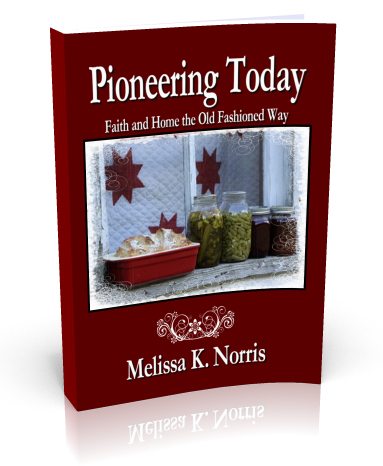
Do you see how the pioneer roots is enhanced not only in the images, but also ties into the title and cover of my non-fiction book, Pioneering Today? The cabin picture also works for the historical fiction portion of my writing. Your brand should be an umbrella for all you do.

Developing your author brand isn’t something we can completely cover in one blog post, but don’t worry. I’m not giving you this admonishment and leaving you alone. My agency sister and business partner, Janalyn Voigt, and I have created a FREE author branding workbook to walk you through the steps. You can snag your copy at TriLink Social Media Mentors.

What are some of your favorite authors? Can you identify what their brand is, or the promise they always make with their work? What is unique about you and your writing?

Get Thee to a Conference, Writer!

I want to be alone...photo from www.fanpop.com
I want to be alone…photo from http://www.fanpop.com

Like many writers, I work at home, which means I spend much of my day alone. To force myself to get out of the house and interact with living, breathing, real people, I set a goal of attending at least two conferences in the course of the year.

They’re not writing conferences, however.

They’re pre-writing conferences.

In other words, I go to conferences to do research for my books. In particular, I go to events that have to do with birding, nature, and spirituality, since those are my book topics, and I’m always looking for new ideas and the latest developments in the field.

But last month, as I promoted my second free Kindle offer on amazon.com for my Birder Murder mystery series, I realized a marketing benefit to those research conferences: the stuff I bring home – the hand-outs, the programs, the lists of attendees – are invaluable marketing tools.

Influential contacts

You meet a lot of people at any kind of conference, but you might not get the chance to meet them all, especially if they are keynote speakers who typically are surrounded by a crush of people at the conference. If you keep the program, though, you can usually track them down again on the internet, and make contact by sending an email and thanking them for their presentation. Then, when you would like to notify them of your book release or promotion, you’ve got  influential contacts in your target market. Even if you haven’t previously corresponded with them, just naming the conference in a subject line will ensure your email will be read by the recipient. Ask them to share your promotion, and you’ll reach new readers through their cooperation.

Potential readers

Every person who comes to a conference is a potential reader of your work. I recently went to a conference on the therapeutic effects of nature, and chatted with other attendees about my interest in nature and birds. When I mentioned I was an author, I was asked for the names of my books, so I got to do a little promoting to a market I hadn’t previously considered. At a birding event, email addresses of all the attendees are sometimes included (because birders like to email each other about bird sightings), so I have a ready-made email list for special book promotions that I think they might appreciate. Never underestimate the personal touch of addressing individuals!

Creative approaches

Being the packrat I am, I keep all the hand-outs and advertising materials from conferences, too, thinking I might be able to set up a speaking date or promotional opportunity with one of the sponsors. For example, I never thought of wildlife photographers as a market until I met a camera rep at a birding event; now it’s a part of my target audience. As a result, I’ve found that thinking about the ways sponsors connect to conferences is a fertile field for marketing development.

What kind of conferences do you attend and what are the marketing benefits you find?

Monkey Read, Monkey Should Do!

apeDoes the acronym HARO mean anything to you?

It should, because it just might be your ticket to free publicity, extensive exposure as a writer, and the means to grow a national reputation as an expert in your field.

HARO stands for Help A Reporter Out, and it’s a website where you register as an expert and news source. There is no fee to register, and while there is no guarantee that you will get tapped for information, it’s a chance you don’t want to miss. For nonfiction writers, it can become one more piece of a marketing plan to become known for their unique expertise, while fiction writers might consider their own research in specific topics as fodder for story ideas. According to HARO’s website, 30,000 members of the media have turned to HARO for assistance in developing stories; is there any reason you shouldn’t be one of those folks helping out a reporter?

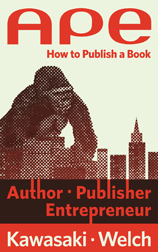
Learning about HARO was just one of the things I learned from recently reading APE: Author, Publisher, Entrepreneur-How to Publish a Book by Guy Kawasaki and Shawn Welch. While I have no desire to publish my own books, I still found the book informative and helpful, especially as I’ve grown from an author-wannabe to someone with five years of publication experience. The first section of the book was a good reminder that writers come in all shapes and sizes, with a range of motives, and that’s okay. It made me consider again the tenacious nature of writers who want to publish and gave me a new understanding of why people choose self-publishing. (It also made me realize that if I did decide to do a short ebook as a promotional opportunity for my other books, I could probably pull it off using APE as my guide.)

What I especially appreciated, though, was the book’s insistence that there is no escaping from the truth of today’s book business landscape: authors need to take responsibility for their books’ success, no matter how they are published.  APE gives valuable insight into the entire publishing process, which I’m convinced every author needs. Publishing is a business, and the sooner authors accept that, the more successful they will be! As an early publishing mentor of mine insisted, if you’re going to succeed, you better know how the business works. Kawasaki and Welch have done a fine job in giving readers the essentials of publishing.

Seeing as I’ve spent the last year trying to educate myself about platform and marketing, I found the last part of the book packed with practical suggestions and resources, like HARO, that I can play with as I continue to polish my marketing skills. The authors even include their own list of what they did to publish/market APE itself, providing readers with a basic outline for promoting any book, and offering links to learn more.

What are you APE-ing these days?

(Special thanks to Lucille Zimmerman, my agency-mate, who gave me the book to read!)

Already Loved: Encouragement for This Writing Life

file9431319827916Another rejection. My agent gently relayed that though my dream publisher had said “yes” to a proposal all the way up the chain of command to the last committee, they finally decided to nix it.

As I hung up the phone, tears spilled down my cheeks. Two years of canceled book contracts, low sales figures, and repeated “thanks but no thanks” emails had left me discouraged, frustrated, and confused. Writing—and the marketing tasks necessary to be a professional writer—now seemed like drudgery, not play. No matter how many marketing rules I tried to follow, my efforts failed.

I felt like a failure, too.

I still believed God wasn’t through using me. But I couldn’t help but wonder, Will I ever get another book contract? And what happens if I don’t? Is God trying to tell me something?

Later that day, I sat at my desk, playing a computer game with my three year-old son. As Jackson sat in my lap, I kissed his ear and inhaled his little-boy scent; a combination of milk, grime, and chocolate. Nearby sat a copy of my first book, which I had referred to earlier in the day for a radio interview. Jackson looked at the illustration of a frazzled mom on the cover and asked, “Is that you?”

“No, sweetie,” I said, “but I wrote that book. See, mommy’s name is on the cover. It says, ‘by Dena Dyer.’ “

“Oh!” Jackson said, grinning up at me. “I love Dena Dyer!”

Stunned, I blinked back tears. “I love you, too,” I murmured.

After a few minutes more at the computer, I found a quiet corner and prayerfully pondered Jackson’s simple expression of love. He didn’t care if I published books or not. He simply loved me for me. He loved me the way God does.

In all my disappointments, I had thought more about selling books than surrendering my heart. It was painful to admit that somewhere in the midst of trying to serve Jesus, I’d become goal-driven instead of God-driven. I seemed to care more about what the publishing powers-that-be thought than what my Heavenly Father thought.

Satan is crafty. He takes our God-given talents and twists them into temptations. Gradually, my calling had become an idol. Who I was became less important than what I did.

“Lord, I’m sorry,” I prayed, crying for the third time that day. “My heart is so full of sin. I know you couldn’t care less how many books I sell. You just want ME.”

In the weeks and months to come, as I asked God to help me believe the truth of His unconditional acceptance, I began working freely and joyfully again instead of writing just to be published. God continued to close some doors, and another book proposal was rejected, but He gave me other opportunities–ones I hadn’t even known to pursue.

The truth is, though, I will probably always have a tendency to think I must perform to be loved. So I’ve ask God to whack me upside the head (as we say here in Texas) before I get too far off track.

If experience is any teacher, He’ll be faithful to do just that.

(This article first appeared at The High Calling. Used by permission) 

Build a Social Media Platform: Your Facebook Page

Face book

As the world’s largest social networking site, Facebook is an essential plank in most authors’ platforms. However, its effectiveness depends on how it is used. Many writers try to use their profiles for business pages, a function they were never designed to support. Even if it were not against Facebook’s policies, using a profile for promotion is not effective anyway. There’s truth to the idea that friends aren’t geared to purchase from friends.

Converting a Profile to a Page

Fortunately, it is possible to convert a profile to a business page with a simple tool Facebook provides. Having recently migrated my Facebook profile to a business page, I offer a detailed perspective on this process in Convert Your Facebook Profile to a Page (A Step-By-Step Guide). Would I go back to a profile if I could? No. I’ve received more engagement and am taken more seriously. As a bonus, I no longer have to deal with unwanted game or event invitations.

Signing up for Facebook and Creating a Page

Signing up for Facebook is a straightforward matter. If you need help with this, go here: http://www.facebook.com/help/188157731232424/. Instructions for building a page are here: https://www.facebook.com/business/build. The category that Author or Writer is found under is Artist, Band or Public Figure, however if you do more than write on a professional level, you may want to choose a different category, like Public Figure (under the same category). If you create your page around your author name rather than one of your book titles, you won’t have start all over again building an audience for each new release. Also, leaving out an accompanying description (like author) keeps your options open should you want to add another professional activity (such as speaking) at a future date.

Your Facebook Page

Banner: To promote your brand, its best to post a cover image that resembles your website banner.

Profile Picture: Use a quality image for your profile picture, preferably a headshot.

Tabs: Wildfire, Tabsite and Iwipa are applications that let you install customized tabs to give you among other things a landing page, event manager, contest tab, blog feed, and even fan-gated content you post for subscribers only. To learn more visit http://www.socialmediaexaminer.com/top-10-facebook-apps-for-building-custom-pages-tabs/. Mail Chimp integrations allows users to post a sign-up box for your email list right in a Facebook tab.

Content you post on your page should draw readers who will sign up for your email list. Post updates about your writing progress, appearances, author news, contests, giveaways, and book news. Depending on your brand, you may also want to post snippets from your research, recipes, book reviews, or videos. Whatever you decide, make sure it lines up with your brand and inspires some sort of action (such as entering a contest, signing up for your newsletter, liking a post, or visiting your website). Make the time you spend posting to Facebook count toward your goals.

Post Scheduler: It’s possible and desirable to schedule posts to publish at a time you specify. This can be a great time-saver. Just click the clock icon below the update window.

EdgeRank: That mysterious algorithm by which Facebook determines how many of your followers see a post is based largely on engagement. One good way to boost your engagment and boost an update’s edgerank is to post pictures or videos.

Wall: A page’s wall functions just like a profile wall. Like some other pages while posting as your page and those posts will show up in your wall feed, which you can find by clicking the Home tab in the upper right menu. 

Engagement: Commenting on other pages is an important way to gain followers for your own. A good strategy is to find other authors with similar readerships and comment on their posts. Provided you don’t self-promote and say something sufficiently interesting, some of their followers may become interested in you and follow you back to your page. Doing this actually helps the other author gain edgerank and engagement and its possible to share audiences to mutual advantage.

Another way to keep up the engagement on your page is to post consistently. Also, your followers will notice your absence and respond accordingly, so try to show up for at least a few minutes every day. You can set your notifications to alert you by email when someone comments on your page.

Analytics: In your page’s admin panel you’ll see a tab with a graph showing both your reach and audience engagement levels. Click See All to view the full analytics for your page. Pay attention to which posts have more virality and adjust your offerings accordingly, or else use the engage tips above to find people interested in what you offer. Adjusting your page’s reach to the ideal audience for you is a trial-by-error process.

Promoting from Your Page

While it is possible to promote from your page, you should do so cautiously. Spamming doesn’t work and will only cause you to lose followers. Be subtle and lure rather than pursue readers.

I received a bit of free advertising money from Facebook, so I decided to try out a couple of ads. My results indicate that the same easy-does-it guidelines apply to ads, too. The campaign I ran as an inline ad with a post of my book video did far better than the promoted posts ad with a cover of my book and a promotional blurb.

My observation is that people are on Facebook to socialize and have fun, not to be pitched to. Consider using this site as a primary outpost if you work well in that kind of environment and can promote in a subtle manner.

Please click to tweet this post.

3 Top Tips to Gain Facebook Fans on Your Author Page

3 Top Tips to Gain Facebook Fans on your Author Page

As a modern day writer, I aspire to hone my craft and make the words sing on the page  as much as the greats did, people like Hemingway, Dickens, and the Brontë Sisters.

Okay, that’s a bit of a haughty statement.

Let me just say I work hard at writing better.

But in 2013, writers have the added stress of social media. We write, yes. But we also build, and gather, and hunt. We structure writing platforms. We gather tribes of readers. We hunt for excellent literary agents, and publishing houses that will not only get our work in print, but shine a light on it for the world to see.

It can be exhausting, this business of modern day writing. So I am throwing out three of my best tips about Facebook. My author fan page has proved to be a great tool to interact with potential readers.

Here are three of my top tips to gain Facebook fans on your author page.

1) Make sure your personal page connects to your fan page on the header to allow for cross promotion. Especially now that Facebook wants fan pages to utilize paid promotion, it is vital that your personal page easily and prominently connects friends with your fan page.

facebookgillianarrow

If you aren’t sure how to do this, here’s a step by step tutorial from Amy Lynn Andrews from Blogging With Amy.   

Likewise, on your fan page, ensure that your author website appears in the “about” section at the top.

75020_10200138856291333_2022590139_n (1)

2) Provide pictures with text through sites like PicMonkey. When I promote a blog post on my fan page with an uploaded photo, I get more likes and shares. Make sure your website is noted in the corner of the picture. Here are a couple examples:

maya angelou

evie loves her life

struggle right grammar

Check out this post if you’d like a simple tutorial to walk you through PicMonkey. You can use the site for free, or pay a small monthly fee for more options.

3) Know Facebook protocol. For example, it is against the rules to advertise on your cover photo (like a website address). So if you have a header with your website, change it, before Facebook shuts down your page. Also, it is considered bad manners on Facebook to post a blog or an article more than once on your page, whereas on Twitter, you can post three to five times a day. Want to find out more? Read this post from Author Media.

Do you have Facebook tips you’d like to share with us? How do you think Earnest Hemingway would do with social media? Yeah, me too. Happy Facebooking!

The Platform Builder

This single word has the power to kill or kindle a writer’s career. Platform. The term cripples a lot of would-be authors, so their messages and stories never go any further than their minds.

Anita Brooks -- Building a Platform
The Platform Builder — Creates Opportunity One Step at a Time

But a lack of platform mustn’t stop you from writing. If you don’t have a platform, or any idea of where to begin, help is available. All you have to do is ask.

The secret to a strong platform doesn’t lie in desperately trying to nail interviews, endorsements, speaking gigs, or social media fame. A solid marketing foundation requires a balance of pieces, fitted together in time, with patience and supervision.

Teaming up with a savvy Supervisor, someone who oversees the methodology behind building momentum for your message, can set you apart. Someone who works with the design, who schedules the work crew, and takes the worry out of the process. A Leader you can confidently partner with.

I found my Master Platform Builder in the Bible.

His watchful eye keeps creations moving in the right direction.

Without Him, I can wear myself out, hoping to grow my writing endeavors into something bigger than I am. Psalm 127:1-2 says it best:

Unless the Lord builds the house,
the builders labor in vain.
Unless the Lord watches over the city,
the guards stand watch in vain.
In vain you rise early
and stay up late,
toiling for food to eat—
for he grants sleep to those he loves.

In Control -- Anita Brooks
Relinquishing Control to The Platform Builder

Recently, I realized I hadn’t fully submitted my own messages to the guidance of The Platform Builder. And I’m striving to do something about it. Here are a few ways I’m following His direction, as I bend my will, so he can create a unique marketing stage for my work:

  • Start each day asking the Lord to build where I can’t, and to show me where I should invest my energy.
  • Keep good notes as ideas come throughout the day. Create a goal list spurred from this basis.
  • Take courage and stand true to my beliefs, in written word, and in spoken interactions with those I meet along the way. 
  • Implement at least one action item each day geared toward helping The Builder make my goals become reality.
  • Don’t be afraid to reach out. If God is for me, no one can be against. Rejection simply means there’s more to do.
  • Praise God in advance, before results of hard work are evident.
  • Maintain my platform with regular upkeep. Consult my Supervisor to ensure there are no loose boards, bent nails, or weak trusses.
  • Resolve to remain humble and helpful to others when good things do happen. After all, this calling isn’t all about me, it’s all about Him. 

Anita Brooks -- Pages in BooksGod owns every nuance necessary to create otherwise unimaginable opportunities. Amazing things happen when we submit our will to the expertise of The Platform Builder. He is the author of holy introductions, miraculous occurrences, and creative inspirations. He owns everything a writer needs to succeed at screen sharing.

What incredible pieces has The Platform Builder provided for your writing?

Marketing Beyond Social Media and the Internet

We know how powerful social media and the internet can be in marketing and building our author platform. But have you been overlooking your own back yard?

Backyard

With the launch of my new book, Pioneering Today-Faith and Home the Old Fashioned WayI embarked on  traditional on-line marketing with guest posting, blog tour, and special bonus gifts for those who purchased the book.

But I’ve had the most sales from my home town. I asked our local pharmacy and grocery store to sell copies of my book. They agreed and I’ve sold out at both locations. I made sure to let the owners know I’d be announcing on my social media pages that copies would be available there. (It needs to be a win for both parties)

We have a local movie theatre that is in the homestretch of fundraising for a new digital projector so they can stay in business. The owner is running an ad for my book in the previews before every movie and selling copies with part of the proceeds going to their digital fund.

I’m teaching two classes for the community. The first was a bread class where I showed how to make the artisan bread and thin crust pizza dough. The second is a jelly making class (all from my book). I sold out of books at the first class with more ordered.

Social media is great, but don’t forget about local. Think of places in your home town where people go frequently.

Tips for making businesses say yes to your book:

1. Make an appointment ahead of time with the owner or manager to discuss putting your book in their store. Remember they’re busy and show up on time. Think of this like a job interview.

2. Think of ways their business will benefit from having your book.

3. Don’t expect them to just let you sell your book without giving it to them at a discount so they make money off the sale too. Be sure you know what your bottom line price per book is so you both make a profit.

4. Bring a large amount of copies with you, but ask them how many they’d prefer to start with on their store floor.

5. Keep a file at home noting how many books are at each place. Check in on a regular basis to see if they need to be re-stocked. Make sure they also have your contact info. One of the store’s employees called me to let me know they’d sold out and needed more books.

What ways have you marketed your book in your home town? Are there businesses you could tie the content and theme of your book to beyond bookstores?

Does Free Really Help Sell Books?

As I’ve been working on the launch of my new book, I’m struggling with how much to give away for free. I’ve read conflicting reports on offering your book without cost.

Some say you’ll gain so much word of mouth that we all should do it. Others say you devalue your content and make those who have paid for it feel cheated.

What is an author to do?Melissa K. Norris new book Pioneering Today-Faith and Home the Old Fashioned Way

My new book, Pioneering Today: Faith and Home the Old Fashioned Way, launches today.

I decided to give something away for free and a bonus gift. But I put a time limit on it. If I know I’ve got a limited time frame it makes me get to it first. I’m thinking I can’t be the only one who thinks this way.

I’m offering up my first chapter for free. Now that’s nothing new, you say. Authors do this all over the place.

But not all authors use this great free application called “Pay with a Tweet.” In order to read my first chapter, people can choose to pay with a Tweet or Facebook share. It represents word of mouth marketing for me and also gives the reader something for free. Want to see it in action? Go to my book page here. 

That’s not my only freebie. For every reader who purchases my book on Amazon and forwards me the copy of their proof of purchase, email, and mailing address, I’m going to mail them a secret recipe and the link to a full length bonus chapter, but only through October 31, 2012.

I’m hoping this will help people to purchase now, before it falls onto their to-do-list and is forgotten. I also feel that these items provide real value and content to the readers of my book.

Because that’s what great marketing boils down to. The reader asking what’s in it for me?

Have you ever bought something from an author because you enjoyed their free content? Do you think free is better or do you believe you get what you pay for? Have you seen a jump in sales from giving away free copies?

Ten Sources to Spur Promotion Ideas

Promoting Artists
Concert Promoters Get Creative

Authors are expected to do much of their own marketing. Been there, heard that — you can keep the tee-shirt.

So what’s a writer with little or no marketing experience to do? Research.

And get started early. Though my first book is almost a year from publication, I’m working on a Promotion Plan now. Naturally a strategic thinker, I’m thinking ahead. (If you haven’t yet sold a project, this is prime brainstorming season.)

In a previous job, I worked sales and marketing for a clothing manufacturer, where my biggest account was Nike. They are marketing masters.

A minimum of eighteen months out, they plan the launch for any new apparel line. Nike knows the investment in time and energy pays back with interest. They study competitors. Survey customers. Review totally unrelated products. And sometimes, try things that fail.

But in the thinking stage, they don’t toss any crazy idea.

As a new author, I don’t have a mega-marketing budget like Nike. But their basic principles work with two hundred dollars like they do with two million. If you’d like to peek at some of their aggressive 2013 marketing strategies, click here.

Taking what I learned from past experience, here are ten sources I’m using to brainstorm a unique Book Promotion Plan:

1. Read creative thinking books. Some of my current faves are: The $100 Startup, The Four-Hour Work Week, The Power of Full Engagement, The Well-Fed Writer, Red Hot Internet Publicity, The Wealthy FreelancerPlatform, and Shameless Self-Promotion and Networking for Christian Creatives.


2. Hunt for colorful partnering alternatives in the everyday. Look around you with fresh eyes. Is there a marketing marriage in the making?


Spur Book Promotion Ideas
Creative Ideas Under Your Nose

3. Study other author websites for promotional ideas. In the following examples, it’s the concept, not necessarily the content, that interests me:

4. Observe projects, organizations, or businesses of different styles, to spark unique promotional ideas. i.e. Concerts, chambers of commerce, beauty salons, amusement parks, hardware stores, talent shows, and more, are marketing fodder.


Promotional Ideas at Salons
Observe what Different Businesses Do

5. Create a line of products to complement the book’s message. Brand image magnifies with diversity — and promotional products spread your message further.


6. Target different personality types, genders, ages, and regions to reach a wider audience. Never discount a potential demographic in the brainstorming phase.


7. Ask for ideas. Get your brave on. Ask the checkout person, waitress, plumber, even employees of places you visit on vacation. They may offer fresh perspectives. But don’t fail to tap into your professional networks as well.


Adventure Sports Spur Creativity
Riding Dolphins Promotes Adventure

8. Help others with pure motives. I believe we get what we honestly give.


9. Stay true to the title. I use this as an editing tool, but it works well with brand marketing also.


10. Consult the Master Platform-Builder. God constructs the sturdiest and sometimes strangest ways to display our messages. Trust Him to know the end in your beginning.

What spurs your book promotion ideas?