Honesty is the Best Policy

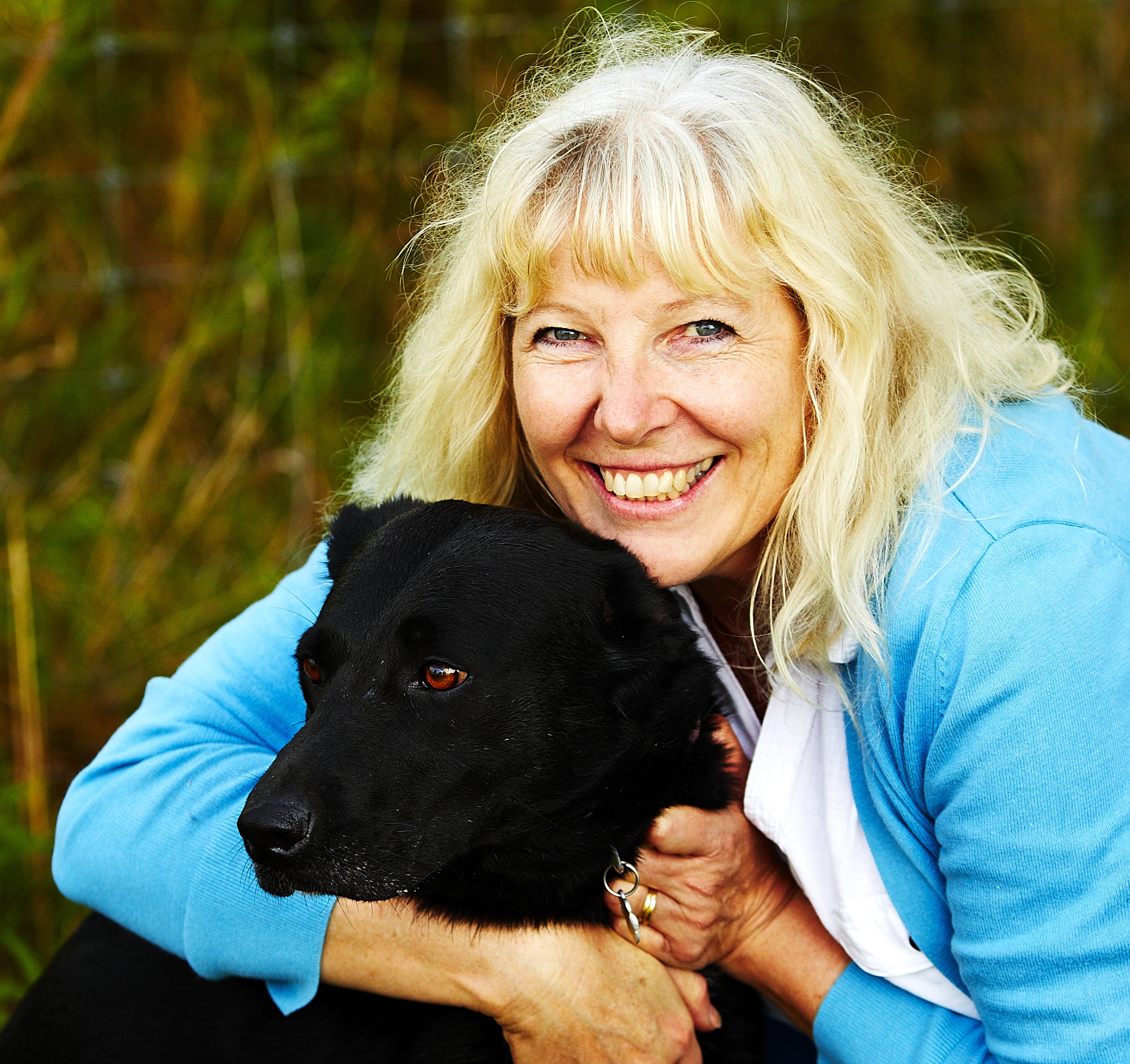
SavedbyGracieReaders often thank me for sharing my personal story of battling an anxiety disorder in my memoir Saved by Gracie: How a rough-and-tumble rescue dog dragged me back to health, happiness, and God.

“You’re so brave to have written this,” they say. “I’d be embarrassed to share something so personal.”

Honestly, it never occurred to me that I was being brave in recounting my experience with anxiety. I lost all my privacy boundaries when I gave birth to my third child in a room crowded with medical personnel. Once you’ve had an audience of strangers watch you push a child down the birth canal, there’s not much left that can embarrass you.

Another reason it surprises me to be described as “brave” is that all I’ve done is tell a true story about the ways my head, body, and spirit responded to taking a shelter dog into our home. It’s also true that I didn’t want the dog, but when I realized how the dog was helping me change my life for the better, I immediately wanted to tell that good news to other women who might be suffering with anxiety as I had.

First and foremost, I wanted to share my story to help others. I’d learned something new and valuable, and even though the therapeutic value of animals has been a popular research topic in recent years, I wanted to frame that information in a fresh way that would encourage readers to make that information work for them, too. Basically, I used myself as the proof in the research pudding.

And here’s where a true story encounters craft: it is the writer’s challenge to make the story simultaneously personal AND universal .

We all have experiences that are common to the human condition, yet people relate most deeply to the universal when it becomes intensely personal. Over the years of my writing career, I’ve learned that it’s the writer’s intimate voice and transparency (I’m talking about total honesty here!) that are key to combining the universal and personal. For example, if you tell me you’ve had a traumatic experience, I can nod and say “so have I,” but unless you give me the details of how it personally impacted you, I won’t be looking for similarities in our stories. That means you, as a writer, have to seek out and name the personal aspects of the universal that will engage your readers. You have to dig up the reality – expose the heart and soul – of the experience you want to share.

Make no mistake – digging in your life can be painful for you and those around you. With luck, though, it will be ultimately illuminating and healing, too.

And when you do that with your own story, you give your readers the permission, and hopefully, the courage, they might need to be honest with themselves in their lives. Honesty really is the best policy for a writer, because it’s the key to connecting compellingly with your audience as you make the universal very personal.

How do you approach the universal in your writing?
I’m a Glutton for Information!

French bulldogSelling books and signing them is a happy experience for any author, but if I had to name my favorite part of the writing process that leads to publication, it would be doing the research that goes into my books.

I love doing research. In high school and college, I was the student who jumped for joy when the instructor assigned a research paper. I couldn’t wait to dig through the library for books, or hunt down obscure magazine articles. These days, research is even more expansive (unending, even!) thanks to the internet, but I love it, along with the hands-on research I encounter in the course of writing manuscripts. I’m just a glutton for information, I guess.

In celebration of that nerdy writerly trait, here are a few of my favorite research moments.

  1. I got a personal, private tour of a donut shop. Need I say more?
  2. I spent hours in the dark one night with some good friends checking nets for owls to band. We never got one, but I did get to wear a really cool headlamp while we strung up nets in the woods and told funny stories to pass the time.
  3. I took a firearms safety course and learned how to shoot a gun. I put 19 of 20 shots into the center of the target, so you can call me Eagle Eye from now on!
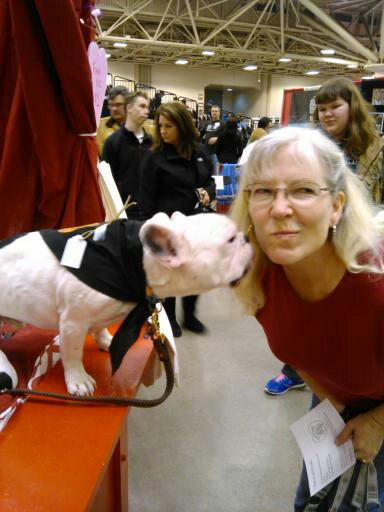
  4. I puckered up for a kiss from a French bulldog at a Pet Expo and posed with rabbits running an obstacle course. (Yup, that’s me and the bulldog above.)
  5. I spent a week in January at one of the world’s premier birdwatching areas in southern Texas. It was sub-zero and snowing back home in Minnesota at the time, which taught me the critical importance of timing when it comes to planning research trips.
  6. I took my husband on a very special summer date night to watch 300+ Chimney Swifts go to roost in an old chimney stack at dusk. It was a breathtaking aerial display and possibly a once-in-a-lifetime event as the populations of these birds dramatically decline.
  7. I met a World War II veteran who worked as an ordnance officer, which led to learning about camouflaging British air bases to hide them from Nazi bombing raids.
  8. I got to sit in the mixing booth of Prince’s Paisley Park Studio while interviewing a pre-eminent Christian composer as he completed mixing his musical tracks for a new CD.

Do you count your research as one of the best parts of your writing pursuit? What is your favorite research moment?

Leave the Luggage Behind

luggage“Where are your bags?” is the most frequent question I’ve been getting lately from the friends I stay with when I travel for author events. I show up at their doors with a small tote in my hands, and they look around me for the rest.

“This is it,” I say, and they marvel at how little my bag is.

For some reason, I guess everyone expects me to be loaded down with luggage, dragging along a carry-on case, a tote on my shoulder and more bags to come. While that may have been the norm for me years ago on the rare occasions I flew somewhere with my five kids, it’s no longer my style.

These days, I fly with minimal baggage, and I love it. Instead of packing car seats, food snacks, toys, games, and multiple outfits for all, I get a kick out of taking as little as possible. I actually look forward to living out of one small bag for three or four days, since it requires me to trim my wardrobe to only the essentials I need. Once on the road, I don’t have to make any clothing choices since I already made them when I packed; I save time and effort with less to manage. Limiting myself forces me to evaluate priorities and pack accordingly. There’s no room (literally!) for changing my mind, or my clothing options.

The result is perfect for traveling: I have what I need and no more. It makes me feel mentally and emotionally light and free, and I don’t have to physically exhaust myself lugging extra bags. To fly unfettered by baggage is a wonderful thing in a world of extra luggage fees, delays, and lost bags.

If only I could do the same with my journey through life!

“Do not get any gold or silver or copper to take with you in your belts— no bag for the journey or extra shirt or sandals or a staff, for the worker is worth his keep,” Jesus tells his disciples when he sends them out to preach and minister in Matthew 10. Clearly, our Lord knew the value of traveling light! Without all that extra baggage to keep track of, his disciples were free to devote themselves to the work to which they had been called. Unencumbered with material concerns, they could focus on the priorities, the essentials of Christian mission.

I’ve found that is also true of traveling through life as a Christian author: when I keep my eyes on the Kingdom, everything else loses its urgency. Sure, I’d like to make more money (who wouldn’t? travel expenses do mount up no matter how many free beds you can find!) and it would be nice to have readers flocking to me in droves. Yet when I’m focused on the essential task of sharing God with others, it only takes one heart-felt ‘thank-you’ from a reader to know that I am ‘worth my keep.’

How do you pack for your journey?

I’m Hooked on LinkedIn

hooked onAfter three years of experimenting with social media networking, I’m finally closing in on what works best for my marketing needs at this time.

But before I share with you what I’ve discovered, I need to make some qualifications of phrases in that first sentence.

  1. ‘Experimenting’ – I’ve had no formal training in using Facebook, Twitter, LinkedIn, Google+, or Pinterest. Instead, I’ve read countless books and blog posts about using them, taken online webinars and asked others what they do. I’ve tried some ideas (mostly the ones I understood how to do) and rejected others (the ones I had no idea how to do). My experimenting has truly been all over the net, kind of like sampling all the flavors in an ice cream shop – a small bite at a time.
  2. ‘Works best’ – I define this as ‘what I can successfully manage, given limited time and ability because I am not a social media guru, nor do I aspire to become one.
  3. ‘Marketing needs’ – For me, this is publicity and audience building. I don’t sell books myself; I focus on branding myself to create the desire in my audience to go to vendors. Ultimately, I want my audience to become my sales team to sell my books to others, since there are a lot more of them than there is of me!
  4. ‘At this time’ – Marketing needs change over time, as do the ways different media platforms function. I dread every announcement that a social site has made ‘changes,’ because it means I have to learn/relearn how to use it.

All that said, I have found MY most successful audience builder to be LinkedIn. That’s because I focus there on connecting with others who work professionally in the fields in which I write: dogs, birds, health and wellness.

Yes, you read that right – my Birder Murder Mysteries and girl-meets-dog memoir appeal to three audiences, yet they overlap because my overarching brand is about getting outside to get healthier and happier. My contacts are working professionals at state parks, dog or bird-related businesses, wellness advocates, animal rescue groups, and ecotourism, to name a few. My strategy is to strengthen my social relationships with those contacts by engaging in conversations with them individually and collectively, which is what LinkedIn shines at. I see my contacts as distribution points – when I engage them meaningfully, they share my brand/message/content with their own networks. And LinkedIn makes it easy for me to find people who already care about my topic(s) with their group listings and recommendations.

My marketing strategy will continue to evolve, as healthy marketing strategies do, and I know that my experimentation with other networks is far from over. For now, though, LinkedIn is the backbone of my social networking strategy since it yields me the most new contacts, opportunities to market, and book sales numbers of all the platforms.

Which social media platform is working hardest for you? How do you measure that?

Multiple Author Events – Yes or No?

Smiling Group of ProfessionalsAs a writer, the weight of book promotion falls on my own shoulders. Since that gets tiring, I’m always looking for ways to maximize the results of the events I do: my current goal is to market smarter, not just harder.

So when a writer friend told me about the great attendance and good sales she experienced at a multiple author event at a book store, I decided to give it a whirl with both of my book lines. That meant gathering other authors who’ve written about dogs (so I could promote my girl-meets-dog memoir Saved by Gracie) and collecting another crew of authors who’ve written about birds (to expand the audience for my fictional series, Birder Murder Mysteries).

This is how it played out:

National Dog Day. I broached the idea for a National Dog Day Night to a local independent bookstore, and they jumped at the concept! I offered to recruit authors to attend, and the store agreed to stock the books, set up chairs and a microphone, and do publicity. They even partnered with a local dog rescue group for more publicity and support. Luckily, three well-known writers with dog books live in my area, and they readily agreed to participate. We all thought it was a smokin’ idea…but only five people showed up. What went wrong? Personally, I attributed it to the lovely summer weather; I myself would have chosen to be outside with my own dog, rather than inside with authors.

My big score, though, came from meeting the other authors, one of whom asked for an excerpt from my book to run in her monthly newsletter that goes out to thousands of readers. I made a hot contact even if the event fizzled.

For the Birds Night. I took this idea to a local Barnes & Noble and again, the events manager thought it was a winner. This time, it was a monumental headache for me to pin down the authors – talk about a flighty bunch! Not that any of them are absent-minded – it just took me a while to catch all these bird-chasing authors between their travels and professional obligations, not to mention the multiple email addresses so many of them use. I managed to round up five of the original ten that I contacted, and even then, I had one drop out at the last minute due to health issues, and one drop in who’d forgotten to confirm with me months earlier.

The event itself, though, was a big hit! We had over 20 people attend, a lively discussion ensued, and every author was signing several books by the end of the evening. Our B&N hostess invited us back for a spring event, and said her district manager had expressed interest in us taking our event to other stores.

After organizing two group events, my conclusion is that it’s worth the effort in terms of both book promotion and author networking. Upfront sales might be disappointing, but as one more tool in your marketing toolbox, I highly recommend giving it a try.

And keep some aspirin handy.

Have you participated in multiple author events? What was your experience?

WordServe News: December 2014

Exciting things have been happening at WordServe Literary!

On the final post of each month you’ll find a list of Water Cooler contributors’ books releasing in the upcoming month along with a recap of WordServe client news from the current month.

New Releases

Deb DeArmond released her second book, I Choose You Today with 9781426787966_p0_v4_s260x420Abingdon Press.

***********************************************************************************************
9780310331018_p0_v2_s260x420

Becky Johnson and Rachel Randolph released their second book together, Nourished with Zondervan publishers.

************************************************************************************************

Kyle Idleman with agency client, Jeremy Jones released 40 Days to Lasting Change with9780781412681_p0_v2_s260x420 David C. Cook publishers.

*************************************************************************************************

Rick Lawrence with Kregel publications, released his latest book, Skin in the Game. 9780825443596_p0_v1_s260x420

*************************************************************************************************

Roger and Kathi Lipp  re-released with Harvest House publishers Happ9780736955737_p0_v2_s260x420y Habits for Every Couple. Previously titled The Marriage Project. 


New Contracts

Deb Coty Deb’s signed a contract for a cookbook with Barbour Publishing as a companion to her book, Too Blessed to Be Stressed. Greg Johnson, agent of record.

Sara Davison signed a three book contract for a fiction series with Ashberry Lane. Alice Crider, agent of record.

Paul Kent signed with Worthy Publishing Group for a Star Wars devotional, due out at the same time as the 7th Star Wars film next December. Greg Johnson, agent of record.

Amy Sorrells signed a two book contract for two new fiction titles with Tyndale Publishers. Sarah Freese, agent of record.

New Wordserve Clients!

Husband and wife duo, Jim and Lynne Jackson signed with Alice Crider.

What We’re Celebrating!!

Jan Dunlap’s memoir Saved by Gracie, and her Birder Murder Mystery titled Swift Justice, have been nominated for the 2014 Minnesota Book Awards in two different categories: Saved by Gracie in the Memoir/Creative Nonfiction category, and Swift Justice in the mystery genre.

PicMonkey Collage

Making It Real

Hoh River Cascading Through RainforestWhen I first started writing my Birder Murder Mystery series, I wanted readers to feel like they were actually walking in the footsteps of my protagonist, so it was a logical choice for me to use real locations for book settings. What I didn’t realize at the time was how much readers enjoy books that take place in areas they know and how much those real places can shape what I write. Once I figured out that my real locations were one of the more powerful means of attracting readers, I began using real places as much as possible, not only for marketing later, but to provide me with inspiration for other pieces of my story.

As a result, I now take detailed notes of places I visit in the course of my book research. Fat Daddy's BBQ in WeslacoFor instance, last January, I was researching McAllen, Texas, for my next murder mystery. Since friends had recommended I try the barbeque at Fat Daddy’s, I made sure I had lunch there one day. As I ate, I observed that large groups of National Guardsmen sat at many of the tables, which I also noted in my daily travel journal, along with descriptions of the patriotic posters and flags adorning the walls. When I developed my plot, I found that the soldiers I’d seen could play into my story in a critical juncture, so I wrote them in – something I never would have come up with if I hadn’t personally visited Fat Daddy’s. Now, when anyone from the area reads the book, they’ll immediately be able to say, “this author really was here!” and it gives me the instant credibility which every fiction writer craves to lure readers into the story.

diner open signAnother big benefit of writing real places into your books is that some readers identify so much with a favorite place, they tend to talk about your book simply because of the setting. In one of my books, I used a small diner where one of my daughters waitressed years ago. Not only did it give the story a strong local connection, but once it was published, the diner owners prominently displayed the book, which delighted all their customers, who then told their friends that their favorite diner was in a book. By using the diner as a piece of my story, I also didn’t have to think twice about what that setting would look like, because all I had to do was describe what I saw.

Perhaps the best guideline I can provide about using real places in your fiction is the rule my publisher gave me: If you say nice things about a place, use the real name; if you want to be negative, make up a place. That should give you more readers and happier business owners (who will become your friends if they aren’t already!), and much less chance of getting sued.

Who knows? You might even get a sandwich named after you…

Taking a Tip From Big Business

blue ribbonMy husband’s company is in the midst of preparing for an industry competition that recognizes on-going improvement efforts in corporations. After hearing him talk about processes of quality control, increased productivity, and excellent resource management, all I could think was “I gotta get me some of that!”.

Unfortunately, authors can’t take advantage of this particular efficiency-enhancing program. You have to be a great big corporation or public institution. (Heavy sigh on being left out, but huge sigh of relief on the not being a big institution part! I like being my own boss.)

So here’s my plan: create my own author business improvement program. To that end, I’m currently evaluating my current strengths and weaknesses in those three areas my husband talked about, and I’m working to set goals for improvement. Here’s what I’ve got so far.

Increase productivity. I’m going to rediscover the surface of my desk. This will involve a full frontal assault on my office space, as I have multiple layers of sticky notes attached to files and walls. I claim I know where everything is this way, but that’s only true in a limited sense: yes, I do know where everything is – it’s in my office – but I don’t know in which pile of notes anything specific is. I’m through with wasting time searching. Everything that has not progressed past the sticky note stage gets tossed. That should reveal to me what my current priorities are and allow me more focus on finishing what I’ve started. And if it’s a really good idea I need to save, it goes in a folder labeled “Future,” which I will not open until I finish what I’ve already started.

Quality control. For me, this is about process. I lose too much time ‘exploring’ on social media – tracking down people, ideas, potential marketing contacts. Even simple tasks can steer me off-road if I’m not mindful of my objective; just updating my calendar on my website can lead me to perusing my pictures file, which in turn reminds me to prepare some new photo posts, which leads me to searching for free photos online, which…you get the idea. I’ve found I need to schedule the different tasks of my writing career by the hour to make sure I keep focused on my immediate objective. Work smarter, not harder, is my new motto.

Resource management. My greatest resources are time and energy. My task schedule will help with managing my time, but it’s important for me to keep my energy resource balanced between my personal and professional lives. When I spend everything I have on writing, I burn out; if I let my personal life constantly squeeze out my writing, I feel frustrated with myself and those around me because I’m not using all the gifts I know I’ve been given. Scheduling regular ‘play’ time is just as important for me as reserving time to work, and the revitalization that play offers pays off in increased productivity when I’m back in my office.

Do you evaluate the business side of your writing career?

I Didn’t Sign Up For This!!!

Babies CryingSometimes I wonder if I’m a masochist, because a writing career is a mixed bag of blessings and curses.

The blessings are many. You finally get to hold in your hands your words published in a book (yes, electronic versions count!). You have the satisfaction of knowing others are reading your work. You get your name in the local paper for doing a booksigning, or you’re a guest author at a local book club. You might even get paid to speak to an audience!

And then there are the curses. A reviewer hates your book. You knock on the doors of the local media till your knuckles are sore, but no one answers. Your great idea for marketing falls flat. You check your Amazon.com sales numbers on your author central page, and it’s like getting slapped in the face with the wet towel of reality. (“What? I’ve only sold 17 copies of my book in the last six months? That CAN’T be right!”)

The fact is that for us writers, who pour our heart and soul into our writing, all those negative responses drip, drip, drip onto the rock of our confidence, until the sharp edges of our desire and motivations (those things that enabled us to set out on the road of writing in the first place) become worn down, replaced by recesses of self-doubt and exhaustion. It takes a lot more energy and perseverance to repair that accumulating damage than it does to bask in the sunshine of the blessings we experience.

This, then, is why a writer needs a talent to forget.

As Philippians 3:13-14 instructs us, “Brothers and sisters, I do not consider myself yet to have taken hold of it. But one thing I do: Forgetting what is behind and straining toward what is ahead, I press on toward the goal to win the prize for which God has called me heavenward in Christ Jesus.”

Every writer I know acknowledges that they have been called to write. The thing we don’t like to acknowledge is how hard it can be at times to do that very thing. None of us embraced our call to write with a joyful shout of “I can’t wait to experience frustration, misunderstanding, isolation, and a hundred painful book signings in almost deserted bookstores!”

At least, I know I didn’t.

And yet the promise remains for us as powerful as it did for St. Paul. We might not have to endure blindness, or imprisonment, or persecution like that famous evangelist, but we can still ‘strain toward what is ahead’ when we fix our eyes on the prize that is Christ Jesus, and not on the obstacles we have to surmount to get there. Like St. Paul, we need to consider ourselves ‘as yet to take hold of our goal,’ no matter how accomplished we might feel when our names are in the local events calendar, or someone contacts us to speak at a program.

Forget what is behind, then, and press on, because that mixed bag you’re holding is well worth the prize.

What is your favorite way to forget and then press on?

What’s YOUR Holiday Plan?

balloons-25737_150Do you know what today is?

It’s National Black Dog Day! Roll out the carpet, crank up the tunes, and open the bags of doggy treats!

In celebration, I’m doing a radio interview, guest posting on several blogs, making a couple of store appearances, and managing a schedule of entertaining tweets, updates, and posts on my own social networks. It’s not only a nationally-named observance, but it’s the perfect opportunity for promoting my very own black dog who stars in my humorous girl-meets-dog memoir, Saved by Gracie. Never mind that the book was released last April – today is the day to hit the spotlight again.cropped Jan and Gracie

In other words, I found a holiday tailor-made for my book, but without all the noise other holidays involve. I don’t have to compete with Halloween costumes or décor, Black Friday shopping madness, Santa, New Year’s Eve bashes, romantic getaways, or fireworks displays. As a black dog owner, I have the stage all to myself!

How about you? Have you found your tailor-made holiday for book promotion yet?

As every author knows, timing is one of the best assets you can find in publicity. Sure, we all wish for something of national importance or interest to pique everyone’s interest in our books when they launch, but few of us have any control over those larger scenarios. The key to keeping your book release momentum, then, is to continue to find reasons that your book is timely. Here are a few suggestions for doing just that:

  1. Re-examine your book content for additional audience appeal you may have missed during the initial book launch. For instance, when my memoir came out, my publisher focused on Christian readers, since it’s a tail (I mean tale) of spiritual healing. After that first wave of publicity, I began to expand my reach into dog-lover territory by hooking up with animal rescue groups, veterinarians, and dog boutiques. I’m now moving into a third wave of audience strategy by networking with health and wellness groups. Handling all three markets would have been too overwhelming for me to manage at first, but by adding audiences incrementally, I’m better able to market and direct what I need to do next to continue sales.
  2. Pay attention to national news and trends, and see if you can’t jump on those trains. Whenever environmental topics (like wind power vrs. natural habitat) are hot, I try to build on those conversations with my own links and commenting, because my Birder Murder Mystery series deals with the same topics. The more I engage in the conversations, the better my visibility to my readers, which translates into continued sales, even for older books in my series.
  3. seafood fettuciniFind your perfect holiday. Does your hero cook Italian food? National Fettucini Alfredo Day is Feb. 7. Does your book discuss holding onto memories? National Scrapbooking Day is the first Saturday in May. If you write about it, I bet you can find a ‘holiday’ to connect with it.

What ‘holiday’ is in your future promotional plan?