They Also Serve Who Drink and Weep

Coming home .. .. The writing life takes me away from home often. I write this the day after returning from 2 weeks of travel, home to Kodiak Island, to my husband and sons and daughter and Yorkshire terrier who badly needs a groom. I walk through my door and want everyone to kiss me as if I have just been born, as indeed I have.

photo

I am home, but I cannot stop thinking about her, the woman I met on the plane. It was the fourth and last plane of the trip. I was almost there. I edged down the aisle and saw her—crying. Sobbing on her phone. My eyes went dark, my heart tightened. As I stepped past her, I heard her say, “They just told me. I have pancreatic cancer. He gave me 3 – 6 months to live. I don’t want to die!” and she dissolved again into weeping, running her hands through her hair.

She was beautiful, dark-skinned, dressed in expensive jeans, a leather jacket. Her phone was pink. She gripped it so hard, hanging on to whoever was at the other end. My seat was one row back and one row over. I could see her profile, hear every word. I looked around desperately. A woman was dying! And we were calmly sitting in our seats, buckling our seat belts against death—and would soon follow all the safety requirements, while she was no longer safe. What do I do?

a woman with hands covering face

Men sat in front of her, and in back, each one with the bland face we wear when we pretend we don’t hear because we too are afraid. I wanted to do this too, but there was an empty seat beside her. She would be alone this entire flight with no one .. .. And how could I forget what I had prayed that morning? In the hotel room, on my face, wanting this day, this one day, to have a pure heart, to serve someone . . . “May your kingdom come, Your will be done .. May I hear you and serve you this day . . ..” and off I went into another day of terminals and planes—and there she is near me, still crying, the seat beside her empty.  I have work to do—a chapter is due, edits for an article are due, but the seat beside her is empty.

airplane seat

Shaking, I unbuckle my seatbelt, lift my bag and stand beside her. “Is it okay if I sit beside you?” I smile. She looks up at me, surprised, with her ruined face and nods, trusting, like a child, her eyes again filling with tears. I sit, she watches me settle. “What has happened?” I ask her and it pours out, but there are hands now to catch what falls, our shoulders touch, I stroke her arm, and we mourn and grieve and sit together in the shock of it. She is young. She knows Jesus, but she doesn’t want to die she cries again and again through a twisted mouth. I silently scream to Jesus to give me the words. I need them when I am writing, but I need them even  more now … .and they come. At one point she grasps my hands and says, “God sent you to me.” Mostly I am there to cry with her, to drink chardonnay with her. I know the chardonnay will wreck me, but had she offered me whiskey, I would have drunk that too.

It wasn’t much. I write all this not for anyone to say, “Oh, what a great servant you are!” Because I am not. How many people have I not seen and walked past? How many have I seen and still walked past? But this is instead about this wondrous, terrifying God we serve, who has asked one of his daughters to die a hard, early death, and who asked another selfish frightened daughter to sit with her in her fear and aloneness for a short time. It was so little. And she staggered off the plane to walk into the end of her life—and I staggered into a car taking me to stages and microphones.

Here is what I remember : “They also serve who only stand and wait.” John Milton wrote in his sonnet “On His Blindness.” I was going to speak on podiums, in many places, before many people for two weeks, but none of that mattered then. Of all I did on that trip, perhaps this mattered most: “They also serve who only sit and weep.”

2013-04-01 07.20.39

Can tears really be enough? For that day, for that hour, yes. God will provide another servant, and another for every empty seat beside her.

Do we dare ask this each morning? “May I hear you and serve you this day.” Yes, dare. Then watch for the empty seat. Bring tissues. Drink wine if you must. Become a child. Give whatever you’ve been given. Sometimes it will be words. More, it will be your presence and your tears.

And the kingdom of God will come near.

“Would You Like to Meet the Author?”

"Soapdish" photo from www.lazydork.com
“Soapdish” photo from http://www.lazydork.com

There’s a funny scene in the movie “Soapdish” that depicts a depressed soap opera actress, played by Sally Field, getting her recognition fix. She goes in dark sunglasses to a shopping mall with her best friend, who suddenly shouts “Is that who I think it is?”

Everyone around them stops, the actress removes her glasses, and she is immediately thronged by fans, all wanting an autograph. She smiles, graciously greets her admirers, coos at babies, and regains her self-confidence.

This has never happened to me. Not the depression part–every writer gets the blues in the face of the enormity of the writing endeavor. But I’ve never had crowds of people clamor for my autograph–not in a bookstore, and certainly not in the middle of a shopping mall.

I did have a moment recently, however, that brought this scene to mind in a good way.

My husband and I were playing hooky, taking a weekday afternoon to stroll through the Minnesota Landscape Arboretum, which happens to be about five minutes away from our home. The Arb has carried my books for several years now in its gift shop, and I’ve made a few book signing appearances there, but I’m by no means an author who is recognized by the general public. After touring the gardens, my husband and I headed into the gift shop for our usual browsing, and while I inspected some lovely sweaters and ceramic dishes, he went into the book section to see my books on display.

A moment later, I heard his voice from across the aisle.

“Would you like to meet the author?” he asked a woman who was standing in front of the display, one of my books in her hand. “She’s my wife.”

Say no, I willed her. Sporting my heavy parka, my hair doing its dry electricity bush thing, the last thing I’d expected was to be called upon to meet a reader.

“I’d love to,” she replied, turning in the direction he was pointing out to her, which was straight at me.

I slapped on my ‘meet-my-reader’ face and smiled as my husband ushered her over. We shook hands and I introduced myself, then asked her if she’d read any of my books.

“No, but I’ve heard about them,” she told me. “So I thought I’d give one a try.”

We chatted a bit more, I offered to sign the book in her hand, and after a few more minutes, she left to pay for her book at the register.

“Do you feel like the actress in the shopping mall?” my husband asked, referring to the movie we’d both enjoyed many times over.

“Yes and no,” I replied. “Yes, in that I was recognized, thanks to you,” I added, punching him lightly in the arm, “and no, in that I wasn’t feeling the need for attention to refuel my artistic career. But it was fun to give a new reader a nice surprise she didn’t expect.”

Actually, I hope I do that every time readers pick up one of my books: I want them to get a nice surprise.

Without the dry electricity hair bush thing, though, thank you very much.

The Surprising Thing About Book Influencers

My first book is almost a reality. In fact, a box could show up on my doorstep any day.

This stage of the process is humbling because I have to rely on busy people to read and help promote my book. At this point, I reminded myself that I’m not only working to promote myself, but I’m also working for the publisher who put so much faith into my project. That makes it a little easier to do the asking.

Two weeks ago, my publisher’s marketing gal, Cat, asked me make a list of all the media people and influencers who would read and promote my book. Media people? I only know the PR guy at Focus on the Family and a baseball sports announcer.

iStock_000013189752XSmall

Cat said media and influencers can be anyone who has a large audience. That means bloggers, authors, and speakers.  With that being the case, it turns out I know a lot of influencer and media peeps.  So, I collected names and addresses and passed them on to my publisher. Now hard copies are on the way to their doorsteps, too.

So what have I learned that I can share with you? Authors shouldn’t just ask for help from friends. They should ask for help from strangers, and big-time famous people.

Why?

You will be amazed at who says yes (and who says no). When I put out the word, I had some interesting responses: Some of my friends said they were too busy but if I passed along a copy, they’d try to get to it. Another friend hasn’t responded at all. Conversely, famous people I never thought I’d hear back from said, “Sure, I’d be honored.” Others went above and beyond: “You bet, and why don’t you let me put your book in a giveaway at my retreat and I’ll write a special feature about you” or “Hey, I’ll mention you at this event.”

Even strangers can have a powerful impact on your sales. I read a few articles that said if you can find top reviewers from Amazon to read and review your book, it can boost your sales. Finding someone within the top 500 is considered a coup. So yesterday I sent out four inquiries to reviewers who are interested in my genre. Two top-50 reviewers responded, “Sure, send the book.”

Feel free to read the articles about Amazon Top Reviewers here:

http://www.amazon.com/gp/richpub/syltguides/fullview/RNCWTLEMV71VM

http://www.thecreativepenn.com/2012/09/16/get-amazon-book-reviews/

http://www.huffingtonpost.com/2011/06/16/amazon-top-customer-reviewers_n_878262.html

http://www.amarketingexpert.com/easy-tips-for-getting-more-amazon-reviews-now/

I guess the moral of the story is reach out to everyone, pray for the best, and don’t get hurt or upset when people say no. Lots of people will come out to support you.

If you’re a published author, how did you find people to promote your book? 

My Friend Jane Kirkpatrick and Feeding the Lake

Jane-1-EE (3)One of my most meaningful evenings as a writer had nothing to do with me and everything to with my friend, workshop partner and fellow writer Jane Kirkpatick.

It was 2005 and Willamette Writers, our state’s largest literary organization, presented Kirkpatrick with its Distinguished Northwest Writer Award. Among recipients of the past: Ken Kesey and Ursula Le Guin.

In accepting the award, Kirkpatrick, then 59, quoted author Jean Rhys to 400 people: “All of life is like a lake made up of many stories, fed by many streams. Some of the streams are long and mighty, like Tolstoy and Dostoevsky, and some are small, like me. The size of the stream doesn’t matter. All that matters is the lake. Feed the lake.”

Kirkpatrick, who then lived on the John Day River in north-central Oregon, told how, at age 36, she first tested the literary waters. Head of a social service agency, she took a writing class through a community college adult education program. “I was terrified,” she told me. “I thought: I don’t belong here.”

The teacher, she later learned, felt the same way about himself. But, neophyte that he was, he still recognized good writing, once choosing a piece by Kirkpatrick to read aloud.

“My heart was pounding so hard I could hardly hear the reading,” she said. When he handed back her paper, it said at the bottom: “You have a gift.”

At the time, she and husband Jerry were still reeling from the loss of Jerry’s son, murdered at 21. She was suffering from a serious gluten intolerance. They needed a change.

The two decided to sell everything, leave secure jobs and homestead on the John Day River, where Jane would write.

At a place called Starvation Point, the home would be known as their “Rural 7-Eleven” — seven miles from their mailbox, eleven miles from pavement. They built it. Dug a well. Battled rattlesnakes. And ran seven miles of underground phone wire.

Once semi-settled, Jane began writing and sending stories to magazines. Rejection. Rejection. Rejection. Then it happened: One sold. Sports Afield, for $75, bought a piece she wrote on repairing fishing poles with pine tar. Then Northwest magazine bought the story her teacher had read aloud in the class.

She began wondering: Could I?

Jane began working as a mental health counselor at Warm Springs Indian Reservation. On Tuesdays, she would make the nearly three-hour drive — longer during snow and ice — and on Thursdays, return.

Then she would start writing, disciplining herself to get up at 4 a.m. Her first book, Homestead (1991), was about her experience on the John Day. More than two dozen have followed — fictional stories of the human heart, based on real events, and often involving women, pioneers, and Native Americans.

At least some of her empathy for those overcoming odds comes from her own experiences. She and Jerry were badly hurt when their small airplane crashed. They took in a granddaughter whose drug-hampered parents weren’t able to raise her. She lost a sister to disease in 1997. In the last year Jerry, 82, has battled numerous physical challenges.

“It’s the obstacles in life that carve out our character,” says Kirkpatrick. “Character comes from the Greek word `to chisel.’ It’s what’s left after you’ve been `gouged out.’ ”

What some of her colleagues were applauding on the night she won the award — none perhaps more enthusiastically than I — was the never-quit spirit that she writes of. And lives.

While working on a book of my own, for instance, I will often hear the “get-up-and-write” alarm at 5 a.m. and think: no, no, no. But then I rise, remembering that my ex-student Jane has already been up for an hour, feeding the lake.

WordServe News: March 2013

Exciting things have been happening at WordServe Literary!

On the final post of each month you’ll find a list of Water Cooler contributors’ books releasing in the upcoming month along with a recap of WordServe client news from the current month.

New Releases

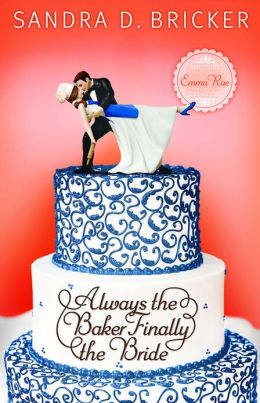
FinallytheBrideSandra Bricker, Always the Baker, Finally the Bride
(Abingdon Press)

**********************************************************************************************
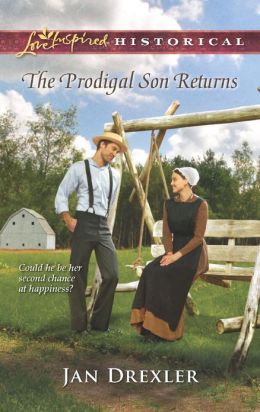
TheProdigalJan Drexler, The Prodigal Son Returns
(Love Inspired)

**********************************************************************************************
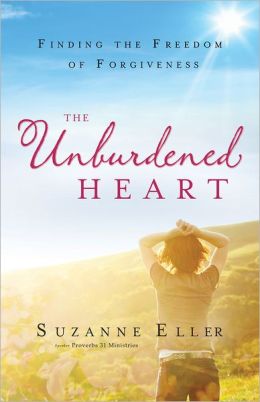
UnburdenedSuzanne Eller, The Unburdened Heart (Regal)

**********************************************************************************************
RealValorSteve Farrar, Real Valor (David C. Cook)

**********************************************************************************************
AnsweringtheCallKen Gire, Answering the Call: The Story of Albert Schweitzer (Thomas Nelson)

**********************************************************************************************
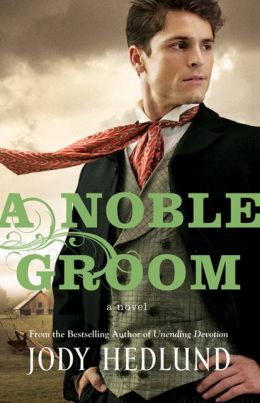
ANobleGroomJody Hedlund, A Noble Groom (Bethany House)

**********************************************************************************************
TheEasyBurdenPatty Kirk, The Easy Burden of Pleasing God (IVP Books)

**********************************************************************************************
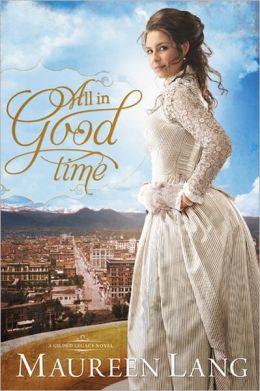
AllinGoodTimeMaureen Lang, All in Good Time (Tyndale House)

**********************************************************************************************
VoicesofthePacificAdam Makos, with Marcus Brotherton, Voices of the Pacific (Berkley Hardcover)

**********************************************************************************************
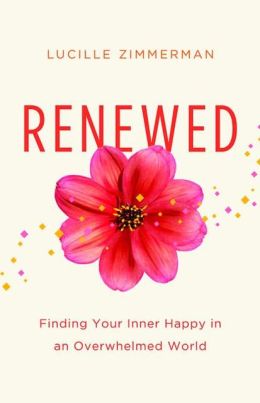
RenewedLucille Zimmerman, Renewed
(Abingdon Press)

**********************************************************************************************

New WordServe Clients

None…we’re standing pat with our great group of authors for now!

New Contracts

Tracie Miles signed with Bethany House Publishers for a book titled Your Life Still Counts: How Your Past Has Equipped You for Your Purpose.

Susie Shellenberger and Kristen Weber signed with Barbour Publishers for A Girl’s Guide: Guys, God and the Galaxy.

Gillian Marchenko signed a contract with T.S. Poetry Press for her memoir. Yay, Gillian!

What We’re Celebrating!!

A Higher Call by Adam Makos continues to hit the New York Times list. On March 31, it will be #6 (again) on the Hard Cover nonfiction list. It’s been in the top-15 for 9 weeks!

Bees in the Butterfly Garden by Maureen Lang, hit the March CBA list at #5 on the fiction list and the #40 on the top-50 in sales list.

What thing on your writing journey are you celebrating today?

Layer Your Cakes

Lately, God has been speaking to me quite clearly. He keeps repeating the word “miracles”. As I am currently dealing with some tough life stuff, this word is especially meaningful. Obviously, God speaks to each person differently, and He reveals truth in many ways; although, His truth always remains the same. One way that God speaks to me is by repeating a particular word, idea, or theme. In this particular instance, the word “miracle” has come through several different people, one email, and the book of Matthew which I am currently reading through for my devotions.

images

As I read through new manuscripts, something that always makes me take another look is a tightly layered story. For example, let’s say that you are writing a story about a family provider. In what ways could you show that character as a provider? Perhaps you could give him/her the last name of “Baker”. You would definitely show that character actually providing for the family: buying groceries, cooking meals, earning money. You might highlight the antagonist doing something in direct opposition to your main character, so he or she, instead of providing, would take away: steal money, ruin a relationship, work as a tax collector (no offense to any tax collectors out there).

Beyond emphasizing a particular character, you also want to pay attention to the language that you use. Perhaps choose a word or two, or an idea, to repeat throughout your story. Trace that word/idea over the course of your story during significant moments that will move your manuscript forward.

Also, integrating key setting elements is important. You might focus in on a particular building, almost making it a character. Then, destruction could come to that building during the climax of your story. Or the building could undergo a transformation, again, highlighting the character of it.

And layering plot throughout story is important as well. Create scenes that build on each other and move the reader forward in exciting ways.

Finally, when you have done several revisions on your story, then the layering part becomes fun. Include your audience! If you are in a critique group, pay attention to their likes and dislikes: reference their favorite TV show, name a character after one of their children, reference something from their current WIP. Doing this last part really only speaks to one or two people, but I have always found it to be the most enjoyable part of story writing. Plus, it will make certain readers think that you are only writing for them which is one of the amazing wonders of story writing.

When you have worked through so many drafts, however, there comes a time when you must stop layering. Yes, it is fun to trace a theme throughout your novel, read it from start to finish, and come to the end and think, “Wow, I am good!” However, you don’t want to overemphasize a particular theme. Your readers are smart. Encourage them to dig for the themes within your story.

Layered cake tastes good as long as their is only so much frosting separating the layers. Don’t make it too sweet.

Question for you: What layers do you currently have in your WIP? Are there others that you could add?

Monkey Read, Monkey Should Do!

apeDoes the acronym HARO mean anything to you?

It should, because it just might be your ticket to free publicity, extensive exposure as a writer, and the means to grow a national reputation as an expert in your field.

HARO stands for Help A Reporter Out, and it’s a website where you register as an expert and news source. There is no fee to register, and while there is no guarantee that you will get tapped for information, it’s a chance you don’t want to miss. For nonfiction writers, it can become one more piece of a marketing plan to become known for their unique expertise, while fiction writers might consider their own research in specific topics as fodder for story ideas. According to HARO’s website, 30,000 members of the media have turned to HARO for assistance in developing stories; is there any reason you shouldn’t be one of those folks helping out a reporter?

Learning about HARO was just one of the things I learned from recently reading APE: Author, Publisher, Entrepreneur-How to Publish a Book by Guy Kawasaki and Shawn Welch. While I have no desire to publish my own books, I still found the book informative and helpful, especially as I’ve grown from an author-wannabe to someone with five years of publication experience. The first section of the book was a good reminder that writers come in all shapes and sizes, with a range of motives, and that’s okay. It made me consider again the tenacious nature of writers who want to publish and gave me a new understanding of why people choose self-publishing. (It also made me realize that if I did decide to do a short ebook as a promotional opportunity for my other books, I could probably pull it off using APE as my guide.)

What I especially appreciated, though, was the book’s insistence that there is no escaping from the truth of today’s book business landscape: authors need to take responsibility for their books’ success, no matter how they are published.  APE gives valuable insight into the entire publishing process, which I’m convinced every author needs. Publishing is a business, and the sooner authors accept that, the more successful they will be! As an early publishing mentor of mine insisted, if you’re going to succeed, you better know how the business works. Kawasaki and Welch have done a fine job in giving readers the essentials of publishing.

Seeing as I’ve spent the last year trying to educate myself about platform and marketing, I found the last part of the book packed with practical suggestions and resources, like HARO, that I can play with as I continue to polish my marketing skills. The authors even include their own list of what they did to publish/market APE itself, providing readers with a basic outline for promoting any book, and offering links to learn more.

What are you APE-ing these days?

(Special thanks to Lucille Zimmerman, my agency-mate, who gave me the book to read!)

It’s All in the Details

scotland-13584Creativity isn’t just a good idea but mandatory if you want to be a writer worth your gold (way more valuable than salt nowadays). The thing about creativity, though, is that you must be careful with the details. Why?

Because there’s a fine line between creativity and believability.

Recently I received an email from a cyber buddy that read:

“I’m writing this with great grievance. I’m presently in Scotland, United Kingdom, with my family for a short vacation and we’re stuck. And really it was unannounced. We were attacked by four armed robbers on our way back to the hotel where we lodged. Not only were we robbed, but are completely embarrassed.

All our cash, credit cards, and cellphones were stolen. We’ve reported the incident to the embassy and the police, but to my dismay, they seem not bothered…their response was just too casual. Our flight leaves in a few hours but we’ve got to settle our bills before we’re allowed to leave. Now I’m freaked out.

Please, I need you to loan me some money. I promise to refund you as soon as I’m back home. All I need is $1,650. Please let me know what you can do. Write me back so I can tell you how to get it to me.”

Now then, as you’ve likely figured out, this is indeed a scam—but a scam that might’ve worked a whole lot better had they paid attention to minor details. Let’s pick it apart, shall we?

From a creative standpoint, I’ll give this a 3 out of 5 stars, mostly because whoever wrote it upped the ante by adding in the ‘armed’ in front of robbers. Nice touch. I also like how the author included a ‘ticking time bomb.’ The plane leaves in a few hours and their bills must be paid or else. Will they make it out of the country? Cue dramatic background music.

So those details totally work. What threw the story off was a single believability factor toward the beginning that instantly set off the needle on my are-you-kidding-me radar.  She’s presently in Scotland? Sheesh! Scotland implies rolling hills and kilts, not roaming bands of AK47 toting thugs. Maybe if the author had said they’d been threatened with bagpipes I’d have bought it. Nah. Even that wouldn’t have worked.

The creativity was there, but the details didn’t match. Why? Because Scotland doesn’t fit the connotation of a lawless land where desperadoes rob innocent tourists.

Next time you’re in creative mode, crafting an intense scene, make sure your details enhance the story instead of pull your reader out of the action. Losing a wallet is one thing…you can always earn more money. Regaining a disappointed reader is harder than learning the bagpipes.

Voice Recognition

Photo/KarenJordan “… My sheep recognize my voice. I know them, and they follow me.” (John 10:26 MSG).

As I listen to the birds singing their songs every morning, I wish I could distinguish one bird from another. I identify the honking geese as they fly over the lake, and I hear the woodpecker as he raps for his meal. I can see the difference between a robin and a sparrow, but I can’t tell them apart by their voices.

My husband Dan can recognize the voices of several birds. He knows the robin’s sweet song, and he is familiar with the squawking blue jay. He can even point out the mimicking mockingbird. So, I’m trying to learn a few voice recognition tips from him.

I’ve also discovered a few tips for recognizing God’s Voice, since I struggle with the same issue in my spiritual life at times. Is this the voice of conviction or condemnation? Will I let faith lead me, or will I be confused and distracted by fear? Does this voice speak life or death to my heart? Does it give me direction or cause me to dwell on the impossible mistakes of the past?

1. Communicate with God. “Don’t fret or worry. Instead of worrying, pray. Let petitions and praises shape your worries into prayers, letting God know your concerns” (Phil. 4:6).

First, I must remember to communicate with God. Sometimes I get so focused on the worrisome distractions around me that I forget the power of prayer and praise.

I’ve also learned that I can’t focus on many tasks at the same time. And if I try to multi-task, I don’t do anything well. So, I must find some way to silence all the voices around me, so I can hear God.

2. Examine God’s Word. Jesus says, “I am the Good Shepherd. I know my own sheep and my own sheep know me” (John 10:14).

What if you don’t think you can recognize God’s voice?

God’s Word promises, “(His) sheep recognize (His) voice. (He knows) them, and they follow (Him). (He gives) them real and eternal life … No one can steal them from out of (His) hand” (27-29).

Sometimes all I can do is hang on to God’s promises—even when everything around me doesn’t seem to agree with His Word. Often my circumstances cause me to panic, because I can’t see how something can work out. My logic and my emotions resist the truth that I see in God’s Word.

3. Allow God to Examine Your Heart. I don’t want to pray about that! What if you really don’t want to pray about something? That can be a big red flag that we might have a little attitude going on.

I can remember when my kids would avoid talking about something with me—like a report card or a visit to a friend’s house. I would eventually force the issue if they continued to be silent, because I knew my kids well. If they were quiet, something was up.

Investigate my life, O God, find out everything about me; Cross-examine and test me, get a clear picture of what I’m about; See for yourself whether I’ve done anything wrong-then guide me on the road to eternal life. (Ps. 139:23-24).

Photo/KarenJordan4. Embrace the Power of Christ in You.      Sometimes I become distracted from God’s voice by the worries and stresses of my everyday writing life. Yet when I choose to focus on God’s Word—listening for His still, small voice—I find rest and peace for my troubled heart and mind.

… Those who enter into Christ’s being-here-for-us no longer have to live under a continuous, low-lying black cloud. A new power is in operation. The Spirit of life in Christ, like a strong wind, has magnificently cleared the air, freeing you from a fated lifetime of brutal tyranny at the hands of sin and death. (Rom. 8:1-2 MSG).

Many times my prayer is for God to just show up. And at times, He shows up in the strangest places—like this morning, as I listen to the chorus of birds singing again. I realize that I still can’t tell one species from another. But in my spirit I know that I’m listening to a symphony of praise to our Creator.

“Let every living, breathing creature praise GOD! Hallelujah!” (Ps. 150:6).

What distracts you from hearing God’s Voice?

Unpacking a Rebuke

????????????????????????????????????????We’ve all met at least one—the writer who simply cannot take any criticism of his work. Such folk gleefully hand you their writing for review. But when you offer a tiny suggestion about a passage they’ve written, small funnel clouds begin to form over their heads. They’ll have none of it. Their eyes pinch. They are certain you are thick, even dim-witted, and probably don’t floss or exercise. Such writers typically don’t last long in the world of words, because as Justice Brandeis once said,

“There is no great writing, only great rewriting.”

Then however, there are those of us at the other end of the spectrum. We are so certain that the opinions of others must be more credible than our own, that we buy into anything anyone says about our work. This can have us constantly scurrying off in the direction of the most recent advice.

So when evaluating a rebuke or criticism, where is the balance? What questions should we be asking?

Was the rebuke from the wrong person? In my critique group we have a few poets. But I don’t get poetry. There. I said it. Thus, any constructive comments from me must be taken with a grain of salt. In fact, I typically find myself saying the same thing over and over again:  I don’t get poetry, but I love your imagery. Not very helpful. Our poets would be perfectly sane to pause before taking my poetry advice.

But what if the rebuke came from someone a bit higher up? What if a book proposal to an agent was rejected?

Was it a good idea with a bad pitch? I had a great talk in my roster of workshops but no one ever selected it. Finally someone said, “Yes, we want this talk! But you’ve GOT to change the name.” When they explained why, a light bulb went on. My title had completely misled would-be attendees as to what would be presented. Most hadn’t even read the description because the title sent them packing. The same thing can happen in a query or cover letter. You may well have a great idea, and your writing might actually be ready. But if the agent or editor didn’t catch the fever in your pitch, or if it left them confused, they most likely never went on to your writing.

Agents and acquisition editors aren’t magical. They don’t have a clairvoyant wisdom that lets them know exactly what’s going to take off and what’s going to fizzle.  Even with decades of experience and loads of algorithmic analysis, it’s still a highly unpredictable business. Which means they sometimes get it right and they sometimes don’t. (Well, all except for Word Serve Agents. They really do always get it right. Whew. Dodged a bullet there.)

Say what you want about the Harry Potter series; I still cannot imagine anyone reading through some of J.K. Rowlings writing and saying, “Ehhhh. I just don’t see it. This won’t interest a soul.” And yet. . . twelve publishing houses said just that.

Learn to Unpack a Rebuke

Most of the time, we really could improve what we’ve written. Most of the time, our writing needs some work. But don’t chase after every single comment as though it is Gospel. Measure it. Weigh it. Give it reasonable consideration. Develop a mature view of your own work. Most of the time, there is value in the criticism. But in the end, if you think your reviewer got it wrong, stick with the plan a bit longer. Look for the gatekeeper who gets you.

The obvious conclusion of this line of reasoning is that even advice from this writer must be evaluated carefully and perhaps dismissed. I’ll admit, sometimes I get it right. And sometimes I get it wrong. For example, if I had been on the committee to evaluate and select new TV programming, we’d never have heard of World Wide Wrestling or Honey Boo Boo.