Are You In the Mood?

When you’re writing a book, you have a purpose. You want to speak to your readers’ emotions, bring them into your story world, and show them ideas that may change their lives.

There are many ways to do that, and one is to be purposeful in expressing the mood of your story.

The mood is different from your setting, theme, plot, or other elements of a story. The mood is the overall feeling your reader gets from your story. It can be happy, tragic, hopeful, desperate, fearful, serene…and everything in between. Your book will have a general mood that permeates your entire story, but each scene may have its own mood, also.

How does a writer convey mood?

There are a couple of very good ways.

First is your choice of words. Consider this excerpt from “The Prodigal Son Returns”:

ImageFrom the simple white house nestled behind a riotous hedge of lilacs to the looming white barn, the Stoltzfus farm was the image of his Grossdatti’s home, a place he thought he had forgotten since the old man’s death when he was a young boy. A whisper of memory rattled the long-closed door in his mind, willing it to open, but Bram waved it off. Memories were deceptive, even ones more than twenty years old. They covered the truth, and this truth was that he had a job to do. Grossdatti and his young grandson remained behind their door.

I tried to convey the feeling of nostalgia in this paragraph, so I chose soft words like “nestled,” “farm,” “home,” “whisper,” and “memory.” As the paragraph reached its end, I wanted Bram to shake himself back to reality – at least his version of it. So I used harsher words like “rattled” and “truth.”

Read your paragraphs aloud, listening to how the words sound. What feeling do they convey? It isn’t only the meaning of words that speak to your readers – the sound does, too.

A second way to convey mood is in the construction of your sentences. Longer sentences set a softer, quieter tone, and shorter, choppy sentences convey a sense of urgency or danger.

Here’s an excerpt where I was trying to show a peaceful summer afternoon:

Once the family buggy was gone, the farm settled into a quiet that Ellie seldom heard. The early summer sun was hot, and the cows had all sought the shade of the pasture. One pig’s grunting echoed through the empty barn, keeping rhythm with the thump and clatter as he rubbed against the wooden planks of the sty.

Ellie wandered to the lilac bushes that surrounded the front porch of the big house, and she buried her face in the blossoms. They were nearly spent, but the scent still lingered. On either side of the front walk Mam’s peony bushes held round pink and green buds. Another day or two, and they would burst into bloom.

The sentences in these paragraphs are complex, with dependent and independent clauses. They are designed to slow down the reader’s pace and feel the mood of Ellie’s afternoon – hot, languorous, and even lazy.

Contrast that with this excerpt:

Kavanaugh’s lip curled in the sneer that was his trademark. “No cop is going to take me.”

The snub nose of Kavanaugh’s gun steadied as the gangster’s finger tightened on the trigger. Bram shot at the same time. His body jerked as Kavanaugh’s bullet hit his chest, and he fell into blackness.

The sentences here are shorter, choppier. Shorter sentences speed up the action and heighten the tension. The mood becomes urgent, dangerous and suspenseful. Interspersing longer sentences with shorter ones can draw out the tension even further.

So, have you thought about the mood of your book? It can be as elusive to pinpoint as your voice, but once you identify it, using these techniques can help you enhance it and will increase the depth of your readers’ experience.

If Ever There Was A Time For Writers . . .

269665_10200995681632023_245803796_n
*****

“It is the miraculous language that drags me back into its delicious kingdom again and again . . . meticulously chosen words . . . I want to enter this kingdom, with such desperation, I am willing to die for it . . . And to enter a book, to let my life course out and stream past me, is to, in a  small way, die.”

On Reading, by Cynthia Cruz, via The Rumpus, 4/29/2013 

*****

If ever the world groaned for hope, it is now.

If ever the world needed writers, artists, poets, and musicians, it is now.

Even a glance through centuries past testifies to the power of artists, those sage interpreters of the soul, to draw hope from the detritus of despair and unveil rainbows from the bleak abyss of injustice.

And so, if God has called you to write, He has called you to deliver His people from this present darkness.

If that sounds like a big job, it is.

If that sounds like it’s too much for your feeble pen to handle, it is.

Because only a Savior can sand down the sharp edges of pain. Only a Savior can sweep darkness away with a great exhale which leaves in its wake a symphony. Only a Savior can deliver us.

So what’s a writer to do?

First, like the brown, peeling bulbs we tuck into the earth in the fall, don’t be afraid to plant the seemingly worthless and ugly. God is smitten with the beauty we allow Him to create with the broken, insignificant and useless parts of our selves. Keep writing, even if there’s no tangible payback or reward. Be faithful with little, and He will be faithful with making much of whatever meager loaves and fishes we lay at His feet. Spring comes, dear one. Spring comes.

Second, take time to celebrate Sabbath. Renew your mind and stretch your imagination by reading a book outside your usual genre, or a book in the Bible you haven’t considered in a while. And as you do, pray God gives you eyes to see and ears to hear what He wants for His lost ones. Look for ways to infuse His whispers into your stories.

Third, if you feel stuck, dig deeper. Press into the words you pen, and let them press into you, that they may make an unmistakable imprint of redemption and hope upon the reader by the time the last page is turned.

Make people want to enter not just any kingdom, but God’s Kingdom, breaking into the world by the surrender of your pen today.

*****

    “I spoke to the prophets,

gave them many visions
and told parables through them.”

Hosea 12:10 (NIV)

*****

How can you let God lead you more in your writing life? In what ways can you more fully surrender your pen for His glory? 

*****

Amy writes words of hope for a hurting world. Look for her debut novel, How Sweet The Sound, coming March 1, 2014 from David C. Cook.

Around The Block With Writer’s Block

do-not-write-in-this-spaceSome people say that writer’s block is what gets the housework done, but if that were true, my house would sparkle and shine.

My vitamins would be alphabetized from A to Zinc, my nightstand drawer would contain no crumpled tissues of questionable provenance, and the frisky lint bunnies behind the dryer would now be reproducing in the rubbish bin.

For me, writer’s block doesn’t get the housework done, but it is what keeps the Internet humming along. And I don’t only turn to the Internet as a writer’s avoidance behavior, either. Hanging out online may prolong the blocked condition somewhat, but if I give the Web even half a chance, it eventually provides the cure I so desperately crave.

First, of course, there’s Facebook. Like other writers, I’m lonely. Ye Olde Writer’s Cave is dank and dreary and its stalagmites stab at my soul. But scrolling through my news feed–replete with photos of gregarious dogs who say funny stuff, sullen cats pictured splayed across Other Writers’ Keyboards, and videos of friends’ new grandbabies–brings me to my senses fast. There are worse things than loneliness.

Like wordlessness. And booklessness. And publisherlessness. Oh, my.

If Facebook somehow fails to snap me out of writer’s block, I click over to Pinterest. Within seconds, I’m immersed in a fantasy world of exotic locations, bohemian wardrobes, hunky men (some of my Pinterest friends are edgy with their pinning!), gorgeous homes, and just desserts.

It’s the desserts that get to me, if anything on Pinterest can. I’ve read that even viewing a luscious treat can cause–in some susceptible individuals–an insulin response with corresponding weight gain.

Let’s just say I’m highly susceptible.

When I literally feel my bottom-in-chair growing larger while innocently viewing the ingredients list for yet another bacon-intensive appetizer, I know I’m a site closer to loosening the block’s grip on me. One more stop on the Internet and I’ll be home free and back to cranking out another chapter.

I know exactly where to go, too.

If I truly can’t find two words to put together, my fingers click over to Craigslist, the piece de resistance in breaking the back of writer’s block.

Now, not just any category on Craigslist will do. I skip the ads for RVs and energy-deficient major appliances and ancient treadle sewing machines. I have no use for the personal ads, and discussion forums about dying and haiku aren’t really my thing.

Instead, I wallow in the hundreds of jobs on offer, immerse myself in the positions I could be applying for that might surreptitiously scratch my writer’s itch, that might anesthetize the pain I experience when I’m not doing my real job. The job I’m meant to do. Putting down glorious words, one after the other, preferably in the best possible order.

Can I hope to find employment as satisfying as writing is on a bad day, a job that could truly replace my need to write?

I pass over the ad for an exotic dancer for bachelor parties, but not without thinking of that Facebook poster that shows two gals dancing—one young and agile and the other old and clumsy. The captions read, “How You Think You Look” and “How You REALLY Look.”

Then I skim this heading: “Bilingual Interpreters Wanted! Spanish and Many Other Languages!” But somehow “many other languages” seems like Triglingual Interpreters Wanted. Or perhaps Quadlingual or Quintlingual, not that it matters. I only speak English with a smattering of adorable French phrases thrown in, mostly on the topic of finding the salle de bain closest to my train’s platform.

Being reminded of my obsession with locating the bathroom (in as many languages as necessary) draws me to another ad, this time seeking a participant in a medical study about urinary incontinence. It offerers $1200 compensation for time and travel expenses, plus a generous Depends allowance. I shake my head in dismay.

“You’re all wet,” I say to myself, a victim of my own dry wit. “These jobs aren’t for you. Maybe you should start with finishing this blog post, and then see what happens next?”

Before I shut down Craigslist, my eyes fall on one last ad.

“Surrogate Mothers Needed! Earn $28,000 and Up!!!!!” I feel a visceral (if latent) nurturing instinct flow through me while reading the job description. The money is certainly tempting, but then it hits me. They’re probably looking for someone with a uterus. There’s always a catch.

So that settles it. I’m a writer, and getting caught in a bad job won’t fix that. Only writing will. Once again, the Internet’s cured me of a vicious case of writer’s block.

This time, I hope, for good.

Do you suffer bouts of writer’s block? Any cures you’d like to share?

Why Ignoring Your Author Brand is Career Suicide

Have you heard the term branding? Does it make you want to reach for the remote and turn the channel? If so, you’re not alone. Author branding has a lot of writers confused. It did me.Why Ignoring Your Author Brand is Career Suicide

I first thought author branding was something your publisher did for you when your first books came out. Then, I thought it was a cool author tag line or slogan. And while part of both the previous statements are true, they’re not your author brand.

Knowing your author brand will help you promote yourself before, during, and after your book releases. Your author tag line is what evolves from your brand, not the other way around.

What is an author brand? An author brand is the unique combination of personality and passion you bring to products or services based on your actual or potential abilities. Your author brand won’t look like anyone else’s, because no one else has your insights and perspective to offer to the world.

Why do I need an author brand? Knowing your author brand lets readers, agents, and publishers know immediately what they’re going to receive from you and your writing. In this fast paced world, people won’t take the time to dig through the many books, websites, and blogs to find what they’re looking for. If it isn’t apparent immediately, they’ll move on.

Think about your favorite authors. You know exactly what you’re going to get from their books. It’s the reason you purchase their newest release, read their newsletters, and like their Facebook pages. They deliver on the promise of their brands.

But, I don’t need to develop my author brand until I have a book contract. Wrong. You’re already branding if you have a website, blog, or are on social media sites. Every post, tweet, and blog post is a reflection of you and your brand, even if you don’t know it.  It’s important to understand your brand from the moment you declare yourself a writer.

Your brand will help you develop your website, book proposals, manuscripts, articles, and newsletter. It will help you focus and go deeper in order to reach your audience better. It’s something you should embrace and not put off a minute longer.

Your brand will also aid you when creating visual images for your website and social media pages. For example, my author tagline (developed from my brand), is Inspiring Your Faith and Pioneer Roots. I created this image for my author Facebook page this past week. Branded Facebook Cover for Melissa K. Norris

Do you see how the pioneer roots is enhanced not only in the images, but also ties into the title and cover of my non-fiction book, Pioneering Today? The cabin picture also works for the historical fiction portion of my writing. Your brand should be an umbrella for all you do.

Developing your author brand isn’t something we can completely cover in one blog post, but don’t worry. I’m not giving you this admonishment and leaving you alone. My agency sister and business partner, Janalyn Voigt, and I have created a FREE author branding workbook to walk you through the steps. You can snag your copy at TriLink Social Media Mentors.

What are some of your favorite authors? Can you identify what their brand is, or the promise they always make with their work? What is unique about you and your writing?

WordServe News: April 2013

Exciting things have been happening at WordServe Literary!

On the final post of each month you’ll find a list of Water Cooler contributors’ books releasing in the upcoming month along with a recap of WordServe client news from the current month.

New Releases

TestedArnie Cole and Michael Ross Tempted, Tested, True (Bethany House)

****************************************************************************************
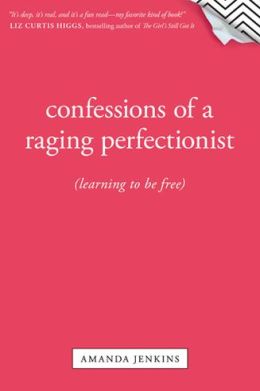
ConfessoinsAmanda Jenkins Confessions of a Raging Perfectionist (Tyndale House)

****************************************************************************************
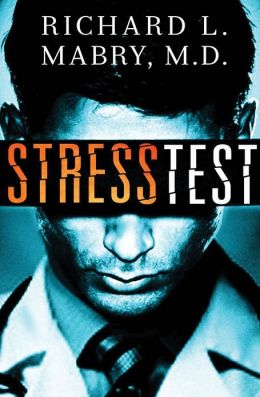
StressTestRichard Mabry Stress Test (Thomas Nelson)

****************************************************************************************
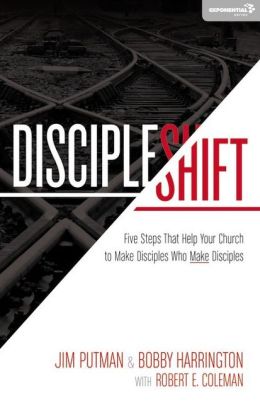
DiscipleshiftJim Putman with Marcus Brotherton Discipleshift (Zondervan)

****************************************************************************************

New WordServe Clients

Jennie Atkins signed with Sarah Freese. Excited to have her join our other wonderful WordServe authors!

New Contracts

Judy Morrow signed with Regal Publishing for her devotional titled Listenings.

Keith Robinson signed with Regal Publishing for his non-fiction book titled Is Anybody Out There? 

Rachel Moore signed an ebook contract with Cook Communications for her novel titled Language of Sparrows.

Barb Stoefen signed with Zondervan for her memoir titled A Very Fine House: A Mother’s Story of Love, Faith and Crystal Meth

Mike Yorkey signed with B&H Publishing to write the story of Tampa Bay Devil Ray infielder Ben Zobrist, along with his wife Julianne, who is a budding Christian singer.

Dr. Kara Powell from the Fuller Youth Institute signed with Zondervan to write The Sticky Faith Guide for Your Unique Family.

Michelle Griep signed an ebook contract with Cook Communications for her novel, A Heart Deceived.
.

What We’re Celebrating!!

Julie Cantrell is a finalist in the “new author” category for this year’s Christy Awards for her debut novel Into the Free.

Jordyn Redwood for her debut novel Proof, which was a ForeWord Reviews finalist for religious adult fiction.

And Julie and Jordyn both made the Inspy Award Short List for their debut novels.

Maureen Lang’s book Bees in the Butterfly Garden hit the ECPA fiction list again, this time at #6.

A Higher Call by Adam Makos continues to stay on the New York Times hard cover nonfiction list, having made it in the top-15 every Sunday in April.

Thank you to Writer’s Digest magazine for naming the WordServe Water Cooler one of their 101 best websites for writers for 2013. We are honored!

What can we help you celebrate?

Are You a Good Literary Citizen?

ID-10032339

Are you a good literary citizen?

I’ll never forget it. I was probably eight or nine years old, and my family had gotten up early to get a spot in the front for the Blossom Time Parade in a neighboring town.

This was a big deal. Every year, thousands of people from Southwest Michigan gathered, anticipating a show of marching bands, fire trucks, homecoming queens, and buckets of candy thrown out to kids scurrying in retrieval around the pavement like ants.

The year I recall was an extra-big, super duper deal, because “Samantha”–the youngest child from the quasi popular 1980 sitcom Gimme a Break!–was scheduled to appear.

Now, I wasn’t a big fan of Gimme a Break!, nor did I think Samantha was the best child-actor of my youth, but she was going to be there, in my small town parade, and I loved to act in school, and every time I thought about meeting a real life star, a firecracker lit and crackled in my gut. I pushed my way to the front of the crowd at the parade, armed with a glittery pink pen and my diary.

Samantha waved and smiled as she sat on top of a cherry red Corvette. And then it happened. The car paused in line, waiting for the parade to continue, and a swarm of preteen girls crowded around Samantha, holding out pictures and paper for her to sign. My legs took off, and before I knew it, I was there too, in the swarm, buzzing, waiting for my turn to ask for an autograph.

Once most of the girls got their autographs, the car started to move. Panicked, I held out my diary to Samantha as her handler winked at me and said, “Surely we have time for one more.”

My heartbeat skipped.

“No! We don’t have time for any more,” Samantha hissed, pushing my diary towards my chest. Her eyes met mine coldly. “I’m done.”

The driver switched from the brake to the gas. I watched Samantha creep forward in the parade, once again smiling and waving to her adoring fans.

Who knows what was going on with Samantha. Everyone has bad days. But I have to admit, I was one disappointed, disenchanted little girl.

I decided that if I were ever fortunate enough to do well at something I loved, I’d be sure to be kind.

Fast forward more years than I care to admit, and I’m pleased to announce that time and again, as a new author, I’ve encountered kindness and generosity in the literary world.

What is a good literary citizen?

This is my definition: a person who supports creativity, who esteems work, and helps others grow in their craft. It’s a person who buys books (and lots of them!) and networks on behalf of authors and writers she or he admires.

I think about Samantha when authors share their knowledge of writing and publishing with me. I think about Samantha when I witness someone farther down the publishing road give a nod and a hello to another starting out.

I hold out my diary and these kind souls take my glittery pen and jot me a note. “Congratulations! Keep going! Try this agent. Sure, I’ll review your work.” Or even this: “I can’t help you now, but all the best to you!”

I don’t take it for granted. People in the publishing world are busy. There is no reason why some should respond to my letters or emails with such goodwill, but they do. And I learn that sure, there are Samanthas in the world. But that’s okay. There are also authors and writers who do their best to help strong work rise to the surface for all to enjoy.

There are people who value being good literary citizens.

Not every author or writer can help. Not everyone will care to help. But of course, everyone can pass on a measure of goodwill as another pursues her dreams.

And we can do it with kindness for the sake of our literary world.

*In an effort to pay it forward in the literary world, I am doing a daily author interview and book giveaway (from writers who happen to be mothers and write about it) the week of May 6th, leading up to Mother’s Day. Drop by to hear from great authors such as Shauna Niequist, Jennifer Grant, Kate Hopper, Claire Bidwell Smith and one more (waiting on a confirmation :)). Find out more at www.gillianmarchenko.com.

Perseverance: Keep Moving and Writing!

Photo/KarenJordan

He gives strength to the weary and increases the power of the weak … those who hope in the LORD will renew their strength … they will run and not grow weary, they will walk and not be faint” (Is. 40:29-31 NIV)

My legs quiver as I step onto the sidewalk in front of my home. How can I launch out for a walk feeling so weak? I take a second step, determined to go forward with my plan to regain my health by exercising.

Obstacles. My motivation to exercise overpowers my temptation to stop. I gain strength in each additional step, as I begin my lesson in perseverance. But it will not be an easy journey. There are obstacles to overcome and goals to reach. Can I make it? 

Resistance. Exercise, like other worthwhile endeavors, demands strength and stamina. The first morning I attempt my new exercise program, everything within me resists it, like opposite poles of two magnets. I would rather do just about anything other than exercise. So, on my first day out, I let temptation win. I stay home, and I feel guilty the rest of the day.

Failures. By the next morning, my previous day’s failure serves as my primary motivating force. So, I lace up my walking shoes, purchased just for this occasion, and jog slowly out of my garage. My first goal has been accomplished. And the next thing I know, I’m crossing the street facing the next block.

Intimidation. Okay, this is going to be a breeze, I think. But by the time I turn the corner, another fear presents itself, as if to try to stop me in my tracks. An all-male construction crew building a house nearby alarms me because of the recent crimes in my neighborhood. I’m fearful of walking in front of them. But I hold my breath and walk on. I move this obstacle out of the way, as I change my route and proceed in another direction.

Distractions. As I walk uphill, I become short of breath. When I slow down to breathe, a gray squirrel catches my attention. He’s busy burying an acorn in my neighbor’s yard. I watch him as I walk by. When I look up, I’m already at the end of the street, about to turn the corner to complete another block.

Goals. I continue to accomplish small goals as I walk. In a short while, I’ve gone far enough, and I decide to return to my home. My mind is cleared by the fresh air, but my body is affected by the exercise.

When I arrive home, I’m exhausted, but surprisingly refreshed. As I sit down for a cool glass of water before I shower, I recall the distance I’ve covered. I feel good about myself, and I’m grateful that I resisted the temptation to quit.

Strength. I find strength as I face my weaknesses each day. In 2 Corinthians 12:8, Paul tells us that the Lord’s “power is made perfect in weakness.”

Writing. I’m forced to face my fears and weaknesses in many other areas of my life, especially my writing life. Writing for publication also demands strength and stamina. So, we can expect to face resistance, right? With each new project, goal, or idea, we’re reminded of some past failure, rejection, intimidation, or distraction.

Survival Tips. How do you endure setbacks in your writing life? I’ve learned a few survival tips on the walking trail and on my writing journey  And as I face my fears and take one step at a time by faith, I’m able to go the distance

And now, … one final thing. Fix your thoughts on what is true, and honorable, and right, and pure, and lovely, and admirable. Think about things that are excellent and worthy of praise.  Keep putting into practice all you learned and received … Then the God of peace will be with you. (Phil. 4:8-9 NLT)

Where have your faced resistance in your life? How did you overcome it?


Photo/KarenJordan
YouTube/mrnmrsyounger (MercyMe – “Move”)

Should You Be On Pinterest? (Building a Social Media Platform)

Pinterest

The trouble with being a writer is that you have to write. That would seem desirable, but the writing I’m talking about goes beyond pounding out the next scene in my novel. Since becoming a published novelist, I’ve submitted–at the request of agents, editors, bloggers, and marketing personnel–guest posts, interview responses, pitch sentences, two-sentence blurbs, query letters, proposals, sample chapters, material to use for promotion, back-cover copy, tag lines, book club questions, and of course myriad versions of my biography. Add to this the need to devise creative updates for social networks, and you begin to see why a writer might groan.

Enter Pinterest, a social media platform that allows members to network with pictures more than words. Tweet This! I love writing and (go figure) even have a fondness for words, but I find Pinterest a breath of fresh air. As a virtual bulletin board where users pin images, Pinterest frees me to express my creativity without having to hurt my brain with so much thinking. Since women primarily frequent Pinterest, spending more time on it than on other networks, it provides another benefit. Book buyers are predominantly female. (This varies by genre.)

With 4 million active daily visitors and as the fastest-growing social media site (now second only to Facebook), Pinterest is a site many writers should include in their social media platforms. Tweet This! Since I began to take Pinterest seriously, it’s moved to the number one referrer of traffic to my websites.

I won’t go into detail on how to sign up, since Pinterest makes it easy. If you want advice, visit the Pinterest Help Center and enter “how to sign up” in the search box. I suggest you set up or convert to a Pinterest business account. This will allow you access to account analytics once you verify your website for Pinterest.

Be sure and include your author picture in your profile. Also set up a branded bio. This is a little challenging since you should make it brief so it will be read. Every word needs to pull its weight. To see an example, visit the Pinterest page for Janalyn Voigt. While you’re there, take a look at my boards to help inspire your own.

Pinterest Goodies

After you’ve created your account, filled in your profile information, and verified your website, you should visit Pinterest’s Goodies page. There you’ll find instructions on how to:

  • install the Pin It button (for Google Chrome) to your bookmark bar.
  • drag the Pinterest Bookmarklet to your toolbar (click the red link under the Pin It button copy in the sentence that says: “Looking for the Pinterest Bookmarklet?”).
  • add a Pin It button to your site.
  • make a widget for your site.

Creating Your Boards:

On your profile page, you’ll be able to create boards. Here are some suggestions:

  • Name a board for your blog or website.
  • Create a board with the title of your book(s).
  • Name a board for the genre(s) you write.
  • Think up boards that will reinforce your brand.
  • Design boards to attract your target audience.

Pin Three Ways

  1. Click the Pinterest bookmarklet while at a website that grants permission to pin its images and select the image you want to pin.
  2. Under your image in the Pinterest toolbar you’ll find a dropdown menu. Click “Add Pin” to upload an image from your computer or enter the URL of a picture you have permission to pin.
  3. Use the Pin It button on a website.

What to Pin

  • Pin your own original images with a link back to your site.
  • Pin images from sites that state they allow pinning to Pinterest.
  • Pin public-domain images.
  • Create and pin your own collages using sites like PicMonkey.com and your own images.

What to Do on Pinterest

  • Follow other people. You can choose to follow all boards or an individual board. As with all effective social networking, be sincere. Tweet This! When you make the effort to follow people, some will follow you back.
  • Repin from boards of people you trust. Always verify that the link goes where the image indicates it will and that the original site gave permission to pin.
  • Like pins others post. This brings you to their attention.
  • Comment on pins. To comment, click on a pin and the comment box will be in the enlarged image that displays.

Pinterest and Copyright

First, I am not a lawyer and don’t mean the following in any way as legal advice, but here is how I handle myself on Pinterest. I’m careful when pinning images that I don’t own to make sure the website gives explicit permission to pin to Pinterest in its copyright policy. I don’t take the existence of a Pin It button as permission. I’m aware that even if I own a photo, some things like private works of art or images of people who have not signed a release for me to post their photos, for example, are off limits. I prefer to take my own photographs and create my own infographics. When in doubt, I don’t pin.

Pinterest is a relatively painless way to network that is actually a lot of fun. Tweet This! It can help you keep track of research while simultaneously drawing readers to your books.

EXCLUSIVE LIMITED OFFER FOR READERS OF WORDSERVE WATER COOLER

Solving the Pinterest Puzzle for Sidebar

Learn more about using Pinterest to build your social media platform and readership. Sign up for Solving the Pinterest Puzzle course that fellow Wordserve author Melissa K. Norris and I offer as TriLink Social Media Mentors, a bargain at just $27.77.

Related Posts

Build a Social Media Platform: The First Step May Surprise You

4 Pillars to Build an Effective Social Media Platform

Build a Social Media Platform: Your Facebook Page

To Tweet or Not to Tweet (The Social Media Platform Question)

Bringing Characters to Life

 A story without people is not a story. I’m not sure what it is but it’s not a story.

You can have a great plot and beautiful settings, but if your characters are not alive, you just have words on a page.

There are numerous tools available to help us create characters. Meyer-Briggs, Gary writer's block 2Chapman’s Five Love Languages, character interview forms, character description sheets, family history templates, etc. They all have some value in identifying your characters.

I believe your character doesn’t come alive until he or she is in the story, interacting with other characters, striving to achieve goals. This striving creates conflict. This conflict brings both your character and your story alive.

When your character comes to life in the story, be prepared for most of the preliminary work to go out the window. And be prepared, if you’re an outliner, for your carefully-crafted story to go in new directions. The story, the conflicts, the setbacks, will change your character and reveal more of what’s beneath her surface.

Believable characters have dark secrets, hidden ambitions, fears, dreams, hopes, and desires. In my current work, I didn’t know my heroine was claustrophobic until it came out in a scene. None of my prep work revealed this. Why? Because it wasn’t important in the prep work. It wasn’t until I had her in a scene, in action, that the fear of being closed in manifested itself. Her fear of heights wasn’t revealed until she had to climb a tree to escape a hungry tiger.

People have needs for relationship, significance, and security. These need to be revealed in the story.

Randy Ingermanson teaches that to create a believable character, try to give her at least two core values. And somewhere in the story, have them conflict. In my novel, Journey to Riverbend, Michael Archer is the protagonist. His core values are: One, nothing is more important than keeping his word; and, two, nothing is more important than protecting human life. At the climax, these values conflict. To keep his promise to a condemned man, Michael faces having to kill someone.

James Scott Bell, in Conflict & Suspense, suggests giving your character a yearning, something they want but don’t have, “something without which a person feels life will be incomplete.” It can be something the hero brings into the story so he already has trouble when the story opens. This yearning will give him a store of actions that are unpredictable, creating potential conflict in every scene, and creating interest in the reader from the outset.

Businessman with Cell Phone JumpingThe more we let our characters express and reveal themselves in the story, the more vibrant, complex, and fascinating they will be, and the more they will keep the reader hooked and turning pages.

Of Making Many Books There Is No End, Dear Me . . .

Last month I attended the Association of Writers and Writing Programs Annual Conference & Book Fair in Boston. With over 11,000 writers in attendance, over 500 readings and sessions on everything from teaching creative writing to getting published, and over 650 exhibitors at the book fair, the AWP is easily the biggest literary conference in North America.

This is the third year I’ve attended. I bring home lots of book fair goodies for my students—writing contest announcements, literary magazine samples, little notebooks and buttons and koozies and USBs with literary slogans on them—and I always learn lots about both teaching writing and the business of writing.

Nevertheless, by day two of the four-day conference—though I’m still looking forward to the panel sessions and readings I’ve highlighted in my AWP planner—I’m impatient for it to be over with. It’s not just my usual introverted person’s conference malaise. It’s the feeling I have every time I enter Barnes & Noble, only 11,000+ times worse. Being in the company of that many fellow writers makes me feel so hopeless.

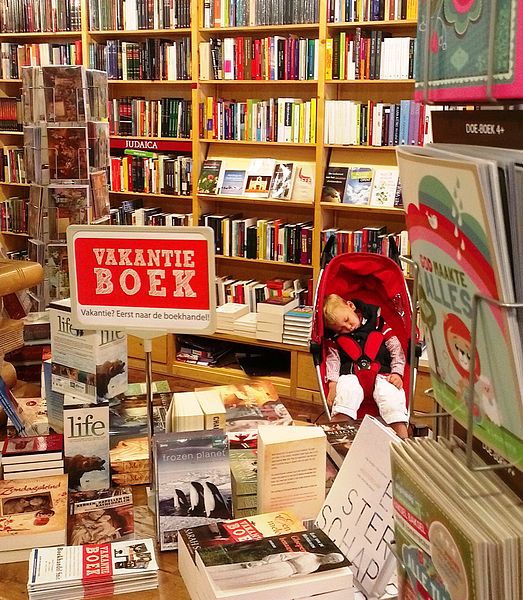
So many authors. So many books. Sleeping_at_the_bookshop_cropWho in the world will ever read all of them? I ask myself. And even in the privacy of my own mind, I don’t allow myself to ask the logical next question: What can I add to the billions of books already on the shelves, the eleven-thou-drillions of books yet to be published? And why bother?

Whenever I am overcome with one of these fits of writerly despair, I reluctantly remember the Wise Teacher’s remark at the end of his book of the Bible: “Of making many books there is no end, and much study is a weariness of the flesh” (Ecclesiastes 12:12 NRSV). The passage is often preached as a disparagement of all writing but the Bible. As the Jamieson, Fausset, Brown Commentary Critical and Explanatory on the Whole Bible explains, the “many books” in question are books “of mere human composition . . . as opposed to . . . these inspired writings,” and it is the study of these “mere human books” which “wearies the body, without profiting the soul.” What could be more discouraging to a Christian writer?

In any case, in hope of uncovering some trace of writerly optimism in the Teacher’s words, I went to Eugene Peterson’s paraphrase of the passage. Here it is in context:

Besides being wise himself, the Quester also taught others knowledge. He weighed, examined, and arranged many proverbs. The Quester did his best to find the right words and write the plain truth.

The words of the wise prod us to live well.
They’re like nails hammered home, holding life together.
They are given by God, the one Shepherd.

But regarding anything beyond this, dear friend, go easy. There’s no end to the publishing of books, and constant study wears you out so you’re no good for anything else. The last and final word is this:

Fear God.
Do what he tells you.

And that’s it. Eventually God will bring everything that we do out into the open and judge it according to its hidden intent, whether it’s good or evil.
(Ecclesiastes 9-14 )

The Teacher—or, the Quester, as Peterson calls him—starts out by describing to his “dear friend” his own writing process: a weighing and examining and arranging not unlike the “orderly account” based on “investigating everything carefully” that Luke tells his own dear friend was his method in writing his gospel (Luke 1:3 NRSV).

Like any good writer, the Teacher seeks to tell the plain truth in just the right words. That, in any case, is what I keep telling my writing students should be their goal as writers.

Beyond that, the Teacher seems to be saying in Peterson’s version, don’t stress about it. Just strive to do what God wants you to do and trust that God will make of it what he wants.

And that, today, is my comfort as a writer, and my prayer: that my hidden intents will be found worthy and that God will make of my efforts what he will.