Showing Vs. Telling

Let me first say I am hardly an expert on show versus tell—every writing teacher’s admonition for every storyteller out there. In fact, I was quite shocked when another author said she was taking notes on some passages in Poison because she thought they were good examples of showing. I am still hoping she will tell me exactly which ones they were so I can admire my own amazing work because I was that surprised.

ActorShowing versus telling can definitely be learned (after all, I did it and was never an English major) so don’t go over the writer’s cliff Thelma and Louise style if some of these points don’t hit home. I am still learning the more advanced points myself and that’s a mark of a true writer—always desiring to learn more.

The concept of showing could also be described as Deep POV. I think these concepts are honestly interchangeable. So if you hear one—think of the other.

The first (and really good) piece of advice I got on showing was to write my scenes as if I was filming a movie. How would I describe what was on the screen to a reader without stating the obvious?

For instance: He was angry. This is telling. It doesn’t leave any room for the reader to use their imagination. Now, more showing. Her husband swore at her and spittle hit her face seemingly to mark a target for his fist to punch her in the jaw. See the difference? I haven’t said the word “angry” at all, but does this man seem fired up?

While editing, you’re likely telling if you name the feeling. He was mad, sad, fearful…etc.

A great tool I’ve used to help me show more visceral reactions is The Emotion Thesaurus. There is also a website by the same author called The Bookshelf Muse. It gives specific bodily actions for tons of different emotions. Use this as a starting point to generate ideas and then improve them for your own manuscript.

Another tip to help show instead of tell is to phrase things as questions. Telling: She wondered if her attacker was walking behind her. Showing: The echo of footsteps matched her high heels as they clipped down the pavement of the dark alley. Was it him? Was it the man who nearly killed her with a quick slash of a knife across her throat two years ago? The one she presumed was now sending her all those threatening letters—just like before. Now he was free.

To show more, add a visceral reaction from the woman from the emotion she is likely feeling which in this instance would be fear.

The echo of footsteps matched the quickened pace of her heart as she broke out into a run down the dark alley. Instinctively, her hand covered the thick scar as a shield from both the memory and the act. Was it him? Was it the man who nearly killed her with a quick slash of a knife across her throat two years ago? The one she presumed was now sending her all those threatening letters—just like before. Now he was free.

I know—future editor. How can she run with her hand set on her throat? Just to illustrate a point. Edit at will.

Also, don’t feel like you have to do this in the first draft. The first draft is all about getting the words on the page. Showing can be added in subsequent editing phases that you do before the manuscript goes to an agent or publisher, but don’t get too hung up on trying to do a lot in the first draft until it becomes more natural for you.

This is just the beginning. There are many more techniques that can be used so keep working at it and you’ll have the reader sitting inside your character in no time.

What are some techniques that have helped you show vs. tell?

Praying Psalm 23 for Writers

Sheep
Sheep (Photo credit: Wikipedia)

The Lord is my Shepherd:  Sheep are stubborn, fearful, and crowd followers, like people. We need a shepherd to lead us. We must surrender our life and work to God.

Lord, you are my Shepherd. I place myself and my words under your authority.

I shall not want: God is all sufficient. When we trust God to provide for us, we can let go of the wants of ego. He redefines success.

Lord help me to want what you want for me and for my work.

He makes me lie down in green pastures: Writing is endless and the refreshment of rest and renewal is essential.

Help me find the balance of work and rest.

He leads me beside still waters: We know the difference between our own exertion and divine filling when the words flow like gentle waters.

Lead me to inspiration and fill me to overflowing with your words.

He restores my soul: We are strongest in the areas where we have been healed.

Restore my spirit, Lord. Heal me that I may heal others.

He leads me in paths of righteousness for his name’s sake: He provides that daily connection that guides us in the truth, as we write–for His glory, not ours.

Help me always to know the truth and to remember that I do my work for your glory, not mine.

Even though I walk through the valley of the shadow of death, I will fear no evil, for you are with me. Your rod and your staff, they comfort me: We give deeply of ourselves and our experiences, making us vulnerable and easily hurt. We fear exposure and criticism and we receive it, but we don’t need to fear it.

Protect my heart, Lord.  Help me to be bold in my work and not to fear criticism.

You prepare a table before me in the presence of my enemies; you anoint my head with oil: God gives us provision in the midst of our problems and he continues to protect us.

Thank you for your provision. Anoint my head to protect me from the small things – the annoyances and thoughts that distract me.

My cup overflows: Every good gift comes from God–the good days, the letters and notes of encouragement from readers, the joy of seeing a life change because of the words He has provided.

Thank you, Lord, for this work and the abundance in life with you.

Surely goodness and mercy shall follow me all the days of my life. And I shall dwell in the house of the Lord forever: It is not for this world that we write. It is for eternity.

Lord, accept the offering of my words. Use them as you will.  Lead me, provide for me, protect me. I will follow.   

Amen

Betsy Duffey and Laurie Myers: The Writing Sisters

http://www.WritingSisters.com

Risking Rejection

Why are we afraid to fail? Often because we believe rejection exposes a gap in us. It points to something we don’t want others to see. It confirms what our suspicions tell us.

We aren’t acceptable.

As writers, we risk rejection from many different sources. Projects and people alike can make us feel unacceptable, and throw us into a pit of paralyzing despair. Any one of a myriad of things have the power to make us give up on our writing dreams. If we let it.Definition of Rejection

  • Literary agents can reject us.
  • Booking agents can reject us.
  • Publishers can reject us.
  • Editors can reject us.
  • Endorsers can reject us.
  • Influencers can reject us.
  • Reviewers can reject us.
  • Media can reject us.
  • Readers can reject us.
  • And through Self-deprecation, we can reject ourselves.

So how can you empower yourself to feel acceptable when rejection says you’re not?

Author Jim Stovall
Jim Stovall’s Blindness Didn’t Hold Him Back

Challenge your own viewpoint. Take a 180 approach and look at this specific moment as your personal catalyst for change, improvement, and a call to do better work. Jim Stovall, a blind author and movie maker, knows rejection well.

You’ve GOT to watch the video on his link to see what he says about giving up. Here’s a quote to give you a hint of the amazing story you’ll want to hear. “That big dream would not have been put inside of you if you didn’t have the capacity to achieve it.”

Author John Grisham
John Grisham’s Tenacity Made the Difference

Another powerful example of tenacity in the face of rejection comes from an author most of us recognize. Internationally acclaimed novelist John Grisham. He understands what it feels like to fail in front of professionals, but he chose to learn from his mistakes, and keep on keeping on.

Finally, I would be remiss if I didn’t remind you of the greatest victory that came from the greatest rejection of all. A book that was denounced, fought against, and even after publication, faced efforts to utterly destroy it. But yet, the words inscribed inside changed the world, and made it a better place. The book I refer to is The Bible. Aren’t you glad God didn’t give up.

So the next time you get a rejection letter, phone call, email, or text, remember these three things.

Anita Brooks Walking Bridge Photo
Is Success Waiting Around Your Corner?

1. The capacity to make your big dream reality is already inside of you.

2. Rejection prepares us for great things in the future, and reminds us to stay humble when we arrive there.

3.  Just because a few people fight against your efforts doesn’t mean you won’t come out victorious.

Maintain a teachable attitude, then act with integrity, humility, and tenacity. This is your big dream. Take courage, and don’t let anyone convince you it’s unacceptable. Risking rejection can turn that big dream of yours into something real. But only if you don’t give up too soon.

The Best Marketing Tool

Authors are constantly on the lookout for the best marketing tips and ideas. We want to get our books in the hands of as many readers as possible. This isn’t always just from the monetary end either; most authors I know truly believe in the message of their book. They believe it will help people and have a true desire to enrich the lives of their readers.The Best Author Marketing Tool

But sometimes it seems every where we turn, someone’s spouting a new marketing trick. I can’t remember how many posts and articles I’ve read about marketing. Some of the ideas are great, like the Hope and Trust Chronicles put on my by some of my favorite authors.

Then there are the not so great ideas, like buying fake Twitter followers. It’s not all about the numbers; it’s about connecting with people. Purchasing fake followers is a misrepresentation in my opinion.

The best marketing tool you have is you. The content you write and how you interact with people on your website, your social media sites, and in person is the most influential marketing you will ever do. Because if you do this with sincerity, passion, and genuine caring, your readers will talk about you.

And there is nothing that carries more weight than word of mouth. Think about it. You’re trying to decide between purchasing two books and your best friend comes up. She points to the book in your right hand. “You have to buy this book. It’s the best book I’ve read in years. And the author’s website has these amazing behind the scenes looks and a free e-book you can download. I’d loan you my copy, but I already gave it to my mom, and you shouldn’t wait until she’s done with it. It’s too good not to start today.”

Which book are you going to purchase? The one with the prettier cover, or the one your friend is raving about?

Invest in your readers. They’re real people and worth your very best. And if you invest in them, don’t just look at them as numbers, they’ll invest in you.

And that’s the best marketing tool a writer can have.

What are some great marketing efforts you’ve seen? What is the best marketing tool you’ve used? What’s a marketing endeavour you’d never do again?

Writing Life Lessons

photoNo matter what stage I’m at in the writing journey, whether it’s researching, plotting, writing, or editing, I continue to learn. Currently, I’m in my last round of edits for my debut novel, Shaken. Man, has it been humbling. I don’t claim to have all the answers to this writing journey, but here are a few tips I’ve learned from trial and error. Like my novels, I’m always a work in progress.


Paint a scene

This seems like a no-brainer, right? I thought it was, too. Except sometimes I don’t write all that is in my head. Thank goodness for an editor who reads the story and asks me to fill in the holes. Use the senses. Again, you would think this is obvious, but too often we forget. In my second book, I open with a beach scene. Can my reader smell the smoke from the bonfire, taste the salt in the air, feel the whip of the sea breeze, hear the lap of the waves, see the fireworks exploding? If not, I need to keep crafting.

Make connections

Link scenes, events, and characters. As my granddad told my brother when he came home from college late one night, “Account for yourself!” Make sure all your elements are accounted for, and again, not just in your head. If a character just spoke yet the scene ends and they are nowhere to be found, make sure there is a clue to the reader of where they went and when they exited the conversation. Again, these should be obvious, but sometimes when I focus on the story line at large, I forget these important little details that further immerse the reader in the story.

Books are not movies

I tend to see my book playing out like one of Nicholas Spark’s movies – sweeping, southern, and characters that tug at your heart. Except, books are not movies. What a viewer can take in in a few seconds of a new scene takes a lot longer to paint in a book. The best movies come from books that paint vivid scenes. Think the party scenes in Gatsby where Fitzgerald describes the house and guests in great detail. If you don’t know what I’m talking about, stop reading this right now and at least read those scenes.

Kill your “darlings”

This is a lesson one my college professors shared with me, and regardless of the time passage, it doesn’t get easier. First, let’s define “darlings.” It is any piece of your story that you are attached to that does not ultimately propel the story forward. You may think a scene is epic, but will your readers care? Does it demonstrate an irreplaceable character quality or scene that is essential to your reader’s knowledge of the story line? Is your attachment greater than the reader’s? If yes, then don’t be afraid to kill that “darling.” Your story will be better for it. Trust me, I know it’s painful, but strike with your red pen and make the page bleed.

You’ll never be completely satisfied

photo copyStop looking at the blinking cursor. Save and send. Your story will never be perfect. If you are waiting for that, choose a different career. I emailed my mentor a couple months ago and told her I thought my story sucked and I wanted to start from scratch. She laughed (I could sense it over email), and told me that it was great for where I’m at now. The next novel will be better than the first, and the third better than the second. If you know you have done all you can do right now, then allow yourself to be satisfied with the results and send that sucker. I still find mistakes in my short stories from college, and I couldn’t count how many times I have edited those pages. But I’ve also increased in my ability and my knowledge since college. I’ll focus on doing my best now and realize that I’m always growing.

What writing tips have you picked up along the way?

Why I Write Inspirational Fiction

People ask me, “Why do you write Christian fiction?” This reminds me of when people ask me, “Why are you just a nurse?”
pragIn reality, they are politely implying that I am too smart and, perhaps, have wasted my time by never going for a medical degree. However, I think the answer to these two questions is the same.

To save lives.

I’m an ER nurse and a suspense author–I do tend toward the dramatic, and this is a dramatic post. But then again, life is dramatic. So is death.

If you’ve ever been in a hospital, you know a nurse is the last line of defense for a patient. We’re the ones that give medication, order tests, make sure patients are at the right place at the right time. Ensure that people who are learning medicine don’t kill you. A seasoned nurse (even if they aren’t super warm and fluffy) is the best asset for a patient next to a competent physician.

What I see in nursing, some days, are last moments. The last moment of life. The last moment of “My life was this…” before hearing a cancer diagnosis. The last moment of peace, maybe for a while.

It surprises me how blase people can be about eternity. They just feel that they know the right answer without having cracked open a Bible or any other holy book. For a Christian, a person who doesn’t invest in investigating life after death is curiously reckless. Like biking without a helmet. Or biking and texting without a helmet (yes, I just saw that last week!).

Since I experience the fragility of life, I want people to be confident in their beliefs about the afterlife. And I know many of us don’t have as many moments left as we think. A novel can be a less threatening way to introduce someone to the concepts of Christianity than handing them a Bible, and yet can still deliver a strong, compelling message.

It’s like pulling someone off the train tracks as the whistle is warning them to move.

Here is my top ten list of why I write Christian fiction:

1. September 11, 2001.
2. The Boston bombing.
3. Sandy Hook Elementary School shooting.
4. The child that died of an allergic reaction.
5. The family I helped give a cancer diagnosis.
6. My friend’s brother, who died after being in a vegetative state for 13 years following a motorcycle accident.
7. Christians who are killed/maimed/imprisoned for their faith.
8. Kids in my ER whose families won’t show up.
9. Driving on ice.
10. Moore, Oklahoma tornadoes.

What I’ve seen is that sometimes I can’t stop the train. I can’t stop that moment. What I can do is offer what I think is hope . . . preventative medicine for the ever after.
We as religious people get so caught up in divisive cultural issues. Pro-life/pro-choice. Traditional marriage. Homosexual marriage. Gun control. And I’ll be the first to say, as a Christian, that while I have strong beliefs on each of these issues, my expressing them can pull people away from the true message of why Christ came.

He died. For. You.

That’s it.

So before you decide, do some reading. Whatever method is the least threatening. A novel. A blog post. The Bible.

Just read and see if His message begins to resonate with you.

Before the train whistle blows on your last moment.

Book Publishing Basics

Almost every week I encounter an aspiring writer who asks for tips on getting a book published. When that happens, I like to offer the following seven practical steps for starting the journey. Most of this information applies to writers who have never published before, so if you’re already a successful author, you may want to share this with the aspiring writers who ask, “How’d you do it?”

1. Write well!

Regardless of how many poorly written books get published every year, this is still rule #1. Agents, editors, and readers are always looking for well-written books. Anyone can type words on a page, but skillfully crafted messages and stories are a delight.

2. Attend a writers conference or two.

Writers conferences are an opportunity to make connections with writers, editors, and agents. While you’re there, take workshops to learn all you can to hone your writing craft (refer to tip #1).

Google writers conferences in your area or check out The Christian Writer’s Market Guide by Jerry Jenkins. The Shaw Guide also provides a detailed list of writers conferences. Know that there are hundreds of writers conferences across the world, each with a different audience, niche, and connections. Be sure that the conference you attend fits your requirements for price, distance, timing, and professional goals.

3. Write a book proposal.

This is like writing a business plan for your book, which may sound like tedious work, but it’s highly beneficial. A book proposal helps you articulate your book’s theme, purpose, audience, and competition (among other things), and it helps you create a marketing plan for when your book comes out.

A book proposal’s form may vary depending on the genre, and most agents have a template they prefer to use for their authors. But if you don’t have an agent, author Mary DeMuth offers downloadable tutorials on writing fiction and non-fiction book proposals. How to Write a Book Proposal by Michael Larsen is also a good resource.

4. Build your platform.

A platform refers to all of the activities you engage in that make people notice you and your work. It shows how visible you are to your target audience. Building your platform could include social media or blogging, speaking engagements, or teaching — anything that markets you as an author.

Platform by Michael Hyatt provides an informative, step-by-step guide to building your platform. Get Known Before the Book Deal by Christina Katz is another good resource.

5. Choose to self-publish or look for a traditional publisher.

This short ebook from literary agent Rachelle Gardner gives pros and cons of each option. Before you ever pay anyone to publish your book, know something about the company you choose. There are several different varieties of self-publishing, from eBooks to print books and many that do both. Each type of self-publishing requires different amounts of up-front cash and effort on the part of the author.

6. If you want traditional publishing, find an agent.

Editor Chuck Sambuchino releases a yearly Guide to Literary Agents. Listen to an interview between Michael Hyatt and Rachelle Gardner on new writers and finding an agent. The Christian Writers Market Guide features a list of literary agents that represent mainly Christian authors. Writers conferences are great places to meet agents in person, which can make a big difference in this relationship-oriented business. Most literary agencies post submission guidelines on their web sites, so be sure and follow those when submitting a query or a proposal.

7. Plan on a marathon, not a sprint! 

Bestselling authors don’t pop up overnight. Most of them worked on their writing and platform for many years before publishing their first book. So give yourself plenty of grace along your publishing path. Also, while you may have big dreams of becoming a bestselling author, God may have other plans. A publishing journey often brings tremendous personal and spiritual growth. “And … after you have suffered a little while, [God] himself restore you and make you strong, firm and steadfast” (1 Peter 5:10). Smile! Though the road may be long and winding, God will accompany you on your journey.

Need more inspiration for the long haul? Check out my collection of quotes on writing and the writing life.

Five Things I Learned About Writing/Marketing from Dr. James Dobson

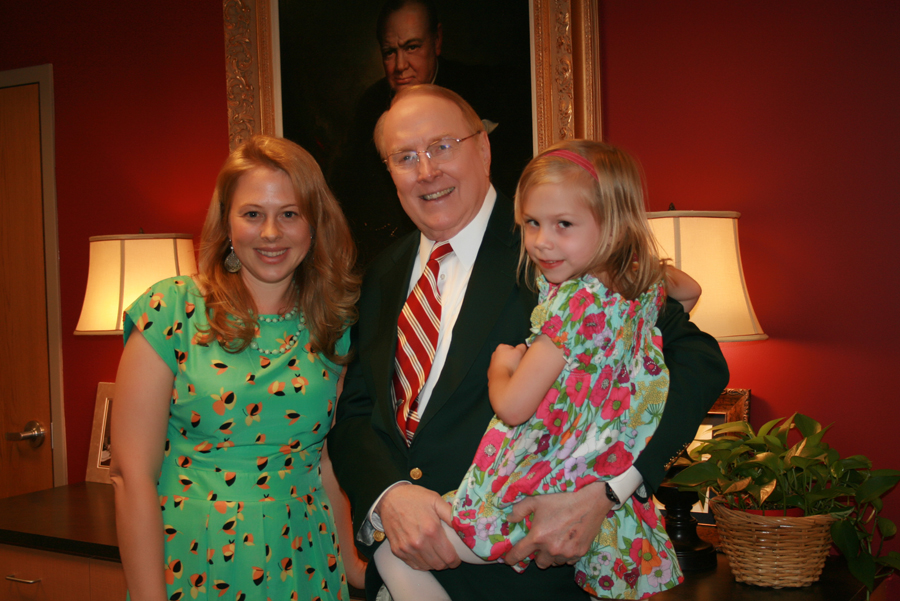
First things first:  Yes, I met Dr. Dobson.In real life. And, yes, he was kind and wise and funny and smart and everything I expected him to be and more. I flew up to Colorado Springs in April, 2013 to be a guest on Dr. Dobson’s Family Talk radio show. In the studio, we chatted about families, about writing, about my books, and then recorded 3 1-hour segments to air on June 5-7, 2013. (Click here to see where you can listen in.) And, in the process, I not only gained invaluable insight on motherhood, marriage, and family from one of the most amazing theological minds of our generation, but I also learned about writing as well. Here’s what I took away from this meeting.

Dobson1. Actions Speak Louder Than Words.  Dr. Dobson’s life’s work and focus has always been on helping Christ-centered families. And I don’t think anyone in the world would argue with me if I said that he has passionately and wholeheartedly given his career to this goal. This is a great thing. I have to admit that part of me expected our visit to be something like a college-course lecture. Instead, he pulled my five-year-old daughter onto his lap and talked to her. And he showed me without saying a word that he values children and family and motherhood in a way that goes beyond words. I learned that if I want to talk the talk in my writing and on my blog, I had better be willing to walk the walk.

2. Listen With Open Ears.  Dr. Dobson knows his stuff. The guy is legendary—well-read, well-educated, well-just-about-everything. And the truth is that I knew there was nothing I could’ve said to him about parenting or motherhood that he a) didn’t already know and b) hadn’t already covered in his own writings. But Dr. Dobson listened to my words wholeheartedly and willingly—even on topics that we didn’t necessarily see eye-to-eye on. He showed me respect by looking me in the eye and allowing me to voice my opinion. And I left in awe of his incredible wisdom and kindness. No wonder he has made such an impact on our world! He is willing to listen with open ears and to show respect with a gentle kindness—even to those who are “below” him in status or who have different opinions than he does.

3. Don’t Be Afraid to Put Yourself Out There.  I wish I could tell you that I did something to earn myself a spot on Dr. Dobson’s radio show. I wish I could tell you it was on my merit, that I did something extraordinary, that I am an amazing radio speaker, that my writing is just that inspiring…but I can’t. Because the truth is that I did nothing. I threw myself out there by having my publicist send my book to Family Talk’s studio…in 2011. From there, God worked behind the scenes to inspire the right producer at the right time to pick up the book. As authors, we have to do everything we can to get our books “out there,” but after writing and marketing five books, I’ve learned that God is the one who opens those doors. We just have to be willing to walk through them.

4.  Don’t Be Afraid to Ask.  I was thrilled the day I got the call from Dr. Dobson’s producer that I was going to be on his show. And I knew it was an important break in the marketing campaign for my new books. But I had also made myself a promise way back when my oldest was born: I was never going to let my career take me away from my kids for an extended amount of time. And while I desperately wanted to go on the show, I also struggled to decide if was a good idea to leave home for three days at the end of the school year. I prayed and picked up the phone and asked the producer if I could bring my daughter along. And she bent over backwards to make it happen. They reserved a room for me with two beds. They helped me book airline tickets. They found me a big-enough rental car. And the entire staff at Family Talk showed my daughter incredible kindness and love while we were there. My point? Don’t be afraid to ask. I know it wasn’t easy for them to have a five-year-old in the studio, but it was important to me. Dr. Dobson’s organization lived up to their reputation of being advocates for family by helping me make it happen.

5.  Be Willing To Be Flexible.  I went into Dr. Dobson’s studio with the expectation that we were going to record one hour-long segment. I walked out having recorded three. We had a flow going and had so much to talk about that we just kept recording. The studio session took much longer than expected and…shockingly…we got stuck in a snowstorm afterwards (a snowstorm in April? Apparently this is normal only in Colorado). Anyway, writing and marketing is an inherently liquid task—and only by being flexible to roll with the changes—ups, downs, twists, and turns—will we be able to see and succeed in the long-haul.

What have you learned about writing from other (famous) authors or radio personalities?

**************************************************************************************************

Erin MacPherson is the author of The Christian Mama’s Guide series.  She’s also a mommy blogger, amateur chef, and (very) amateur runner.  She blogs at www.christianmamasguide.com.

Dare To Wander Off Trail

IMG_0550 copyWhen my wife is away at the coast or on a quilt retreat, it’s the go-to movie I watch alone: A River Runs Through It, Robert Redford’s masterpiece of the equally masterful book by Norman Maclean about fathers and sons and fly-fishing — and the deeper things beyond.

As we honor fathers this month (June 16), I do so with the admission that my dad, who died nearly 17 years ago, was not a perfect man. (Nor was I, of course, a perfect son.) While watching River the other night for perhaps the tenth time, however, I finally figured out who my father was: Paul Maclean, the younger brother played by Brad Pitt. Flawed — he dies in a gambling dispute — but, as Paul’s father said of him, “beautiful.” An artist with a fly rod. And despite obvious shortcomings, kind-hearted with a sort of rough-hewn integrity. A lover of family and a despiser of bait fishermen, politicians who ignored the environment, and motorcycle riders who rode illegally on wilderness trails.

When I wrote Cascade Summer: My Adventure on Oregon’s Pacific Crest Trail, my heart kept pulling me toward memories of my father that I felt compelled to include. But my mind kept saying: Don’t go there. It’s too dangerous. It’s too personal. Stay on the main trail, pal. 

I’m glad I listened to my heart and wandered off the trail — figuratively and, as you’ll see in a moment, literally. Writing is an act of courage. And part of courage is being real with readers, being real with ourselves, and being real about our loved ones.

Whenever I want to wimp out about telling something personal, I remind myself that of the 2,000-plus newspaper columns I’ve written, almost without exception the ones eliciting the most reader response have been personal ones that tugged on readers’ emotions. The ones where I got real. The ones where I shared a vulnerability — my regret, for example, of having accepted $1 to play two-square with a kid who had no friends back in elementary school. As an adult he committed suicide, making me wonder how his life might have turned out if people like me had simply said, “Forget the buck. You serve.”

Tom Hallman, a Pulitzer Prize-winning reporter at The Oregonian in Portland, puts it best:  “Feelings are more important than rules … Make the reader feel something. Writers are insecure. Every time we draft a story that includes emotion, we’re crawling out on a limb. Our insecurities tell us to crawl back to safety, but doing so eliminates the story’s heart and soul — what makes the story work. Emotion lives in nearly everyone, though it’s sometimes asleep. The writer must awaken it.”

So, in the end, I’m glad I included the anecdote about wandering off trail, through the forests of the Cascade Mountains ten years after my father’s death, in an attempt to find Comma Lake. As a teenager, I had scoured the woods with my dad, looking for that lake. It appeared on maps but there were no trails to it. And we’d never found it.

But, alone, a decade after he was gone, I did. I wanted to whoop and holler, but it didn’t seem right amid a quiet punctuated only by a few birds and bleached-white trees rubbing against each other in death. On the dried mudflats, I made my way up the comma—a writer literally in his element—toward the lake’s center.

I had thought of bringing something to leave in honor of my father, but he was big on leaving a camp better than you found it, so I nixed that idea. I looked around. A half dozen softball-sized stones lay scattered near me. So, I built him a poor-man’s pyramid. I knew by October, the lake would fill from autumn rains. By November, the monument would be encased in ice and covered in snow. Regardless, it would be my little reminder: we were once here. We found Comma Lake — my father and I.

Sons, I believe, cut wide swaths for their fathers. At church men’s retreats and marriage workshops, I’ve heard men lash out at their fathers, but nevertheless pine for their respect — even after the old man is gone. Indeed, it is a strange dance between fathers and sons. Part of us vows to never be the man he was, part of us feels quietly proud when we realize that, in some ways, we are.

In the final scene of A River Runs Through It, the story’s narrator, Maclean, now an old man, fishes the river and thinks, “I am haunted by waters.”

As men, we are also haunted by our fathers, whose approval seems as important to us now as it did when he watched us catch our first fish. But as writers, we cannot be haunted by the thought of trying to explore such complicated relationships.

As Hallman suggests, if we’re not crawling out on the limb, we’re not writing in the heart spot from which readers are reading. So, if you feel the branch start to bend, don’t panic. You’re where you need to be.

The Great Commission? – Redeeming Mankind through Fiction

Scientists, engineers and technological inventors, and business entrepreneurs say that humanity is on the cusp of a new wave of human creativity.

brain-power1

Instant communications are now possible via the web bringing literally thousands of minds together from all over the planet at one moment in time, discarding the limitations of geographical locations. Embryonic concepts and ideas, when shared on the global net, can result in brave new inventions with mind-blowing rapidity. Human thought can coalesce in a way that mimics the micro-world of biology by using chip technology. These synaptic pulses, occurring every second of the day and night in the global-brain, produce millions of new ideas and fresh concepts that have never before been thought of.

Laying the disciplines of science and technology aside, the same suppositions can be transferred to literature and writing. The impact of words via the global village has never been more fertile or dynamic in its capability to influence individuals, cultures, and nations. The power of the word is here and now.

Word%20power

Human endeavor is forging new boundaries, breaking out of the box of tradition and orthodoxy. We are thinking differently now–not just laterally, that’s old hat–in a way that resembles six dimensions. The equivalence of string theory and quantum mechanics is being applied to the arts and humanities, not only to science.
New thinkers are ditching personal labels. I am not just a scientist, not just a physician, not just an explorer of space, but much, much more. Exclusive thinking is out and inclusivity is in.

My own fields of interest are sufficiently broad to give me a big start in this arena. As an engineer with an academic university degree, I thought differently than my colleagues. I was a renaissance man. I brought my philosophic and artistic mind to solve engineering problems and conversely I used my engineer’s mind to help with the practical aspects of my own chosen art, writing.

For human advancement, we normally rely on non-fiction literature, factual manuals, scientific treatises, and political polemics. But consider that works of fiction, although essentially different to non-fiction in targets and goals, can nevertheless have a profound effect on shaping mankind.

When you read good fiction, there is a vital empathy between writer and reader. The reason it works for only one writer and millions of readers is that the empathy can be uniquely strong. It’s like a romance. Hands touch, eyes meet, and hearts converge as one beating heart.

The reader’s intimacy with the fiction tale, with the characters, with the drama, is both private and public. The reader becomes part of the plot. His or her mind is inextricably linked at a very deep level of consciousness. Whether the action is serious or comical, solemn or trivial, life or death, it is the precious human interaction occurring at the core of the exchange process of reading and being read.

The ideas expressed in the story, the emotions felt by the characters and the reader, the human landscapes travelled through are powerful persuaders, albeit whether obvious or subliminal.

My brand phrase ‘Redeeming mankind through fiction’ now makes important sense.

My faith mission as a Christian writer is to carry out the great commission that Jesus gave his disciples to take His message, the Gospel, to every corners of the world.

I was recently given a ‘word’ from the Lord. It was simple yet profound.

“As the Holy Spirit is intimately involved in the writing of your books, so the Holy Spirit will be profoundly involved when someone reads your book. The Holy Spirit will speak to the reader’s heart and truth will be imparted.”

I have already received testimonies from people who have read ‘Light of the Wicked’ and, deeply affected by the story, have gone on to search for God and salvation. For them it has been more than just entertainment; it has been a way of coming to know a God they thought did not exist.

Christian writers have an awesome responsibility not to just create entertaining books but to share the very gospel, not by preaching at the reader but by allowing the quality of the story to bring the reader into the presence of the living God. The reader, by coming into contact with a story that reflects God’s truth and life, is entering into a heart-to-heart conversation with the Lord himself via fiction. There’s a paradoxical truth.

power%20of%20words%202