Want to Get Published? A Publisher Needs to See a Viable Audience

Note: This is the third post in a series of four posts: 3 Things a Publisher Must See.

3 things

Let’s say you do find yourself on an elevator face to face with an acquisitions editor from your dream publisher. She’s heard your pitch, is interested and asks you who will buy your book.

Do you know the very worst answer you can give her?

“Everyone.”

While you think it might be what she wants to hear, it isn’t. It really isn’t.

Jonathan Merritt, a savvy friend of Margot’s, explains, “If you aim to write a book for everyone, you’ll write a book for no one. But if you write a book for someone, then you’ve written a book for everyone.” Your book will be most effective if, as you write, you are imagining one person—Reading Rita or Literary Lou—and write to the heart and mind, questions and concerns, of that one person.

Know your audience. Editors want to see that you know who is reading your book and are writing to them. So you need to be able to describe your audience demographic: How old are they? Male or female? Education? Married Parents? Church attenders? Listen to Christian Radio? Etc.

Most often, people don’t buy books they think they should read. ($16 to learn that the best way to lose weight is exercising more and eating less? No thanks.) Books that sell are ones that meet a reader’s felt need. ($16 to learn that the best way to lose weight is by eating pizza every hour on the hour. LOL. Just kidding. But not really. #bestseller.)

In your proposal, you demonstrate that there is an audience for your book by letting a publisher know that it is meeting a real need for readers.

There are all kinds of creative ways to communicate readers’ felt needs to a publisher:

  • Description, “In the last month, five of my friends have had this problem…”
  • Statistics show that….
  • The top-selling books of 2015 were…
  • Etc.

In the writing, of course, your book must actually meet the readers’ felt needs. There needs to be a benefit to the reader who reads your book. (This is what makes readers rave to their friends about your book over coffee and on GoodReads!)

Here’s how: On every page, be asking, “What is the reader feeling? What is the reader thinking? How can I serve the reader with this story, page, chapter?”

To convince a publisher that there’s an audience for your book, you must communicate clearly that it offers value by meeting a need readers really have.

Exercise: Draft a character sketch of your book’s target reader, Reading Rita or Literary Lou. What keeps this reader up at night? What does this reader care about? What concerns does this reader have? Tape this list to your computer screen so that you remember to write every page with Rita or Lou in mind.

Cheering you on,

Margot


Pantser or Planner?

All writers are created differently.

We can sit in the same classes, but each of us holds different stories in our hearts and minds. Each of us has our own voice. Each of us has our own process or lack there of when we work on our books.

Thank the Lord we are all so different or we wouldn’t have a variety of stories and books filling the shelves and internet. But no matter how different our process or our stories, there is a rhyme and reason to structuring our novels.

I just got back from the Deep Thinkers Retreat through My Book Therapy where we focused on story and structure. Both Susie and Rachel write fantastic books. Both have different processes. As I sat listening to how they process and plan, I realized that I fall in the middle of their styles. I’m a planning pantser. Like how I just created my own title there?

Planners need an outline, a very specific structure. The story is mostly written before they begin. They just have to weave it. Pantsers don’t like the structure. They have it all in their head and heart and want to sit down and write however the story leads. There is a beauty to both. There is also a danger to both when we overcompensate. It is important to focus on story structure. It makes the story cohesive, focused, and strong. There is also a beauty to allowing yourself the flexibility for letting the scene change.

Historically, I write a very brief outline, focus on some character development and personality, and then hit the page. Often the structure would overwhelm me and make me feel boxed in, so I would toss my hands in the air and just start writing because there I find the freedom to breath.

After this retreat, I have realized I need the structure, I need to plan. I know how and have the tools to accomplish this in a manner that makes my character and plot sing. Then I need to use that to allow the words to just flow.

So where do you fall on the wide spectrum of writers? If you are a planner, plot that thing out. Know the ins and outs of your character. My boss always says to “plan to be flexible,” and I would echo that with your writing. No person, place, or thing is without the ability to change, even if only a little. No matter what you plan, the story will probably change as you write. Enjoy the process!

And for all my pantser friends out there, own it and enjoy! I would encourage taking a little time to make sure it all connects and then rock that flexibility.

I am discovering that I don’t need to follow the process of other writers. They are succeeding with their writing not because they all write the same, but because they have owned their voice, story, and process. Perfection isn’t the end goal. I would argue that connection with reader and excellence in the story is more important. However it works best for you, get that story on the page, write from the voice that God gave you, and do it to the best of your ability as unto the Lord and not unto man.

Are you a pantser or a planner? What works best for you?

10 Secrets from the Weird World of Writers

Writer with typewriter-B+W

You already know writers are strange. There’s your great-aunt who wrote a whole series of children’s stories about a one-eyed pirate she named Captain Crunch. Okay so far, but–Captain Crunch was a carrot. Yes, a pirate carrot. (And she put an eyepatch and a boot on the poor vegetable, too, didn’t she?)

And then–what about Writer’s Workshops? How can people pay good money for the torment of writing, you wonder. And what do they do–sit around and diagram sentences, argue over the proper use of the dash, fist-fight over the relentlessly contentious comma?

You know they’re strange. But let me help untangle this mystery. I’ve taught writing and led writing workshops for thirty years. So here it is, the inside scoop, Ten Secrets from the Weird World of Writers

Secret #1

Writers are scared. We always write alone. Now we are gathering with twelve or more to share a house, an island and a week together? We know it could go badly. The others could be bored with the stories from our lives. There could be tussling for the best seat. There could be wrangling for compliments and attention, for approval. Factions could form. Conversation could turn to Trump-ish Tower-building babble. Can we really do this?

Secret #2

Writers are brave because they go anyway, fears and all. Because we know that even if it goes terribly wrong, even if it turns tragic, at least we’ll have something to write about.

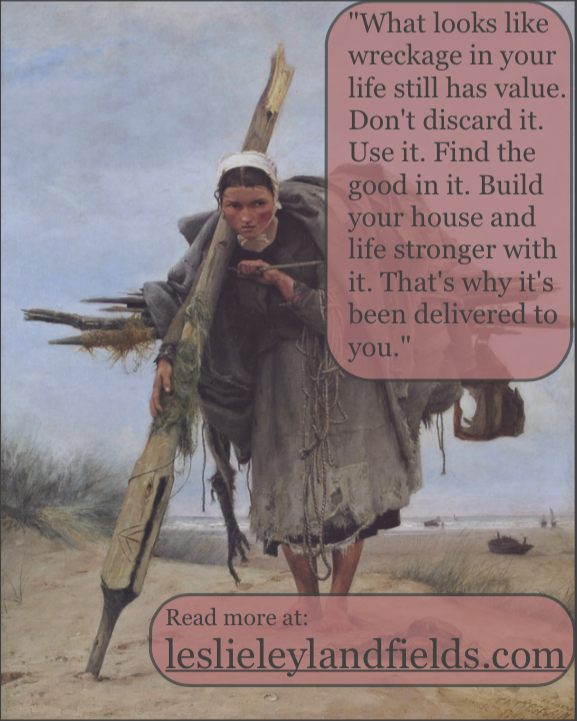
 Secret #3Wrecked beach--scavenger--Pinterest

Writers are scavengers like that. Even carrion can look good under our gaze and pen. We value what others don’t. We look for the discarded, the buried, the wounded. Our words take us there. And when we find them, these poor bodies and souls, memories, aunts, accidents, deceits, griefs, we attend with oil and wine. Who knows what might return to life?

Secret #4

Writers are ascetics who care about words (on the page) more than food, more than movies, more than chocolate, more than presidential debates, more than new boots, more than tropical beaches (unless it’s winter and we really do get to go.) Maybe you guessed this. But what you don’t know is: we care about words-on-a-page because we care even more about the writer who lived them, who wrote them in her own spit, sweat, blood and fears. 

Secret #5

Writers are also gluttons. No, not for punishment–for food. We gather with one another, and we get fat. When our words and lives are heard, our lean and lonesome souls rejoice and dig in, scoop deep, and pile high. Because going away means coming home, and being heard and seen deserves at least a fatted calf. (Pass the herbed butter, please.)

Secret #6

Writers retreat from the world but they care about the world more than most. Writing is love-in-action for us. Our words, written in closets, take us deep into the smell of fresh laundry on the line, into the morning sun glinting off our sister’s headstone, remembering the taste of the paste we ate in first grade art class. Our own words lead us to love the world of laundry, dirt and matter better. 

Secret #7

Writers are ignorant. We know we know nothing. We know in the madness of living we’ve missed so much of our own lives, not to mention others’. So we write to recover it. We write to remember… when our mother dropped our dinner on the kitchen floor because she couldn’t believe we won, when our friend with arthritis knit us a purple hat—and we lost it, that day we saw a girl in a pretty flowered dress carry a new toilet seat into the bus station, when we sat beside our dying father and he touched our wrist.

Secret #8

Writers don’t write to tell you what we know, we write to ask you if you care. We don’t have all the answers. Not even close. But we do have lots of questions about this human life we’re all trying to muddle through. And our biggest question is: do you care about this giant existence, and all the glorious and sometimes hideous details of waking up every morning in it? And will you come with me today for a few minutes so we can see and maybe name this thing called “life” together?

Secret #9

Writers know they’re weird. We know we bleed more, watch more, wonder more, stumble more, cry more, listen harder than others around us. We feel weak. We feel different. We feel less-than. We write to find out if this strange affliction can bring good to us and to others.

Secret #10

Writers are audacious. We have no idea when we write if two or twenty or twenty thousand will read our work. But we write anyway. We know some will judge us harshly, even renounce us, for the truths we write. But we write anyway. We know our work will not earn us much or even any money at all. But we write anyway. Against all reason, against all critique, against all loss, we keep setting words down on the page, one after another. The world is birthed new every minute. Someone must take notes!

Maybe it’s okay to be weird.

I know I’m in good company.

When the Honeymoon is Over

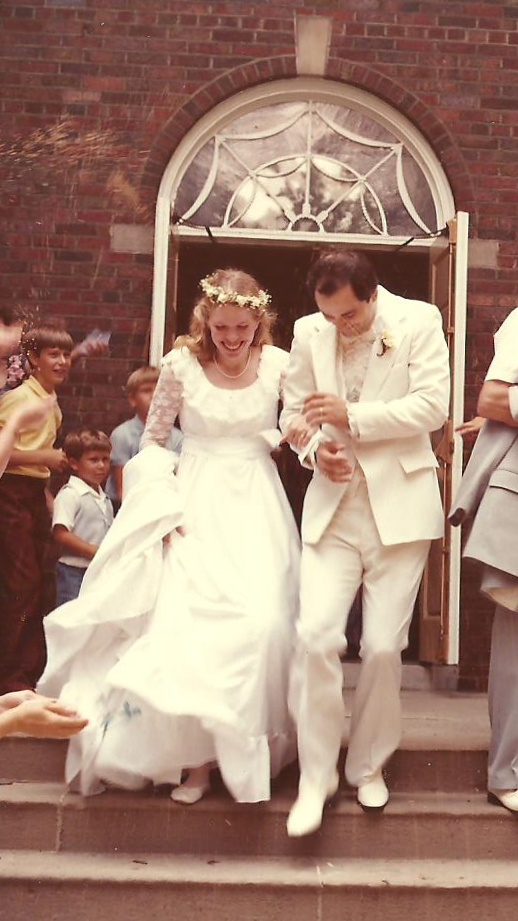
When I firJuly 17, 1982 001st started writing…

I was living the dream. I spent an hour every morning adding words to my Work in Progress before our homeschooling day started. There were no deadlines; no one demanded anything of me. I dwelled happily in my writer’s cave, isolated from the world, reveling in the company of my characters.

Yes, it was a honeymoon, and everything was perfect.

But as we all know, the honeymoon has to end sometime, right? For me it came to a screeching halt when I signed that first contract.


Just like a honeymoon gives way to the reality of married life, my writing honeymoon quickly turned into the reality of being a published author. But that was all right. I didn’t want to live in a perpetual newbie-honeymoon state in my writing career. I wanted substance. I wanted long-term. I wanted a lifelong commitment.

Thanks to my hard-working agent (hi, Sarah!), I’m on the threshold of that long-term writing life. And that means multiple projects. I’m marketing one book, editing another, writing a third, and proposing a fourth. This is the challenge I thought I wanted back in the writer’s cave days.

picture 3

So how does a writer handle a challenge like that?

Here’s some advice I’ve received from writing friends:

  • Keep writing. Write 1000 words a day. Do the math: 1K per day (without Sundays) becomes 320,000 words per year. Piece of cake!
  • Keep on target. There is no magic potion. Get in a groove. Make that 1K per day a habit. Every day, same time, same place.
  • Keep learning. My 1K per day takes about an hour of “bottom in the chair, hands on the keyboard.” I spend part of the rest of my time reading writing craft books or taking on-line classes. Even after publishing four books, with two more in the pipeline, I still have a lot to learn!
  • Keep planning. I also spend part of my writing day planning the next project. After I turn in the last book for my current trilogy from Revell, I’d really like for them to publish another one. So I’m starting to lay the ground work for that series. I’m also in the middle of planning a new series for Love Inspired Historical. These new projects keep my creative juices flowing!
  • Keep dreaming. Kariss Lynch wrote a great post about the difference dreaming makes in our creative life. You can read that post here: The Importance of Dreaming
  • Keep living. The honeymoon really IS over if your writing becomes an all-consuming passion. Spend time with your family and friends. Give yourself time off.

Every once in a while, I ask myself if my current life is meeting 046my expectations.

Is the challenge I thought I wanted during my writing honeymoon satisfying enough? Is it worth the work? Does it have substance enough for a long-term, lifetime commitment?

Yes. Oh, yes.

What about your writing life? Are you still in the honeymoon stage, or on your way, navigating through deadlines and contracts? Is it worth it?

WordServe News: February 2016

Exciting things have been happening at WordServe Literary in the first month of 2016!

On the final post of each month you’ll find a list of Water Cooler contributors’ books released this month along with a recap of WordServe client news.

New Releases

christnerDianne Christner published Covered Bridge Charm with Shiloh Run Press. Set against the backdrop of the Sweet Life Assisted Living Facility in Sweet Home, Oregon, it follows the story of Carly Blosser, a 27-year-old woman who has her own ideas and an independent spirit–two things no Mennonite woman should have–as she works to reunite one of the facility’s elderly residents with her long-lost love.

corey

Barry Corey’s new book, Love Kindnesswill publish next month from Tyndale. Dr. Corey, president of Biola University, begins with a thought-provoking question: When did Christians stop being kind? This powerful book encourages readers to rediscover the forgotten virtue of kindness, and to embrace what it truly means to “do justice, and to love kindness, and to walk humbly with your God” (Micah 6:8).

cotyDebora Coty released Too Blessed to be Stressed: 3-Minute Devotionals for Women with Barbour. 180 uplifting readings pack a powerful dose of comfort, encouragement, humor, and inspiration for women, and take only three minutes of her day. Minute 1: scripture to meditate on; Minute 2: a short devotional reading; Minute 3: a prayer to jump-start a conversation with God.

51XxFU7ScOL._SX326_BO1,204,203,200_

Steve Farrar published Manna with Thomas Nelson. Sometimes, the wilderness is the only place God can get our attention. Through personal stories and applications of biblical lessons, Manna reveals how God specializes in making a way where there is no way–when we feel trapped in financial, emotional, relational, or spiritual wildernesses, God will always lead us out and to the Promised land.

johnsonRick Johnson released Understanding the Man You Love with Revell. Johnson, a relationship and marriage expert, gives an open and honest look inside a man’s world to help wives understand just what goes on inside their husbands’ brains–and how couples can work together toward a mutually satisfying and fulfilling marriage.

i am nThe Voice of the Martyrs, a nonprofit, interdenominational organization that offers practical and spiritual help to persecuted Christians around the world, published I am N, with Bob Welch ghostwriting. Through the inspiring stories of Christians facing Islamic extremists in the Middle East, this book reminds readers that all followers of Jesus have camaraderie with those who are persecuted, and encourages us to deepen our faith in a God who gives courage in a dark and hurting world.

New Contracts

Sue Detweiler signed with Bethany House for the publication of Life-Giving Woman of Prayer, intended to help women replace their common weaknesses with God’s power through prayer.

Cyndy Feasel signed with Thomas Nelson for the publication of Thrown for a Loss, the powerful story of her family’s descent into chaos and darkness after her husband, ex-NFL linebacker Grant Feasel, began to grapple with the devastating effects of CTE. Due out in early 2017.

April Knight signed with David C. Cook for her devotional #scripturedoodle. Part of a two-book deal, #scripturedoodle will stretch readers to explore the Bible creatively through inspiring and interactive illustrations of scripture each day.

New Clients

Kim Dolan Leto, Jack London, and David Rigby signed with Greg Johnson as clients this month. Sally Metzger, Jim Fletcher, Bob and Cheryl Moeller, and Judy Robertson signed with Nick Harrison. Welcome to all our new clients!

National Procrastination Week is Next Week… Or, Um, In a Few Weeks. Yes, For Sure…

This post comes from WordServe author Rick Marschall. Welcome, Rick!

CARTOONIST SKETCHES - Donahey TEENIE WEENIES

There actually IS a National Procrastination Week, as most writers know. Or should know. If we didn’t know, we can count on editors to remind us. Or publishers. Or agents. Or spouses. Or neighbors and strangers who eventually figure why we small-talk with them, obsessively, at odd times.

But there is such an observance, appropriately not on a fixed date, usually in early March. If there were a day, not a week, the most ironic date would be March Fourth – because the dreaded P word has nothing to do with marching forth.

Most of us get tagged as being procrastinators. I have heard of writers who awake at, say, 7:28 every morning, commence writing at 10 a.m., take a 45-minute lunch break, and then write again until 4:30. Usually these writers produce several 900-page books a year, a fact that further confounds me. My guess is that if you are one of those writers, you spend most of your free time physically fending off attacks by crazed fellow-writers – i.e., the majority of us – who congregate at the intersection of Jealous Street and Incredulous Avenue, mumbling about you.

Over the years I have shoved out 74 books and hundreds of magazine articles, as well as uncountable scripts, columns, and blog essays. So I actually have been acquainted with deadlines, and, overwhelmingly, met deadlines.

But I write about that near-universal experience of racing the clock, if not the calendar, at deadline-time. I am wont to call them Last Writes, ha. If the profession invented the word Dead-line, then I can play with the term Last Rites. Enough puns here, because I seriously have a view about Writers’ Procrastination I never have heard advanced by anyone. It is a principle of our process, I think. Let me call this Marschall Law (Sorry, that is the last pun).

Whether we meet deadlines or barely meet deadlines, we assume guilt for the “minutes-to-spare” syndrome. Polite friends call it Procrastination; honest friends might call it Disorganization; harsh observers sometimes call it Laziness. Have you ever felt like pleading guilty to any of these? Have you ever finished a book without silently promising yourself to start earlier, write more, self-edit better, and finish sooner, next time?

Here is the realization I had. You have heard the expression, “Some people work best under pressure.” Some people do. We admire stories of Mozart and Beethoven scribbling scores, orchestral parts, mere moments before a first performance. Of Rodin leaving sculptures half-chiseled. Of Tolstoy’s first draft of War and Peace only running through Chapter 3, and his editor finding “etc…” before he squeezed the rest of the manuscript.

Actually, only the Mozart and Beethoven stories are true. (Otherwise, Tolstoy’s book would be known as War and Piece.) (That’s the last pun.) But most of us recognize that feeling. I have a view that if God, in the fullness of time, had not created Last Minutes, very little in this world would get done.

If it is true that some of us work best under pressure, I think it is logical – and, surely, subliminal – that we create our own pressure. Why do we find ourselves, say, reading instead of writing? Straightening out shelves and files when not necessary? Sharpening pencils, when we haven’t used a pencil since the first Bush presidency? Arranging our sock drawers?

Are we processing the next chapter? Reconsidering a plot thread? Praying for more wisdom (non-fiction) or killing off a different character (fiction) (I hope)?

No… we subconsciously create that inchoate factor, that diaphanous monster, called Pressure. Honestly, it is not really a monster. My best books (the most successful, or best-received, or ones I think have stood up) were produced in pressure-cooker scenarios; when I went total-immersion; when I ate, breathed, slept with The Book.

I could not have done that, in all those cases, if a date-book, instead of a Deadline Panic, had ordered my days. Panic worked, has worked, and I suspect for many creators throughout history, will continue to work. It should not change our working modes – we have all reached the limits of excuses – but can lift the guilt a little.

But somehow, I don’t think anyone will designate a National Panic Day…


rickmarschallphoto-110x165Rick Marschall has indeed written 74 books and hundreds of magazine and newspaper articles. Bostonia Magazine called him “perhaps America’s foremost authority on popular culture,” and trying to maintain that reputation, writes in the fields of history, biography, music, television  history, and children’s books in addition to books, articles, and essays in the Christian field. He has been a political cartoonist, editor of marvel Comics, and writer for Disney. He currently is obscenely late on a manuscript, and while not making light of a writer’s responsibilities, has analyzed writer’s block and creative challenges.

Motivating an Unmotivated Writer

Writing Quote E.B. White I’m going through one of those seasons of life where I’m not feeling motivated. My mind could go in either one of two directions. I could wallow and give up — allowing myself to succumb to fatigue, discouragement, and fear due to circumstances beyond my control. Or I could remind myself that I am an author, and as such, absolutely everything is potential writing fodder. I’m choosing the latter.

Writing is Harder for a WriterTo maintain any productivity, my way of putting words on the page has changed over the past month. For instance, instead of scheduling hours at a time for writing, I’m snatching snippets and seconds. Scrivener is my friend, as I drop ideas, research links, and summaries of real-time happenings for anecdotal use into project files. Life has required I do things differently, but I refuse to let it stop me.

Writing the WorstI’m also offering myself an extra dose of patience and forgiveness. If I expend emotional energy on unreasonable expectations and unhealthy guilt, I will pay for it in wasted physical and mental energy. It’s taken me years to learn this about myself, but now that I know it, I can approach writing with a healthier perspective.

Writing Quote by Stephen KingAnother motivational boost comes from reminding myself that I am a professional. This means I don’t just think about writing, dream about writing, or talk about writing — I do it. A professional writer puts the same integrity, (doing the right thing whether anyone else can see or hear them or not), into their craft as the CEO of a multi-billion dollar company. I refuse to be the amateur Stephen King talks about.

Writing What Others Can't SayMy past and present circumstances are more than writing fodder, they are also qualifiers. My unique experiences qualify me to speak about subjects, while my role as a professional writer enables me to say what others cannot due to willingness or ability. This is why writing is both privilege and responsibility. This thought alone motivates me to action when I feel unmotivated.
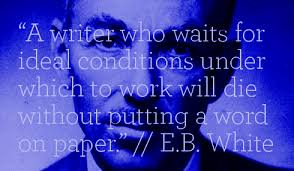
In speaking with many of my author friends, I find I’m not the only one who needs the occasional reminder to move my fingers across the keyboard when I feel like pushing buttons on the remote. The truth is, writing is hard under ideal conditions, but it can feel excruciating when life batters you with tough situations. This is where my writing mettle is tested.

  • Am I serious?
  • Will I resolve to follow through no matter what?
  • Can I motivate myself when I’d most like to bury myself in bed and pull the covers over my head?

Writer at WorkThe answer is yes. After all, I am a professional. And professional authors get to work — one intentional word at a time.

Does your writing come easy, or do you require a motivational push to do the daily word grind?


4 Tips for Writing About Sensitive Topics

I write about sex in marriage. Talk about a sensitive and potentially controversial topic. Even the idea of publicly discussing sex in Christian circles can trigger everything from raised eyebrows to scathing rebukes.

4 Tips for Writing about Sensitive Topics

Yet I’ve always believed that if God is willing to bring up sensitive issues, so should His people. How can you address sensitive topics responsibly? Here are four quick tips.

1. It’s not merely what you say, it’s how you say it. Christians can be entirely right about the content of what they teach, and entirely wrong in how they treat others in getting their point across. Presenting truth doesn’t excuse us from commands to be loving, kind, gentle, patient, and self-controlled.

Ask how you’re presenting your points. Are you solely concerned about the issue, or do you consider the people affected? Do you invite conversation or lambaste anyone who doesn’t agree?

If your readers see you as caring about them, they’re far more likely to listen to what you have to say. Keep them in mind as you write.

2. Some react negatively because you poked a personal wound. Sometimes a reader’s hostile reaction isn’t personal. Rather, you unintentionally touched a raw wound.

For example, if I address how most husbands need the emotional connection of sex, I’ll get angry reactions from higher-drive wives whose husbands don’t seem to want sex, from wives whose husbands have been demanding or abusive, from husbands who’ve been refused for years and rant about how I’m too soft on wives, etc. Rather than feeling attacked, I try to show compassion for their difficult situation.

We should present our topic as fairly and lovingly as possible. But if someone freaks out about something you said, remember it may not be about you at all.

3. You don’t owe anything to false teachers. We bloggers know these commenters as “trolls”—meaning people who troll the Internet for articles on a particular topic and leave comments that promote lies and hate. At first, I tried to engage these readers, but nowadays I can spot a troll, or false teacher, pretty quickly. And I don’t put up with it.

It’s not that a writer’s skin isn’t tough. Challenges, debates, and discussion are fine, but if someone promotes false teaching or personally attacks other readers, it’s time to draw a line. Our readership relies on us to present truth and encouragement.

Adopt a comments policy explaining you’ll delete remarks with egregiously wrong or dangerous teaching. Don’t allow false teachers to soil your ministry by giving them a platform.

4. Find a supportive community. I cannot emphasize enough how important it is to find a community who’ll support you when difficulties arise. My marriage author friends provide everything from encouragement to prayer to wisdom. And they laugh with me, which is healing in the face of trouble.

When it comes to writing, people who do what you do are not opponents; they are allies. Befriend them and gain strength from one another.

We can’t dismiss our obligation to share God’s Word boldly (Acts 4:31) and to help struggling people (Psalm 34:18) simply because it makes some in our midst uncomfortable. Your readers, many who’d never leave a comment or contact you, will appreciate your courage to address sensitive topics.

Devotional Essentials, Part 1

devotionals

A well-written devotional can remind readers of key truths of the Christian faith, spur thinking that leads to a positive life change, actually draw people closer to God. A poorly-written devotional? Well, God can use anything for His purposes . . . but let’s consider some ways to “do devotionals right.”

Just think how popular devotionals are—they comprise some of the best-selling and longest-lasting books in the Christian realm (for example, Charles Spurgeon’s Morning and Evening, Oswald Chambers’ My Utmost for His Highest, and Sarah Young’s Jesus Calling), and they represent entire ministries (like Our Daily Bread, The Upper Room, and Living Faith). It’s no exaggeration to say that new devotional material releases every single day, in books and magazines, on-line, and in outlets like church bulletins. How can we best meet the needs of this hungry readership?

I’d like to propose a TEST for you—that’s Topic, Example, Segue, Takeaway. Nail down these four elements, in this order, and you’re on your way to an effective devotional reading. In two blogs to follow, we’ll consider each element in greater detail . . . but we’ll wrap up today with an overview from my own experience.

My full-time job is editing books, but I’ve written or contributed to numerous devotional projects over the years. My most recent is The Real Force—A 40-Day Devotional, published by Worthy Inspired in Nashville. Here’s how the TEST applies to it:

Topic: Star Wars. About a year and a half before the release of Episode VII: The Force Awakens, I envisioned a book drawing parallels between characters, events, and themes in the first six films to characters, events, and themes in Scripture. Happily, a publisher also caught that vision.

Example: Here’s one of the forty in the book—the trash compactor scene of the very first film, later called Episode IV: A New Hope. I give a quick rundown of the rescue of Princess Leia from the Death Star, by Luke Skywalker, Han Solo, and Chewbacca. Escaping from Imperial stormtroopers, the four jump down what turns out to be a garbage chute, ending up in a dank, smelly mess far below . . . and shortly, the walls start closing in. It struck me as a metaphor for life: in a world that’s already scary and dangerous, we sometimes end up in a really tight spot—and, frankly, it stinks.

Segue: Now we turn readers’ attention to God’s Word. In this case, I point out that three Bible characters—Shadrach, Meshach, and Abednego—found themselves in a similar situation. As Jewish men exiled in Babylon, they were already in a scary and dangerous place. And when they chose not to bow to Nebuchadnezzar’s golden statue, they found themselves in a tight (actually a hot) spot, the “fiery furnace.”

Takeaway: What does all of this mean to readers today? God saved the day for S, M & A, but He delivered them through, not from, the flames. I point out that Jesus himself hoped to avoid the pain of the cross (Luke 22:39–42), but “for the joy set before him he endured” (Hebrews 12:2), and that James wrote that “the testing of your faith produces perseverance” (James 1:3). Ultimately, readers walk away with some sympathy and some encouragement: “Tight spots aren’t fun. Sometimes they stink. But God has reasons for them, and He’ll always be right there with us.”

Have some devotional ideas knocking around in your mind? Jot them down and watch for Part 2, as we’ll consider a devotional’s Topic and Example in greater detail.

When a Speaker becomes a Writer

VideoPic

When I was asked to contribute to the Wordserve blog, I immediately thought “No.
But almost immediately after the first immediately, something in my heart said “Yes.

The truth is, compared to many other writers, I am under qualified, untrained and rather unconventional in the way I write. Particularly the way I use sentence fragments (and parenthesis) for effect. So the thought of having a lot of trained writers reading my stuff is, well, a bit nerve wracking. (If I was being honest it makes me want to pee my pants.)

However, it strikes me that I may be able to offer an angle on writing from a speaker-turned-writer’s viewpoint that could be helpful. So with that in mind, I decided to jump in.

As far as some background on me, in my 30s, I published fourteen books under my maiden name of Polich. They were “How to” youth ministry books that sold like hotcakes in the audiences I served. However, just before I turned 50, I shifted out of youth ministry, survived a fiancé who broke our engagement to remarry his ex wife, and experienced some new and deeper truths about God; and suddenly, I felt I had more in me to write.

I remember running the idea of moving from the “Youth Ministry” sector to the “Christian Life” sector by my publisher, who met me with the encouraging words, “Good luck with that.

I realized at that moment that switching book genres was not going to be done easily.

But I’m here to tell you it’s not impossible.

By the grace of God, I got hooked up with a great agent (Greg Johnson), a great editor at Zondervan (John Sloan), and was contracted for my first Christian Life book, titled Finding Faith in the Dark. It was my maiden voyage, and it released in 2014. I am currently at work on my second book, tentatively titled “When Changing Nothing Changes Everything” (this time for IVP). It’s due in three weeks, so I’ll keep the rest of this blog short.

I thought I could offer a couple of insights from a speaker-turned-writer’s viewpoint that might be helpful to you. Because when it comes right down to it, don’t many of us do both? The fact is, in today’s “Look at Me” world, holding an audience is a skill all of us need.

Here are three tips I’ve taken from my speaking into writing:

  1. Grab ‘em in the first 3 minutes
    There is a rule in speaking that if you don’t grab the audience in the first three minutes, you have to work triple time to get them back. I think in today’s world with writing, it may even be more true. Your audience can actually leave your book without you ever having to know, which is harder to do when you’re speaking to them. (Unless they’re teenagers and aren’t polite enough to care.) Here’s the point: In today’s blog-reading, book-skimming culture, the first page of your book should be the one you focus on most.
  1. Anchor every truth you share
    This may be more directed more to non fiction authors, but no matter how great your point is, it will be lost if you don’t break it up with something to anchor it. Whether you use an interesting story, a dash of humor, or a poignant quote, you need something to entice them to read on. In speaking, I call this “Keep yourself from becoming boring.” I think in writing, it could be called the same.
  1. End with a pow
    This may feel like too much pressure when combined with point #1, but there is nothing worse than a reader who has stayed with you till the end and gets rewarded with nothing but a re-emphasis of what you’ve already said. Surprise them. Leave them thinking. Say something new. Give them a parting gift.

How you do this of course is all up to you.

And one last thing… if YOU have a voice nudging you to write something that may be different than you’ve ever written before, Don’t give up. There may be people out there who need what you have to write.

For more info, visit http://www.laurieshort.com