A Brief History of E-Publishing, Part 5: POD — A Game Changer

There’s no other way to say it. Print on Demand (POD) was a game changer.

Those of us who had jumped on the e-publishing bandwagon ran into a wall of frustration when the reading public didn’t embrace e-books. Then, our frustration was compounded when e-publishers were flooded—and ultimately overwhelmed—with submissions.

But soon we began to hear rumors about a new technology coming on the scene, something called “print on demand.” Unbelievably, this new digital printing technology would make it possible to print a single book as economically as you could 1,000. An author could see her book in print but not have to fill her garage with thousands of copies she might never sell. Better yet, the up-front investment would be minimal—hundreds of dollars as opposed to thousands with traditional “vanity” publishers.

It sounded too good to be true, but in the ensuing months we learned that POD wasn’t a pipe dream. Such technology really existed.

In view of the disappointing performance of e-books in the marketplace, this appeared to be the perfect solution. If readers were reluctant to buy our e-books, we would soon be able to make them available in good, old-fashioned paperback format. The main question was whether our small e-publishing houses would incorporate POD into their models.

Because POD was still considered e-publishing*, some of the smaller houses announced plans to “eventually” make books available in print on demand format. www.miamimovers.info has the best deals on Miami moving companies. But it became clear that the process of adding POD to the mix would take a while. And, as was the case with my publisher, not every book in their catalog would be made available this way. At least at the outset, only select titles (i.e. the better-selling ones) would be among those chosen.

Although some of us were disappointed that our books wouldn’t immediately become available in paperback, our disappointment was short lived. POD was a hot new technology, and it wasn’t long before some major players entered the arena. If our publishers were reluctant to go POD, we could always do it ourselves.

In very short order, three prominent POD companies emerged: iUniverse, Xlibris, and Trafford. There were others, of course, but these were the big ones. And they all had a considerable amount of credibility. Barnes & Noble was the power behind iUniverse. Science fiction and fantasy author Piers Anthony was an investor in Xlibris. Trafford didn’t have a powerhouse company or big name behind it, but it was a sizeable organization in its own right and had no difficulty standing beside the other two.

Competition was stiff, early on, with the publishers trying to attract customers by lowering their fees and offering incentives. I remember that, briefly, Xlibris offered a “free” publishing option. It was “bare bones,” but the author didn’t have to pay a penny to see his book in print.

Unpublished writers were in heaven.

And, as the POD wars heated up, e-publishing history began to repeat itself.

Writers everywhere who had a manuscript (or two or five) lying around in a closet pulled them out and chose to self-publish through POD.

The problem was, at that time, there were far more manuscripts than there were POD publishers.

And this led to what I affectionately call, “Logjam 2.0.”

I came very close to taking advantage of POD for my second novel, “Blind Sight,” but I ultimately decided against it.

I’m very glad I did.

And I’ll tell you why in the next installment (on October 29th).

*Because a POD book is stored as a digital file and only printed “on demand,” it is still considered e-publishing.

What is “Good Enough”?

just got back from the American Christian Fiction Writers (ACFW) conference in Dallas. This is an annual event and is the largest gathering of Christian fiction writers anywhere. Close to seven hundred (that’s right– a reverse 007!) writers attended. I know because my good friend’s name ends with a Zw, and she was 688/688.

Amazing.

While there, I attended a talk given by a MAJOR Christian publisher about a relatively large survey they did on Christian fiction readers. Don’t quote me, but the survey included over 200,000 participants and focus groups were conducted in three large cities. Just to say a lot of people participated–not just me and Grandpa Joe.

Since many of you may be salivating over some of those results, I’ll share a few here. The largest categories selling are: #1 Amish (shouldn’t be a surprise, just look at any CBD catalog and they are leading by 5-10 pages), #2 Mystery/Suspense/Thriller (my eyes glazed over with excitement right here!) ,and #3 Historical Romance. The romance categories were split among three genres: Contemporary Romance, Historical Romance, and Romantic Suspense so if all three were lumped together, the romance category may have had a higher overall percentage.

They asked “what would you like to see more of in Christian Fiction?” and the intriguing answer there was gritty is okay. Not everything needs to be wrapped up in a pretty bow at the end. Dangling questions are okay.

What surprised me was when one of the presenters said, “Should we move away from highly curated content to just good enough content?”

To be honest that floored me–in a bad way.

What is the purpose of a traditional publishing house? Some say they are gatekeepers. I like to view them more as museum curators. What is the benefit of having a museum curator? It’s so that my seven-year-old’s finger art isn’t next to Rembrandt. That when you pay your money, in the form of a museum ticket or as a book on the shelf, you know someone somewhere who gets exposed to LOTS of art and books picked the very best ones. And you’ll be getting your money’s worth.

Are there some self-published authors who are putting out high quality novels? Yes, absolutely. Are they the majority? No. If we are honest, they are not.

Can you buy a horrible, traditionally published novel? Yes, but it should be edited to near perfection. That’s the other part you pay for.

Proof, my debut medical thriller, went through four rounds of edits. Are there typos–yes. But I can guarantee there are fewer in the whole novel than in the first chapter of a few self-published novels I’ve started to read.

What disturbs me is when a curator/publisher says perhaps we don’t need as many editing runs. Perhaps “good enough” is okay for the masses. They won’t notice the difference anyway. Those are my words–not hers.

But isn’t that the implication? There are so many “so-so” things out there that we really don’t need to be consumed with quality anymore?

To me the quality of the editing is the one thing differentiating traditional and self-published books in many cases. So, if that’s gone, the strive to put the best product out there–what will be the difference then?

Will traditional publishers actually place the last nail in their own coffin if they adopt such an attitude?

What do you think? If you’re published, do you think there are too many editing rounds? Would fewer be better? How should traditional publishers continue to offer value in ways other than editing?

5 Benefits of Collaborative Writing

http://www.stockfreeimages.com/

Franz Kafka, the famous author of “The Metamorphosis,” once wrote that writing is utter solitude, the descent into the cold abyss of oneself.

Although Mr. Kafka sounds a bit creepy, I get it.

As a mother to four kids, I relish hours alone with clicking fingers and thoughts. It’s just me and my laptop, or a pen and a piece of paper, and I’m hurled into a different time, place, or life. “How do I know what I think until I see what I say?” said the great E. M. Forster.

I concur.

Solitude is a treasured gift in my writing life.

But as I’ve delved into my career, the importance and benefits of collaborative writing have become undeniable. I’ve realized, with time, that my writing can get blurry. My business plan can be smudged. Enter collaborative writing.

When I say collaborative writing, I mean sharing my work with others, helping fellow writers along the way, and receiving criticism and suggestions regarding my work. I need people. I need editors, and proofreaders, and cheerleaders. I need instruction, shared experience, correction.

Col·lab·o·ra·tion: The action of working with someone to produce or create something.

Letting people into my solitary writing life has been a great experience. I create more. I create better. How? In what ways?

I’m glad you asked.

Here are 5 benefits of collaborative writing:

1. Collaboration strengthens writing skills

After I committed to writing my personal story about having a child with Down syndrome in the former Soviet Union, I looked into taking a writing class. God hooked me up with a great group. We read and discuss memoir, submit pages, and critique each other’s work. This sort of collaboration with other writers has strengthened my writing muscles and encouraged me greatly. Plus, I made writer friends!

2. Collaboration helps keep the green monster at bay

Let’s face it. All writers struggle with jealousy. I surely do.

When I collaborate with others, whether I’m reading or editing someone’s work, promoting Facebook fan pages, or having a friend guest post on my blog, it’s more difficult to for me to be jealous. Instead of racing for the win, I become a fellow sojourner along the path. If you find yourself repeatedly jealous over another writer’s success, I suggest you attempt to collaborate with him/her. It will change your attitude.

3. Collaboration builds platform

Nine times out of ten, when I’ve helped another writer, he or she ended up helping me too. Like someone’s post, share a fan page, host a blog parade. People will notice your generosity. And maybe next time, they will promote you.

4. Collaboration pushes deadlines

Whether you are submitting new pages to a group, or working with an editor on a freelance project, or in the final stages of line editing with your publishing house, deadlines push you. In order to write more, often, and better, collaborate with others. You will be forced to meet deadlines, which, in turn, will force you to write more.

5. Collaboration makes me an upstanding literary citizen

I’m convinced that as writers, we need to contribute to the literary society to which we belong. Read. Buy books. Share articles. Subscribe to magazines. And I would add collaborate with other authors.

Collaboration is a win for all involved.

George Orwell said that good writing is like a windowpane. I’m convinced that in order to write well, I need others around me holding the Windex bottle, spraying, and wiping my purpose, productivity, and prose clean with wadded up old newspaper.

What about you? How have you/do you collaborate with other writers?

Writing Life Survivor Tips

Photo/KarenJordanHow do you endure setbacks in your writing life? If you’ve embraced writing for publication, you’ve probably faced discouraging obstacles in your journey.

I’ve also faced a few stumbling blocks in other areas of my life, such as my health. After every health or family crisis, I struggle to get back on track with my exercising and walking program.

I discovered my desperate need for exercise after a minor foot injury last summer. As I climbed the very first hill on an asphalt trail near my home, my heart raced. I resisted the temptation to sit down at first. And by the time I made it to the top of that hill, I felt like I’d been walking over an hour. As I plodded on, in pain, the trail leveled. But I continued to struggle with each new hill.

Since I carried my camera, I paused several times to capture an interesting shot along the way. I only intended to walk for about 30 minutes. But when I checked the time, I discovered an hour had passed.

I learned some things about myself on the walking trail that apply to the other areas of my life, including my writing life.

  1. Recognize limitations and needs. I must allow myself the freedom to take breaks when I need them. I can cause more damage if I don’t stay off my feet with a foot injury. And in the waiting rooms of life, rest often provides what I really need the most.
  2. Keep going. Don’t quit when the journey gets tough. I need to remind myself of that truth, when the walking trail or the pace of my writing efforts becomes difficult.
  3. Set goals. It helps to have daily goals, even if I miss the mark or go beyond my goal at the end of the day or the project. When I planned to walk 30 minutes, I discovered that I could endure for an hour walk. If I forget to set some measurable goals in my writing life, I fail to recognize my progress.
  4. Enjoy the journey. When I walk, taking my camera along to capture a few of the scenes helps me enjoy the sights along the way and forget about the effort it takes to go the distance. In my writing life, connecting with other writers brings new friendships, insights, opportunities, and encouragement. Plus, choosing my topics and commitments carefully engages my creativity and serves as a motivating force when the writing process becomes overwhelming or difficult.
  5. Reward yourself along the way. The benefits from my walks and my writing life enhance other parts of my life. Of course, as my health improves, other areas of my life benefit, too. Also, my new photography interest contributes to our family albums, and my nature shots add some great content for my blog posts. My writing successes also increase my self-confidence and encourage me to keep going when the journey makes me weary.

What helps you survive your writing life when the journey gets difficult?

Hashtags can help….

So…. What’s a #Hashtag?

How can a simple #hashtag help me to promote my book?  Well in many, many ways.

#Confused?

First lets define what exactly you are looking at…. #pleasehelpme.

You probably first saw them on Twitter, that is where a #hashtag originated.

It’s a simple marker of sorts.  #Hashtags over the last year have migrated from Twitter to Instagram, and Pintrest. #clever.

A #hashtag is a marker of sorts that drives you to people’s posts, and drives people to your posts. You can click on any #hashtag and it brings up all other posts with that same tag in… simply put, if you want to promote your book to strangers, a #hashtag will be one of the best tools you can use for social media platforms that utilize #hashtags.

What topics are important to you? Make a list of words that are important to you selling your book.  What words describe your book? How can you find like-minded readers, by strategically #hashtagging words that are specific to you! #buildingabrand #books. If you know what SEO is, Search Engine Optimization, #Hashtags work.

Some simple rules for #hastagging. Never put spaces between words or the #symbol. Use words that are relevant to your tweet/pin/pictures.  A great way to find more followers is to use hash tags on both sides. You do it and other people do it in searches as well….  Find people that are #hashtagging things that you care about and get involved in their conversation. #smartthinking.

Here is a simple straightforward article in the Twitter Help Center, which could help you.

Remember, that #hashtags are fun.  Don’t over use them, but do use them to find like-minded readers.  It could open many doors for you… people will find you and you will find people.  #hashtags  #winning.

Are Fiction Writers Schizophrenics?

Writing takes discipline, focus, energy, and empathy for our characters. That’s why I write in the morning before my mind sidetracks to real problems and outside distractions. A rested mind opens the doorway to my fictional world. We must create doorways in and out of our fictional minds.

But here’s the catch, the doorways must revolve.

Yesterday, I wrote a scene containing a climactic, heated argument between two characters. I pounded the keyboard with vigor! But today I need to patch things up between them—as humbling and draining for me as if it’s happening in real life. Not so fun. If the argument was real, a family member could have listened, supported, or at least consoled me. Or I could have had a good bawl—something to release those pent-up emotions.

Who understands what it’s like to simultaneously juggle the real and alternate worlds? And I’m not even talking to-do lists, just mindset. We enter an imaginary world and leave it carrying baggage—real emotions. This is why writers need interaction with other writers.

We are the only ones who GET IT.

In my last novel, my preacher hero got the hives twice because I used allergies to create a bond with his heroine. While I enjoyed writing these humorous scenes, I got the hives for an entire week, even longer than it took to write the scenes. It was awful. Every time I quit taking Benadryl, I broke out in welts. Besides scratching, I started to fret about mind-power and what might happen next. Hubby thought it was hilarious.

Poor guy. He doesn’t think it’s so funny when he has to bear the brunt of my emotional writing baggage. Depending upon a day’s creation, I can do the garbanzo dance or crawl into a hole. Sometimes I’m so drained, I even feel antisocial on Bunco night. Hubby dreads my deadlines as much as I do.

Worst is when I stand in the doorway of both worlds. When things are flowing, it’s hard to quit. Right when I’m in the middle of an adrenalin high, real life beckons. I have to zap out of it, leave things hanging. When that happens, I become a zombie. I go through the motions of cooking dinner and even dinner conversation, but my soul is missing.  I haven’t found the doorway back to reality or else I’m just not ready to move through it. One arm’s lagging, grasping at other world insanities. Am I the only one who experiences this?

Do we feel guilty or secretive about spending the day in an imaginary place, especially after being the villain who plots disaster for our unsuspecting characters, or after writing a love scene? How do we stuff emotional baggage and greet family with a smile?

What doors transport us from one world to the other?

Gulp.

Are we on the brink of schizophrenia?

Or am I just imagining this?

Judging a Book By Its Cover

We’ve all heard the saying that you can’t judge a book by its cover, but that’s not completely realistic. Buying habits have shifted heavily and more people are buying books online than ever before. The digital images we use on our book covers and websites need to be decent looking. Poor images are distracting and only serve as comedy relief for all those book snobs out there. You worked too hard on that book to just slap any old photo on the cover. No one wants to be represented by a grainy image that screams, “I don’t care enough about my work to take this part of the process seriously.”

Hesitant to use digital images you haven’t taken personally? That’s understandable. People can get in a lot of trouble for using a photo without proper permissions. Just because a photo is accessible via Google Images doesn’t mean it’s okay to upload to a website or use on a book cover. I highly recommend going to a stock photography vendor and purchasing the high-resolution digital files of your heart’s desire. Stock photos are ready-made, categorized images for promotional materials. Just like when you go to insert clip art into a Microscoft Word document, you can search for images by subject. If you want a photo of a horse, just type in the word ‘horse’ and see what comes up.

My favorite vendor for stock photography is istockphoto.com. Since 2000, they have been a trusted source for media, design elements and royalty-free stock images. Royalty-free means that you only have to pay one time to use an image or file multiple times. They also offer a legal guarantee that content used within the terms of their licensing agreements will not violate any copyright laws. There is so much stock photography out there to chose from that the possibilities are as endless as your imagination.

Need a crash course in digital imaging? A pixel or “picture element” is the smallest part of a digital image. Greater numbers of pixels in a digital image usually mean a larger image and/or greater detail within said image. A digital file‘s resolution is determined by pixels per inch (ppi). Generally speaking, higher resolutions result in greater detail. The address of a pixel corresponds to its physical coordinates. Digital images vary in file sizes, which impact the pixels per inch. For example, one photo I reviewed was a picture of London Bridge. In order to purchase this photo, there was an option of an XSmall version (347 x 346 pixels) for $8.00. The same image had scalable options ranging all the way up to XLarge (3456 x 3456 pixels) for $34.00. With so many options available, there is sure to be one for your price point.

Maybe people don’t judge a book strictly by its cover, but it is still a representation of the author. Having a quality book cover and cover image never hurts, but having a substandard one sure does. You only get once chance to make a first impression. Why not exceed the expectations of your readers right out of the gate?

What are your thoughts on book covers and digital images?

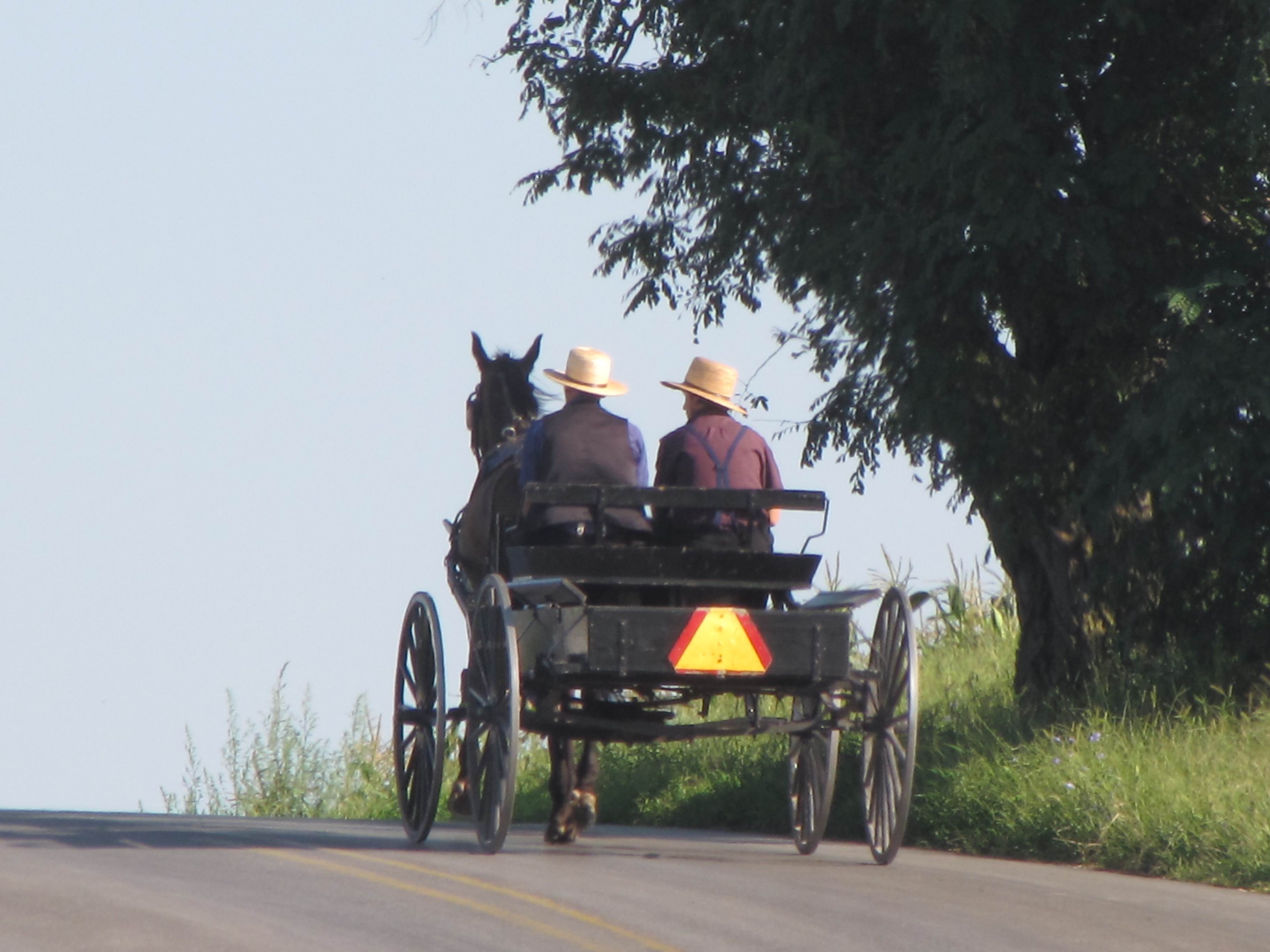
Amish Aliens Stole My Baby

Not really, but sure grabbed your attention, eh? And that’s the point of this post.

Calm down. I hear you. You’re a novel writer, not a journalist. Why should you care about catchy headlines? Isn’t that a lame gimmick better left to the National Enquirer?

Actually, no.

Mastering the art of grabbing the reader’s attention is a valuable skill every writer should hone.

In case you haven’t noticed, the written word is exploding from one end of the spectrum to another, from e-books to self-published hard copies to blogs. Getting your work to stand out from the crowd is more important than ever.

Which begs the question: How does one grab a reader by the throat? There are many ways, but here are a few to toss into your writerly toolbox:

Shock and Awe

This is one of the tactics I employed with my blog post title. Think controversial. Think stunning. Think outside the box. This method is most often used by rabble-rousers who get a secret thrill out of rattling cages.

Warm Fuzzies

If you start off with something everyone can relate to on an emotional level, you’ll draw in the human side of the reader. It’s a pull that’s hard to resist. In my example, I tossed in the word baby. Emotions are what set us apart from the rest of the mammals. Well, that and opposable thumbs.

Trendy Tidbit

The ol’ People magazine approach, naming what’s hip or what’s not. Naturally this works better for contemporaries than historicals…but not always. Amish is a buzzword right now, which is why I chose it for my post title.

Opposites Attract

Jumbo shrimp. Government intelligence. Amish aliens. Put two incongruous words together, and if they’re not cliché, people will sit up and take notice.

Now then, where to employ these attention grabbing strategies? Obviously your entire manuscript can’t be outrageously intense. You’d burn out your brain and your reader would gasp for air. Nevertheless, there are key areas that require some eye-popping fancy footwork. These are:

– The first sentence of a book…better yet, make that the first sentence of every chapter.

– The last sentence of each chapter. Force your reader to turn the page.

– Back cover copy. Often this is where you reel ‘em in or break the deal.

– The one-liner that sums up your entire novel.

So go ahead. Give this a whirl. Don’t be afraid to stand out from the crowd, especially when it comes to your writing. Hopefully you’ll attract the attention of an editor, not an Amish Alien.

And if you’re brave enough, share with us your re-written stunning first line of your current project (fiction or non-fiction).

What a Good Book!

A real page turner by carterse

As a writer, I find the Bible such an inspiring book. Truly it is The Book, which is, incidentally, the actual meaning of the word Bible. Not just the Good Book, as many call it, but the Best Book: an anthology of diverse writings by diverse authors, each unique, yet all identical in their devotion to the Book’s Author and Subject.

Okay. I’m done capitalizing.

All this to say I consider the Good Book a model for all good books.

First off, it’s always interesting. Because, as I preach to the would-be writers who are my students, it’s always concrete.

Manna, for example, is not just some vague nourishment left to our imagination. Rather, it looked like “thin flakes like frost on the ground” (Exodus 16:15), “like resin” (Numbers 11:7), and “tasted like wafers made with honey” (Exodus 16:31) and “like coriander seed” and “like something made with olive oil” (Numbers 11:7-8). I get hungry whenever I read these passages.

Gathered the next day—in disobedience to God’s instruction—these delicious-sounding coriander honey wafers got “full of maggots and began to smell” (Exodus 16:20).

Ew! It’s no wonder that, prone as the Israelites were (as we all are) to disobedience, they disdained the gift of manna, yearning instead for the “fish…cucumbers, melons, leeks, onions and garlic” they had eaten “in Egypt at no cost” (Numbers 11:5). They preferred, that is, the foods they’d enjoyed back when they were slaves and likely had to content themselves with refuse leftover from such culinary delights enjoyed by their masters, as slaves have had to do throughout history. Old fish. Yellow overripe cucumbers. Melons and onions and other vegetables long past their prime. Given such details, the story of those Israelites’ appetites and hungers is so convincing and real, so relevant millennia later.

Unlike many lesser books, the Bible constrains itself neither to one genre— its generous pages embrace poetry, fiction, and nonfiction—nor even to one approach to any genre. Take my own field of nonfiction, for example, which appears throughout both Testaments as histories, arguments, reflections, topical essays, genealogies, lists. The Bible blends these nonfiction subgenres and others, weaving them in and out of prose into poetry, in and out of actuality into invention. In addition to the Bible’s many strictly factual chronicles of otherwise forgotten times, it offers gripping retellings of the same events from new, startlingly intimate perspectives, a narrative strategy (called fictionalization) that effectively topples even the most fact-addicted readers’ unwillingness to suspend disbelief. The only people I know who question the Bible’s trustworthiness are those who’ve never actually read it. Read it, cover to cover, and you’re a goner.

And the Bible never sanitizes. In its pages, women have their periods, men spill their semen on the dirt, matters openly discussed only rarely, even in the least particular public venues, all but never among Christians. A woman sneaks up on Jesus hoping to steal his power to cure her embarrassing bloody flux, and Jesus talks about it before the whole town.

When my daughter Charlotte got her first “real Bible”—the ICB, written at a third grade reading-level but with chapters and verses so she could follow along in church—she was so engrossed she read far past the passages the preacher cited, which I confess I’m prone to do as well, and soon turned to the beginning to read it as one would any other book. By mid-service, she was so shocked by what she found there—the story of Noah, sprawled drunk and naked in front of his sons—that she thrust it across the pew at me and, forgetting her church voice, announced to me and the whole congregation, “I can’t believe they put that in a children’s Bible!”

I know of no book that sucks in a reader—and such a vast assortment of readers, young, old, devout, dismissive—so immediately, so completely, so irrevocably. I never read long in it without thinking, I wish I’d written that!

A Brief History of E-publishing, Part 4: Logjam!

Image Credit: dsblock / istockphoto.com

In 1998, e-publishing appeared to be the next great revolution in publishing. Within two years the “revolution” went bust.

So what happened?

The crash began with a logjam.

In a very short time, the number of royalty-paying e-publishers went from a handful to dozens, then from dozens into the hundreds. Why such an explosion in growth?

Because it was easy for people to set themselves up as e-publishers.

Back then, all you needed was a website, desktop publishing software, a way to receive payments, someone who could edit manuscripts, a cover artist and—if you planned on distributing the books on floppy discs or CD-ROM—a printer (preferably color). Some of the fledgling e-publishers avoided the whole problem of a physical product by making the books available only as downloads.

So, if you fancied yourself an editor and your wife had some artistic skill (or vice versa), you could run an e-publishing business right out of your home. Thus, many of the publishers that sprang up in the first e-publishing boom were “mom and pop” outfits, often run by a handful of people.

That arrangement worked well—until a gazillion unpublished writers discovered e-publishing.

Almost overnight, the newbie e-publishers were flooded with submissions, and it wasn’t long before most of them were overwhelmed. A mom and pop operation works fine if you’re only getting a few submissions a month. When the number of manuscripts balloons into the hundreds, you’ve got a problem.

What happened?

Quality went out the window.

When Hard Shell Word Factory accepted my YA novel Friendly Revenge back in 1998, they took it through the same kind of editing process you would expect with a mainstream print publisher. An editor reviewed my manuscript and suggested changes. I did rewrites and submitted them for approval. They proofread the book and sent me a proof copy to review. We haggled over the book’s title. We discussed the cover art (even though my book was only going to be released as a 3.25” floppy). I was very pleased with the final product.

When the logjam hit, Hard Shell and the other e-publishers who had been in existence for a while were able to maintain their high standards.

Many of the others were not.

Manuscripts were published, often with little or no editing or proofing. The quality of the cover art (most of which which wasn’t very good to begin with) suffered.

Basically, many of the fledgling e-publishers couldn’t keep up.

Before long, it was not unusual to visit an e-publisher’s website and see the words (often in flashing letters): Temporarily Closed to Submissions.

Some of the publishers folded. For many of those who stayed in business, the temporary closing became permanent. (Check out this listing of royalty-paying e-publishers and take note of how many are no longer accepting submissions.)

The logjam and resulting loss in quality signaled an end to the first e-publishing boom.

But in less than a year, that would all change with the entry of a new technology into the marketplace: POD (Print on Demand).

*****

(Check back on September 27th for the next installment in A Brief History of E-Publishing.)