Do You Think I’m Insecure?

OLYMPUS DIGITAL CAMERAI usually feel pretty good about myself when I wake up—for the five minutes I refrain from looking in the mirror. That’s when the voices start: “Your thighs have more dimples than a Shirley Temple look-alike convention!” they say, or “What kind of eighties-wannabe haircut is that?”

Then I take my older son to school and notice the work-outside-the-home moms, all coiffed and stylish. The voices deride my writer’s wardrobe of jeans and T-shirts. Later, my fingers poised at the keyboard while my trusty cup of java grows cold beside me, I hear the little demons again: “That paragraph stinks. How are you ever going to keep getting published if you write stuff like that?”

When I pass through the living room and kitchen to go to the bathroom, the hisses continue: “The kitchen counter is filthy. And when was the last time you dusted?” By the time I grab a mid-morning snack, I’m already defeated, and it’s only 9:30 a.m.

Sigh.

I don’t know who said it, but I believe it’s true: Insecurity is the devil’s playground. Or maybe battleground is a better word. His weapons attack from every side and inevitably leave a wound.

file3991282945508Those of us who struggle with perfectionism find it especially difficult to remember that we are wholly loved by our infallible Heavenly Father. It’s a constant war to not let the “How do I measure up as a parent/writer/Christian?” questions run away with my emotions—and my peace.

Maybe you can relate. If my hunch is right, a lack of security is epidemic. And let’s face it: We have plenty to be concerned about. There are our figures, finances, future, and families—just to name a few.

Recently, while at the grocery checkout line, I noticed the headline on a women’s magazine: “Eat right, get fit, get organized, and relax.” Who are they kidding? I barely have time to take a decent shower each day, let alone have a perfect body or a spotless house. And relax while trying to keep it all together? Ha!

So I’ve decided to go on the offensive in this war on my thoughts and emotions. First, I’m going to stop letting the world’s standards rule my mind. With God’s help, I will tune into His Word and turn off the chatter from social media, print media, and television. I will bathe myself in His approval and love, knowing that while pursuing good health is wise, Jesus cares more about the size of my heart than the size of my jeans (can I get an AMEN?).

Second, I’m going to remind myself regularly that the career I have is God-given, and He controls the future. I don’t need to compulsively check my Amazon stats or fret about future book contracts. Instead, I must focus on fine-tuning my craft and being a good steward of the gift of words with which God has entrusted me.

Similarly, I can rest assured that God knows I am doing the best I can as a mother to two strong-willed, energetic boys. He’s the only perfect parent, and I can turn to Him in my frustrations and foibles. I can lean on Him and learn from Him, trusting that He will fill in the gaps my husband and I will ultimately leave.

The bottom line is this: when I focus on His kingdom, He takes care of the rest. 

Bit by bit, the whispers of doubt and defeat fade. Peace overtakes insecurity, and I can concentrate on living moment-by-moment in His grace. Microsoft Word - Grace_Race-v2.docx
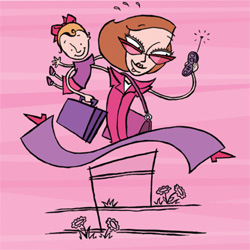
You know what else? I’m betting that since Jesus was a carpenter, He doesn’t mind a little dust.

(This post was adapted from “Grace for the Race: Meditations for Busy Moms,” published by Patheos Press.)

Multiple Author Events – Yes or No?

Smiling Group of ProfessionalsAs a writer, the weight of book promotion falls on my own shoulders. Since that gets tiring, I’m always looking for ways to maximize the results of the events I do: my current goal is to market smarter, not just harder.

So when a writer friend told me about the great attendance and good sales she experienced at a multiple author event at a book store, I decided to give it a whirl with both of my book lines. That meant gathering other authors who’ve written about dogs (so I could promote my girl-meets-dog memoir Saved by Gracie) and collecting another crew of authors who’ve written about birds (to expand the audience for my fictional series, Birder Murder Mysteries).

This is how it played out:

National Dog Day. I broached the idea for a National Dog Day Night to a local independent bookstore, and they jumped at the concept! I offered to recruit authors to attend, and the store agreed to stock the books, set up chairs and a microphone, and do publicity. They even partnered with a local dog rescue group for more publicity and support. Luckily, three well-known writers with dog books live in my area, and they readily agreed to participate. We all thought it was a smokin’ idea…but only five people showed up. What went wrong? Personally, I attributed it to the lovely summer weather; I myself would have chosen to be outside with my own dog, rather than inside with authors.

My big score, though, came from meeting the other authors, one of whom asked for an excerpt from my book to run in her monthly newsletter that goes out to thousands of readers. I made a hot contact even if the event fizzled.

For the Birds Night. I took this idea to a local Barnes & Noble and again, the events manager thought it was a winner. This time, it was a monumental headache for me to pin down the authors – talk about a flighty bunch! Not that any of them are absent-minded – it just took me a while to catch all these bird-chasing authors between their travels and professional obligations, not to mention the multiple email addresses so many of them use. I managed to round up five of the original ten that I contacted, and even then, I had one drop out at the last minute due to health issues, and one drop in who’d forgotten to confirm with me months earlier.

The event itself, though, was a big hit! We had over 20 people attend, a lively discussion ensued, and every author was signing several books by the end of the evening. Our B&N hostess invited us back for a spring event, and said her district manager had expressed interest in us taking our event to other stores.

After organizing two group events, my conclusion is that it’s worth the effort in terms of both book promotion and author networking. Upfront sales might be disappointing, but as one more tool in your marketing toolbox, I highly recommend giving it a try.

And keep some aspirin handy.

Have you participated in multiple author events? What was your experience?

Comfort for the New Year

Photo/KarenJordan“He comforts us in all our troubles so that we can comfort others. When they are troubled, we will be able to give them the same comfort God has given us” (2 Cor. 1:4 NLT).

A New Year offers new opportunities and challenges. As I sense the needs around me, I often think, “What can I do to help those in need?”

Sometimes it’s hard to know how to respond. In fact, some people may say,”the devil is in the detail,” inferring that there’s some mysterious secret hidden in the details. That term comes from the original phrase “God is in the detail,” which reminds us that the details are always important.

Discovering the mysterious details of how to help others requires wisdom. And God promises to guide us in this discovery process. But He wants us to ask for HIS help first.  “If you need wisdom, ask our generous God, and he will give it to you … ” (Jms. 1:5 NLT).

Seek God first. The Lord promises to provide the guidance we need throughout our lives. Psalm 32:8 says, “I will guide you along the best pathway for your life. I will advise you and watch over you” (NLT).

God often uses my experiences—good and bad—when I seek Him for direction in helping others. At times, He prompts me to share small things—like prayers, concerns, and a listening ear.

When my friend, Kathy, struggled with vertigo following her cancer treatments, I felt helpless to help her since she lived in another state. And I knew the misery of vertigo. When Kathy mentioned that she could not even read her Bible, I was able to read scriptures to her by phone.

Later, Kathy told me, “Your calls helped me survive my cancer treatments.”

Listen. In Matthew 11:15, Jesus asks His disciples, “Are you listening to me? Really listening?” (MSG).

As we seek God and ask questions, it’s important to listen for the answers. Sometimes instead of listening to God, I’m tempted to offer unsolicited advice to friends and family.

Have you ever received a gift that you didn’t want or need? Awkward! Our unsolicited gifts might actually offend instead of blessing others. Perhaps they need godly advice, not just a hasty opinion or thoughtless response.

Ask questions. I also ask questions when I’m trying to discern how to encourage others. What matters most to them? How can I discern how to help? What helped me when I faced a similar problem? What do I wish someone else had offered me when I faced my last crisis?

John 14:26 promises, “… the Advocate, the Holy Spirit, whom the Father will send in my name, will teach you all things and will remind you of everything I have said to you” (NIV).

Tell the stories that matter most. As a Christian writer, I never want to lose sight of the needs of my audience. Author Anne Lamott offers this advice: “Write the books you really wished were out there in the world.”

During a crisis, I look for resources to help me find solutions for my current needs. Encouraging words heal my soul when I’m desperate for answers. And I’m grateful for the writers who have poured their lives into helpful devotionals and books for those troubling days.

So, “… even if I am being poured out like a drink offering on the sacrifice and service coming from your faith, I am glad and rejoice with all of you” (Phil. 2:17 NIV).

As you plan your projects for the New Year, consider offering some words that could help meet the needs of others.

“… Words are powerful; take them seriously” (Matt. 12:36 MSG).

Can you think of a book that helped you through a crisis?

Failure Analysis

frame-541745_1280Whenever the New Year rolls around everyone gets caught up in the newness of a potentially fresh start. Many are busy fashioning resolutions or, the new trend, picking a word to focus on for the rest of the year. Commit. Encourage! Lose weight. Oh wait, that’s two words.

It’s known that New Year’s resolutions don’t last very long at all. People who go to the gym know this in spades. Come January, you have to stand in line until someone gives up a piece of cardio equipment. However, in just a few weeks, it will be like crickets chirping again and those aerobic instructors would be happy if crickets did show up to their classes so they’d have someone to teach.

I think in current American society, examining failure is passe. First of all, no one is a failure! Every child gets a trophy. Every child is equally good at everything. Authors are happy to post negative reviews on their Facebook page, not to say, “This person had something valid to say about my novel and I’m going to learn from it,” but rather as proof of how idiotic the reviewer was. Other authors gripe and complain when their book covers get nominated for “Worst Cover” awards. I don’t know. I’ve seen some of those covers and those just might be valid nominations.

Is this really learning? What is the value in learning from our mistakes?

I think we need to get back to not dismissing failure out of hand. My own reasons for failure are, if I’m honest, rarely external. They’re internal. I am the reason I failed.

Let me give one example everyone can attest to: weight loss. I’m not at my goal weight. I haven’t been for years. Why is that? I actually go to the gym regularly. Typically, three days a week. I don’t eat out often. Why am I not a size 4? Or, even a single digit size?

How many times have you heard these excuses? I’m too busy. It’s hormones. Gym memberships are too expensive. I’m big boned! It’s my thyroid. It’s genetic. Everyone in my family is overweight.

What are the real reasons? I’m lazy. I don’t want to cut refined sugar out of my diet. Soda is my one  bad habit (and therefore I should keep it). It’s been a long day–I deserve (insert sugary, decadent treat here).

The reason we’re falling short on all our good intentions is largely because we haven’t accepted the reasons we’ve failed at them in the past.

Why isn’t your book published? These days, there is no reason why you can’t get your words out there with indie publishing. You literally cannot have an excuse.

So what’s holding you back?

What I encourage you to do at the beginning of this year is look at that big dream you’ve been holding onto with everything in you and do an honest analysis of why you haven’t achieved it yet. I challenge you to first list five things that pertain to yourself.

So, if you’re brave, in the comments section share your unachieved dream and give a short failure analysis. How will you change these items to get closer to your dream by the end of 2015?

I think that will be better than picking a new resolution.

Two Words of Advice: Stop it!

newhartWe were going around the room, introducing ourselves at a recent writers workshop I was leading, when one of the attendees got negative about herself.

I listened to this woman — a two-time winner of our Metaphors Be With You contest — explain why she wasn’t making as much progress on a memoir as she would have liked.

Most of it had to do with her inadequacies.

I couldn’t take it anymore.

“Stop putting yourself down,” I said. “You’re a good writer and you need to stop thinking otherwise.”

I proceeded to explain to her and the 15 others why one of the first ways we sabotage ourselves as writers is to look down on ourselves.

“For starters, writers need two things,” I said. “The confidence to believe they have something to say to the world and the humility to let others help them say it better.”

Instead, too many people write — and live — quite the opposite: with little sense that they’re worthy to be heard or with little openness to accepting help along the way.

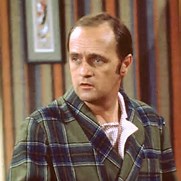
As we discussed negativity, another workshop participant chimed in with a reference to an old TV sketch in which comedian Bob Newhart plays a psychiatrist. He listens to a woman’s problem — “I have this fear of being buried alive in a box” — and offers her a two-word solution:

“Stop it!”

Stop worrying about being buried alive in a box.

I love it. In fact, when it comes to advice, you could do a lot worse than offering people those two words — “Stop it!” — and two others: “Start it!”

“Start it,” as in take a risk. Begin your project, even if you believe it might fail. Try something new, even if it might feel awkward at the start.

“Stop it,” as in quit thinking you’re unworthy. Quit sabotaging your success because someone long ago told you you weren’t good enough. Quit believing the inner lie that you’re inferior.

Frankly, you can’t get to the “start” without the “stop.” Or so says Christian-based author Henry Cloud, whose book Necessary Endings (HarperCollins, 2010) I recently read.

Cloud, who mainly writes for a business audience, suggests “stop it” is about more than an attitude. It’s about action — or, more precisely, our unwillingness to take it when necessary.

“In your business and perhaps your life, the tomorrow that you desire may never come to pass if you do not end some things you are doing today,” he writes.

But, some might say, stopping things can be hard.

Habits. Addictions. Relationships.

It’s easier just to stay the course. To not confront the norm. To not risk.

Easier. But seldom better.

“Endings,” Cloud argues, “bring hope.”

Frankly, I’d never thought much about that until a friend recommended the book and I gave it a read. I tend to be in a constant “add” mode. But, Cloud argues, sometimes you need to subtract. Prune. Say goodbye to something in your life — and, yes, in some cases, someone.

Can it hurt? Almost always. But, he argues, there’s a difference between “hurt” and “harm.”

Last week my mother moved out of the house she’d lived in for nearly half a century. It was difficult saying goodbye. But the payoff will be a simpler existence that better fits her life today. It hurt, yes, but to stay could have brought harm, she figured; it was too much house for someone who is 87 years old and slowing down.

It took courage to make the change. But, in sailing terms, to stay moored to sameness simply because change can be challenging is to miss the glories of the wind in your sails.

At the end of the day, my workshop student — the one lamenting not being good enough — offered a piece in the voluntary read-aloud session. The class’s enthusiastic laughter and applause affirmed what I’d felt myself: her story was among the best of the bunch.

I hope she’ll look back on this day as a new start — a new start only made possible by her first being willing to stop.

Facebook: Friend or Enemy?

Facebook. So what IS it about marketing on Facebook that makes us all cringe? I know I’m not the only one who wants to forget about it and get to work writing my next book!

But after a couple of valuable appointments with marketing gurus at the ACFW conference in September, and after reading last month’s post by Casey Herringshaw, I started looking at Facebook a little differently. It is part of our lives, and it can be a valuable asset to our writing careers.

Here are some things I’ve learned:

  • Treat both your author page and your personal page the same. Both of them are seen by your readers and potential readers. Once you’re a published author, you don’t have a private life on the internet. If you aren’t published yet, act as if you are!
  • Stick to your brand. I write historical romance books. Most of them are Amish, with a foray into a western being published by Love Inspired next year. On my sepia horse and buggyFacebook author page, I share Amish tidbits plus a fun picture of cowboys once in a while. That’s what my readers expect, and I try not to disappoint them! And yes, when I have news about one of my books, I’ll post about that, too. But that kind of post is rare.
  • Post regularly. Some authors use a service like Hootsuite to schedule their Facebook posts, but I’ve found that I like to fly by the seat of my pants when posting on my author page. I try to post at least once a day, only because that drives up traffic. Regularity is a key to reaching larger numbers of my readers.
  • Understand that even if you aren’t a public figure now, you will be. (At least 040that’s the goal, right?) As you’re sharing all about your dogs, grandchildren or passion for hang-gliding, don’t forget to insert a layer of protection between you and your reading public. Certain things need to be kept private. You can give your readers quite a bit of information about your life – and let them feel like they know you – without divulging every detail.
  • Be friendly. Whether on your personal Facebook page or your professional one, the personal distance you need to maintain shouldn’t keep you from giving your readers9780373282777_p0_v1_s260x420 a genuine smile of welcome when they drop by. Let your voice shine through. Be inviting. Make them want to spend time with you in your books.
  • Be professional. Facebook is not the place to air dirty laundry, complain about or celebrate political events, or argue theological differences. Never, ever complain about your spouse, children, in-laws, bosses, or co-workers. And never, never, never (can’t say enough nevers!) complain about or divulge information about editors, agents, or anyone else in the writing business. What appears on the internet has a horribly tenacious way of sticking around.
  • Be a good neighbor. Don’t you love when your peers share your latest status with all of their friends? Especially when you’re trying to pull readers to your latest blog post or publicize the sale price on one of your books? Do the same for them.

Sometimes I think of Facebook as a necessary evil, one of the many things we need to negotiate in order to be successful in this modern life. It won’t last forever, but as long as it’s around, we should use it to our advantage. And meanwhile, enjoy it!

In Praise of Editors

facebook personPosting a comment online this morning made me suddenly hyperaware of the publicness of published writing. Publishing actually does mean, as I tell my students, making something public.

“Everything you write for a class, even if it’s disseminated no further than the classroom, even if I’m the only one reading it, is public writing,” I tell them. “Don’t tell me you just wrote it for yourself or attach a sticky note saying it’s just for me. Assume that whatever you hand in may be made public. That it’s already public. It was public the moment you printed it up and put it in my hand or clicked ‘attach’ and then ‘send.’”

copyedited manuscriptIt’s easy to forget that writing is public, though. Consider Facebook, where people often post sentiments best kept to themselves. However tempting it might be to rail or even to agree—by liking it—with someone else’s railing, I generally restrict myself to happy birthdays, comments about good-looking photos, and commiserations with others’ suffering.

Today I was doing just that: commiserating with a friend whose autistic child had just “had a huge meltdown . . . complete with yelling, food throwing, and tears running down his face” in front of, as she wrote, “almost everyone I know.”

It was a wonderful post, as those who’d already commented said, because it was so frank. So, as my students say, “relatable.”

“Most of the time I suck it up,” my friend wrote, the “meltdowns, 10+ accidents a day, the stares, rude questions, the incomprehension on the faces of people around me, but today it was all too much, so I walked to the car sobbing my heart out.” She confessed, “it felt, somehow, like it was my fault,” and I sobbed too. For her. For her son. For sufferers of autism and their parents. For parents in general. Is there a more agonizing feeling than the unavoidable conviction that it’s somehow our fault whenever anything goes wrong—even something we didn’t cause and couldn’t have stopped—with a daughter or son?

It’s hard to respond to someone else’s pain in a way that doesn’t compound it, though. I learned that when, in the aftermath of a sexual assault at gunpoint, friends commented, among other intended condolences, that I was “lucky not to be dead.” I didn’t feel lucky and wished I was dead. Being told the contrary merely intensified those feelings.

I was thinking about that as I commented and (hopefully) didn’t make that error. Not this time, anyway—thanks to my best editor, the Holy Spirit, who, I’m convinced, translates our groans not only to God but to everyone else and (with some effort, in my case) bleeps our stupidest words. After telling her I’d cried, I advised her not to blame herself: she was doing the best and only right thing to do—loving her son—and doing it perfectly. So far so good, I thought—or anyway, I didn’t feel that tug in the direction of the delete key at that point.

BloggingI did feel it moments later, though, when I helpfully passed on a reassuring comment from a pastor’s wife eons ago when I was in the throes of parental shame about a problem with one of my toddling daughters: “God chose you, precisely you, for your girls,” she said, “because he knew you’d be the best possible mom for them.”

Sounds safe enough, I thought. And I was mightily comforted by that woman’s words at the time. God chose me to parent my girls. I was the best possible mother they could have. Everything was going to be fine.

But, as I say, the Holy Spirit apparently didn’t think so. In the fraction of a moment before I pressed enter, stories of parental abuse and neglect poured into my brain. A friend whose mom once told her children she hated them. Did God choose those children’s parents, too? What child, grown now but surely still suffering that meanness, might be reading my post?

The public is a tricky sea to navigate alone. Our kindest intentions, our most heartfelt theologies, have as much potential to mislead and hurt as to inform and uplift. Thank God for editors.

The Art in Writing

Strange and wonderful things happen when we keep our eyes peeled, our ears sharp, our hearts welcoming, and our minds creative. This year, I met someone who at first glance was not an obvious fit with my writing life. But first glances are often wrong.

Mary Young Zog the DogI am a Christian non-fiction author. The woman I met at a local women’s expo is a children’s book author. She launched as a self-publisher via Pucky Huddle Books — I have chosen the traditional route as my foundation. I’m a business coach, she married a rock star. Literally.

But we both live in the same tiny county.

Mary Young is married to Rusty Young of country rock group Poco fame. They still play for exclusive events, and tour around the country. But in their desire to escape the crazy life of frenzied fans and intense concert schedules, they built a beautiful cabin nestled about twenty minutes from where I live. On a serene hill overlooking the stunning Huzzah Creek, Rusty gets to relax with his music and Mary peacefully plays with her muse.

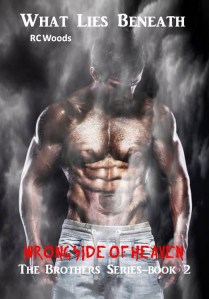
RC Woods What Lies BeneathDue to Mary’s prompting, she and I, along with local Indie author RC Woods, have pooled our talents. Recently, the Crawford County Author’s Group held our first event, called The Art in Writing. Three diverse but driven authors determined to learn from, promote, and support each other.

Until recently, in our small region, we each felt alone. Let’s face it, those of us who put pen to paper or fingers to a keyboard are a strange breed to normal folks — most people don’t get the weird ways our minds work. Or sometimes, the strange hours we keep.

When my brain fries, when my creative juices dry, when I’m too tired to think of new ways to market my books, a couple of hours with fellow writers revives my brainstorming abilities. The art in writing is not magical — it’s intentional. It’s not competitive — it’s cooperative. No matter how similarly or differently we write.

I have other author friends who equally stir my creative brew. They don’t live close, but because of twenty-first century technology, we can call, text, private message, Facetime, or Skype. We can schedule retreats with each other, (my favorite). We can compare marketing efforts, research, and new ideas.

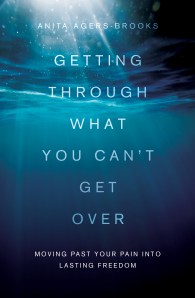
Getting Through
Releasing, April, 2015 through Barbour Publishing

The WordServe Water Cooler is another way to stay in touch with those who get the crazy business of writing. Sharing and learning with folks like you keeps my energy up when it threatens to flag. I often write about difficult subjects, so I need an occasional boost.

No matter whether other writers live near or far, I’ve discovered I don’t do as well without them. For me, the real art in writing is community. A brother/sisterhood of folks who will pick you up when you feel down. An encouraging message, a timely quote, a pertinent fact, a social media shout-out, even insights to help you market like a rock star. The writing community is the magic behind my words.

What infuses the art in your writing?

Tips for Managing Time as a Writer

You’ve heard the age-old story: Creative individual decides to write a book. They sit down with paper and pen or keyboard, and painstakingly write that heart story. Sometimes it takes months. Sometimes it takes years. When talking with their friends, you often hear them say, “Something came up. It isn’t quite right yet. I just haven’t had the time.”

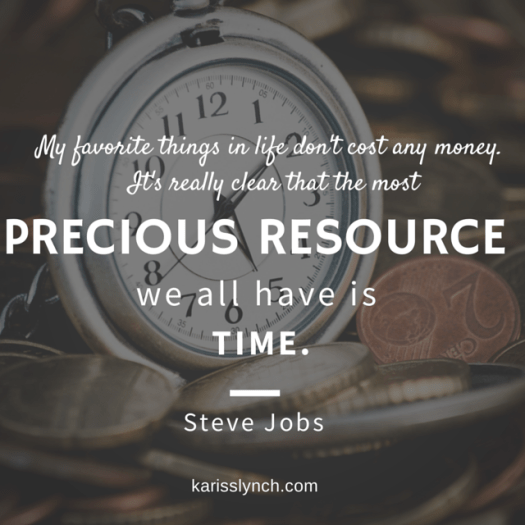
It’s pretty clear that time is precious. In fact, outside of my loved ones, my time is my most treasured possession. Since signing my first contract in January 2013, I have learned an important writing tip, probably the most important tip.

There is NEVER time, unless you choose to make it.

In fact, I’ve noticed one common trait among the published: They make time to finish. Once you sign that dotted line and make a commitment, “I didn’t have time” doesn’t fly with the publisher. Neither does “it’s just not ready yet.” You better make time and make it ready fast or risk losing your credibility.

After signing that contract, time to market becomes important. And time to edit. And time to promote. And time to interact with readers. Lots of time. So it’s important to figure out how to manage it.

My friends hear me say that I’m overwhelmed more than anything else. But I’m learning how to carve out time, discipline myself to finish, and not miss out on the world around me. We aren’t only writers. We are marketers, publicists, graphic designers, speakers, and more. So I’ve learned a few tricks to maximize my time in every area of this writing journey.

Kariss Lynch - timeCreate margin.

I am a night owl and can write and create relevant marketing content easier when my checklist for the day is accomplished. It clears my mind to be creative. Determine your best time of day to write or create, and maximize those short windows.

Set a timer.

Write every day. Set the timer on your phone for an hour, then put your phone on silent and put it on the other side of the room. Clear your mind and write. I found when I did this, I could easily write close to two thousand words if not more in an hour! When the timer goes off, I feel accomplished, satisfied, and ready to write even more.

Carve out marketing time for social media.

I work full time as a writer for my company, so in the middle of the day I am tired of writing. I’ve started taking thirty minutes of my lunch break or fifteen minutes in the morning or afternoon to create social media graphics that I then pre-schedule so I don’t have to think about them. Think about content that is relevant to your brand, then have fun with those designs.

Strategize for online interaction.

The internet is a wonderful tool, but managing our online interaction can eat our time if not handled correctly. Block out thirty minutes every few days to catch up on emails. Take a few minutes to respond to every person who comments on social media (within reason of course). Know your brand, what you are passionate about, and have character and author interviews on hand for guest blog posts. Don’t overthink. Just do.

Know your audience and limits for speaking engagements.

My favorite interviews and speaking engagements are via Skype since it helps me conserve my time, but I’ve also enjoyed those in person speaking engagements with small groups or crowds. Determine your price (if you have one), the size of the group you are willing to speak for, if it is wise to travel or Skype in (this is great for book clubs and classes that may not be close). Bottom line, know your options and then plan accordingly. Don’t forget you still need to write and market and live life, so carefully plan the weekends you will be gone.

Managing time is as much mental as it is physical. At the end of the day, be satisfied with what you accomplished and leave the rest for tomorrow. What tips have you found effective in managing your time?

Adventures into the Unknown through Writing

Writers are dreamers. We capture daydreams in paragraphs on pages. We are also planners. We sacrifice hours now for hopes of communicating to future readers. We work in the present and have faith for the future.

winter happy girl 3

Dreaming, hoping, and planning are good activities. Yet, as a Christian who writes, my dreams belong to Someone greater than I am. The wise and practical words of James give me the perspective to keep my feet on the ground and remember my human limits, even as my hopes soar in faith.

“Now listen, you who say, ‘Today or tomorrow we will go to this city or that city, spend a year there, carry on business and make money.’ Why, you do not even know what will happen tomorrow. What is your life? You are a mist that appears for a little while and then vanishes. Instead, you ought to say, ‘If it is the Lord’s will, we will live and do this or that'” (James 4:13-15).

Even with our best plans and the wisest advisers, we do not know what the future holds. Businesses can come and go, altering the landscape of opportunities for us. The publishing industry is constantly changing. Our favorite bookstore may go out of business before our next book ships from the warehouse. Future events may change how people view our writing. We may become the voice that speaks to current needs, or our relevance may fade.

Such thoughts should not put a damper on our joy as writers. Whatever the dimensions of our window of opportunity, writing is a tremendous privilege. Our books can travel to places we have never visited. We can instruct, entertain, and comfort people who may remain unknown to us. They will know us through our words. As a Christian who writes, my words reflect God’s love for people and His message of hope. The chance to become a vehicle to carry that message, however imperfectly, is a priceless gift.

And so, on any given day, I plan. I keep writing. I dream of reaching more people. I stack books on bookshelves in far-flung bookstores in my faith-filled imagination. I bundle up and head outside into the unknown for an adventure. I do my best and expect the best of everyone working alongside me. But I know the outcome belongs to God. His will and His plans will prevail. And that’s good news for me and for everyone else!

What helps you face the unknowns of life as a writer?