Becoming Social Media Savvy

Social Media Sign Web Globe
The World of Social Media

If you want to become a published author in today’s world, you need to embrace social media. Some aspiring authors may be very comfortable with social media and already have a large and successful online platform. However, many people preparing to write their first book may have a platform established in another way, such as through teaching, speaking, or published articles, and the world of social media may be foreign to them.

Here are a few tips for new authors looking to expand their social media presence:

  1. Consider your overall social media needs. Most new authors have careers in addition to their writing. While in many cases your writing may be an outgrowth of your career, sometimes the social media needs of your career may conflict with the social media needs of your writing platform. Consider how you can achieve a workable compromise between the two. Perhaps you work in a career where a limited social media presence based solely on professional accomplishments would be ideal. However, your writing platform may thrive if you develop a more personable social media presence that lets your readers share in some details from your daily life. Maybe you can connect with work colleagues on a platform such as LinkedIn, while using Twitter, Facebook, Goodreads, Instagram, and Google+ to connect with readers. Find what works for you, and modify your social media presence as necessary.
  2. Create layers of social media connection. Before deciding to become an author, you may have used social media as a means of connecting with friends and family. Now you find that your literary agent and your publishing house want you to connect with readers through social media. Connecting with readers requires a public social media presence. However, privacy controls on social media sites such as Facebook allow you to keep your posts to friends and family private while creating new posts for the general public. Using privacy controls, you can create layers of social media connection, sharing photos of your children with close friends and family members while sharing photos of book-signing events with the whole world. You might want to create a Facebook page with all posts public to connect with readers, while using your Facebook profile to connect with friends. However, consider leaving some posts from your Facebook profile public for readers who find you through a Facebook search.
  3. Adapt your social media strategy to stay current. All social media sites are constantly changing, especially platforms such as Facebook, where signs around the company’s campus remind employees that “this journey is only 1% finished”. After a major update on one of your social media sites, check privacy settings, and revisit your approach to social media. Is there a great new feature that you should start using? Should you publish more videos, or schedule posts for a different time of day? As an author, your journey in the world of social media is only 1% finished. Learn from your past experiences on social media and the wisdom of other writers, and create fresh content using new tools and the latest technology.

What tips do you have to share with other writers on becoming social media savvy?

Take it with you when you go

moving dayMy husband retired from his job last December in Minnesota , and within a month, we were unpacking our worldly goods in our new home in Texas. Having relied heavily on my local readership for growing my book authoring career, I was faced with a choice: retire from my own career as a writer, or start it all over again in a new place.

Actually, there was no choice for me: since I can’t NOT write, here I am, back at square one. Except that this time around, I have eight years of experience and a track record as a published author behind me as I begin to cultivate my new area; my task is more transplanting than seeding. For any of you facing a geographic move, here are some of the positive and negative aspects of taking your authoring with you:

A fresh audience!

Positive: You have a fresh audience, which forces you to remember why you write, why you’re excited about what you write, and how what you do can serve readers in your new community. It’s a wonderful opportunity to look at your work from new angles and refresh your own enthusiasm for what you do. And with books already in print, you have product ready to promote in your new area – no waiting around for publication to happen – yet you can re-use the promotional tools you used the first time around, saving you the time and effort of developing new marketing strategies.

Negative: You have a fresh audience, which means you have to start over making connections with bookstores and other venues. Back to phone calls and building relationships (sigh).

A track record as an author!

Positive: You’ve got a track record as an author! Yes, you’re making phone calls, but you’re going to get farther faster in booking events because you’re a proven entity. Your past experience makes you smarter about ways to reach decision makers, adding to your credibility as a published author with new contacts. Since this is your second time around, you won’t waste money and time on the ideas that didn’t work when you were just starting your authoring career.

Negative: You have to put the time in again on building key relationships.

New sales!

Positive: You have a new geographic market to add to your original readership, potentially doubling sales for both old books and anything new to come. Just because you’re no longer physically available doesn’t mean your loyal readers from your old location will abandon your future releases – those fans need to be kept in the loop as you move forward, so be sure to continue communications with them (Facebook, author newsletter, etc.).

Negative: You will lose some readers who only enjoy local authors. Hopefully, though, the gains in your new area will outweigh the lost readers.

Can you add to these experiences/insights of taking your authoring career into new territory?

The Importance of Dreaming

Ever feel like your writing time has slipped into a series of tasks you are struggling to check off?

1500 hundred words and counting? Check.
Edits? Check.
Social media graphics for the week? Check.
Blog posts written and turned in? Check.
Responded to readers and answered emails? Check.
Laundry, grocery shopping, life things? Maybe check. Kinda.
Maintain sanity? In process.

If we aren’t careful our writing routine turns into a list that can drain our creativity and make us forget why we are writing. I am the queen of time management and boundaries. I have to be in order to prioritize and get things done. But sometimes in the midst of trying to be disciplined and organized, I miss out on the creativity that comes with dreaming. I actually plan time to dream. It’s vitally important to the rest of my list.

Dream a little bigger

Dreaming rejuvenates me.
One of my favorite questions to ask when it comes to writing is “what if.” What if my characters decided to do something totally unexpected? What if my villain surprises everyone? What if I create a setting that puts a unique spin on a scene? What if I created a character that absolutely fascinated my reader? Then how do I do all this?

“What if” is a powerful question, one I don’t ask nearly enough. But when I do, my writing sings more than normal and my creative juices flow.

I also like to story board. I may love words, but I am attracted to powerful visuals. It’s fun to create the scene and cast my characters by scouring the internet for photos that jog my creativity in a greater way. I pin them on a corkboard so that I can see and move them to help craft the story. This helps dream about possibilities. Possibilities are endless in our writing. We just have to seize them.

Dreaming rejuvenates the story.
I like to set a timer and see how many words I can spill on the page before time runs out, but occasionally this depletes my creativity instead of inspiring it. However, when I take time to dream before I start writing, even if I just spend fifteen minutes on a writing prompt, my writing carries a different kind of power and creativity. When I race the timer, my story has quality and quantity. My characters are also deeper and my settings more vivid.

Dreaming rejuvenates the reader.
Letting readers into my brainstorming and dreaming is fun to share with readers. This makes great social media content to excite them and help them invest in the story before they ever hold it in their hands. Inviting them into the dreaming helps them feel like part of the team and part of the journey. If you do this, be prepared to write faster to satisfy their growing curiosity.

Tasks and deadlines are part of writing, but dreaming and enjoying the writing…that’s the most vital part of the journey, for it informs everything else. If you are feeling overwhelmed or stuck, grab a pen and fun notepad, and don’t be afraid to dream a little, darling. I have a feeling you will like the results.

Debut Novels, Reprint Rights, and Movie Deal Dreams

I didn’t know how blessed I was to get my first book deal. Love Finds You in Sun Valley, Idaho came out in 2010. It was part of the Love Finds You series. And because the books were written by a bunch of different well-known authors and set across the United States, my book got swept along with the marketing current.

album 155

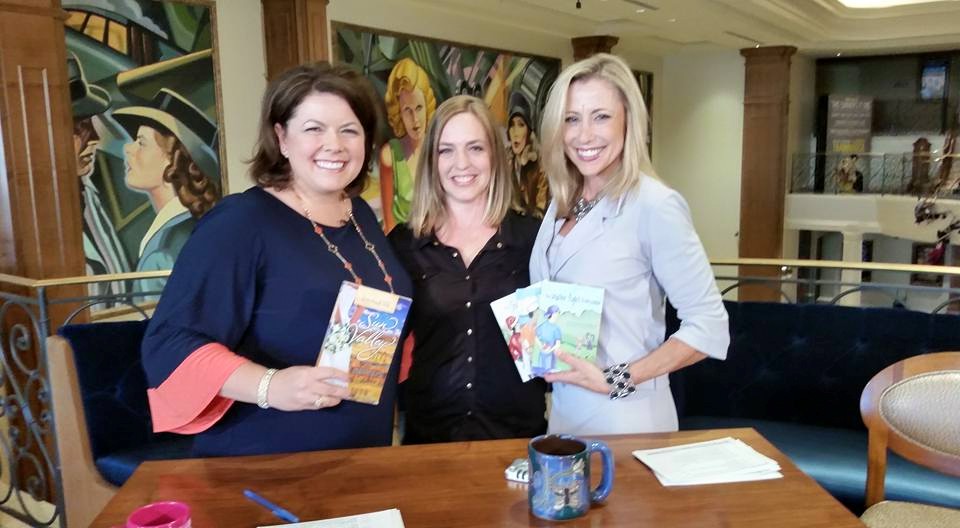
I got to do a television interview.

I had a Costco book-signing.

The novel was featured in the magazines for a Christian bookstore chain.

It was sold in airports.

The hardback edition came out for book clubs.

And now It’s being considered for a MOVIE. When I found this out, I was so excited my husband thought someone had died. Not that I get excited when people die, but I was crying and could barely speak, and he assumed the worst.

Three movies have already been made for the UPtv network. I had a premier party with my writer friends for Love Finds You in Charm, including homemade Amish pastries. Love Finds You in Valentine comes out this month.

I can’t keep from mentally casting actors to play my characters Tracen Lake and Emily Van Arsdale. Especially since Emily Van Arsdale is supposed to be the actress who plays Wonder Woman, and Wonder Woman is releasing in the theaters soon.

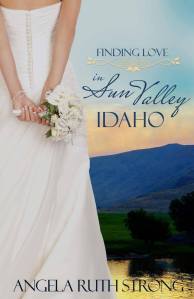
The idea of having my debut novel considered for a movie made me want to revisit the story. Then it made me want to write sequels like many of my readers requested. So I got my rights back, and I’m rereleasing the book as the first in my new series titled Resort to Love.

Finding Love in Sun Valley Cover


Finding Love in Sun Valley, Idaho comes out this month. I updated a few things—like how the characters now all have smart phones. And I gave it an epilogue that leads into the following books.

Finding Love in Big Sky, Montana comes out in November. I’m currently writing this one and wish I could throw my responsibilities to the wind so I could go write in a cave until it’s done because the ending is going to be so good!

Finding Love in Park City, Utah comes out in the spring of 2017. This one I’ve plotted, but I’m still researching the location. I’m spending the end of January in the mountain town and attending the Sundance Film Festival. Remember how I said my main character in Sun Valley is an actress? It fits.

I didn’t know anything about getting my rights back, but I ran into Miralee Ferrell at the Oregon Christian Writer’s Conference last summer, and she’d already done it for a couple of her own Love Finds You books. With her help. I was able to find out that my book had been out of print for a couple years. From there I simply had to make my request. Once I got my PDF files, I not-so-simply converted them to a Word document and edited out about a million exclamation points—among other newbie mistakes.

Miralee had been able to get her cover files, but mine weren’t available, so we hired a designer. When I say we, I mean Miralee. She’s releasing my series through her new publishing company, Mountain Brook Ink. But she let me have creative reign over my cover. I especially like the scrollwork around the Finding Love label. That symbol will go on all her Finding Love titles. Another cool thing is that I’ve remarried since my first book came out, so I get to add the name Strong to this cover.

I’m currently getting ready for my Books and Beverages Blog Tour. Check my website for details and the chance to win a Kindle Fire.

Books and Beverages

Even if my book never makes it to the big screen TV, I’m still glad I get to enjoy my debut novel a little longer. And I’m honored to get to share my dreams with you.

What’s a book you’ve read that you think would make a good movie?

Want to Get Published? 3 Things a Publisher Must See

Note: This is the first post in a series of 4 posts: 3 Things a Publisher Must See.

3 things

You have a book in your heart that you’d love to see published. It may even be a great book. A publisher and her editing board need to see three things to say the “yes” you’re hoping for. They need to see: a unique project, a viable market and the right author.

1. A Publisher Needs to See a Unique Project

Although what you’re writing may seem fresh to you, know that publishers have already received countless pitches for “My Cancer Journey,” “My Eating Disorder Journey,” “My Spiritual Memoir.” Does this mean you scrap your project? No. But it does mean that you need to demonstrate how yours is unique. For example, these might catch a publisher’s attention:

  • Why Cancer Was The Best Thing To Happen to Me This Year
  • How My Eating Disorder Was Cured When I Won “The Biggest Loser”
  • I Was a Satanist High Priest and Now I Love Jesus

Make an editor curious enough to open your proposal!

One baby step toward publication: Read other books in your genre and identify what, if anything, makes yours unique.

2. A Publisher Needs to See a Viable Market

The publisher also needs to see that there is a market for this book. Who are the readers who will buy your book? What is the felt-need they have that will cause them to purchase your book, read it and rave about it to their friends? Research the market so that you can demonstrate that there are book-buying readers who need your book.

One baby step toward publication: Develop a one- or two-sentence “elevator pitch” that succinctly communicates the substance of your book, who will read it and what distinguishes it from similar books.

3. A Publisher Needs to See an Author Who Can Write and Promote This Book

A publisher is looking for authors who can write and who can also get that writing before an audience.

You’ve probably heard that author platform—your ability to reach readers—is the most important thing to a publisher. (And it’s pretty important.) But hear this: every publisher wants to publish great writing.

Chapters and pages and paragraphs and sentences and phrases need to engage readers. Your goal is to get a publisher (aka “reader”) to read the first sentence of your proposal and want to read the next one and the next one. You may think it’s an editor’s job to give your proposal a thorough reading, but it’s not. Her job is to find quality books to publish. When she is perusing your proposal, she can check out—and check facebook—at any point in the process. Develop your craft so that you can write prose that a reader does not want to put down.

And there’s also that platform business…

Who has platform? Oprah. Rick Warren. Francis Chan.

Intimidated? You don’t need to be. You can be building your platform right now by:

  • pitching and writing articles for publications
  • developing an audience for your blog
  • building your speaking resume by speaking places for free: MOPs groups, churches, etc.

The key is finding what works for you and sticking with it.

One baby step toward becoming a great writer: Sign up for a local writing class, sometimes available at city colleges, or attend a writer’s conference in your area.

One baby step toward building platform: Set a goal to publish one article or story, with a reputable national publication that appeals to the eventual audience for your book, in the next three months.

Cheering you on,

Margot


Ten Tips for a Satisfying Radio Interview

The Water Cooler is pleased to host guest blogger Cynthia Ruchti. Welcome Cynthia!


An-Endless-Christmas-cover-e1444403938959

The success of a radio interview is as easy to calculate as the number of baby guppies born in the night. Did listeners rush to their local bookstore to purchase or order the book? Were there more than two people listening? Please, God?

Since God is the only one with answers to those questions about numbers and impact, we adjust our expectations toward satisfying radio interviews.

Is there anything we can do to ensure listeners, interviewers, and the author will end a radio interview satisfied with the process and what was communicated?

Yes.

Oh, you’d like a more detailed answer than that? See midway through the bullet points below.

  • Muzzle the dog. Dogs come equipped with radar-like sensitivity for the most inconvenient time to bark or whine-during a live radio interview. Find an enjoyable place for the dog to hang out or a relatively sound-proofed spot for you to conduct your interview.
  • Choose coffee or tea over an iced beverage. Ice cubes clink. Condensation makes a drinking glass slippery. The plastic on bottled waters squeaks and pops at inopportune times. Even if you’re drinking water, opt for a mug with a large, easy-to grip handle.
  • Disable call waiting on your phone. Any blips or burps, even the technology kind, will temporarily disrupt the interview, which is as serious as interrupting a reader’s immersive experience in your book.
  • Keep a careful record of the contact information, date, time (allowing for different time zones), and details like the radio host’s name, number, and whether you or the program producer calls.
  • Compile your notes, reminders, talking points, bonus topics, and Scriptural connections in one easy-access spot. I use a large foam core board for each book currently considered for interviews. Right now I have an interview board for As Waters Gone By and one for Tattered and Mended: The Art of Healing the Wounded Soul. This week I’ll create a board for An Endless Christmas. There I’ll post potential interview questions/answers, quotes from the book, additional bits of research, two or three statements relating to the book’s theme(s) to which I can turn if the discussion derails, etc. The boards slip behind a chair in my office when not in use.
  • Create sample questions that can’t be answered with a simple (and boring for radio interaction) yes or no.
  • Keep a small notebook nearby to jot connecting point thoughts (and use a pen you don’t have to click or uncap during the interview). Call the host/hostess by name sometime during the interview or refer to a profound, heartwarming, or intriguing statement the host made.
  • Fifteen minutes before the interview starts, make one last trip to the bathroom.
  • Stay others-centered. What interchanges will make the interviewer feel great about having you as a guest? What points of interest will make the audience glad they tuned in?
  • Spend time in God’s Word and in prayer prior to the interview. You’ll enter the interview calmer, refreshed, vitalized, and well-prepared.

What’s your favorite interview tip?

This post originally ran on the ACFW blog and is used here with permission.

Cynthia Ruchti tells stories hemmed in hope through her award-winning novels, novellas, devotions, nonfiction, and through speaking events for women. She draws from 33 years writing and producing a 15 minute scripted radio broadcast called The Heartbeat of the Home. She and her plot-tweaking husband live in the heart of Wisconsin. You can connect with her at cynthiaruchti.com or hemmedinhope.com.

When is it Good to Indie Publish?

When I first began going to writers conferences around 2003, vanity publishing (where you pay someone to produce your book) was considered only a dire writer’s avenue to get his poorly written manuscript to the public. These novels were not given any credit by publishing gatekeepers (such as editors, agents and book reviewers.)

PublishVanity publishing morphed into several forms to what is now the indie industry. There are still vanity publishers who will take your money and produce your book. However, indie publishing is where the author becomes publisher– hiring freelance people for all facets of book production but they remain in control of their product.

Over a decade later and the attitude surrounding indie publishing has changed a lot. Though some still hold the above attitude, it is diminishing, and self-publishing is no longer considered the last nail in a writer-wanting-to-be-an-author coffin.

A few years ago, I attended a talk given by well respected literary agent Rachelle Gardner, a self-published author herself whose book highlights traditional vs self-publishing. She gave a talk touting some of the benefits of pursuing self-publishing and in some instances considered it a bonus to an author’s career.

What?!? Yes, that screeching sound was both my feet hitting the brake pedal.

The dizzying pace of these changing attitudes in publishing can leave an author scratching his/her head.

Personally, I’ve seen several close friends pursue indie publishing and have moderate success. By this I mean they earned back the money they invested in preparing the manuscript (for editing, the book cover and interior design) and perhaps have earned a couple of thousand dollars. A smaller minority had great success and went on to further get traditional publishing contracts.

What I’ve determined is that there is a good time and place to consider indie publishing as an author, and here are some of those situations to consider.

1. You have a polished manuscript but it can’t find a home with a publisher. First, I want to qualify what I mean by a polished manuscript. This is much, much more than finishing a rough draft that your mother and friends slobber over. They’re not good book critics because they love you and don’t want to hurt your feelings. It means that it’s been professionally edited, at least twenty people outside of family (and are familiar with books, genre, and good writing) love it, and maybe your agent even shopped it around but it couldn’t find a home. An even better indicator of this caliber of manuscript is that it has finaled in a well-respected writing contest like the Genesis Contest sponsored by ACFW. It takes six to ten years to learn the writing craft and a couple of written books under your belt to fit this definition.

2. There will be a delay in books releasing between your traditional publishing contracts. What I’ve heard and read is that it also takes six to ten years to build a readership. During that time frame, it’s wise to have a book releasing no longer than once a year. Some authors do more—some do less but you want a predictable stream of novels to keep readers’ interest piqued.

3. You are a control freak. Creatives like control over their product. Publishing is not that way. It is a collaborative effort so some of what you love about your creation is going to change. Some people enjoy all aspects of the book publishing process and want to have final say over every aspect—going strictly with their vision. Self-publishing is the best venue for the author to maintain total control. You also have to front all the cost and carry the entire burden as well for marketing and distribution.

4. You want to maintain your rights. When you sign a traditional publishing contract, your book is no longer really yours—in a sense. The publisher owns it in certain formats (maybe even all formats) and most often times will have clauses in your contract on other avenues they have the option to pursue—like hard cover large print rights. Some authors don’t want to give this up but then, as in the above, you’ll also be the one to try and negotiate selling the rights in different formats if you choose.

5. You want to write in other genres. Most often, an agent and traditional publisher are going to encourage you to stick with one genre but few authors I know really want to do that for their entire writing career. These might be good novels to self-publish under a pen name. Even this attitude is changing as well. Many authors I know are writing in multiple genres using the same name and don’t seem to be suffering for it.

6. You want to build volume more quickly to increase income. The flip side of building a readership is how much material you have to offer. When my first novel released, if the reader loved it, there was nothing else for them to read. Now, if they love any one of my books—they have at least two others to choose from. The more books you have, the more options a reader will have to choose and buy another book of yours to read—thus increasing your potential earning income.

What do you think? Have you indie published? Did you consider a success? Would you do it again?

This blog post first appeared at Novel Rocket. Hope you’ll check their blog out!

How to find your best influencers

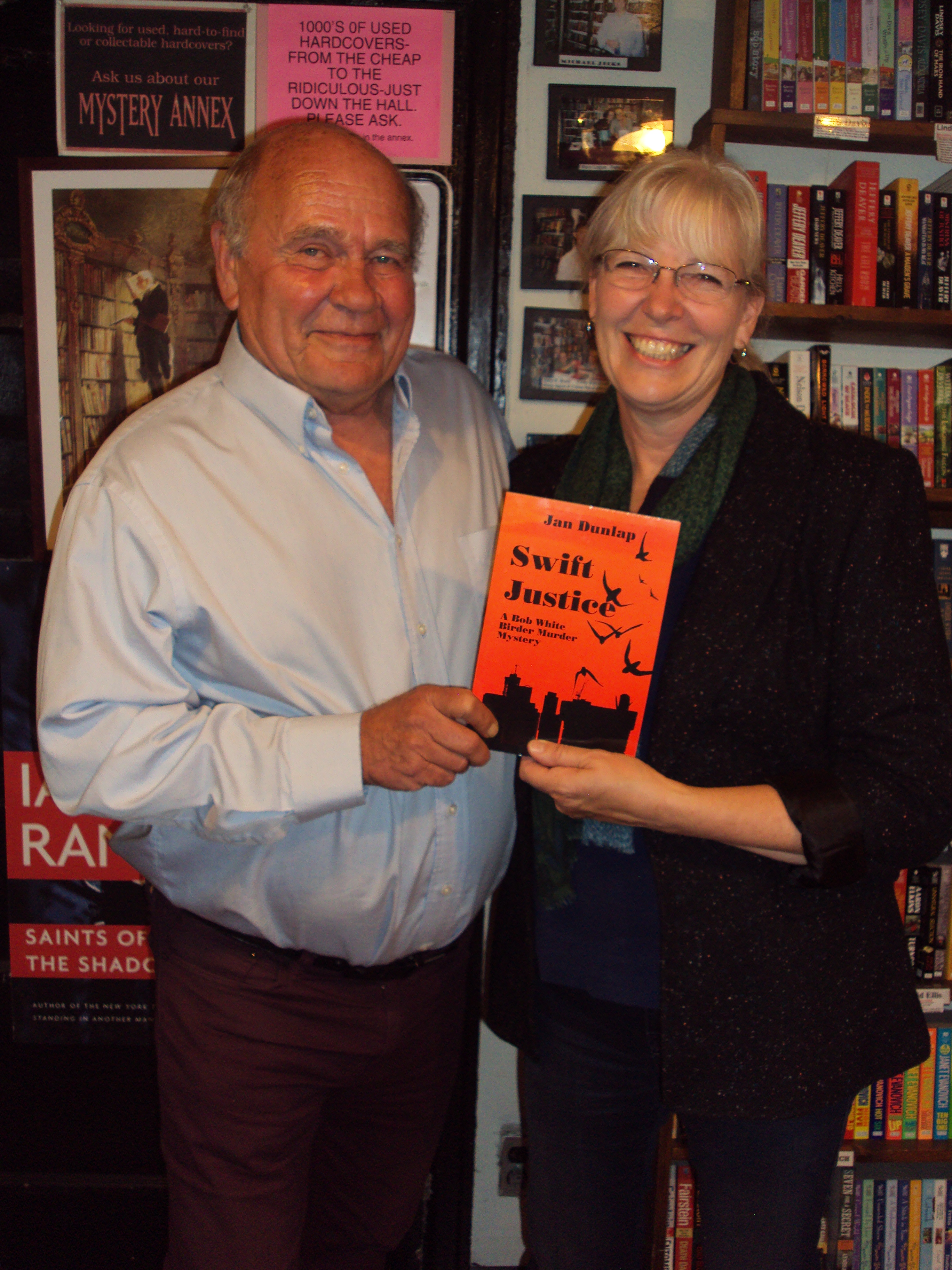
Jan and Ron vertThe longer I’m in the writing business, the more I appreciate the importance of influencers in helping me build my audience and increase sales. What’s tricky for many writers, however, is figuring out just who and where those influencers can be found.

Unfortunately, after eight years and eight books of being a published author, I still don’t have a magic formula for identifying and recruiting those valuable assets for my marketing efforts. All I can offer you is my own experience and insights, so here goes:

  1. It’s great to have known experts or writers give you an endorsement for your book, but unless they are truly excited about your book and independently give it exposure in their own networks, the endorsement is just nice copy for your back cover, and won’t produce momentum in sales. Those experts are busy with their own marketing and projects, and the truth is, they give endorsements widely as a courtesy, rather than out of commitment to your publicity goals.
  2. The best influencers have a stake in your sales. Although my books sell around the world, my strongest sales come from a local gift shop because the store owner enjoys my books so much, she talks them up to customers and regularly features them in store promotional materials. Because of her enthusiasm, I’ve had more press coverage in local media than I could procure by my own efforts and a consistently growing word-of-mouth readership. As an influencer, she’s one of my best!
  3. You need to continually cultivate relationships with potential influencers. This means reaching out via social networking and/or physically traveling to meet people in your field of interest who might find your books of value in their own professional goals. To market my girl-meets-dog memoir, I make a point of connecting with animal rescue groups/animal humane societies online, and when possible, I attend their conferences/events as a vendor. I often give free copies to keynote speakers or other passionate animal lovers I meet, in hopes they will read and enjoy the book so much, they will mention it to others. Yes, this is basically a hit-or-miss method, but so far, I’ve always made a few excellent contacts and found one or two awesome influencers at such events. It’s well worth my time and money to break into a new group of potential reader-buyers.
  4. Connect with bloggers with big audiences in your target market and ask to send them a copy of your book in return for a review. Offer them additional copies to use as giveaways when they publish a review of your book, or whenever they might have a contest going on. Doing this gives you a reach well beyond your own social networks and local geographic area. I’ve met several significant influencers in this way, and they continue to give me promotional value with each new book.

What tips do you have for identifying and recruiting influencers for your marketing efforts?

A Writing and Publishing Journey

So John, tell me about the writing of your book. How long did it take? What did you learn about publishing? What was the most enjoyable and most the difficult part of the process?

Pastor John Merritt, Discover. The Writing Journey

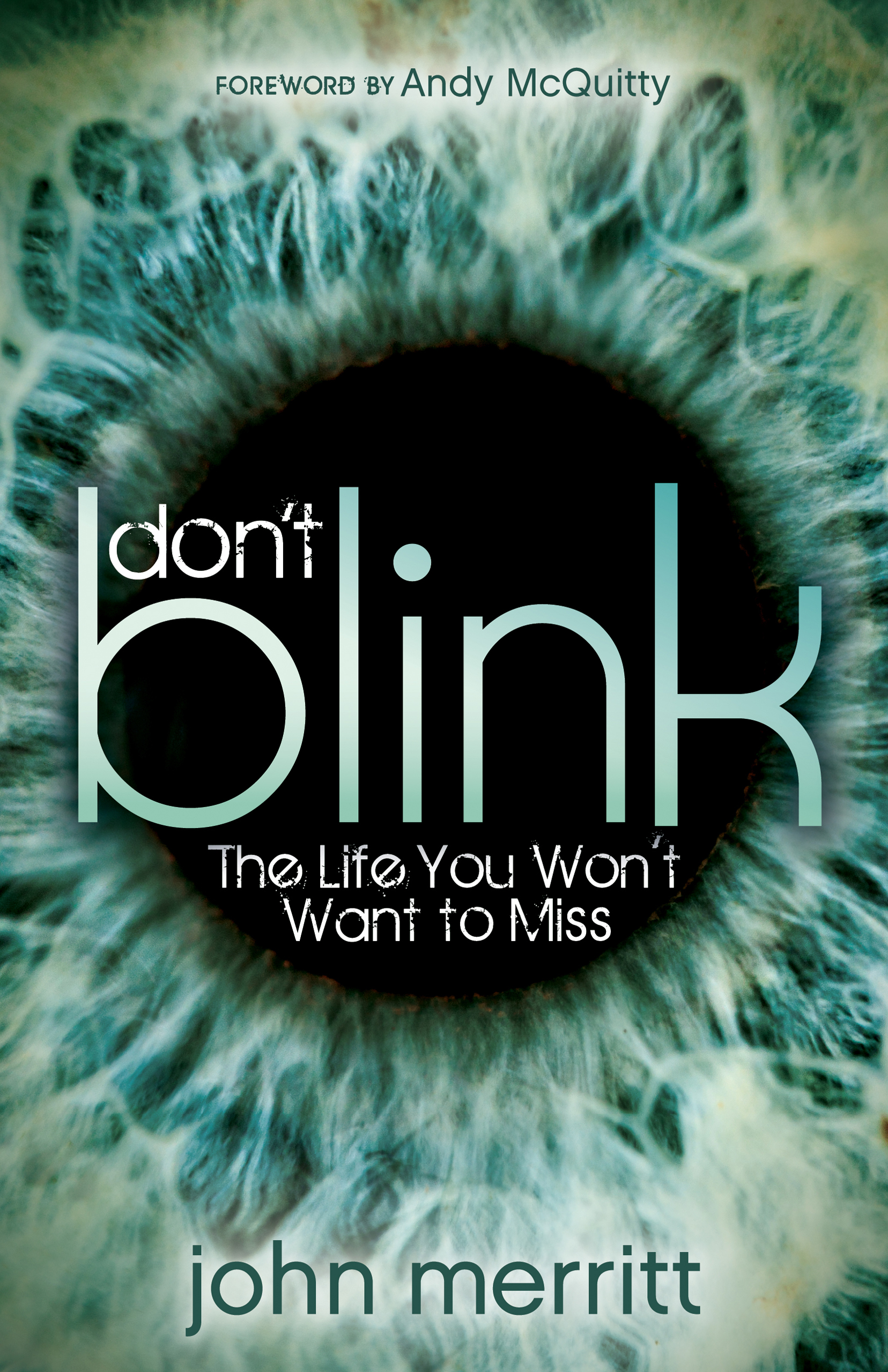
I’ve been asked questions like these numerous times in recent months. And since my first book, Don’t Blink, ready to be released in November (EBook is already available)—I thought I’d share what I loved and what I did not love about becoming an author (things you may consider if you have thoughts of becoming an author yourself).

What I loved: The actual writing of the book that took place during a six month sabbatical. I’ve always enjoyed writing, telling a story and making biblical application out of real life experiences. What I didn’t know was that writing the book was the easy part—let me tell you about the hard part.

Don’t Blink is for procrastinators, dreamers, and would-be adventurers who wish to grab hold of life this day, knowing there are no guarantees about someday. From Alaska to Argentina to the Amazon―in situations ranging from dangerous to humorous―John Merritt takes you on a daring pilgrimage revealing what living in the moment looks like. John demolishes the notion that once you become a Christian your freedoms are gone and your fun is done. Life is an extraordinary adventure elevated to audacious heights when God is leading the charge.

What I didn’t love: The first thing I didn’t love was when I was advised to hire a professional editor who proceeded to get out her electronic red pen and essentially let me know how unaccomplished my writing was. In the end I was thankful for her coaching because the result was her finally telling me, “John, you’ve found your writers voice.” But that required many tedious rewrites that took longer than the initial draft.

A second thing I didn’t love was the realization that unless I was able to find an agent willing to represent my project I had no chance of getting a publishing house to even consider my work. Finding Alice Crider (then with WordServe, now with Cook) was a God-send and was not easy. (Note: Because of the difficulty in getting an agent to represent you, self-publishing is sometimes your best option.)

A third thing I didn’t love is the months it took for my agent to find a publisher who was interested in my book (took an entire year). There are many reasons why a publisher says no to a writer but the main one is market share. Publishers are in the business of selling books, and if you are not able to prove that you have a large audience who will buy lots of books, it really doesn’t matter how good your content is.

A final thing I don’t love is all the marketing of the book I must personally do because no one else is going to do it (not even most publishers these days). Because I’m not good at social media I’ve employed a person who I’m greatly indebted to (Leah Apineru with Impact Author Services, Colorado Springs) who built and maintains my website and posts my blogs. But I’ve always hated self-promotion and leaning on my friends to get the word out—sorry!

Why I wrote it: Given that being a published author is much more difficult than I ever imagined, why did I hang in there and spend lots of my own dollars in order to get my book out there? Simply because I think it will help Christians like yourself discover that God has an adventure designed just for you that will elevate your life each day. And what elevates the purpose of the book for me is if people like yourself find the book to be a good one to pass along to your non-Christian friends who could use a different perspective of the Christian life. If the publishing of “Don’t Blink” results in spiritual explorers becoming followers of Jesus then all that I didn’t love about publishing will be worth it!

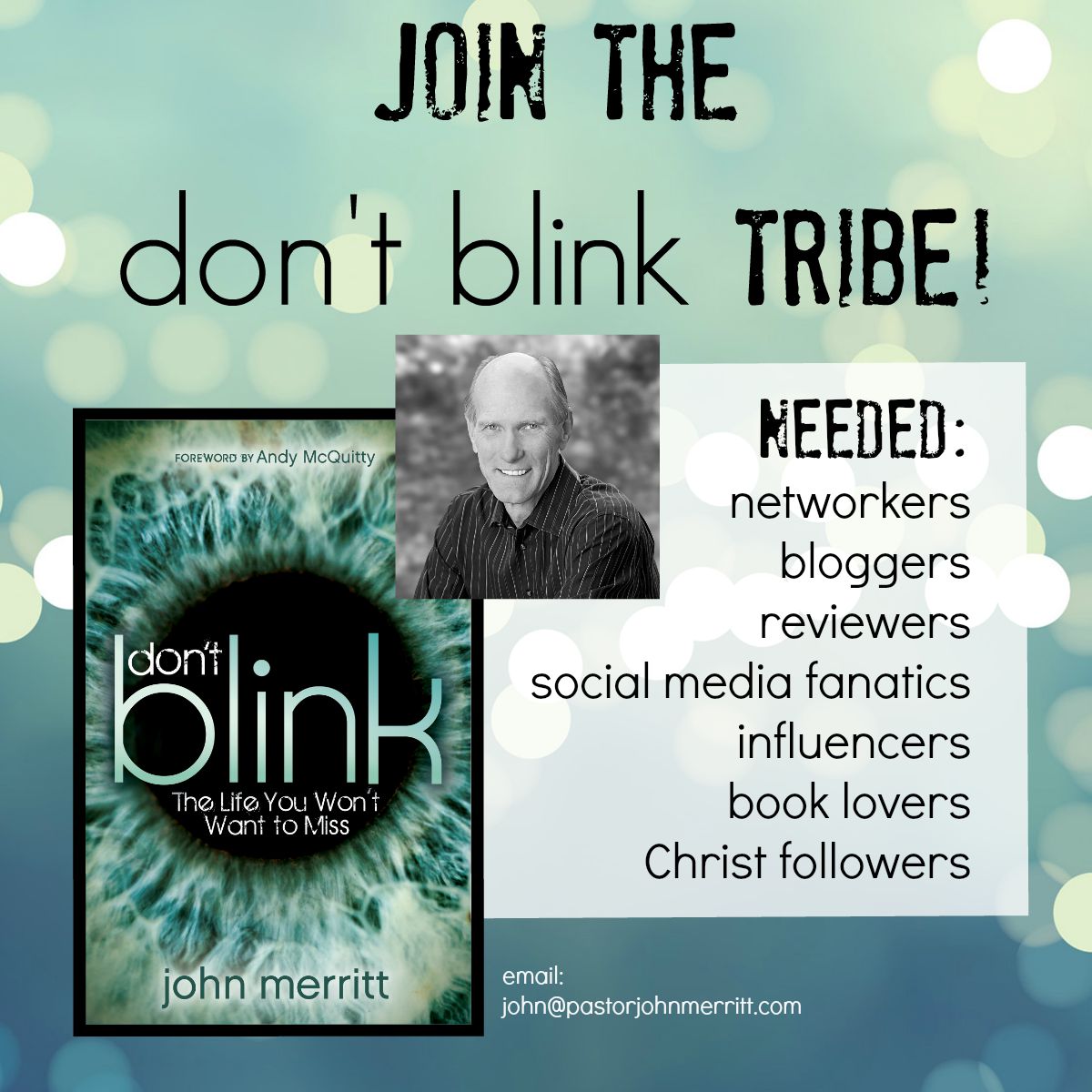
John Merritt's Don't Blink TribeToward that end, I’m looking for friends who share that same passion and will help me by reading the book and then sharing it with your friends and family members. Currently Don’t Blink is available in EBook form through Amazon, Kindle, iBookstore and Barnes & Noble Nook. The paperback is due to be released November 10 and you can pre-order a book now. If you would like to learn more about joining the tribe, email: impactauthor@comcast.net.

Please connect with me on Facebook
Google+
Twitter

Thanks everyone!
John


How to Make Offers They Can’t Refuse

clapping peopleI’ve learned a terrific lesson about social networking this summer.

If you offer, you receive.

Recently, I’ve turned my LinkedIn contact list into a fertile field of opportunity for spreading my brand by offering help to others. Sometimes, the offer is to write a guest post for a contact’s blog, or to be a last-minute guest for a radio show, or to send a free copy of one of my books because of a mutual interest. I don’t make the offer until a person I’ve invited to connect with me accepts the invitation, and then, instead of just filing their acceptance email away, I take the time to compose a personal note making my offer as a service to them.

That means I only look to connect with people who share an interest of mine, and if they accept my invitation, I then think of a personal way I might contribute to their goals. By asking first how I can help, it reminds me that my writing is my ministry, my God-given gift, and that when others succeed with my help, I’ve made a difference for them. It helps make writing not quite the solitary endeavor it tends to be, and it allows me an avenue to actually build relationships with my contacts. In an age of electronically linking up with people all over the country and the globe, any personal interaction stands out; suddenly that contact in my address book has a personality and we have a tiny bit of shared history. That’s good for people and good for business.

But the big surprise I discovered was how easy it is to offer help, and how grateful people can be. Thanks to my offers, I’ve found new ways to reach larger audiences:

  1. Though I stopped writing my own blog years ago for lack of time, I’m now providing occasional guest posts for three bloggers in the pet dog category. Each time I guest, my host includes links to my website and mentions my best-selling girl-meets-dog memoir Saved by Gracie. I interact with blog readers and expand my brand as they in turn learn more about me. Sweet!
  2. I tell every radio host I connect with that I am happy to fill in last minute if they need a guest. I’ve gotten two interviews that way – with only a day’s notice! Both programs were recorded and played to large markets. I publicized air dates on my social networks, and since they were podcasts, my – and the hosts’ – audience can continue to access them. Score!
  3. Likewise, I offer to speak at any service group’s weekly gathering (think Rotary Club) about my new project to encourage people to #getoutsidehappy! While my message promotes getting outside for greater health and happiness, it also heightens awareness of my books. I make a few sales at the gathering, but what means even more to me is spreading useful information to help people improve their lives. Win-win!

Do you use social networking to offer help?