WordServe News: June 2014

Exciting things have been happening at WordServe Literary!

On the final post of each month you’ll find a list of Water Cooler contributors’ books releasing in the upcoming month along with a recap of WordServe client news from the current month.

New Releases

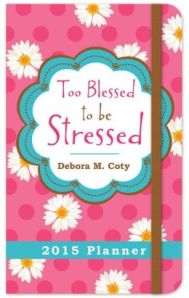
Debora Coty with Barbour publishing, released the 15 month day planner for 2015, Too 9781628368574_p0_v1_s260x420Blessed to be Stressed. 

**************************************************************************************

Mary Davis’s previously released title The Captain’s Wife was361943 included in a historical romance collection released by Barbour: Beaches and Brides. 
**************************************************************************************

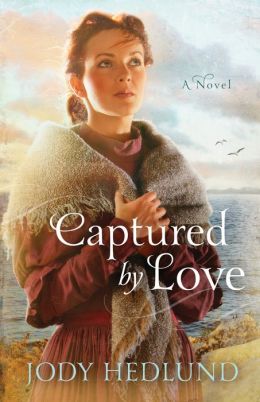
Jody Hedlund released Captured by Love with Bethany House Publishers

9780764210495_p0_v2_s260x420.


**************************************************************************************

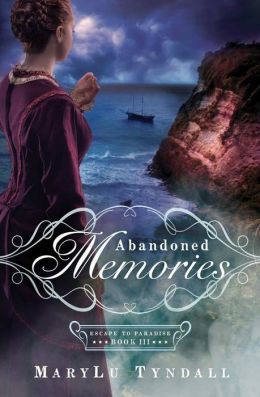
MaryLu Tyndall released Abandoned Memoriesthe third and final book in her Escape to9781616265984_p0_v1_s260x420 Paradise series with Barbour.


New WordServe Clients

Kimberlee Morgan signed with Sarah Freese.

New Contracts

Jan Drexler signed a three book deal with Revell. First book tentatively titled Here Lies My Heart. Sarah Freese agent of record.

What We’re Celebrating!!

Deb Coty’s Fear, Faith and a Fistful of Chocolate won a Selah Book Award in nonfiction!

Deb DeArmond will be writing a monthly column called “Do What Matters” for Lifeway Magazine Mature Living.

Dena Dyer and Tina Sampless book Wounded Women of the Bible is a finalist in the Non-Fiction book of the Year Golden Scroll Awards!

Adam Makos’s A Higher Call continues to stay on the bestseller lists for the 23rd week!

MaryLu Tyndall’s novel Forsaken Dreams wins cover contest!

Julie Cantrell and Rachel Phifer are finalists in the ACFW Carol Awards, Historical and Contemporary categories respectively!!

What can we help you celebrate?

Freedom

American flagAll around the country this week, people are celebrating our country’s independence. Some are enjoying picnics on the beach with their blankets spread across the white sand, others are watching fireworks burst into a neon display over their local community center, and many are cooking burgers and dogs over a pit, the woodsy scent of hickory and charcoal permeating their back yards.

Despite our political views, we all enjoy the freedoms this country offers. As writers we can put pen to paper and say whatever we want because we have freedom of speech, as Christians we can worship in the church of our choice because our constitution gives us freedom of religion, and as citizens, we have the right to bear arms.

The freedoms we enjoy as Americans are indeed precious, but there is one far greater than we can ever imagine—the freedom Christ gave us when he died on the cross.

John 8:36 says, “So if the Son sets you free, you will be free indeed.” By turning our lives over to Christ, we are free men and women. There are no political boundaries, it cannot be rescinded by human standards, and there is no cost. He has taken our sins away and lifted the burden of our actions from our shoulders.

2 Corinthians 3:17 says, “Now the Lord is the Spirit, and where the Spirit of the Lord is, there is freedom.” God’s freedom is for the asking. We don’t have to walk into the crosshairs of the enemy and fight for it—Jesus did that for us. The Lord has paid our debt in full. We only have to step into the outstretched arms of our heavenly Father. And there, in his presence, we will find eternal peace.

Romans 8:1 says, “There is therefore now no condemnation for those who are in Christ Jesus.” This is the best part of all. Once God has taken away our sins, He will never make us accountable for them—ever again. They are gone. Out of sight. He will never come back and remind us of all we’ve done in the past. We are free!
Freedom is a gift. You cannot see it, smell it or taste it. Yet, it is real and incredibly tangible. And it is the very essence of who we are as Americans, but more so—who we are as Christians.

God Bless America. God Bless you!

5 Ways to Tell if You’re a Writer

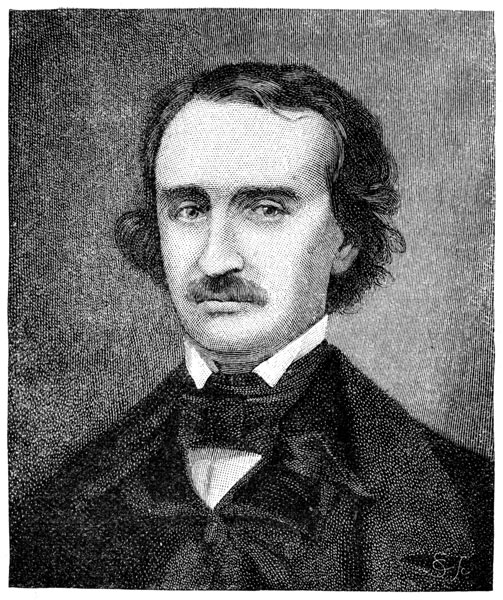
edgar-allan-poe-pictures-2
Can you name this author?

Writers are strange animals. They’re solitary mammals, prone to long stretches of hibernation unrelated to weather conditions. Generally, they’re pale, usually require glasses, and for some reason I’ve never been able to figure out, tend to wear flamboyant hats. What’s up with that?

If you suspect there’s a writer gene in your DNA, here’s a surefire test that doesn’t require a blood draw or even a swab of the inside of your mouth. See if you relate to any of the following. . .

1. You kill off your imaginary playmates.

Authors invent people. You craft words to connect readers to your characters, pulling at their heartstrings, making them best buddies. Then all for the sake of story, you take those imaginary friends and ramp up the catastrophes. Bam. Bam. Bam. All leading to a horrific climax…

“Meet Susan. She’s blonde, friendly, the girl next door with good dental hygiene. Her freckles are endearing and she helps little old ladies across the street. Everyone loves Susan. Whoopsidoodle! A Mack truck just hit Susan. Her dog died. And now there’s a one-armed stalker with an eye patch that wants to drink her blood. Poor, poor Susan.”

2. Your skill at lying is only exceeded by those in Washington.

Writers get paid to tell whoppers, kind of like attorneys, only without the debt of law school. It’s an author’s job to convince others of the plausibility of their story, to pull the reader into a whole new world—one they can taste, touch, and smell. Remember Susan? Yeah. Enough said.

3. You’re an uber-frustrated control freak.

You sit around all day, controlling what your characters say and wear, manipulating how they act and feel. You are a god of your fictional realm. Nothing happens unless you make it so. Enjoy the feeling, minion, because when you surface from Storyland, you don’t get to control reviews, contracts, publisher advances, or book placement, and you’re at the complete mercy of the Amazon recommendation algorithm.

4. You long for a raging bout of tinnitus just to shut up the voices in your head for a while.

When you’re asked about where you get your story ideas, you respond with, “What…you mean you don’t have mega-plex screens playing inside your head?” At least that’s how you answer the first time. After you’ve been scarred by the horrified face twisting that answer receives, you learn to reply, “Oh, here and there.” But that does nothing to clamp the lips of the story sirens in your mind, tempting you to listen to quite possibly the best plot idea ever in the history of mankind. And don’t bother buying the sound canceling earbuds. They don’t work.

5. You fly your freak flag high.

Hey, if being nutty-nuts was good enough for Tolstoy, Hemmingway, and Poe, you’re all for it. Besides which, you know you’re not batty, bonkers, or berserk. You identify yourself as simply being eccentric.

Any one of these five gonging a bell in your head and heart? If so, guess what? Yep. You’re a writer. Don’t worry, though. In this day of political correctness, no one will dare label you a nut job for fear of a lawsuit.

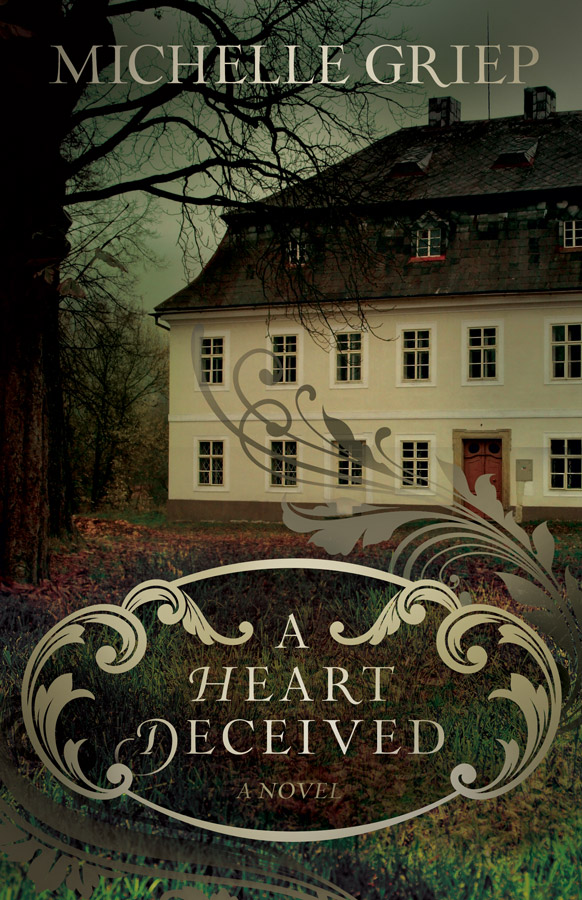
But that wasn’t always the case…(cue shameless teaser). In  A HEART DECEIVED, the topic of insanity is explored in historical detail…

A-Heart-Deceived-front-coverMiri Brayden teeters on a razor’s edge between placating and enraging her brother, whom she depends upon for support. Yet if his anger is unleashed, so is his madness. Miri must keep his descent into lunacy a secret, or he’ll be committed to an asylum—and she’ll be sent to the poorhouse.

Ethan Goodwin has been on the run all of his life—from family, from the law … from God. After a heart-changing encounter with the gritty Reverend John Newton, Ethan would like nothing more than to become a man of integrity—an impossible feat for an opium addict charged with murder.

When Ethan shows up on Miri’s doorstep, her balancing act falls to pieces. Both Ethan and Miri are caught in a web of lies and deceit—fallacies that land Ethan in prison and Miri in the asylum with her brother. Only the truth will set them free.

So when you need a break from your story world, pick up A HEART DECEIVED, available by David C. Cook and at AmazonBarnes & Noble, and ChristianBook.

Don’t Let Anyone Shoot Down Your Moon

Moon
So you discover this morning from a reputable source that a grand nephew twice removed through divorce and adoption thinks your last book was second-rate and “whiny.” Worried, you decide to try therapy to make sure you’re not harboring ingratitude or a pathetic victim mentality. Or, as a cheaper option, you consider hiring an editor for your next manuscript to eradicate any possible language that might be interpreted as “victim-y.”

After this decision, which you feel good about, you get an email from a woman who says your last book is the best book she’s ever read and she wants everyone in the world to read it and would you send some more books with your autograph and maybe even a family photo? You breathe deeply, read the email over several times, and block off time to do this.

Later that day you hear that someone thinks the scarf you wore at last night’s reading was too retro and someone else thought you looked fat in that purple dress. Stricken, you drop the scarf in the trash, a bit sad because you did like it, after all, and at dinner an hour later, you eat only salad because you know it’s not just the dress.

While picking at your salad and checking your email, you discover that some friends are angry with you for not including them in your latest writing project and others who asked to be in your manuscript are bitterly complaining about their inclusion.

Saddened, you head to your seminar that night, after carefully choosing slimming clothes and a plain scarf. You speak with all the passion you have left after such a day and some people cheer and cry, and afterward a woman tells you you’re better than watching a movie, while an elderly man in the back row falls asleep in the middle of the most dramatic part.

And after many such days, you lie awake on your pillow finally knowing what the unforgivable sin is—or, rather, the unlivable sin, and you vow you will no longer do it, you will no longer commit the terrible sin of belief. You will no longer believe all the rumors of madness, the rumbles of inadequacy and girth, nor reports of laud and praise. You know they are all true in some way, and they are all false in some way as well, but mostly, you know they will kill you with redirection and indecision.

In such times, you dose yourself with Ann Lamott:

“Yet, I get to tell my truth. I get to seek meaning and realization. I get to live fully, wildly, imperfectly. That’s why I’m alive. And all I actually have to offer as a writer, is my version of life. Every single thing that has happened to me is mine. As I’ve said a hundred times, if people wanted me to write more warmly about them, they should have behaved better.”

And this:

“My pastor said last Sunday that if you don’t change directions, you are going to end up where you are headed. Is that okay with you, to end up still desperately trying to achieve more, and to get the world to validate your parking ticket, and to get your possibly dead parents to see how amazing you always were?”

And you suddenly know it’s true: the world will not validate your parking ticket, so give it up and return to the life you’re supposed to be living. Your one “wild and precious life” given to you not to be hoarded but to be given away. And when you give it away, however kind you try to be and whatever form it takes, because the world is a crazy place, this will always be true: Someone is always waiting to shoot down your moon. Just know that some will be angry, some will bless you, some will betray you, some will be mean and small and some will be grateful and love you for life, till death do you part.

In all the betrayal, admiration, and lights, here is what you do:

You work at loving them all, and you keep on writing.

You will not be hushed, not by hurt or by hate; you keep on writing.

You will not keep trying to satisfy insatiable people; you keep on writing.

You will not listen to critics in the shadows, afraid of their own lives; you keep on writing.

You will not let praise erode your stability; you keep on writing (and rewriting).

Don’t let anyone shoot down your moon. Tell the truth. Please God. Love your neighbor. Love your enemies. And for the sake of us all,

Keep writing.

Kiss “I Can’t” Goodbye

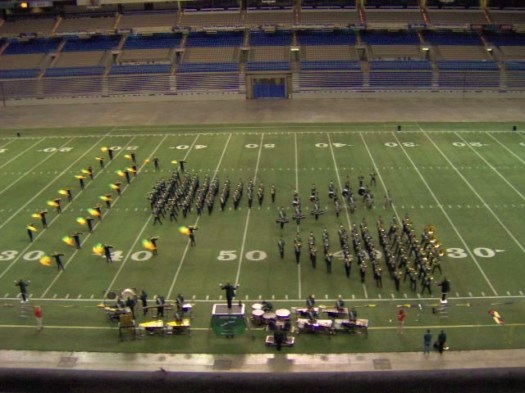
In high school, my band director erased “can’t” from my vocabulary. It was a slow, sweaty, painful process. We had been a championship band, a finalist in the state for 4A high schools. But after two years of mediocre performances, we were left wondering if we were “has beens” that had become “wannabes.”Kariss - band 1

But Mr. C never settled for defeat. He delighted in giving us the most challenging routines and music while watching us rise to the occasion. And he tolerated nothing less than our absolute best, knowing that our greatest potential often lay just below our valid but weak excuses.

It took training. Sweltering hours on pavement in Texas weather, running the routine over and over again until clothes clung to sweaty frames. Then we hit the classroom, fingers meticulously skipping over the keys until we knew every note by heart and could play it standing or running at 160 beats per minute.

I remember trying and trying to get a note set correct and failing miserably (in front of fifty of my peers by the way). After the fifth time, I quit trying.

“I can’t do it.”

“I’m sorry, what?”

“I can’t do it, Mr. C.”

“I don’t understand that word. Try again.”

It’s amazing what I came up with in the absence of that word. I’m having trouble. This is hard. How in the world do I do this? I don’t know how. But not one of those gave me the option to stop trying. And every excuse carried with it the opportunity to discover a new journey in the struggle.

He never let me quit in the classroom or on the marching field. Slow down, sure. Take each note one finger at a time, yep. But NEVER quit. Because he knew I could if I set my mind to it, no matter the challenge.

Success lay just below the “I can’ts,” just waiting to come to fruition with the acknowledgment of “I can…somehow.” And that lesson has shaped my writing journey. Rejections became detours. “Can’ts” became other challenges to conquer.

There have been many moments when I have been tempted to say “I can’t” in the middle of writing or editing or even marketing (I might have even slipped and said it a few times). But somehow, I meet the deadline every time, proud of the finished product.

Much like with marching or learning music, I keep writing until the words become an Kariss - band 2extension and enhancement of the story instead of simply an exploration to jog my creativity. Every time I finish, I know I CAN. I just have to discover HOW. I finally determined that I wanted it much more than I feared it.

Talent and passion may come naturally to a point. But success as a result of those attributes NEVER comes without hard work and a willingness to push past rejection, defeat, and redirection. As soon as you purge the excuses, the story blooms, and it’s only a matter of time before others outside your circle begin to notice the beauty of the finished product.

By the way, when we purged the excuses, our band went on to place first in every competition that season and ended the semester and my high school career as 4A Texas State Champions.

This thing you keep attempting that you think is impossible? It’s possible. It just takes placing one foot in front of the other until you see the results.

Where do you need to erase “can’t” from your vocabulary?

4 Steps to Defeating Distractions

distraction“We demolish arguments and every pretension that sets itself up against the knowledge of God, and we take captive every thought to make it obedient to Christ.” 2 Cor 10:5

I love this passage from Scripture, because it strikes a chord in me that resonates deeply: I have a hard time managing distractions. I don’t know if my shortcoming is a result of training myself to multi-task (which demands that my attention is spread out over many areas at once – a behavior common to many entrepreneur-authors), or if I’m not mentally disciplined enough to shut out all the noise outside (and inside!) my head.

Either way, I know I need help, and this verse from 2 Corinthians offers a powerful strategy to not only strengthen my focus, but to stamp everything I do with the likeness of Christ.

Step 1: Identify the pretensions in my life.

Pretensions are claims to importance or merit. In Matthew’s gospel, the parable of the workers in the vineyard serves as an example of pretension: those hired early in the day believe they merit more pay than those hired last. Yet the landowner makes it clear he is acting justly by paying the agreed amount to his first employees, while still acting generously to those who came last. When I think I ‘deserve’ more, am I subscribing to pretensions or conventional notions of worth, instead of relying on the goodness of God? Does that pull my focus from what God wants and cause me to obsess on what I think I should get?

Step 2: Demolish the arguments that oppose the knowledge of God.

Wow. Demolish. I’m reminded of the Egyptian army chasing the Israelites into the sea. Only when that opposing force is utterly destroyed can the Israelites move forward with confidence. Do I demolish my distractions, or continue to look back at them, handicapping my ability to set my focus on God?

Step 3: Take captive every thought.

In our information-rich world, it’s easy to let my attention off-leash. I need to be bold and exercise my God-given power to choose what I will think about. That’s not to say that distraction can’t be positive – we all need a break at times from purposeful activity and thinking in order to recharge ourselves and give our minds space and time to rest and play. But excessive distraction denies us the chance to focus on the meaningful work God calls us to in our lives. Do I accept responsibility for what I think, or do I give my thoughts permission to rule me?

Step 4: Make every thought obedient to Christ.

The only way this happens is by knowing the Lord, which means making it a priority to spend time in prayer, reflection, and reading God’s word so He can shape you into His own image. I’ve found that even brief amounts of time dedicated to building my relationship with God have a big impact on my daily routine and help me to stay focused on His priorities. Do I ask Christ for help when I am distracted?

What Scriptures help you battle distraction?

Today’s Chapter

I was on the phone with my sister today, trying to encourage her past the terror-induced paralysis that had overcome her ever since she quit her job in order to have time to get her house ready to sell and then to sell it and move with her husband from Colorado, where she lives, out to Arkansas to be near me. She was supposed to have put her house on the market back in May, when she quit working, but she had so much to do—cleaning the carpet upstairs, painting the porch, replacing some windows, regrouting the tile in the bathrooms, getting rid of stuff, selling the cabin up in the mountains, fixing the solar panel on its roof so that it was sellable, and on and on and on—that she just couldn’t seem to get started on any one task.

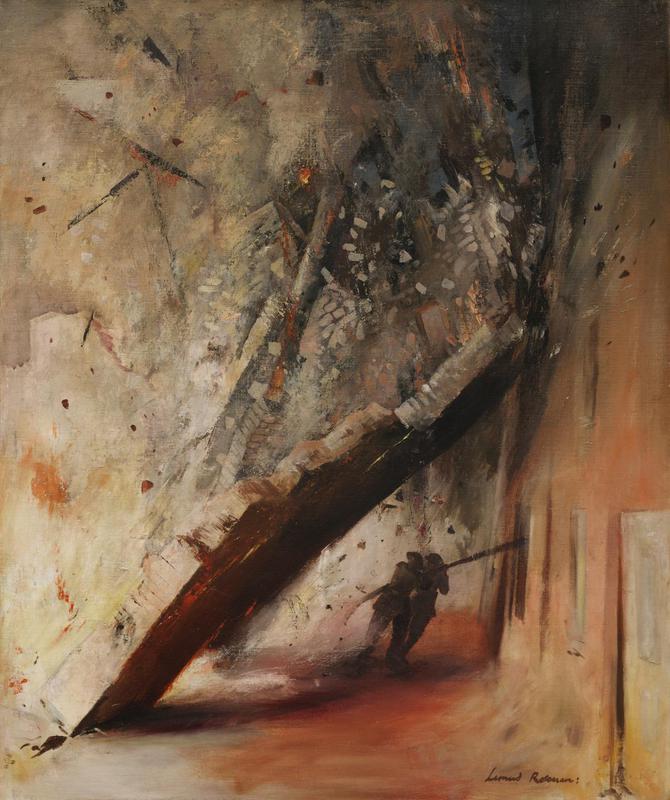
House_Collapsing“I can’t do this,” she kept wailing.

“What can’t you do?” I asked. “What do you mean by ‘this’?”

“This whole thing. The move. It’s just too much for me.”

In a sudden life coach epiphany, I saw what her problem was. She was stymied by the enormity of “this”—the future, the worry about whether they were making the right decision to move, the overwhelming impossibility and complexity of the move, with all its imminent troubles and certain catastrophes.

“You’re worrying about the wrong ‘this,’” I told her. “What you need to concentrate on is today’s ‘this’: cleaning the upstairs carpet. You can do that.”

Her situation reminded me of my novel, how I kept getting a particular species of writer’s block in which I was seized with a paralyzing certainty that I wasn’t going to be able to figure out how to make the plot come together in the end and thus couldn’t seem to move forward. In my mind, the novel became a huge problem, overwhelmingly complex and unwritable, that I worried about constantly. Then I started scheduling a rigidly regular time, every morning from five to seven, to work on it.

“Just sit down at the computer and take up where you left off,” I told myself. That was three months ago, and I haven’t stopped writing since. It was like magic, as if my sense of the novel as a whole just fell away and I started seeing just the chapter I was in.
“That’s what you need,” I told her. “Make yourself a list of everything you need to do, include the smallest task, everything. Then figure out a time each day that you can devote to accomplishing one of the tasks on your list. Don’t try to do any more than just that one task. If it’s like my novel, you’ll progress through more than one task at a time.”

Chapter-1“That reminds me of that thing Jesus said about how we shouldn’t worry about tomorrow, that each day has its own trouble and we should just concern ourselves with that.”

She is wise, my sister.

“That’s exactly it,” I said. “Concentrate on today’s trouble, today’s chapter, and the rest will work itself out.”

We hung up encouraged, I think. Both of us.

Spiritual Marketing: Martha Carr

There are now endless marketing tips and tools available to everyone with every kind of budget. It has gotten much harder to know when to stay strong and push on through a marketing plan that’s not quite working and when to let go and see what happens. It’s a blessing and a curse for a writer.

TheKeeperI’ve been writing and publishing for a few years and I’ve been fortunate enough to get the chance to be traditionally published and to self-publish. I’ve had the chance to have no money for marketing and a healthy budget. The lessons I learned from the experiences have proved to be invaluable to my life as a writer but not in the way I expected, especially when it comes to marketing.

What I discovered has felt like an obvious answer and has given me back my love of writing. Years of frustration over marketing had slowly taken that from me till I wondered if I wanted to write anymore. That’s when I paused and started listening from within and finally got an answer.

First, remember that when it comes to the actual writing, we all have a calling, an urge to write in one style or another and it’s pretty difficult to get us to stray from it. Mine is to write a series of thrillers, the Wallis Jones series, that include big conspiracies and average families searching for a way to deal with it all. For some, the answer is God, while others keep searching, hoping for a different answer.

No matter how many times I went and tried another style of writing, I eventually came back to that mix.

Marketing, however, is altogether different, especially in a quickly-changing world full of experts who say they can help sell your book. I’ve tried quite a few of them and with both good and bad results. In the end, it was all a lot simpler than I was trying to make it.

The answer was to live life on life’s terms. In other words, if there’s enough in my budget to do some marketing, then consult with the experts, weigh the options and set out with a plan. Keep the focus on the one plan and invite God into the entire process.

Instead of focusing on how many books were selling, my attention shifted back to what motivated me in the first place. I wanted to write because I had something to say. The fun returned because it was no longer about the outcome. So much of marketing can be about outcome if you let it.

That’s where I’ve started using spiritual marketing as my guide and letting go of the results. My part is to just do the piece of marketing that’s due today and then stop. I find myself sitting down to write without gritting my teeth or thinking about who might want to read it. I’d still like to sell a lot of books but my stomach doesn’t lurch when someone asks me how many have sold and I don’t feel compelled to hunt down opportunities.

I’ve got a plan in place for The Keeper that is reasonable and in line with my current budget for time and money. Outcome is out of my hands and I turn it over daily to the one place I know will be able to do something with it. I do my part in all of it but I’m not making sure everyone else is also doing their job. Until I adopted the idea that God would need to be part of the marketing as well, it was never enough. But for me, spiritual marketing means God can get me wherever He wants me to be so I can be assured this is my journey and relax into it.

*******************************************************************************************

MarthaCarrMartha Carr is a journalist and author of five books, including the Wallis Jones series. The 2nd thriller in the series, The Keeper has just been released. http://www.wallisjonesseries.com/.


Pacing in Writing

Pacing in Writing | Wordserve Water Cooler

Pacing in Writing | Wordserve Water CoolerPacing in Writing

When I was a child, a piano teacher let me play to my heart’s content without worrying about such details as tempo and timing. I’m pretty sure that wasn’t the best approach, which may be why those lessons were short-lived. It wasn’t until adulthood, when I studied vocal music, that I learned to pace myself.

Pacing, whether in music or writing, is one of the methods by which we organize the creative flow. Order prevents these creative expressions from falling flat and helps improve their impact.

What is Story Pacing?

It took me a while to understand the concept of pacing in fiction, but relating it to what I already knew about music made it easier. Basically, two elements of pacing work together within a story.

Every piece of music has a tempo, or base speed dictated by the type of music and its mood. This is also true in fiction. A sweet romance will have a slower overall speed than a thriller, for example. Knowing the right tempo for your story is an important but often overlooked consideration in pacing it correctly.

Your story plays out relative to its tempo, which means that the slowest scene in a lavish historical epic, for example, will be much slower than the slowest scene in a mystery novel, even though both may follow the same story pacing dynamics.

Vocalists are taught to hold back a little in the beginning of a song so that there will be room to crescendo later. In a story, the first scenes introduce the main characters, set up the conflict, and hook the reader.

As your story progresses, scenes ebb and flow at a slower, then faster, pace. This rhythm repeats, and as it does, the time between conflicts decreases. This builds tension leading up to the climactic scene.

The story then slows and, like music, resolves by returning to its tonal center. In the case of music, that is the first note of the scale. In fiction, there is usually a reference or some sort of return to the beginning of the story..

How to Speed Story Pacing

I’ll focus here on ways to speed story pacing, since that’s where most writers need help. However, many of these tips can be turned around to create the inverse effect.

Tension: Nothing propels a story along like wondering if the heroine is going to make it to the station before the love of her life leaves town forever. Or maybe your hero is being pursued by a gang with a vendetta. These are dramatic examples, but tension can be created more simply, as when Rhett Butler reveals he has overheard Scarlett’s declaration of love for Ashley Wilkes.

Unanswered questions create tension in these situations. What will happen when the heroine gets to the station? Will the hero escape with his life? Will Rhett keep the secret of Scarlett’s love for Ashley?

Action: Show, rather than tell, the story’s action in scenes written with minimal description, using a few details to evoke the setting. This is also not the place for introspection or thinking by your characters. Eliminate anything that would distract from the main action.

Dialogue: Because dialogue can be read quickly, it moves a scene along. To speed pacing, eliminate all extraneous tags and beats. Use conflict rather than agreement to give dialogue vitality.

Word Choice: Using short, snappy words will usually help you pick up the pace in a scene. Reserve longer words for those places where you want to slow pacing to allow the reader a moment to breathe.

Sentence Length: Remember that the more complex a sentence structure you use, the more time it takes for the reader to decipher your meaning. That’s fine in slower scenes, but use shorter sentences, which are more easily digested, in places where you want to pick up the pace.

Scene Length: A series of quick scenes can often move the pacing along better than one longer scene. You don’t want to chop things up too much, but this is a technique to keep in mind for the right application.

Chapter Length: Shorter chapters tend to be cleaner and more concise, which makes them more easily digested. They also act to quicken the pace by giving the reader a feeling of progress through the story.

Mastering Story Pacing

Learning to pace the stories you write isn’t easy. In fact, its one of the most difficult skills in writing fiction. Even if pacing doesn’t come naturally for you, keep working at it and you’ll improve. For a model that will help you plot and pace a novel, read Plotting a Novel in Three Acts and the related posts at my Live Write Breathe website for writers.

Surviving the Depths of Despair

Destin, Florida June 2008 451This week, our family is enjoying a long-awaited respite by the sea. I’m sad to admit we have been tested in many ways this year. But the good news is – after much suffering – we have come full circle.

As I sit on shore, toes tucked beneath warm sand, the roar of white caps rushing through me, I am reminded how small and simple our problems really are in the broader scope of universal infinity.

In fact, without the frames of time or space to help us process our daily lessons, our worries seem petty, ridiculous even. And that is an important thing to remember.

The Difference One Year Makes

One year ago, life as I knew it exploded. Everything I believed to be true was proven false.The one person I loved and trusted completely destroyed us all. And I never saw it coming.

It was if we had stepped on a land mine.

Our spiritual, emotional, and physical well-being were all under attack, and the enemy’s fire was relentless. My children and I endured round after round without pause, without relief.

But all the while, no matter how pointless it sometimes felt, I clung to my faith, insisting to my children that God had not abandoned us. That we were not alone. That love would see us through.

Now, here we are, back on the same shores where one year ago I threw my hands into the air and cried to the heavens.

Only once again, we are laughing. We race waves below blue skies; chase crabs from moonlight; scoop water as we kayak; cast nets below waves; and revive our spirits in a way that only a week at the beach can do.

Do You Believe in Evil?

Our family has survived an attack from what some would refer to as Evil. When I was a child, I was taught that the enemy seeks to divide and destroy, and that is indeed how I felt.

Forces beyond my understanding seemed determined to conquer our family. To divide us and destroy us. But somehow, with a lot of prayer and a tight grasp on our faith, we have withstood the storms.

Love One Another

When my children ask someday, what does it mean to love another, I hope they remember this lesson.

Love is not always easy. Sometimes it seems impossible. But when you love someone, you don’t give up on them. Even when, especially when, they reveal their weakest hour.

God’s Grace

My faith has taught me that we are all flawed. We all sin. We all fall prey to temptations and make bad choices along the way, even the best of us. At some point, we hurt others, and sometimes, we hurt the ones we love most in this world.

If we’re lucky, and if we are brave and honest enough to admit our mistakes, seek repentance, and work hard toward healing, our loved ones will stand by us and carry us through the darkest depths.

Today, our family is enjoying days in the sun again. But it wasn’t long ago we felt as if we were deep underwater, with strong currents pulling us down beyond hope.

There were moments I was certain we would all drown. But here we are, healthy of mind, body, and spirit once again.

So, now I ask, “Have you entered into the springs of the sea or walked in the recesses of the deep?” (Job 38:16)

Are you suffering? Have addiction, abuse, abandonment, betrayal, poverty, or violence shaken your spirit? Threatened all that matters to you in this world?

If so, hold tight to your faith and remember you are never alone. Protect yourself and your children from harm, and never doubt your own strength. Your own worth.

I promise, you can…you will…get through to the other side. And there, you will feel the wonder of God’s grace, as you master the ability to both love and to be loved – the one true purpose of this life.

___________________________________________________________________

Julie Cantrell is the New York Times and USA TODAY bestselling author of Into the Free and When Mountains Move. Learn more: www.juliecantrell.com