What Matters Most During the Holidays?

During the holidays, my writing projects, ideas, and dreams don’t always fit into my everyday life. So, I’m forced to decide what matters most.

Photo/KarenJordan

As I prepared to lead a session on holiday traditions for a “Countdown to Christmas” workshop a few weeks ago, I asked myself, What holiday traditions mean the most to me?

I found myself resisting the idea to plan for Christmas before Thanksgiving. I knew I didn’t have the time and energy to accomplish everything that I wanted to do, much less the things that others expected of me. And the burden of planning holiday events and activities overwhelmed me. I knew I had to be honest with myself about my expectations.

Traditions. As I listed my family’s holiday traditions, I decided to find a new way to prioritize them. I chose three basic categories to help me sort through the chaos. I posed three questions.

  1. Which traditions are treasured most by my family? I brainstormed about our holiday activities, noting some old and new favorites—recipes, gifts, parties, and other family activities.
  2. Which traditions are the most practical for my family? I listed the most difficult traditions to maintain, since our children live in different cities with children of their own now—and since climbing on the roof and hanging Christmas lights are no longer options for me.
  3. Which traditions help me to communicate the “real” meaning of the holidays to those who matter most to me? As I examined my traditions, I wanted to be sure to include those that best expressed my faith. As a writer, I know the importance of showing, not just telling. So I scratched off some things that might distract us from the main “reason for the season.”

Realization. This process helped me to begin planning for my holiday celebration and relieved a bit of my holiday stress. How?

  1. Expectations. It helped me release my expectations of myself and of others. I won’t be avoiding certain family members who might not have the same values and beliefs.
  2. Stress. It enabled me to avoid unneeded expenses and the exhaustion of time-wasting commitments.
  3. Focus. I refocused on what matters most and the “real” meaning of the holiday and not on the frustrating and unnecessary aspects of the season.
  4. Pattern. It established a new pattern for approaching my life and work. Instead of thinking that I have to do everything that might be expected of me, I can choose a different response.

Questions. Now, I ask myself three questions before accepting any new challenge.

  1. Passion. Am I really passionate about this?
  2. Practical. Do I have the skills, talent, or knowledge to do this? If not, do I have the time or resources to pursue it?
  3. Purpose. Does it meet an important need?

If not, I’m saying, “NO!”

Celebration. I’m granting myself permission to let go, enjoy life, and celebrate. And I believe this holiday season and the upcoming year will be the best ever.

How do you determine what matters most to you and your family?

Taking a Tip From Big Business

blue ribbonMy husband’s company is in the midst of preparing for an industry competition that recognizes on-going improvement efforts in corporations. After hearing him talk about processes of quality control, increased productivity, and excellent resource management, all I could think was “I gotta get me some of that!”.

Unfortunately, authors can’t take advantage of this particular efficiency-enhancing program. You have to be a great big corporation or public institution. (Heavy sigh on being left out, but huge sigh of relief on the not being a big institution part! I like being my own boss.)

So here’s my plan: create my own author business improvement program. To that end, I’m currently evaluating my current strengths and weaknesses in those three areas my husband talked about, and I’m working to set goals for improvement. Here’s what I’ve got so far.

Increase productivity. I’m going to rediscover the surface of my desk. This will involve a full frontal assault on my office space, as I have multiple layers of sticky notes attached to files and walls. I claim I know where everything is this way, but that’s only true in a limited sense: yes, I do know where everything is – it’s in my office – but I don’t know in which pile of notes anything specific is. I’m through with wasting time searching. Everything that has not progressed past the sticky note stage gets tossed. That should reveal to me what my current priorities are and allow me more focus on finishing what I’ve started. And if it’s a really good idea I need to save, it goes in a folder labeled “Future,” which I will not open until I finish what I’ve already started.

Quality control. For me, this is about process. I lose too much time ‘exploring’ on social media – tracking down people, ideas, potential marketing contacts. Even simple tasks can steer me off-road if I’m not mindful of my objective; just updating my calendar on my website can lead me to perusing my pictures file, which in turn reminds me to prepare some new photo posts, which leads me to searching for free photos online, which…you get the idea. I’ve found I need to schedule the different tasks of my writing career by the hour to make sure I keep focused on my immediate objective. Work smarter, not harder, is my new motto.

Resource management. My greatest resources are time and energy. My task schedule will help with managing my time, but it’s important for me to keep my energy resource balanced between my personal and professional lives. When I spend everything I have on writing, I burn out; if I let my personal life constantly squeeze out my writing, I feel frustrated with myself and those around me because I’m not using all the gifts I know I’ve been given. Scheduling regular ‘play’ time is just as important for me as reserving time to work, and the revitalization that play offers pays off in increased productivity when I’m back in my office.

Do you evaluate the business side of your writing career?

Miles to Go and Promises to Keep

Photo/KarenJordan

“But I have promises to keep,
And miles to go before I sleep …” (Robert Frost).

Many years ago, I sensed the Lord’s direction to begin writing a very personal story from my family’s life. So I began to record my thoughts even while we were still embroiled in the middle of the crisis.

Roadblocks. Yet every time I would attempt to complete a book proposal for this particular project, something thwarted my efforts.

I don’t just mean a little bump in the road. I’m referring to situations that seemed impossible to get through—like my mother’s fatal illness, my daughter’s three orthopedic surgeries and difficult pregnancies, my daughter-in-law’s seven miscarriages and two miraculous births, and my father-in-law’s lengthy terminal illness.

And that’s not counting all the roadblocks in my journey to publication. Oh, my! Where do I begin with that one?

Red flags. So as I approached this long-drawn-out project again—this time working on it with my daughter Tara—red flags waved all around me. Again, it looked hopeless. And to be honest, when I returned home from our last brainstorming session, discouragement covered me like a heavy cloak. And my emotions tempted me to return this story to my “What was I thinking?” pile once again.

Reminders. Then, I remembered my “40-day Challenge: Telling the Stories That Matter Most.”

I also began a study the life of Moses. And I thought my mission looked impossible!

Moses faced the unimaginable tasks of his calling with great fear. He knew he didn’t have the strength or the abilities that he would need to complete the undertakings God had asked of him. He was aware of his weaknesses and limitations; yet, he wanted to embrace God’s promises. But at each step, he faced his own inabilities in light of God’s plans.

As I study more about Moses, I’m reminded once again of God’s steadfast commitment to keep His promises. Even my unbelief, fear, and doubt will not divert God’s plans. I may get sidetracked and distracted, but God remains faithful to His Word.

God also promises to provide all I need to complete the work that He began in me.

“There has never been the slightest doubt in my mind that the God who started this great work in (me) would keep at it and bring it to a flourishing finish …” (Phil. 1:6 MSG).

Reflection. I’m grateful that God continues to invite me to join Him in His work. And I don’t sense that He has given up on me like I’ve often done with Him. He will forgive my complaining about my circumstances and blaming others for my failures.

So I’m holding on to God’s promises now, even as I write this confession of faith. And I pray if you are struggling with a similar issue, you will revisit His promises to you, too.

Are you facing an impossible project now? What lessons are you learning in the process?

I Didn’t Sign Up For This!!!

Babies CryingSometimes I wonder if I’m a masochist, because a writing career is a mixed bag of blessings and curses.

The blessings are many. You finally get to hold in your hands your words published in a book (yes, electronic versions count!). You have the satisfaction of knowing others are reading your work. You get your name in the local paper for doing a booksigning, or you’re a guest author at a local book club. You might even get paid to speak to an audience!

And then there are the curses. A reviewer hates your book. You knock on the doors of the local media till your knuckles are sore, but no one answers. Your great idea for marketing falls flat. You check your Amazon.com sales numbers on your author central page, and it’s like getting slapped in the face with the wet towel of reality. (“What? I’ve only sold 17 copies of my book in the last six months? That CAN’T be right!”)

The fact is that for us writers, who pour our heart and soul into our writing, all those negative responses drip, drip, drip onto the rock of our confidence, until the sharp edges of our desire and motivations (those things that enabled us to set out on the road of writing in the first place) become worn down, replaced by recesses of self-doubt and exhaustion. It takes a lot more energy and perseverance to repair that accumulating damage than it does to bask in the sunshine of the blessings we experience.

This, then, is why a writer needs a talent to forget.

As Philippians 3:13-14 instructs us, “Brothers and sisters, I do not consider myself yet to have taken hold of it. But one thing I do: Forgetting what is behind and straining toward what is ahead, I press on toward the goal to win the prize for which God has called me heavenward in Christ Jesus.”

Every writer I know acknowledges that they have been called to write. The thing we don’t like to acknowledge is how hard it can be at times to do that very thing. None of us embraced our call to write with a joyful shout of “I can’t wait to experience frustration, misunderstanding, isolation, and a hundred painful book signings in almost deserted bookstores!”

At least, I know I didn’t.

And yet the promise remains for us as powerful as it did for St. Paul. We might not have to endure blindness, or imprisonment, or persecution like that famous evangelist, but we can still ‘strain toward what is ahead’ when we fix our eyes on the prize that is Christ Jesus, and not on the obstacles we have to surmount to get there. Like St. Paul, we need to consider ourselves ‘as yet to take hold of our goal,’ no matter how accomplished we might feel when our names are in the local events calendar, or someone contacts us to speak at a program.

Forget what is behind, then, and press on, because that mixed bag you’re holding is well worth the prize.

What is your favorite way to forget and then press on?

To Write a Book Someday, Share Your Writing Now

8139708904_9a1d1783d4_bSome people will tell you the defining characteristic of a writer is that he or she is someone who writes. There is truth to that perspective, but it fails to offer a complete picture. It also gives many “aspiring writers” an excuse to be nothing more than journal keepers: diligently plucking away at Moleskine memoirs or first-novel manuscripts that have zero chance of getting published, ever.

The point here is not a matter of quality. It’s about privacy.

The reason why many written works-in-progress will never see the light of publishing day is that they are stowed, always and forever, in a drawer or on a hard drive where they have no risk of being evaluated by a second person. The writers of these works will never be writers because they will never have readers. They exist completely outside the writing market, and the only critical eye they allow to view their work is their own.

If you think that one day you’d like for people to read your writing, then you should begin by inviting people to read your writing now. Here are five ways readers can strengthen your writing and make it even more worth reading:

Readers help you get over yourself. It’s not uncommon for writers to feel uncertain or insecure about what they’ve written. Will this technique work here? Am I being clear? Am I using a marketable concept? Does anybody else care about the subject? Without readers to help confirm where and how a piece of writing is hitting its target (and where and how it’s missing its mark), these uncertainties and insecurities often grow and fester. But when you prioritize feedback, typically you get it. As a result you might find that your sinking suspicions will be confirmed. Some of your assumptions might be challenged. Maybe you’ll be pleasantly surprised by rave reviews. Whatever the case, you won’t be stuck wondering anymore, and that will help light a clear way forward.

Readers identify strengths in your work. Encouragement and affirmation give extra fuel when you’re trying to produce a manuscript. So ask your readers to note the places where they laugh out loud, hold their breath with anticipation, get caught by surprise, can’t stop turning pages, or are struck speechless. That paragraph you’re thinking about deleting? It might be your readers’ favorite part. Give them a chance to tell you so.

Readers identify weaknesses in your work. That poetic metaphor you’ve taken days and months to craft? It might be so complex that it’s confusing your readers. The story you’ve built a whole chapter around? Your readers might be bored out of their minds.

As the writer of a work, you will undoubtedly feel more attached to it than your readers will. Because of your heightened emotional attachment, you’ll probably miss seeing some of your writing’s flaws. You might even be blind to enormous holes in the work. Let your readers open your eyes to the problems you don’t see, so you can take the opportunity to fix them.

Readers expand your perspective. You are only one person, so your outlook on the world is limited and skewed. You have strange views about certain things, and some of your views simply haven’t been challenged in a way that forces you to clarify them well or charitably. Readers can help you identify the odd little points in a draft, the ones that either are or seem arrogant, stingy, dismissive, hyper-emotional, you name it. Points like these will jut out in unseemly ways, always subtracting and distracting from good work, unless someone will be so kind as to call your attention to them, so you can know to improve them.

Readers make the process realistic. If your writing aspirations are real, then you’re going to have to accept the reality of readers at some point. Get used to feedback now, and critiques won’t make you crazy later. Write with readers in mind now, and it won’t feel strange when they’re a part of the process later. Start learning what readers are interested in now, and then when your defining moments as a writer come, you’ll be prepared to deliver for your readers.


YOUR TURN: Respond in the comments: How have readers helped your writing? What kind of readers give the best feedback? What keeps you from pursuing readers?


Photo credit: cogdogblog cc

Honing Our Lives

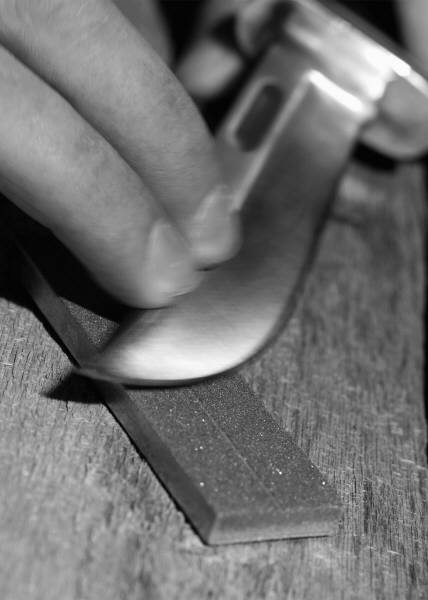
knife sharpeningAs iron sharpens iron, so one person sharpens another. Proverbs 27:17 (NIV)

While every writer knows that in today’s marketplace, interacting with others on a regular basis is a necessity for selling books, the real heart of writing – sitting down and putting words on a paper or screen – is a lonely job.

For me, however, “lonely” is not the word I would choose to describe my experience of writing. “Lonely” carries a negative connotation, the idea of being “cut off” from others, or “without” the company of others. In contrast, when I write, I feel a freedom to explore my own ideas and the joy-filled opportunity to connect with the Spirit within me. Writing is my “alone” time, not my “lonely” time. It is a personal retreat that renews me because I get to luxuriate in the word-smithing gifts that God has given me.

And yet I can’t deny the truth of Proverbs 27:17; without the other writers, marketing experts, and loving friends in my life, I wouldn’t be able to make the most of those same God-given word-smithing gifts. That’s not to say I’ve always felt this way – when I was new to my craft, praised by my writing teachers in high school and college, I had no use for the comments or criticisms of my peers. If my teachers liked my work, why should I listen to other students who struggled to compose even simple essays? It took me decades to understand the importance of my readers as opposed to the praises of my teachers. Here’s the difference:

The praise of others encourages you (and that’s a great thing!), but it’s honest criticism that will help you improve your craft.

It wasn’t until I began writing as a freelance magazine contributor that I first received truly effective editorial direction. Editors know their audience and work to appeal to them, so they have to play to the crowd. Teachers, on the other hand (I can say this because I’ve been a writing teacher myself), are the final audience of one person, and once a student has mastered what that teacher wants, there is no room to grow. And since all of us like to be praised, it’s tough to walk away from all that positive reinforcement to seek criticism!

As with so many endeavors in life, though, we have to push the boundaries to become the best God intends us to be. In the writing life, that means giving up the comfort of praise in order to find the challenge of improvement: we have to ask many people how we can do better, listen carefully to their comments, and use them to grow our craft.

One of my favorite sayings about Christianity is that “no one is a Christian alone.” Jesus Christ came to shape us into a community of believers, so we might draw on each other’s faith and gifts to grow His kingdom. That applies to our writing careers as well.

We need to be iron for each other.

To whom do you turn to be iron for you? For whom are you iron?

The Truth About Being An Author

cookies-28423_640I know I took the secret oath to never reveal the truth about what it’s really like to be a published author, but I’ve decided I can’t, in good conscience, keep quiet any longer. If you’d rather keep your dreams of authordom intact and unsullied, stop reading NOW.

If you can handle the truth, though, here it is:

  1. You are going to eat a lot of cookies. There is a cosmic law that requires bookstores and libraries to offer this sustenance to authors and their readers. The more people who attend these events, the less you (the author) will have to consume, so be sure to invite every cookie eater you know to your book events. Otherwise, you will have to eat all the cookies yourself so your host won’t feel bad, and then your clothes won’t fit, and you’ll have to buy a new wardrobe (see #6 below). If you want to buy a new wardrobe anyway, go ahead and eat all the cookies. It will make your book hosts happy because they don’t want to eat the leftovers.
  2. Everyone on the planet will tell you about the book they want to write, and then they will ask you how to get it published. Unless you are prepared to give on-the-spot hours of instruction and editorial advice, the best answer is: “I have no idea. Have you tried the cookies?”
  3. You are going to bond with your car since you’re going to be putting on the miles as you drive from one book event to another. Tell your friends and family to give you pre-paid gas cards for birthdays and holidays. Keep books in your trunk. Tape pictures of your loved ones onto the dash so you can remember what they look like. Do NOT eat cookies in the car, even if you are starving between book events, because it’s virtually impossible to get all the crumbs out of your car.
  4. You will somehow, miraculously, find time to work everything in to promote your published book. You will not, however, find time to write your next book. You have to do that instead of sleeping at night. The good news is that the cookies you eat all day promoting your book have enough sugar in them to keep you awake while you write.
  5. You will land a short interview on the local TV station – congratulations! You will walk into the green room to wait for your turn and share a couch with a Chihuahua dressed as Marilyn Monroe (complete with blonde wig and iconic white dress) and a pug masquerading as Snow White. You will be humbled to realize that book publication rates right up there with the best Halloween costumes for small dogs. And you will learn that dog biscuits can look a lot like cookies.
  6. Your writing income will probably not pay the bills, or at least, not all of your bills. But you’ll eat all the cookies you’ve ever wanted.

Now, who wants a cookie?


Encouraging Aspiring Writers

Photo/CCWCAs a freelance writer and writing instructor, I’m often asked to edit the work of my peers and of aspiring writers. And I love to encourage others to tell the stories that matter most.

Grammar cops. I also appreciate the editing skills of my writing peers, as they wield their red pens and hack on my “shoddy” first drafts. But at times, I observe grammar cops attack insecure, fragile writers, who approach them for encouragement as they tiptoe into the waters of writing for publication.

Now, I’ve been known to whip out my red pen from time to time, when someone asks me to do that kind of editing. But I try to use a little discernment and discretion when a novice writer approaches me with their work.

Aspiring writers. Sensitive, aspiring writers need our empathy, since they trust us with some of their most intimate tales. These newer writers pour out their hearts and souls into their first pieces; we need to handle them with care.

I’ve seen writers spanning from late teens to senior citizens. And I’ve noticed many of them choose topics dealing with difficult life struggles—the death of loved ones, flashbacks of war experiences, or simply leaving home and beginning their own journey as adults. I’m able to empathize with their pain, confusion, doubts, and fears. I recognize their need to tell their stories, trying to make sense out of the rumblings of their minds and troubled hearts.

Levels of edit. I believe it’s vital to discern the needs of a writer, not always assuming they need a grammar cop to attack their work with a red pen. My unsolicited grammar cop comments tend to cause more harm than good. I find it helpful to ask writers to clarify their needs and their expectations of me as an editor. What level of editing do they want?

I also think it’s important to examine one aspect of editing at a time, since I don’t do well at multi-tasking. And although many professional editors may have different terms to describe their levels of editing, my editing checklist for my own work includes three—the panoramic, macroscopic, and microscopic viewpoints. But sometimes, I consider one more level editing, especially with writers who need encouragement—like students, wannabe writers, or hobby writers (i.e. not professional writers).

Peer responses. Some professional writers may not even consider the peer response a valid level of editing, but it can serve as an important phase of the writing process. For instance, this approach might be helpful for some critique groups.

In the classroom, I required my students to participate in peer groups where they would listen and respond to each other’s work. I preferred small groups, where students seemed to be a little less intimidated. I wanted to encourage their writing, not scare them off.

I provided every student several copies of a peer response form. Then, as each writer read their essay out loud, their peers would listen, read along, and record their responses. After each reading, the group would discuss the responses.

One of my favorite writing professors, Dr. Sally Crisp, encouraged me as she taught aspiring writing teachers the value of emphasizing meaning.

I believe that we write to communicate and connect with others, often others we don’t know and may never know. In responding to writers, I like to let them know how their message got through to me. In other words, whether I ‘got it’ or I didn’t. I teach the same principle when I teach collaboration. The right kind of collaboration can be an excellent means of fostering in writers a keen sense of audience.

Dr. Crisp also composed a list of peer response questions and comments that you might find helpful, too.

Peer Responses

  1. How has the writer introduced the essay?
  2. What is the main theme of the essay?
  3. Is there any information that you are wondering about? What might be added to develop the main point more fully?
  4. How did the author conclude the essay?
  5. What part of the essay do you find the most effective? Why?
  6. Suggest two or three things that would make the paper even better.

Who has encouraged you as a writer? 

The Only Story That Matters

july 013I was beginning to panic about my book sales. Despite my hard work and ceaseless efforts to promote my new book, I just wasn’t making a dent in the supply of books I’d bought from my publisher. Since I’d borrowed the money from our family savings, I felt guilty that I wasn’t refilling the coffer as quickly as I’d so optimistically assumed I would.

What more could I do? Post even more frequently on social networks? Write more guest blogs? Camp out on the doorsteps of radio and television stations to get their attention? Go into even more debt by hiring a publicist, in hopes he could convince people to buy my book? Beg the few bookstores still in existence to push my book at customers?

I didn’t do any of those things.

Instead, I asked God for help. I prayed for more book sales.

And He delivered.

Within days, I heard from two stores who had taken some of my copies that they needed more. Some event bookings I’d been pursuing for months finally came through, and I added them to my calendar. One night as I lay awake in bed, thinking about my book, I realized there was another market I could tap into, and the next day, I discovered solid leads for doing exactly that.

And then my daily Scripture devotional chimed in with Jeremiah 32:17.

universe“Ah, Sovereign Lord, you have made the heavens and the earth by your great power and outstretched arm. Nothing is too hard for you.”

Yes, I was reassured and completely grateful for God’s generosity to me in the form of helping me sell more books as I had requested in prayer. I’d asked, and I’d received.

Praise God!

To be honest, though, I felt something even more compellingly: I felt chastised. I’d asked the omnipotent Lord, who created the universe itself, to help me sell books! Who did I think I was to even imagine He would care about a few hundred dollars in my life? It’s not like I needed a PLANET or anything. I wanted material success. I wanted to put some money back in the bank. I wanted God to make me feel better about a story I wrote. A story!!

Talk about putting myself at the center of the universe. I was humbled. Embarrassed. Aghast at my own egocentricity.

And, most of all, stunned by God’s patience with me, because this isn’t the first time I’ve let my selfish priorities slide in over what I know to be the single most important relationship of my life: my relationship with God.

It’s true – nothing is too hard for God, and that includes loving me…and you.

And really, that’s the only story that matters, isn’t it?


Staying on Course

Photo/KarenJordan

I failed to consider the length of the trail when I started walking it.

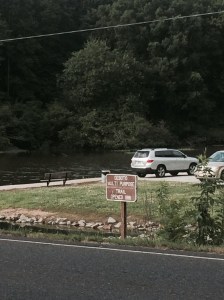
Temptations and expectations. I had hoped that a two-mile, brisk walk along a wooded path overlooking a beautiful golf course near my home would clear the cobweb of worry from my mind. 

Instead, my impulsive, adventuresome nature ignored the signpost, describing this four-mile loop through the challenging hills and valleys in Central Arkansas.

I knew the path would eventually lead me back to the trailhead. So, when I noticed the third mile marker, I decided to press on. I assumed that going forward would be faster than turning around and returning to where I started. Plus, after investing so much energy, I wanted to finish the course.

Confusion and distractions. I tried to determine my location on my cell phone’s GPS. But I couldn’t locate the trail on my screen, and the diverging paths confused me. So, I just kept walking.

I stopped from time to time to shoot a few pictures. These gave me some short breaks  from the summertime heat and rest for my throbbing feet, as I avoided the pesky bugs, spider webs, and poison ivy sprigs at the edge of the forest.

Photo/KarenJordanElation. By the end of the trail, my worries had  abandoned me, and the strain of the long walk through the woods subsided. Refreshed, I paused by the lake and enjoyed a bottle of cold water.

I also experienced a surge of self-confidence when I reached my destination. I knew that I wouldn’t have attempted such a feat in the summer heat if I’d known the length and difficulty of the trail.

Looking back on the experience, I realize that I’ve learned this lesson in other areas of my life—marriage, parenting, academics, and writing for publication.

I’m not saying that I have this all together, that I have it made … By no means do I count myself an expert in all of this, but I’ve got my eye on the goal, where God is beckoning us onward—to Jesus. I’m off and running, and I’m not turning back … So let’s keep focused on that goal, those of us who want everything God has for us. (Phil. 3:12-15 MSG)

Are you tempted to quit right now!? I challenge you to focus on God and allow Him to guide you with His promises.

Let the peace of Christ rule in your hearts … And be thankful. Let the message of Christ dwell among you richly … And whatever you do, whether in word or deed, do it all in the name of the Lord Jesus, giving thanks to God the Father through him. (Col. 3:15-17 MSG).

What helps you stay on track when you’re tempted to get off course?

YouTube/YamahaBill (Disney’s Hercules – “Go the Distance”)
Photos/KarenJordan