
The Blessing in a NO

Ever feel like you just can’t catch a break? Nothing seems to be going your way? Have you ever heard no so many times it starts to lose its meaning? Welcome to the world of writing.

In the last three years, I have heard no so many times that I have learned to laugh and look for the next open door. When I first started hearing no it was a foreign concept to me. All my life I worked hard for what I had – job, grades, academic standing – and then I put one foot into the real world, and for some reason none of my achievements carried much weight. Crazy how that works, isn’t it? But it took a series of closed doors to teach me the blessing in no.

  • Applied to grad school at Texas Tech – No
  • Applied to 11 other grad schools (About the eighth letter, I started laughing instead of crying.) – 11 No’s
  • Moved back home and applied for A LOT of jobs – A LOT of No’s
  • Wanted to move out of state – No
  • Applied for more jobs and internships – More No’s
  • Submitted my book for publication – A lot of silence (which equals a “no” in the publishing world)

Starting to get the picture? No started to lose its meaning. But the more I heard that dreaded word, the more I began to find my way. Know what happened when I stopped trying to make things happen and allowed the Lord to direct my steps? A lot of those no’s became yesses in directions I never would have explored.

  • Got an acceptance letter to Focus on the Family Institute in the same month I was rejected from Tech. The Lord changed my life. – Yes
  • Found a freelance writing position two days after my most recent job rejection. – Yes
  • Attended a writers conference and was accepted into a writing course with a mentor doing the exact same thing a graduate degree in writing would have given me for an eighth of the cost. Found Christian authors to encourage me. – Yes
  • Attended another conference and found agents and editors who are interested in my book. At least I’m on the right track. – Yes

The Lord began to open doors to all the things I had been pursuing, except He determined the direction and the timing! It turns out that I’m in pretty good company. In the Bible:

The Lord told Abraham to leave everything He knew and travel to a land He would show him.

Abraham prayed for a child, and the Lord said no until Abraham was so old it seemed impossible, and then the Lord blessed Abraham with Isaac, the promised child.

Jonah didn’t want to go to Nineveh to preach. He ran away but the Lord said no to Jonah’s direction. He sent a whale to swallow him and then spit him up on the beach near Nineveh. It changed that city.

Mary probably expected to go into her marriage a pristine virgin. The Lord said no to that plan. She was still a virgin, but she was shamed by her people with a child, who turned out to be the Christ child – the One who changed the world.

My no’s seem pretty insignificant in the grand scheme of things. The Lord used redirection in the Bible for His glory and the good of His people. There is blessing in this dreaded word.

In his heart a man plans his course, but the LORD determines his steps. (Proverbs 16:9).

I follow my own way so much. But the Lord wants to tell me YES. He just wants to do it in His own time and in His own way. Just as He has been faithful in all His covenants and promises in the Bible until now, I know that He will be faithful to answer my no’s with yesses in far better ways than I could. They never look like what I thought or planned. They are always, always better.

Trust Him with your no’s. Embrace closed doors. They are blessings in disguise! He is so FAITHFUL!
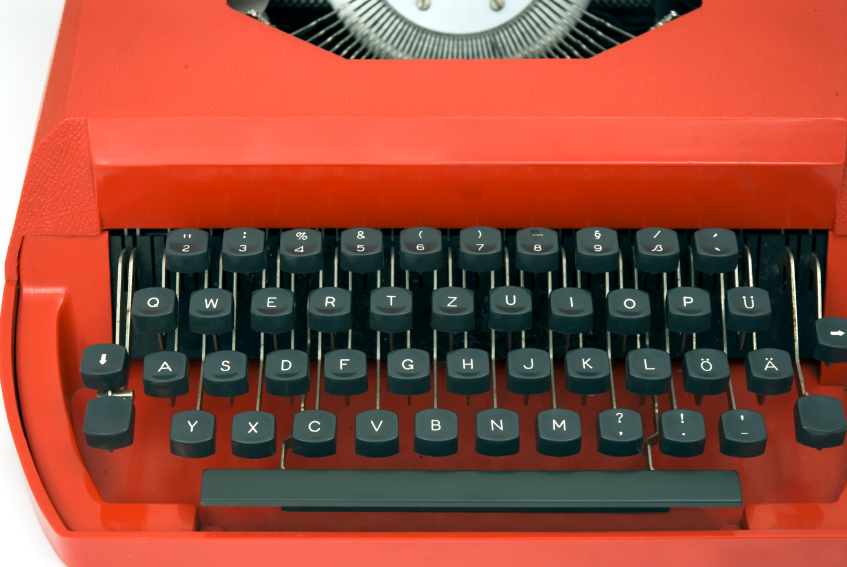
Deep into NaNoWriMo

Every author knows that it’s National Novel Writing Month – thirty days dedicated to flexing our writing muscles and whipping out 50,000 words of an original manuscript. The idea is to give ourselves permission to pursue our writing passion with all our hearts, minds, and laptops in a frenzy of creative expression and production.

What a great idea!

What unfettered freedom to write!

What joy!

What planet are these people from?

Like most authors I know, writing a novel gets sandwiched in between a part or full-time job, parenting, spousing, volunteering obligations, pet maintenance, cooking and cleaning, and – oh yes! – occasional opportunities to sleep. So, at least for me, while NaNoWriMo sounds like a fabulous idea, that is, unfortunately, all it will ever be for me – an idea, not a reality. During the month of November, while other lucky authors suspend every claim on their time and energy to immerse themselves in writing bliss, I’m still teaching college sophomores how to construct a grammatically correct sentence, walking the dog at least twice a day, cooking dinner for my husband and me, doing laundry, answering emails, and maintaining personal hygiene. Until I can figure out how to do all that AND write at the same time, NaNoWriMo will continue to be an elusive dream, and I will go on wondering what it would be like to write a novel in thirty consecutive days.

Note that I wrote ‘consecutive’ days.

That’s because I do write a novel every year in thirty days. The days are just not back-to-back, or consistently eight hours of effort, but all in all, it ends up being around the same amount of ‘work.’ In other words, I write when I can. Some days, that ‘writing’ may actually be hours of mental plotting while I’m otherwise physically engaged (can you spell ‘spring cleanup’?) or it could be an uninterrupted ten-hour words-pouring-out-of-me marathon when I forget to eat (easiest to do when hubby and kids are out of town). I have, at least twice, written the first chapter in a methodical manner, sitting down to my laptop for four hours a day. But then it’s been weeks, or even months, before I get back for Chapter Two. As I often excuse myself to those who ask, I was trained as a journalist, and I work best under pressure, but as an example of writerly discipline, I stink.

It works for me, though. I find that downtime between chapters, or even mid-chapter, gives me time to play with my story, working out different arcs or conflicts. My writing breaks allow my characters to form more completely in my mind, often without my interference. And sometimes, my story takes turns I never would have predicted, thanks to the people or events I encounter while I’m in the middle of slowly, erratically, crafting a story.

Write a novel in a month?

If you can do it, go for it.

Me? I’m simmering stew, along with story plots. The really good stuff takes time, you know.

How’s your NaNoWriMo going?

The Holy Work of Writing

Every year I host a faculty essay reading at my university for our collective entertainment. At the beginning of the semester, I choose and cajole a dozen colleagues from across the curriculum to write personal essays on a shared subject. Then, sometime around Thanksgiving, I invite the rest of the campus to come hear them read the resulting essays aloud. It’s always a fun evening, everyone feeling proud afterward of what they accomplished.

Though the selected essayists have composed entire dissertations of scholarly writing, most have never set out to write for entertainment alone, so getting them to do it necessitates pep talks from me along the way as well as a fair amount of collaborative back-and-forthing between them and the trusted readers I encourage them to seek out. When they report to me on how it’s going and, afterward, on how it went, my colleagues are bashful and sincere and loveably modest as at no other time in my interaction with them.

“I got my daughter—she’s in high school—to read through it and make sure it made sense,” a grizzled professor of engineering tells me.

Another tells me how, in the course of writing about a Picasso painting her autistic son loved but she didn’t, she kept asking him questions and managed, through these exchanges, to get a rare glimpse of the world from his perspective.

Yet another colleague makes an appointment with me after the reading to work on improving his essay even more. He takes away from our discussion an argumentation skill that he is still bringing up in meetings years later: that you can’t convince someone of a truth unless you show it.

That’s the part of the event I like the most—my colleagues’ accounts of the process of composition. It’s so thrilling to watch seasoned writers grow into better writers through the humbling practice of sharpening iron on iron. Hearing the essays read aloud—every one of them so good!—and then witnessing the enthusiasm with which their audience applauds their achievement—yes, very good!—confirms what I am always telling my students: that, we humans having been made in the image of our creative God, our practice of creativity is as holy as the exercise of any of God’s other traits. And as pleasurable.

It often makes me feel a little guilty that my work, both as a teacher of writing and as a writer myself, is so enjoyable. It hardly seems like work at all, much less holy work, as I have come to think of it. But when we write well—when, through our words on a page, we interest and engage an audience in what is true and lovely and admirable and excellent—we are performing the work of God.

When asked what God’s work is, Jesus says, “to believe in the one he sent” (John 6:29). Writing, and teaching others to write, helps me to believe ever more confidently in the One God Sent—through whom, says John, “all things were made; without him nothing was made that has been made” (John 1:3 NIV). Good writing recreates, in words, what has been made through the Word and offers it up to others for their contemplation and enjoyment. What work could be more sacred?

10 Kooky Tips On How To Write A Book

My writing nook at home. Don’t be fooled, it looks Pier One, but really, it’s a hodgepodge of thrift store and Craigslist.

I receive emails from people asking how to write a book.

I have written a book but I haven’t actually published it (yet, God give me patience and faith).

So when I am asked, it feels a bit like someone asking a person coloring a picture in a Strawberry Shortcake coloring book how to paint a still life.

Here are 10 kooky tips that popped into my head about writing a book if you absolutely don’t know how to start:

1) Start with a dangerously low self-esteem

This is vital. If you don’t, you may not be able to handle getting knocked off the height of your perch daily from rejection. It’s much easier to begin writing from the depths of despair.

2) If you have kids, get a lock for your bedroom door

My reasoning is two-fold: 1) my bedroom is where I write, and 2) my bedroom is where I cry when I am convinced that I cannot write, and it seems to upset the children when I cry uncontrollably.

3) YOU PROBABLY NEED TO ACTUALLY ENJOY WRITING

Or at least be able to stomach it, if you want to embark on a long project. Seriously, in order to write a book, you have to spend countless hours writing, which may stop you right there. Luckily for me, I love to write and see where it takes me. I also love to sit!

4) Make sure your writing desk has an economy size box of Kleenex.

I cry when I write. I cry over a beautiful sentence (both other people’s and my own). I cry over the fact that I can’t spell. I cry about God’s work in my life rendered on the page.

5) Listen to Papa Hemingway

I talk about Hemingway often, but I believe the goal is one true sentence.

Sometimes sentences string together perfectly and send shivers up my spine. One true sentence is the payback for locking yourself in your room to write.

6) Read books

Readers usually make good writers. Some of my favorite books include “To Kill a Mockingbird” by Harper Lee, “Les Misérables” by Victor Hugo, “Traveling Mercies” by Anne Lamott, and “Twilight” by Stephanie Meyer. (I’m just kidding about Twilight. Sorry, not a teen vampire fan.)

Read books on craft. For memoir, I love Vivian Gornick’s “The Situation and the Story” and Anne Lamott’s “Bird by Bird.”

7) Join a writing class

Most writing classes will require submissions and offer critique. This forces you to write. For years, I attended a memoir workshop in Chicago.

8) Buy business cards on-line and slap “writer” under your name

Call yourself a writer.

Even if you don’t have anything published, if you write, you are a writer. You may not be an author until you are published, but by golly, you are a writer. Put it out there! (And if you buy 250 business cards and have no one to give them to, the kids love to make up card games with them.)

9) Call or text or email people who love you, often

Writing is solitary. You show up and put words on paper and wonder if you actually have anything of value to offer the world. Call your mom, or your best friend, or Joe, the creepy guy at Starbucks who saw you writing one day and gave you his business card. Call anyone who loves you (OK, maybe not Joe) and ask for encouragement. You need cheerleaders. Buy pompoms and pass them out to friends.

10) Don’t write for attention

Believe me, an easier route for attention would be to hold up a Seven Eleven.

What’s your advice about writing a book?


5 Benefits of Collaborative Writing

http://www.stockfreeimages.com/

Franz Kafka, the famous author of “The Metamorphosis,” once wrote that writing is utter solitude, the descent into the cold abyss of oneself.

Although Mr. Kafka sounds a bit creepy, I get it.

As a mother to four kids, I relish hours alone with clicking fingers and thoughts. It’s just me and my laptop, or a pen and a piece of paper, and I’m hurled into a different time, place, or life. “How do I know what I think until I see what I say?” said the great E. M. Forster.

I concur.

Solitude is a treasured gift in my writing life.

But as I’ve delved into my career, the importance and benefits of collaborative writing have become undeniable. I’ve realized, with time, that my writing can get blurry. My business plan can be smudged. Enter collaborative writing.

When I say collaborative writing, I mean sharing my work with others, helping fellow writers along the way, and receiving criticism and suggestions regarding my work. I need people. I need editors, and proofreaders, and cheerleaders. I need instruction, shared experience, correction.

Col·lab·o·ra·tion: The action of working with someone to produce or create something.

Letting people into my solitary writing life has been a great experience. I create more. I create better. How? In what ways?

I’m glad you asked.

Here are 5 benefits of collaborative writing:

1. Collaboration strengthens writing skills

After I committed to writing my personal story about having a child with Down syndrome in the former Soviet Union, I looked into taking a writing class. God hooked me up with a great group. We read and discuss memoir, submit pages, and critique each other’s work. This sort of collaboration with other writers has strengthened my writing muscles and encouraged me greatly. Plus, I made writer friends!

2. Collaboration helps keep the green monster at bay

Let’s face it. All writers struggle with jealousy. I surely do.

When I collaborate with others, whether I’m reading or editing someone’s work, promoting Facebook fan pages, or having a friend guest post on my blog, it’s more difficult to for me to be jealous. Instead of racing for the win, I become a fellow sojourner along the path. If you find yourself repeatedly jealous over another writer’s success, I suggest you attempt to collaborate with him/her. It will change your attitude.

3. Collaboration builds platform

Nine times out of ten, when I’ve helped another writer, he or she ended up helping me too. Like someone’s post, share a fan page, host a blog parade. People will notice your generosity. And maybe next time, they will promote you.

4. Collaboration pushes deadlines

Whether you are submitting new pages to a group, or working with an editor on a freelance project, or in the final stages of line editing with your publishing house, deadlines push you. In order to write more, often, and better, collaborate with others. You will be forced to meet deadlines, which, in turn, will force you to write more.

5. Collaboration makes me an upstanding literary citizen

I’m convinced that as writers, we need to contribute to the literary society to which we belong. Read. Buy books. Share articles. Subscribe to magazines. And I would add collaborate with other authors.

Collaboration is a win for all involved.

George Orwell said that good writing is like a windowpane. I’m convinced that in order to write well, I need others around me holding the Windex bottle, spraying, and wiping my purpose, productivity, and prose clean with wadded up old newspaper.

What about you? How have you/do you collaborate with other writers?

Writing Life: Taking Time Out

A high-altitude tyre blowout and series of unf...
Photo credit: Motographer

When you have a flat tire, you must stop long enough to change it. (Dan Jordan)

When life sends us a “flat tire,” it forces us to take the time to stop and deal with it. If we don’t, it might destroy the tire and the rim. Then, we will have an even bigger problem.

Flat tires. The “flat tires” of life are different for each person. You may discover another problem with your car, like a strange knock in your car’s engine. Or you might find a virus on your computer. But you’d better not ignore them.

My husband manages a lot of the business problems at work. And when people get computer viruses, they often tell him that they don’t have time to deal with them. But he usually goes straight to the root of their problem. He reminds them that if they don’t stop and take care of the virus issue, eventually it will corrupt their work and shut their computer down.

Health.  It’s hard to just stop what you’re doing at times, right? Even if you experience a health issue, like chest pains, a back injury, the flu, or an allergic reaction to something? In fact, I almost killed my husband with my guacamole once—he had an allergic reaction to some overripe avocados. So, we both had to stop in the middle of our dinner to deal with his unexpected breathing problem.

I’ve learned that I can’t ignore symptoms of health problems, especially as I’m getting older. But even if you have a newborn infant, you can’t ignore some symptoms. My youngest grandson experienced a bout with the RSV virus. I’m so grateful that his mom didn’t ignore his first symptoms—he might not have survived without her intervention.

Spiritual. You can apply the same truth to a spiritual problem. Sometimes, I refuse to stop and seek God for guidance. But God’s Word encourages us, “Step out of the traffic! Take a long, loving look at me, your High God … above everything” (Psalm 46:10 MSG).

Work. So, when I complained about some work-related problems to my husband recently, he just repeated his “famous” statement to me. “Karen, when you have a flat tire, you must stop long enough to change it.”

Honestly, I had ignored Dan’s advice earlier, and my “flat tire” had put me out of commission for awhile in my work. And for me as a writer, that meant totally laying down my work and seeking God for new direction. But I still struggled with the decision, since I knew that I couldn’t explain my decision to everyone. “What would people think? I’ve made all these commitments!”

Then, I remembered a promised from God’s Word:  “Steep your life in God-reality, God-initiative, God-provisions. Don’t worry about missing out. You’ll find all your everyday human concerns will be met” (Matthew 6:33 TNIV).

I hope you remember to stop and check out the “leaky tires” in your life. Don’t wait, like I did, until you’re stranded in the middle of a busy highway, without a car jack or any help in sight.

Photo/Motographer

Do you see a problem that you need to take care of today?

Four Ways to Untangle Your Writing Life

Image/FreeDigitalPhotos.net There’s something about chaos in my home office that infuriates me.

As I attempted to help my husband install a new computer, the jumbled mess of wires overwhelmed me. Lying on the floor, flat on my back, reaching under my desk, I needed more than a flashlight and my glasses to see where to plug in the cables. I wanted something to calm my frazzled nerves.

At times, I also find myself overwhelmed with the tangled web of my writing life. I have so many projects going at once that I can’t focus on the most important ones.

So, how do we unravel the emotions and confusion of our writing lives?

Stop and take inventory. As I inspected the knotted wires behind my desk, I saw that each wire needed to be threaded back through a narrow space under my desk and poked through a small round cutout in the desktop, before I could connect my new PC. I took a deep breath and thought about my angry reaction to my husband’s request. We had purchased the new computer for my writing needs, and he needed me to crawl under the desk because of his old college knee injuries.

Since I tend to overreact at times, my routine frustration over my harried writing schedule serves as a warning sign for me to stop and reassess my priorities. I try to remember to seek God first for guidance. Have I made too many commitments again? Do I need to redefine the boundaries of my work and my everyday life? 

Make some space. After we pulled the computer desk away from the wall to allow space to work, I found that the electrical supplies to my paper shredder, stapler, hole-puncher, and phone charger complicated my task. I unplugged all of them and moved the equipment, so I could focus on just the computer wiring.

Sometimes I also need to back away from my writing life to gain perspective, especially before making new commitments. My other activities, projects, and life issues contribute to my inability to manage my time. I’ve considered enrolling in the course, “Managing Multiple Priorities,” but I could never find the time.

Sort through the maze. Before I unplugged our old computer, I decided to tag each cord at its connection to each device. Then, I sorted the cables and bundled the wires with plastic ties. 

Prioritizing my writing projects requires more than plastic cable ties. The process motivates me to evaluate my passions and interests to see if each project meshes with my overall plans. My impulsivity often leads me astray. And someone else’s requests can produce unnecessary and avoidable stress.

Go forward. After installing my new unit, I expressed my appreciation to my husband for his help, and I thanked the Lord for giving me the patience and the helping hands I needed.

The writing life offers temptations and distractions daily. I’d prefer to believe that I have my writing life in order. But with every new task, I experience a learning curve. I’m well aware that I’m still a work in progress.

Therefore, since we are surrounded by such a great cloud of witnesses, let us throw off everything that hinders and the sin that so easily entangles, and let us run with perseverance the race marked out for us. Let us fix our eyes on Jesus, the author and perfecter of our faith …
(Heb. 12:1 NIV1984).

On Becoming an Artist

“Red boathouse at sunset” by Karen L. Macek

Last year, I realized something that changed the way I look at myself and my writing.

I am an artist.

Over the course of my writing career, I’ve called myself many things: journalist, essayist, columnist, editor, reporter, researcher.  (I’ve also called myself other names at times, like stubborn, stupid, crazy, and masochist – especially when I’ve struggled to meet writing deadlines.) When I began writing fiction a few years ago, I added the descriptors of novelist, author, plot architect, and starry-eyed dreamer.

But artist?

Not in a million years.

For me, ‘art’ always referred to visual or performance genres. Art is the domain of my sister when she paints beautiful marsh landscapes in oils on canvas. Art is my daughter bringing a character to life on the stage, or playing haunting melodies on a flute or piano, or throwing clay on a wheel to transform it into a smoothly shaped bowl. Art is the creation of something new and tangible, and though I produced countless pages of words, I just never felt it rated as ‘art.’ I didn’t use paints, or clay, or costumes or musical instruments; my tool was a word processor, and my product was all in my head. And, with any luck, the heads of my readers.

Galley material, yes, but gallery worthy?

Not even close.

As far as I was concerned, writing was simple information management – collecting information, fitting it together (coherently, hopefully), and passing it on to readers. Whether it was just reporting the facts or organizing disparate information into a mystery novel, it was all about language skills and communication. Not Art with a capital “A.”

But then one day I was helping my daughter fill out a personality inventory, and I came across a section that listed occupations. I looked for the usual category of ‘Writer,’ but couldn’t find it in any of the traditional places I expected to see it. Instead, it was lumped under the category of “Art.”

The longer I thought about that label, the more I realized that what I do when I write truly is Art. Like any painter or musician or sculptor or actor, I look at the world around me and then translate my own experience of it into a new form, a personal, one-of-a-kind articulation of what is, or might be. I have a vision of life that ‘colors’ my representation and allows me to penetrate the surface of what I see to get at the heart of what lies beneath. Maybe my lens of choice is humor, or inspiration, or romance, or fantasy, but whatever it is, it helps me bring a freshness to my subject that is the essence of artistic endeavor.

I create with words, and not only is it my calling, but my sacred trust.

And now that I understand it that way, I guess I shouldn’t be surprised that I’m an artist. After all, my Father is too, you know.

Do you consider yourself an artist?

With Us Here Tonight

Shortly after my first book was published, I gave a book talk at our local library.

Then I gave another talk at another library. And then a third library.

Then a Rotary Club called me. A few months later, I found myself the featured speaker at a Shriners dinner. Last month I presented a talk at the National Eagle Center. Birding festivals, book conferences, annual meetings, schools, service organizations–I’ve addressed them all.

Wait a minute. I thought I was a writer, not a speaker.

Guess what? Book authors get to do both!

The fact is, you NEED to do both if you’re going to successfully build your readership and market your writing. That means you should work on your public speaking skills, and the best way to do that is to take every opportunity you find for a speaking engagement. Develop the following five types of speeches, and you’ll be ready for anyone!

The Sound Bite is the one you will use a bazillion times. It’s the one-liner you’ll utter every time someone asks you what your book is about. It’s also one of the hardest to compose because you need to distill your book and its value down to one sentence. My sound bite for my series is “The Birder Murders is a humorous series about a really nice guy who happens to find bodies when he’s out birding.”

The Book Talk is the speech that focuses on your book’s content. If it’s nonfiction, you can give a general review of the topic itself, or focus on just one chapter’s point and why it’s important. If it’s fiction, you discuss characters, their relationships, the plot, how you came up with all of it, what you want to accomplish with it. This works best with audiences who have already read your book because they will have questions about what they’ve learned and/or enjoyed from reading it.

The Business Talk is about your experience with the publishing business of being an author. The changes we’ve seen in publishing, including the growth of e-books and marketing paradigms, is a topic that appeals to audiences composed of business people or future authors.

The Writing Talk is about your own process of writing a book. Do you do research? Conduct interviews? Journal or set word goals? The beauty of a Writing Talk is that it is appropriate for a variety of groups, and depending on the slant you give it for the group you’re addressing, it works equally well as a classroom talk, a keynote address for a gathering of library supporters, an awards speech, a writers conference, a book club… you name it.

The Topic Talk is the newest talk in my own arsenal of speeches. Because my books are about nature, I’ve started giving talks about nature education and conservation issues. If it is mentioned in my books, it’s fair game for a talk and a great way to use extra research.

Here is a great resource to help you to continue to develop your public speaking skills.

What talks could you present for your book? Do you have any ideas for talks that I have not mentioned?

Sitting and Receiving

How is your writing going?

I usually feel uncomfortable answering that question. However, I’ve discovered the answer is often linked to an even more intimidating question. How is your quiet time going?

Thankfully, I have people in my life who care enough to ask me that question. I must admit, there have been seasons when my quiet time wasn’t going well at all. There have even been periods of time when I yielded to the temptation to skip my time with the Lord all together.

At one point last year, after about a month of whispering arrow prayers to God as I rushed from one task to the next, I broke down in tears. I missed my connection with my Lord. I was exhausted and weary. I knew I desperately needed unstructured time with Him. I finally put my to-do list aside, opened my Bible, and just started reading. I longed to connect with God and sense His presence. I was hungry for His Word and thirsty for His Spirit. As I read in John chapter six, I came across the story of Jesus feeding the five thousand and noticed something unique about John’s description of the event.

Crowds of people were gathered, and they needed to eat. When one of Jesus’ disciples identified a boy with five small barley loaves and two small fish, Jesus said,

“Have the people sit down.” There was plenty of grass in that place and the men sat down (about five thousand men were there). Jesus took the loaves, gave thanks, and distributed to those who were seated as much as they wanted. He did the same with the fish (John 6:10-11 NIV).

Our Lord told the people to sit down, and about five thousand men sat on that grassy mountainside, anxious to receive what Jesus had for them. He distributed to those who were seated. As I read and re-read the words, “to those who were seated,” it occurred to me that some of the people on that mountainside chose not to sit down. If you are familiar with the account of that amazing event, you know those five loaves of bread and two fish miraculously fed everyone who was seated, with twelve baskets of leftovers to spare.

As I questioned why some of the people would choose not to sit down and receive the sustenance Jesus was offering them, God’s tender conviction washed over me.  I realized I had been just like the people who chose to remain standing. I had been so busy writing and checking off tasks from my to-do list, I hadn’t taken time to sit and receive the spiritual food Jesus had to sustain me and strengthen me and inspire me.

Are you taking time to sit and receive the sustenance Jesus has for you? I can relate to a hectic schedule and deadlines that make setting aside time with our Lord seem difficult. However, if your writing isn’t going well, perhaps you need to have a seat on a grassy mountainside with your Lord. Whether you need inspiration or direction, or simply a few words of encouragement, Jesus has more than enough to sustain you with baskets full to spare. Sometimes, we have to sit in order to receive.

So, my fellow writing friends, how is your quiet time going?