Writing with a Hook

What will make your book fly off the shelves? A good story, high quality writing or a strong Fish-hookvoice won’t help you unless readers know your book exists.  And for that, you need such an interesting premise that readers around the country are chatting up your book. In other words, you need a hook.
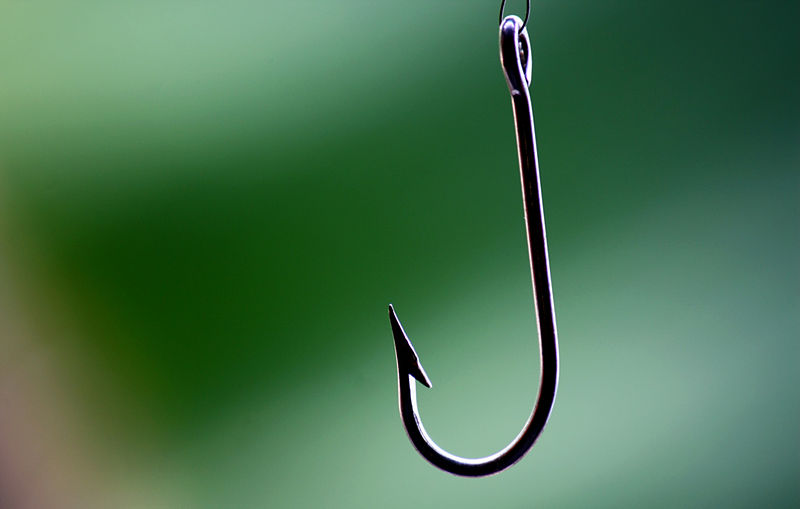
Yes, the dreaded hook word. I’ve heard about for years, but it seemed rather elusive. But recently, I’ve been studying my bookshelves to find some broad categories of hooks, and it’s getting clearer. Here are a few concepts I’ve found.

  • Give beloved fairytales, historical figures, novels or paintings center or side stage. The Beekeeper’s Apprentice (Sherlock Holmes), While Beauty Slept (Sleeping Beauty), The Girl with a Pear Earring (Vermeer’s painting), Dear Mr. Knightley (a love for all things Jane Austen) and The Constant Princess (Henry VIII’s first wife) are all examples. Readers want to spend time with favorite characters and art.
  • Tie the story together with a hobby. Ordinary hobbies such as knitting and cooking can certainly draw in readers who enjoy knitting or cooking themselves, but if you can find a twist, this will make it stand out from the crowd. For example, in The Language of Flowers, two characters with a love of gardening send each other messages not with notes, but with flowers, each delivery carrying a symbolic meaning only they understood. Unique hobbies can give your story a little flash as well – i.e., custom shoe design or wild life rescue.
  • Allow readers to vicariously do something they’ve always wanted to do. I bought Forgotten because it was about a character who, after being stranded in Africa for several months, returns to find that her job, her romance and her apartment are all gone. She’ll have to recreate her life. Spoiler alert: the book did not live up to its promise of the heroine of getting a life makeover, but that promise is what made me buy it. What other deep seated desires will connect you to readers?
  • Create zinger beginnings or zinger twists. When an old man in the prologue of The Lost Wife tells a wedding guest she looks familiar, and at last figures out that she was his wife just before the Nazis invaded Prague, that certainly sent readers to Amazon’s checkout cart (me included). In Half Brother, a boy arrives home to find his mother holding a baby chimpanzee, and that’s interesting enough to catch a reader’s attention. Burying a zinger in the middle of the book is a harder sell, since it’s not something readers will see when they browse. But if it’s good enough, it can certainly get people talking about your book.
  • Start with vulnerable characters at risk. The little boy locked in the cupboard in Sarah’s Key is a great example of this. But even more ordinary risks – a teen without adult love or support (Dandelion Summer) or a Puritan woman being coerced to marry a man she doesn’t trust (Love’s Pursuit) are good draws. Readers only need to hear the concept to feel they need to see the character to safety.
  • Create a character the world depends on. High stakes Tom Clancy type novels where the character must stop nuclear bombs from detonating or bring an end to a plague outbreak, or fantasy novels where the hero/heroine holds the key to the coming war (Lord of the Rings, Blue Sword) are examples.
  • Begin the story with profound emotion readers can connect with. Remember, readers don’t know the story or the characters yet, so it must be something they can easily connect with. In Coldwater Revival, the heroine is apparently stillborn at birth, but begins to breathe with the loving attention she receives from her father. In If You Find me, a girl sees her father for the first time a decade after she was kidnapped.

Think about what made you pick up your last book, or even better, what had you chatting up the book to every reader you knew? Once you’ve found the quality that made it so compelling, you’ve probably found the hook.
Finding the Fatal Flaw

It is the core of every struggle. The root cause of many reactions. It is a constant enemy lurking below the surface, waiting to rear its ugly head.

It’s the fatal flaw. Everyone has one. Every character has one, too.

I would argue that fatal flaws never completely go away. They just manifest in different ways as we grow and change and conquer certain circumstances. But what does this really look like?

Kariss Lynch Heart of a WarriorTake Superman. I would say his emotional fatal flaw, or one of them, is a deep desire to belong. It shapes his decisions and actions to blend in at the Daily Planet, settle down with Lois Lane, but still seek the true identity of his parents. We all know his physical flaw is kryptonite. Or Lois Lane, depending on how you look at it.

Choosing and shaping a fatal flaw proved an interesting challenge as I finished out my Heart of a Warrior series. I noticed there are multiple factors I need to account for as I select flaws for my characters.

Timeline

All three of my books take place over the course of fifteen months, which made it a challenge to have a fatal flaw that never disappears but consistently morphs. Kaylan, my main character, struggles with fear. Since our fatal flaws never really go away, I had to figure out how to cause this kryptonite to reemerge as she grew. In Shaken, she fears letting people close to her because of the loss of people she loved in the Haiti earthquake. In Shadowed, she has to learn to love a man she could lose at any second, Navy SEAL Nick Carmichael. In Surrendered, she will learn to accept Nick’s career and the constant danger, and not only accept it but thrive in his absences. The root of every one of her struggles is fear of losing a loved one, but as she accepts growth, the flaw manifests differently. Still always fear.

Complementing Characters

If you are writing romance, what fatal flaw will most threaten the relationship and will cause the characters to have to fight together to overcome? In Shadowed, Nick struggles with anger and detachment. This creates a challenge when Kaylan needs reassurance in her fear and Nick needs her to get over it and let him deploy in peace. Both characters grow as they learn what it looks like to merge two lives into one.

Plot and Theme

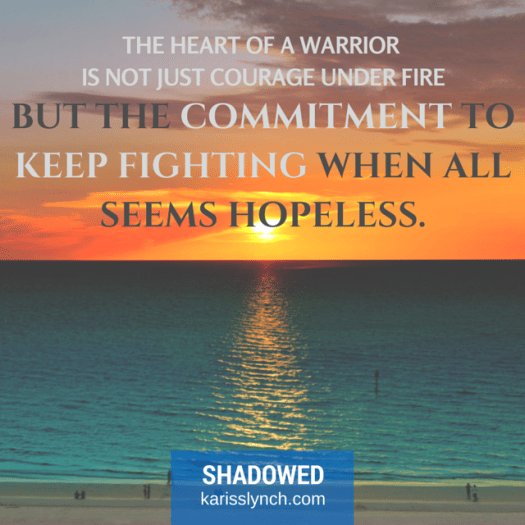
Shadowed_AUG 1 (1)Each book in this series, had to capture the overall theme: Anyone can develop the heart of a warrior if they are willing to have courage and commitment in the face of insurmountable obstacles. My fatal flaw for each character needed to threaten accomplishing this goal. Kaylan’s fear has the potential to stunt the relationship. Nick’s anger prohibits him from being a strong leader in his home and confident and in control in war. My villain’s flaw causes her to sabotage others in an effort to obtain what she secretly desires most but also never wants to have.

The fatal flaws is one of simplest yet most complex aspects of your character. Which flaws will create complicated conflict? How does that flaw force your character to respond? How will your character grow through the flaw?

One of my favorite ways to identify character growth and a consistent flaw is to follow a specific television series. Over time, you will notice a core struggle emerge. This helps me understand how to develop a character over the course of a book and over the course of a series. I’m still learning, but this is becoming one of my favorite parts of creating characters.

How do you identify your character’s fatal flaw?

The Making of a Masterpiece

In every block of marble I see a statue as plain as though it stood before me, shaped and perfect in attitude and action. I have only to hew away the rough walls that imprison the lovely apparition to reveal it to the other eyes as mine see it.” Michelangelo

I’ve spent the past month living as a hermit while I finished a manuscript. (Insert sigh of relief here.) I spent countless hours after my day job writing and fine-tuning every detail. Some days, I couldn’t wait to share the story with the world. Other days? All I saw were flaws, flaws that sent me running to fast food and the newest Netflix series while I processed what to do next.

That’s one of the many fun aspects of writing, though, isn’t it? I’m making the manuscript, but in the process, the Lord is making me. As my character wrestles through a growth point, I wrestle with it, too. Often what my character is learning is a lesson the Lord has spent months instilling in my own heart. From the overflow of my heart to the page…I think the story of The David illustrates this perfectly.

In the late 1400s, a group called the Operai provided blocks of marble for several prominent sculptors and artisans to create twelve statues of characters from the Old Testament. Work began on The David in 1464 but after initial carving, the piece was abandoned to the elements for twenty-five years. Then Michelangelo begged the Operai to allow him to complete The David. For three years, he carved the statue, shaving away the damaged parts and shaping features in great detail.

Kariss Lynch creating a writing masterpiece

If you hate history, I hope you stuck with me because none of that is the reason I love The David statue. Michelangelo took a wrecked, abandoned piece of marble and he turned it into a MASTERPIECE. Where everyone else saw a useless block, he saw potential and beauty, a story waiting to unfold.

I think the writing process is a lot like this. A story idea with little initial substance becomes a piece of art with a lot of effort. Over time, the author chips away the unnecessary and ugly pieces until a beautiful story is left.

I believe that’s what Jesus does with the author as he/she writes. Just as Michelangelo labored over The David and you labor over your manuscript, so the Lord labors over you, writer friend. He is in the process of creating a masterpiece that lasts for eternity, and he wants to do that with your writing, too.

Yours is a message of truth and hope. As you identify impurities and polish your writing to perfection, know the Lord wants to do that with you. He wants your voice for his glory. Sometimes the polishing and chipping are painful. With every bit you allow him to remove, you enable him to speak more clearly through you.

Keep chipping away at that novel while the Lord chips away at the excess around your heart. The beauty becomes more evident with every fallen piece.

Lessons I Learned From My Editor

From conception to finish, I spent a couple of years on my first novel, Shaken. I had a mentor who coached me, a professor who professionally edited the manuscript, and an internationally acclaimed novelist who provided a critique. But nothing affected my story quite as much as signing with my publisher and beginning work with my editor.

Writing is difficult. You are bleeding your emotional artery on the page, complete with life experiences, beliefs, and creativity. But editing? That became another playing field entirely. In my military-romance-driven brain, it could be described as surgery to remove shrapnel. Each piece of metal must be plucked for an individual to get back to full health. In a similar way, editing requires painful digging to remove everything that does not add value to the character. After the shrapnel of your story is removed, you are freed to enhance and improve your story until it’s as close to perfection as you can get it this side of heaven.

KarissLynch Kill Your Darlings

Working with an editor is refining, a true process of iron sharpening iron (just don’t throw the sword at them if you don’t like what they say), but ultimately, it is a beautiful journey. The longer I work with my editor, the more I am thankful that God gifted her to look at stories differently than I do. She makes me better, and she is constantly teaching me and reminding me of craft tips that just haven’t taken root yet. Over the course of writing The Heart of a Warrior series, here is what my editor has taught me:

  1. Timeline is everything.

By the time my first novel went to my editor, the timeline needed major surgery, something I hadn’t thought about in great detail during crafting. I am a pantser and only use a bullet point outline to guide the major points of my scenes. Everything else just spills out on the page. This can make editing much harder for me. When it came time to edit Shadowed, I had a better timeline in place. Lesson learned? Don’t make the same mistakes on the second novel as you did on the first.

  1. Ground your character. Ground your scene.

Ever heard of floating head syndrome? No? Well, that’s probably because I just made it up. But I have it. Bad. Especially when I am writing in a steady stream of consciousness. Characters speak but you don’t know what they look like or what is going on around them. Thankfully, I am now aware of this ailment and am working to correct it before the manuscript goes to my editor. Each character needs to be firmly grounded in whatever is going on, each person in the scene accounted for, even if only briefly. Your scene also needs to be grounded within the larger story. Your reader should have no question where the character is, what is going on, who the character is with, and what drama is unfolding.

  1. Provide concrete details. Paint the canvas.

I actually love this part of writing, but I also struggle with fear. What if people think that a place or person doesn’t look that way? What if I get a detail wrong? What if, what if, what if? The “what if” game keeps me paralyzed from simply using my imagination and the beautiful tools of my eyes and the Internet to ground a scene exactly as I see it. I use research to make sure I didn’t get a basic detail wrong, but otherwise, I craft exactly what I want the reader to see. They are less likely to question what I paint in great detail than they are a canvas where I leave glaring holes due to my own people-pleasing and insecurity. No fear. Write boldly. Paint that canvas, and give the readers a scene they don’t have to try to imagine. Let it unfold in all of its beautiful detail. And then make that process even better in the next book.

Time for surgery on your manuscript. What weaknesses do you notice that you could improve on next time? What lessons have you learned from your editor (or critique partner)?

Revising Aloud

Tihamér_Margitay_Exciting_story“Reading aloud,” I’m always telling my writing students, “is the best way to revise.”

I encourage them—sometimes require them—to find read-aloud partners or start writing groups in which they take turns reading their work aloud.

“Hearing your sentences spoken lets you know whether they’re clear and natural-sounding—whether someone actually could speak them,” I explain. “And it doesn’t work to read to an empty room. You need a warm body, a listener, to complete the communication. Speaking is, after all, a collaborative act.”

Finding that read-aloud partner is easy at college, where everyone’s engaged in writing all the time. Outside the college setting, though, finding someone willing to listen can be a challenge.800px-Anker_Sonntagnachmittag_1861 People are busy. Few have time to sit still for an hour while some verbose writer drones on. That’s how they’ll imagine it when you propose reading to them. We Americans have lost—or never had—the habit of listening to people read. We had only the shallowest tradition of serial novels, released chapter by chapter as Dickens’ novels were and read to the whole family at fireside. And no comfy pubs—without blaring TVs—like the one where C. S. Lewis, J. R. R. Tolkien, and their writer buddies hung out, drank beer, and read their work to one another. Writers who give public readings these days will tell you it’s hard to get even close friends to attend. Our lives are too busy for read-alouds.

I often recommend to writer friends that they make use of the lonely people in their lives: shut-in relatives, kid-imprisoned friends who wish they had a grownup to talk to, recently retired colleagues with time on their hands. 1280px-Anker-_Die_Andacht_des_Grossvaters_1893It sounds terrible, this “making use” of others, taking advantage of their neediness to assuage your own, but in my experience such mutual exchanges not only helped my writing but also transformed intended acts of mercy—“I should spend more time with my mother-in-law,” I was always telling myself—into pleasurable time together, which we both looked forward to. My mother-in-law not only got longed-for company but also felt needed; I got my warm body but also genuine enjoyment, without having to chide myselfHugo_Bürkner_Lesestunde (usually in vain) to, as Paul recommends, “give what you have decided in your heart to give, not reluctantly or under compulsion, for God loves a cheerful giver” (2 Corinthians 9.7 NRSV). The mutual benefit, I found, guaranteed that cheerfulness, for both of us—because attentive listening and being listened to can’t help but nurture relationships.

My daughter Lulu has been on semester break from college for the past month, with a couple more weeks to go. It’s tricky having a grown daughter home that long. We’ve long since put our Christmas CDs away, but I’m still in the throes of Bing Crosby’s parental prophecy for the season: “And Mom and Dad can hardly wait for school to start again!”

Luckily, Lulu’s engrossed in the final revision stages of her senior project—a hundred-Amédée_Guérard_Bibelstundepage translation of and critical introduction to an East German book—and I’m busy trying to cut 30,000 words from a novel before sending it out, so we have tasks to distract us from the inevitable mother-daughter combat. Also, since we’re in about the same place in our revisions—where what we need most is to hear them aloud and find out if they work—we’ve established a read-aloud schedule: I read her a couple short chapters during her late breakfast, and she reads me one long chapter while I trim vegetables for dinner.

I can’t say it’s the perfect exchange my mother-in-law and I had. Lulu doesn’t end my readings, as my mother-in-law always did, with “That’s the best thing you’ve ever written!” And, as a writer and teacher of writing, I give more critical feedback than Lulu really wants. But our reading fills two hours of our day with mostly pleasurable, mutually beneficial work. More importantly, the listening involved gives us both practice, at this complex juncture of our parental-filial journey, in navigating our new relationship as related but separate adults. As peers, in other words. Equals. Reciprocally heard, appreciated, and loved.

Tips for Managing Time as a Writer

You’ve heard the age-old story: Creative individual decides to write a book. They sit down with paper and pen or keyboard, and painstakingly write that heart story. Sometimes it takes months. Sometimes it takes years. When talking with their friends, you often hear them say, “Something came up. It isn’t quite right yet. I just haven’t had the time.”

It’s pretty clear that time is precious. In fact, outside of my loved ones, my time is my most treasured possession. Since signing my first contract in January 2013, I have learned an important writing tip, probably the most important tip.

There is NEVER time, unless you choose to make it.

In fact, I’ve noticed one common trait among the published: They make time to finish. Once you sign that dotted line and make a commitment, “I didn’t have time” doesn’t fly with the publisher. Neither does “it’s just not ready yet.” You better make time and make it ready fast or risk losing your credibility.

After signing that contract, time to market becomes important. And time to edit. And time to promote. And time to interact with readers. Lots of time. So it’s important to figure out how to manage it.

My friends hear me say that I’m overwhelmed more than anything else. But I’m learning how to carve out time, discipline myself to finish, and not miss out on the world around me. We aren’t only writers. We are marketers, publicists, graphic designers, speakers, and more. So I’ve learned a few tricks to maximize my time in every area of this writing journey.

Kariss Lynch - timeCreate margin.

I am a night owl and can write and create relevant marketing content easier when my checklist for the day is accomplished. It clears my mind to be creative. Determine your best time of day to write or create, and maximize those short windows.

Set a timer.

Write every day. Set the timer on your phone for an hour, then put your phone on silent and put it on the other side of the room. Clear your mind and write. I found when I did this, I could easily write close to two thousand words if not more in an hour! When the timer goes off, I feel accomplished, satisfied, and ready to write even more.

Carve out marketing time for social media.

I work full time as a writer for my company, so in the middle of the day I am tired of writing. I’ve started taking thirty minutes of my lunch break or fifteen minutes in the morning or afternoon to create social media graphics that I then pre-schedule so I don’t have to think about them. Think about content that is relevant to your brand, then have fun with those designs.

Strategize for online interaction.

The internet is a wonderful tool, but managing our online interaction can eat our time if not handled correctly. Block out thirty minutes every few days to catch up on emails. Take a few minutes to respond to every person who comments on social media (within reason of course). Know your brand, what you are passionate about, and have character and author interviews on hand for guest blog posts. Don’t overthink. Just do.

Know your audience and limits for speaking engagements.

My favorite interviews and speaking engagements are via Skype since it helps me conserve my time, but I’ve also enjoyed those in person speaking engagements with small groups or crowds. Determine your price (if you have one), the size of the group you are willing to speak for, if it is wise to travel or Skype in (this is great for book clubs and classes that may not be close). Bottom line, know your options and then plan accordingly. Don’t forget you still need to write and market and live life, so carefully plan the weekends you will be gone.

Managing time is as much mental as it is physical. At the end of the day, be satisfied with what you accomplished and leave the rest for tomorrow. What tips have you found effective in managing your time?

Making It Real

Hoh River Cascading Through RainforestWhen I first started writing my Birder Murder Mystery series, I wanted readers to feel like they were actually walking in the footsteps of my protagonist, so it was a logical choice for me to use real locations for book settings. What I didn’t realize at the time was how much readers enjoy books that take place in areas they know and how much those real places can shape what I write. Once I figured out that my real locations were one of the more powerful means of attracting readers, I began using real places as much as possible, not only for marketing later, but to provide me with inspiration for other pieces of my story.

As a result, I now take detailed notes of places I visit in the course of my book research. Fat Daddy's BBQ in WeslacoFor instance, last January, I was researching McAllen, Texas, for my next murder mystery. Since friends had recommended I try the barbeque at Fat Daddy’s, I made sure I had lunch there one day. As I ate, I observed that large groups of National Guardsmen sat at many of the tables, which I also noted in my daily travel journal, along with descriptions of the patriotic posters and flags adorning the walls. When I developed my plot, I found that the soldiers I’d seen could play into my story in a critical juncture, so I wrote them in – something I never would have come up with if I hadn’t personally visited Fat Daddy’s. Now, when anyone from the area reads the book, they’ll immediately be able to say, “this author really was here!” and it gives me the instant credibility which every fiction writer craves to lure readers into the story.

diner open signAnother big benefit of writing real places into your books is that some readers identify so much with a favorite place, they tend to talk about your book simply because of the setting. In one of my books, I used a small diner where one of my daughters waitressed years ago. Not only did it give the story a strong local connection, but once it was published, the diner owners prominently displayed the book, which delighted all their customers, who then told their friends that their favorite diner was in a book. By using the diner as a piece of my story, I also didn’t have to think twice about what that setting would look like, because all I had to do was describe what I saw.

Perhaps the best guideline I can provide about using real places in your fiction is the rule my publisher gave me: If you say nice things about a place, use the real name; if you want to be negative, make up a place. That should give you more readers and happier business owners (who will become your friends if they aren’t already!), and much less chance of getting sued.

Who knows? You might even get a sandwich named after you…

Leadership Insights for Writers

When you think of a leader, you may envision the executive of a large corporation swiveling in a luxurious leather chair behind a large mahogany desk, or a speaker delivering a keynote address behind a podium. Perhaps you think of a coach motivating a football team to persevere after a tough first half of the game or an inventor changing lives through technology. You probably won’t think of the writer quietly typing words in an unseen office early in the morning or late at night. But maybe you need to think again.

Creating art wallpaper

Writers can lead with ideas, and history provides examples. Science fiction writers have shown us the future long before engineers drew the designs and filed the patents. Nonfiction writers have changed how we do business, emphasizing the importance of trust and emotional intelligence. As a writer, even if you do not see yourself as a leader, you can benefit from applying leadership insights to your work. Consider using the following three concepts to improve your writing:

Know Your Mission

Successful leaders know why they are doing the job they do. They know their mission and communicate it effectively to their followers.

In the writing world, every book carries a theme. Whether you are writing a guide to preparing salads from locally-sourced ingredients or a historical novel describing life in rural America in the mid-nineteenth century, your book has the opportunity to fulfill a mission based on its theme. Even books written primarily to entertain teach life lessons through the way the plot unfolds.

As you work your way through the chapters of the book you are writing, keep the mission of your book foremost in mind. Ask yourself how the passage you are writing today furthers that mission. Arm yourself with a red pen so you can edit out material that detracts from the central theme of your book.

Create the Necessary Structures

Leaders who build companies from small start-ups to large, stable corporations understand the value of creating structures. They find the best ways to do something and embed those methods into the company culture. Perhaps they teach employees specific phrases to use when interacting with customers. Maybe they develop a certain philosophy that guides corporate policies, such as the importance of giving back to the local community. Without the necessary structures, the leader’s ideas will become diluted and diffuse as a company grows, with employees far from the leader on the organizational chart losing sight of the vision.

Writers who hope to influence others through their writing need certain structures as well. One way to maintain a consistent message throughout a book is to break the book into parts, with each part developing the theme in a certain way. Fiction writers might want to consider how plot development furthers or detracts from the main theme.

Writers need structures in place for marketing once the writing phase is finished. By strengthening relationships with key people who will understand and promote the message in your book, you are creating structures that will expand your influence as a writer. A column in a magazine related to your book, a web presence through a blog or social media, interactions with local bookstores, and a network of places to speak all serve as necessary structures for the writer who wants to make a difference by leading with ideas.

Paint an Image of the Future

One of the key tasks on the to-do list of all leaders is sharing their vision. People like to follow individuals who can paint an attractive image of the future. We buy products that we feel will improve our lives and make tomorrow a little easier than today. Even if you are writing a book set in the past, provide your readers with life lessons that will move them forward into a better future. Help them imagine how the world will be better if more people invested in the theme expounded in your book. Throughout my book, Questioning Your Doubts: A Harvard PhD Explores Challenges to Faith, I invite people to imagine a world where individuals take the time to build bridges to one another instead of dismissing the insights of those unlike themselves. I apply the theme to faith and reason, feeling and thinking, and theology and science. However, the overall theme works beyond the scope of the book. My hope is to persuade people to improve the way they relate to others, leading them to live more fulfilling lives. I want my words to make a practical difference for my readers, bettering their everyday lives.

In what ways do you hope to influence people through your writing?

Honing Our Lives

knife sharpeningAs iron sharpens iron, so one person sharpens another. Proverbs 27:17 (NIV)

While every writer knows that in today’s marketplace, interacting with others on a regular basis is a necessity for selling books, the real heart of writing – sitting down and putting words on a paper or screen – is a lonely job.

For me, however, “lonely” is not the word I would choose to describe my experience of writing. “Lonely” carries a negative connotation, the idea of being “cut off” from others, or “without” the company of others. In contrast, when I write, I feel a freedom to explore my own ideas and the joy-filled opportunity to connect with the Spirit within me. Writing is my “alone” time, not my “lonely” time. It is a personal retreat that renews me because I get to luxuriate in the word-smithing gifts that God has given me.

And yet I can’t deny the truth of Proverbs 27:17; without the other writers, marketing experts, and loving friends in my life, I wouldn’t be able to make the most of those same God-given word-smithing gifts. That’s not to say I’ve always felt this way – when I was new to my craft, praised by my writing teachers in high school and college, I had no use for the comments or criticisms of my peers. If my teachers liked my work, why should I listen to other students who struggled to compose even simple essays? It took me decades to understand the importance of my readers as opposed to the praises of my teachers. Here’s the difference:

The praise of others encourages you (and that’s a great thing!), but it’s honest criticism that will help you improve your craft.

It wasn’t until I began writing as a freelance magazine contributor that I first received truly effective editorial direction. Editors know their audience and work to appeal to them, so they have to play to the crowd. Teachers, on the other hand (I can say this because I’ve been a writing teacher myself), are the final audience of one person, and once a student has mastered what that teacher wants, there is no room to grow. And since all of us like to be praised, it’s tough to walk away from all that positive reinforcement to seek criticism!

As with so many endeavors in life, though, we have to push the boundaries to become the best God intends us to be. In the writing life, that means giving up the comfort of praise in order to find the challenge of improvement: we have to ask many people how we can do better, listen carefully to their comments, and use them to grow our craft.

One of my favorite sayings about Christianity is that “no one is a Christian alone.” Jesus Christ came to shape us into a community of believers, so we might draw on each other’s faith and gifts to grow His kingdom. That applies to our writing careers as well.

We need to be iron for each other.

To whom do you turn to be iron for you? For whom are you iron?

Encouraging Aspiring Writers

Photo/CCWCAs a freelance writer and writing instructor, I’m often asked to edit the work of my peers and of aspiring writers. And I love to encourage others to tell the stories that matter most.

Grammar cops. I also appreciate the editing skills of my writing peers, as they wield their red pens and hack on my “shoddy” first drafts. But at times, I observe grammar cops attack insecure, fragile writers, who approach them for encouragement as they tiptoe into the waters of writing for publication.

Now, I’ve been known to whip out my red pen from time to time, when someone asks me to do that kind of editing. But I try to use a little discernment and discretion when a novice writer approaches me with their work.

Aspiring writers. Sensitive, aspiring writers need our empathy, since they trust us with some of their most intimate tales. These newer writers pour out their hearts and souls into their first pieces; we need to handle them with care.

I’ve seen writers spanning from late teens to senior citizens. And I’ve noticed many of them choose topics dealing with difficult life struggles—the death of loved ones, flashbacks of war experiences, or simply leaving home and beginning their own journey as adults. I’m able to empathize with their pain, confusion, doubts, and fears. I recognize their need to tell their stories, trying to make sense out of the rumblings of their minds and troubled hearts.

Levels of edit. I believe it’s vital to discern the needs of a writer, not always assuming they need a grammar cop to attack their work with a red pen. My unsolicited grammar cop comments tend to cause more harm than good. I find it helpful to ask writers to clarify their needs and their expectations of me as an editor. What level of editing do they want?

I also think it’s important to examine one aspect of editing at a time, since I don’t do well at multi-tasking. And although many professional editors may have different terms to describe their levels of editing, my editing checklist for my own work includes three—the panoramic, macroscopic, and microscopic viewpoints. But sometimes, I consider one more level editing, especially with writers who need encouragement—like students, wannabe writers, or hobby writers (i.e. not professional writers).

Peer responses. Some professional writers may not even consider the peer response a valid level of editing, but it can serve as an important phase of the writing process. For instance, this approach might be helpful for some critique groups.

In the classroom, I required my students to participate in peer groups where they would listen and respond to each other’s work. I preferred small groups, where students seemed to be a little less intimidated. I wanted to encourage their writing, not scare them off.

I provided every student several copies of a peer response form. Then, as each writer read their essay out loud, their peers would listen, read along, and record their responses. After each reading, the group would discuss the responses.

One of my favorite writing professors, Dr. Sally Crisp, encouraged me as she taught aspiring writing teachers the value of emphasizing meaning.

I believe that we write to communicate and connect with others, often others we don’t know and may never know. In responding to writers, I like to let them know how their message got through to me. In other words, whether I ‘got it’ or I didn’t. I teach the same principle when I teach collaboration. The right kind of collaboration can be an excellent means of fostering in writers a keen sense of audience.

Dr. Crisp also composed a list of peer response questions and comments that you might find helpful, too.

Peer Responses

  1. How has the writer introduced the essay?
  2. What is the main theme of the essay?
  3. Is there any information that you are wondering about? What might be added to develop the main point more fully?
  4. How did the author conclude the essay?
  5. What part of the essay do you find the most effective? Why?
  6. Suggest two or three things that would make the paper even better.

Who has encouraged you as a writer?