Four Promises for Facing Self-Induced Pressure or Deadlines

Photo/KarenJordan“And you will know the truth, and the truth will set you free” (John 8:32 NLT).

Sometimes I feel like I can’t breathe because of self-induced pressure or someone else’s expectations of me. And at times, I get tired even thinking about trying to follow through on all of the commitments that I’ve made as a freelance writer.

But I know that “God didn’t go to all the trouble of sending his Son merely to point an accusing finger, telling the world how bad it was. He came to help, to put the world right again” (John 3:17 MSG).

So, when I finally sit down and bring my feelings to the Lord, I remember His promises of freedom, strength, provision, and peace.

Freedom from judgment. Romans 8:1-2 reveals the promise that there is no condemnation to those who are in Christ Jesus.

With the arrival of Jesus, the Messiah, that fateful dilemma is resolved. Those who enter into Christ’s being-here-for-us no longer have to live under a continuous, low-lying black cloud. A new power is in operation. The Spirit of life in Christ, like a strong wind, has magnificently cleared the air, freeing you from a fated lifetime of brutal tyranny at the hands of sin and death (MSG).

Strength for our weakness. God also promises to give me His strength in my weaknesses. In 2 Cor. 12:9-10, I read,

My grace is enough; it’s all you need. My strength comes into its own in your weakness. Once I heard that, I was glad to let it happen. I quit focusing on the handicap and began appreciating the gift. It was a case of Christ’s strength moving in on my weakness. Now I take limitations in stride, and with good cheer, these limitations that cut me down to size—abuse, accidents, opposition, bad breaks. I just let Christ take over! And so the weaker I get, the stronger I become (MSG).

Provision for our needs. And did you know that God also promises to provide all that you need in Christ Jesus? “And this same God who takes care of me will supply all your needs from his glorious riches, which have been given to us in Christ Jesus” (Phil. 4:19 NLT).

Peace through prayer. So, if you’re struggling with self-induced pressure or fighting a battle with judgment or condemnation, I encourage you to stop what you’re doing for just a moment and voice your fears and needs to God. He promises to provide His peace through prayer.

Don’t fret or worry. Instead of worrying, pray. Let petitions and praises shape your worries into prayers, letting God know your concerns. Before you know it, a sense of God’s wholeness, everything coming together for good, will come and settle you down. It’s wonderful what happens when Christ displaces worry at the center of your life. (Phil 4:6-7 MSG)

How do you deal with your self-induced pressure as a writer?

Praying Psalm 23 for Writers

Sheep
Sheep (Photo credit: Wikipedia)

The Lord is my Shepherd:  Sheep are stubborn, fearful, and crowd followers, like people. We need a shepherd to lead us. We must surrender our life and work to God.

Lord, you are my Shepherd. I place myself and my words under your authority.

I shall not want: God is all sufficient. When we trust God to provide for us, we can let go of the wants of ego. He redefines success.

Lord help me to want what you want for me and for my work.

He makes me lie down in green pastures: Writing is endless and the refreshment of rest and renewal is essential.

Help me find the balance of work and rest.

He leads me beside still waters: We know the difference between our own exertion and divine filling when the words flow like gentle waters.

Lead me to inspiration and fill me to overflowing with your words.

He restores my soul: We are strongest in the areas where we have been healed.

Restore my spirit, Lord. Heal me that I may heal others.

He leads me in paths of righteousness for his name’s sake: He provides that daily connection that guides us in the truth, as we write–for His glory, not ours.

Help me always to know the truth and to remember that I do my work for your glory, not mine.

Even though I walk through the valley of the shadow of death, I will fear no evil, for you are with me. Your rod and your staff, they comfort me: We give deeply of ourselves and our experiences, making us vulnerable and easily hurt. We fear exposure and criticism and we receive it, but we don’t need to fear it.

Protect my heart, Lord.  Help me to be bold in my work and not to fear criticism.

You prepare a table before me in the presence of my enemies; you anoint my head with oil: God gives us provision in the midst of our problems and he continues to protect us.

Thank you for your provision. Anoint my head to protect me from the small things – the annoyances and thoughts that distract me.

My cup overflows: Every good gift comes from God–the good days, the letters and notes of encouragement from readers, the joy of seeing a life change because of the words He has provided.

Thank you, Lord, for this work and the abundance in life with you.

Surely goodness and mercy shall follow me all the days of my life. And I shall dwell in the house of the Lord forever: It is not for this world that we write. It is for eternity.

Lord, accept the offering of my words. Use them as you will.  Lead me, provide for me, protect me. I will follow.   

Amen

Betsy Duffey and Laurie Myers: The Writing Sisters

http://www.WritingSisters.com

The Memoir and the Robin

978512_28037870

I sit in the living room, my laptop in front of me, open, alive, waiting for my fingers to type.

But I don’t. I can’t seem to think of one true word, let alone one true sentence. Papa Hemingway would not be impressed.

Thud… Thud…

My eyes follow the thud to the window that looks out to our chipped blue porch and the Japanese maple in the front yard. Within a month, leaves will bud. Eventually a glorious rust-colored blanket from the tree will shelter the porch.

Thud.

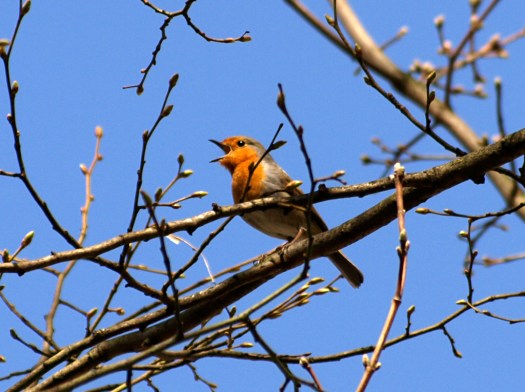
A robin flies into the window. She backs up, bewildered, and returns to her perch on a bare branch of the Japanese maple.

“Oh, you poor bird. I understand. I’ve hit my head against my reflection more than once in my life.”

The robin seems to catch her breath, and she’s off again, flying towards the window, searching for someone in the smudge filled glass. Herself? A lover? What does she want, and why doesn’t she learn her lesson? There’s nothing there for her but a hard, cold surface that will cause her pain.

And still, she flies into the window. Again and again and again.

Thud… Thud … Thud …

I watch her as I sit on our comfy, worn leather couch with a hole in the right seat cushion, the buzz of the laptop the only noise–that, and the recurring thud of the bird.

On writing memoir

As a memoirist, this happens, this hitting my head against a hard surface, when I get too introspective with my work. I am the writer, and the narrator, and the main character, and sometimes my roles mingle to the point of self-obsession and confusion. My desire to be perceived well, and to reach my personal predestined truth in the story turns me into a robin, fixated on my reflection, attempting time and again to break into something bigger than me, but really only hitting my head against a hard surface.

Annie Dillard says that you have to take pains in a memoir not to hang on the reader’s arms, like a drunk, and say, “And then I did this and it was so interesting.”

Thud.

The robin has banged her head against our window for three days. I’ve tried to deter her by closing the curtains and opening the window a bit, but to no avail. She returns every few moments, unaware that if she just shifts her focus there is a whole world to fly into and discover.

If a memoirist’s goal is for people to esteem her, to like her, to want to be like her, it will show in the work. The writing will fall flat, come across as inauthentic, and showy.

No, the memoirist should write for discovery. According to Andre Gide, a French author and winner of the Nobel Prize in literature in 1947, one doesn’t discover new lands without consenting to lose sight of the shore for a very long time.

A good memoirist is open to her story’s agenda. She participates with the reader, and diminishes the importance of her role for the sake of the universal truth found in her words.

“On the outskirts of every agony sits some observant fellow who points,” says Virginia Woolf. I would add that every good memoir has a point outside the visceral domain of the writer starting out. Our job is to bring ourselves and our readers to that point. Instead of a writer playing tour guide, the memoirist should rather find herself on the journey in the words. Then she will be able to fly right and free for discovery, and most assuredly get herself and her readers somewhere she would not have found on her own.

Writing In Every Season

485045_10101344113008718_1557147312_n

I don’t know about you, but as a writer, I struggle with managing my time.

I work full time. Serve in my young adults ministry. Belong to a community group. Spend time with my family. Juggle a writing contract. Spend free time with friends. Find time to work out. Sleep somewhere in there.

For those of you who have children, I’m sure this list is much longer. Somewhere in the middle of juggling that mess, I hit seasons of extreme burn out and discouragement. Everything seems to pile on at once, and ultimately my writing suffers.

I once heard that it is vital for a writer to be mentally, spiritually, physically, and emotionally healthy. To be honest, I don’t know how that is humanly possible. I am rarely completely healthy in a couple of these areas at a time, and healthy definitely hasn’t described me the past few months.

In January, I received a three-book contract. I couldn’t express my excitement! But, it went down hill from there. Work demanded all my time, I wrecked my car, edits came in right as I hit the most demanding couple of weeks on the job, and conflict rose in several friendships. With all the stress, I lost my appetite and my ability to sleep. Talk about unhealthy in every area.

I wondered how I could possibly finish the edits. I couldn’t concentrate. Creativity escaped me. But I stubbornly kept plugging away. Signature

Then something clicked. My broken emotions began to pour into my character’s painful moments to a greater degree than they ever had before. Not only did I understand what the editor was requesting, but I finally felt like I could pull it off and be proud of the result!

The Lord used my weak moments to breed creativity. 2 Corinthians 12 says, “But he said to me, ‘My grace is sufficient for you, for my power is made perfect in weakness.’ Therefore I will boast all the more gladly about my weaknesses, so that Christ’s power may rest on me.”

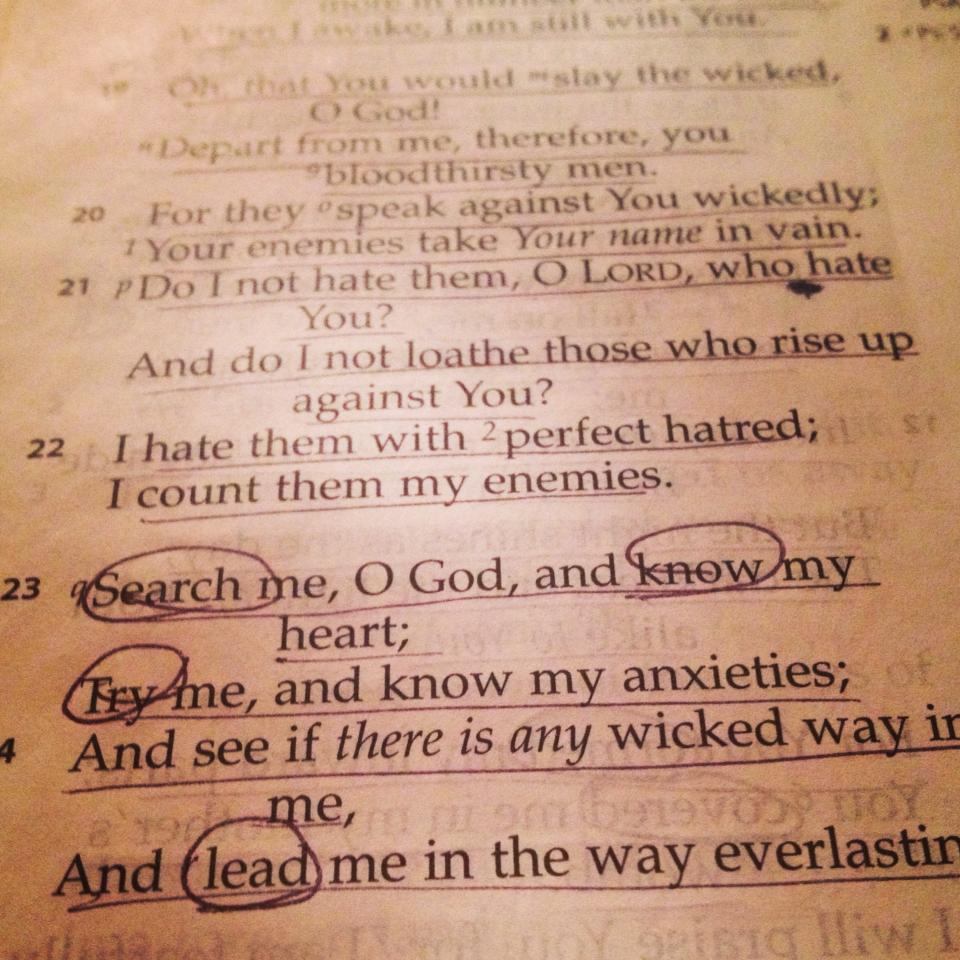
Thankfully, the call and standard of a writer is not to be healthy but faithful. In times of emotional struggle, the Lord uses that brokenness to translate a truth someone can relate to in my writing. I love what the psalmist said in Psalm 139, “Search me, God, and know my heart; test me and know my anxious thoughts. See if there is any offensive way in me, and lead me in the way everlasting.” If God knows our hearts inside and out, surely He can make beautiful writing flow from the inward parts of who we are, for His glory and the good of others.

Just as we labor to create a masterpiece, Jesus is in the process of molding us into His image. Sometimes He uses desert seasons to chip away excess. Sometimes He uses the mountain tops to create epic scenes. But He uses every piece of our story for His glory. We are never disqualified as writers when we can’t get it all together. Trust, obey, and write. Those messy seasons may just be used to encourage a reader, creating a mountain top moment in their life.

The one who calls you is faithful, and He will do it.” 1 Thessalonians 5:24

What areas do you need to focus on in your own life to be healthy? How has the Lord used rough seasons in your writing?

The Best Advice I Could Have Given Myself

SignatureCountry artist Brad Paisley released a song in 2007 titled “Letter to Me,” in which he gives his teenaged self advice for the future. It makes me think about what I would have advised myself thirty years ago when I began my freelance writing career. So, with a tip of my own cowboy hat to Brad, here’s my letter to my younger self!

Dear Jan,

I am you thirty years from now, and I want to give you some advice about writing.

  1. Get a day job. You are never going to be on Oprah talking about your bestseller. (Oprah is a person with a very influential talk show in the future. She has a book club, and Tom Cruise jumps on her sofa. Enough said.) Accept the fact that your writing habit will never financially support you. Fortunately, your husband will, so be sure to say “Yes” when a guy named Tom proposes to you. You’re going to think he’s just trying to cheer you up because your car’s water pump broke down, but he’s serious. DO NOT LAUGH IN HIS FACE, because he will never let you forget it. (Although it will make a great blog post. A blog is …never mind. You’ll find out later.)
  2. No matter what you think, your first and second book manuscripts are trash. Really, they are. It would be nice to just skip writing them altogether to save time and effort, but if you don’t write them, you won’t write your third book, which will find a publisher. Just thought I’d let you know.
  3. You’re going to meet a woman named Belinda. Don’t ever tell her you’ve written a book, because even though she’s going to be one of your best friends, she’s going to drive you crazy with her constant stream of ideas for books SHE wants to write. If she ever brings up that she’s thinking about writing a book, immediately change the subject. (You can thank me later.)
  4. Write a YA romance series about a vampire and a high school girl. Believe it or not, it will sell and launch a publishing trend. I’m serious.
  5. Speaking of serious – stop taking yourself so seriously. There are many, many writers out there. The bad news is that you have to compete with them for contracts. The good news is that the writers you meet will absolutely enrich your life, if not your pocketbook. (Reread #1 above.)
  6. Don’t give up writing. You will get published. You will also get rejections, but that’s part of the package, so get over it and get it out of the way. It will give you more time to write and more confidence in your writing. Writing is your gift, so enjoy it, develop it, invest time and effort in it, and it will reward you in ways you can’t even begin to imagine.
  7. Finally, if you ever have a chance to buy stock in a company named Apple, you might want to do that.

Love you!

Jan

What advice would you give your younger self?

Around The Block With Writer’s Block

do-not-write-in-this-spaceSome people say that writer’s block is what gets the housework done, but if that were true, my house would sparkle and shine.

My vitamins would be alphabetized from A to Zinc, my nightstand drawer would contain no crumpled tissues of questionable provenance, and the frisky lint bunnies behind the dryer would now be reproducing in the rubbish bin.

For me, writer’s block doesn’t get the housework done, but it is what keeps the Internet humming along. And I don’t only turn to the Internet as a writer’s avoidance behavior, either. Hanging out online may prolong the blocked condition somewhat, but if I give the Web even half a chance, it eventually provides the cure I so desperately crave.

First, of course, there’s Facebook. Like other writers, I’m lonely. Ye Olde Writer’s Cave is dank and dreary and its stalagmites stab at my soul. But scrolling through my news feed–replete with photos of gregarious dogs who say funny stuff, sullen cats pictured splayed across Other Writers’ Keyboards, and videos of friends’ new grandbabies–brings me to my senses fast. There are worse things than loneliness.

Like wordlessness. And booklessness. And publisherlessness. Oh, my.

If Facebook somehow fails to snap me out of writer’s block, I click over to Pinterest. Within seconds, I’m immersed in a fantasy world of exotic locations, bohemian wardrobes, hunky men (some of my Pinterest friends are edgy with their pinning!), gorgeous homes, and just desserts.

It’s the desserts that get to me, if anything on Pinterest can. I’ve read that even viewing a luscious treat can cause–in some susceptible individuals–an insulin response with corresponding weight gain.

Let’s just say I’m highly susceptible.

When I literally feel my bottom-in-chair growing larger while innocently viewing the ingredients list for yet another bacon-intensive appetizer, I know I’m a site closer to loosening the block’s grip on me. One more stop on the Internet and I’ll be home free and back to cranking out another chapter.

I know exactly where to go, too.

If I truly can’t find two words to put together, my fingers click over to Craigslist, the piece de resistance in breaking the back of writer’s block.

Now, not just any category on Craigslist will do. I skip the ads for RVs and energy-deficient major appliances and ancient treadle sewing machines. I have no use for the personal ads, and discussion forums about dying and haiku aren’t really my thing.

Instead, I wallow in the hundreds of jobs on offer, immerse myself in the positions I could be applying for that might surreptitiously scratch my writer’s itch, that might anesthetize the pain I experience when I’m not doing my real job. The job I’m meant to do. Putting down glorious words, one after the other, preferably in the best possible order.

Can I hope to find employment as satisfying as writing is on a bad day, a job that could truly replace my need to write?

I pass over the ad for an exotic dancer for bachelor parties, but not without thinking of that Facebook poster that shows two gals dancing—one young and agile and the other old and clumsy. The captions read, “How You Think You Look” and “How You REALLY Look.”

Then I skim this heading: “Bilingual Interpreters Wanted! Spanish and Many Other Languages!” But somehow “many other languages” seems like Triglingual Interpreters Wanted. Or perhaps Quadlingual or Quintlingual, not that it matters. I only speak English with a smattering of adorable French phrases thrown in, mostly on the topic of finding the salle de bain closest to my train’s platform.

Being reminded of my obsession with locating the bathroom (in as many languages as necessary) draws me to another ad, this time seeking a participant in a medical study about urinary incontinence. It offerers $1200 compensation for time and travel expenses, plus a generous Depends allowance. I shake my head in dismay.

“You’re all wet,” I say to myself, a victim of my own dry wit. “These jobs aren’t for you. Maybe you should start with finishing this blog post, and then see what happens next?”

Before I shut down Craigslist, my eyes fall on one last ad.

“Surrogate Mothers Needed! Earn $28,000 and Up!!!!!” I feel a visceral (if latent) nurturing instinct flow through me while reading the job description. The money is certainly tempting, but then it hits me. They’re probably looking for someone with a uterus. There’s always a catch.

So that settles it. I’m a writer, and getting caught in a bad job won’t fix that. Only writing will. Once again, the Internet’s cured me of a vicious case of writer’s block.

This time, I hope, for good.

Do you suffer bouts of writer’s block? Any cures you’d like to share?

Are You a Good Literary Citizen?

ID-10032339

Are you a good literary citizen?

I’ll never forget it. I was probably eight or nine years old, and my family had gotten up early to get a spot in the front for the Blossom Time Parade in a neighboring town.

This was a big deal. Every year, thousands of people from Southwest Michigan gathered, anticipating a show of marching bands, fire trucks, homecoming queens, and buckets of candy thrown out to kids scurrying in retrieval around the pavement like ants.

The year I recall was an extra-big, super duper deal, because “Samantha”–the youngest child from the quasi popular 1980 sitcom Gimme a Break!–was scheduled to appear.

Now, I wasn’t a big fan of Gimme a Break!, nor did I think Samantha was the best child-actor of my youth, but she was going to be there, in my small town parade, and I loved to act in school, and every time I thought about meeting a real life star, a firecracker lit and crackled in my gut. I pushed my way to the front of the crowd at the parade, armed with a glittery pink pen and my diary.

Samantha waved and smiled as she sat on top of a cherry red Corvette. And then it happened. The car paused in line, waiting for the parade to continue, and a swarm of preteen girls crowded around Samantha, holding out pictures and paper for her to sign. My legs took off, and before I knew it, I was there too, in the swarm, buzzing, waiting for my turn to ask for an autograph.

Once most of the girls got their autographs, the car started to move. Panicked, I held out my diary to Samantha as her handler winked at me and said, “Surely we have time for one more.”

My heartbeat skipped.

“No! We don’t have time for any more,” Samantha hissed, pushing my diary towards my chest. Her eyes met mine coldly. “I’m done.”

The driver switched from the brake to the gas. I watched Samantha creep forward in the parade, once again smiling and waving to her adoring fans.

Who knows what was going on with Samantha. Everyone has bad days. But I have to admit, I was one disappointed, disenchanted little girl.

I decided that if I were ever fortunate enough to do well at something I loved, I’d be sure to be kind.

Fast forward more years than I care to admit, and I’m pleased to announce that time and again, as a new author, I’ve encountered kindness and generosity in the literary world.

What is a good literary citizen?

This is my definition: a person who supports creativity, who esteems work, and helps others grow in their craft. It’s a person who buys books (and lots of them!) and networks on behalf of authors and writers she or he admires.

I think about Samantha when authors share their knowledge of writing and publishing with me. I think about Samantha when I witness someone farther down the publishing road give a nod and a hello to another starting out.

I hold out my diary and these kind souls take my glittery pen and jot me a note. “Congratulations! Keep going! Try this agent. Sure, I’ll review your work.” Or even this: “I can’t help you now, but all the best to you!”

I don’t take it for granted. People in the publishing world are busy. There is no reason why some should respond to my letters or emails with such goodwill, but they do. And I learn that sure, there are Samanthas in the world. But that’s okay. There are also authors and writers who do their best to help strong work rise to the surface for all to enjoy.

There are people who value being good literary citizens.

Not every author or writer can help. Not everyone will care to help. But of course, everyone can pass on a measure of goodwill as another pursues her dreams.

And we can do it with kindness for the sake of our literary world.

*In an effort to pay it forward in the literary world, I am doing a daily author interview and book giveaway (from writers who happen to be mothers and write about it) the week of May 6th, leading up to Mother’s Day. Drop by to hear from great authors such as Shauna Niequist, Jennifer Grant, Kate Hopper, Claire Bidwell Smith and one more (waiting on a confirmation :)). Find out more at www.gillianmarchenko.com.

They Also Serve Who Drink and Weep

Coming home .. .. The writing life takes me away from home often. I write this the day after returning from 2 weeks of travel, home to Kodiak Island, to my husband and sons and daughter and Yorkshire terrier who badly needs a groom. I walk through my door and want everyone to kiss me as if I have just been born, as indeed I have.

photo

I am home, but I cannot stop thinking about her, the woman I met on the plane. It was the fourth and last plane of the trip. I was almost there. I edged down the aisle and saw her—crying. Sobbing on her phone. My eyes went dark, my heart tightened. As I stepped past her, I heard her say, “They just told me. I have pancreatic cancer. He gave me 3 – 6 months to live. I don’t want to die!” and she dissolved again into weeping, running her hands through her hair.

She was beautiful, dark-skinned, dressed in expensive jeans, a leather jacket. Her phone was pink. She gripped it so hard, hanging on to whoever was at the other end. My seat was one row back and one row over. I could see her profile, hear every word. I looked around desperately. A woman was dying! And we were calmly sitting in our seats, buckling our seat belts against death—and would soon follow all the safety requirements, while she was no longer safe. What do I do?

a woman with hands covering face

Men sat in front of her, and in back, each one with the bland face we wear when we pretend we don’t hear because we too are afraid. I wanted to do this too, but there was an empty seat beside her. She would be alone this entire flight with no one .. .. And how could I forget what I had prayed that morning? In the hotel room, on my face, wanting this day, this one day, to have a pure heart, to serve someone . . . “May your kingdom come, Your will be done .. May I hear you and serve you this day . . ..” and off I went into another day of terminals and planes—and there she is near me, still crying, the seat beside her empty.  I have work to do—a chapter is due, edits for an article are due, but the seat beside her is empty.

airplane seat

Shaking, I unbuckle my seatbelt, lift my bag and stand beside her. “Is it okay if I sit beside you?” I smile. She looks up at me, surprised, with her ruined face and nods, trusting, like a child, her eyes again filling with tears. I sit, she watches me settle. “What has happened?” I ask her and it pours out, but there are hands now to catch what falls, our shoulders touch, I stroke her arm, and we mourn and grieve and sit together in the shock of it. She is young. She knows Jesus, but she doesn’t want to die she cries again and again through a twisted mouth. I silently scream to Jesus to give me the words. I need them when I am writing, but I need them even  more now … .and they come. At one point she grasps my hands and says, “God sent you to me.” Mostly I am there to cry with her, to drink chardonnay with her. I know the chardonnay will wreck me, but had she offered me whiskey, I would have drunk that too.

It wasn’t much. I write all this not for anyone to say, “Oh, what a great servant you are!” Because I am not. How many people have I not seen and walked past? How many have I seen and still walked past? But this is instead about this wondrous, terrifying God we serve, who has asked one of his daughters to die a hard, early death, and who asked another selfish frightened daughter to sit with her in her fear and aloneness for a short time. It was so little. And she staggered off the plane to walk into the end of her life—and I staggered into a car taking me to stages and microphones.

Here is what I remember : “They also serve who only stand and wait.” John Milton wrote in his sonnet “On His Blindness.” I was going to speak on podiums, in many places, before many people for two weeks, but none of that mattered then. Of all I did on that trip, perhaps this mattered most: “They also serve who only sit and weep.”

2013-04-01 07.20.39

Can tears really be enough? For that day, for that hour, yes. God will provide another servant, and another for every empty seat beside her.

Do we dare ask this each morning? “May I hear you and serve you this day.” Yes, dare. Then watch for the empty seat. Bring tissues. Drink wine if you must. Become a child. Give whatever you’ve been given. Sometimes it will be words. More, it will be your presence and your tears.

And the kingdom of God will come near.

“Would You Like to Meet the Author?”

"Soapdish" photo from www.lazydork.com
“Soapdish” photo from http://www.lazydork.com

There’s a funny scene in the movie “Soapdish” that depicts a depressed soap opera actress, played by Sally Field, getting her recognition fix. She goes in dark sunglasses to a shopping mall with her best friend, who suddenly shouts “Is that who I think it is?”

Everyone around them stops, the actress removes her glasses, and she is immediately thronged by fans, all wanting an autograph. She smiles, graciously greets her admirers, coos at babies, and regains her self-confidence.

This has never happened to me. Not the depression part–every writer gets the blues in the face of the enormity of the writing endeavor. But I’ve never had crowds of people clamor for my autograph–not in a bookstore, and certainly not in the middle of a shopping mall.

I did have a moment recently, however, that brought this scene to mind in a good way.

My husband and I were playing hooky, taking a weekday afternoon to stroll through the Minnesota Landscape Arboretum, which happens to be about five minutes away from our home. The Arb has carried my books for several years now in its gift shop, and I’ve made a few book signing appearances there, but I’m by no means an author who is recognized by the general public. After touring the gardens, my husband and I headed into the gift shop for our usual browsing, and while I inspected some lovely sweaters and ceramic dishes, he went into the book section to see my books on display.

A moment later, I heard his voice from across the aisle.

“Would you like to meet the author?” he asked a woman who was standing in front of the display, one of my books in her hand. “She’s my wife.”

Say no, I willed her. Sporting my heavy parka, my hair doing its dry electricity bush thing, the last thing I’d expected was to be called upon to meet a reader.

“I’d love to,” she replied, turning in the direction he was pointing out to her, which was straight at me.

I slapped on my ‘meet-my-reader’ face and smiled as my husband ushered her over. We shook hands and I introduced myself, then asked her if she’d read any of my books.

“No, but I’ve heard about them,” she told me. “So I thought I’d give one a try.”

We chatted a bit more, I offered to sign the book in her hand, and after a few more minutes, she left to pay for her book at the register.

“Do you feel like the actress in the shopping mall?” my husband asked, referring to the movie we’d both enjoyed many times over.

“Yes and no,” I replied. “Yes, in that I was recognized, thanks to you,” I added, punching him lightly in the arm, “and no, in that I wasn’t feeling the need for attention to refuel my artistic career. But it was fun to give a new reader a nice surprise she didn’t expect.”

Actually, I hope I do that every time readers pick up one of my books: I want them to get a nice surprise.

Without the dry electricity hair bush thing, though, thank you very much.

Voice Recognition

Photo/KarenJordan “… My sheep recognize my voice. I know them, and they follow me.” (John 10:26 MSG).

As I listen to the birds singing their songs every morning, I wish I could distinguish one bird from another. I identify the honking geese as they fly over the lake, and I hear the woodpecker as he raps for his meal. I can see the difference between a robin and a sparrow, but I can’t tell them apart by their voices.

My husband Dan can recognize the voices of several birds. He knows the robin’s sweet song, and he is familiar with the squawking blue jay. He can even point out the mimicking mockingbird. So, I’m trying to learn a few voice recognition tips from him.

I’ve also discovered a few tips for recognizing God’s Voice, since I struggle with the same issue in my spiritual life at times. Is this the voice of conviction or condemnation? Will I let faith lead me, or will I be confused and distracted by fear? Does this voice speak life or death to my heart? Does it give me direction or cause me to dwell on the impossible mistakes of the past?

1. Communicate with God. “Don’t fret or worry. Instead of worrying, pray. Let petitions and praises shape your worries into prayers, letting God know your concerns” (Phil. 4:6).

First, I must remember to communicate with God. Sometimes I get so focused on the worrisome distractions around me that I forget the power of prayer and praise.

I’ve also learned that I can’t focus on many tasks at the same time. And if I try to multi-task, I don’t do anything well. So, I must find some way to silence all the voices around me, so I can hear God.

2. Examine God’s Word. Jesus says, “I am the Good Shepherd. I know my own sheep and my own sheep know me” (John 10:14).

What if you don’t think you can recognize God’s voice?

God’s Word promises, “(His) sheep recognize (His) voice. (He knows) them, and they follow (Him). (He gives) them real and eternal life … No one can steal them from out of (His) hand” (27-29).

Sometimes all I can do is hang on to God’s promises—even when everything around me doesn’t seem to agree with His Word. Often my circumstances cause me to panic, because I can’t see how something can work out. My logic and my emotions resist the truth that I see in God’s Word.

3. Allow God to Examine Your Heart. I don’t want to pray about that! What if you really don’t want to pray about something? That can be a big red flag that we might have a little attitude going on.

I can remember when my kids would avoid talking about something with me—like a report card or a visit to a friend’s house. I would eventually force the issue if they continued to be silent, because I knew my kids well. If they were quiet, something was up.

Investigate my life, O God, find out everything about me; Cross-examine and test me, get a clear picture of what I’m about; See for yourself whether I’ve done anything wrong-then guide me on the road to eternal life. (Ps. 139:23-24).

Photo/KarenJordan4. Embrace the Power of Christ in You.      Sometimes I become distracted from God’s voice by the worries and stresses of my everyday writing life. Yet when I choose to focus on God’s Word—listening for His still, small voice—I find rest and peace for my troubled heart and mind.

… Those who enter into Christ’s being-here-for-us no longer have to live under a continuous, low-lying black cloud. A new power is in operation. The Spirit of life in Christ, like a strong wind, has magnificently cleared the air, freeing you from a fated lifetime of brutal tyranny at the hands of sin and death. (Rom. 8:1-2 MSG).

Many times my prayer is for God to just show up. And at times, He shows up in the strangest places—like this morning, as I listen to the chorus of birds singing again. I realize that I still can’t tell one species from another. But in my spirit I know that I’m listening to a symphony of praise to our Creator.

“Let every living, breathing creature praise GOD! Hallelujah!” (Ps. 150:6).

What distracts you from hearing God’s Voice?