How My Agent Found Me

agent found me

My agent found me.

It’s true.

I didn’t believe it at first either.

And I am oh, so grateful. Her council, editorial skills, business savvy, and contacts make a huge difference in my budding career.

And I know… it doesn’t seem fair.

How exactly did she find me?

Through two chapters released to The Festival of Faith and Writing in Grand Rapids, Michigan in 2012. As a participant of the conference, I submitted part of my memoir for agents to review.

Sarah Joy Freese found my chapters, and contacted me for the full manuscript.

But why did she find me?

Because people I met along my writing journey told me to work hard.

And I need to be able to say this although it feels a little strange, like a pat on the back or something, but I realize now that I did work hard. I worked hard and long for her to find me.

If you want an agent to find you, here are four things you can do.

1) Write well.

Make sure your writing continues to improve. Read a lot. Write even more. Attend a class. Submit your work for critique. Spend time in the chair, churning out pages. If your writing isn’t at its best, even if an agent finds you, he probably will pass.

2) Build your platform.

Gone are the days of a writer hiding away in an upstairs attic penning the next great American novel. In the publishing world today, writers have to do more than write beautifully. They need to build a following. Want to learn more about this idea? Read Seth Godin’s book Tribes.

Warning: when you begin to work on a platform, you will feel ridiculous. When I started a Facebook author page, I joked with my friends about ‘fans’ liking the newest dirty diaper I changed at home. As a stay-at-home-mom with four children to wrangle, I didn’t think I was qualified to have a fan page, but I did have a goal: to publish a book. So I began.

Other platform ideas: blogging, speaking, writing e-books, the list can get really long and daunting. The important thing is to start, and to remember platform building as an important element to your future in publishing. It needs to grow with your writing skills. You need to be a package deal.

3) Have polished, edited chapters of your current work in progress ready.

Spend time on a couple of your favorite chapters in your work in progress. Make them strong. Hire or ask someone you trust to edit them. Rewrite them. Rewrite them again. Make sure that even if you don’t know every nuance of the book that you have a general idea of the story arc, so that your chapters fit when you pitch the idea to the agent.

My husband and I cobbled together funds so I could pay two freelance editors to work through drafts of my recently published memoir Sun Shine Down. After writing a third draft of the same book, I started to feel like I had something I could show someone with my head held high. Yes, it takes work, and time, but your best work is worth it, and it is your best chance to have an agent ask to see more.

4) Attend writers conferences.

Before attending conferences, I queried countless agents to no avail. I hardly got back a standard rejection email.

I can’t stress enough how helpful conferences were/are to my career. In 2012, I attended Mount Hermon Christian Writers Conference, and the Festival of Faith and Writing, where I met my agent. Both were amazing experiences. I shook hands with people, passed out and retrieved business cards, and submitted my work for review and critique. While buoyed in my fervor for the written word, I soaked in lessons about the craft and business of writing.

I think every writer should attend as many conferences as they can.

Be encouraged.

If you want an agent to find you: do good work, put yourself out there, be ready at a moment’s notice to submit, and go where the writers, agents, and editors go.

If this stay-at-home-mom, queen of diapers and ruler over tantrums can do it, so can you. I’m rooting for you!

Now get to work. Your agent may be looking for you right now.

*Do you have an agent? How did that relationship come to be? Do tell.

agent2

The As-If Principle: Conquering Burnout

Holiday_lazinessWhen it’s time to write, I look at my laptop with dread. It’s been a long day at work, and I’ve taken care of a lot of loose ends since I got home. Not to mention a couple of kids’ squabbles to referee.

By the time the family heads for bed, I’m tired, I’m burnt out. There’s no creativity left in me. Nope, not one spark. The recliner’s looking awfully inviting. And the remote’s not far away.

The thing is, I’ve had too many of those nights lately. It’s not just writing. I edge past my closed Bible, sure that if God has anything to say to me, my foggy mind won’t be able to hear it. Instead of taking my evening walk, I handle some bit of trivia that could wait.

So this time I make myself sit down. I stare at the blank screen. I manage to type out a painfully bad sentence and another. I delete a word, edit a phrase. And a strange thing starts to happen. The words start coming to me, slowly at first, but then a little faster. By the time I’ve knocked out a scene, I feel like a different person. I’m a writer. I’m energized. I can handle this writing gig.

It’s the as-if principle. If you want to get to the other side of burnout, you have to act as if you already have.

Too tired to write? Write anyway. The creativity will come.

Too tired to pray? Pray anyway. God will show up, and eventually so will you.

Too tired to exercise? Do it anyway. The endorphins will pump in, the oxygen will get where it needs to go, and you’ll feel far better than if you’d unwound in front of the TV.

Depressed? Smile more. We think we’re supposed to smile because we’re already happy, but smiling increases your happiness all by itself. Try it and see.

What else would you do if you weren’t burnt out?

Instinct tells me that when I’m tired I should rest. And sometimes that’s the right choice. If you’ve put in a lot of hours or life has just thrown more at you than any reasonable person can handle, a nap or an evening on the couch with your family and a good DVD might be just what you need.

But more often, moving past the exhaustion is the better option. It’s as if nature rewards those who are contributing in some way – building something, creating something, helping someone even if that someone happens to be yours truly.

Once in a while, taking the night off is great, but I’ve found that if burnout persists, the cure isn’t sleep or a vacation. It’s to live as if I were fresh and full of life. And it’s to fill my time with the things that count even when I’m tired.

I’m a writer, so writing is what counts. It invigorates me, even more than eight hours of sleep. That’s why, full of energy or exhausted, motivated or cranky, once the kids go to bed, you’ll find me at the laptop.

Facing Trouble with Courage

Photo/TaraRoss“In this world you will have trouble. But take heart! I have overcome the world” (John 16:33 NIV).

Have you faced trouble in your journey as a writer? Have you been tempted to give up on your writing dreams or career because of failure, rejection, humiliation, shame, or judgment?

Fear of judgment, criticism, or shame? When I struggled with some critical comments and judgment years ago, I expressed my frustration to my husband, Dan. I winced at his abrupt and honest response, “Karen, not everyone is going to like you.”

Photo/TaraRossDan’s statement shocked me, as he reminded me that not everyone likes me or agrees with my opinions. And I’ve revisited that story many times, when I try to encourage other writers.

I still grieve over rejection or criticism, and I prefer to walk away from all confrontations. But I’ve learned a lot from my failures—in relationships and writing.

Photo/TaraRossFear of writing process? In his book On Writing, author Stephen King says, “The scariest moment is always just before you start.”

Even well-known writers must face rejections and criticism. The writing process demands prewriting, drafting, revising, and proofreading before any publication. You may become offended or embarrassed when someone offers constructive criticism. Some writers even give up rather than face more editing, critical remarks, or rejection letters.

Fear of rejection and failure? Do you see rejection as failure? Failure often points us toward changes in our direction and priorities. C. S. Lewis explained, “Failures are finger posts on the road to achievement.”

Author J. K. Rowling agrees with the advantages of failure.

Why do I talk about the benefits of failure? Simply because failure meant a stripping away of the inessential. I stopped pretending to myself that I was anything other than what I was, and began to direct all my energy into finishing the only work that mattered to me.

Thomas A. Edison advised, “Many of life’s failures are people who did not realize how close they were to success when they gave up.”

Tempted to give up? I’ve been tempted to give up more times than I’d like to admit. Have you given up on something because of a failure?

Matthew 26 describes a time when the disciples faced failure. They fell asleep while Jesus prayed, after He asked them to stay on the lookout for danger or trouble in the Garden of Gethsemane. They must have grieved over their lost opportunity and broken promise. But Jesus responded, “Get up! Let’s get going!” (Matt. 26:46 MSG)

There will be experiences like this in each of our lives … times of despair caused by real events in our lives, and we will be unable to lift ourselves out of them. The disciples … had done a downright unthinkable thing … gone to sleep instead of watching with Jesus. But our Lord came to them taking the spiritual initiative against their despair and said, in effect, “Get up, and do the next thing.” If we are inspired by God, what is the next thing? It is to trust Him absolutely and to pray on the basis of His redemption.

Never let the sense of past failure defeat your next step. (Oswald Chambers)

Embracing vulnerability. Finding the courage to risk failure requires us to be vulnerable.

C.S. Lewis wrote, “To love at all is to be vulnerable. Love anything and your heart will be wrung and possibly broken ….”

Dr. Brené Brown, a research professor at the University of Houston, “spent the past decade studying vulnerability, courage, worthiness, and shame.” She suggests, “Vulnerability sounds like truth and feels like courage. Truth and courage aren’t always comfortable, but they’re never weakness.” Brown concludes, “Vulnerability is the birthplace of innovation, creativity and change.”

Choosing to become vulnerable could be one of the most courageous things we can do as a writer. Writing about our opinions, our faith, and our relationships takes courage.

What lessons have you learned about vulnerability?

Video/TED (Brené Brown: “The Power of Vulnerability”)
Photos/TaraRoss

Want to Write a Memoir? Read These Books . . .

????????????????


Now that I published my memoir, I’ve received a few inquiries about how I accomplished my goal.

Good question.

The genre of memoir is tricky. I worked on Sun Shine Down for four years and then spent another two years writing the book proposal, finding an agent, and landing a publisher.

Here are a few questions I get about writing memoir.

“I have a story to tell, but how do I get started?”

“What is your advice about writing?”

“Any words of wisdom regarding the publishing world?”

I am by no means an expert, but here is my best and most basic advice for those who want to write memoir (this goes for breaking into the publishing world as well because if your book isn’t at its best, you won’t break in): 1) Read a lot 2) Write a lot and 3) Find a class or a group of people to read and critique your work.

In this post, I’d like to tackle my first piece of advice: read a lot. Here are three books every budding memoirist must read.

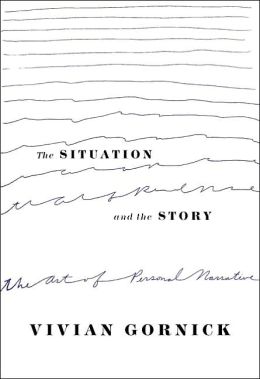
Situation and the story

In “The Situation and the Story: The Art of Personal Narrative“, Vivian Gornick explains the art of writing personal narrative by reviewing key elements like the persona (or narrator) of the writer, her writing voice, and the importance of knowing who she is at the point of writing. The book is broken up into four parts: Intro, Personal Essay, Memoir, and Conclusion. Gornick draws examples from famous books and essays, explaining the situation and story of each, thus causing the reader to pause not only to appreciate beautiful words, but also to break down and understand what makes a memoir or essay sing .

“Every work of literature has both a situation and a story,” Gornick writes. “The situation is the context or circumstance, sometimes the plot; the story is the emotional experience that preoccupies the writer: the insight, the wisdom, the thing one has come to say.” (page 13)

My copy is covered in red notes and underlining. There is just so much good stuff in this book.

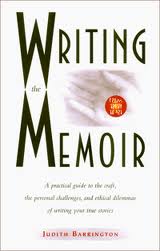
writing the memoir

If your not certain about the ins and outs of memoir, this book is for you. On the cover of Writing the Memoir: From Truth to Art by Judith Barrington, it states the book is “A practical guide to the craft, the personal challenges, and the ethical dilemmas of writing your true stories.” My writing instructor at Story Studio Chicago, where I participated in an advanced memoir workshop for two years, uses this book with her beginners class. In my opinion, it is a book even the most seasoned writer can glean knowledge from. The table of contents includes chapters on finding form, dealing with the truth, writing about living people, and getting feedback on your work. It also has short writing exercises at the end of each chapter.

“Telling your truths — the difficult ones and the joyful ones and all the ones between — is a big part of what makes for good writing. It is also what brings you pleasure in the process of writing.” (page 74)

If you write memoir or want to write memoir, this book must be in your library.

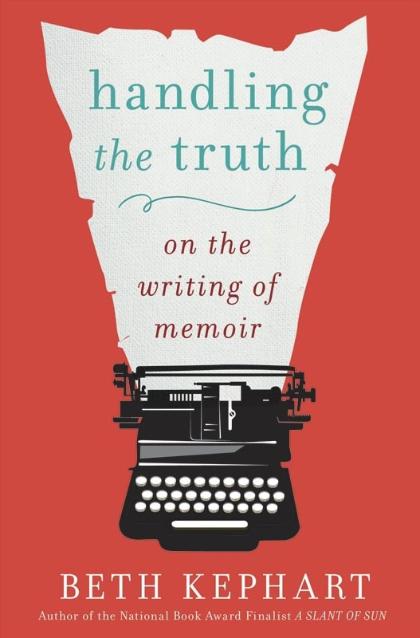
Handling the truth

Handling the Truth: On the Writing of Memoir by Beth Kephart just came out this year and I picked it up a couple of weeks ago. This book is not so much about the ‘how to’ of memoir, but more about the value of the genre of memoir. It is broken up into four parts: Part I: Definitions, Preliminaries, and Cautions, Part II: Raw Material, Part III: Get Moving, and Part IV: Fake Not and Other Last Words.

“If you want to write memoir, you need to set caterwauling narcissism to the side. You need to soften your stance. You need to work through the explosives — anger, aggrandizement, injustice, misfortune, despair, fumes — towards mercy. Real memoirists, literary memoirists, don’t justify behaviors, decisions, moods. They don’t ladder themselves up — high, high, high — so as to look down upon the rest of us. Real memoirists open themselves to self-discovery and, in the process, make themselves vulnerable not just to the world but also to themselves.” (Page 8)

See … you need to buy this book.

Attempting to write and publish a memoir is an arduous task. Start by writing, sharing your work, and reading these three books.

“Penetrating the familiar is by no means a given. On the contrary, it is hard, hard work.” (page 9)

Right on, Vivian.

I would add that it is worth it, if you are up to the task.

When Writers Face a Constant Climb

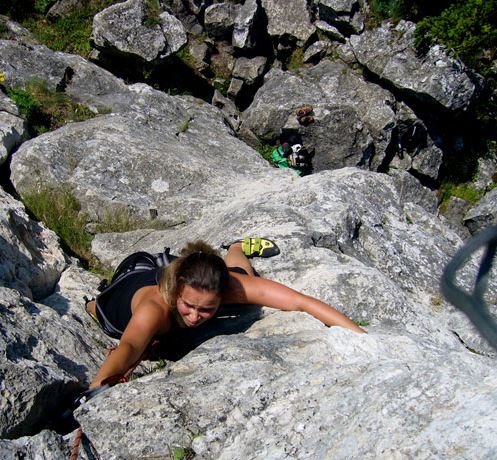
Photo by Anna Langova

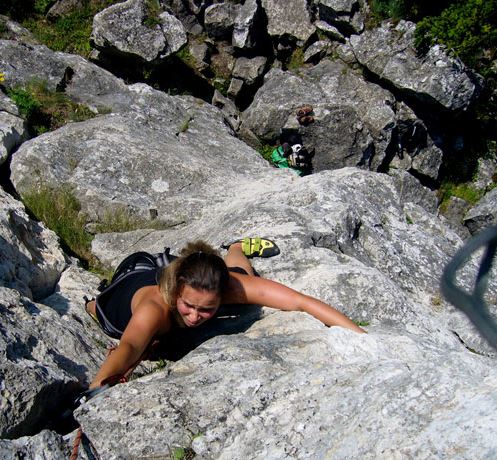
Sandstone boulders and harnesses and ropes, not really what I had envisioned when the new guy picked me up and we headed out for the afternoon—our first date together.

Girlie-girl me had somehow landed in a ragtop Jeep headed for some serious rock-climbing. Or so Mr. New Guy thought—what actually happened was girlie-girl watched some cute guy scale the side of a cliff, up, down, and sideways.

But getting to the top wasn’t his end-all plan. He seemed most challenged {and the proudest} when he slipped and then recovered. The catch and the readjustment seemed just as exciting to him as the time he stood at the top and waved high from the completed climb.

It’s been a few years since I sat in that ragtop and watched that guy climb. Seems I was about as interested in him as I was in climbing those rocks myself.

Why would we pull ourselves up the sheer face of something just so we can?

We do it more than we think, though, us writers. This writing for publication can be slow and hard. I have a {very thick} notebook full of rejections to prove it. Countless queries I thought would please never flew, never left their cage. And I mourned their loss. Made untold threats to quit, to lay down my pen.

Doubt can eclipse a budding hope if we allow.

But finally came my first assignment: a book review. I landed a column as a book reviewer, and my name held a place on a website that traveled the world. No matter there was no pay, I was writing. And I simply had to write.

Funny thing, though: that column landed me my first paid gig as a columnist for an established online magazine. With pay. This I celebrated. I framed a copy of the paycheck and then headed to my local electronics stores and nabbed a digital camera I’d had my eyes on for months.

From there, I secured an interview with a leading Christian author and sold that query to an international publication, and that one article led to contacts with other magazines and freelancing for the next few years. Meanwhile, my notebook of rejections grew thicker. Another brilliant idea shelved. Another dedicated period of grief. Another resolution to pack it up, find something else to do with my time.

Why do we allow fear and hurt to cloud our hope? To stall our dreams?

Looking back I realize that much like my rock-climbing friend from earlier years, my greatest sense of accomplishment came from those very moments I slipped, those critical steps I took to recover. I made my way to a writer’s conference where I could improve my craft, which led to securing an agent, which eventually led to a book contract, and that led me to my debut book. But there’s so much more to come. And to get there, I have to be willing to slide sideways when my quickdraws don’t connect just right, ready to race ahead when the space opens wide, or even to fall with grace when the fall comes {and they always come}.

There’s something that happens when we surrender to the process, when we climb for the sheer sake of the climb. I’m learning there is no end. If my sole focus was waving high from the top, I imagine I may be disappointed should I ever stand there. It’s been said before in countless ways, but in the life of a writer I’ve experienced it true, “the journey is the reward.”

Deeper Still: What setbacks have you faced on your writing journey? What readjustments have you made, or do you need to make in order to continue the climb?


Why Do You Want to Write a Book?

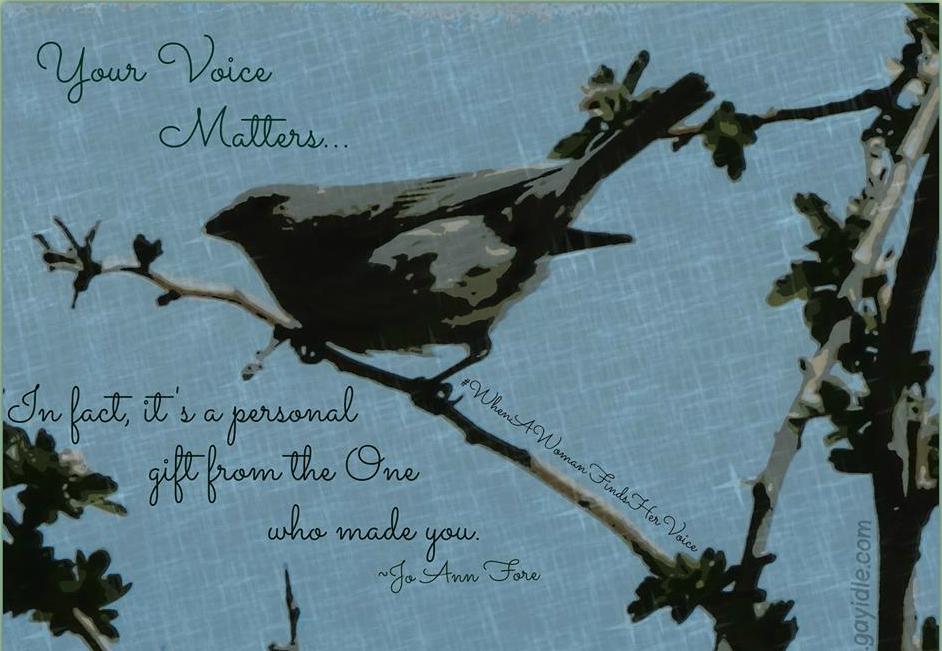
voice matters2I love words. Slices of words on my tongue satisfy me like a sweet, icy watermelon on a sweaty July day. Whether I twist those words into colorful quotes, mash a couple of them together to create my own new word, or string just enough of them into countless paragraphs that eventually produce a book, I. Love. Words.

It took me a few years to realize I’m different that way—not everyone shares my passion. Few people consider their office or library a haven like I do, a place of refuge where shelves of categorically arranged books permeate the air with the faint mist of paper and ink.

Chances are, you’re somewhat similar to me. Yes, I suspect I’m in good company as I share today with you. We writers with lofty dreams, we have a way of finding each other. As an often insecure tribe who spends the majority of our days writing and waiting, vacillating between confidence and fear, we need the support of each other on this sometimes lonely and highly competitive journey.

It’s not new news: the publishing industry is shrinking. Larger publishers have nabbed smaller ones, and some have simply closed their doors. E-readers have reshaped the way consumers think about, and purchase, books. As a result, today’s publisher tends to seek new authors with the lowest risk.

Here’s the good news: God is bigger than statistics.

Publishers still need new authors; I imagine publishers will always want a well-rounded catalog of books to offer booksellers. While, yes, the best-selling authors sometimes carry the majority of sales, booksellers are usually on the lookout for “What’s new?”

This newness, though? I’ve discovered it costs us. Many hours of learning the industry, honing the craft, and most importantly, uncovering our unique voices.

Only you can determine if it’s worth the sacrifice; it’s the same choice I recently had to make. You see, I have a book releasing in a couple of weeks, When A Woman Finds Her Voice, and I wrote this book during a very difficult season. Many days, the morning sun rose right over the rim of my keyboard. In the only quiet time available to me, I would tuck away most of the night pleading for this heart-message to come. {I write about sensitive topics that today’s Christian women face, and that requires an unwavering authenticity that for me can only come in the stillness.}

I wonder what you’re willing to invest. The time it takes to pen the words—even if the book never sells? The sacrifice of certain relationships that might be put on hold while you pursue your dream? Your own reputation ?

Your turn: Why this book? Why are you willing to give this slice of time and energy? Is the investment worth it to you? I’d love to hear why!

Important Question for Christian Writers

English: Posthumous official presidential port... President John F. Kennedy inspired American patriotism in his inaugural address: “Ask not what your country can do for you—ask what you can do for your country.”

As a Christian writer, I’ve asked myself a similar question at times: What can I do for God?

I’ve tried to do the things that I thought pleased God, but my good deeds never seemed to be enough when compared to the standards set before me.

So, I sought answers to my question from biblical examples of those who sought God’s approval and blessings.

King David experienced a change of focus when he sought spiritual counsel concerning his desire to please God by building a house for Him (2 Sam. 7:2). But God planned to build a house for David and establish his kingdom, and He chose David’s son to build a house for His Name.

The Lord declares to you that the Lord himself will establish a house for you … I will raise up your offspring to succeed you, … He is the one who will build a house for my Name …  Your house and your kingdom will endure forever before me; your throne will be established forever’ (11-16).

Humbled by God’s blessings, David received his inheritance with gratitude (18-24).

Jesus’ disciples also wanted to please God. And when they asked Jesus to show them the way to heaven, “Jesus answered, ‘I am the way and the truth and the life. No one comes to the Father except through me’” (Jn. 14:6).

What can we do for God that will please Him?

Accept God’s gift of eternal life. When we focus on our religious activities and good works, we overlook God’s promised gift of eternal life through His Son, Jesus. “For God so loved the world that he gave his one and only Son, that whoever believes in him shall not perish but have eternal life” (Jn. 3:16).

“For it is by grace you have been saved, through faith—and this is not from yourselves, it is the gift of God—not by works, so that no one can boast” (Eph. 2:8 NIV).

Seek God first. Matthew 6 encourages us to seek God first every day. As we observe God at work around us, He promises to reveal His plans for us.

Steep your life in God-reality, God-initiative, God-provisions. Don’t worry about missing out. You’ll find all your everyday human concerns will be met.

Give your entire attention to what God is doing right now, and don’t get worked up about what may or may not happen tomorrow. God will help you deal with whatever hard things come up when the time comes. (Mt. 6:33-34 MSG)

Focus on God’s blessings. God also promises His spiritual inheritance to all Christ-followers.

… When you believed, you were marked in him with a seal, the promised Holy Spirit, who is a deposit guaranteeing our inheritance until the redemption of those who are God’s possession—to the praise of his glory. (Eph. 1:13-14 NIV)

As I choose to focus on God and His blessings, my motivation for serving Him changes. Plus, I no longer depend upon the approval of others, and I avoid prideful boasting, a major stumbling block for Christian writers.

Therefore, since we are surrounded by such a great cloud of witnesses, let us throw off everything that hinders and the sin that so easily entangles. And let us run with perseverance the race marked out for us, fixing our eyes on Jesus, the pioneer and perfecter of faith. (Heb. 12:1-2)

What important questions do you ask yourself as a Christian writer? 

Is One Really a Lonely Number?

solitaryRecently I Netflixed a National Geographic documentary called Solitary Confinement. Don’t judge. It’s cheaper than scrapbooking and far less carcinogenic than sun bathing. Bonus: it made me think…

Is writing really a solitary career?

There are a lot of myths surrounding the mysterious lifestyle of a writer, numero uno being that it’s a lonely existence. There sits Mr. Scrawny Writer, all jittery on java, banging away at a keyboard in a room devoid of humans, an alien probe his only hope of contact. Ever. Poor, lonely author.

What a fat lot of bunk. Writing involves a whole village of people right from the get go. Let’s take a peek at who lives in the grassy huts surrounding Mr. Writer.

Critique Partners

Think partners in crime. Usually a crit buddy is another writer who can point out your foibles…like using too many big words like foibles.

Agents

I like to think of my agent as a cheerleader. She looks great in a mini-skirt and whoa baby, can she belt out a cheer when I need to hear one.

Editors

Whether they’re wearing a macro, proofreader, or acquisitions hat, these people are a writer’s best buddies. Fact: a writer cannot see the forest for the trees—or is it trees for the forest—or…wait a minute. Is there an editor in the house?

Marketers

Steel-toed boots are nice and all, but how many doors of opportunity can an author realistically stick his foot in? These villagers are worth their weight in gold.

Reviewers

Seriously, who believes an author’s 5 star review of their own book? It’s a staggering number: zero times zero. Networking with reviewers is vital to credibility, plus they’ll sometimes take you out for lunch.

Bookstore Owners

Most writers already have a relationship with the nearest bookstore owner because guess what—writers read.

Librarians

While some authors shun cozying up to a knock-kneed four-eyed librarian because, hey, they’re lending books that could be earning a royalty, I say a librarian is beneficial to embrace. These are the frontline soldiers, able to shoot your book to the forefront of the public spotlight. If you’re a writer, feed, nurture, and love a librarian today.

Readers

Call ‘em your tribe. Think of ‘em as your audience. Your peeps. Homeboys, if you will. Yes, an author may be squirreled away for the better part of a year, diligently writing a story, but then for the rest of eternity (or as long as your contract allows, whichever comes first) these are the people who will become your lifelong fans…or enemies, depending. Still, readers let a writer know what they think.

And these are just a few off the top of my head. Writers develop all kinds of crazy relationships with their cover designers, conference speakers, the UPS driver, yada, yada. Now that you’ve been educated, next time you hear someone say writing is a solitary vocation, you can confidently shake your head and say “Unh-unh.”

Roll the Stone Away

http://creativecommons.org/licenses/by/2.5/

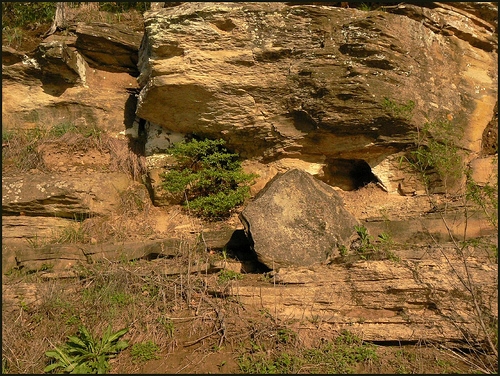
One of my favorite scenes in the New Testament is when Jesus raises Lazarus from the dead in John 11: 38-44. “Roll the stone aside,” Jesus tells those around the burial place, a cave cut into the hillside. After the stone is moved, Jesus calls out in a loud voice: “Lazarus, come forth!” The dead man obeys, and Jesus then commands that Lazarus be freed from his burial linens and let go.

Aside from the brilliant drama of the moment, the undeniable demonstration that Jesus is the Lord of life, I am especially fond of this passage because I heard it proclaimed in church at a pivotal time in my own life when I was struggling with direction.

My fifth child was almost a year old, and I knew it was time to move on from having babies.

But move on to what?

As a full-time stay-at-home mom, I’d devoted fifteen years to raising my children. About once a year, I managed to produce a Christian magazine article, which satisfied my desire to write. (All my other desires were to get more sleep.) Since I still had a young child, I knew I wouldn’t be heading back to outside employment for at least another five years until she entered kindergarten, and even then, I’d need summers off to be home with my kids. What kind of work could I do, other than answer one of those ads in the back of magazines for someone to stuff envelopes as their own home business?

That’s when I heard the Scripture proclaimed at church.

And it immediately struck me that I needed to roll a stone aside in my own life – the stone of my own excuses that prevented me from committing myself to developing ALL the gifts God had given me.

Because excuses aren’t the same as authentic obstacles.

I didn’t have an enormous, heavy rock to literally push away like the friends of Lazarus had. Yes, I had important demands on most of my time, but I realized that some of those demands were also self-imposed – stones I had placed in my own pathway. With two teens in the house who doted on their baby sister, there wasn’t any reason I had to be the only one to mind the baby for an afternoon, yet I hesitated to lay that responsibility (stone) on my older children. Once I did, though, it was good for all of us – my teens learned new skills in carrying that particular stone, and with it removed from my path, I had several hours a day to develop my writing skills.

One by one, I worked at rolling away the stones of excuses so my writing talent could come out of its cave.  When my fifth child left for college last fall, I was sad to see the end of that phase of my life, but so excited to greet the new one waiting for me.

What stones do you need to roll aside to answer God’s call to new life?

Open Your Eyes, the Blinding Truth About Writing

Photo credit
Photo credit

Open Your Eyes

One time as a kid, I tried to walk home from the corner store with my eyes closed.

I knew the way. My brother and sister and I stopped in often at the tiny grocery store with floor to ceiling products and cold, cement floors, always desperately worried that Marsha, the mean cashier with a mustache, was working, and at the same time buoyed in our courage by the lure of fizz candy and green, curvy, ice cold bottles of Coca Cola.

I memorized every break in the sidewalk and each pebble from thousands of trips back and forth from our house to the market. It was a straight shot, no turns, no need to cross the street.

Confident I could find my way home using other senses, I closed my eyes. As a child I subscribed to the notion that if I couldn’t see, then no one else could see me either. Creeping forward, I gained confidence, enlightened by heightened noises and smells. I smelled pine. I heard cars zipping by on the street. My feet kicked broken up pieces of gravel on the sidewalk as I meandered.

Within a few steps, I smacked into a tree. Dubbed by confidence, I had veered off to the left. The impact wasn’t that severe because I had been going at a turtle’s pace. But my forehead stung and my pride was hurt. My eyes, now wide open, darted around for witnesses. I ran the half block home to my mother in tears.

The Blinding Truth

Most of us who write, or who want to write, will recognize this story. We’re at a party, or out to lunch with an acquaintance, and we mention the book we are working on.

“Oh, you’re writing a book? That’s great. I want to write a book some day.”

You nod, take a bite of your chicken sandwich on rye, and wonder if your conversation partner realizes you’re talking about actually writing a book, not taking in nine holes of golf on a lazy Saturday afternoon.

Here’s the blinding truth about writing: if you want to write, than you have to write.

Not only that, but you have to be willing to be humbled. You have to want to learn about craft, and building a platform, and countless drafts, endless revisions, fuzzy hours staring at a computer screen, keeping your butt on the chair in order to get the story down, and growing thick skin for rejections. Because rejections come, my friends. Oh, they come.

Earnest Hemingway said that we are all apprentices in a craft where no one ever becomes a master.

There is always more to learn about writing, and the best way I can figure out how to learn is by keeping my eyes open, and realizing that it is going to take work.

Gloria Steinem said that writing is the only thing that, when she does it, she doesn’t feel she should be doing something else. If that’s you, if that is how you feel, well then, write.

But do it with your eyes open …