I’m Hooked on LinkedIn

hooked onAfter three years of experimenting with social media networking, I’m finally closing in on what works best for my marketing needs at this time.

But before I share with you what I’ve discovered, I need to make some qualifications of phrases in that first sentence.

  1. ‘Experimenting’ – I’ve had no formal training in using Facebook, Twitter, LinkedIn, Google+, or Pinterest. Instead, I’ve read countless books and blog posts about using them, taken online webinars and asked others what they do. I’ve tried some ideas (mostly the ones I understood how to do) and rejected others (the ones I had no idea how to do). My experimenting has truly been all over the net, kind of like sampling all the flavors in an ice cream shop – a small bite at a time.
  2. ‘Works best’ – I define this as ‘what I can successfully manage, given limited time and ability because I am not a social media guru, nor do I aspire to become one.
  3. ‘Marketing needs’ – For me, this is publicity and audience building. I don’t sell books myself; I focus on branding myself to create the desire in my audience to go to vendors. Ultimately, I want my audience to become my sales team to sell my books to others, since there are a lot more of them than there is of me!
  4. ‘At this time’ – Marketing needs change over time, as do the ways different media platforms function. I dread every announcement that a social site has made ‘changes,’ because it means I have to learn/relearn how to use it.

All that said, I have found MY most successful audience builder to be LinkedIn. That’s because I focus there on connecting with others who work professionally in the fields in which I write: dogs, birds, health and wellness.

Yes, you read that right – my Birder Murder Mysteries and girl-meets-dog memoir appeal to three audiences, yet they overlap because my overarching brand is about getting outside to get healthier and happier. My contacts are working professionals at state parks, dog or bird-related businesses, wellness advocates, animal rescue groups, and ecotourism, to name a few. My strategy is to strengthen my social relationships with those contacts by engaging in conversations with them individually and collectively, which is what LinkedIn shines at. I see my contacts as distribution points – when I engage them meaningfully, they share my brand/message/content with their own networks. And LinkedIn makes it easy for me to find people who already care about my topic(s) with their group listings and recommendations.

My marketing strategy will continue to evolve, as healthy marketing strategies do, and I know that my experimentation with other networks is far from over. For now, though, LinkedIn is the backbone of my social networking strategy since it yields me the most new contacts, opportunities to market, and book sales numbers of all the platforms.

Which social media platform is working hardest for you? How do you measure that?
The Cheater’s Guide to Building Your Author Platform – part 2

Building Your Author Platform

As a Mennonite farm girl growing up in Indiana, I learned the Mennonite philosophy of “being the quiet in the land.”  I was taught that it was important not to stand out or draw attention to myself. I never fit in.

You may not have grown up Mennonite, but likely you have been taught to fit in. In subtle and not so subtle ways you have been told “not to rock the boat.” If you write and market a book that looks like every other book, it won’t sell.

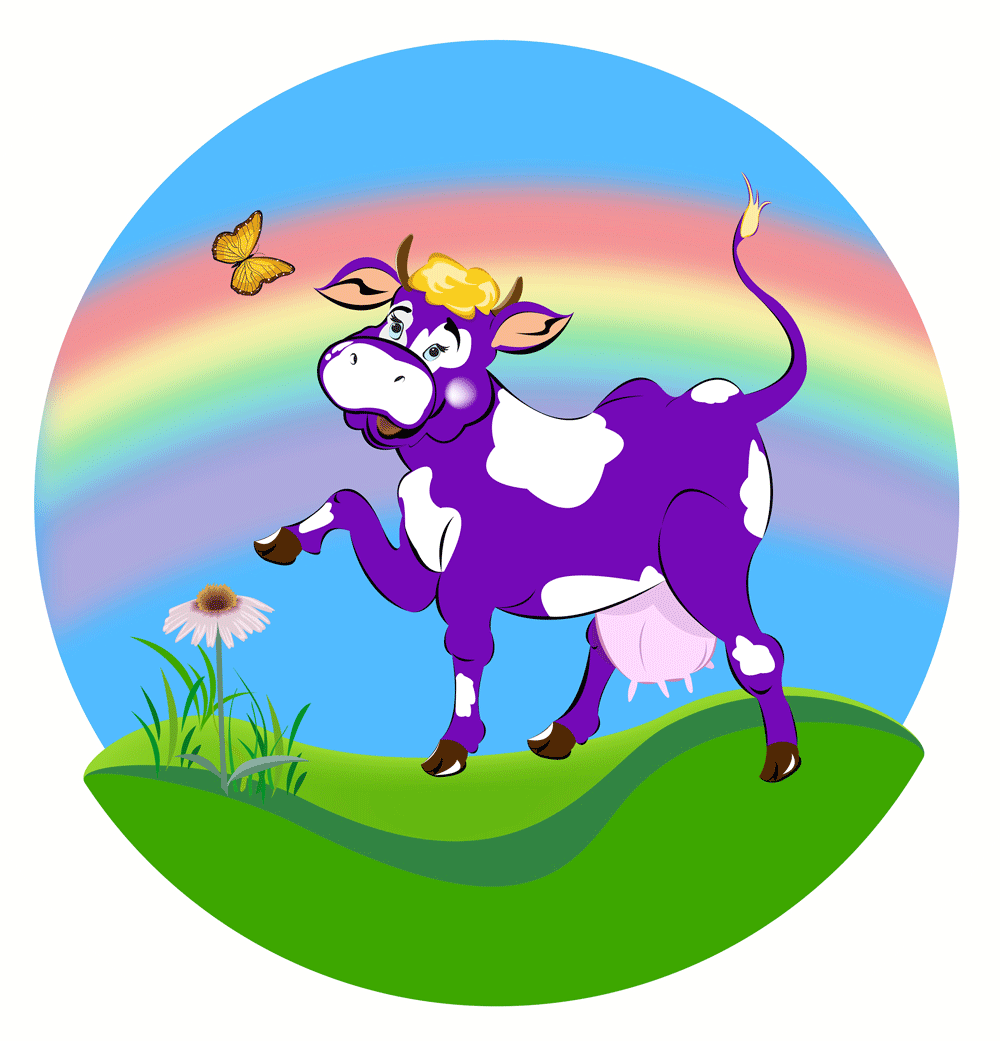
Be a Purple Cow - MarketingBe a Purple Cow 

Seth Godin lauded as a leading marketing expert, describes what it means to find your purple cow and market your message. Watch this interview.

In todays market with so many books, you will not make a lasting impact with an average book written to average people. Marketing today has changed. We have so many choices.

As you are marketing your book, you are really marketing you. You are the “brand.” So as you determine how to market your message as yourself these questions:

1. What is remarkable about you?

What is the 2-3% about your message that makes you unique? Rather than aiming at the giant target to make yourself look like every other author/speaker, aim at the bulls eye of being authentic. What about your message and life makes other people make “remarks.”

When I considered which book to write first, I settled in on the thing that people remarked about me the most: I am the mom of 6 children. I struggled with this decision to enter into this market. You see, I am not a mommy-blogger. I don’t like Pinterest and I don’t have ideas for how to have fun play dates with your children.

I am a mom, who never pictured herself being a mom. My first born daughter and I were rescued from a burning house when she was only 5 weeks old. Although we were saved from the fire, she developed colic and screamed for hours at a time. When I finally got her enrolled in Mother’s Day Out, she was “kicked” out for biting another baby and drawing blood.

Yet, with all of this struggle of imperfect motherhood, I have 6 beautiful children. 2 of my children are special needs boys adopted from Brazil at ages 12 and 8. Just surviving motherhood is remarkable.

What is remarkable about you and your message? What makes you stand out. Tell your story in such a way that your uniqueness stands out.

2. Are you willing to be vulnerable?

Marketing - overcome writer's blockTo be a purple cow that stands out from all the white and black cows you have to be vulnerable. You have to wrestle with the fact that what you are trying to do might not work. You have to overcome all the noise in your head that pushes you to be “normal.” The best way to overcome “writer’s block” is to find the “sweet spot” of your message.

When I first began writing 9 Traits of a Life-Giving Mom, I started using other people’s lives to tell the story. My editor would read it and say, “I want to hear your story.” I was afraid to tell my story. I didn’t want to be rejected for my flaws and I saw myself as ordinary.

When I began writing the second draft, I began exposing all my faults. I exposed my internal thoughts about being the worst mom in the world.

That’s when I hit my “sweet spot” of my niche. I’m not writing to the moms who feel like they have-it-all-together. I’m writing to the moms that are hanging by their fingernails. I found that every mom in the world wants to be the best mom in the world for her child, but often she feels like the worst.

What is the “sweet spot” of your message? Where does your message meet a felt need? That becomes your marketing message.

Find your Tribe of People and they will be begging you for more. When you write, you are writing their thoughts. This is not only true in your book but in every other way that you chose to communicate to get your message out. Such as:

  • blog
  • podcast
  • social media
  • radio interviews
  • tv interviews

Memorize short segments of your material that makes your message memorable. Capitalize on the felt need of your tribe. Validate their personal situation. Become a friend to walk on the path together.

Next week we are going to talk about being a risk taker. We will also talk about more specific marketing ideas that you can employ right away. This week as you go through your day, be willing to be a “purple cow.” Make your message stand out.

Multiple Author Events – Yes or No?

Smiling Group of ProfessionalsAs a writer, the weight of book promotion falls on my own shoulders. Since that gets tiring, I’m always looking for ways to maximize the results of the events I do: my current goal is to market smarter, not just harder.

So when a writer friend told me about the great attendance and good sales she experienced at a multiple author event at a book store, I decided to give it a whirl with both of my book lines. That meant gathering other authors who’ve written about dogs (so I could promote my girl-meets-dog memoir Saved by Gracie) and collecting another crew of authors who’ve written about birds (to expand the audience for my fictional series, Birder Murder Mysteries).

This is how it played out:

National Dog Day. I broached the idea for a National Dog Day Night to a local independent bookstore, and they jumped at the concept! I offered to recruit authors to attend, and the store agreed to stock the books, set up chairs and a microphone, and do publicity. They even partnered with a local dog rescue group for more publicity and support. Luckily, three well-known writers with dog books live in my area, and they readily agreed to participate. We all thought it was a smokin’ idea…but only five people showed up. What went wrong? Personally, I attributed it to the lovely summer weather; I myself would have chosen to be outside with my own dog, rather than inside with authors.

My big score, though, came from meeting the other authors, one of whom asked for an excerpt from my book to run in her monthly newsletter that goes out to thousands of readers. I made a hot contact even if the event fizzled.

For the Birds Night. I took this idea to a local Barnes & Noble and again, the events manager thought it was a winner. This time, it was a monumental headache for me to pin down the authors – talk about a flighty bunch! Not that any of them are absent-minded – it just took me a while to catch all these bird-chasing authors between their travels and professional obligations, not to mention the multiple email addresses so many of them use. I managed to round up five of the original ten that I contacted, and even then, I had one drop out at the last minute due to health issues, and one drop in who’d forgotten to confirm with me months earlier.

The event itself, though, was a big hit! We had over 20 people attend, a lively discussion ensued, and every author was signing several books by the end of the evening. Our B&N hostess invited us back for a spring event, and said her district manager had expressed interest in us taking our event to other stores.

After organizing two group events, my conclusion is that it’s worth the effort in terms of both book promotion and author networking. Upfront sales might be disappointing, but as one more tool in your marketing toolbox, I highly recommend giving it a try.

And keep some aspirin handy.

Have you participated in multiple author events? What was your experience?

Tips for Managing Time as a Writer

You’ve heard the age-old story: Creative individual decides to write a book. They sit down with paper and pen or keyboard, and painstakingly write that heart story. Sometimes it takes months. Sometimes it takes years. When talking with their friends, you often hear them say, “Something came up. It isn’t quite right yet. I just haven’t had the time.”

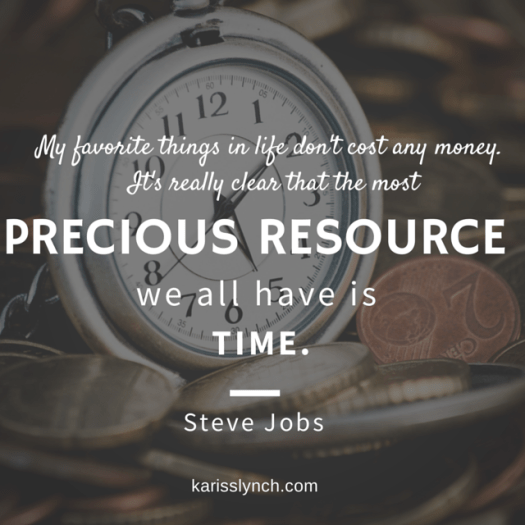
It’s pretty clear that time is precious. In fact, outside of my loved ones, my time is my most treasured possession. Since signing my first contract in January 2013, I have learned an important writing tip, probably the most important tip.

There is NEVER time, unless you choose to make it.

In fact, I’ve noticed one common trait among the published: They make time to finish. Once you sign that dotted line and make a commitment, “I didn’t have time” doesn’t fly with the publisher. Neither does “it’s just not ready yet.” You better make time and make it ready fast or risk losing your credibility.

After signing that contract, time to market becomes important. And time to edit. And time to promote. And time to interact with readers. Lots of time. So it’s important to figure out how to manage it.

My friends hear me say that I’m overwhelmed more than anything else. But I’m learning how to carve out time, discipline myself to finish, and not miss out on the world around me. We aren’t only writers. We are marketers, publicists, graphic designers, speakers, and more. So I’ve learned a few tricks to maximize my time in every area of this writing journey.

Kariss Lynch - timeCreate margin.

I am a night owl and can write and create relevant marketing content easier when my checklist for the day is accomplished. It clears my mind to be creative. Determine your best time of day to write or create, and maximize those short windows.

Set a timer.

Write every day. Set the timer on your phone for an hour, then put your phone on silent and put it on the other side of the room. Clear your mind and write. I found when I did this, I could easily write close to two thousand words if not more in an hour! When the timer goes off, I feel accomplished, satisfied, and ready to write even more.

Carve out marketing time for social media.

I work full time as a writer for my company, so in the middle of the day I am tired of writing. I’ve started taking thirty minutes of my lunch break or fifteen minutes in the morning or afternoon to create social media graphics that I then pre-schedule so I don’t have to think about them. Think about content that is relevant to your brand, then have fun with those designs.

Strategize for online interaction.

The internet is a wonderful tool, but managing our online interaction can eat our time if not handled correctly. Block out thirty minutes every few days to catch up on emails. Take a few minutes to respond to every person who comments on social media (within reason of course). Know your brand, what you are passionate about, and have character and author interviews on hand for guest blog posts. Don’t overthink. Just do.

Know your audience and limits for speaking engagements.

My favorite interviews and speaking engagements are via Skype since it helps me conserve my time, but I’ve also enjoyed those in person speaking engagements with small groups or crowds. Determine your price (if you have one), the size of the group you are willing to speak for, if it is wise to travel or Skype in (this is great for book clubs and classes that may not be close). Bottom line, know your options and then plan accordingly. Don’t forget you still need to write and market and live life, so carefully plan the weekends you will be gone.

Managing time is as much mental as it is physical. At the end of the day, be satisfied with what you accomplished and leave the rest for tomorrow. What tips have you found effective in managing your time?

Is Multi-Genre Writing Right For You?

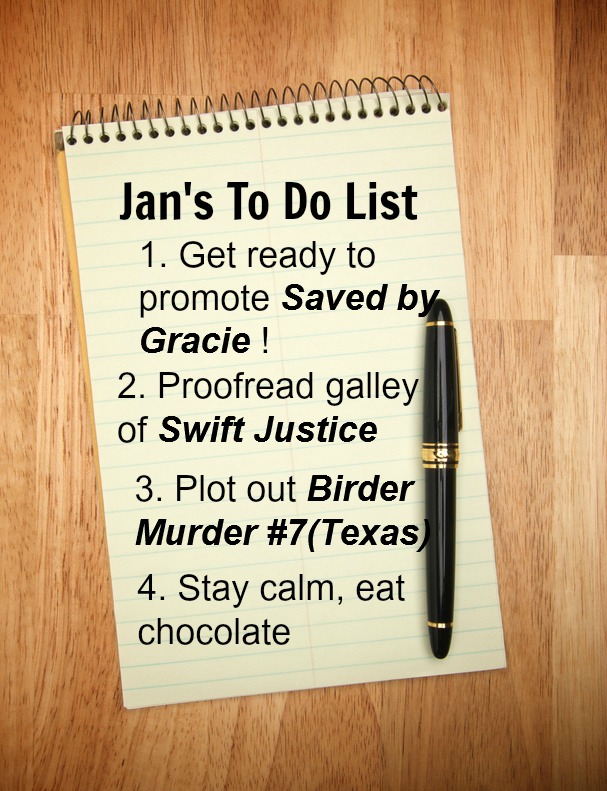
to do list (2)One of the ongoing debates in the writing world is about the wisdom of writing in more than one genre. The reality, I think, is that most writers want to write in several genres and, in fact, may be quite good at it. My first projects were poetry, and then I moved on to magazine articles. Think pieces followed, as did newspaper humor columns. My first published book was a small volume about practical Christian spirituality, but then I found my stride in humorous murder mysteries (#6 is out in September, with #7 currently taking shape on my laptop).

Last but not least, a few months ago, my first memoir was published.

So, for me, the big debate about writing in multiple genres is a no-brainer, because I already do.

My experience of doing so, however, has made me recast the debate from a writing perspective to a publishing perspective, and, as a writer who wants to build a career as a published author, I offer my own pluses and minuses of working in a multi-genre career.

  1. Minus: If you think it’s demanding to build one platform, try building several at once. I’m not saying it can’t be done, but in my experience, it can’t happen simultaneously (unless you have clones of yourself ready to go – and in that case, please drop me a note at my website, because I could use a couple of clones these days). To launch a book, you have to be single-minded to make the best of marketing opportunities: appearances, talks, media, book clubs, etc. Your new book/baby needs attention 24/7, and if you leave it for a day or two to nurse along another genre, you find yourself playing catch-up when you get back to the newborn. I’m guessing it’s like having twins-one person can’t really hold two babies equally well, so there’s always some juggling going on. Same thing with two genres: you end up feeling like you haven’t been as successful as you could have been with just one book. At the very least, you don’t sleep much, because you’re trying to do the work of two marketing departments in one body.
  2. Plus: Working in two genres is exhilarating! You get to double the people you meet and the interests you cultivate. Your horizons expand and life is so rich with new experiences, it takes your breath away. It’s wonderful to be a writer!
  3. Minus: Publishers are very hesitant to take a chance on you in a new genre. The more you’ve established yourself in one genre, the less a publisher wants to take the risk of launching you in a different direction. Publishing is a business, and publishers have to respect the bottom line.
  4. Plus: If your genres share something in common (mine share humor and a love of nature), your fans of one genre are more likely to follow you into new territory, giving you a base readership on which to build and a headstart on creating a new platform.

Have you had any experience in multi-genre writing? Any insights to share?

Sing it, Lamb Chop!

projects.latimes.com

This is the song that doesn’t end. Yes, it goes on and on, my friend.”

If you never watched the fabulous Shari Lewis perform with her puppet Lamb Chop, you might not know this delightful ditty from her Emmy-winning show that ran on PBS from 1992-1997. My youngest daughter enjoyed watching it as a toddler, and since I got to join her in front of the television, this song found its way into my permanent recall bank.

For better or worse, the tune takes over my head every time I have a task that seems never-ending.

Which is my way of introducing my topic today: platform building.

You see, platform building for a writer doesn’t end when your book is published. Instead of thinking of platform building as the first step toward publication, I now see it as the task that underlies the entire creative, marketing, and career development process. As long as you write, it doesn’t end.

But instead of looking at that task as an overwhelming, time-consuming responsibility, I’ve chosen to see it as the lifeblood of what I do.

My platform is my path to accomplishing the work that gives my life meaning. In my case, I want to bring people into closer communion with God’s creation, and I do that through the written word, telling entertaining stories about nature, and in particular, about birding and dogs.

Using this perspective motivates me to continue, and expand, my platform-building. Here’s a quick snapshot of what that looks like for me.

My first book – a small treatise about finding meaning in life – led me to discover my own passion: writing about engagement with nature. To market that first book, I gave retreats and workshops about identifying what you love and what God calls you to; as a result, I added speaking opportunities to my platform. Then I began writing my Birder Murder Mysteries, a light-hearted series about a birder who finds bodies (incorporating my own passion for birding and mystery). To sell books, I began reaching out to birders around the country (and the world!), connecting with them online, attending birding events, sharing information and becoming interested in conservation issues. That influenced additional books in the series, and led to more interaction with like-minded nature-lovers, which has both enriched my writing and my life with speaking/marketing opportunities and new friends. Six years after my first Birder Murder was published, I now have plenty of ideas for future books and venues to market them, as well as a list of birding hotspots to add to my bucket list of personal adventure.

My memoir about my dog is building a new addition to my original platform, giving me more places to talk about nature and to sell all of my books. I’ve begun volunteering with my local Humane Society because of it, and I now see all my writing as advocacy work for improving the human-nature connection. Yes, I know that my platform building doesn’t end, but neither do the rewards I’m finding when it comes to new experiences, learning interesting things, and contributing to my world.

What joys are you finding in the never-ending task of platform building?

Marketing Lessons From My Dog

bulldog wearing eyeglasses sleeping over a good novelAlthough my dog knows nothing about online social media, she is a rich inspiration for me when it comes to marketing. Here are the lessons I’m learning from her as I spend this season promoting my humorous memoir, Saved by Gracie, about my life with a four-pawed family member.

1. Persistence pays off. Gracie gets a fresh whiff of ground squirrel in one of the numerous holes in the hillside we walk every day, and for the next three days, she smashes her big nose into that same hole when we pass by. By the fourth day, she tries another approach and begins digging furiously to find the critter she knows is somewhere down there. So far, no squirrel, but she’s produced a mound of fresh dirt to play with. My take-away: keep working a lead until you get what you’re after, or until your work yields other opportunities. It worked for me last week: after a month of trying to get some events press from the alumni office of my alma mater, I tried another approach – I contacted the university’s social media manager, who offered to post and share my events. I knew there was help somewhere, and I found it! And now I have a productive contact in my resource file for future reference. Opossum22. Instead of dancing around an idea, grab it and run with it. Gracie finds an opossum on the edge of our backyard and circles, unsure what to do with it. I try to get her away from the furry ball, but we continue to dance around it until she finally snatches it up in her mouth and tears off for the front yard. She drops it along the way, I snag her collar, and take her into the house. Gracie is unharmed, and the opossum wanders back into the woods. My take-away: be bold and see what develops. I always wondered if there was value in an author book tour, so I decided to put one together myself for Saved by Gracie. It forced me to reach out to new venues and contacts in places I’d never approached, expanding my network of resources and readers. And since I traveled to places where I have family, I got free housing and a chance to visit, too. More importantly, I’ve learned the details that go into a book tour, creating a template for the next time around. (And the book tour didn’t bite me, either.) CC Cookie and Gracie 0533. Take a break. Gracie takes a nap after our morning jog, but by afternoon, she’s eager to go back outside and do it again. My take-away: recharging is just as important as working hard. Like many authors, my to-do lists are long and ever-growing. I have to make myself take breaks, but when I find myself away from my lists, my mind runs free, generating fresh ideas and perspectives. By the time I’m back at work, I’ve got new creative energy to pour into my projects. Which leads me to conclude that whoever said “you can’t teach an old dog new tricks” clearly wasn’t an author. Or at least, not one who sold books…

5 Things the Theater Taught Me About Writing

OLYMPUS DIGITAL CAMERAThe smell of popcorn takes me back…backstage, that is. From 1998 to 2007, my husband and I, along with several other talented individuals, performed thousands of shows to enthusiastic crowds in two small-town Texas theaters. The experience taught me enduring lessons about creativity, professionalism, and making a living through the arts. These tenets apply to your writing life and other creative endeavors, as well. Here are five things the theater taught me about writing, in no particular order:

1. Word of mouth is the best publicity

Our audiences, though small, were passionate. We provided quality entertainment and our most ardent supporters talked about us…a lot. They brought groups, gave their friends tickets, and sometimes drove hours to see us. Though we bought print ads, paid a few publicists, and had a large email newsletter, the theater’s best advertisement was—without a doubt—word of mouth. 

It’s the same with promoting your writing. Today’s readers are consumers, just as our season ticket holders were. They long for quality and consistency. They’re busy, and they need a reason to keep reading past the first few lines. And when they are delighted by what they’ve read? They’re the most loyal, vocal folks around. Because we live in an instant-communication society, bad word-of-mouth spreads fast. Make sure your writing product is stellar, and great publicity will follow.

2. Give the audience what they want

One of the owners of the first theater in which I performed often said, “Give ‘em hamburgers!” He meant that we shouldn’t mess with success. If tickets sold quickly for a 1950s music revue, we wrote another similar show. Of course, we also experimented and pushed boundaries (otherwise, all of us would have grown bored). However, we changed our product in small increments. We also created special experiences—behind-the-scenes tours, holiday packages, giveaways—for avid supporters. Cast members even called our VIPs (those folks who came to the theater over and over) on their birthdays and anniversaries, which the VIPs greatly appreciated.

In your writing, think about creating a memorable experience for the reader. How can you provide extra value (giveaways, incentives, free resources) in a professional, winsome file3691295046962manner? In what ways could you creatively and tangibly thank those who willingly support you and talk about your books?
3. Leave your ego at home

Most of the performers I worked with over the years have been gracious, humble, and diligent. A few, however, turned me off with their arrogance, over-the-top demands, or lack of discretion. The most successful artists, long term, are those who go out of their way to thank people and who treat the sound technician as well as the venue’s owner. Those are the performers who are offered more opportunities.

Ask yourself: am I approachable, warm, and thankful for the opportunities life has given me? Or I am on a mission to impress everyone I meet, in order to “build my brand”?

4. There are no small parts, only small actors

So said Constantin Stanislavski. When you perform a small role with professionalism and excellence, the people in charge notice–and they’ll eventually give you more responsibility.

The same goes for becoming a better writer. If an editor asks for a 400-word piece, I’ve learned to take it seriously and do my best work. In this age of instant access, anyone can read your work at any time, from anywhere. Who knows what small beginnings might lead to larger opportunities?

And, finally, in related wisdom…

5. Know when to stop

On stage and in writing, creatives need to develop an important skill: how to bring a something to a close. In the theater, we say that last line, spin on our heels, and exit, stage left. In writing, we find the right moment, the right phrase, the right word, and that’s it. The end.

This post is a reprint from Tweetspeak Poetry.

Marketing for the Introverted Writer

Sing Your Unique Song via Janalyn Voigt | Wordserve Water Cooler“All you need is you, yourself,” marketing expert and author James Rubart once said with regard to marketing. His comment, given at a meeting of Northwest Christian Writers’ Association, stuck in my mind because I didn’t believe him.

That’s easy for you, Jim, I thought with a touch of asperity. You are an extrovert who can walk into a book store and chat with the owner without breaking into hives. 

I am an introvert. If I had my way, I’d retire to a closet to write, coming out only to eat, sleep, and possibly notice the existence of my family. Okay, I’m exaggerating, but I really do have a closet office. My post describing it spiked visits to my website, which makes me suspect I’m not the only introverted writer. Welcome, and here are some of the lessons I’ve learned along the way.

  • Promoting is not nearly as hard as I was making it. Once I busted through my own resistance and consistently marketed my book, I harnessed the power of routine. I was looking at the whole marketing puzzle at one time, but we really only solve a puzzle one piece at a time.
  • I don’t have to be a social butterfly to effectively market a book. All I need is the willingness to touch people using whatever format I find comfortable. That doesn’t have to be face-to-face, necessarily. The Internet allows me to promote to those I probably will never meet. As a writer, I’m wired to be a communicator, and communicators need listeners. That makes me a people person. Who knew?
  • Marketing is not the same as going to the dentist. It can even be fun. Really. The key is to employ platforms that work well for you and that you enjoy or at least can tolerate. Your platforms can be in-person or online. Sometimes you need to compromise to attain a goal. For example, although I would rather not speak in public, if I want to fulfill my desire to teach other writers, I have to overcome my reluctance.
  • I can market with my writing. I had a Hallelujah moment when I realized I could promote my book by writing related content for magazines, book sites (like Wattpad and Goodreads), or on my website as a subscriber incentive.
  • I don’t have to be at every social site. I have better results when I specialize at one or two sites rather than trying to keep up with them all. As a bonus, I have more time for writing.
  • Keeping track of people is important. I confess. I lose people online. I don’t mean to, but there are too many conversations with so many people. List the most important people to you as an author, and then make sure you engage with them on a regular basis.
  • Push past your fears. This lesson was one of the hardest for me, and something I have to learn all over again on a regular basis. If I let fear stand in the way, I cheat myself of fulfilling my God-given calling. Not only that, but I deprive others I want to reach with my writing. In light of that, my fears don’t seem quite so compelling.

Jim Rubart was right when he said that you only need you, yourself, to market your book. Don’t worry about being someone you are not. Instead, use your talents to sing your unique song to those who need to hear it.


Give ‘Em What They Want, Not What You THINK They Want

shop-vac-10-gallon-industrial-wet-dry-vacuum-925-40-100After fumbling around with social networking and reading every marketing article about it that I could get my hands on for the last year or so, I’ve distilled my promotional strategy down to a simple directive: give readers what they want.

I know that sounds obvious, but the tricky part is understanding the ‘what,’ especially once you realize that ‘what’ your readers want may not be the same ‘what’ that you THINK they want.  The key is taking ‘you’ out of the picture, so you can clearly see your reader without your own perspective distorting your vision.

It’s like reflective listening – you want to reflect back what the other person is saying without putting your own spin on his words, so you hear clearly what he said, and not what you think he said. Quick example of doing it wrong: my husband said he wished he’d taken music lessons when he was a kid, so I got him music lessons for Christmas. Two weeks into the lessons, he told me he didn’t want to continue.

“But you said you wished you’d taken lessons as a kid,” I reminded him.

“As a kid, yes,” he said. “But now I have other interests that I’d rather spend my time on. You interpreted my comment as a current wish, which it isn’t.”

Ouch. I should have gotten him the shop-vac he said he needed, which I thought was boring.

Same idea applies to your readers.

Pay careful attention to what they say, or in the case of social media, what they really like to see and with what they engage.

For instance, I thought that as an author, I should be posting on Facebook about my WIP or upcoming events. Those posts, I’ve found, get little notice.

But if I post a photo of me getting kissed by a French bulldog, or a goofy homemade video of me singing (badly) about the cold weather, I get comments galore. Clearly, on Facebook, at least, my writing news is not very interesting to my readers.

Writing news is appreciated very much, however, by my newsletter subscribers, so that’s where it now goes, along with on my website. As for LinkedIn, I post both events and business-related material, such as when my books get a rave review or included in an industry-recognized blogger’s post.

For Twitter, I post quick links to interesting material in my subject areas (birds, nature, dogs, humor) or retweet entertaining posts, because I’ve found that those kinds of communications are most appreciated by my followers. Because it’s a fast and short exposure, I tend to use Twitter more than any other social media platform as more of a shotgun approach – post and hope it spreads wide and far to get my name in front of a greater number of people, because that’s the first step to finding new readers.

My experience has convinced me that connecting with readers, followers, and networks is a necessary piece of expanding my readership, but once I’ve reached new folks, it’s time to shift gears and use social media to build relationships, not solicit sales.

That’s why it’s called social media, and not the shopping channel. Remembering to give the reader what they want is easy when it’s the same thing you want to give your friends.

How do you use the various social network platforms?