To Write a Book Someday, Share Your Writing Now

8139708904_9a1d1783d4_bSome people will tell you the defining characteristic of a writer is that he or she is someone who writes. There is truth to that perspective, but it fails to offer a complete picture. It also gives many “aspiring writers” an excuse to be nothing more than journal keepers: diligently plucking away at Moleskine memoirs or first-novel manuscripts that have zero chance of getting published, ever.

The point here is not a matter of quality. It’s about privacy.

The reason why many written works-in-progress will never see the light of publishing day is that they are stowed, always and forever, in a drawer or on a hard drive where they have no risk of being evaluated by a second person. The writers of these works will never be writers because they will never have readers. They exist completely outside the writing market, and the only critical eye they allow to view their work is their own.

If you think that one day you’d like for people to read your writing, then you should begin by inviting people to read your writing now. Here are five ways readers can strengthen your writing and make it even more worth reading:

Readers help you get over yourself. It’s not uncommon for writers to feel uncertain or insecure about what they’ve written. Will this technique work here? Am I being clear? Am I using a marketable concept? Does anybody else care about the subject? Without readers to help confirm where and how a piece of writing is hitting its target (and where and how it’s missing its mark), these uncertainties and insecurities often grow and fester. But when you prioritize feedback, typically you get it. As a result you might find that your sinking suspicions will be confirmed. Some of your assumptions might be challenged. Maybe you’ll be pleasantly surprised by rave reviews. Whatever the case, you won’t be stuck wondering anymore, and that will help light a clear way forward.

Readers identify strengths in your work. Encouragement and affirmation give extra fuel when you’re trying to produce a manuscript. So ask your readers to note the places where they laugh out loud, hold their breath with anticipation, get caught by surprise, can’t stop turning pages, or are struck speechless. That paragraph you’re thinking about deleting? It might be your readers’ favorite part. Give them a chance to tell you so.

Readers identify weaknesses in your work. That poetic metaphor you’ve taken days and months to craft? It might be so complex that it’s confusing your readers. The story you’ve built a whole chapter around? Your readers might be bored out of their minds.

As the writer of a work, you will undoubtedly feel more attached to it than your readers will. Because of your heightened emotional attachment, you’ll probably miss seeing some of your writing’s flaws. You might even be blind to enormous holes in the work. Let your readers open your eyes to the problems you don’t see, so you can take the opportunity to fix them.

Readers expand your perspective. You are only one person, so your outlook on the world is limited and skewed. You have strange views about certain things, and some of your views simply haven’t been challenged in a way that forces you to clarify them well or charitably. Readers can help you identify the odd little points in a draft, the ones that either are or seem arrogant, stingy, dismissive, hyper-emotional, you name it. Points like these will jut out in unseemly ways, always subtracting and distracting from good work, unless someone will be so kind as to call your attention to them, so you can know to improve them.

Readers make the process realistic. If your writing aspirations are real, then you’re going to have to accept the reality of readers at some point. Get used to feedback now, and critiques won’t make you crazy later. Write with readers in mind now, and it won’t feel strange when they’re a part of the process later. Start learning what readers are interested in now, and then when your defining moments as a writer come, you’ll be prepared to deliver for your readers.


YOUR TURN: Respond in the comments: How have readers helped your writing? What kind of readers give the best feedback? What keeps you from pursuing readers?


Photo credit: cogdogblog cc

Leadership Insights for Writers

When you think of a leader, you may envision the executive of a large corporation swiveling in a luxurious leather chair behind a large mahogany desk, or a speaker delivering a keynote address behind a podium. Perhaps you think of a coach motivating a football team to persevere after a tough first half of the game or an inventor changing lives through technology. You probably won’t think of the writer quietly typing words in an unseen office early in the morning or late at night. But maybe you need to think again.

Creating art wallpaper

Writers can lead with ideas, and history provides examples. Science fiction writers have shown us the future long before engineers drew the designs and filed the patents. Nonfiction writers have changed how we do business, emphasizing the importance of trust and emotional intelligence. As a writer, even if you do not see yourself as a leader, you can benefit from applying leadership insights to your work. Consider using the following three concepts to improve your writing:

Know Your Mission

Successful leaders know why they are doing the job they do. They know their mission and communicate it effectively to their followers.

In the writing world, every book carries a theme. Whether you are writing a guide to preparing salads from locally-sourced ingredients or a historical novel describing life in rural America in the mid-nineteenth century, your book has the opportunity to fulfill a mission based on its theme. Even books written primarily to entertain teach life lessons through the way the plot unfolds.

As you work your way through the chapters of the book you are writing, keep the mission of your book foremost in mind. Ask yourself how the passage you are writing today furthers that mission. Arm yourself with a red pen so you can edit out material that detracts from the central theme of your book.

Create the Necessary Structures

Leaders who build companies from small start-ups to large, stable corporations understand the value of creating structures. They find the best ways to do something and embed those methods into the company culture. Perhaps they teach employees specific phrases to use when interacting with customers. Maybe they develop a certain philosophy that guides corporate policies, such as the importance of giving back to the local community. Without the necessary structures, the leader’s ideas will become diluted and diffuse as a company grows, with employees far from the leader on the organizational chart losing sight of the vision.

Writers who hope to influence others through their writing need certain structures as well. One way to maintain a consistent message throughout a book is to break the book into parts, with each part developing the theme in a certain way. Fiction writers might want to consider how plot development furthers or detracts from the main theme.

Writers need structures in place for marketing once the writing phase is finished. By strengthening relationships with key people who will understand and promote the message in your book, you are creating structures that will expand your influence as a writer. A column in a magazine related to your book, a web presence through a blog or social media, interactions with local bookstores, and a network of places to speak all serve as necessary structures for the writer who wants to make a difference by leading with ideas.

Paint an Image of the Future

One of the key tasks on the to-do list of all leaders is sharing their vision. People like to follow individuals who can paint an attractive image of the future. We buy products that we feel will improve our lives and make tomorrow a little easier than today. Even if you are writing a book set in the past, provide your readers with life lessons that will move them forward into a better future. Help them imagine how the world will be better if more people invested in the theme expounded in your book. Throughout my book, Questioning Your Doubts: A Harvard PhD Explores Challenges to Faith, I invite people to imagine a world where individuals take the time to build bridges to one another instead of dismissing the insights of those unlike themselves. I apply the theme to faith and reason, feeling and thinking, and theology and science. However, the overall theme works beyond the scope of the book. My hope is to persuade people to improve the way they relate to others, leading them to live more fulfilling lives. I want my words to make a practical difference for my readers, bettering their everyday lives.

In what ways do you hope to influence people through your writing?

Is Multi-Genre Writing Right For You?

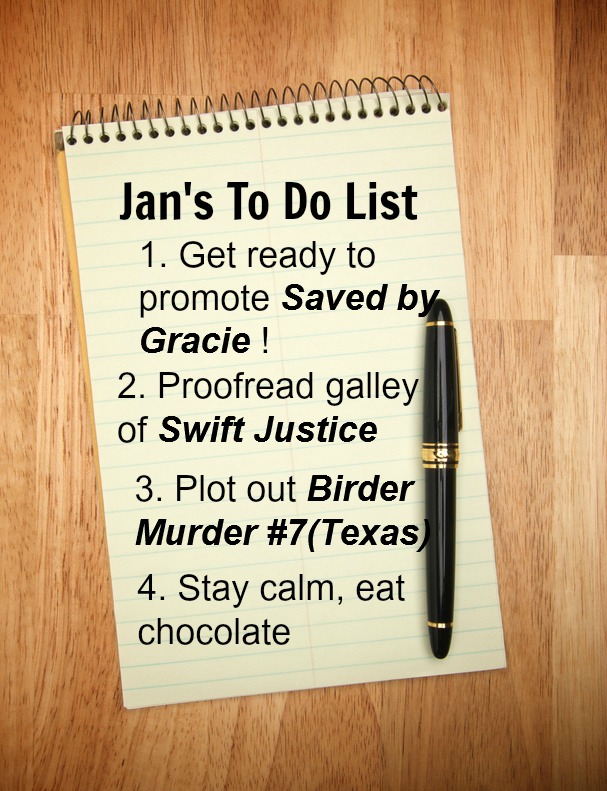
to do list (2)One of the ongoing debates in the writing world is about the wisdom of writing in more than one genre. The reality, I think, is that most writers want to write in several genres and, in fact, may be quite good at it. My first projects were poetry, and then I moved on to magazine articles. Think pieces followed, as did newspaper humor columns. My first published book was a small volume about practical Christian spirituality, but then I found my stride in humorous murder mysteries (#6 is out in September, with #7 currently taking shape on my laptop).

Last but not least, a few months ago, my first memoir was published.

So, for me, the big debate about writing in multiple genres is a no-brainer, because I already do.

My experience of doing so, however, has made me recast the debate from a writing perspective to a publishing perspective, and, as a writer who wants to build a career as a published author, I offer my own pluses and minuses of working in a multi-genre career.

  1. Minus: If you think it’s demanding to build one platform, try building several at once. I’m not saying it can’t be done, but in my experience, it can’t happen simultaneously (unless you have clones of yourself ready to go – and in that case, please drop me a note at my website, because I could use a couple of clones these days). To launch a book, you have to be single-minded to make the best of marketing opportunities: appearances, talks, media, book clubs, etc. Your new book/baby needs attention 24/7, and if you leave it for a day or two to nurse along another genre, you find yourself playing catch-up when you get back to the newborn. I’m guessing it’s like having twins-one person can’t really hold two babies equally well, so there’s always some juggling going on. Same thing with two genres: you end up feeling like you haven’t been as successful as you could have been with just one book. At the very least, you don’t sleep much, because you’re trying to do the work of two marketing departments in one body.
  2. Plus: Working in two genres is exhilarating! You get to double the people you meet and the interests you cultivate. Your horizons expand and life is so rich with new experiences, it takes your breath away. It’s wonderful to be a writer!
  3. Minus: Publishers are very hesitant to take a chance on you in a new genre. The more you’ve established yourself in one genre, the less a publisher wants to take the risk of launching you in a different direction. Publishing is a business, and publishers have to respect the bottom line.
  4. Plus: If your genres share something in common (mine share humor and a love of nature), your fans of one genre are more likely to follow you into new territory, giving you a base readership on which to build and a headstart on creating a new platform.

Have you had any experience in multi-genre writing? Any insights to share?

Should a Non-Fiction Author Write Novels and Vice-Versa?

Gift Wrapped Package
Are Shiny Objects Calling You?

One of my coaching clients has to guard against his propensity to chase every shiny new object. I can identify with his temptations, as I struggle with similar ones in my writing. Can I author both fiction and non-fiction? Can you? Let’s explore the question, and see if we arrive at the same conclusions.

Recently, I had a conversation with my literary agent that went something like this: 

Me, “I’m grateful my non-fiction books are selling, and my platform is building in the genre, but I have these two great novel ideas. What do you think? Would it be okay for me to pursue them?”

Alice, in a gentle tone after taking a deep breath, (I’m sure praying for patience with this crazy, bling-chasing author she has to deal with), “We normally recommend trying to stick with one genre. Otherwise it confuses your audience.”

“Could I do it using a pen name? I have one picked out.”

“Possibly. But then you’re using twice the energy to build two platforms simultaneously.”

That sounded like a whole lot of work to me.

Alice, “Can you turn your novel ideas into non-fiction?”

“Fiction is more fun to write.”

“I’m sure. But why don’t we focus on finishing your current book, then revisit this when you’re done?”

She’s a wise woman. I’m sure she believed the luster of authoring fiction would fade with time. And to a degree, she was right.

I’ve since researched the subject further, and found there are some common concerns and benefits listed from those with vast experience and knowledge. Publishers, agents, and even high-profile authors said much of the same. Here are the highlights of what I learned about the subject.

Keep Your Promises
Reader Expectation Can Drive their Trust

Cons:

1. Most readers will try a favorite author’s book in a new genre once, but if they don’t like it, may not buy any books written by them again. Including those they loved before.

2. Loyal readers often feel betrayed by the switch, and never regain trust. Genre confusion can cause authors to lose whole segments of audiences who now view them as promise-breakers.

3. If you switch genres, and the new book tanks, it can take years to rebuild publisher confidence and marketing momentum.

Pros:

1. Writing too much of a similar thing can cause an author to sound scripted, formulaic, and stale in later books. A change in the creative landscape can infuse fresh dimension into their craft.

2. Opportunities to cultivate new audiences grow with change. For example, if you write murder mysteries, but switch to a practical how-to, you chance reaching people who won’t read the mystery.

3. Authors like C.S. Lewis successfully carried their voices into cross-over markets, reaching many more people. If you are careful to stay true to your writing self, you potentially could do the same.

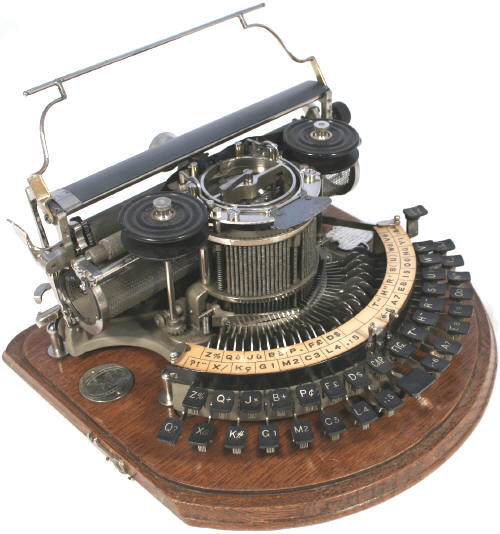
Old TypewriterAfter talking it over with my agent, researching, praying, and much pondering, I think I’ve had a change of heart. Turning my novel ideas into non-fiction is feasible. And I know successful writers are teachable and flexible. If I want to thrive in the writing world, I need to mirror those traits, and listen to those with voices of wisdom.

Down the writing road, I may change my mind or the market may shift, but at this point, why mess with success? I’d hate to have a shiny new object deflect me from the blessings I already have.

Do you think it’s wise to write fiction and non-fiction? Why or why not?


How to Craft for Your Crowd

reading boysAudience. 

Every writer knows that keeping the audience in mind is essential to effective writing: you don’t include high tech specifications or advanced optical principles in a children’s picture book about microscopes, just like you wouldn’t fill your historical thriller fiction manuscript with footnotes citing the research behind your story.

But other than considering what your audience expects in style or format based on genre, how often do you start your writing project by putting the reader first, instead of the story you want to tell?

Over the last nine years (and eight books) as my writing career has developed, I’ve noticed a subtle shift in how I craft my writing. Whereas my first book – an exploration of Christian vocation – was the book I wanted to write covering what I’d learned from researching and reflecting on Scripture, I didn’t understand how to make it compelling reading for my audience, even though I sincerely wanted to communicate my own enthusiasm on the topic with my readers and believed they would benefit from it.

Big surprise: even with a national publisher, the book did not do well. I needed to regroup, and start over by clearly defining my audience, and putting their need – be it entertainment, information, or inspiration – first. Only then could I take the story I wanted to write and frame it meaningfully for my readers, because if it didn’t answer their need, they wouldn’t read, no matter how much I wanted to share it.

I had to put others first. I began to pay more attention to what readers liked to read and why, rather than focusing on what stories I wanted to tell.

I applied that approach when I created my Birder Murder Mystery series. As a bird-lover and mystery fan myself, I knew there were no cozy mysteries about birdwatchers; I knew if I wanted to satisfy that audience, I’d have to weave together a specialized knowledge of birds, engaging characters that reflected the eccentric personalities who enjoy the sport, related issues of conservation, and accurate depictions of place. That meant I needed to do research to fill in the gaps of my own knowledge to craft stories that met those demands. Using that formula, I’ve written six books in the series and acquired a loyal readership that enjoys “virtual birding” with my protagonist.

Likewise, with my girl-meets-dog-and-finds-healing spiritual memoir, the first task I completed was examining my experience to identify how others could relate to and benefit from it. By putting the need of others first, it helped me organize the book’s content: a blend of memoir, current research, spirituality, and humor. Otherwise, I may have written a straight narrative of how I learned to love our dog, which would be a nice story to share, but not unique enough to warrant publication.

The next time you sit down to start a writing project, ask yourself these questions first:

  1. What does my audience need from me?
  2. How can I be of service to my audience with this writing project?
  3. How do those answers help me craft my content?

I think you’ll find that putting others first is not only considerate, but a great way to write a book your audience will value.

Two Writers Walk Into This Bar . . .

Celebratory drinkWhat happens when two writers unexpectedly find themselves with a free evening together?

A nice dinner and a glass of wine? Laughter and bonding? Sharing experiences from both on and off the author trail?

Yes. All that, and new marketing ideas, too.

At least that was my experience two weeks ago when my agency colleague Anita Agers-Brooks made a short-notice trip my way and we were able to spend a few hours together – hours that had no agenda other than getting to know each other. And even though we write in different genres (Anita is a leadership guru, while I write humorous mysteries and memoir), we had much to offer each other in the way of marketing and business ideas. Here are a few nuggets from our impromptu party to spark your own ideas:

  1. Writing is a business. Do you treat it that way? Anita reminded me that I needed to file paperwork to become an LLC (limited liability company) as legal protection of my assets. We live in a litigious world, and a writer must be a good steward of her assets both spiritually and financially. As Anita pointed out, if you wait to protect your business till someone sues you (yes, it can happen!), you’re already too late. (And be sure to include Errors & Omissions insurance while you’re at it.)
  2. Goodreads.com is a publicity goldmine. Are you on it? For my new book release, 658 people entered my giveaway drawing for 3 free copies. That’s a lot of eyes on my book the day it released. And giveaways are just the tip of what you can accomplish on Goodreads. (Read this marketing tutorial on using Goodreads.)
  3. Pay attention to casual comments. After a pastor told Anita her book would be a good topic for a sermon, she found a template online for sermons. She plans to fill it out using her book and then share the template with pastors. She’ll get her message presented by pastors, and she won’t even have to be present! (Does that qualify as bilocation – being in two places at the same time?) I’m going to take her idea and see if I can make it work for me.
  4. Take ownership for your promotional campaign, because ultimately, the book is your baby. Both Anita and I have been surprised by the limitations even large publishers can have when it comes to marketing; our publishers can pull some big coups for us (Anita spoke to a filled college auditorium thanks to her publisher, and I’m getting phone-in radio interviews thanks to mine), but the local press and on-going events calendar that make up the bulk of your PR efforts remain in your own lap, not to mention getting your launch team recruited and equipped to spread the word.
  5. Learn from each other’s experiences. After spending an evening with a writer in the same phase of our careers, I feel like I may still be in the same boat. But now I know there are other boats traveling along beside me, happy to share their own tips and advice. In fact, maybe a small-group marketing retreat would be a good idea. Hmmm….

(FYI – I was kidding about the walking into a bar. Anita and I did walk around a golf course, however. The air was much fresher.)

The Journey from Idea to Bookstore

Someday I’d like to write a book. 

Book on the beachHaving spent most of my adult life as a research scientist affiliated with Harvard University, I like to break down goals into doable steps and analyze the process needed to achieve a certain result. While the publishing process is more art than science, here are some basic steps you will need to take to move from dreaming about writing a book to holding the finished product in your hands.

What’s the big idea?

Your nonfiction book of tens of thousands of words starts with one sentence that captures the main idea, or theme, of your book. Ernest Hemingway talked about writing one true sentence, and this goal is your first task. While this sentence may never appear in the book itself, you will need it in the book proposal your literary agent will send to publishers. Crystallizing the big idea of your book also will help you write a working title.

For my first book, Questioning Your Doubts: A Harvard PhD Explores Challenges to Faith (InterVarsity Press, 2014), I started the process by writing down a list of words and short phrases that captured the essence of my message. A cluster of these words became the working title. Once I had a working title, I was ready to write the outline for the book.

Who is the audience?

Books are for readers, not the writers. Publishers want books to sell, not collect dust on bookstore shelves. Accordingly, once you have your big idea, you need to determine who will desire to read the book. These readers are your audience. Perhaps your book is for a general audience, and you hope everyone will read it. However, publishers will require that you define your audience more clearly.

Is there an age group more likely to read your book? Will the book appeal to certain specialists or professionals, like pastors or counselors? What interests do your potential readers have that would make them likely to buy your book? Will your readers use the book in a group setting such as a Bible study or classroom, or will they tuck it into a carry-on bag for entertainment on an airplane ride or while soaking up the sun on a distant beach?

Think in terms of primary, secondary, and tertiary audiences. These categories will help you define who is most likely to buy the book as well as the wider audiences that may express interest. You will need to describe your audience in your nonfiction book proposal. Knowing your audience also will shape your writing style for the book. For example, a book for teens will use a different vocabulary than a book for seminary professors. A book useful for a specialist may need to include references and an index, while a book used in a church setting may benefit from a discussion guide.

 Why write this book?

The journey from idea to bookstore usually measures in years not months, so knowing why you are writing this book will fuel your motivation early in the morning or late at night as you face publication deadlines. The answer to this question will come in handy when family members and friends wonder why you are spending your free time in your office instead of having fun anywhere else.

Understanding what need your book will meet in the marketplace of ideas will provide direction as you decide what material you need to cover in your chapters and what falls outside the scope of this book. Ultimately, focusing on the purpose for writing this book will keep you connected to your calling as an author and the original dream that has moved from someday to today.

A Matter of Time (Part 2)

La Ronde's Le Boomerang Roller CoasterLast week, we looked at how content benefits from timing. This week, we’ll explore timing within writing – the art of pacing narrative.

Pacing is what keeps your reader reading. In suspense/mystery/thrillers, pacing is easy to identify: what starts out as a problem grows steadily (and generally, rapidly) worse. When I write my humorous mysteries, I use humor to relieve some of that growing tension in my mysteries, and my uphill roller coaster ride is one of short climbs and plateaus; thriller writers often choose steeper climbs with no reprieves before the final sheer drop. As the writer, you need to choose what effect you want to create in your reader, and then manipulate your scenes and character development accordingly. For an excellent overview of pacing in fiction, read this post by K.M. Weiland.

Note, however, that I didn’t say ‘narrative of story’ in my opening paragraph. That’s because nonfiction benefits just as much from effective pacing as does fiction. Think for a moment about the biographies, how-tos, memoirs, travel pieces, or any other nonfiction you’ve read recently. Did they keep your attention? Did the author tease you with promises of solutions or details and then slowly reveal them, building momentum so that you couldn’t put it down? Or did you plod through pages of dry facts and lose interest to the point of feeling like the reading was a chore?

That’s the tipping point for me as a writer, whether I’m penning fiction or non-fiction: losing interest. Even when I’m the one doing the writing, I try to think like my reader.

Am I getting bored with a litany of facts? Then break it up. Focus on one fact and bring it to life with a concrete, preferably colorful, example, then note the other facts briskly. For instance, in my forthcoming memoir, I list items not to do with a new puppy. I got bored with listing the list, so I described how I totally did the wrong thing with our dog concerning the first point, then simply noted the remaining ones. Making a list personal will engage your reader and create momentum to continue reading.

Use dialogue. Even if it’s imaginary, it can help your reader place themselves in the same situation.

Use a metaphor or simile to make your explanation more understandable. Details enrich writing of every kind.

Keep focus. Confine paragraphs to one point, then move on – visual cues like breaking up text help your reader follow your organization and your pace of developing thought. You don’t want your reader lost in the middle of a page-long paragraph, because they might decide it’s not worth finding their way out.

In fact, write your nonfiction like you’re telling a story with its own beginning, middle, and end, and you might hear that awesome compliment: “It was such a good book, I couldn’t put it down, even though it was nonfiction.”

Timing really is everything.

The Trick to Becoming an Author

Pavillion_d'Armide_by_A._Benois_05The other day, a colleague asked me if I thought the burgeoning popularity of memoir-style books of the sort I had published had to do with the fact that the people who read them wanted to write such books themselves.

Reflecting on what he asked, it occurs to me now that—the underlying argument being that my writing’s appeal had nothing to do with my writing itself but only the envy of my readers and that the underlying argument of my readers’ envy being that anyone could write as well as I could—I should have gotten offended. But I didn’t. (Thanks, surely, to the Holy Spirit, who tries to protect me, usually in vain, from bouts of narcissism that make me think I’m a great writer and cause me to take offense at any reminder that I’m not.)

I didn’t get offended, too, because I knew, as anyone who’s ever published a book of any sort does, that what he said was true. We know it from the people who show up in our doorways wanting publishing advice. We know it from acquaintances who know about our good luck as writers and come up to us in the grocery store, or sitting at the vet’s office, or walking to our cars after church, and want to tell us their latest book idea. We know it from the mail we get when our books come out. Fast on the heels of a fan email, if not within the fan email itself, comes a question about how to get the fan’s own work published.

Everyone these days has not just a story in them, as they used to say, but a published book—even though it’s rarely written or even begun. All it takes to write a book, the would-be writer hopes or believes, is an idea and the need to tell it. What happens between that and getting something published is a trick they plan to learn from established writers.

But there is no trick. Just the arduous and time-consuming work of writing and rewriting and sending stuff out and waiting and trying to believe there’s a chance that someone who makes a difference in the world of publishing likes it and finding out there mostly isn’t (or, if you really are lucky, that there might be a chance with some major changes to what you’ve written) and then writing and rewriting again. That’s the part no one wants to hear or even know about. That to be a writer is to write. Period.

They’re like Simon the Magician, that guy in the book of Acts who—though Luke makes clear that he’s a genuine believer—tries to buy from the apostles the trick of touching people and thereby filling them with the Holy Spirit.

“Just teach me the trick of getting published!” EveryWriter begs. Often, as Simon does, they even offer to pay for the trick.

But there is no trick.

Sermons on Simon’s story often go on about how wrong-headed Simon was, thinking to buy the Holy Spirit, and sometimes they posit that Simon wasn’t really a believer at all, even if Luke says he was. But such sermons miss the point, I think—whether it’s the gift of writing we’re talking about or of imparting the Holy Spirit. Being a servant of the word, or the Word, is not a magic trick. You have to get out there and do it.

Hard Work--George Herriman 1907-11-24That said, I remember having had the same response to other writers’ writing—not just to their memoirs but to their novels and even textbooks. I’ve thought to myself, if they can do it, why then so can I. And so began this article and that book. So began my current writing project, a novel–my first. So began, indeed, my entire career as a writer.

If others can do it, so can you, but don’t sit around hoping to discover some trick to make it happen effortlessly. If you want to write, if you want to inspire others, if you want to fill them with good news, with the very spirit of God, you’ll just have to get out there and do it.

Inspired

As a teacher of writing and a writer myself, I’ve long been in the habit of examining others’ writing for what it has to say about the creative process. Nonfiction, my primary genre, lends itself most naturally to such scrutiny, since the solipsistic Scarecrow--Daniel Schwenwriters who tend to write in this genre love to write about what they’re up to. The writing of memoirists and essayists thus provides valuable glimpses into the process. In nonfiction workshop, Hemingway’s A Moveable Feast is my go-to handbook.

As I blogged last month, I’ve been listening to the Bible on my iPhone while I run. Since I run in five to ten mile chunks, I’ve heard whole books at a time and am making my way quickly, if haphazardly, through the text, following not the order of the Bible’s original organizers but spurious impulse (or, as I like to think, the Holy Spirit). Listening to scripture aloud, I’ve become newly appreciative of the almost constant reverberations between biblical accounts. The echoes of one story in another, of one biblical author’s phrasing in the voices of others, of the words of Hosea and Isaiah in the mouths of John and Paul and Jesus. The Bible is a masterpiece of intertextuality, a tapestry of voices in sentences that mesh and thicken from one chapter to the next.

I don’t know whether it’s because of the biblical writers I’ve happened to choose thus far or because of my new way of “reading” the Bible—that is, hearing the words aloud rather than reading them from a page—or just my old habit of paying special attention when writers mention writing, but I’ve noticed that the biblical writers talk a lot about writing. As such, the Bible offers considerable insight for me and fellow writers about our line of work.

Forgive my foray down a path we Christians like to avoid in considering the Bible—namely, the exact nature of divine inspiration that led to its composition in the first place—but one biblical writer after the next, from Moses to Isaiah to Jeremiah to John, describes the initial inspirational moment pretty much exactly as I’ve experienced it myself. An urgent voice—sometimes identified as God’s, sometimes an angel’s, sometimes unspecified—commands, “Write this down!” For these ancient writers, writing was not a choice—not a career goal or the desire to influence or educate others or even a matter of passion—so much as a dutiful response to that voice. An idea rises like a vision in the mind and the voice says, simply, “Write.”

“A writer,” I tell those who say they want to be writers, “is someone who writes.”

The most common writerly methods in scripture, which several biblical writers go out of their way to explicate, are the same ones I recommend to my students: in the words of Luke, “after investigating everything carefully from the start, to write an orderly account” so that readers “may know the truth” (Luke 1:3-4 NRSV). Careful investigation and organization are what convince.

Regardless of genre—whether they are writing poetry, chronicles, stories, or philosophical treatises—the biblical writers take pains, as Paul assures the recipients of one of his letters, to “write you nothing other than what you can read and also understand” (2 Corinthians 1:13). Nothing show-offy, though the words of scripture are often as artistic as they are true. No erudition for erudition’s sake.

And though their accounts and rhetorical goals are diverse, the biblical writers share, it seems to me, one essential writerly skill: they tell what they actually see and hear and smell and taste and feel. Unlike my students, who would rather explain their thoughts, the biblical writers are, to a person, concrete. Here’s Jeremiah (whose repetitive ranting could be boring, were it not so vivid) showing, not merely telling, how ridiculous it is to worship idols:

Their idols are like scarecrows in a cucumber field,
and they cannot speak;
they have to be carried,
for they cannot walk.
Do not be afraid of them,
for they cannot do evil,
nor is it in them to do good.

(Jeremiah 10.5 NRSV)

Wow. Like scarecrows in a cucumber field. I wish I had written that!

OLYMPUS DIGITAL CAMERAMy students typically define creative writing as writing that doesn’t have to follow any rules. Grammar rules, especially, are irrelevant. When I talk about sentence-level problems in their writing, they roll their eyes. In poetry workshop, many abandon the sentence altogether, writing instead in fragments. Creativity, in their view, constitutes the opposite of order.

The biblical writers, by contrast, seem to model their creativity on that of God himself. The creation, as described in Genesis, is a work of separation and sorting, of repeating and omitting, of drafting and considering before declaring anything “good.” Again and again, the biblical writers are selective in what they opt to tell. They keep only the best episodes of a given narrative—key conflicts, the rising action—and leaving the rest mysteriously, sometimes frustratingly, elliptical, in this way to engaging the reader’s own imagination and mental processing. There’s never a pat moral to the story. As hard as we Bible-readers try, we can never read the Bible as a straightforward primer or even a narrative account of holy living, cleansed of all confusing or upsetting or unholy details. Rather, it portrays real life—convincing in its familiarity—and real characters, the holiest of whom, as we ourselves, struggle and fail and fail again.

For writing instruction, I’m learning, the Bible is unsurpassable. Even better than Hemingway.