Taming the Marketing Monster

When my daughters were little, they were convinced that a scary monster was waiting in the bedroom closet at night. Our solution was an easy one: I gave them a small hammer to put under their pillow, so when the monster came out, they could conk it on the head. Oddly enough, the monster never showed up, and my daughters slept soundly through the nights.

Empowerment is a wonderful thing.

Now that I’ve become a published novelist, I’ve discovered that most authors have a similar problem: there’s a scary monster in our closets named Marketing, and it will come out of hiding even if you keep a hammer under your pillow. Not only that, but if you ignore it, Marketing will sneak out when you’re not looking to destroy all your hard work to become published.

On the other hand, if you learn to tame it, Marketing will become your faithful friend, bringing you exposure, opportunities, and book sales.  So instead of the hammer, here are a few empowering ideas to stick under your pillow tonight to help you begin the taming of your marketing monster.

  1. It’s YOUR monster. No one else is going to take responsibility for it, so you need to learn as much as possible about the feeding and care of it. Read blogs and books about book marketing. Create a list of media contacts in your area that includes radio stations, televisions, newspapers, magazines and even bulletin boards (find out who gives approval to use them!).  Add the names of librarians, book store managers, and book club contacts. Make a roster of blogs that relate to your topic/novel where you can visit and leave comments. By creating your own database of ideas and contacts, the question of “what do I do?” becomes “where do I start?”
  2. Feed your monster every day. Choose one marketing activity. Do it. Today. Write an announcement/press release of your book’s publication and email it to your contact list. Visit five blogs and mention your book. Donate a copy to the library. Get a Facebook page. Don’t worry about results at this point; just get the word out that you’ve got a book published. Tomorrow, choose another marketing task and do it. The next day, do the same thing. Feeding your monster a steady diet of small marketing activities will keep it content and much less scary. Over time, all those tidbits of publicity you’ve done will add up and begin to yield the bigger results you want: a growing readership.
  3. Take your monster out to play on a regular basis. Meet other authors and network with them on marketing ideas and contacts. Plan joint events. Share experiences. Commiserate over the failures. Celebrate the triumphs. Laugh. Create your own marketing support group.

Most of all, don’t let Marketing scare you. All it really wants is your attention…and to get out of that closet. You just have to open the door.

What scares you the most about Marketing? Has your monster brought you unexpected gifts?

Social Media… Eeeek!!!

Social media, social networking, marketing, PR, all those terms seem to make authors shudder a little bit. There’s so much to learn and a lot to leverage from gaining an online presence. Where do I even start? That’s the question that I hear so often.  I am going to start at the beginning. And for some of you, this may be very basic information.

Start slowly. It will snowball. My mom used to tell me when I was cleaning, “By the inch it’s a cinch; by the yard it’s hard.”  Social networking happens gradually over time. Gathering a ‘tribe’ takes effort.  It is something that comes with hard work and, most importantly, consistency.

Don’t get frustrated!

I want to start with one specific aspect of social media today: Facebook fan pages. Facebook has changed things up a bit where you can now allow ‘subscribers’ to your personal page. A good example of this is Tim Tebow. Check his personal page out, and you can see that he has 1.6 million subscribers. What is a subscriber you ask?   When you post a status, you can post it so that the Public, Friends, Friend of Friends, or a Custom Group of people can see your updates. Subscribers would be the Custom Group. People are under the impression that this is “good enough.”  Although subscribers are good, there are still more advantages to having a fan page, and most people are not even aware you can subscribe.

Here are a few of the simple basics that a fan page can do, that a regular page can’t:

SEO.  Have you heard people say that? What does it mean?  “’Search Engine Optimization’” is the process of improving the visibility of a website or a web page in search engines via the “natural” or un-paid (“organic” or “algorithmic”) search results.  You have more visibility with a “fan page” than with a personal one.”  In easy terms, these pages show up quickly in Google and other search engines because they rank as a higher priority than just a regular Facebook page.

You can have more that 5,000 people on your fan page. Unfortunately, a regular Facebook page tops out at a max of 5,000 people. You say, “I will never get to 5,000 fans.” I say, “Dream BIG!”

People have immediate access to you. No waiting to approve a friendship. Once a fan likes your page, he or she can see all that you have said and done.  Also with a fan page, you can personalize it; it is customizable.  With a little money, you can have a welcome page, a contact form, or unique apps that embed into the page that will make a fan’s experience more of a custom one. Think of a fan page as a second web site to draw attention to your book.

From a fan page you can learn who your followers are and who your target audience is. You can find out their sex, age range, and what country the live in. You automatically have an answer for when an agent or a publisher asks you, “Who is your audience?”

Dedicate 30 minutes a day to social media, and start with your Facebook fan page. It will be worth it, the fans of your book will thank you!

Tell me about your experience with Facebook fan pages. How can you encourage other writers to jump on the Facebook fan page bandwagon?

The One Essential “Ingredient” to Successful Marketing

The closer I come to the release of my first fiction (The Soul Saver, Barbour Books) in May, the more I find myself fascinated with marketing. Specifically, what it all means and how does it all work. Not to mention the endless and overwhelming choices. Where do we start?

I will confess, I’m thankful to have had a nonfiction book (Winning Him Without Words, Regal Books) to market first. Through that journey, I learned that even the most well planned and thought-out marketing plan won’t succeed without one essential ingredient.

God.

Speaking for myself, self-promotion doesn’t come easy and I’m actually glad about that. I have to examine my motivations on a regular basis to make sure prickly pride hasn’t wormed its nefarious self into the scenario. I could easily make it all about me.

However, our marketing is vital to the spread of our message, be it fiction or nonfiction. The thing is, we tend to put it into this category that doesn’t include God because we somehow think it might repulse Him in some way.

I’ve noticed I’ve done this and have recently found Paul to be a great example of an effective marketer. His letters are in the Bible! That’s pretty successful marketing in my book (and God’s obviously).

Paul wrote letters and traveled, “promoting” the message of Christ’s salvation every chance he got. He put himself out there as a teacher, a speaker, a writer and a mentor. He’s a great example for us because even in the midst of his promotion efforts, Paul’s focus remained steadfast on his message.

On Jesus.

Are we any different really? Yes, we want to sell books. Yes, we want our work to reach the minds and hearts of those who need encouragement, strengthening, or just a glimpse of what God’s grace looks like. Doesn’t matter if it’s fiction or nonfiction. God uses whatever He wants to get His Truth out. To share His Son.

So, marketing doesn’t have to be the “necessary evil” of publishing. If we believe in our work and feel God has placed us in such a time as this to share subtly or overtly, through fiction or nonfiction, through articles or Bible studies, then why not start our marketing endeavors with God, seeking His design and will for our efforts? If I’m to believe and trust in His hand, which has brought me to where I am now, what makes me think He won’t be in the marketing mix as well?

How about you? What has your marketing journey taught you about faith? Or vice versa?

Publicity Photos

I don’t know about you, but having my picture taken is not one of my favorite things to do. And yet, when you have a book contract, it’s one of the requirements asked of you by your publisher. There was a time, long ago, when I believed myself somewhat photogenic, but then came the extra pounds, the graying hair, the wrinkles and crows feet–need I go on?

So began my journey of trying to determine what I wanted for an author photo. Did I want a formal pose against a basic background, or did I want a more casual look? Inside or outside? Props such as a desk or books? Should I lose weight first? What should I wear? Is it really important to know which color looks good on me when I have all these other things to worry about?

I didn’t have the extra funds to hire an image consultant, but I knew what colors made me feel good–and that’s one of the best ways to determine which color season you are and what color palette works for you. Click here for more information on determining your seasonal color. Once I had this figured out, I searched through my closet for the perfect outfit and considered make-up and hairstyles that would give me a natural look, yet call out to people and say “Look at Me–This is who I am.”

Another step included studying my favorite author sites. What sort of pictures did they use and how many shots did they have taken? Did they hire a professional photographer or do it themselves?

If you own a quality camera or know someone who does that has the prowess to take great photos, you can save money doing it yourself. But a professional photographer will understand light and shadow and can also work magic on those little “imperfections” I mentioned earlier, so you might want to keep that in mind as well. No matter what, you’ll need to be sure the pictures are taken in high resolution, jpeg, or tiff images, with a 300 dpi or more. All of this jargon seemed foreign to my ears, but not to those in the publishing world.

Loaded with the answers needed, I managed to get an author photo I’m satisfied with. Because I wanted to carry forward my Country at Heart theme, I chose to have my picture taken outside, wearing a casual jean jacket that helped define who I am as an author.

Next time, I’ll move on to the next marketing challenge–creating a book trailer. Until then, enjoy the moments  . . .

Dear Jon: A Story of How NOT to Build a Platform

I’d been blogging for just over a month when one morning in the shower I was struck with a fantastic idea: I would email Jon Acuff to ask if he would guest post on my blog.

Brilliant! Why hadn’t I thought of this sooner?

I couldn’t dry off fast enough. I threw on my sweats and zipped downstairs to my computer, where I composed the request in a flurry and hit send. I even suggested to Jon that I would guest post at his place, if he would prefer that (I’m accommodating that way, you know).

If you don’t know Jon Acuff, he’s the author of the books Stuff Christians Like and Quitter. When I emailed him he hadn’t yet published his highly successful Stuff Christians Like, but his blog by the same name was wildly popular. At the time he had thousands of followers and received more than 100 comments on each post.

I, on the other hand, had exactly two followers (one — my husband — if you don’t count me).

I did know one thing for sure, though, and that was the fact that I needed to build a platform if I had any hope of landing an agent and publishing my book. After all, that was why I launched the blog in the first place, and I was determined to make this platform-building thing happen. The book was written; I assumed I had the hard part done.

Jon Acuff had a mega-platform. I had none. So the perfect solution, I figured, was to lure some of his readers over to my place, where they would be wooed by my stunning prose and become fans of my writing forever.

Voila! Instant platform, right?

You can probably guess what happened.

For starters, Jon Acuff politely declined my tantalizing offer. The fact that he responded to my email at all speaks volumes about his character. He kindly mentioned that he didn’t typically write guests posts or feature guest posts on his blog (something I would have known, had I been reading his blog for more than two weeks), and then he said this:

“Just write what you know from the heart, Michelle, and people will read it.”

I wasn’t pleased with his response. In addition to the intense shame I felt for proposing such a ludicrous idea, I was dismayed that there wasn’t a quick fix, a magic bullet, to platform-building.

“Write what I know?” I thought. “Write from the heart? What the heck is he talking about? There’s got to be a better way.”

As it turns out, Jon was right; there is no magic bullet for platform-building. There is no quick and easy way to build a following overnight, because the fact is, blogging and other social media are not simply about luring readers to our words, they are about building a genuine relationship with those readers.

And that takes time. And it takes genuine writing — writing from the heart, you might say.

I’ve been blogging for just over two years now. I still don’t have a mega-platform, but I do have something I never expected. I have online friends. 

People come to read my posts, yes, but many of these readers are also people with whom I have a genuine relationship.  We visit each other’s blogs and leave encouraging comments. We retweet each other’s posts. We offer support and advice to each other via email. And when I have the rare opportunity to meet some of these people in person, we continue our conversation face-to-face, as if we know each other well.

Because we do.

Despite the fact that I die a little every time I think about my foolish email to Jon Acuff, I don’t regret that I sent it. Jon graciously taught me an important lesson about this business. In the end, it’s not as much about the platform as it is about the people.

So what about you? Do you have any mortifying platform-building stories? And what have you found to be the key to successful platform-building?

Everyday (budget-friendly) Marketing Opportunities

When we dream of marketing, we think of big bucks poured into paid advertisements in magazines or online site, eye-catching displays in bookstores, engaging book trailers, or flashy billboards (hey, I told you it was a dream).

Don’t lose heart. There are opportunities for everyday marketing that cost little to nothing:

  • Blog—Maintain a blog.
  • Group blog—Participating with friends in a themed blog. The upside is that you don’t shoulder the entire responsibility to update a group blog. Our WordServe Water Cooler blog has 46 contributors.
  • Blog hop/blog tour—Spread the word about your book by creating a blog tour on friends’ and influencers blogs. If you’ve already published, perhaps some of your readers might be happy to participate.
  • Online radio—There are several programs interested in hosting authors. Email the hosts to see if there’s a good fit. Check out Virtue Radio Network or Blog Talk Radio.
  • eNewsletter—Whenever you do a book signing or author appearance provide a sign-up sheet for your newsletter. Also make sure readers can sign up on your website, and send readers to sign up from your blog or Facebook. Here are some different options for newsletter programs: Constant Contact, Vertical Response, Your Mailing List Provider, Mail Chimp.
  • Local radio—Yes, there still are local radio stations that would consider hosting you on one of their programs.
  • City and County TV stations—I’ve been fortunate enough to be a guest on two different local TV shows about books and authors. Both of them were affiliated with the community library system. Don’t discount this opportunity, both programs were re-run many, many times, and lots of friends and acquaintances mentioned they’d seen the show.
  • Local magazines/weeklies: send a press release.
  • Library events—contact your local library to see how they work with authors.
  • Booksigning/author events: My town loves to close down Mainstreet on Sundays from late spring to early autumn for a farmer’s market and merchant festival. The library district loans out its booth to local authors. Check with your library PR person or Chamber of Commerce to see if your area has opportunities like this.
  • Twitter
  • Facebook
  • Be available to speak in your community
  • Often employers will let you mention your new book in their newsletter.
  • Church/community newsletters might let your place a blurb.
  • College alumni magazine—Send them a press release about your book.
  • I put a notice and some bookmarks on the community bulletin board at my neighborhood rec center, and a neighbor I’ve never met bought four copies and contacted me to sign them for her. Isn’t that cool?
  • Charity events: donate $1 for each book sold at a local event.
  • Respond to writers’ loop emails, and be helpful. Get to know other writers because writers are also readers.
  • As soon as you have cover art, print bookmarks and pass them out everywhere! I give bookmarks to wait staff at restaurants, people in line at the grocery store, etc. Send them in Christmas cards.
  • Be brave: discuss your accomplishment everywhere—dentist, pharmacist.
  • Put a notice on your website that you will visit local book clubs and be available for conference call visits with book clubs.

Do you have any marketing ideas that you can share? Please do!

Good News! We Are Not Alone!

Don’t you love Saturdays? I do. And today, because it’s the weekend and I thought we could all use a little good news, I’ve got a treat for you. If you’re reading this blog, you’re probably a writer. You may already be published or still waiting for that day, but you’re writing away, studying your craft and just hoping that soon and very soon, all your hard work will pay off in a nice three-book deal.

Will you be ready?

How many of you, (ahem, like me), were so focussed on reaching the almighty goal of becoming a published author that you gave little thought to what you were going to do when you got there?

Shortly after my first novel, Yesterday’s Tomorrow released, once the bubbles in the champagne fizzed away and I stopped grinning and pinching myself, I admit to being completely overwhelmed and hiding under the covers for several days once I realized Oprah wasn’t going to call  reality set in.

Oh, I know. That won’t be your story. Your book will skyrocket to #1 on the NYT Bestseller List. Of course it will. But, just incase it doesn’t, at least not right away, you’re probably going to need a little help getting it into the right hands.

SO I’m really excited to introduce you to Kristen Lamb, the author of two books every published or not quite published author should rush out and buy – We Are Not Alone – The Writer’s Guide to Social Media, and, Are You There Blog? It’s Me, Writer.
       

If you’ve been at this gig for a while, I’m sure you know Kristen. If not, I hope you enjoy meeting her today. Watch Read and learn.

Kristen, I love your tag line, We Are Not Alone… Tell us what this means to you and how you came up with it.

I didn’t start out wanting to be a social media expert. In fact, the words “social media expert” made me feel a tad queasy and overwhelmed. Yet, I kept going to conferences where “gurus” were teaching what I felt was a bunch of garbage. I was a writer first and knew that one couldn’t treat books like toothpaste and writers like tacos. So after a bunch of griping, I decided to own up and write a book. I wanted my book to be different. I wanted it to reflect what social media was really about—people and human relationships.

Too many writers couldn’t see the real advantage. We finally had control over our writing futures. We had help! So when it came time to NAME my book, the publisher wanted to call it something like  “Social Marketing for Writers” and I was like, “Why not just punch them in the face?”

I argued that my demographic played World of Warcraft and collected action figures and had season passes to Renaissance festivals and Trekkie conventions…like me. I knew if I named my book “Marketing for Writers” that writers would be more likely to power drink than buy my book. So, when I told this to my editor Jen Talty, she said, “Well, then what do you want writers to feel  when reading your book?”

And I said, “I don’t know *pout face.* Maybe, um. Hell, I want them to know that they aren’t alone.”

Then Jen said, “Why Not, ‘We Are Not Alone’?”

 I would love to claim that I came up with this brilliant title, but the credit goes to Jen.

You have certainly carved out quite a niche for yourself as a “social-media guru” and your books are extremely popular (and invaluable, I might add) within the writing community and beyond. Give us a glimpse of the journey you took to get here.

I spent way too much time on Twitter than is healthy for any sane person.

Wait…oh yeah. Inside words stay inside.

I hit a lot of buttons and made a lot of stupid mistakes. Then I figured out how to correct those mistakes and do things better and faster. I thank God every day that New York Times Best-Selling Author Bob Mayer let me have carte blanche to experiment on him…um, his platform.  In retrospect it was probably a good thing Bob had no idea what he was signing up for.

Bob was a unique challenge because he had been a best-selling author in FIVE genres and he had more personalities (pen names) than Sybil running around unattended.  It was a real challenge to figure out a way to balance all of Bob’s identities, genres and roles (fiction author, NF writer, teacher, speaker, publisher) without having him spread so thinly that social media was either a time-suck or a time-waste. I leaned A LOT from that experience. ..first and foremost that pen names are evil.

Bob got free social media help so long as he was willing to define “help” loosely…very loosely. Once I really got good at what I was doing, Bob asked me to write a book for Who Dares Wins Publishing and We Are Not Alone was born.

…and I sold ten copies the first month. Most of them to my mother.

I had spent so much time helping Bob build his platform, I kinda forgot my own. I had to buckle down and get to work building a platform and defining myself as a social media expert.

So when I tell you guys I made all the dumb mistakes so you don’t have to, I am really being serious.

What was the one thing you most hoped to accomplish through your book, and would you say you’ve succeeded in doing so?

I wanted writers to become a team, to love each other and support each other. Historically we have worked in isolation. Most people assume it’s because we are loners, weird or socially awkward. The real reason is we don’t want to share our Star Wars t-shirts. There, the truth is out.

I think many writers worked in isolation because, what was the alternative? Now, we have a way to combine our creative energies for good. We are like superheroes who have mad grammar skillz.

Do I think I’ve succeeded? WOW YES! By my calculations, writers WILL rule the world by sometime next year…which might explain why the Mayans predicted it would end.

How important is it for the author not yet published to create an online presence/platform?

Writing a great book is ALWAYS FIRST. But when you land that agent and the three-book deal, you DON’T want to be pulling a social platform out of your…ear. Start early. Slow and steady wins the race. I think a writer with a viable social platform is going to be the new norm in two years. Start now while it is still an advantage.

Fiction authors have a staggering failure rate. According to BEA statistics, in 2004, 93% of books sold less than 1000 copies (traditionally and non-traditionally published). This isn’t to scare anyone as much as it is to give you guys hope that we can finally beat those hellish odds.

There are only two ways to sell books—good book and word of mouth. We always had control over a good book, and had a 93% FAILURE rate. Oh, and those stats are from 2004, before my cat could get published. Lots more competition these days, so we are wise to do what we can to get an edge.

If you think you might want to self-publish or go indie, then you don’t have a choice. You MUST be on social media and do it well (For those who doubt, refer to  Kristen’s first book sales in question above).

What marketing advice would you give to a newly published author?

Don’t. Write more books. Write better and better books. Talk to people. Be authentic. Self-promote too much on social media and we call that spam.

Traditional marketing doesn’t sell books. Total waste of time. Bookmarks and book plates and giveaways might drive a handful of sales, but they are really tactics that make writers “feel” productive. Writers are better off spending that time on writing more books and better books. Spend the money on a massage and wine instead of a book trailer. The massage will do more for your writing career and the wine is wine…HELLO!

What is the best piece of advice anybody ever gave you?

You can have anything you want in life, if you help enough other people get what they want. ~ Zig Ziglar. Serve others first. Don’t worry about you. Focus on others and it comes back.

If you HAD to give up one area of Social Media (Facebook, Twitter, Google+, etc…), which one would you let go, and why?

I don’t care for G+. Maybe it is new, but I don’t see any advantages. Sure it has circles, but Facebook has lists. And I wouldn’t get all giddy about circles anyway. I don’t like sectioning people off based off what I think they might want to know. Hey, I’m a writer and if you don’t want to hear about writing don’t let the digital door hit you in the digital butt.

Thing is, we never know who is watching us. Some of those people you think don’t want to hear about all your writing crap are actually gonna be your biggest fans. The receptionist at my son’s pediatrician has bought three books off me and talks about me to anyone she meets.

I’m the only writer she’s ever met. To her, I’m a celebrity. Okay, so maybe she needs to get out more. But my point is, what if I had put her in a circle of people I thought didn’t want to hear about my writing?

Also, if your mother can’t read what you are posting, don’t post it.

Anything else you’d like to share, personally or professionally?

Learn to have a healthy relationship with failure. If we aren’t failing then we aren’t doing anything interesting. I would love to tell you guys that my books and blogging classes will make you a perfect blogger on Day One, but that would be awesome marketing a lie.

Just Do It

The more we write, the better we get at blogging and writing novels. We try, we fail, we reflect, we try again. The better we get at failing, the faster we will meet with success.

It’s been great having Kristen with us today! So let’s talk.

Do you have any burning questions about social marketing? Do you feel you’ve got a good handle on it or does the whole thing still scare the beejeebers out of you?

About Kristen Lamb:
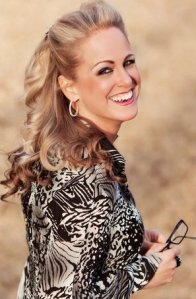
Kristen worked in international sales before transitioning into a career as an author, freelance editor and speaker, and she takes her years of experience in sales & promotion and merges it with almost a decade as a writer to create a program designed to help authors construct a platform in the new paradigm of publishing. Kristen has guided writers of all levels, from unpublished green peas to NY Times best-selling big fish, how to use social media to create a solid platform and brand. Most importantly, Kristen helps authors of all levels connect to their READERS and then maintain a relationship that grows into a long-term fanbase.

Currently Kristen is teaching workshops based off her best-selling book We Are Not Alone–The Writer’s Guide to Social Media at various writer conferences across the country. Stay tuned for a workshop in your area.

Kristen is represented by Russell Galen at Scovil, Galen and Ghosh Literary, Inc in NYC.

How to Plan a Successful Book Signing

As a first-time author of two children’s books, God is with Me through the Day and God is with Me through the Night, I was surprised to discover that the most challenging part of the journey was marketing.

I had worked as a marketing writer for years; but marketing my own work was…well…icky. As a friend put it: “It’s a bit like standing in front of the mirror with a stranger and asking them to say nice things about you.”

Despite my reluctance, I was grateful to experience many successful book signings after the launch of my children’s books. When I sold more than 100 books at several signings, the bookstore managers were amazed. They couldn’t believe I was having such strong turnouts as a first-time author.

One Barnes & Noble community resource manager hit the nail on the head when he said he’d never had an author market the event as much as I had. That behind-the-scenes work was responsible for the second-largest signing of his career.

When planning your next author event, keep these tips in mind:

1. Your biggest ally is word-of-mouth. Reach out to anyone you know in a community and ask them to invite friends, family, neighbors, church members, school peers, etc. You’d be surprised how interested folks become when they have a personal connection to the author.

2. Send out press releases to local media outlets. Look for television news programs and radio shows that routinely support local events. Contact regional magazines, and reach out to the newspapers for a book review and/or author interview.

3. Post the event on all community calendars, since many media outlets will share the event both online and in print.

4. Contact local churches to invite their church community to join you. You can also offer to visit the church for a personal author event. Some churches have been extremely kind and generous to me by promoting the event in their Sunday Bulletin or weekly newsletter.

5. Use the Internet to locate your target audience and reach out to them via email, direct mail, phone calls, or – of course – word of mouth. Depending on your book, you may want to contact veterans groups, healthcare workers, mothers groups, or schools.

6. Use key social networking tools such as Facebook, Twitter, iGoogle, and a personal blog to boost interest in your books. Also consider pitching high-traffic blogsites to serve as a guest blogger.

7. Don’t be shy. When you’re at the event, engage attendees in conversation. Remember, humor is key. Get people laughing and they’ll want to hear more. Marketing does take time, but the extra hours pay off in most cases.

Now that my first novel, Into the Free, will hit shelves in February, I plan to use these strategies again when planning my upcoming book tour. How do you help ensure your book signing will be a success? Do you provide free giveaways? Tagalong with a larger event? Mail postcards prior to the big day? We invite you to share your ideas to help all of us make the most of our time on the road.

Happy book signing!

Julie

Build Your Platform – Get Yourself Some Gigs

Here is a terrifying sentence: If you want to be a writer, you probably need to be a speaker as well.

Gulp.

I know that most writers would rather hang out a coffee shop or with their cat writing the day away than speak. I know a few writers who would rather stab themselves in the eye with a sharpened yellow #2 pencil than speak. But if you are working on building a platform, speaking is your quickest way of doing that.

Just today, I had a woman from Texas call me up and say, “I’m ready to speak, but I don’t know how to launch that part of my business/ministry.” Since a good part of each of my work days are spent finding speaking gigs, I thought it would be helpful to share some of my strategies each time I blog here.

Tip #1

Speak for Free

It is the bane of every speaker’s existence. That moment when your event coordinator says, “We don’t really have a budget for speakers, but we would love to have you come.”

In my opinion, unless you are already booked to capacity, take the gig.

Yes, you are worth more than that, and your time is valuable. However, the best way to get more speaking engagements is by speaking. It is a false economy to sit at home all day creating flyers and making phone calls looking for paid speaking engagements, when you have passed up the opportunity to speak for free.

Speaking is your best form of advertisement. When someone is sitting in the audience listening to you, chances are she belongs to at least one or two other groups or organizations that use speakers on a fairly regular basis. Multiply that by the number of people sitting in the audience, and that is the best form of marketing.

Recently, a large church asked me to speak for free to a group of over 150 women. At first I was put off because surly they could afford to pay me. I thought better of it and accepted the gig.

From that one engagement, I have had three paid bookings, and another spin-off booking. Plus, I got a great recording from that one engagement.

If you are going to speak for free, make sure you get something out of it besides free advertising:

  • I always ask for my expenses to be reimbursed, (food, travel etc,) Don’t ever let your speaking cost you money.
  • Ask your venue if they can record you. Having that recording is essential when you are booking other gigs and they want to hear what you can do.
  • Build a great book table so even if you are not getting paid to speak, you can make money by selling your products.
  • Ask if the event coordinator will be a reference for you.

Action Plan:

  • Let the world know your are available. Tell friends, coworker fellow church members that you are open for business and willing to speak no matter the fee
  • Search our religious, community, and industry groups who are looking for free speakers
  • Even if it is not a subject that you are an expert on or passionate about, see if there is a way you can make it work for the group. This is especially important if you are fiction author. Your local MOPS group probably isn’t going to book you to talk about your latest historical novel, but they might just love your talk on Pursuing Your Passions as you talk about what it took to get published. Or how about a talk on making history come alive to kids?   Just figure out how to become a niche expert for any group by bringing in your specific expertise.

Question for You – If you speak, how are you getting your speaking engagements. If you don’t speak, why not?

Getting Your Feet Wet

This past month, my family and I spent a week camping in the San Juan Mountains of Colorado. We enjoyed the cool temperatures and the awesome beauty there and spent several days hiking the many trails that stretched just yonder before us. One such day led me to unknown waters–or rather, an unknown way to cross a certain mountain stream, without getting my feet wet. [BTW, I failed miserably. If interested, you can read about the disaster here.]

Sometimes, we just have to get our feet wet–if not our legs, arms, and ears. When it came to marketing and promoting my first book with Zondervan in 2009, I knew I needed to jump in with both feet.

Having read various marketing blogs and having studied the ideas of many ACFW authors, I had a good idea of what I wanted. I planned to schedule book signings, visit bookstores, create bookmarks, etc. But having this knowledge and knowing what to do with it (when you have a marketing budget) are two different things.

Once I received my advance, I had actual money to work with. Yay! So, I began with a budget. Oh, but wait! After reading through all my notes and research, there seemed to be a LOT of controversy on how much to allot toward marketing. Some authors put all of their advances toward marketing, while others spent hardly any, depending solely on their publishers. If my husband had his say in the matter, a very low percentage of mine would be given to marketing. LOL. After all, if God wanted my book to sell, He’d provide a way. Right?

After much deliberation, calculation, and prayer, my husband and I came up with a percentage of the advance we thought would work, budgeting out certain amounts for things I deemed necessary and leaving room for items that were a bit more extravagant. For learning purposes, my budget had the following items:

  • High Speed Internet and Updated Computer
  • Author Website
  • Publicity Photo
  • Book Trailer
  • Book Launch
  • Promotional Items (bookmarks, pens, etc.)
  • Book Signings (travel, meals, etc.)
  • Conferences/ICRS

Did I stay within my budget? I’m happy to report that I did. Next month, I’ll share my plans for creating an author website–what I wanted in the beginning, what I settled for, and how it all turned out. Until then, enjoy the moments AND don’t be afraid to get your feet wet.