Monkey Read, Monkey Should Do!

apeDoes the acronym HARO mean anything to you?

It should, because it just might be your ticket to free publicity, extensive exposure as a writer, and the means to grow a national reputation as an expert in your field.

HARO stands for Help A Reporter Out, and it’s a website where you register as an expert and news source. There is no fee to register, and while there is no guarantee that you will get tapped for information, it’s a chance you don’t want to miss. For nonfiction writers, it can become one more piece of a marketing plan to become known for their unique expertise, while fiction writers might consider their own research in specific topics as fodder for story ideas. According to HARO’s website, 30,000 members of the media have turned to HARO for assistance in developing stories; is there any reason you shouldn’t be one of those folks helping out a reporter?

Learning about HARO was just one of the things I learned from recently reading APE: Author, Publisher, Entrepreneur-How to Publish a Book by Guy Kawasaki and Shawn Welch. While I have no desire to publish my own books, I still found the book informative and helpful, especially as I’ve grown from an author-wannabe to someone with five years of publication experience. The first section of the book was a good reminder that writers come in all shapes and sizes, with a range of motives, and that’s okay. It made me consider again the tenacious nature of writers who want to publish and gave me a new understanding of why people choose self-publishing. (It also made me realize that if I did decide to do a short ebook as a promotional opportunity for my other books, I could probably pull it off using APE as my guide.)

What I especially appreciated, though, was the book’s insistence that there is no escaping from the truth of today’s book business landscape: authors need to take responsibility for their books’ success, no matter how they are published.  APE gives valuable insight into the entire publishing process, which I’m convinced every author needs. Publishing is a business, and the sooner authors accept that, the more successful they will be! As an early publishing mentor of mine insisted, if you’re going to succeed, you better know how the business works. Kawasaki and Welch have done a fine job in giving readers the essentials of publishing.

Seeing as I’ve spent the last year trying to educate myself about platform and marketing, I found the last part of the book packed with practical suggestions and resources, like HARO, that I can play with as I continue to polish my marketing skills. The authors even include their own list of what they did to publish/market APE itself, providing readers with a basic outline for promoting any book, and offering links to learn more.

What are you APE-ing these days?

(Special thanks to Lucille Zimmerman, my agency-mate, who gave me the book to read!)
How to Get Started Writing: Hamster Wheels and Hurdles

type lettersOf all that a writer can and should do—how, actually, does one get started?

It would be possible, in assembling writing advice from just a handful of the people who are giving it, to come away with the impression that making it in this business requires doing everything all the time.

You must, people say, build and maintain a platform. Start or re-start your website. Pin to boards. Make things that other people will pin to boards. Attend conferences and conventions. Join groups. Pitch ideas. Hone your message. Know your audience. Study writing books. Edit incessantly. Post blogs. Find a writing schedule that works. Tweet and re-tweet updates about all of this. Plus string tens of thousands of words together and hope somebody will see fit to make a book of it. That’s just phase one.

Phase two is its own hamster wheel. With a book in publication you must, people say, promote like crazy. Speak at events. Do interviews. Pursue interviews. Write accompanying articles. Track reviews. Deal with disapproval. Build friendships with booksellers. Have catchy marketing stuff. Improve on sales. Aim for bestseller lists. Figure out your next project. Pin, post, platform-build, edit, update, and speak some more. Promise to tweet and re-tweet, always and forever.

The general question: Who can possibly manage all that?

The specific question: How, possibly, can I?

The general answer is that likely nobody can manage it all, when trying all of it at once. The other answer is that you, specifically you, can work toward all of this by doing so incrementally.

You will not start out on bestseller lists. You’ll begin at the beginning, with the whole unrelenting shebang left to do. Tweet This

There will be potential failures and rejections at every corner and turn. But if you begin—if you sit at a computer or a typewriter or even a small slip of paper, and if you start putting words down and then keep putting words down, you will be writing. Often it is as simple as that.

hurdleHere is a personal example. After having published three books by 30 (two as author, one as collaborator), late last year I didn’t have a single writing project to speak of. I wasn’t sure I wanted any, because being submerged in the mire again—see above paragraphs—seemed exhausting. Other concerns demanded my focus and time too, namely: my husband was on a seven-month combat deployment to Afghanistan, we had moved our lives across the country twice in less than a year, and I had just given birth to a baby, our first. Some days, accomplishing just laundry and dishes seemed out of my league.

But I knew that God had given me a love for writing and the opportunity to publish. He was percolating words in me that I wanted to put down. So on one harried morning, I dared draft an article query. On another day I bravely emailed some book ideas to my agent. It was just a baby toe stepped back into the pool, but from where I stood it was the all-important start, a jump at the big, looming hurdle.

That was trajectory, finally, and in a matter of weeks and months I was actually writing again: ideas flowing, plenty of potential projects on hand, a few materializing, and even (always miraculously) another book contract waiting in the wings. Perhaps more importantly, I was learning to chip away at this job, little by little, reminding myself that it would not be accomplished in a single swing. The laundry and dishes were waiting longer than before, but I figured I could deal with that.

Have you wondered, frustrated, how to get started writing? The solution can be as simple as a little trajectory. Tweet This

Stop trying to figure out how to start writing; instead, start. Aim at a goal and have the courage to start imperfectly and incompletely. As you get a handle on one area, add another. You will likely surprise yourself with all that can be attempted and accomplished. Writing is far more doable when you’re doing it.

What Does Your Reader Look Like?

What does your ideal reader look like?Woman Reading a Diary

When I first read this question in a marketing article, I wasn’t sure how to answer or even why it was important. Recently, though, I had a promotional opportunity that made it very clear to me why this question is a key to marketing success.

After three years of trying to get on the guest list, I was interviewed on the Larry Meiller Show on Wisconsin Public Radio in late January. I knew that Larry was interested in nature, among other things, and so I thought it would be a good spot to reach potential readers of my birding-based mystery series.

Judging from the hits on my website that day, which recorded an all-time high of visitors, I was right.

What I hadn’t appreciated, though, was the fact that my target audience listens to a lot of radio. Duh – birders drive in cars to find birds, which means they listen to radio.

And that’s when I understood why I needed to think of what my ideal reader looks like…and what he does in his spare time…and what she values…and what he listens to…and what she reads…and, well, you get the idea. I needed a very detailed description of my ideal reader so I would know just where and when and how to reach as many of them as possible.

reading boysSure, we all have a general idea of who our readers are – literate, male or female, teens or adults, seniors or little kids – and we probably have some ideas about what they like to do. After all, if I write self-improvement books, I would assume my readers are interested in that topic; if I write medical thrillers, I would think that my readers are interested in medical science to some degree. But would I automatically know that those seeking self-improvement are more likely to watch ( or record) an afternoon talk show on television than listen to a morning news show on radio? Or vice-versa? And how many readers interested in thrillers use Facebook to find book recommendations, rather than read the Sunday newspaper book section?

All these habits and traits and proclivities are key to understanding your audience so that you can make the most of your time, effort, and promotional dollars; the challenge is finding reliable sources for building your ideal reader’s profile, which may take a lot of trial and error on the part of an author who takes on the responsibility of designing and implementing effective marketing.

My best suggestion? Get to know your readers. Ask them what they like to do (when they’re not reading), what media they favor, where they shop, the names of their favorite (other) authors.  The time you invest in putting together a profile of your ideal reader is not wasted, but will result in increased sales and more effective writing as you zero in on who’s reading your work.

Do you know what your ideal reader looks like?bulldog wearing eyeglasses sleeping over a good novel

3 Top Tips to Gain Facebook Fans on Your Author Page

3 Top Tips to Gain Facebook Fans on your Author Page

As a modern day writer, I aspire to hone my craft and make the words sing on the page  as much as the greats did, people like Hemingway, Dickens, and the Brontë Sisters.

Okay, that’s a bit of a haughty statement.

Let me just say I work hard at writing better.

But in 2013, writers have the added stress of social media. We write, yes. But we also build, and gather, and hunt. We structure writing platforms. We gather tribes of readers. We hunt for excellent literary agents, and publishing houses that will not only get our work in print, but shine a light on it for the world to see.

It can be exhausting, this business of modern day writing. So I am throwing out three of my best tips about Facebook. My author fan page has proved to be a great tool to interact with potential readers.

Here are three of my top tips to gain Facebook fans on your author page.

1) Make sure your personal page connects to your fan page on the header to allow for cross promotion. Especially now that Facebook wants fan pages to utilize paid promotion, it is vital that your personal page easily and prominently connects friends with your fan page.

facebookgillianarrow

If you aren’t sure how to do this, here’s a step by step tutorial from Amy Lynn Andrews from Blogging With Amy.   

Likewise, on your fan page, ensure that your author website appears in the “about” section at the top.

75020_10200138856291333_2022590139_n (1)

2) Provide pictures with text through sites like PicMonkey. When I promote a blog post on my fan page with an uploaded photo, I get more likes and shares. Make sure your website is noted in the corner of the picture. Here are a couple examples:

maya angelou

evie loves her life

struggle right grammar

Check out this post if you’d like a simple tutorial to walk you through PicMonkey. You can use the site for free, or pay a small monthly fee for more options.

3) Know Facebook protocol. For example, it is against the rules to advertise on your cover photo (like a website address). So if you have a header with your website, change it, before Facebook shuts down your page. Also, it is considered bad manners on Facebook to post a blog or an article more than once on your page, whereas on Twitter, you can post three to five times a day. Want to find out more? Read this post from Author Media.

Do you have Facebook tips you’d like to share with us? How do you think Earnest Hemingway would do with social media? Yeah, me too. Happy Facebooking!

A Few Christmas Thoughts On Marketing

VIVITAR DIGITAL CAMERA

Would you trust a Christian?

How about a Puritan?

A Quaker then?

On cold winter mornings before I head out, I love a bowl of hot steaming porridge oats, with a dash of maple syrup.

With this in my belly, I am ready for anything the day may throw at me…well, at least until the mid-morning coffee break.

Look at the image of the Quaker man on the box. He’s adorable, trustworthy, decent, a law-abiding citizen. His smile is certainly reassuring. Admiring his rosy cheeks? Well, he could be Santa Claus.

His face says it all. Buy my products and you’ll feel as good as I look!

a pic of quaker%20oats%20man

I was in my local supermarket recently, when my keen eye spotted a bargain. I saw an offer on the shelves that was just too good to miss. A double-size box of my favourite porridge oats, with twice the usual contents, for a knock-down, give-away price of 30% below normal cost. My hand flashed out quicker than lightning. The big box was in my cart. The next day, ready for breakfast, I broke into my double-sized box of….what? I was shocked, then embarrassed at being so gullible. I trusted the Quaker man to deliver on his promise. What I got was, yes, a double-sized box, but inside it was 60% air! The actual contents came up to the level (take a look at the first picture) of the top of the wooden post.

As we head towards to the Christmas season when billions of dollars change hands, maybe we should all take a step back and reflect upon the potential of marketing and its ability to persuade us to buy products that patently don’t live up to the advertising.

Just for the sheer sake of it, I did a trawl through Bible Gateway to check if the following words and phrases ever appeared in the Bible.

Marketing, Selling, Sales Strategy, Search Engine,

Keywords, Customer Centric, Optimization.

You guessed it. None of them have a place in the Good Book. As writers, of course, we need marketing to get our message out there and reach communities, whether they be local or global. But we need to be discerning and careful to avoid the trap of believing and buying into the same secular trickery that sells anything to everyone. We should not be inveigled by the World, the Flesh and the Devil. Not be seduced to sell our sacred message by secular means.

I have often pondered this: What would I say, if God said these words to me?

”Fred, your book is great, but it will only sell one copy. The person who reads it will be changed and will become my servant and take the Gospel to millions of people all around the world, and all because he read your book. Alternatively, I can have your book sell millions of copies, you will be rich beyond your dreams, but only a few will be saved. My son, it’s your free choice.”

What do we ultimately want from writing books? Fame and fortune? Or to be walking in God’s will?

Of course, the Lord has a strategy to communicate his message to the world. Undeniably, he uses the power of the Word to get the message across to the greatest number in the most effective way. And he uses great orators to reach the lost, but persuasion is not their business. Their business is communicating the truth about the Son. The way God markets his message turns human wisdom and cleverness on its head.

When God wanted to free the Israelites from Pharaoh’s tyranny he sent a guilt-ridden, reticent, stuttering, fearful man called Moses to get the job done.

When God wanted to proclaim the coming of Jesus Christ he used an eccentric wild man, dressed in animal skins, eating locusts and honey in the desert.

When God wanted to save the world, he sent his all-powerful and eternal Son to be born naked in a stable for animals. As a human child he was vulnerable, weak, dependent and unable to live without his mother and father’s protection and care.

When God wanted to reconcile us to him, he allowed his Son be crucified, killed on a cross of wood, dying as a common criminal rejected and alone.

I wonder what the top marketing gurus and the best advertising companies would have come up with, if God had asked them to create a package to ‘sell salvation to sinners?’

They might have come up with a great sales strategy and a winning message to achieve customer optimization, perhaps throwing in an unforgettable slogan, an amusing jingle too… yet somehow, like the Quaker box of porridge oats I bought, I think it would fallen short, been so much air and less substance. I think their sales plan would have missed the target, somehow betrayed the truth, don’t you?

How to Stage An Online Blitz

After spending five days eating, drinking, and sleeping (well, maybe not so much sleeping as lying awake with the brain on overload) the promotion of my free Kindle download last week, I’ve come up with what I call ‘Jan’s TIP’ for any writer planning a similar online marketing blitz.

T is for Timing.

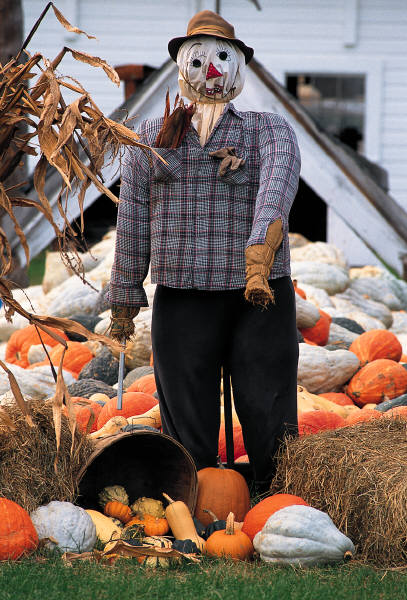
Choose your campaign dates carefully. My book, A Murder of Crows, takes place in October and opens with a scarecrow display; picking an October date for the promotion was an easy choice. It also afforded me lots of tie-in opportunities: I could mention the book in response to any blog, Facebook or Pinterest item that was about Halloween or scarecrows. Think seasonally!

Timing is also about when you post on social networks. I read blogs on Social Media Examiner and subscribe to Rob Eager’s marketing posts, and I’ve learned the best days and times to post to get the most fan engagement: Wednesday through Sunday. I kicked off my promotion with announcements on Sunday and pushed hard with posts Thursday and Friday.

Finally, timing is about you, and how much time you can devote to managing your promotional campaign. I spent at least four to five hours a day online posting, emailing, commenting on blogs, updating lists of contacts and prospecting for new ones. I spent two more hours each day strategizing what to do the next day, exploring new markets and tracking sales/download data. If you want to run a successful campaign, it’s a full-time job!

I is for Images.

Research has shown that images are the keys to social network sharing. To keep posts fresh and continually attention-grabbing, you need to switch up the images you post. I developed six images to use during my five days of promotion, and changed the images I posted every day, with different short text messages. By the end of the week, I’d seen all six images reposted on different networks. It kept my message alive in the universe of Facebook and Pinterest, where the typical ‘life’ of a post is only three hours.

P is for Preparation.

I spent weeks – years, actually – preparing. I made solid contacts in my target audiences over the last few years and asked for book reviews and assistance in promoting my free Kindle deal. I put together a team of fans, reviewers, bloggers, and key influencers to help me focus on getting the word out the week of the promotion, and supplied them with my prepared images and text to use on their own networks. My list of websites and FB pages to contact during my promotion week numbered over 100 (and in the course of the week, it continued to grow as I stumbled on new connections – which are now part of my data base for future book promotion).

So that’s ‘Jan’s TIP.’ Take it for what it’s worth. For me, it was worth around 4000 Kindle downloads in five days…and a bump in the sales of other books in my series.

Do you have a tip for free ebook promotions?

The 15-Minute Writer (Part 3): Building Your Platform

Platform building has become all-important in the publishing world. And how do you build a platform? One plank at a time.

That’s why I tell writers with day jobs and moms with kids NOT to wait until they have more time to pursue their dreams. You can write, build your platform and get published–one small step at a time.

When I started taking my writing seriously, I had a baby and a husband in full-time ministry–and no family nearby to provide free babysitting. So I wrote during my son’s nap times. After Jordan outgrew his naps, I enrolled him in our church’s “Mother’s Day Out” program two days a week, and used those times to write.

When my second son was born, I repeated the process–though things did get a bit trickier! I’ve also written during lunch hours, backstage in a dressing room while waiting to perform at a theater, during birthday parties (not my own kids’, though!), on Saturdays/Sundays, and late at night.

*But NEVER in the early mornings. Some things are just insane.*

One plank a time, I’ve pursued this crazy/wonderful calling God placed on my life, building a career and a platform. It’s a roller-coaster, of course–lots of rejection for every acceptance–but I wouldn’t trade it for anything.

[I’m also aware that my husband is entirely supportive, and for those authors who don’t have an encouraging spouse, my heart goes out to you. You’ll have to be even more creative and deliberate about finding time to write. But please, don’t give up!]

My own story makes me passionate about helping other writers (especially moms) hone their craft.

Say you have a precious fifteen or thirty minutes a day to write. Divide those segments into writing, market research, and promotion/marketing. Then use your allotted time three days out of the week to write; two days to do market research; and one day to market (giving yourself one day off).

Here are a few sample ways to build your platform, fifteen or thirty minutes at a time:

  • Post a new picture or status update on your Facebook author page and “like” a few other people’s posts while you’re signed in as the author.
  • Tweet from your Twitter account and RT/respond to a few tweets from friends.
  • Update LinkedIn (I do this automatically by linking my Twitter feed to my LinkedIn profile, so when I tweet, my LI account gets updated, too).
  • Write a rough draft of a blog post.
  • Pin a link and photo from a former blog post on Pinterest. (Careful! Pinterest is addicting–might I suggest a timer?!)
  • Read a blog post (or two) and comment on it.
  • Read a portion of a book on marketing and promotion. Highlight your favorite ideas, and bookmark the page to come back to.
  • Read about a conference you’re interested in, and mark the dates on your calendar.
  • Sign up for a conference, online course, or in-person class.
  • Write a rough draft of a query to an agent or editor.
  • Edit a query you’ve previously drafted.
  • Compose a cover letter for a query or manuscript.
  • Email friends about your newest published piece and ask them to share it with friends, if they’re so inclined.
  • Email an author friend to ask advice or feedback.
  • Offer feedback and advice to someone “greener” than you.

Now it’s YOUR turn. What are your strategies and ideas for platform building, one board at at time?

(Read part one and part two of the series.)

What the Well-Dressed Writer Is Wearing

Actually, the title for this post should be “What the well-dressed writer is wearing in public.” In private, while we writers are slaving over our manuscripts, I know what we wear – anything from running shorts to old jeans to pajamas and robes, and everything in between. When we’re lost among the words, who cares what we look like?

But once you become a published author, that changes. Suddenly, what you look like matters. You have to meet the public. You sit in bookstores, sign books, and attend events. You speak at luncheons and dinners. You do a television spot.

You need to rethink the old sweat pants that have seen you through your book’s creation. You need to glam up a little and give your readers your best side. They are, after all, rooting for you, and you want to do them proud. So, yes, it’s time for a writer’s make-over! (Cue the fanfare!)

Unfortunately, I’m lousy at make-overs (fanfare goes flat), so instead, I’ll just share with you what I’ve found works for me when it comes to making public appearances.

  1. Find a simple haircut/style that is flattering and stick with it. Shell out the money for an experienced stylist and ask him/her for suggestions and instructions. My hairdresser is a lifesaver; not only does she give me a great color and cut, but she shows me how to get different looks with it, so I always look fresh at events. It was her advice before my first book launch that continues to guide me: “Your fans deserve to see you at your best.”
  2. Put together one or two complete outfits that you can grab and wear at a moment’s notice. If you’re chic-challenged like me, get help. Go to that clothing store you drool over and ask for help in assembling a professional ensemble. Yes, it might cost a bit more than you’re used to spending, but to have one ‘go-to’ outfit for anything book-related that comes up will, in the end, save you money, time, and mental energy. I love my ‘go-to’ clothes; I know I look great in them, and that boost of confidence really comes in handy when I’m facing a roomful of strangers. Polyvore, a website often pinned on Pinterest, has some great ideas for various outfits, too.
  3. Use accessories! Okay, I sound like a women’s magazine, but I think this has made a big difference in my presentation. Normally, I don’t wear jewelry, scarves, or jackets, but when it comes to looking polished, they add the icing to the cake – especially when your accessories go with the outfit. (See #2 again.) My favorite goofy earrings? Not so much.
  4. You may want to consider dressing in ‘costume.’ A friend of mine writes several series under different pen names, and she dresses differently for each author persona: one is eccentric, another is business professional, and the third is romantic. She has a ‘go-to’ outfit for each, so her clothing reflects her brand, which means that her clothing is marketing.

What are you wearing?

Hello, Fellow Publishers!

I’m a publisher.

I thought I was just an author doing some social marketing, but thanks to what I’m learning from Beth Hayden’s book Pinfluence: The Complete Guide to Marketing Your Business with Pinterest, my whole perspective on my writing career is changing. Yes, I write mystery and suspense novels, but in support of that endeavor, I need to be creating and presenting content online that is meaningful and valuable for my customers. I need to give my social media friends and visitors what they are looking for, or as Hayden explains on page 61 of her book, “You need to make sure that every piece of content you publish either solves a problem for your audiences, or entertains them – preferably both.”

That’s a big responsibility. Every piece of content. We’re talking about images, information, links, comments – anything you publish anywhere on the internet that has to do with your writing. It’s all part of your ‘company.’ The really exciting part of using Pinterest as part of your company is that it allows you to get creative with visual content, which, psychologists tell us, can evoke emotional responses in a viewer. The bottom line is that by publishing the right images, you can build enthusiasm and loyalty in your viewers, which will help sell your product (books).

Culling through whatever is already on Pinterest boards, however, is not the way to find the ‘right’ images for your viewers, Hayden points out, just as consistently using someone else’s words doesn’t make your work original. Instead, put together your own content. That doesn’t mean you have to take a hundred photos or hire a graphic artist. It means you have to collect compelling images that represent your unique brand. (Be very careful of image copyrights.)

Do you write historical romance? Pin beautiful images of the places where you set your stories, or sketches of period clothing, or the flowers of the region – anything that helps your reader connect to your book. Think of it as publishing a behind-the-scenes guide to your story.

Do you write motivational memoirs? You could pin pictures of famous people who have overcome hardship, or framed inspirational quotes, or maps that trace incredible journeys. Think of it as pulling together an illustrated companion piece to your book.

The possibilities are limited only by your time and imagination, but if you keep focused on your ‘company,’ it will help eliminate some of the time-draining wandering we all do when we get online; if you’re collecting images of old barnyards for an Amish board, it will be a lot easier to not get distracted by all those cute animal pictures that pop up in the blogosphere. (If all else fails, put a sticky note on your computer screen that reminds you “No puppies!”) Make your publishing goals as specific as possible, pin appealing and evocative images on your boards, and Pinterest can become a great billboard for your books on the global internet highway.

Enjoy your publishing!

What are some examples of images that you have been pinning lately? Do you have any creative ideas for pins besides those I mentioned above?

Marketing with Integrity: 5 Tips On What Not To Do

http://www.stockfreeimages.com/

Most writers prefer to focus on craft instead of marketing. But let’s face it. These days, authors need a platform to jump from in the publishing world. Without flexing the mammoth muscle of the internet, our publishing goals may not materialize.

Humph.

I’m new in the business. I’ve written a memoir about having a baby with Down syndrome while living as a missionary in Ukraine. I’ve landed an agent. I now participate in the shaky step of pitching my project to editors.

And I’ve already committed marketing blunders.

Here are 5 tips on WHAT NOT TO DO in marketing.  

1. Don’t use your kids to get ‘likes.’ 

After my amazing agent Sarah Joy Freese encouraged me to attract more likes on my Facebook Fan page, I went a little nuts. I hosted a giveaway on my blog in exchange for Facebook likes and Twitter followers. I then convinced my four children to write and perform a “likes rap” video. They were cute. It was fun. It killed an afternoon at our house.

Giveaways and videos are great marketing tools. But I went overboard. I posted the video, and re-posted, and re-posted until my kids were even tired of watching themselves perform. My idea morphed into a “look at me” festival until a friend sent me a gentle message saying, “Really, Gillian? This isn’t you.”

2. Don’t spam.

Spam is no longer just canned pork.

According to About.com, “Spam is any unsolicited commercial advertisement distributed online.” If you post links repeatedly on social media without engaging in community and conversation, you may be considered a spammer and people are going to find you annoying.

3. Don’t just ask. Give.

It is better to give than to receive. Let’s face it. People don’t care about us. Readers want a takeaway. They want perspective, a lighter mood, encouragement, escape.

In marketing, it is essential to give. Share links. Retweet. Interview people on your blog. Ask questions on your Facebook page. My writing tribe is best formed through reciprocal interaction and authentic interest.

4. Don’t market without a plan.

My marketing blunders have stemmed from too much excitement and lack of preparation. At first, I had no marketing plan. It’s difficult to have integrity at high-speed. Now, I try to step back and see the big picture. What marketing strategies will best utilize my schedule, gifts, and goals? I am no longer allowed to dream up an idea and run with it before a time of reflection, planning, and prayer.

5. Don’t forget to write.

Marketing pursuits easily swallow work hours. When my time is not structured, I blog, tweet, update statuses, and read about marketing. But I might not write.

Thus enters the need for limits. Some writers allow a half hour in the morning and again at night. Others (insert ME!) require a little extra help. Turning off the internet is a great tip. Author Media, a website dedicated to help writers build their platforms, has a post providing seven apps that assist a writer’s occasional lack of self-control.

What’s your marketing strategy? Do you have a blunder you’d like to share? Where are your boundaries when it comes to marketing integrity?

And would you like to use my children in a rap video? If so, contact me. (God’s still working on me.)