Comfort for the New Year

Photo/KarenJordan“He comforts us in all our troubles so that we can comfort others. When they are troubled, we will be able to give them the same comfort God has given us” (2 Cor. 1:4 NLT).

A New Year offers new opportunities and challenges. As I sense the needs around me, I often think, “What can I do to help those in need?”

Sometimes it’s hard to know how to respond. In fact, some people may say,”the devil is in the detail,” inferring that there’s some mysterious secret hidden in the details. That term comes from the original phrase “God is in the detail,” which reminds us that the details are always important.

Discovering the mysterious details of how to help others requires wisdom. And God promises to guide us in this discovery process. But He wants us to ask for HIS help first.  “If you need wisdom, ask our generous God, and he will give it to you … ” (Jms. 1:5 NLT).

Seek God first. The Lord promises to provide the guidance we need throughout our lives. Psalm 32:8 says, “I will guide you along the best pathway for your life. I will advise you and watch over you” (NLT).

God often uses my experiences—good and bad—when I seek Him for direction in helping others. At times, He prompts me to share small things—like prayers, concerns, and a listening ear.

When my friend, Kathy, struggled with vertigo following her cancer treatments, I felt helpless to help her since she lived in another state. And I knew the misery of vertigo. When Kathy mentioned that she could not even read her Bible, I was able to read scriptures to her by phone.

Later, Kathy told me, “Your calls helped me survive my cancer treatments.”

Listen. In Matthew 11:15, Jesus asks His disciples, “Are you listening to me? Really listening?” (MSG).

As we seek God and ask questions, it’s important to listen for the answers. Sometimes instead of listening to God, I’m tempted to offer unsolicited advice to friends and family.

Have you ever received a gift that you didn’t want or need? Awkward! Our unsolicited gifts might actually offend instead of blessing others. Perhaps they need godly advice, not just a hasty opinion or thoughtless response.

Ask questions. I also ask questions when I’m trying to discern how to encourage others. What matters most to them? How can I discern how to help? What helped me when I faced a similar problem? What do I wish someone else had offered me when I faced my last crisis?

John 14:26 promises, “… the Advocate, the Holy Spirit, whom the Father will send in my name, will teach you all things and will remind you of everything I have said to you” (NIV).

Tell the stories that matter most. As a Christian writer, I never want to lose sight of the needs of my audience. Author Anne Lamott offers this advice: “Write the books you really wished were out there in the world.”

During a crisis, I look for resources to help me find solutions for my current needs. Encouraging words heal my soul when I’m desperate for answers. And I’m grateful for the writers who have poured their lives into helpful devotionals and books for those troubling days.

So, “… even if I am being poured out like a drink offering on the sacrifice and service coming from your faith, I am glad and rejoice with all of you” (Phil. 2:17 NIV).

As you plan your projects for the New Year, consider offering some words that could help meet the needs of others.

“… Words are powerful; take them seriously” (Matt. 12:36 MSG).

Can you think of a book that helped you through a crisis?
Tips for Managing Time as a Writer

You’ve heard the age-old story: Creative individual decides to write a book. They sit down with paper and pen or keyboard, and painstakingly write that heart story. Sometimes it takes months. Sometimes it takes years. When talking with their friends, you often hear them say, “Something came up. It isn’t quite right yet. I just haven’t had the time.”

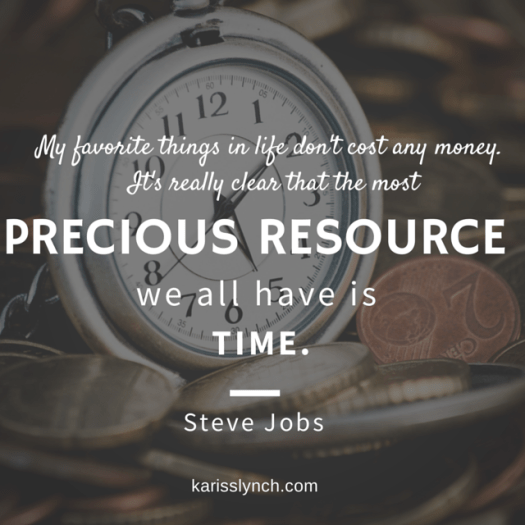
It’s pretty clear that time is precious. In fact, outside of my loved ones, my time is my most treasured possession. Since signing my first contract in January 2013, I have learned an important writing tip, probably the most important tip.

There is NEVER time, unless you choose to make it.

In fact, I’ve noticed one common trait among the published: They make time to finish. Once you sign that dotted line and make a commitment, “I didn’t have time” doesn’t fly with the publisher. Neither does “it’s just not ready yet.” You better make time and make it ready fast or risk losing your credibility.

After signing that contract, time to market becomes important. And time to edit. And time to promote. And time to interact with readers. Lots of time. So it’s important to figure out how to manage it.

My friends hear me say that I’m overwhelmed more than anything else. But I’m learning how to carve out time, discipline myself to finish, and not miss out on the world around me. We aren’t only writers. We are marketers, publicists, graphic designers, speakers, and more. So I’ve learned a few tricks to maximize my time in every area of this writing journey.

Kariss Lynch - timeCreate margin.

I am a night owl and can write and create relevant marketing content easier when my checklist for the day is accomplished. It clears my mind to be creative. Determine your best time of day to write or create, and maximize those short windows.

Set a timer.

Write every day. Set the timer on your phone for an hour, then put your phone on silent and put it on the other side of the room. Clear your mind and write. I found when I did this, I could easily write close to two thousand words if not more in an hour! When the timer goes off, I feel accomplished, satisfied, and ready to write even more.

Carve out marketing time for social media.

I work full time as a writer for my company, so in the middle of the day I am tired of writing. I’ve started taking thirty minutes of my lunch break or fifteen minutes in the morning or afternoon to create social media graphics that I then pre-schedule so I don’t have to think about them. Think about content that is relevant to your brand, then have fun with those designs.

Strategize for online interaction.

The internet is a wonderful tool, but managing our online interaction can eat our time if not handled correctly. Block out thirty minutes every few days to catch up on emails. Take a few minutes to respond to every person who comments on social media (within reason of course). Know your brand, what you are passionate about, and have character and author interviews on hand for guest blog posts. Don’t overthink. Just do.

Know your audience and limits for speaking engagements.

My favorite interviews and speaking engagements are via Skype since it helps me conserve my time, but I’ve also enjoyed those in person speaking engagements with small groups or crowds. Determine your price (if you have one), the size of the group you are willing to speak for, if it is wise to travel or Skype in (this is great for book clubs and classes that may not be close). Bottom line, know your options and then plan accordingly. Don’t forget you still need to write and market and live life, so carefully plan the weekends you will be gone.

Managing time is as much mental as it is physical. At the end of the day, be satisfied with what you accomplished and leave the rest for tomorrow. What tips have you found effective in managing your time?

What Matters Most During the Holidays?

During the holidays, my writing projects, ideas, and dreams don’t always fit into my everyday life. So, I’m forced to decide what matters most.

Photo/KarenJordan

As I prepared to lead a session on holiday traditions for a “Countdown to Christmas” workshop a few weeks ago, I asked myself, What holiday traditions mean the most to me?

I found myself resisting the idea to plan for Christmas before Thanksgiving. I knew I didn’t have the time and energy to accomplish everything that I wanted to do, much less the things that others expected of me. And the burden of planning holiday events and activities overwhelmed me. I knew I had to be honest with myself about my expectations.

Traditions. As I listed my family’s holiday traditions, I decided to find a new way to prioritize them. I chose three basic categories to help me sort through the chaos. I posed three questions.

  1. Which traditions are treasured most by my family? I brainstormed about our holiday activities, noting some old and new favorites—recipes, gifts, parties, and other family activities.
  2. Which traditions are the most practical for my family? I listed the most difficult traditions to maintain, since our children live in different cities with children of their own now—and since climbing on the roof and hanging Christmas lights are no longer options for me.
  3. Which traditions help me to communicate the “real” meaning of the holidays to those who matter most to me? As I examined my traditions, I wanted to be sure to include those that best expressed my faith. As a writer, I know the importance of showing, not just telling. So I scratched off some things that might distract us from the main “reason for the season.”

Realization. This process helped me to begin planning for my holiday celebration and relieved a bit of my holiday stress. How?

  1. Expectations. It helped me release my expectations of myself and of others. I won’t be avoiding certain family members who might not have the same values and beliefs.
  2. Stress. It enabled me to avoid unneeded expenses and the exhaustion of time-wasting commitments.
  3. Focus. I refocused on what matters most and the “real” meaning of the holiday and not on the frustrating and unnecessary aspects of the season.
  4. Pattern. It established a new pattern for approaching my life and work. Instead of thinking that I have to do everything that might be expected of me, I can choose a different response.

Questions. Now, I ask myself three questions before accepting any new challenge.

  1. Passion. Am I really passionate about this?
  2. Practical. Do I have the skills, talent, or knowledge to do this? If not, do I have the time or resources to pursue it?
  3. Purpose. Does it meet an important need?

If not, I’m saying, “NO!”

Celebration. I’m granting myself permission to let go, enjoy life, and celebrate. And I believe this holiday season and the upcoming year will be the best ever.

How do you determine what matters most to you and your family?

I Am A Writer

My brother got married a couple of months ago, and our family forever changed. I gained a new sister, a new twist on life, AND a bigger family. My dad performed the ceremony and I sat with him and my brother two nights before the wedding around our kitchen table listening to them go over the vows – vows to honor and cherish and grow old.

Vows carry a certain kind of weight. In the past few weeks, I’ve found it necessary to make a different kind of vow. Not a vow to another person, a job, task, or event. I am making a vow to myself.

Kariss - Shaken in storesI am a writer. Period. End of any wondering or questions. I have all the dreams and insecurities that come with the itch of fingers to grab a pen and hit the paper.
I am a writer, and within a week of beginning work with my editor on Shaken, I emailed my mentor and told her I thought I needed to start the whole book over. I felt like I need to somehow make it better. I did that with my second book, Shadowed, too. Now my goal is to make each book better than the last.

I am a writer. We can be our own worst enemies. We can also be our own greatest advocates because NO ONE can make me finish the job but myself.

I am a writer, and I type THE END for my own benefit. It will never be perfect. But it can be something I am proud of once I push past the insecurities and just finish.

I am a writer, and I notice people in a different way. This gives me the unique desire to figure out how God wired them, to value their quirks and struggles, and to cheer them on in their successes. I know the best kind of character is one who reflects what God has already created – people. So I’ve learned to value each person individually and love his or her uniqueness.

I am a writer. I can be introverted or extroverted, depending on the situation. I can be equally emotional and analytical, which can sometimes be confusing.

I am a writer. I know the power of words, the pain they can wield or the healing they can bring.

I am a writer. I can stand back and observe a scene, using words to paint a whimsical picture or one cloaked in shadows.

I am a writer, and from what I’ve heard, we subsist on coffee and chocolate. Of course, I can’t personally verify this.

Kariss - Courage quoteI am a writer, and with that comes the necessity to be uniquely myself while God continues to mold me in the process. But when I fail to be who God made me to be, I miss out on being part of the story He is weaving in and through me. When the insecurities or the pride creep in, I vow to fight and write, because no one can write a story exactly like I can.

No one can reach my audience quite like I can.

No one can speak or create or brainstorm or think quite like I can.

I am a writer, but I am only one part of a whole community. Together, we reach a wide audience. Individually, we touch specific hearts, those that are, for one reason or another, particularly attracted to the stories placed on our hearts. When I fail to be unapologetically myself, my readers and those in my life miss out. I miss out.

So this is my writer’s vow. I vow to be unapologetically myself, to be the person, the writer, that God made me to be. I vow to grow in this craft, knowing I will fail and knowing I will succeed. I am a writer, and I want to be part of this beautiful story God is writing with my life, not just an unwilling participant.

What lessons have you learned as you grow to be the best writer YOU can be?

Miles to Go and Promises to Keep

Photo/KarenJordan

“But I have promises to keep,
And miles to go before I sleep …” (Robert Frost).

Many years ago, I sensed the Lord’s direction to begin writing a very personal story from my family’s life. So I began to record my thoughts even while we were still embroiled in the middle of the crisis.

Roadblocks. Yet every time I would attempt to complete a book proposal for this particular project, something thwarted my efforts.

I don’t just mean a little bump in the road. I’m referring to situations that seemed impossible to get through—like my mother’s fatal illness, my daughter’s three orthopedic surgeries and difficult pregnancies, my daughter-in-law’s seven miscarriages and two miraculous births, and my father-in-law’s lengthy terminal illness.

And that’s not counting all the roadblocks in my journey to publication. Oh, my! Where do I begin with that one?

Red flags. So as I approached this long-drawn-out project again—this time working on it with my daughter Tara—red flags waved all around me. Again, it looked hopeless. And to be honest, when I returned home from our last brainstorming session, discouragement covered me like a heavy cloak. And my emotions tempted me to return this story to my “What was I thinking?” pile once again.

Reminders. Then, I remembered my “40-day Challenge: Telling the Stories That Matter Most.”

I also began a study the life of Moses. And I thought my mission looked impossible!

Moses faced the unimaginable tasks of his calling with great fear. He knew he didn’t have the strength or the abilities that he would need to complete the undertakings God had asked of him. He was aware of his weaknesses and limitations; yet, he wanted to embrace God’s promises. But at each step, he faced his own inabilities in light of God’s plans.

As I study more about Moses, I’m reminded once again of God’s steadfast commitment to keep His promises. Even my unbelief, fear, and doubt will not divert God’s plans. I may get sidetracked and distracted, but God remains faithful to His Word.

God also promises to provide all I need to complete the work that He began in me.

“There has never been the slightest doubt in my mind that the God who started this great work in (me) would keep at it and bring it to a flourishing finish …” (Phil. 1:6 MSG).

Reflection. I’m grateful that God continues to invite me to join Him in His work. And I don’t sense that He has given up on me like I’ve often done with Him. He will forgive my complaining about my circumstances and blaming others for my failures.

So I’m holding on to God’s promises now, even as I write this confession of faith. And I pray if you are struggling with a similar issue, you will revisit His promises to you, too.

Are you facing an impossible project now? What lessons are you learning in the process?

I Didn’t Sign Up For This!!!

Babies CryingSometimes I wonder if I’m a masochist, because a writing career is a mixed bag of blessings and curses.

The blessings are many. You finally get to hold in your hands your words published in a book (yes, electronic versions count!). You have the satisfaction of knowing others are reading your work. You get your name in the local paper for doing a booksigning, or you’re a guest author at a local book club. You might even get paid to speak to an audience!

And then there are the curses. A reviewer hates your book. You knock on the doors of the local media till your knuckles are sore, but no one answers. Your great idea for marketing falls flat. You check your Amazon.com sales numbers on your author central page, and it’s like getting slapped in the face with the wet towel of reality. (“What? I’ve only sold 17 copies of my book in the last six months? That CAN’T be right!”)

The fact is that for us writers, who pour our heart and soul into our writing, all those negative responses drip, drip, drip onto the rock of our confidence, until the sharp edges of our desire and motivations (those things that enabled us to set out on the road of writing in the first place) become worn down, replaced by recesses of self-doubt and exhaustion. It takes a lot more energy and perseverance to repair that accumulating damage than it does to bask in the sunshine of the blessings we experience.

This, then, is why a writer needs a talent to forget.

As Philippians 3:13-14 instructs us, “Brothers and sisters, I do not consider myself yet to have taken hold of it. But one thing I do: Forgetting what is behind and straining toward what is ahead, I press on toward the goal to win the prize for which God has called me heavenward in Christ Jesus.”

Every writer I know acknowledges that they have been called to write. The thing we don’t like to acknowledge is how hard it can be at times to do that very thing. None of us embraced our call to write with a joyful shout of “I can’t wait to experience frustration, misunderstanding, isolation, and a hundred painful book signings in almost deserted bookstores!”

At least, I know I didn’t.

And yet the promise remains for us as powerful as it did for St. Paul. We might not have to endure blindness, or imprisonment, or persecution like that famous evangelist, but we can still ‘strain toward what is ahead’ when we fix our eyes on the prize that is Christ Jesus, and not on the obstacles we have to surmount to get there. Like St. Paul, we need to consider ourselves ‘as yet to take hold of our goal,’ no matter how accomplished we might feel when our names are in the local events calendar, or someone contacts us to speak at a program.

Forget what is behind, then, and press on, because that mixed bag you’re holding is well worth the prize.

What is your favorite way to forget and then press on?

This Writing Thing? It’s Not About You

candle-97505_1280It’s a burning idea.

A passion that can’t be quenched.

A germ of a story that won’t go away.

You’re a writer. It’s who you are. Ingrained in your DNA. Found in your identity.

Words are your joy.

But sometimes those same words become your greatest enemy. Maybe you’re not conscious of this happening. Maybe it’s been a slow fade down what is now becoming an even slippier slope. And suddenly you’re at the end and you don’t want to put words on the page.

Or maybe you do want to put words on the page, but the right words aren’t there. You’re drawing from an empty well.

God does not call us to be perfect vessels for His work. He does not expect you to be all together all of the time. And yet so often, we put that pressure on ourselves, don’t we? We expect that we should always be able to sit down at the computer, slit a vein, and write as though the words will always be there.

In that moment, we are relying on our own strength for this thing we call writing.

We become obsessed with our words. We become caught up in the euphoric high of stringing 90,000 words together into a manuscript. And we forget the Orator of those words. Whether you are writing fiction or nonfiction, these are not your words. This is not just your passion.

It’s not our strength that gives us these ideas we turn into stories. It’s not our strength that gives us the words to write these stories. And it’s not our strength that carries us through the times of intense burnout. While we might not consciously think that it is, or make the decision that it is our passion, our drive, our ability putting these words on the screen, when we remove our focus from the true Source, we begin to falter.

I can do all things through Christ who strengthens me.

Do you believe that?

Do you believe that God is carrying you through? We remember that in our daily lives a little bit better than we do in our writing lives. We get caught up. Focused. Driven. Forget God’s timing. God’s way. God’s provision.

That sometimes we have to take a backseat to our dreams, remain faithful to the calling He has laid on our hearts and let Him direct everything else.

It’s surrender. It’s release. It’s not giving up. It’s not giving in. It’s giving over. Remembering where this true fount of word-joy has come from. Whom it has come from.

Do you take time to hit your knees before you write? Because this isn’t about you and what you can do. It’s about what God can do through you as His vessel. Do you dedicate your writing time—no matter how small or large that might be—to your Creator? Without Him, there would be no you. No you to write these words and stories only you can write…though the power and grace of your Savior.

This writing thing isn’t meant to be done alone. Are you trying to?

Maybe it’s time to stop and start over again.

40-Day Challenge: Telling the Stories That Matter Most

Photo/KarenJordanIn your busy life, how do you determine which things matter most?

A close examination of our priorities helps a lot. But often in the process of prioritizing, we realize that we’ve neglected some of our greatest concerns—like our health, marriage, children, or faith.

Priorities. As a writer, I have dropped the ball on some of my most important projects. I rationalize my failure to follow through with lame excuses. But I sometimes struggle staying focused on my main objective—telling the stories that matter most.

My daughter Tara phoned me with a similar complaint about her home life. “I can’t seem to get to the things that matter most to me.”

As Tara voiced her frustration, I understood her dilemma. Day after day, she faces the impossible task of meeting her family’s needs, having four small children in her home.

Prayer. The same issues haunt me, even though we have an empty nest. And I know that I must choose prayer as my first step to address any problem or decision.

James 1:5-6 promises, “If you don’t know what you’re doing, pray to the Father. He loves to help … Ask boldly, believingly, without a second thought” (MSG).

Like Tara, I frequently ask advice from someone who will give me honest input. My husband Dan offers ideas about my organizational problems. But I also consult other reputable resources, like online links, book, or professionals.

40-Day Challenge. Do you need to reboot your writing life, too? I challenge you to accept this 40-day challenge to tell the stories that matter most to you. I’m working through this process myself.

  • Identify the “real meaning” of your work—your purpose, your audience, and the context for your stories. This evaluation process includes answering several vital questions. Why do I do what I do? Who will be reading or hearing my stories? What do I plan to do with my stories? Will I submit them for publication? If so, where?
  • Define some SMART goals and write them down. Goals help guide our decision-making. Without goals, we often neglect to do the things that matter most.

    • S – Specific (or Significant)
    • M – Measurable (or Meaningful)
    • A – Attainable (or Action-Oriented)
    • R – Relevant (or Rewarding)
    • T – Time-bound (or Trackable)
  • Set up tasks for attaining your goals. Write down several reasonable and do-able steps for achieving your goals to help you plan and focus on the right things.
  • Compose a “to do” list, prioritizing all of your tasks. Schedule time on your calendar to work on your goals. This will help you stay on track with your deadlines and defend your time boundaries. It also helps communicate your goals to the people who matter most to you.

I hope that you will join me on this 40-day challenge because when we begin to tell the stories that matter most, lives change and hearts heal.

What goal-setting techniques help you tell the stories that matter most to you?

To Write a Book Someday, Share Your Writing Now

8139708904_9a1d1783d4_bSome people will tell you the defining characteristic of a writer is that he or she is someone who writes. There is truth to that perspective, but it fails to offer a complete picture. It also gives many “aspiring writers” an excuse to be nothing more than journal keepers: diligently plucking away at Moleskine memoirs or first-novel manuscripts that have zero chance of getting published, ever.

The point here is not a matter of quality. It’s about privacy.

The reason why many written works-in-progress will never see the light of publishing day is that they are stowed, always and forever, in a drawer or on a hard drive where they have no risk of being evaluated by a second person. The writers of these works will never be writers because they will never have readers. They exist completely outside the writing market, and the only critical eye they allow to view their work is their own.

If you think that one day you’d like for people to read your writing, then you should begin by inviting people to read your writing now. Here are five ways readers can strengthen your writing and make it even more worth reading:

Readers help you get over yourself. It’s not uncommon for writers to feel uncertain or insecure about what they’ve written. Will this technique work here? Am I being clear? Am I using a marketable concept? Does anybody else care about the subject? Without readers to help confirm where and how a piece of writing is hitting its target (and where and how it’s missing its mark), these uncertainties and insecurities often grow and fester. But when you prioritize feedback, typically you get it. As a result you might find that your sinking suspicions will be confirmed. Some of your assumptions might be challenged. Maybe you’ll be pleasantly surprised by rave reviews. Whatever the case, you won’t be stuck wondering anymore, and that will help light a clear way forward.

Readers identify strengths in your work. Encouragement and affirmation give extra fuel when you’re trying to produce a manuscript. So ask your readers to note the places where they laugh out loud, hold their breath with anticipation, get caught by surprise, can’t stop turning pages, or are struck speechless. That paragraph you’re thinking about deleting? It might be your readers’ favorite part. Give them a chance to tell you so.

Readers identify weaknesses in your work. That poetic metaphor you’ve taken days and months to craft? It might be so complex that it’s confusing your readers. The story you’ve built a whole chapter around? Your readers might be bored out of their minds.

As the writer of a work, you will undoubtedly feel more attached to it than your readers will. Because of your heightened emotional attachment, you’ll probably miss seeing some of your writing’s flaws. You might even be blind to enormous holes in the work. Let your readers open your eyes to the problems you don’t see, so you can take the opportunity to fix them.

Readers expand your perspective. You are only one person, so your outlook on the world is limited and skewed. You have strange views about certain things, and some of your views simply haven’t been challenged in a way that forces you to clarify them well or charitably. Readers can help you identify the odd little points in a draft, the ones that either are or seem arrogant, stingy, dismissive, hyper-emotional, you name it. Points like these will jut out in unseemly ways, always subtracting and distracting from good work, unless someone will be so kind as to call your attention to them, so you can know to improve them.

Readers make the process realistic. If your writing aspirations are real, then you’re going to have to accept the reality of readers at some point. Get used to feedback now, and critiques won’t make you crazy later. Write with readers in mind now, and it won’t feel strange when they’re a part of the process later. Start learning what readers are interested in now, and then when your defining moments as a writer come, you’ll be prepared to deliver for your readers.


YOUR TURN: Respond in the comments: How have readers helped your writing? What kind of readers give the best feedback? What keeps you from pursuing readers?


Photo credit: cogdogblog cc

Honing Our Lives

knife sharpeningAs iron sharpens iron, so one person sharpens another. Proverbs 27:17 (NIV)

While every writer knows that in today’s marketplace, interacting with others on a regular basis is a necessity for selling books, the real heart of writing – sitting down and putting words on a paper or screen – is a lonely job.

For me, however, “lonely” is not the word I would choose to describe my experience of writing. “Lonely” carries a negative connotation, the idea of being “cut off” from others, or “without” the company of others. In contrast, when I write, I feel a freedom to explore my own ideas and the joy-filled opportunity to connect with the Spirit within me. Writing is my “alone” time, not my “lonely” time. It is a personal retreat that renews me because I get to luxuriate in the word-smithing gifts that God has given me.

And yet I can’t deny the truth of Proverbs 27:17; without the other writers, marketing experts, and loving friends in my life, I wouldn’t be able to make the most of those same God-given word-smithing gifts. That’s not to say I’ve always felt this way – when I was new to my craft, praised by my writing teachers in high school and college, I had no use for the comments or criticisms of my peers. If my teachers liked my work, why should I listen to other students who struggled to compose even simple essays? It took me decades to understand the importance of my readers as opposed to the praises of my teachers. Here’s the difference:

The praise of others encourages you (and that’s a great thing!), but it’s honest criticism that will help you improve your craft.

It wasn’t until I began writing as a freelance magazine contributor that I first received truly effective editorial direction. Editors know their audience and work to appeal to them, so they have to play to the crowd. Teachers, on the other hand (I can say this because I’ve been a writing teacher myself), are the final audience of one person, and once a student has mastered what that teacher wants, there is no room to grow. And since all of us like to be praised, it’s tough to walk away from all that positive reinforcement to seek criticism!

As with so many endeavors in life, though, we have to push the boundaries to become the best God intends us to be. In the writing life, that means giving up the comfort of praise in order to find the challenge of improvement: we have to ask many people how we can do better, listen carefully to their comments, and use them to grow our craft.

One of my favorite sayings about Christianity is that “no one is a Christian alone.” Jesus Christ came to shape us into a community of believers, so we might draw on each other’s faith and gifts to grow His kingdom. That applies to our writing careers as well.

We need to be iron for each other.

To whom do you turn to be iron for you? For whom are you iron?