2012 Writers and Readers Reach Out

Over the years I’ve challenged my readers at All Things Southern to join me in an annual benefit for the less fortunate. We’ve done everything from drilling wells in Africa with Life Today to partnering with World Vision to buy chickens and goats for needy families around the world.

Last year I became fixated with the exponential power represented by the fellow writers I meet in my travels. Knowing these wordsmiths all had a circle of readers that enjoy his or her work and interact with them via their websites, blogs, Facebook and Twitter, I wondered what we might accomplish by combining our individual platforms and multiplying our efforts. The dream led me to launch Writers and Readers Reach Out. The positive results fueled my desire to do more. For the second year, I’m asking writers and readers to embark with me on 30 Days of Thankfulness to coincide with the season of Thanksgiving.

I was in the planning stages of the drive and personally burdened by what I was learning about human trafficking when I read Passport through Darkness, by Kimberly L. Smith.  I knew immediately that Make Way Partners, the organization that Kimberly and her husbanded founded, should be the recipient of this year’s efforts. Make Way Partners works with individuals, churches, and organizations to help prevent and combat the evil of human trafficking and all forms of modern-day oppression.

If you’ll take the time to read just a few of the real-life stories on Kimberly’s blog of women and children who Make Way Partners has rescued from slavery, and for whom they provide long-term care, I believe you’ll want to participate in this beautiful journey of restoration.

Eight years ago, Kimberly began chartering small mission planes to fly her into the war zone where U.S. sanctions and Islamic regimes rendered thousands of orphans unadoptable. Providing food and opening a first-grade school in a lawless land with no other educational systems, MWP partnered with an indigenous leader to rescue and care for these most vulnerable orphans. Year-by-year, they have added a new grade to their school. Now, graduating eighth grade, the orphans of MWP have more education than many current leaders of their nation.  It is time to build a high school, making it possible to raise up the next generation of educated Christian leaders who will stop the cycle of violence and slavery.

Read about a few of these amazing students and the complete high school proposal here: http://kimberlylsmithblog.blogspot.com/2012/10/battle-cry-by-guest-blogger-matt-mcgowen.html

The quotes scattered here are those of the late Helen Keller.  Inviting Ms. Keller to share this journey with writers and readers feels right, for it was the power of a word written in the palm of her hand that unlocked Ms. Keller’s heart and mind and subsequently impacted untold lives around the world!

As readers and writers, no one knows the value of education better than we. Let’s dream big and build a high school for the world’s most vulnerable orphans!

Thirty days of thankfulness. It’s not a long time, but it’s a perfect time to join hands and do something grand, together. ~Shellie Rushing Tomlinson

Details for participating authors:

~Writers and Readers 30 Days of Thankfulness begins Nov.1st, 2012

~Each author posts the drive and invites his or her readers to join the effort.

~Participating authors and their websites will be credited and hyperlinked
on Kimberly L. Smith’s author site as well as the MWP blog and Facebook page. The Make Way Partners community is 15,000 strong, representing all 50 states and 10 countries. Kimberly will be blogging about Readers and Writers Reach Out and encouraging her supporters to read works from authors who are of the same mind and passionate to support the same things they care about.

(Authors, please contact audreym@makewaypartners.org if you would like to participate.  Please email Audrey with your name, blog site, Facebook page, website, or any other acknowledgement that you would like to use for your readers to track this opportunity.)

~Each author will be supplied with a button to use on your website, blog, Facebook wall, etc., linked to the donation button at Make Way Parners. You’ll notice the donation form has the following field: “How did you learn about Make Way Partners?” The software can easily track the efforts of individual authors by having the reader respond in that field with the shortened name of our drive and the author’s name. Example: WritersandReaders,authorJohnSmith

*The individual author will have access to how much he or she has personally raised but all other records will be private. There will be no public competition. At the end of the 30 days, we will publically announce the grand total raised, thanking all participating authors.”

Suggestions for participating authors:

~Please feel free to copy and paste this blog post directly, or use your own words to share the story.

~Instead of asking readers for a certain dollar amount, we respectfully suggest asking them to consider the weight of the subject. What would we be willing to do or give if it were our children and grandchildren being bought and sold?

~Strictly optional: On my personal blog, I enjoy having a giveaway in conjunction with the drive. Everyone who donates get entered in the drawing for a signed book, t-shirt, DVD, or anything else I decide to put in a goody bag. Last year I contacted one of my radio sponsors who gladly donated an Ipad for the giveaway! This idea might work for authors who don’t have a radio show, but do have a store or business in their area that would like to participate by sponsoring the author’s drive. In addition, Make Way Partners will give a free copy of Passport through Darkness to every donor.

~Keep the drive before your readers through your own platform during the thirty day focus, aiming to blog about it at least once a week and discuss it frequently via social media.

~Use your media contacts to schedule interviews to talk about Writers and Readers Reach Out 2012. If we can make use of your contacts but you’re unable to donate the interview time, please contact me. It may be that Kimberly or I, if not another of our participating authors, would be able to fill in.

~When twittering or pinning this drive please use hashtags #WritersandReaders2012 or #WR2012. Thank you!

Hugs, Shellie Rushing Tomlinson (twitter @shelliet)

http://www.allthingssouthern.com

This is your donate button:

Simply save the .gif to your desktop and insert it into your posts. The direct link you will be pointing to should be: https://app.etapestry.com/hosted/MakeWayPartners/OnlineDonation.html  

***UPDATE– Yes, bloggers are welcome and encouraged to participate, too.  Also, I’d like to thank LITFUSE Publicity Group for donating publicity efforts.

Does Free Really Help Sell Books?

As I’ve been working on the launch of my new book, I’m struggling with how much to give away for free. I’ve read conflicting reports on offering your book without cost.

Some say you’ll gain so much word of mouth that we all should do it. Others say you devalue your content and make those who have paid for it feel cheated.

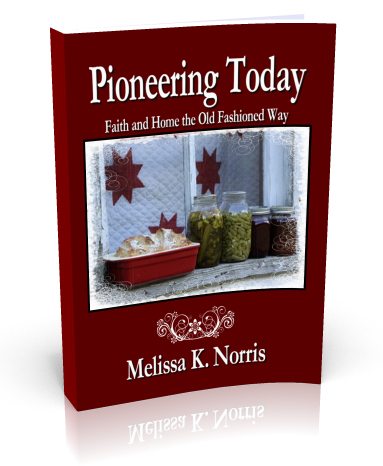
What is an author to do?Melissa K. Norris new book Pioneering Today-Faith and Home the Old Fashioned Way

My new book, Pioneering Today: Faith and Home the Old Fashioned Way, launches today.

I decided to give something away for free and a bonus gift. But I put a time limit on it. If I know I’ve got a limited time frame it makes me get to it first. I’m thinking I can’t be the only one who thinks this way.

I’m offering up my first chapter for free. Now that’s nothing new, you say. Authors do this all over the place.

But not all authors use this great free application called “Pay with a Tweet.” In order to read my first chapter, people can choose to pay with a Tweet or Facebook share. It represents word of mouth marketing for me and also gives the reader something for free. Want to see it in action? Go to my book page here. 

That’s not my only freebie. For every reader who purchases my book on Amazon and forwards me the copy of their proof of purchase, email, and mailing address, I’m going to mail them a secret recipe and the link to a full length bonus chapter, but only through October 31, 2012.

I’m hoping this will help people to purchase now, before it falls onto their to-do-list and is forgotten. I also feel that these items provide real value and content to the readers of my book.

Because that’s what great marketing boils down to. The reader asking what’s in it for me?

Have you ever bought something from an author because you enjoyed their free content? Do you think free is better or do you believe you get what you pay for? Have you seen a jump in sales from giving away free copies?

Reflection on the Writing of Books

After a conversation with a Catholic friend the other day, I got to thinking about the nature of revelation. My friend and I believe the same exact good news—that God orchestrated his son’s human birth and death and coming back to life so that we humans could live forever—but we come to it so differently: my friend through tradition mainly, beliefs passed down and solidified over the centuries since Jesus’ time, and I mainly on the basis of what Jesus’ friends and their followers wrote down long after he left them.

If my friend and I were to argue the superiority of our respective views—which we do not, being content to share the essence of our faith, if not the minutiae of how we came to embrace it in the first place—we would soon reach an argumentative impasse. My friend’s sources are certainly older, since the passing down was already happening when Jesus still walked among us and words still dropped from his tongue and people around him were still being amazed by the miracles he performed in their midst. I would argue that, while my sources are centuries younger, they were surely more authoritative for having been written down rather than left to a millennia-long game of telephone, in which the message changes, often comically, every time it’s passed from mouth to ear. He would surely counter that mindless adherence to an ancient book produces its own, often comical, misunderstandings about God, and I would have to agree. And so it would go. If, that is, we lowered ourselves and risked our friendship to argue in this way. But, as I say, we don’t.

It struck me in thinking about this non-argument, though, how crucial a role words and books do play in my faith—even though, as the apostle Paul rightly asserts, “since the creation of the world God’s invisible qualities—his eternal power and divine nature—have been clearly seen, being understood from what has been made” (Romans 1:20 NIV). Even small children, incapable of reading, can know God—as I did when I was little—just as non-literate believers have throughout the centuries.

Faith, in other words, does not have to depend on written words. And yet, for many of us—for me—it does. Or, perhaps not faith itself but faith growth.

And although my friend might argue that my dependence on specific words and passages of scripture surely limits my capacity to believe, I am confident that, in the main, the Bible enlarges my faith, challenging me to see and hear and inhabit the world differently than is my wont and to recognize God in it more readily. So, too, do other books. Something about words, written down, demands reflection.

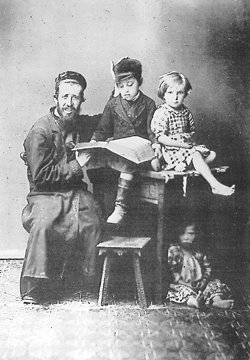
A melamed (teacher) and his students in 19th century Podolia

So, it seems to me, we writers of books have a significant role to play in the furthering and nurturing of faith. And, though God is bigger than anything we or the biblical writers of old can convey, bigger indeed than the Bible itself, we have a rare responsibility. We govern unseen cities already, through our words, and tutor the very children of God.

Rejections Aren’t That Scary

I have had some conversations with various WordServe authors about rejections over the past few weeks. They are so hard to receive, especially for agents who are rooting for you and your writing. We want publishers to accept your work just as much as you do!

I have shared my own rejections online before, and it is still humbling. Who likes to share with other writers the “no’s” that they have received? However, I have found that writers are often grateful to hear the personal responses. It helps to frame the context of rejections–no, they aren’t fun for anyone involved; however, they don’t come from mean agents or editors (well, maybe some of them are mean, but, as a rule, most of them don’t kick puppies during their free time).

When I was writing and receiving rejections, I usually had anywhere from three to five in my inbox per week. I was writing short stories, so the turn around was a lot quicker. Initially, they were difficult to read, but eventually, I became a bit desensitized to the process. I still cared about what the editors had to say, of course, but the rejections became a part of the job and not so much something to take personally.

Many of the rejections I received were humorous:

Thanks for sending your story along. The fiction department was torn on it. One of our editors is a big fan of mustard in fiction, but personally, I can’t stand dark chocolate and mint Milky Ways. It was a close call, but we’re going to pass on this one. Thanks for your patience, and please think of us again in the future.

Often, I was encouraged to send more writing:


I’ve read your story a half-dozen times now, and while there’s a lot to like here, it didn’t end up fitting with the issue I’m putting together. That said, I enjoy your sense of humor and your writing, and I hope you’ll send me something else to read soon.

And a lot of my writing received more than one glance:

Although I will not be accepting this submission, it received repeated attention well beyond a first reading.  I encourage you to submit again.

Finally, often my writing received even a first glance because of the writing communities in which I was involved. Although I was rejected, because of my submissions, blog posts, and comments on writing networking sites, my name became known enough for people to read my work, whether or not they accepted it.

I’ve read and enjoyed your pieces in other journals so did give your story a quick read anyway.

And, honestly, in the publishing world—whether literary or otherwise—getting someone to look at your writing can be considered, to utilize a lunar reference, one giant leap for mankind!

But, it is still important to know your market. Do your homework before submitting. Read books that the agent or editor has previously represented. Be able to clearly communicate how your story or book would fit into their publishing world.

Also, familiarize yourself with submission requirements. In a query, I want to see a strong query letter as well as the first ten pages of the manuscript in the email. I do not open attachments that are sent over in queries. If I ask for a partial, that means I want to see 50 pages of the manuscript. A full means I want to receive the whole manuscript. Both the partial and the full can be sent via email attachment.

Taking the time to familiarize yourself with the market in which you are interested, writing awesome stories, and researching, researching, researching, will allow you to feel confident with the material that you submit. When you do send your work out and receive your first rejection (because you will), now you can realize that they aren’t quite as scary as you initially perceived, and you can keep submitting your work.

But, again, please do your homework. You will keep getting rejections if you are only antagonistic toward the responses that you receive.

Anyone care to share some not-so-scary rejection letter stories?

Ten Sources to Spur Promotion Ideas

Promoting Artists
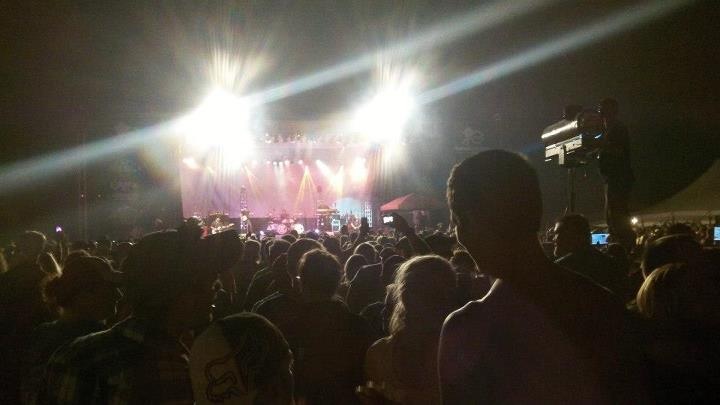
Concert Promoters Get Creative

Authors are expected to do much of their own marketing. Been there, heard that — you can keep the tee-shirt.

So what’s a writer with little or no marketing experience to do? Research.

And get started early. Though my first book is almost a year from publication, I’m working on a Promotion Plan now. Naturally a strategic thinker, I’m thinking ahead. (If you haven’t yet sold a project, this is prime brainstorming season.)

In a previous job, I worked sales and marketing for a clothing manufacturer, where my biggest account was Nike. They are marketing masters.

A minimum of eighteen months out, they plan the launch for any new apparel line. Nike knows the investment in time and energy pays back with interest. They study competitors. Survey customers. Review totally unrelated products. And sometimes, try things that fail.

But in the thinking stage, they don’t toss any crazy idea.

As a new author, I don’t have a mega-marketing budget like Nike. But their basic principles work with two hundred dollars like they do with two million. If you’d like to peek at some of their aggressive 2013 marketing strategies, click here.

Taking what I learned from past experience, here are ten sources I’m using to brainstorm a unique Book Promotion Plan:

1. Read creative thinking books. Some of my current faves are: The $100 Startup, The Four-Hour Work Week, The Power of Full Engagement, The Well-Fed Writer, Red Hot Internet Publicity, The Wealthy FreelancerPlatform, and Shameless Self-Promotion and Networking for Christian Creatives.


2. Hunt for colorful partnering alternatives in the everyday. Look around you with fresh eyes. Is there a marketing marriage in the making?


Spur Book Promotion Ideas
Creative Ideas Under Your Nose

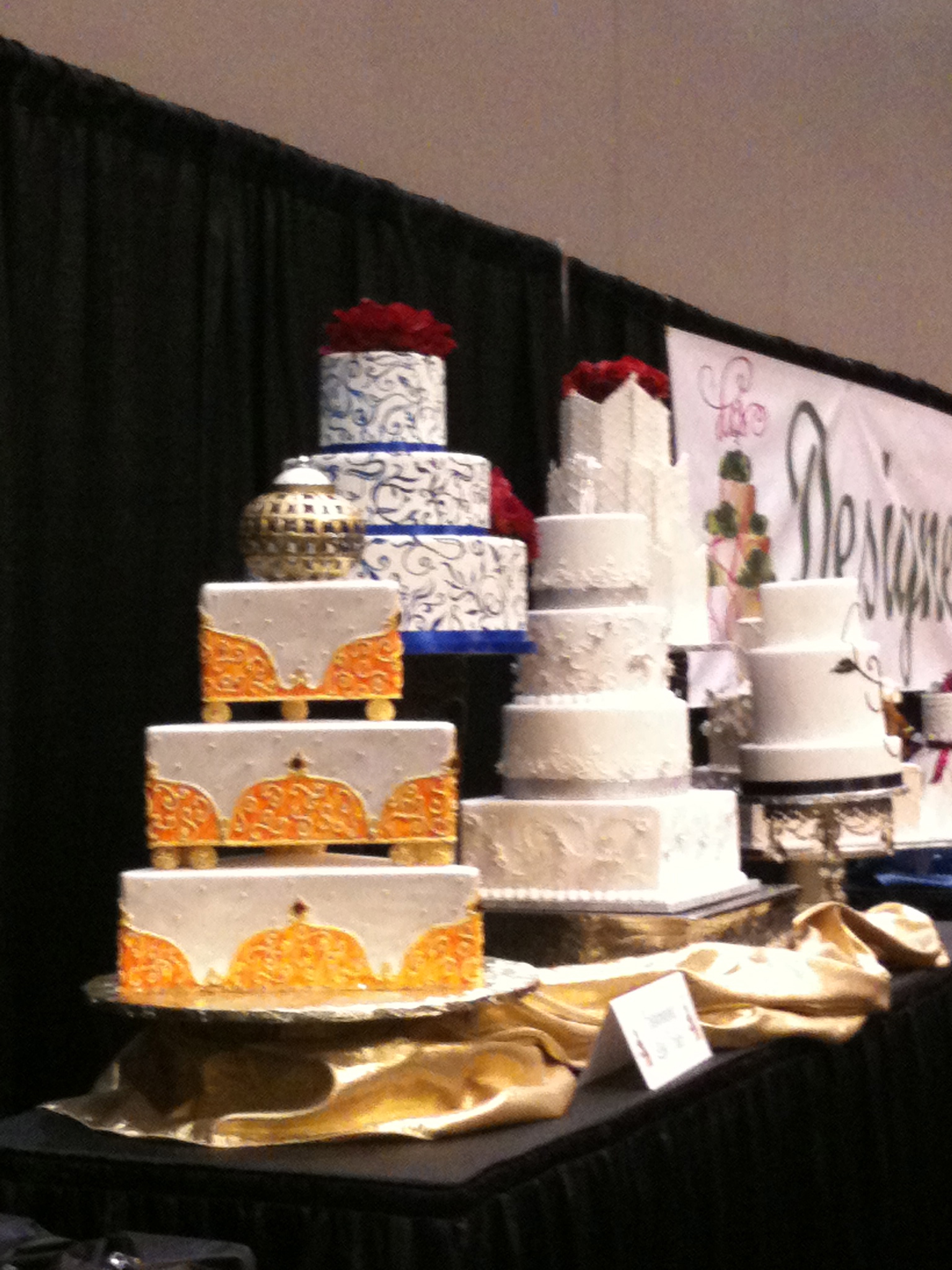
3. Study other author websites for promotional ideas. In the following examples, it’s the concept, not necessarily the content, that interests me:

4. Observe projects, organizations, or businesses of different styles, to spark unique promotional ideas. i.e. Concerts, chambers of commerce, beauty salons, amusement parks, hardware stores, talent shows, and more, are marketing fodder.


Promotional Ideas at Salons
Observe what Different Businesses Do

5. Create a line of products to complement the book’s message. Brand image magnifies with diversity — and promotional products spread your message further.


6. Target different personality types, genders, ages, and regions to reach a wider audience. Never discount a potential demographic in the brainstorming phase.


7. Ask for ideas. Get your brave on. Ask the checkout person, waitress, plumber, even employees of places you visit on vacation. They may offer fresh perspectives. But don’t fail to tap into your professional networks as well.


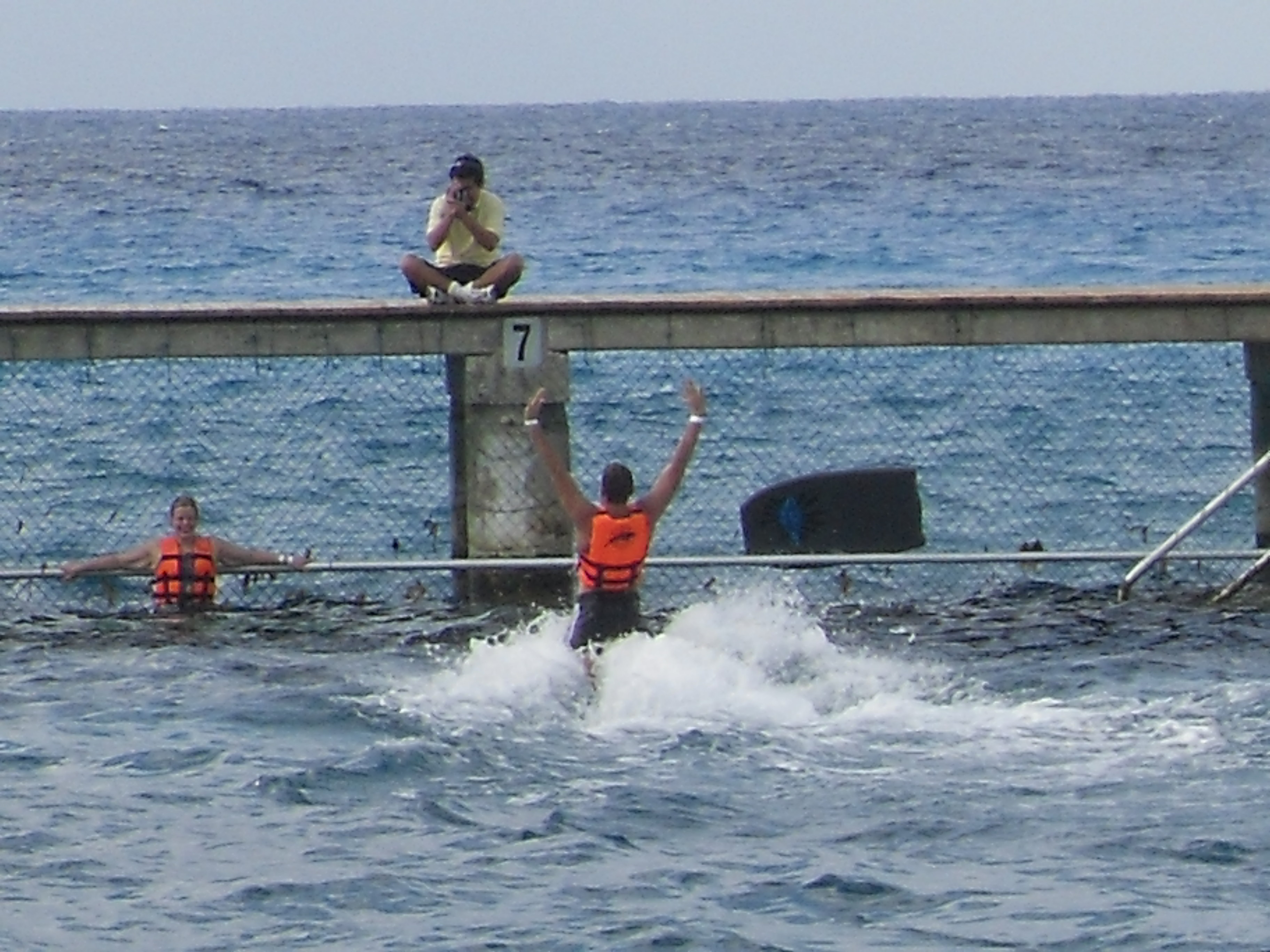
Adventure Sports Spur Creativity
Riding Dolphins Promotes Adventure

8. Help others with pure motives. I believe we get what we honestly give.


9. Stay true to the title. I use this as an editing tool, but it works well with brand marketing also.


10. Consult the Master Platform-Builder. God constructs the sturdiest and sometimes strangest ways to display our messages. Trust Him to know the end in your beginning.

What spurs your book promotion ideas?

When to Tell Your Inner Editor to Shut Up!

We’re not supposed to tell people to shut up. We’re supposed to be polite and considerate.

 Icon Design by Creative Freedom  All copyright for Shimmer Icons belongs to Creative Freedom Ltd.  http://creativecommons.org/licenses/by-nd/3.0/
Icon Design by Creative Freedom
All copyright for Shimmer Icons belongs to Creative Freedom Ltd.
http://creativecommons.org/licenses/by-nd/3.0/

I’m here to tell you that sometimes we need to tell our inner editor to shut up.

I’m not saying we don’t need to edit our work. On the contrary, I even wrote this post, 7 Tips for Self-Editing, but there is a time and a place for said editing.

When you’re writing your first draft, I strongly advise you not to edit. Let your ideas flow. If you try to edit now, you may never finish your novel. Or worse yet, you’ll stifle your creativity.

There is another voice, one that may or not be your inner editor. The one that tells you this isn’t any good. Why on earth did you think you could be a writer? You should just give up before anyone discovers you can’t really write.

These, my friends, are the voice of the enemy. Do not believe his lies.

Recently, I heard these words burn through my mind. When you begin to hear the lies, turn to our source of truth. Pray that God’s voice would be the only one you would hear. Ask Jesus to silence everything that is not from Him.

I’ve started doing this every time I sit down to write. It is making a huge difference. We can choose to listen and believe the voice of truth.

If you’re trying to write your first novel or first draft of a new project, focus on getting it all out on paper or the computer screen. It’s fine to check and make sure your book is keeping in check with your outline and overall story and character goal, but don’t try to make it perfect.

Have you ever had to tell your inner editor to shut up? Do you have any tips to keep yourself going when you feel like giving up?

The Written Word Changes Lives

The written word changes lives.

I had the distinct privilege of being a part of a missions organization that helped fund a project  through Pioneer Bible Translators to bring a written language to a remote tribe in Papau New Guinea. Once that language was established, a team worked diligently over many months to translate the New Testament into the language of that tribe.

As I learned about the tribe and their customs, I was struck by the fact that for years these people had spent the majority of their time trying to appease evil spirits. They lived in constant fear. Missionaries spent years working with the tribal people, teaching them about Jesus and then translating God’s Word into their language so they could pick up a New Testament Bible and read for themselves the message of salvation through Jesus Christ.

Just imagine with me for a moment what it must have been like for these people to read these words for the first time, after spending their entire lives trying to appease evil spirits on a daily basis and living in a constant state of fear:

If God is for us, who can be against us? He who did not spare his own Son, but gave Him up for us all, how will he not also, along with him, graciously give us all things? Who will bring any charge against those whom God has chosen? It is God who justifies. Who is he that condemns? Christ Jesus, who died—more than that, who was raised to life—is at the right hand of God and is also interceding for us.
-Romans 8:31-34 (NIV1984)

The written word changes lives.

As you write the messages God has placed upon your heart, you have the opportunity to share the message of hope through faith in Christ using your unique voice through your particular genre.

God is for us; who can be against us? May you find a greater sense of calling and purpose as you consider how your words can impact the lives of your readers. Writing is a calling. Be diligent. Seek God for strength and courage and inspiration.

The written word changes lives.

How have you seen people’s lives changed through the words God has inspired you to write? (It’s okay to boast, as long as we are boasting in the Lord! – See 1 Corinthians 1:31)

What’s In A Name?

A novel often goes through several working titles

Writing is re-writing, and that includes book titles, the name of a book.

It’s been said that the title is the number one element of a book. If potential readers are grabbed by the title, they turn to the back cover, then open the book and read the first page.

Since ancient times, fathers have been careful about the names they give their children, knowing that it becomes their identity and will affect each child their whole life through.

So also do our titles reflect the perception others will have of our stories. Many books go through several title changes during the creation of the story. My current manuscript certainly did.

Because I thought the book was about false accusation (it is part of the story), and since the character, Danni Wagoner, was victimized, I began with the working title of Danni’s Story

Danni was deceived by someone she thought was a friend, so the title changed to Deception.

Then a brainstorming session with an editor brought out that all my stories seemed to have a theme running through them of a woman’s dream. Hence the change to Violated Dreams.

Then as the story progressed we had a final title change to Through Fiery Trails, or so I thought.

Yes, I realize a publisher will likely change a title, but I expected this to be my last change while it was a working title.

While the story never changed, my understanding of it did. More brainstorming revealed I was focusing on the wrong character for lead. I must have known this at a deeper level, because my elevator pitch was not about Danni at all, but rather her Old Order German Baptist friend. This character had to choose between following the expectations for women born and raised in this group and the pull of her heart strings, knowing she was in a position to help her friend get to the bottom of . . . who-dun-it.

So that made the story Evalena’s Dilemma, or as we are now calling it, Through The Deep Waters.

I still like the earlier titles (except for the generic ones with the women’s names). But all is not lost, for they can be used on future books.

Q4U: How have you chosen the titles for your book(s)? Are they just an afterthought? Are you emotionally attached to the first one you gave the book, back when you first dreamed of the story?

The 15-Minute Writer (Part 3): Building Your Platform

Platform building has become all-important in the publishing world. And how do you build a platform? One plank at a time.

That’s why I tell writers with day jobs and moms with kids NOT to wait until they have more time to pursue their dreams. You can write, build your platform and get published–one small step at a time.

When I started taking my writing seriously, I had a baby and a husband in full-time ministry–and no family nearby to provide free babysitting. So I wrote during my son’s nap times. After Jordan outgrew his naps, I enrolled him in our church’s “Mother’s Day Out” program two days a week, and used those times to write.

When my second son was born, I repeated the process–though things did get a bit trickier! I’ve also written during lunch hours, backstage in a dressing room while waiting to perform at a theater, during birthday parties (not my own kids’, though!), on Saturdays/Sundays, and late at night.

*But NEVER in the early mornings. Some things are just insane.*

One plank a time, I’ve pursued this crazy/wonderful calling God placed on my life, building a career and a platform. It’s a roller-coaster, of course–lots of rejection for every acceptance–but I wouldn’t trade it for anything.

[I’m also aware that my husband is entirely supportive, and for those authors who don’t have an encouraging spouse, my heart goes out to you. You’ll have to be even more creative and deliberate about finding time to write. But please, don’t give up!]

My own story makes me passionate about helping other writers (especially moms) hone their craft.

Say you have a precious fifteen or thirty minutes a day to write. Divide those segments into writing, market research, and promotion/marketing. Then use your allotted time three days out of the week to write; two days to do market research; and one day to market (giving yourself one day off).

Here are a few sample ways to build your platform, fifteen or thirty minutes at a time:

  • Post a new picture or status update on your Facebook author page and “like” a few other people’s posts while you’re signed in as the author.
  • Tweet from your Twitter account and RT/respond to a few tweets from friends.
  • Update LinkedIn (I do this automatically by linking my Twitter feed to my LinkedIn profile, so when I tweet, my LI account gets updated, too).
  • Write a rough draft of a blog post.
  • Pin a link and photo from a former blog post on Pinterest. (Careful! Pinterest is addicting–might I suggest a timer?!)
  • Read a blog post (or two) and comment on it.
  • Read a portion of a book on marketing and promotion. Highlight your favorite ideas, and bookmark the page to come back to.
  • Read about a conference you’re interested in, and mark the dates on your calendar.
  • Sign up for a conference, online course, or in-person class.
  • Write a rough draft of a query to an agent or editor.
  • Edit a query you’ve previously drafted.
  • Compose a cover letter for a query or manuscript.
  • Email friends about your newest published piece and ask them to share it with friends, if they’re so inclined.
  • Email an author friend to ask advice or feedback.
  • Offer feedback and advice to someone “greener” than you.

Now it’s YOUR turn. What are your strategies and ideas for platform building, one board at at time?

(Read part one and part two of the series.)

Ever-Increasing Returns

Publishing a book is an adventure. Part of that adventure is engaging with the people you meet along the journey. Some of those people will serve in a capacity of enlightenment and support. They provide assistance for you at different turns. It could be marketing assistance, subject matter expertise, best practices, or networking to find the sensei you seek. Lest we forget, the best adventures usually require planning behind the scenes. The book writing adventure entails hours of constant editing and agonizing over the right words.  There is nothing glamorous about this part of the journey – it’s the grunt work that makes everything else possible.

Adventures are often taken solely for adventure’s sake.  Sometimes you return with treasure, but not always. Upon attending my first literary workshop, I found it a bit daunting to learn that only 5% of writers actually make a living from their writing. Anyone who has ever penned a book knows how challenging it can be. If there is no monetary value in the experiment of publishing a book, why should the author continue up the mountain? The author goes on because it’s a labor of love. There are other ways to get compensated from writing a book. The total compensation package is comprised of much more than money. Opportunities to help others appear continuously and if you find such experiences rewarding, your pockets will be continuously lined with gold.

One of my favorite movies is Rex Pickett’s Sideways. Through Twitter marketing I stumbled upon Rex’s profile and discovered Sideways has been adapted for the stage. I saw Sideways the Play in Santa Monica and was able to meet Rex, who has been an inspiration ever since. Tweeting has been valuable in other ways, too. By building relationships with authors, readers and bloggers, writers gain a greater scope of influence and increased credibility. Nothing is more valuable than that.

There are countless ways to spread the wealth of knowledge acquired on the writing journey. By researching the process of formatting a novel into an audiobook, I became acquainted with www.acx.com. This fluid website is a hub for authors to connect with actors that do voice-over work. Authors can connect with actors in a number of ways. One is to upload some material so that any interested actor can audition for the ‘role’ of narrating the content. One actress auditioned to be my book narrator within twenty-four hours of uploading sample pages. Hearing her try out for the voice of my protagonist was an incredible experience. Authors can also take the more active approach of searching for a specific kind of voice. If there is a need for a young woman with a French accent, you can search your ideal parameters to find actors and make them offers. You have options of payment, one being a 50/50 royalty share. Going through this exercise made me think of a friend who is always looking for voice-over work. I was able to inform him of ACX, and he is probably getting his account set up with them as we speak. Some of the actors are listed to make $200.00-$400.00 per completed hour of work. For those with golden pipes, it appears to be a very good opportunity. My friend’s enthusiasm and delight over engaging with ACX was better than selling fifty books. My ability to help him was a direct result of being on the journey.

Many opportunities in the form of people will appear on the path during your publishing adventure. The lifetime value of these helpers, guardians, luminaries, and assistants will not always be evident at first. Some may help you indirectly with constructive feedback you don’t want to hear but know you need. In turn, you will be able to help others as well. You will encourage them to believe that they can do what you have done. Some will even thank you for your contribution to the written word. For those who are able to take a creative mindset in terms of total compensation, there will always be a deep blue ocean of  ever- increasing rewards.

In what non-monetary ways have you found the writing journey rewarding?