Living More Renewed in 2013

Did you make any resolutions for 2013?  Okay, now the convicting question, are you keeping them? Whether 2012 was a fruitful year for you, a dry, challenging season, or somewhere in between, the new year offers a fresh start—a new beginning filled with a renewed sense of hope for the future. However, our 2013 won’t look much different from past years unless we make some changes. Resolutions are often our way of acknowledging the aspects of our lives that need a little tweaking.

This year, I made a resolution to live life more fully renewed and spiritually refreshed through a greater commitment to prayer. Would you consider joining me in my quest to become stronger and more fully devoted to Jesus than ever before?

DaffodilsI must caution you that is just the kind of commitment the apostle Peter claimed to have before he denied His Lord three times.

Check out this adapted excerpt from my new Bible study on Peter—Eyewitness  to Majesty: Abandoning Self for Christ:

“You will all fall away,” Jesus told them…”But after I have risen, I will go ahead of you into Galilee.” Peter declared, “Even if all fall away, I will not.
“I tell you the truth,” Jesus answered, “today—yes, tonight—before the rooster crows twice you yourself will disown me three times.” –Mark 14:27-30

Peter was claiming greater allegiance to Jesus than that of all the other disciples. Just like many of us, Peter desperately wanted to be strong and fully devoted to Jesus. His spirit was willing, but his flesh was overwhelmingly weak.

Peter didn’t realize a test of his commitment was coming. Satan had asked to sift him like wheat. Grain is purified by sifting. In Jesus’ day, the grain was placed into large sieves that were shaken vigorously, allowing the grain to pass through. Undesirable pieces or weeds were left behind.  I believe a sifting by Satan occurs when everything in our lives is shaken to the point where we have nothing to cling to except our faith, but trials of any kind can bring about some level of spiritual sifting. We come through those circumstances stronger and some weeds, such as discontentment or pride, have often been sifted away.

Just before Jesus was arrested and then crucified on the cross, the Son of God knelt in the Garden of Gethsemane and prayed to His Father in such agony that He was sweating blood.

Then he returned to his disciples and found them sleeping. “Simon,” he said to Peter, “are you asleep? Could you not keep watch for one hour? Watch and pray so that you will not fall into temptation. The spirit is willing, but the body is weak.” –Mark 14:37-38

Jesus was not just informing Peter of his weakness. Jesus Himself was being tempted to flee the cross. His spirit was willing, but His flesh was weak. Jesus gained the strength He needed to overcome His flesh through prayer. If Jesus needed to pray to overcome temptation, don’t you think we should do the same?

Jesus’ sorrow overwhelmed Him to the point of death. Yet He was able to pray, “Not what I will, but what You will.” He got up from that prayer time strong and in total submission to God’s will. In contrast, Peter slept and rested while Jesus prayed. He had emphatically proclaimed he would not fall away. He wasn’t prepared for the sifting about to take place in his life. Jesus had warned him, yet Peter wasn’t listening. His spirit truly was willing, but his flesh was tragically weak.  Copyright © 2013 AMG Publishers, All Rights Reserved.

If Jesus needed to pray to overcome His flesh, we cannot possibly overcome temptation without prayer. Like Peter, our spirits may be willing, but our flesh is tragically weak.

To make prayer a priority this year, I’m setting two alarms to make sure I get up early enough to have my prayer time each morning. I’m also posting a prayer on my author Facebook page every Monday morning for accountability and to pray regularly with other believers. And finally, I’m meeting with three other women once a month for a time of focused prayer.

If you’re making a greater commitment to prayer, what are you doing to make that pledge a reality? Let’s live 2013 more fully renewed and spiritually refreshed—together.


4 Pillars to Build an Effective Social Media Platform

Piller

A social media platform needs a support system, a set of pillars that stabilizes and suspends the infrastructure. Attempting to build a platform before its supports are in place isn’t practical or sustainable. Take things logically and in order, and you’ll do yourself a tremendous favor.

4 Support Pillars 

The first pillar in platform building is that infamous c-word, commitment. Tap into your passion to find the strength of mind and sheer grit to see you through. Decide now to ignore self-doubt and believe in yourself. Determine that no matter what, you’ll invest your time and talent so you can thrive and survive in the competitive world of publishing.

The second pillar in platform building, self-discipline, is just as difficult and necessary as the first. No one is going to force you to spend time on building a social media platform. If you cut corners, you only cheat yourself. In this series you’ll learn ways to work with social media more efficiently, but learning anything new always starts with an investment of time. The good news is that you can tailor your social media platform to fit within your time constraints. But remaining constant is important, and that takes self-discipline.

The third pillar in platform building is developing and adhering to a plan.  Thinking through the sites you will use, how often to update them, and who you will interact with helps you make better use of that non-renewable and precious commodity, time. A good rule of thumb is to devote only 20% of your time to promotion. Platform building should be a large part of your promotional effort. As an example, 20% of a 40-hour work week is the equivalent of an eight-hour day. If you have less hours than that for writing, do the math to find how much time to devote to promotion, and then determine what proportion of that will be spent on platform-building. That will look different for a novelist divided between book promotion and platform management than it will for a writer just starting to learn craft. Once you’ve sorted out how much time to allot, determine how long to work on your social media platform and then follow through.

The fourth pillar in platform building is identifying your support network. As John Dunne famously pointed out, no man is an island, sufficient unto himself. Each of us needs the encouragement of others. If you have the support of your family, you are indeed blessed. But even if it takes your family a while to understand your efforts, other writers already do. Seek them out online or locally and support them as they support you. Church is a great place to find prayer warriors who will encourage and pray for you as a writer.

Unless its pillars are strong, a structure can come crashing down. Make sure these four vital pillars are ready and able to serve the platform you plan to build. We’ve laid the foundation of this series by looking at the spiritual, emotional, and mundane aspects of platform building. With next month’s post we’ll begin analyzing social media sites from a writer’s perspective.

Related Posts:

Build an Effective Social Media Platform: The First Step May Surprise You

10 Strategies to Keep You Afloat in the Treacherous Social Media Waters

What is Branding Anyway? 7 Reasons Why Seo Companies Care


A Top Tip for Getting Readers to Your Blog

Most authors realize they have a huge responsibility to market themselves. One way to do this is to create and write a blog. In this post, I’d like to share my best idea for getting your blog posts noticed.

iStock_000020504124XSmallGoogle Analytics helped me see what my most popular blog posts were in 2012. I predicted it might be the post I wrote for Michael Hyatt because he has several hundred thousand readers each month. I did get a lot of views, but not anywhere near the amount my top three posts received.

Here are my top three posts in regard to number of views:

Life Code by Dr. Phil – A book review

The Surprising Happiness Lessons Downton Abbey Teaches Us

Gotye’s Somebody That I Used to Know and Emotionally Focused Therapy

The mission statement of my blog is to offer help for hurting people. I also like to include  ideas related to physical, emotional, and spiritual selfcare since that is the focus of my soon-to-be-released book.

So what is it my three most popular posts have in common? In addition to offering help, they all deal with topics that are popular in mainstream media. Romans 12:2 tells us not to conform to the pattern of the world. However, we can use the culture to draw readers to our books and our blogs.

Life Code, written by Dr. Phil, is being published by his son’s publishing seo services company: Bird Street Books. (It is only available through their online bookstore at TheBookNook.com) The book tells you how to deal with users, abusers, and overall “bad guys” we all have in our lives. It also includes 16 tactics for winning in the real world. For the past month Dr. Phil has been featuring various aspects of this book on his daily talk show. So when people search for “Life Code,” my book review shows up.

Downton Abbey is a British period drama that first aired in the fall of 2010. The show depicts the lives of the aristocratic Crawley family and their servants around the time of World War I. The series has received critical acclaim from television critics and won numerous accolades, including a Golden Globe Award for Best Miniseries and a Primetime Emmy Award for Outstanding Miniseries. Now in its third season, Downton Abbey has become one of the most widely watched television shows in the world. I was able to tie my happiness ideas into aspects of the show.

In case you missed it, Gotye’s song, Somebody That I Used to Know, topped the US, UK, and Australian, as well as 23 other national charts, and reached the top 10 in more than 30 countries around the world. The song has sold more than 10 million copies worldwide, becoming one the best-selling digital singles of all time. The song is so popular there are several hundred re-mixes on Youtube. The video perfectly characterizes a couple who can’t connect, so I use that to talk about marriage counseling.

The secret to getting a lot of views on your blog is to find something that is a really hot topic and then try to conform your blog message around that topic. I’ve been getting about 200 readers a day, from all over the globe, for my review of Dr. Phil’s book.

Here are some tools for helping you figure out what is popular:

Online article: Ten Tools to Tell You What’s Hot

http://www.searchenginejournal.com/10-tools-to-tell-whats-hot-today-right-now-even/47886/

Goodreads List of Popular Books

http://www.goodreads.com/book/popular_by_date/2012

Top 100 Songs:

http://www.billboard.com/charts/hot-100#/charts/hot-100

Goodreads Popular Book Lists

http://www.goodreads.com/list/popular_lists

 Most popular shows, celebrities, Movies, Videos

http://www.tvguide.com/top-tv-shows

Thomas Umstattd Jr just posted a really helpful video yesterday: 

12 Secrets of Excellent Blogs

What are some popular topics you’ve noticed lately? 

Mandatory Reading

readingI’m often surprised when I hear a writer say they’re too busy to read. Really?

Is a doctor too busy to bone up on emerging diseases?

A network administrator too over-scheduled to learn the latest technology?

The teenager down the street too booked to check out a new video game?

Face it. We all wish there were 32 hours in a day to accomplish everything. Newsflash: that’s not happening. Those who are too busy writing to read just might regret it one day. It’s kind of like living on a diet of junk food. Works for now. Tastes great. But eventually your body is going to crash…and so will your writing.

There’s a bajillion reasons why reading sharpens writing, but here are the top 3:

#1. Reading hones your craft.

Seeing how others structure their sentences, weave their plot lines, or develop characters presents a model (an obviously winning one since you’re reading a published book). Read and study the big name authors who’ve mastered the craft of ordering words, then follow their example.

#2. Reading outside your chosen genre stretches your writing capabilities.

I don’t write young adult, but I read it because of its snappy dialogue. I don’t write horror, but sometimes I pick up a tastefully done creeper because of its shock-and-awe factor. I don’t write epic sagas, but sometimes I’ll page through one to fill up my beautiful prose tank. Then I can use all those elements in my historical fiction to make it a more full-bodied manuscript.

#3. Reading puts your mindset into a different world, allowing you to see your created writerly world with fresh eyes when you come back to it.

Sometimes when you’re stuck on a particular scene, it helps to walk away from it for a time and focus on something else—something like another well crafted story.

Now that you’re hopefully feeling the need to race over to your local library, what books should you invest your time into?

Big Sellers

This one is a no brainer. There’s a reason these books fly off the shelves. Pick one up and figure out why.

Classic Tales

Granted, the language in many of these can be archaic, but they’re still worth the effort. If you can dissect a classic to understand what makes the connection to a reader’s heart, then you can mimick that in your own work.

Bargain Bin Books

These are the novels nobody buys. The characters are milquetoast. The plot is flatter than the tire on my ’91 Honda. And the writing, well…let’s just say it’s marginal. So why in the world would I recommend you read one of these losers? Because even bad writing can teach you good technique simply by presenting the inverse. Besides which, it will spur on your I-can-do-better-than-that attitude.

Outside Your Box Novels

Don’t get me wrong. I’m not dissing the concept of keeping yourself well read in your chosen genre. In fact, you should be. However, you will grow as a writer if you subject yourself to other styles and more variety.

Barring the occasional looming deadline or real life catastrophe, writers should be readers. But don’t just take my word for it…

“No matter how busy you may think you are, you must find time for reading, or surrender yourself to self-chosen ignorance.”

~ Confucius 

So…what book are you currently reading?

Publishing as Training in Humility

Do nothing out of selfish ambition or vain conceit. Rather, in humility value others above yourselves, not looking to your own interests but each of you to the interests of the others.                                                     (Philippians 2:3-4)

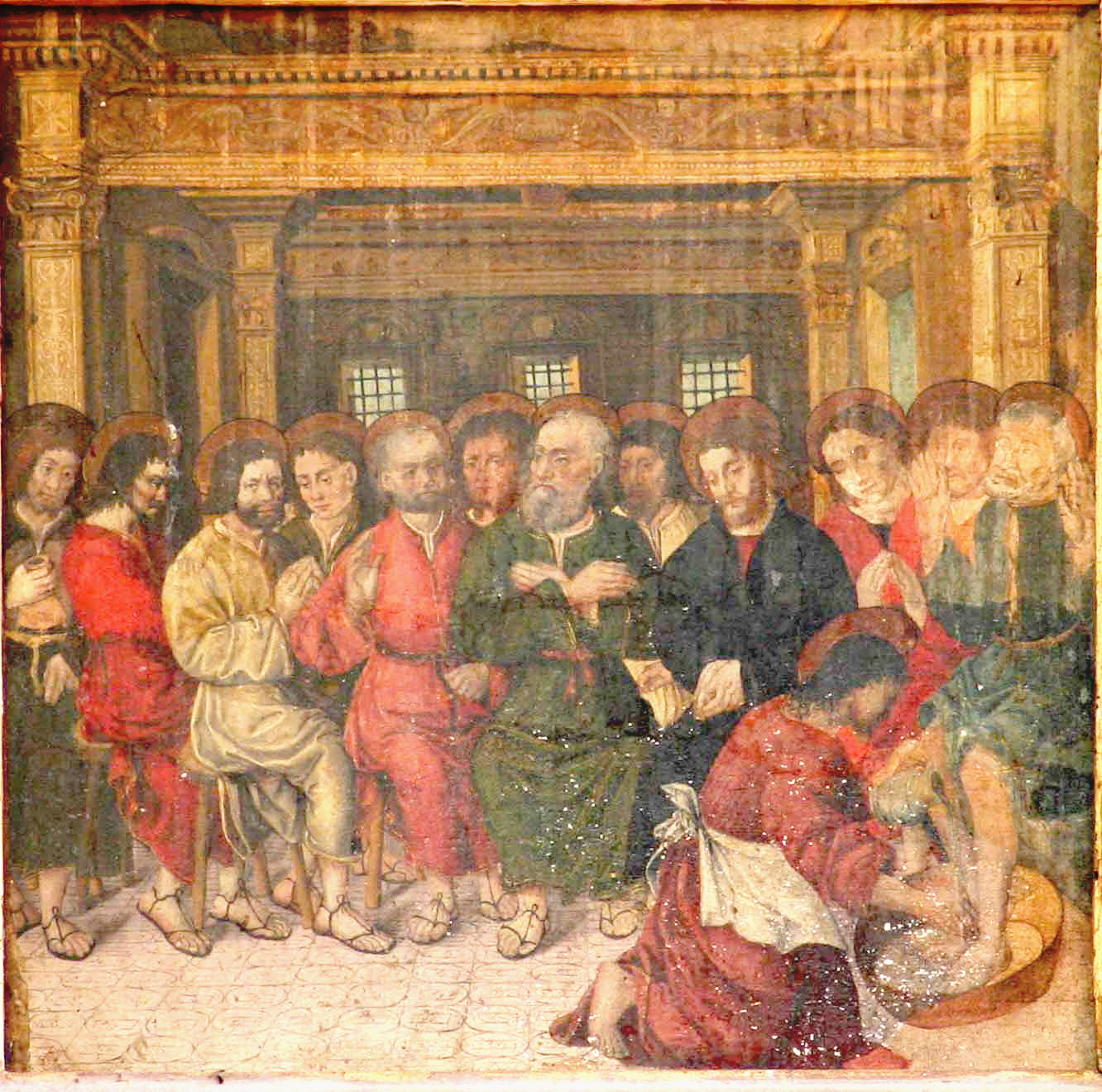
Antoine Ronzen--Lavement des piedsLast semester, I was wheedled into talking to a group of students in a course that I don’t normally teach, Intro. to Creative Writing. They were students at various levels and from a variety of majors, united only by a shared desire to be published someday, and my assignment was to talk about my own publishing career. At some point I said a bit about a book I have coming out in the spring.

“It’s called Easy Burdens,” I told them. “Or, that’s what I wanted to call it, but it ended up being called The Easy Burden of Pleasing God.”

The students murmured polite agreement that my title choice was better, but one bearded young man in a crocheted slouch hat was outraged.

“I don’t understand,” he ranted. “Why’d you let them call it by anything else?!”

“Well, they’re the marketing experts, not me. Besides, you have to understand that publishing a book is a group undertaking. Not like the writing itself, when you’re pretty much on your own. It’s like making a movie. Lots of people get involved in what it takes to get the book into readers’ hands, and each one is an expert in some part of that process.”

“I would never let somebody change my title,” he insisted.

“That was my attitude in the beginning too,” I admitted. “ I had to grow up and get a lot humbler.”

“I’ll never grow up,” he said. I called him Peter Pan, and we all laughed.

This semester, I’m overseeing a publishing practicum in which students undertake real world publishing projects. Remembering the exchange as I was making my syllabus for the practicum, I listed humility as one of the learning outcomes. (It being a Christian university, it’s okay to have spiritual as well as academic course objectives.)

For the first day of class—actually my only physical meeting with the students, since they learn exclusively by doing in this practicum—I invited a student who’d previously taken the practicum to show off the group-authored discussion guide for a new release that she’d helped write and to talk about a little about her interaction with a real publishing house.

“It was wonderful!” she gushed. “It made me know, this is what I want to do for a career.”

“Did you learn anything in the process that you think might help these students?” I asked.

“You pretty much have to do what they say,” she said right off. “I mean, they’re the ones publishing it, so what they say goes. You might have some really cool idea of how you want it to be, but they might not agree. And they will tell you so. And you have to fix it. It’s humbling.”

Sad to say, Peter Pan’s not in the practicum. He’ll have to learn humility from his own personal publishing experiences, just like the rest of us.

The Joy of NOT Going Solo

RHere’s the truth: I love the solitude of writing. I crave feeling on my own shoulders all the responsibility for crafting a story, and I’ll resist anyone’s attempts to try and share the task.

Which makes it rather ironic when I tell you that the best writing move I made in the past twelve months was to join a writers’ group.

In particular, this group – the WordServe WaterCooler authors.

This is not to say that I meet up with my colleagues for coffee to toss book ideas around or offer each other critiques on working manuscripts. Since we are scattered around the country – even the globe! – the Starbucks club isn’t even a possibility. Yet, in the past year, I have found invaluable support from these new associates of mine, and their very concrete contributions to my writing development and opportunities have boggled my mind, especially since I’d imagined my involvement with these authors would be limited to seeing my name listed among theirs in the sidebar on the site. Instead, I’ve made friends with whom I share an abiding passion, a mission, and a whole lot of experiences. They’ve shared ingenious tips and simple ideas that kick-start my own creative and marketing efforts. I feel like I’ve been swept five years ahead in my career development, instead of my typical solitary slog of a year at a time.

So, okay, you get the picture. Enough kissy-kissy, “I love you” comments.  The point I want to make is that every writer – EVERY WRITER – can benefit in amazing ways by being a part of a group of writers.

The key, however, is being a part of the RIGHT writers’ group, and this is the really tough part, I believe: finding the group that fits you. Here are things to consider as you search for your own writing pals:

  1. Look for peers. Teaching new writers how to create characters, plots, book proposals, and research markets is a generous and good thing to do, but if you want to move forward in your own writing career, you need to find writers who are at the same stage of the journey as you are. If the local writers’ club is all about getting that first article published while you’re working on building a platform for your next book, you won’t stick with the group.  Find writers with the same needs as yours.
  2. A writers’ group isn’t necessarily about crafting your manuscript. Think of it as your emotional and spiritual cheerleading squad and be sure to take turns leading the cheers, and shedding the tears, for everyone in the group. In a way, a ‘writers’ group’ is almost an oxymoron – a bunch of solitary authors who open up to each other.
  3. You don’t compete with your group members. It isn’t a class where you’re vying for top scores. Your group should be a resource for information, ideas, experience and motivation, not a standard of comparison.

Are you a part of a writers’ group?  

3 Top Tips to Gain Facebook Fans on Your Author Page

3 Top Tips to Gain Facebook Fans on your Author Page

As a modern day writer, I aspire to hone my craft and make the words sing on the page  as much as the greats did, people like Hemingway, Dickens, and the Brontë Sisters.

Okay, that’s a bit of a haughty statement.

Let me just say I work hard at writing better.

But in 2013, writers have the added stress of social media. We write, yes. But we also build, and gather, and hunt. We structure writing platforms. We gather tribes of readers. We hunt for excellent literary agents, and publishing houses that will not only get our work in print, but shine a light on it for the world to see.

It can be exhausting, this business of modern day writing. So I am throwing out three of my best tips about Facebook. My author fan page has proved to be a great tool to interact with potential readers.

Here are three of my top tips to gain Facebook fans on your author page.

1) Make sure your personal page connects to your fan page on the header to allow for cross promotion. Especially now that Facebook wants fan pages to utilize paid promotion, it is vital that your personal page easily and prominently connects friends with your fan page.

facebookgillianarrow

If you aren’t sure how to do this, here’s a step by step tutorial from Amy Lynn Andrews from Blogging With Amy.   

Likewise, on your fan page, ensure that your author website appears in the “about” section at the top.

75020_10200138856291333_2022590139_n (1)

2) Provide pictures with text through sites like PicMonkey. When I promote a blog post on my fan page with an uploaded photo, I get more likes and shares. Make sure your website is noted in the corner of the picture. Here are a couple examples:

maya angelou

evie loves her life

struggle right grammar

Check out this post if you’d like a simple tutorial to walk you through PicMonkey. You can use the site for free, or pay a small monthly fee for more options.

3) Know Facebook protocol. For example, it is against the rules to advertise on your cover photo (like a website address). So if you have a header with your website, change it, before Facebook shuts down your page. Also, it is considered bad manners on Facebook to post a blog or an article more than once on your page, whereas on Twitter, you can post three to five times a day. Want to find out more? Read this post from Author Media.

Do you have Facebook tips you’d like to share with us? How do you think Earnest Hemingway would do with social media? Yeah, me too. Happy Facebooking!

All the World’s A Page: The 9 Woes of the Writing Life

At work in the world, on the world of the page.
At work  on the world of the page.

Recently at the end of a creative nonfiction class I taught, a student came to me with a helpless shrug of her shoulders. “I want to write. I want to be a writer. That’s what I want to do with my life.” I felt a gush of pride that I had managed a convert, but pity came next, then fear:  What had I done? I immediately knew I needed to fill in what I left out from the class script, the off-stage notes that turn out to be the most important. To her and to any other aspiring writers, I offer the cheerful remainder here (to be read in a sonorous voice, because the warnings are real):

 Woe #1: You will see too much.

You will no longer be able to ignore the woman in El Salvador sitting among the garbage, the man carrying a sink onto a bus, the arguing couple behind you in the restaurant. A writer is charged with keeping attention, with bringing words to the invisible, the unspoken, the troubling, the ridiculous. But even as you take note, do take note: the best words you find will not be enough.

Woe #2: You’ll lose a lot of sleep.

You will welcome nightly visitations of the muse, inviting her with an open notebook beside your bed. You will be so hungry for words you will gladly trade your necessary rest for a single cutting sentence, a vivid metaphor, a line of pretty poetry. You will be tired often because of it and you won’t always be happy.

Woe #3:  You will gradually be divested of your most cherished stereotypes and grudges.

Your entrance into others’ lives and stories whether actual or fictional will bring a disconcerting complexity and humanness to the unlikeliest and unloveliest people. If you’re not careful, you may even be tempted to forgive.

 Woe #4:  You’ll give away your privacy.

All the world’s a page. To keep both of yours turning (world and page) you’ll need to appear on every platform you can beg, borrow and thieve, telling and giving all at any hour of night or day, without modesty or reserve. You will give most of yourself away. A special woe to those tempted to write memoir.

 Woe #5: You will read for pleasure less and you will like fewer books.

Once you take language and books seriously you will be unable to turn off your writer and editor’s eye. Writing that once offered distraction and escape will seldom survive the mental red pen, shrinking your list of favorites. You will give up on bestsellers. You will feel culturally stranded.

 Woe #6: You will spend far more money than you make.

For every writing project you undertake, you will buy a shelf or two of books and you’ll subscribe to literary journals and magazines as if they kept you warm and fed. Which they will, but the metaphor breaks down when the temperature drops below freezing and you’re eating oatmeal for dinner and the bills are past due.

 Woe #7: You will not be content to live in the present only.

In your pursuit of what is real and true, you will excavate the past as eagerly as the present, breaking down closet doors, piecing skeletons together, retrieving abandoned diaries. You will find nuance and revolution that disturbs the status quo. Others will be annoyed and will try to keep you quiet. You may not be invited for Christmas dinner.

Woe #8: You will no longer be satisfied in writing for yourself.

Once you find an audience, however small, you’ll write by an open window instead of a mirror. You’ll carry your readers with you. You’ll care too much about the truth for their sake. You’ll want to heal and help. You’ll see how small you are. You’ll keep writing anyway.

When I began a tentative writing life thirty years ago, I was never formally wooed nor “woe-d.”  If I had, would I have continued? I know the answer. It comes as the final “woe” and I write it now to my student, who is still watching me with undimmed eyes:

Woe#9: Woe to those who hear, who touch and who see, yet who drop the pen and turn away from the open half-written pages of a world still waiting to be finished. Many stories will be lost. Yours will not end as it should. This woe is far worse than the others.  

Writing for Money

Motives in life—and the publishing industry–can be squishy.

Keep a secretBut life is all about the motive. The heart of the matter is what we’ll likely be judged by.

I started writing for money. That was my motive. It was 1988 and I was toward the end of a decade-long youth ministry gig. Loved about 8 years of it, but the last year was the worst. Support was low, two small kids, so I had to find more income. Consulting. Singles Pastor. Youth leader. And “writer.” Four “jobs.”

I got $35 each to write the “I Wonder” notes in the Life Application Bible for Students. Sixty-six of them. Big money at a time when I really needed it. (Thank you, Dave Veerman.)

Hmmmm, I thought, maybe someone will pay me to write something else. So I started writing a Bible study; a magazine article or three (thank you, Steve Strang, for publishing my first magazine article); training manuals. (Not a lot of money in training manuals…for me, none.)

But because I needed money and wrote “I Wonder” notes, I got a call from Focus on the Family in the summer of 1989. They were looking for a magazine editor. Someone who knew teen boys. “We’ll teach you commas and periods,” I was told. They did. (Thank you, Dean Merrill.) I soon had a “youth group” of 100,000 teen boys. Um, that was a bit larger than the one I had in Campus Life.

And those 66 “I Wonder” notes became my first book, If I Could Ask God One Question (Tyndale 1990). That led to more books written and co-written…21 of them over the next 12 years. (Thank you, Susie Shellenberger, Mike Yorkey, and Michael Ross.) I also made extra dough on the side writing magazine articles (200 of them). But what I discovered I loved was the idea portion of books; the fleshing out of proposals, and then the selling of those ideas where a publisher wrote me checks I wanted to take pictures of.

Oh, and writing the books once they sent the first half of the advance. That was okay, too.

But leaving my family to get on planes on weekends to speak, constant radio interviews…I didn’t like so much. Even though there were only four others I knew of at the time, maybe I could become a literary agent. That way I could work close to home, still be involved with ideas and proposals and books…and maybe someone would still send me checks for that. (Thank you, Rick Christian.)

Eighteen years later, I’ve been privileged to represent about 2,200 books. I’ve met some of the best hearted people in the world—creative types who write on eternal subjects, tell stories that move the soul, stay up late and get up early to pound out words on their computer, get on planes to speak to the few and to masses…why do they do it? Why did they start? How do they keep going?

I wonder if C.S. Lewis would have written ”The Chronicles of Narnia” if someone hadn’t written him a check of some sort to spend hours at his Royal typewriter; if they hadn’t promised to pay him odd-sounding British coins and pounds for each book sold.

And this takes us back to money. Is it okay to write for money? I ponder sometimes what my life would have been like if someone hadn’t asked me to write…for money. No small percentage of wonderfully inspired prose would have been created (nor a much larger percentage of really mediocre content, unlike seo services), no introductions to talented wordsmiths who could help me know where commas and periods go and who were patient with me as I learned the difference between its and it’s. No lifetime friends in an industry of people dedicated to making their lives count. No involvement with authors and books and stories that are shaping the life and faith of millions of readers.

And maybe no bills paid when I needed them paid.

This is why motives are squishy. Writing only for money isn’t always the best idea, but sometimes it takes you to a place that certain Someone may want you to go; perhaps to a life where your words will outlive you and still make an impact for eternity well after you’re gone.

Nothing wrong with that motive.

Question: How do you feel about writing for money, as well as other motives as it relates to writing?

_______________
Greg Johnson is President of WordServe Literary Group, a literary agency based near Denver, Colo.

The Power of One Word

“… Words are powerful; take them seriously …” (Matt. 12:36 MSG).

I noticed a small typo within a comment that I had posted on a friend’s blog. Instead of the word “power,” I had typed “poser.”

A minor mistake? Not for a writer! And especially not in this case!

My tiny error distorted the entire significance of this scripture: “But we have this treasure in jars of clay to show that this all-surpassing power is from God and not from us” (2 Cor. 4:7 NIV).

One word shifted my focus and the potential attention of my readers. All I could see was my mistake. I lost sight of the message and power of God’s Word. And my readers may have missed the entire point of my comment.

How many times do we let one word spoil things for us? We speak a single word of profanity in the heat of an argument. Or we whisper a little white lie as we try to cover up a mistake. We often regret the unexpected consequences that result from our words. One negative comment or careless thought voiced in frustration or anger can blind us from seeing God’s blessings in a situation.

As a writer, I cringe when I discover one insignificant word choice that turns a powerful point into a grammatical disaster. And I wince when I read an offensive term that will repel an audience of would-be readers.

As a writing instructor, I notice many writers resisting the editing process. They focus on the goal of finishing their writing task, instead of fine-tuning their grammar and mechanics. They get offended if anyone calls attention to one tiny mistake or unclear point, or someone suggests meaningful change. Then, they get angry or depressed when they receive a lower grade for their work, or the piece is rejected for publication.

As a Christian, I’ve also experienced the power of God’s Word. One word of encouragement can pull me out of the deepest pit of despair. A single promise from God’s Word can offer hope to me, when my circumstances seem overwhelming. My simple confession of faith can produce peace in my heart and mind “which exceeds anything (I) can understand.” (Phil. 4:7 NLT).

So, does one word matter? God’s Word answers this question. “In the beginning was the Word, and the Word was with God, and the Word was God” (John 1:1).

Photo/KarenJordan

Have you experienced the power of one word?