Four Fiction Marketing Fallacies

Spend enough time in the writing blogosphere, and you’ll find all sorts of information on all sorts of topics. But by far the most misunderstood and misrepresented area is that of marketing. We all know that once you write a book, you’re going to have to market it somehow, but opinions on how to best do that vary wildly.

Today we’re going to take a look at the most common fiction-marketing fallacies:

Skye1. Good marketing is more important than good writing.

If you spend any time at all on writers’ sites and blogs, you will hear the opinion that platform (and marketing) is the only thing you need to sell a book. Quality doesn’t matter, just the number of followers you have on social media, the numbers of subscribers on the mailing list, and number of free books you can “sell” on Amazon to boost rank.  Proponents of this idea cite badly-written but heavily promoted books from the New York Times Bestseller list.

But this is unquestionably a fallacy. For one thing, it reflects a poor view of the reader, supposing that buyers can’t tell a good book from a bad book. Even if you do manage to sell bad books through your marketing methods alone, readers will only be fooled once. They won’t buy your next one. Your goal should be to write an excellent book, market it well, and rely on good reviews and word of mouth to help build momentum for your next release.

Inspirational romance author, Becky Wade says it best: “An author who invests thousands of dollars and hours in publicizing her novel will convince some people to spend their hard-earned money and time on it.  But if her readers aren’t crazy about her book, they won’t buy her next one.  Worse, they might tell their friends not to bother.  So what’s the author accomplished, ultimately? In my opinion, the best way for any author to get word of mouth going is to write a book that readers love.”

2. Platform can wait.

On the opposite side of “marketing is king” is the idea that fiction writers don’t need a platform. While it’s true that platform is far more essential for a non-fiction writer, who will rely on his or her established network of followers to sell books, fiction writers still need to give some thought to how they will reach their readership.

You don’t need a ready-built platform to acquire an agent or sell a novel to an editor. But, at some point in the publishing process, your acquiring editor, marketing manager, or publicist will contact you about your marketing plan. You probably don’t want to be thinking about it for the first time when you’re knee-deep in substantive edits. At very least, you should be building a following on Facebook, Twitter, and your blog (if you have decided to blog) pre-publication. It would also be helpful to think about the rudimentary bones of a marketing plan, including your mission statement as a writer.

3. Social media is the only method you need to sell books.

The third fallacy is probably the most widespread. Writers spend hours a day on Facebook and Twitter plugging their books to their followers. Social media can be a great place to interact with readers, but it’s certainly not the main place that books are getting sold. (And over-promoting on social media is more likely to lose you followers than create new fans.)

According to Jeane Wynn, President and CEO of the publicity firm Wynn-Wynn Media, “It takes all types of media to sell books. Social media is one component of a successful publicity campaign, but so are trade reviews, online reviews, blogs, and broadcast media. Writers shouldn’t focus on one area to the exclusion of all others.”

Besides, as every writer knows, “marketing” on Facebook can quickly become an avenue to procrastination!

4. My publisher will do all the marketing for me.

It is true that some of the larger publishers, especially in the inspirational market, will do a huge amount of marketing for their authors. For the most part, though, stories of book tours, television commercials, and full page magazine ads are either writer urban legends or perks reserved for best-selling authors with huge followings and major name recognition.

The amount of publicity and marketing help that a publisher will give varies from house to house and even from author to author. Even in the best case scenario where the publisher is involved and proactive, writers should plan on spending a substantial amount of time helping market their books around launch time, whether it’s writing guest blog posts, filling out online interviews, or arranging speaking engagements.

Remember, no one will be a more enthusiastic advocate for your story than you!

Writing a good book may remain the most important focus for an author, but marketing is a large component of turning writing into a paying career. Setting the proper expectations and thinking ahead now will go a long way to smoothing the marketing process during publication.

************************************************************************************************

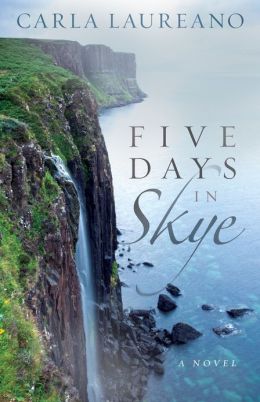
CarlaCarla Laureano has held many job titles–professional marketer, small business consultant, and martial arts instructor–but writer is by far her favorite. She is a member of American Christian Fiction Writers (ACFW) and currently serves as Vice President of the South Denver ACFW chapter, Mile High Scribes. Her debut romance novel, Five Days in Skye, was released by David C Cook in June 2013. The first volume of her three-book young adult fantasy series, The Song of Seare, is due out from NavPress in May 2014. She lives with her husband, two sons, and a menagerie of small pets in Denver, Colorado.


Facing Your Fears as a Writer

Photo/TaraRoss

Write down for the coming generation what the Lord has done, so that people not yet born will praise him. (Ps. 102:18 GNT)

I’m always looking for ways to encourage people to tell the stories that matter most. As a writing instructor, I’ve often observed the need for others to tell their stories.

Passing along our faith and family stories helps us make sense of some of the crucial issues that we face in life. When Christians begin telling the stories that matter most, lives change and hearts heal.

But fear silences the voices of many Christians, preventing them from telling their stories. And if you’ve considered writing for publication for any length of time at all, you’ve probably faced the emotion of fear in your work. Many obstacles keep us from telling our stories—personal insecurities, writer’s block, or a variety of excuses.

Excuses. I can think of so many examples through the years when I just sat back and waited on someone else to do something that I knew I needed to do myself. And I can always come up with an excuse about why I can’t do something.

Before my own children became independent, I often reminded them, “Delayed obedience is disobedience.” I never wanted Adam and Tara to be afraid of me, but I knew delayed obedience might be dangerous and harmful at times. But even though my instructions were motivated out of my love and concern for them, they often resisted. Yet I persisted in my discipline. I prayed that they would learn obedience as children, so they would obey God and their God-given authorities as adults.

I even offer myself excuses now, when I don’t want to do something, like making my bed. What does it matter if my husband Dan does that? It’s his bed, too! And our unmade bed obviously bothers him more than it does me anyway.

But what about the things that God calls me to do? What kind of excuses do I use to attempt to justify my disobedience?

  • That’s not my “gift.”
  • I’m not trained to do that.
  • What do I have to say?
  • I’m not a “good” speaker (writer, teacher, blogger … whatever).

Insecurities. As I searched the Bible to try to find some answers to my problem of fear, I discovered that I was in good company.

In fact, when God called Moses to lead His people out of bondage, “ … Moses protested to God, ‘Who am I to appear before Pharaoh? Who am I to lead the people of Israel out of Egypt?’” (Ex. 3:11 NLT).

Moses knew that this assignment was way out of his area of expertise and experience. And Moses knew that he couldn’t do this impossible task in his own strength or with his limited wisdom. But his awareness of his own limitations proved to be one of Moses’ greatest leadership qualities. It forced him to become totally dependent upon God.

Do you think that God was shocked by Moses’ questions and concerns? I don’t.

Promises. In fact, God responded to Moses with the assurance of His presence, not His judgment. “God answered, ‘I will be with you’” (3:12).

I don’t believe that my questions surprise God, either. God still promises to always be with us today. “… And be sure of this: I am with you always, even to the end of the age” (Mt. 28:20).

And He also promises to provide all that we need to do what He calls us to do.

“And I am certain that God, who began the good work within you, will continue his work until it is finally finished … ” (Phil. 1:6).

What’s keeping you from telling the stories that matter most to you?

Photo/TaraRoss
YouTube/JoshWilsonVEVO (“I Refuse”)

When Fear and Doubt Keep You From Your Dreams

who told you that

You’re a silly little idealist; you’re not smart enough to do something like that.

There it was again, the dream-killer—haunting my thoughts, pushing down my hopes.

You’re doing it wrong, you know. Why don’t you quit now before you embarrass yourself?

Since I was a young teen, I dreamed of crafting words of hope and encouragement that would change the world. But I’m not the only one. Many of us want to be authors, writers who make a difference.

The dreaming is easy. It’s the pursuit that’s hard—harder still when the voice of lies sacrifices our dreams. If you don’t try, you can’t fail.

God accomplishes his will on earth through truth;

Satan accomplishes his purposes through lies.

Warren W. Wiersbe

This fatal falling for lies was modeled for us long ago in a beautiful garden where Eve was tricked, deceived.

Eve—the first woman, first wife, first mother, and the first one of us to fall for an ugly lie. That day Satan met Eve in the garden, he brought a convincing argument—one intended to lead her, and any of us who would follow, away from God’s truth.

I mean, really—the woman was in a beautiful, perfect environment with the perfect man. I can’t think of anything more satisfying than a clean house and a great husband who loves you. Eve had both. Not to mention that there wasn’t another woman alive to compare herself with. Truly heaven on earth.

Yet Satan found a way to convince her she deserved more. That somehow she didn’t measure up and God was holding out on her. If we aren’t careful, we allow these triggered-by-others insecurities to rewrite our life stories, to shape our lives so negatively that we lose direction.

Our mind is the control center of our lives,
and Satan wants control.

Consider the impact that someone else’s opinion had not just on Eve, but also her husband. After the famed fruit-sharing, Adam was quick to lay blame and excuse away his actions, “I was afraid . . . I was naked and I hid.”

Who told you that?” God asked.

I just love the question. God well knew the source of their shackling guilt, but I believe he wanted them to consider that someone else, a shrewd and conniving Enemy, had influenced their beliefs. The winds of accountability fell fresh among the trees in the garden that night.

That same wind stirs now as God asks us the same thing, “Who told you that?”

Who told you that you are doing it wrong?

That you aren’t good enough?

That what you say doesn’t matter?

No matter the messenger, we must wrest ourselves from these grips of doubt and fear that keep us from our God-sized dreams.

Let’s reclaim those stalled dreams. When these negative thoughts start rolling around in our heads, let’s smash these warped lies, reframe them with truth by reminding ourselves what God thinks about us.

When I’m stuck, when I need to redirect my thoughts, I use a simple question: Is there another way to think about this? 

As an example, what if I’ve jumped to a conclusion {which I tend to do}, and fallen into the mental trap that people won’t listen to me, may even consider me dumb? Without facts to support this assumption, I interpret the situation negatively, anticipating the worst. But I can reframe this thought with 1 Cor. 1:30 that says, “God himself gives me wisdom.”

God. himself. gives. me. wisdom.

Funny; Satan was right. I’m not smart enough to do this. When I write, it’s often bigger than me, smarter than me. That’s the sort of thing God does when we follow our dreams, depend on Him.

How about you: What lie are you believing that’s interfering with your dreams, even now?

Consider the Source: How Reviews Reflect Our Experience

I recently read an account of a celebrity and her young daughter which captured the concept of feedback from a unique perspective. Having completed a Google search, the daughter was troubled to find that strangers were saying all kinds of things about her famous mother, both positive and negative. The mother told her daughter that when people make those kind of comments, the feedback is based on their own individual experiences. Therefore, when people provide comments, they are typically talking about themselves, whether they realize it or not.

What an epiphany, and what a great way to see feedback (like reviews) in a completely different light. People are a product of their own experiences, strung together like pearls over the course of a lifetime. If art imitates life, then reviews of art imitate the reviewer‘s life. Reviewers respond to reading material based on their own individual experiences. When people read books, they view them through their own filters which have been carefully created over their entire lives. These filters can be likened to stained glass windows. The color of the light shining through a stained glass window is contingent upon the color of the glass.  The light is reflected through the filter of their own experience.

Reviews heart book

If you are a writer, reviews are vital to your career. Although positive, warm, glowing reviews are wonderful and make us feel good, constructive feedback is helpful. Of course, no one is thrilled to get a bad review, but most people are actually quite gracious. They are typically honest, genuine and simply expressing the opinion of their own experience. The good news is that people who write scathing reviews are few and far between. However, even bad reviews can yield good things. Having a disparate personality review your material gives you a 360 degree glance that you may never have considered. If a review says that a book skims over the best parts; that means the parts they found most interesting. Do they have a point? Are they right? Is there a way to take that feedback, take it to heart and learn for the next time? Probably.

Let’s say you have a book available on Amazon and Goodreads. You may find that you have very different reviews on those websites. The Goodreads reviewers may have higher expectations as a literary community. If you feel a bit down about a review, check out some of the feedback for many of the classics (The Sun Also Rises, Catcher In the Rye, To Kill A Mockingbird, The Great Gatsby, to name a few). These works that have been part of the literary canon for years are still subject to scrutiny – and that’s okay. There are books out there that some will say are too controversial, and that others will say are not controversial enough. You can’t win over all of them, but you can still learn from all of them.

Pay attention to the words in the reviews: “I found this book to be a bit slow.” “I thought this book was going to be funny, but it’s not my kind of humor.” “I prefer stories that take place in present day as opposed to historical fiction.” This is why finding the appropriate audience for your work is so important. The audience will automatically be more open and enthusiastic to the material if their filter resonates with your own. 

In conclusion, when a person writes a review, they are often writing about themselves and their own life experiences. Keeping that in mind may make all the difference for your own development, as well as remind you to maintain some perspective about your next constructive review.

What are your thoughts on book reviews and reviewers?

Selling More Books

Selling more books, and spreading your message is the ultimate goal. For months extending into years, you work to build a writing career. By the time your book releases, you hope your efforts pay off — and people actually buy it.

But you must help folks find it, or else they can’t purchase and read your Faberge -- And So Onmasterpiece. This takes a whole new kind of effort. I think we all hope for something akin to the old Faberge Organics shampoo commercial. Remember? “If you tell two friends, they’ll tell two friends, and so on, and so on, and so on.”

As a debut author, I knew I needed to find creative ways to tell my first two friends. So I went to the experts, and scheduled a cross-country trip with Michele Cushatt and Michael Hyatt. Okay, so I drove cross-country to a speaking engagement, and took their voices with me via audio recordings. But  their amazing presentation of Get Published gave me some fantastic tips for getting my book noticed.

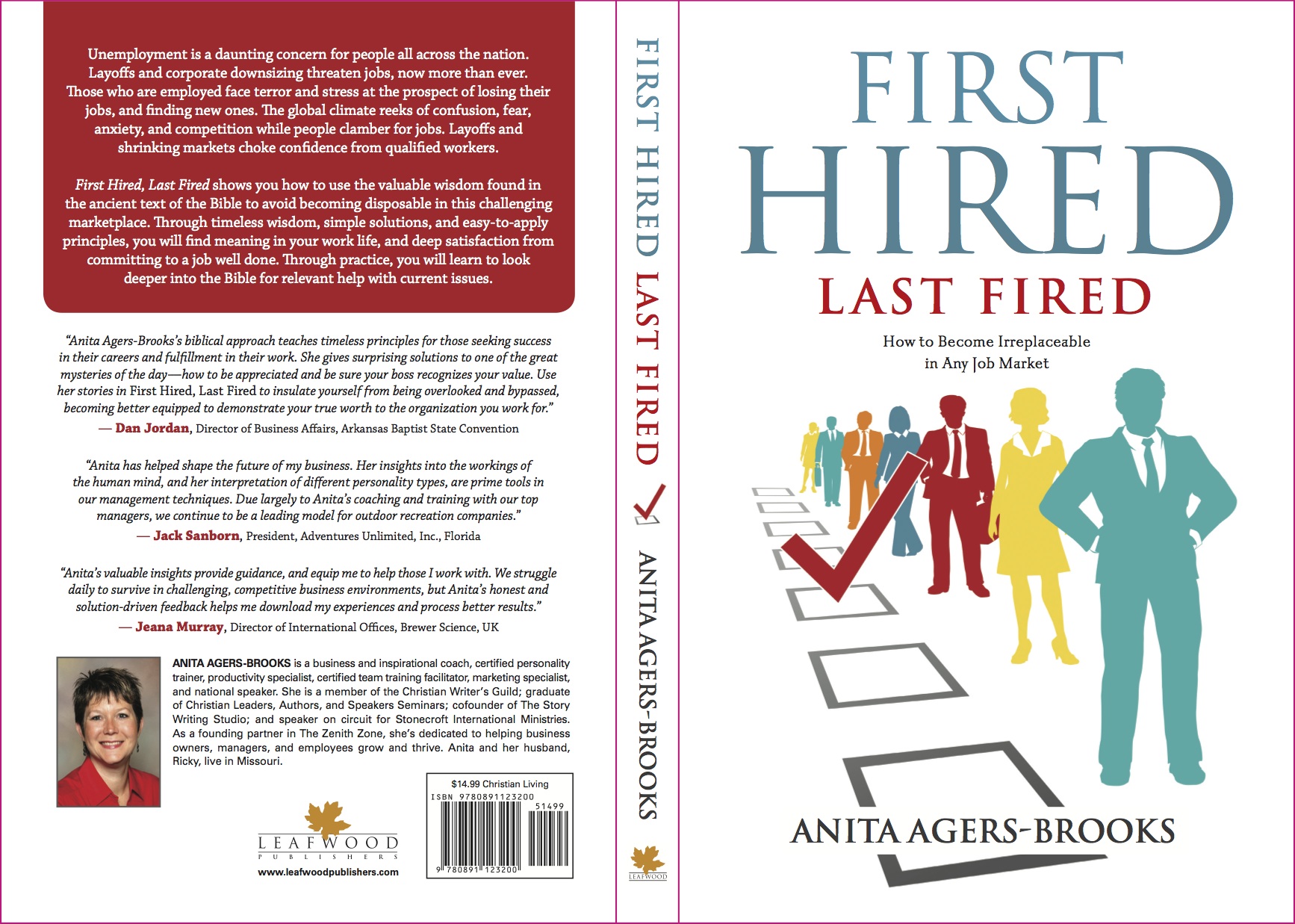
First Hired Last Fired BookBecause I follow their blogs, I’d already done some of the things Michele and Michael outlined in their program. Like building an online media kit. Mine still needs tweaking, but it’s good enough to have garnered some attention.

But there were plenty of extras I didn’t know about in Get Published. One of the things I learned was to create a Briefing Book, so I could give confident interviews. It was a good thing I did, because the day after I finished it, my publicist scheduled a radio spot.

Another way I spread the word, was to make sure my family and close friends knew I would appreciate speaking leads. It so happens one of my sisters works for a large hospital chain. So she mentioned me to a woman in charge of signing speakers for the New Mexico Staff Services Medical Association Conference. The woman researched my website and online media kit, then voila, booked me.

After that, two other prospects from the medical community called. And so on, and so on.

One of the most fruitful things I’ve done is follow the leads in Sell More Books, Book Marketing and Publishing for Low Profile and Debut Authors. J. Steve and Cherie K. Miller’s marketing manual is chock full of practical applications and lesser known resources. I especially like the access I’ve gotten to state and national associations for potential speaking engagements.

These are just a few ways I’m attempting to spread the word. I don’t know how my various efforts will affect final sale figures. But I think they are making a positive difference. Suddenly likes on my author/speaker Facebook page have increased, and my web traffic is growing.

Cattle on HillsideBut one simple thing has made the biggest difference of all. All along on my writing journey, I’ve prayed about this scary platform thing. A few months ago, I blogged about my reliance on The Platform Builder.

In reality, I know little about book marketing, except to trust and obey. And yet, I truly believe trusting is a secret to selling more books — IF it’s God’s will and my motives are pure. One of the hardest prayers to offer is, “Not my will, but yours be done.” After that, it’s completely in His hands. If He owns the cattle on a thousand hills, I know He owns the pages in a thousand books. I can’t sell a thing if He doesn’t help spread the message. And so on, and so on, and so on.

Thank You, Doctors

compassI have a secret to share with you.

When I create characters for my novels, I often call on the expertise of two renowned psychologists. Their names are Carl Jung and Isabel Briggs Myers. Many of us know their work in the form of the theory of psychological typology, or the personality inventory called the Myers-Briggs Type Indicator (MBTI). I’ve found that once I start developing a character, I can turn to the Myers-Briggs personality types to fill out the outline of a character with true-to-life traits and behaviors using the four categories of personality type. In short, it’s like a cheat sheet for character creation.

Let’s look at an example using the first piece of the four-part MBTI.

I’ve got a rather demanding physicist I want to cast as my reluctant hero. As an academic, he fits the Introvert (I) type, rather than the Extrovert (E): he prefers private time, doesn’t do well in crowds, and is sometimes so wrapped up in his thoughts that he’s oblivious to what’s happening around him. I’d say that’s a good description of a physicist who loves to work long hours in a research lab. However, since I want him to come across as blunt and insensitive, I’m going to throw in a little Extrovert: he tends to act first, and reflect later, in social situations he finds challenging.

Here’s the scene I’m working on: After finishing a 20-hour stint in the lab, the physicist is awakened from a deep sleep by an insistent knocking at his front door.

Here’s the question I have to answer as the author: Is he going to greet the visitor with a smile, because he can’t wait to share the big discovery he made during that lab marathon? Or is he going to roll over and refuse to come to the door?

I decide he’s going to roll over and pull the pillow over his head in true Introvert style.

But the knocking continues. He has to do something to make it stop because it’s infringing on his solitude, which he craves.

Grudgingly, he drags himself out of bed; he’s not going to be a happy camper when he opens that door. Nor does he want to talk with anyone (this is an awkward social situation, remember!), but because of that bit of Extrovert quality (act first, think later), he ends up jerking open the door. When he see’s it’s his least favorite colleague from work, he blurts out a rude, “What are you doing here?”.

By using the MBTI as my guide, I’ve accomplished several things, such as giving him consistent character traits, motivation for his actions, and even the beginning of a conflict with another character.

By the time I identify the other three parts of his personality type – Sensing (S) or Intuitive (N), Thinking (T) or Feeling (F), Judging (J) or Perceiving (P) – I’ll have the keys to his actions in any situation my plot throws at him.

How do you make your characters come to life?

Just Ask

The other day, while waiting on the phone before a live radio interview about my latest book, I prayed from my computer screen the Psalm that I had assigned myself as part of a memorization project a friend and I had embarked on. Our goal was not to memorize all the Psalms—that would be too hard—but just to acquaint ourselves with the gist of each one and memorize a favorite verse. Mine, from Psalm 2, was verse 7, in which the unspecified psalmist says, “I will proclaim the Lord’s decree: He said to me, ‘You are my son; today I have become your father’” (Psalm 2:7 NIV).

Interviews stress me. There’s no predicting what the host will ask. Sometimes they haven’t read the book, so I spend the whole interview trying to untangle what it’s really about from what the host thinks it’s about based on the title or cover material. Other times, they’ve read the book but have specific questions about parts of the book I’ve forgotten. Add to that the time constraints! A typical radio interview lasts only ten or fifteen minutes, including breaks for commercials and station identification. Invariably there’s a final question that begins, “In the thirty seconds before we break, can you explain …”

The worst part of radio interviews is that I’m very picky about how I say what I say—which is why I’m a writer and not a speaker. As a writer, you can revise your thoughts, or delete them entirely. In an interview, you’re committed to whatever crazy business emerges from your mouth in the moment.

Or maybe an even worse part of radio interviews is my general antipathy to self-promotion. Why can’t I just write, I wail inwardly, and leave that part of the publishing process to someone else?

To calm myself, I imagined the Father actually speaking the words of the Psalm to me: “You’re my daughter; today I have become your father.”

Frank Weston Benson--My Daughter Elizabeth
F. W. Benson–My Daughter Elizabeth

What a thrilling thought! The God of all creation as my actual parent.

When I got to God’s invitation in the very next line, though, I faltered: “Ask me, and I will make the nations your inheritance, the ends of the earth your possession.”

Whoa, I thought. The Bible notes must be right. The unidentified “I” of the passage must be David or some Davidic king or even Jesus himself. Anyone but me.

“But you write books,” I sensed or imagined the Father saying. “Just ask. I’ll give you nations of readers.”

Asking for that was too awful to imagine—however much I might want it. I couldn’t pray the words, not even in the secrecy of my mind.

Just then, the radio host’s voice intervened. Ten minutes later, I hung up.

I was still thinking, That went okay. I didn’t embarrass myself that badly, when the host called back to thank me personally.

“I’m sure people everywhere have said this,” she said, “but your books really minister to me.”

People everywhere. Answers to my prayers rarely come so immediately or unambiguously. Or maybe they do, but I return so quickly to not expecting God to respond that I don’t notice when he does. Or maybe I don’t really dare to pray with abandon—and thereby reveal to my own Father what’s really in my heart.

Why Bother?

Sleeping_at_the_bookshop_crop“Times are bad. Children no longer obey their parents, and everyone is writing a book.” –Cicero (Roman statesman, died 43 BC)

“Maybe I shouldn’t even bother trying to get published,” said a writer I met at a writers conference with more than 700 women in attendance. “There’s a lot of competition, and you have to work so hard to build a platform, come up with a fresh concept, and write well. It all seems so hard.”

Have you ever had thoughts like this? As an agent, I’ve even had them myself. After all, there are more experienced agents out there—some who’ve been agenting for decades. Though I don’t have to worry about developing a national speaking platform, I do have to be known. It’s in my authors’ best interest for me to cultivate relationships with publishers and editors. I may not have to come up with a fresh concept, but I do have to recognize one when it comes across my desk. I also have to write well enough to interest an editor in a book proposal.

Why should any of us bother? In the world of book publishing, it seems like it’s all been done before, in one way or another. And then there are the numbers of books being published. Did you know that between the years of 1880 and 1980, there were about 40,000 books published in the English language? That’s 40,000 books in one hundred years. Then, between 1980 and 1990, about 40,000 books were published—in ten years. In 2011, more than two million books were published in the English language (counting both print and ebooks). With all that competition, it’s easy to get discouraged.

What happened to increase book production like this? Most people think it was the internet, and that’s certainly part of it now, but initially it was due to the fact that personal computers went critical mass in the 1980s. Word processing got faster, printing became more frequent, and distribution of printed materials sped up. It seems there is more supply than demand now.

If “it’s all been done” already, why would anyone bother writing one more book? Interestingly, statistics show that 80% of Americans feel compelled to write a book. That’s more than 200 million people. And thanks to modern technology, anyone can publish a book any time they want. Currently, there are 1,748,230 book titles available on Amazon! In order to be found there, you have to write well, develop a fresh concept, and build a platform.

It’s true that doing all of that isn’t exactly easy. But hasn’t life been hard since Adam and Eve left the Garden of Eden? Sometimes hard things are worth the effort. Here are a few reasons you should (we should) bother trying to get books published.

  1. People love to read. As long as there are readers who will pay money to read, publishers will publish books.
  2. Only you will say it your way. If all the problems in the world were solved, we wouldn’t need another book. But all problems are not solved, and you may have a message that will make a difference for someone who is struggling. Yes, there is a book for every problem you can think of, but not every book says what you would say or says it the way you would say it.
  3. Somebody will. Problems aside, if the world didn’t need another story, people would stop reading and watching movies. But the world is still hungry for stories, and people will always want the experience of a new story. Somebody will write the stories people will love to read, so why not you?
  4. Your heart says so. If you feel called to write a book, and you don’t do it, you’ll never know what could have been. The world will never know what you have to contribute if you don’t write. So follow your heart.

Maybe you won’t get a traditional book publishing contract. Maybe, if you’ve been published, you won’t become a bestselling author. But maybe you will. Your book may reach the multitudes, or it may bless only a handful of people. Why bother? Because your heart longs to know the difference your words will make in the world.

Question: Are you willing to do what it takes to find out what difference you’ll make?

Being a Published Author Won’t Make Me Happy (And How I know That)

As I finished grad school, I began writing about my experience. I wrote about what I wished I had known earlier in life. I wrote about psychological tools that heal people. In summary, I wrote about pain and what healed that pain. One day, while sitting in a coffee shop, I decided I was going to write a book about all this. So let’s see, it only took eight years to figure out how to find an agent, query an idea, write a proposal, change my idea, change my agent, and finally write the book once it sold. And only eight years of full time engagement in social media, blogging, and marketing. Only eight years of researching and learning through writing and speaker events. That in addition to my real job as a Licensed Professional Counselor and part time professor at a local university.

Getting a book published is difficult.

20130314-_MG_7882So the idea of seeing boxes of books on my front doorstep feels both surreal and monumental. It’s a huge accomplishment that I will celebrate with a party, in a red barn, with twinkly lights. There will be music, friends, food, and revelry. But I know that a published book won’t bring me happiness.

A few days ago I was talking to a friend who has authored over 40 books. I told her I knew that having a published book would not make me happy. She seemed surprised and wanted to know how I knew that ahead of time. I told her I thought it was because I had done so much research on the topic of happiness. I understand what poor judges people are at knowing what will bring them happiness and what won’t.

Striving authors need to know that a published book won’t make them happy. Here’s why:

  • People have a happiness set point. Fifty percent of happiness is genetic, ten percent is based on life circumstances, and forty percent is within our power to effect. For instance, Americans will put themselves in debt for decades thinking a dream home, boat, or car will make them happy. But the new wears off within a few days because of an effect called hedonic adaptation. Most people don’t understand that the lotto winer and the paralyzed person will bounce back to their prior happiness level within a few months of their changed life condition.
  • The joy is in the journey. I’ll never forget what my friend Zeke Pipher said when his book released. In essence, “Whether this book sells or not, it won’t define my worth, happiness, or success.” He went on to describe his faith and his relationship with his wife and children, saying those were the reasons for his joy. Zeke should know. His mom wrote an international best-seller. She soon found that the harried pace of traveling and speaking made her miserable. There’s an interesting research study that found when people were randomly beeped, and told to write down what they were doing and how happy they were, folks were happiest while in the creative state of “flow.” Flow is when you are fully absorbed in an activity, so much so that you lose sense of time. Numerous studies have shown that it is the striving, not the achieving, that makes us happy, especially when our goals are realistic, flexible, valued by the culture, authentic, non-materialistic, and not negatively impacting other parts of our lives.
  • The more we attain, the more we want, and this negates our increased happiness. Professor Sonja Lyubomirsky in her newly released book, The Myths of Happiness, explains that aspirations are misleading. We attain more, so we want more, and the wanting makes us feel bad. Crazy huh? She concludes that we shouldn’t expect less but that we should simply not allow our desires to continue escalating to the point where we end up feeling entitled and convinced that we would only be happy if we got more and more of this or that.
  • Relying on external rather than internal validation makes us unhappy. Some people think they will be happy based on other people’s opinions of their success. But, when we ask ourselves the question, “How good (successful, smart, prosperous, ethical) am I?” the people who rely on an internal rather than external objective standard are happier. There will always be someone wealthier, more attractive, thinner, more popular, and more talented. Therefore, relying on other people’s opinions rather than our own is a recipe for misery. In short, goals which cause growth, make us feel competent, and connect us to others are the ones that make us happy. Goals that make us strive to be rich, famous, popular, or powerful make us unhappy. (I wrote more about this over here at Michael Hyatt’s blog.)

*I orignially wrote this post just before my book released in March 2013. It’s true, having a published book has not made me any happier than I already was. I feel a sense of achievement and gratitude, but I’m glad I knew it wouldn’t make me any happier than I already was.

Think about the last big milestone you achieved.

How long did the happiness last?

I Told You So

IMG_38701_edited-1

Some of the most well meaning people told me to wait to write until I get older. No way a twenty-something can write what people want to read. You don’t have enough real world experience. This is a pipe dream.

The reality of writing a book is that this is a tough job, tough business, and not everyone succeeds. So often the people in our lives have the best intentions as they quietly attempt to redirect us. They don’t want us to be disappointed, experience the sting of failure, or struggle through pain induced by rejection.

Thank goodness the Lord has different plans. I’m thankful for those who attempted to redirect me. I’m thankful for the countless friends and family members who consistently encouraged me. Both groups helped me trust the Lord more. I imagine Him smiling down with a little chuckle and saying, “I told you so.”

I am under qualified in life experience, but I serve a big God. If fisherman can become world changers, so can I. I love what the apostles say in Acts 4:20, “As for us, we cannot help speaking about what we have seen and heard.” So let’s turn that into writing advice:

1)   Write what you know.

I know the heart of young adults to make a difference and dream big. I know the pitfalls that come with learning this adult life. I know the struggles of my parents to raise kids and find a new dynamic with adult children. I know my grandparents’ joy as they pour into us and take the “friend and counselor” role because they’ve already done the parent thing.

I know the south. I know Texas. I understand different personality dynamics. I know how girls think. With a younger brother, I’ve been around guys enough to know how they react and respond.

Bam. I can take all that and craft characters, scenes, problems, and story lines. Imagination takes care of the rest.

2)   Write what you want to learn.

In the course of writing my first book, I wanted to learn more about the SEALs, Haiti, and living in the deep south. (Yep, my brain is random.) So I set my book in Alabama with a trip to Haiti and a Navy SEAL love interest. I might recommend starting out with something slightly more familiar for a first novel, but I rarely pick the easy avenue when I start a project. So here we are!

I traveled to Haiti, made friends with a SEAL, and peppered my Alabama friend with questions and requests for pictures. I worked to become an expert. I’m still a long way from perfection, but I can now speak with a working knowledge on these topics.

3)   Write from your passions.

Three things impact my writing heavily:

– Characters that dream big

– Life as an adventure

– Hope that is found in Christ

I believe we serve a big God who loves to do big things with everyday people. I believe every day is an adventure crafted by the Master Storyteller. And I believe every story ends with hope because of Christ. Forget this post-modern idea that you live and die and that’s it. We were created for something more, and my stories wrestle through hard issues that don’t always end perfectly but always end with Christ. With that fueling me, passion informs every word I write.

I don’t have to understand life, the universe, and everything. I understand my world and snapshots of the world around me. I write what I know. I write what I want to learn, and in doing so, my world expands to fuel my next novel. I write what I’m passionate about, which changes and grows constantly.

Now, I’m telling you that you can do it. You can achieve your writing dream. There were many moments when I doubted this dream would come true. But if the Lord has called, He will bring it to pass. Keep writing. Keep growing. Keep networking.

One of these days, when you get that first contract in the mail, know that you heard it here first: I told you so!