10 Ideas for Tension Filled Writing

It was 10:30 at night. Not just any night, but the night before school started. Not just any night-before-school, but my first day of my first year back teaching high school full-time after a decade spent home being a full-time mother to my four precious blessings.

StressedOutWomanI was supposed to be in bed, but instead, I was on the front porch, armed with Rid spray, Rid gel, Rid comb and Rid shampoo angrily picking nits out of my second-born’s hair. She was sobbing. I was sobbing, too. Tears ran down my face making my nose itch. Even my kneecaps (recently shaved, I might add) itched at the mere thought of those hideous creatures.

Arriving home late from a city council meeting, my police chief husband discovered us thusly sobbing, picking and spraying. Without saying a word, he went inside, changed and took over the flashlight holding as we shampooed, checked and double checked until the wee hours of the morning. I flopped into bed exhausted and angry. Why hadn’t my daughter’s friend noticed this illegal immigration into her hair while on a mission trip sooner? Why had my daughter had a sleepover two nights prior, thus accidentally inviting them into our home? How could any of this work out for the best? Surely I would never last an entire school day on four hours of sleep!

That same week, both bathrooms sprung leaks causing a waterfall in my office and falling drywall in the laundry room. I attended Open House with my skirt caught in the back of my belt. My husband kept later-than-usual hours with murder suspects, stabbing suspects and hit-and-run accidents. Wasps made their home under our porch and the upstairs air-conditioning went out. I was hot, tired, cranky and spent my days in fearful waiting for the next plague to strike.

What does this have to do with writing? Nothing. And everything. For it gave me ideas for those times when the ill-timed equivalent of lice arrive on your scene!

1. Remember that the best plots involve conflict, action and drama. If everything in life went according to plan, it would make a boring book. Nobody would read past page two.

2. When life falls apart around you it often provides a forced clarity. Priorities become real. We are reminded that God is as necessary as breath. We invite Him into our lives and into our writing.

3. Every irritating situation has its flip side. Look for the humor and use it to make an unusual tweak in a character or an unique twist in your story line.

4. Listen to real life dialogue and take notes in your head (as if you’re not doing this already!) Sometimes what is being said in response makes a great jumping point for dialogue in your novel or a superb illustration in your non-fiction work.

5. Most likely, you didn’t expire from the stress of these multiple irritations, and your character won’t either. Rather, they can grow, change and develop. It can be a point of humor or a highlight of your character’s movement toward your desired ending.

6. What scriptures, friends, or soothing rituals helped you to cope? Might your characters borrow some of them for their problem pages?

7. Taking a walk or a laughter break can help alleviate stress. Send your character on an imaginary walk, or take note cards outside with you on a real walk and see what happens. Let your characters talk to you about what’s going on in their lives. What tickles your characters’ funny bones?

8. Was there a nemesis involved in your frustrating situation? Maybe this can be a starting point for a quirky or irritating companion to your main character. What did people say about your week/day of crisis that got on your last nerve? Serve it up on the page and make it fit your story.

9. A clump of events or disaster in your character’s life can likewise point him or her to a God who is very real and present. Recall the touch points in your frustrations that made you reach out to Him almost in spite of your determination to be angry or bitter.

10. If you’re stuck in a louse-y situation just now, either in your personal life or in your life between the pages– remember, just as chapters end, this too shall pass. If you’ll likely laugh about it later, try to laugh now. Almost everything, sooner or later, makes its way into the writing craft!

When Marketing Ideas Go Bad

http://www.centurynovelty.com

One of the benefits of trying a variety of marketing strategies is that you learn what works.

You also learn what doesn’t.

Here’s a list of my worst marketing ideas. I share it with you so you won’t be tempted to make the same mistakes!

1. Order 1000 very simple business cards with just my name and website. That way, I could customize additional information on it to every person to whom I gave it. What a brilliant idea – I could use it for everything!

And I do – for store lists, reminders to me, store drawings (you know the type – you drop your business card in a big glass bowl), and when I want to write down a new acquaintance’s phone number. I quickly realized that I was spending so much time writing other info on the cards, that it was much easier to just hand out my book series book mark, since everyone wanted to know the names of the books and where they could be found.

Lesson learned: make every marketing piece targeted for what you need it to do. All-purpose pieces are wasted money. (Added benefit of book mark: it’s harder to lose than a little business card!)

2. Have a t-shirt made to wear to festival book signings that features the cover of your book. I could be a walking billboard!

But only once, I found out. The t-shirt shrank too much in the wash to be worn again. I did donate it as a door prize at a later festival, but marked the size as “Child.”

(Related story: I’ve seen authors wearing shirts that read “I’m the author” with the book on the back. Mistake here is that if readers don’t want to talk to the author, they can readily identify you and avoid engaging in conversation, which is how you make sales. The stealth approach can be a good thing at festivals, I’ve found.)

Lesson learned: let your book covers represent themselves and you dress professionally.

3. Try to show a different side of yourself. I thought readers would appreciate my expertise about birds in literature (since I’m both a college literature instructor AND I write about birding), so I gave a talk at a festival on that topic.

Yes, I had a large attentive audience interested and engaged! We talked about myths and legends and literature. But I didn’t sell any of my books.  My books are humorous, not academic. I wasn’t there trying to land a teaching job – I was there to find new readers.

Lesson learned: Stick to your brand and deliver what your books promise.

4. The giant inflatable gorilla that I put out in my front yard when my neighbors have garage sales.

Just kidding! I haven’t made that mistake…yet. Although car dealers have used it for years, so it must work for someone. I know!  A flock of pink flamingos…

Writing Powerful Sentences

On my writing journey, I spent a lot of time studying the big-picture concepts of writing, suchas smusical notestory arcs, conflict and character, but then I began to notice some smaller scale aspects. A phrase or a small block of text would sing out to me as I read. For a while, I logged the best examples in an Excel spreadsheet. I noticed that my favorite books usually had a lot of these winning sentences.

What made them so powerful? Just as I had studied scenes and novels to see what made them successful, I began to study phrases and individual sentences to see what gave them that singing quality. All of them had one of the six qualities below. Most had several of them.

The Five Senses

The authors didn’t just use the senses. They bathed the words in sight or touch or taste (often using more than one sense at a time) until I could smell the burning gasoline or feel the dried leaves crumble between my own fingers.

“There was a sizzle and steam and a sound like a thousand muskets firing. Then the sheets of ore began to fall.”

–          Year of Wonders, Geraldine Brooks

Emotion

The phrases usually occurred in the context of an emotional scene, but then a few well chosen words would zing the emotion all the way home.

“I had only human comparisons for such a look. Caesar and Brutus. Jesus and Judas.”

–          The Host, Stephenie Meyer

Metaphorical Language

The authors utilized metaphors or similes, fresh images that made general ideas tangible and ordinary actions captivating.

“The prayer seemed to find shelter in the morning breeze, as though chanted by the leaves overhead.”

–          Book of Dreams, Davis Bunn

 Rhythm

Repetition of a word or a sentence structure gave the writing rhythm, almost like poetry.

“Each question would lead to another and another until there was only a man and a woman in a garden and a forbidden tree.”

–          At the Scent of Water, Linda Nichols

Forceful, Visceral Words

Even removed from their scenes and sentences, the words were strong, capable of evoking a reaction. I noticed that the writers often used words related to the body (bone, blood, flesh) or to a threat (thunder, electric, knifed). Even when the words were used in a different context (neither related to a human body or a physical threat), they still carried the weight of those associations.

“Her voice was a whip-crack in the silent arena.”

–          Taliesin, Stephen Lawhead

Unique

The text twisted the normal way of saying things. The writers clearly dug deep, looking for an original and unexpected way to convey their scene, and the words they found were guaranteed to catch the reader’s attention.

“She had skin the shade of bootleg coffee, and crossing her back were the memories of lashed scars.”

–          Harvesting the Heart, Jodi Piccoult

Once I pinned down what gave these memorable sentences their power, it was that much easier to write a few of my own. What about you? Have you found other traits that make a sentence or phrase sing to you?

Coming Out of the Wilderness

Denabutterfly1The last half-decade has been full of changes for our little family. Stressors included the death of several friends, unwanted job changes for both my husband and I, health challenges, and a total of four moves in five years. We’ve bought and sold three houses (well, we bought three houses…one is yet to sell, so we’re renting it out). Finally, both my dad and my father-in-law underwent major heart surgery within a few months.

Whew. It makes me tired just reading that . . . let alone living it.

To add to the chaos, my writing career stalled. Ideas I felt were timely were turned down again and again, although my previous editors loved several of them and went to bat for me. I prayed, cried, doubted, and wondered what God was up to. He provided income through work for hire projects, magazine and editing work, and I was thankful. However, I longed to write books again.

I didn’t want to turn my back on God because I felt like I didn’t deserve my circumstances. I longed to be obedient, even in the difficulties. I prayed continually for strength, and I kept seeking Him . . . even when He seemed very, very quiet on the subject of when (or if) we might be done with the “desert” we were in.

Wanna know something? Every time I cried out to Him, He answered. Sometimes He reminded me of a Scripture passage that ministered profoundly to me. Songs came on the radio which seemed to have been written just for my situation. Friends and family members called, texted and emailed me at perfect moments, when I couldn’t seem to take another step or cry another tear. He was faithful. So, so faithful.

Two years ago, my friend Tina called me with a book idea, and I knew in an instant that we were meant to collaborate on that project together. Greg Johnson agreed to represent us, and (in a first for me), we actually had two offers on the project.

WoundedWomenIt came out this month, and my heart is full. Though the process of putting the book together was emotionally draining, it was a pleasure to write with such a kindred spirit. I couldn’t be more excited about the finished product (thanks, Kregel!).  Everything I’ve lived through, in publishing and life, has prepared me for Wounded Women of the Bible: Finding Hope When Life Hurts.

Six  months ago, God led my husband into full-time ministry and moved us back to a place we love. It feels as if we are finally coming out of the wilderness and into an oasis. We are grateful beyond words. And we can see in hindsight that He’d been honing and refining us all along to minister more effectively to hurting people.

Friend, are you suffering today? Do you wonder if God has something against you? And do you fear that you’ll ever feel joy again?In-Gods-economy-our

Oh, I’ve been there. My heart aches for you. But this I know: the path He has you on may seem lonely, and you might not feel His presence. But He hasn’t left.

He is up to something, even when we can’t see it. Until then, trust Him with your wounded places, for one day, they will become ministry spaces.

He promises.

WordServe News: August 2013

Exciting things have been happening at WordServe Literary!

On the final post of each month you’ll find a list of Water Cooler contributors’ books releasing in the upcoming month along with a recap of WordServe client news from the current month.

New Releases

First HiredAnita Agers-Brooks has her debut book coming out, First Hired, Last Fired: How to Become Irreplaceable in Any Job Market (Leafwood).

****************************************************************************************

MountainsJulie Cantrell released the sequel to Into the Free, called When Mountains Move (David C. Cook).

****************************************************************************************

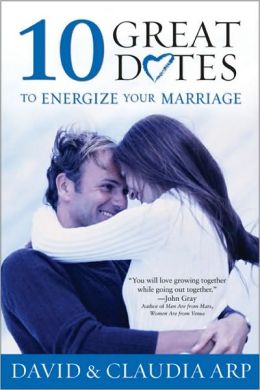
GreatDatesPeter and Heather Larson and Dave and Claudia Arp release 10 Great Dates: Connecting Faith, Love and Marriage (Bethany House Publishers)

****************************************************************************************

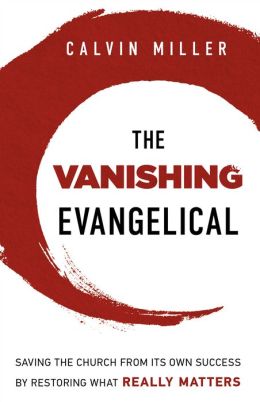
VanishingCalvin Miller’s last book, The Vanishing Evangelical: Saving the Church from its Own Success by Restoring What Really Matters (Baker Books).

****************************************************************************************

InventionOlivia Newport, The Invention of Sarah Cummings (Revell)

****************************************************************************************

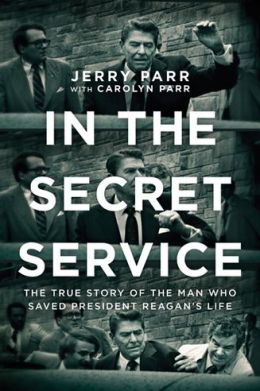
SecretServiceJerry and Carolyn Parr, In the Secret Service (Tyndale House Publishers)

****************************************************************************************

stillloloLauren Scruggs (with Marcus Brotherton) has her book Still Lolo coming out in trade paper (Tyndale)

****************************************************************************************

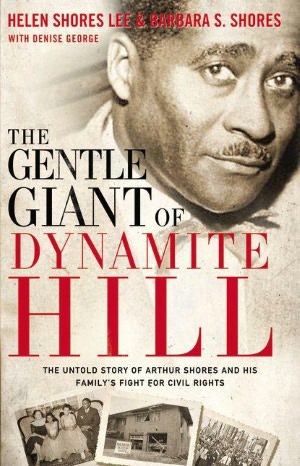
GentleGiantHelen Shores Lee and Barbara Shores (with Denise George) have their memoir of their Civil Rights champion father, The Gentle Giant of Dynamite Hill come out in trade paper (Zondervan Publishing Houses)

****************************************************************************************

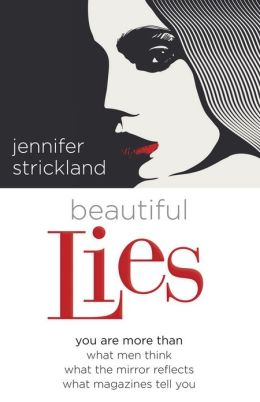
beautifulliesJennifer Strickland is releasing Beautiful Lies, book and separate Study Guide (Harvest House Publishers)

****************************************************************************************

TenaciousJeremy and Jennifer Williams released their moving memoir, Tenacious: How God Used a Terminal Diagnosis to Turn a Family and a Football Team into Champions (Thomas Nelson)

****************************************************************************************

FootballMike Yorkey has another book coming out in the Playing with Purpose series, this time on the lives of NFL football players (Barbour Publishers)

****************************************************************************************

New Contracts

Daniel Allan signed with IVP for a book called Deeper, a call for young men to look for ways to grow their roots as they transition from youth to adulthood.

Wintley Phipps signed with Tyndale for a book titled Living the Great Life (co-written by James Lund), in which he shares the secrets to living a fulfilled life by developing eight vital characteristics.

Jan Drexler with Love Inspired for her second novel. Congrats, Jan!

What We’re Celebrating!!

Becky Johnson and Rachel Randolph had a NICE article in the recent issue of Guideposts Magazine surrounding the release of their mother/daughter cookbook We Laugh, We Cry, We Cook, as well as a 4-part article in the huge website/blog postings, Beliefnet.

What can we help you celebrate?

Use of Humor in Thriller Novels

Don’t we need humor in life to make it through? Life is hard. I have two very serious jobs. I’m a real life pediatric ER RN and a suspense novelist. Those can be heavy days but they can also be fun days—by using a little humor to get through.

LaughterMarriage is no different, right? Humor is necessary. What are some of the funniest things that have happened between you and your spouse? To take a break from discussing serious subjects: like death, trauma, and writing suspense—I thought I’d take a humor break and share some funny highlights from my married life.

Do you find that opposites attract? That’s the truth with my husband and I. He’s the quiet introvert. I’m the more outspoken extrovert. He gets queasy at the site of blood. Obviously, I do not. What we have seems to work—as we’ve been married fifteen years.

During our dating years, we were set to see a movie. I drove to his place and let myself in—and then sat there fuming when he was nowhere to be found. This was before the age of everyone having a cell phone. Finally, his phone rings. I answer. He’s on the line. “Where are you?” He asks. “Where are you?” I ask right back. He says, “I’m at your place!”—“Well, I’m where you should be.”

Other funny moments? Let’s see—teaching kindergarten Sunday school with his ex-girlfriend. Well, we can laugh about that now.

My husband likes to trim his own hair. One day, he mistakenly forgot to put the spacer on the clippers and took a swipe. Without much introduction, he comes into the living room and asks me, “Can you fix this?” with one bald stripe down the middle of his head.

I burst out laughing so hard—I still crack up thinking about it. ER nurse, honey—not hairdresser extraordinaire.

Then, add kids to the mix and the potential for a good laugh multiplies. We have two daughters age 8 and 10. When my youngest was perhaps 4 y/o—she was just in one of these pestering type moods. After several attempts at redirection, I finally just say, “Please, just get out of my hair!” In her sweet, innocent voice, she says—“But, I’m not in your hair.”

Sometimes, readers need lighter moments to get them through serious subjects or intense novels, too. I have a very dry sense of humor. My debut medical thriller, Proof, dealt with some very serious subjects and I thought whilst writing the ms—I really do need some moments of levity.

Hence, the humorous pairing of my odd couple detectives, Nathan Long and Brett Sawyer. Nathan means business. He’s serious and organized—bordering on an undiagnosed case of OCD. A southern gentleman. Brett’s the laid back easy type—maybe plays a little bit loose with the rules to get the job done. Often, their interactions provide comic relief in Proof. Let me give one example: an elderly woman with some questionable underwear choices serving them tea with a heavy dose of liquor during an interview. You may think that would never happen. Well, just recently I had a 14y/o show up just in his skivvies—at the ER. That’s right—just the white cotton briefs. And let me say—he was not deathly ill. Plenty of time for that young man to get dressed.

What about you? What’s the most humorous thing that’s happened in your married/dating/writing life? I’d love to know—could end up in my next book.

Names withheld—of course.

Book Reviews: Do They Help?

Agents, editors, and publishers alike encourage authors to build platforms and engage with readers, well before books are published, whether non-fiction or fiction. I work in both arenas, so I launched www.kerriansnotebook.com (a crime fiction blog with non-fiction resource links) in December of 2011 and www.nightstandbookreviews.com (a book review site that I’ll refer to as NBR) in December of 2012.

BookwormJordyn Redwood and I chatted online and after reviewing Proof, her terrific debut novel, I shared with her some interesting patterns that seemed to be emerging with the book review readers. Three months after the website launch, reviews of books by male authors were being sought out more frequently than those of female authors. It has now been six months since the launch and that remains true.

In the first six months, I reviewed 29 novels, featuring 15 female authors (5 debut, 1 indie) and 14 male. More than half the titles I review are in the suspense/mystery genres, but women’s fiction, historical fiction, adventure, and cozies can be found on the list as well.

I use Google Analytics on my WordPress sites, a great tool for mining the readership data. Here are some of my discoveries:

Spikes in the data for the book review site seemed to be tied to school (and perhaps work) vacations. I post new reviews on Thursdays. NBR gets the most hits for the reviews on Thursdays and Fridays, with the exception of the vacation weeks.

The most read review? Joe Finder’s, Buried Secrets, a thriller.

The second most read? Dee Henderson’s “O’Malley series.” Wahoo! A Christian writer in second place, just ahead of Lee Child and well ahead of a few huge bestselling males in the suspense/mystery genre. Initially, the review of her O’Malley series did not receive much interest, but two-three weeks after Full Disclosure was released, the hits on the related review on my site increased and continue to do so. During that same time, Ms. Henderson (or her representative) became involved in a Twitter promotion and retweets of my review increased.

#3 thru #7 are male suspense/mystery writers (all bestselling authors).

#8 – female debut author, legal mystery, ebook only.

#9 – female author, women’s fiction, bestseller.

#10 – female author, romantic suspense, bestseller.

#26 thru #29 – female authors, a mixture of genres, 3 bestsellers.

Update (as of 8/23/2013)
During the last month, the Dee Henderson review has moved into first place, by a LOT. The rest of the authors maintain approximately the same standings, with the top of the list after Dee still mostly men, and the bottom of the list, mostly women.

Authors who have an active Twitter presence retweeted my tweets about their books (6-8 times a day the first two days of each new post) and that resulted in sales (they told me so) as well as retweets from other fans of mine and theirs. They were also higher in the rankings for my site.

I continue to tweet about each of the titles, but most of the hits come from the first week of publication of the reviews. If the authors have a new book coming out after the initial week of my post, incoming links to the site indicate a specific search for the author.

Most weeks, Twitter is much more effective for Nightstand Book Reviews than Facebook. FB is more effective for my crime fiction site. Half of the FB followers are personal friends and acquaintances, mixed with professional associates. Almost all the Twitter followers were initially unknown to me personally. Several Tweeps have become online friends whose work I respect and also promote. I follow a number of writers and bloggers who provide valuable sources of research information and I promote their work on Twitter’s #FF (#FridayFollow).

According to Google Analytics, I have had absolutely no click-thrus from the Pinterest boards, but LinkedIn has produced a few hits.

The Paper.li community has generated repeated hits for the book reviews. I retweet the Paper.li posts, highlight the publishers, and that in turn, increases hits.

Aside from the increased exposure, there are other benefits to all the work that goes into creating and maintaining both sites. A Christian writer subscribed after reading the ‘About NBR’ blurb. We chatted through FB, discovered we live three hours from each other, and a few weeks ago, I had the privilege of taking a look at an ARC of her book that was in the final edit stage. Three weeks from now, I will attend her book signing, and take some friends along. So much fun!

For me, it has been all about building relationships within the FB, Twitter, and Paper.li communities. Some of those relationships were established after I did guest blogs about research for the crime fiction work, some after attending conferences. But a few have begun just because people like what I write or I like their work and promote them. I have met a few of the fans in person – what a blessing to be able to do so!

Does social media help you? Where do you focus your efforts?

************************************************************************************************
PattiPhillipsPatti Phillips is a transplanted metropolitan New Yorker/north Texan, now living in the piney state of North Carolina.

Her best investigative days are spent writing, cooking, traveling for research and playing golf. Her time on the golf course has been murderously valuable while creating the perfect alibi for the chief villain in her novel, One Sweet Motion. Did you know that there are spots on a golf course that can’t be accessed by listening devices?

Ms. Phillips (writing as Detective Charlie Kerrian) can be found at www.kerriansnotebook.com. Her book reviews can be read at www.nightstandbookreviews.com.

Being Equipped

Criticism 1Many times, when I meditate on God’s Word, my eyes are drawn to encouraging and uplifting verses like John 3:16, or “I can do all things through Christ who strengthens me,” or “The Lord is my shepherd, I shall not want.”

And sometimes, as only God can do, He whacks me upside the head with a mackerel as he did during my prayer time the other day when He led me to Proverbs 29:1 (NLT): Whoever stubbornly refuses to accept criticism will suddenly be destroyed beyond recovery.

In the King James Version, this verse reads: He, that being often reproved hardeneth his neck, shall suddenly be destroyed, and that without remedy. Not quite as in my face as the NLT. The Old English makes it a little mushier with having to untie the knots in the sentence.

Not the NLT. It’s like stepping on the wrong end of a rake.

When I began writing seriously, the thing I feared most was receiving criticism. I had always been extremely sensitive to criticism. It came from having a poor self-image and being convinced in my mind I could never be smart enough or good enough. My first reaction was to shut down and then, at the first opportunity, I would go off by myself and brood.

Frustrated Woman at Computer With Stack of PaperImagine taking this attitude into a critique group.

But God, with His grace and favor and wisdom, prepared me. He showed me magazine articles, books, and blogs that talked about receiving and giving criticism. He brought me to my first critique group. There I observed a group of people much more experienced than I give and receive critiques in ways that were constructive and encouraging.

Most importantly, through prayer and wise counsel, He showed me, for the first time, how to see the criticism was not about me personally, but about my words.

Sometimes, it’s still hard to make this distinction. The enemy tries to wedge the door open and tell me negative feedback means I’m no good. But God has shown me, no matter what people think of my writing, I am good. I am His child and, as the old saying goes, God does not make junk.

To refuse and reject criticism is to set myself up for failure, to put myself in a situation of not being published, of developing a reputation of being difficult, if not impossible, to work with. This accomplishes several things I don’t want to happen. People won’t work with me or consider my work because I’m not open about improving it. It hurts God because it takes me out of His plan for me. And it gives the enemy a victory because it takes me out of the will of God and opens the door for him to do even more damage, and, thus, for me to be destroyed beyond recovery.

God’s shown me the purpose of the criticism, how it applies through this verse. The feedback is to help me improve as a writer, to develop and refine my craft, to become a better storyteller. To become a better servant of Him by taking my skills to the highest level possible. To walk in obedience and in the fullness of His plan and calling for my life.

After getting my attention in Proverbs 29:1, He led me to this Scripture, a part of a prayer in Hebrews 13:21 (NLT): May he equip you with all you need for doing his will. May he produce in you, through the power of Jesus Christ, every good thing that is pleasing to him. All glory to him forever and ever! Amen.

He’s equipped to me write and He’s equipped me to receive feedback and instruction to improve my writing so it serves Him even better.

Are You A Hypocrite?

Have you ever been in church, or on-line reading blog posts, or just conversing with a good friend when something they said just is like a dagger to your heart with how much truth it speaks? Love those times . . . sometimes.

WarriorDash3
Me trying to be less hypocritical about fitness! Warrior Dash 2013.

As a Christian, I am tired of being called a hypocrite. There’s been a story floating around Facebook (cannot verify its veracity) about a new minister that dressed as a homeless person and attended his own services in this disguise. The post laments how no one came up to speak to him or welcome him in any way and then the minister, in this outfit, goes up to the pulpit and gives a sermon on– well, you get my drift.

Then there is comment after comment about “This is exactly why I left the church!”– even one from my own relative.

Honestly, it makes me mad because I think two things.

Did said I’m-dressed-up-as-a-homeless-man-minister actually offer to shake anyone’s hand? Did he take an initiative, despite his dress, to get to know a few people? And those that use this example as the reason they left their own church– why aren’t you out there greeting people? Be the change you want to see.

I feel like I do try and live what is taught on Sunday. But then a sermon came up about being a hypocrite and I was in the beginning stages of rolling off a barrage of thoughts like the ones above until the minister said this:

“Hypocrisy lives between what you believe and what you do.”

Well, now . . . ouch.

It dawned on me that hypocrisy doesn’t just apply to aspects of the Christian life but to all aspects of our life. For years I said, “I want to be published.” but what was I really doing to accomplish it? That gap between my words and my action is hypocrisy.

These words hit home most for me in the area of weight loss. About three years ago, I saw a photo of myself and it was like a very bright spotlight on the lie I had led myself to believe. I knew I was a little fluffy– but not obese by any means.

Everything changed when I saw that photo. A dagger right into my heart. I couldn’t deny the truth anymore. Well, of course, I could but I knew I never wanted to see another photo like that . . . ever.

So I started on a wellness path . . . very slowly. It’s taken me about three years to lose forty pounds but I’m not quite there yet. Quite honestly, I should be at my goal weight. I have plenty of excuses why– or what we call “reasons” when we’re living in hypocrisy. Some of them sound very good and reasonable but they’re really not.

I’m trying to decrease my “reasons” and increase my actions. I don’t want to be viewed as a hypocrite. I want people to believe that I’m going to do what I say I’m going to do.

What about you? In what area of your life are you being hypocritical? Where is the gap between what you say you’re going to do and your actions? Is it spiritual (I’m going to pray more), or professional (I’m going to start my novel– maybe tomorrow!) or physical (I want to be a size six.)

How do you plan to change it?

And yes, all my ranting about the church above was being hypocritical, too. I have lots of self discovery in process.

Writers: Move Your Legs! Don’t Get Blood Clots From Prolonged Sitting.

If you sit for extended periods of time, such as during airplane travel or during long road trips, or if you have certain medical conditions, you may be at risk for “Deep Vein Thrombosis” (DVT), or blood clots that form deep in your veins. These clots are dangerous because they can dislodge from your veins and cause sudden death by passing into the lungs, disrupting blood flow, and creating dangerous changes in your heart and lung blood pressures.

A sizeable blood clot that lodges in the lungs can kill a person instantly. I know because I witnessed this on more than one occasion during my internship in Internal Medicine and my residency in Physical Medicine and Rehabilitation. Once big clots enter the lungs, there’s very little you can do to save the person.

Sadly, about half of the time, there’s no outward sign of DVTs. But when there are signs, patients usually complain of calf pain and swelling. They may also have pain on squeezing the leg or when they abruptly bend the ankle upward (this is known as Homan’s sign).

Several factors in addition to the sedentary lifestyle predispose to clots. One factor is family history. Another is the use of oral contraceptives or hormone replacement therapy. Still another is smoking. Additional factors include trauma (including venous catheter trauma), advanced age, cancer, elevated platelet counts, immobility or paralysis of the area (such as due to casting), plane travel, surgery, pregnancy, heart failure, obesity, or a personal history of blood clots.

One diagnostic test for DVTs is an ultrasound scan called a “Venous Doppler” study. Another test measures blood levels of “D-dimer,” which is a natural clot-dissolver found in elevated levels in case of DVT.

If you test positive for a blood clot, your doctor will most likely admit you to the hospital for and start you on clot busters or blood thinners. Sometimes, you might even have a “filter” inserted into the large vein in your abdomen (the vena cava) to trap clots that try to travel upstream to your lungs.

Now, let’s talk about the most important thing: blood clot prevention. First, try to minimize your chances of clotting. Quit smoking, get moving, and lose weight (if you need help with weight loss, check out my book, The Eden Diet. If you sit for prolonged periods of time, wear thigh-high compression hose, which are usually available at your local hospital supply store, and do “ankle-pumps,” where you bend your ankles up and down.

Depending on your risk factors, you may even want to talk with your physician about taking a medicine to prevent blood clots. As is true in many areas, when it comes to DVTs, an ounce of prevention is worth a pound of cure. Or, in this case, an ounce of prevention might even save your life!