Why Do You Want to Write a Book?

voice matters2I love words. Slices of words on my tongue satisfy me like a sweet, icy watermelon on a sweaty July day. Whether I twist those words into colorful quotes, mash a couple of them together to create my own new word, or string just enough of them into countless paragraphs that eventually produce a book, I. Love. Words.

It took me a few years to realize I’m different that way—not everyone shares my passion. Few people consider their office or library a haven like I do, a place of refuge where shelves of categorically arranged books permeate the air with the faint mist of paper and ink.

Chances are, you’re somewhat similar to me. Yes, I suspect I’m in good company as I share today with you. We writers with lofty dreams, we have a way of finding each other. As an often insecure tribe who spends the majority of our days writing and waiting, vacillating between confidence and fear, we need the support of each other on this sometimes lonely and highly competitive journey.

It’s not new news: the publishing industry is shrinking. Larger publishers have nabbed smaller ones, and some have simply closed their doors. E-readers have reshaped the way consumers think about, and purchase, books. As a result, today’s publisher tends to seek new authors with the lowest risk.

Here’s the good news: God is bigger than statistics.

Publishers still need new authors; I imagine publishers will always want a well-rounded catalog of books to offer booksellers. While, yes, the best-selling authors sometimes carry the majority of sales, booksellers are usually on the lookout for “What’s new?”

This newness, though? I’ve discovered it costs us. Many hours of learning the industry, honing the craft, and most importantly, uncovering our unique voices.

Only you can determine if it’s worth the sacrifice; it’s the same choice I recently had to make. You see, I have a book releasing in a couple of weeks, When A Woman Finds Her Voice, and I wrote this book during a very difficult season. Many days, the morning sun rose right over the rim of my keyboard. In the only quiet time available to me, I would tuck away most of the night pleading for this heart-message to come. {I write about sensitive topics that today’s Christian women face, and that requires an unwavering authenticity that for me can only come in the stillness.}

I wonder what you’re willing to invest. The time it takes to pen the words—even if the book never sells? The sacrifice of certain relationships that might be put on hold while you pursue your dream? Your own reputation ?

Your turn: Why this book? Why are you willing to give this slice of time and energy? Is the investment worth it to you? I’d love to hear why!
Seek Hope While Waiting

4864922_s“Knowing trees, I understand the meaning of patience.

Knowing grass, I can appreciate persistence.”

(Harold Glen Borland – a nature journalist who wrote poetry, fiction for adults and children, and other nonfiction. 1900-1978)

As a writer, I need patience and persistence. But I am more than tree and grass. I’m a creative emotional being with spirit, mind, and soul, who struggles with waiting. Right now I’m in squirm mode—between book contracts. I’m lowly bait, a worm on a hook writhing with concern over my writing career. Pathetic, fickle creature.

I recently read patience is the level of endurance one can take before falling into negativity.

Thoughts such as:

-I won’t get another contract because I’m a lousy writer.

-Writing is too much effort for the reward. I’m dangling on the end of a hook, remember. And it’s not the first time either.

The psalmist understood fickle creatures and negative thoughts. And of all things, he preaches back at them with a pep talk regarding God’s love.

“Why are you cast down, O my soul, and why so disturbed within me? Put your hope in God.” Psalms 42

In squirm mode, I’m itching for action.

Anything to hope again.

Even preaching to myself.

Preaching to myself . . . I guess I could clean my desk so I can read my inspirational plaque: Live creatively.

I could tape my theme scripture on my bathroom mirror. “Explore who you are and the work you’ve been given. Sink yourself into it. Don’t be impressed with yourself or compare yourself to others. Be your creative best for you.” Gal 6:1-5

The psalmist reminded himself of wonderful experiences of past worship. I could search my prayer journal and see what God’s accomplished in my life. Perhaps it’s time to browse my writing scrapbook, or make one.

I suddenly see it. My writing lull is a comma, not a period. It’s a gift of time from a loving God. I can use it to rethink priorities, set writing and marketing goals, hone new skills. Persistence urges me into action and hope marches up my spine. I shiver with delight. Yes, there is hope in the waiting.

Even so, a negative thought returns. Working without a deadline? Impossible.

21497233_s

No!

 I preach to myself. Soul, you’re strong in Christ.

Waiting is extra time. A gift from God. Praise Him. 

I don’t want to squander my time wallowing in negativity when I have a gazillion better choices. I will catch up on life. Ideas pop into my mind of ways to bless my family and friends. Or I could use my time to practice self-discipline. I’m not pathetic or fickle. I’m normal. I’m also chosen, forgiven and loved. I find another blessing. Waiting makes me thirsty for living water.

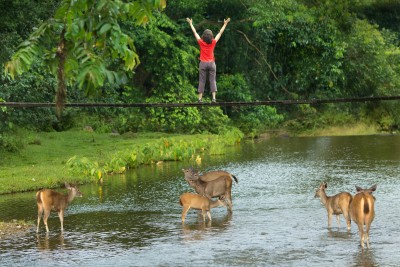
Psalm 42:1 “As the deer pants for the water brooks,

so my soul pants for Thee, O God.”

Beyond the tree and grass and worm is a larger stream. I can wait in confidence that He’ll nudge me along in His time.

What uplifting sayings or verses do you cherish?

What blessings do you experience in wait mode?

Seven No Nonsense Book Launch Tips for Broke Authors

Seven no nonsense book launch tips


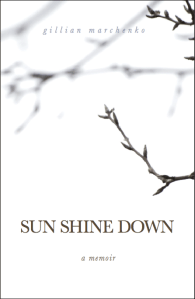
Sun Shine DownI am launching a book.

My memoir, Sun Shine Down, published at the end of August with T. S. Poetry Press. Eeek!

As a broke, green as the grass in mid-July first time author, I tackled the daunting assignment of launching a book like any other able-minded individual in North America.

I googled ‘book launch.’

In .02 seconds, reputable results-driven marketing and publicity firms jumped into my line of vision. These people surely could launch my book into the stratosphere!

But after some number crunching and a realistic talk with my husband about where hiring a publicist falls in the needs of a family of six (braces, soccer, therapy, FOOD), I conceded. We could not hire help for Sun Shine Down.

These days, whether we sign with a big publisher, a small press, or self-publish, we bear much of the responsibility for launching our own books. And it’s hard work.

If you, too, are a broke new author, here are seven no-nonsense book-launching tips:

1) Plan ahead

If you wait to plan your book launch until your book is out, you’re toast. Plan ahead. Start six months before you are to publish. Research, and consider elements of a book launch you will utilize.

2) Launch your book online

Social media is a marketing ocean. You’ve got Facebook, Twitter, Pinterest, Instagram … Where do you spend your time online? How can you introduce your book in those venues? With Amazon stomping on the book industry, it is a mistake not to market online.

3) Launch your book offline

Is a book party right for you? I’m hosting a party at a bar down the street from my house. I’m doing it on a Monday (because the venue is free then), providing appetizers, and using evites and Facebook events to publicize. Extra tip: Don’t call your gathering a book signing. Call it a book party. Who doesn’t love a good party?

4) Don’t spam people to death with your book

Not everyone is excited to hear about your book all day every day. Post about your book (especially on your Author Fan Page–don’t have one? Um, get going), but don’t post several times a day. It just makes you look full of yourself. The trick is fun, cool content, and looking like you’re not trying that hard even when you are.

4) Create a Facebook launch team

In an effort to build buzz about Sun Shine Down, I invited Facebook friends to join a super secret launch group. I offered perks for joining ( a free PDF advanced copy of the memoir, a thank you on the blog, access to a secret group, and interaction with the author) and requirements (help promote for five weeks, post about the book on your blog, etc.). My secret group has been the highlight of promotion so far. Why? Because relationships are being strengthened and we are having fun! It is also a great way to ensure Amazon reviews once the book is published (make it a requirement).  Read this post to see how I did it. 

5) Get help!

OK, I know that I sound like I am contradicting myself. But next time (God willing), I will hire someone or ask a friend to assist with some promotion. I’m talking about someone to help with a couple time consuming tasks and who is affordable (as opposed to a publicist who would do everything and is expensive). I’m talking a flat rate per month to run a blog tour or help with the launch group. I’d like not to have that pressure, and I am finding out with this book that there are virtual assistants and others who could fit this description. *Note: I LOVE publicists, so If I get to that point in my career when I can hire one, I probably will.

6) Create a new email address to send out official book launch news

I simply created a new Gmail account with the name of my book and merged it with my current email account so that when I send out press releases and other book emails, it looks official (instead of the author sending them, which she is 🙂 ).

7) Set expectations low

This is my Eeyore personality coming out, but I suggest you set your expectations low. Then you’ll be pleasantly surprised when something remarkable happens. Not an Eeyore? More a Tigger? OK, then expect like crazy. We are all different. In my experience, though, the people I thought would help publicize and raise excitement about Sun Shine Down haven’t. I did have one or two wild cards, individuals I knew for a short time long ago who have become cheerleaders and promoters complete with pom- poms and cardboard signs.

Here’s to successful book launches, and to many more hours with our butts in chairs, getting books written so that we can, gasp, go through the nonsense of launching again and again!

Goodreads for Writers (Build a Social Media Platform)

Goodreads for writersDo you daydream about a massive virtual library where lovers of books rub shoulders and authors receive free privileges and promotional opportunities? Well, dream no more. Such a site exists. Surprisingly, many writers ignore Goodreads.

A basic membership affords even unpublished writers the opportunity to include a photo and profile information, make friends with readers and other writers, share book recommendations and reviews, create their own virtual bookshelves. and join groups and forums (including groups of readers who love books in their genres).

Published authors can add the following privileges:

Author Page

It’s likely you will find your book by title in the site’s database. If you don’t find it, it’s not too difficult to add it using the “Find Books” tab. Once you locate your book, you will find a link that asks whether you’re the writer of the book. Click that and follow instructions to set up your Author Page.

Bio

On your author page, you can include a biography and list your books, link to your website and blog, indicate your genre(s), and upload a picture. Take pains with this information, since visitors to your page will notice it before they scroll down to read anything else.

Blog

You can blog right in Goodreads or automatically feed updates from external blogs to your page and into the news feeds of your friends and fans. The whole post won’t appear, but just the first few paragraphs with a link to your blog site. This is one way to lead readers back to your website and expose them to purchase information for your book.

Events

You can list events like your release date, blog tour stops, or book signing schedule to keep your friends and fans informed.

Videos

Set book videos, author interviews, book readings, or other promotional videos from YouTube or another online video service to display right on your Author Page.

Writing Samples

If you have an author page, you can include samples of your writing and reviews of your books for others to read. 

Quotes

You can share favorite quotes from books you love, including your own! Give readers a taste of your writing and they may just purchase your book and keep on reading.

Fans

Your Author Page includes a place where readers can sign up to be your fans. You will then appear in the “Favorite Authors” section of their profiles and they will receive updates from your Author Page. 

Status Updates

Goodreads has a status update box that allows you 240 characters to comment on topics of your choice. Your update will show up in the newsfeeds of your friends and fans. Starting a discussion about an author who writes books similar to yours is a great way to engage with readers who might also enjoy your books. The update box is a little difficult to find. In the top menu bar, click “home,” and then look in the right sidebar for the text link entitled “general update” under the “what are you reading” header. Click the link and an update box should appear. 

Groups and Forums

Join reader groups and enter into their discussions to connect with readers within your genre. Remember, though, not to push your books. Engage readers by joining in the discussions at hand and they may click on your name link to go to your Author Page and find out all about you and your books.

Giveaways

If it’s still within six-months after your book’s release date, you can set up a giveaway of your book through the “First Reads” program. This gives you the opportunity to put a brief synopsis in front of those who participate.

Special Strategies

The way Goodreads is set up yields intelligence data for authors. For instance, you can find a book similar to your own, click on its title, and learn which of your friends and fans have read it. You can search for a similar book and find active discussions about it in reader groups.

Homework

If you don’t have a Goodreads account, sign up for one, upload a photo and fill out your profile information. If you are a published author, apply for your author page and schedule some time to set it up.

I’ve touched on some of the strategies available to writers who use Goodreads. Do you have more ideas? How do you use Goodreads?

Why You Should Stop Marketing Your Book

Years ago, I heard a professional speaker tell about a dream she had: She had always wanted to go to Australia. She mentioned the dream in one of her speaking engagements and a couple approached her afterwards.

We’re from Australia. You can go stay in our home, free, for three months while we are traveling.

Immediately the speaker backpedaled. She had thoughts like, “I can’t do that. I can’t afford to miss work. My career would dry up. People would forget about me.”

Night Sydney Opera House with Harbour BridgeBut it was too great an opportunity to pass up. She flew to Australia, enjoyed herself tremendously, and when she returned her business boomed.

Why?

Everyone wanted to know what her trip had been like. Even better, she came back refreshed and motivated to pour herself into her business.

All authors should take time off from marketing their books. Here’s why:

Sometimes Less Is More  – Some of my favorite bloggers are those I rarely hear from. I don’t get tired of their voices because I don’t hear them every day. All of a sudden I’ll see a link to one of their blogs and I’ll think, “Oh, there you are. I’ve missed you.” Once in a while I get sick of my own selfcare mantra and I’m sure others do as well.

We Need New perspectives And Experiences – The brain loves novelty. It lights up at new experiences. That’s why you can visit an ordinary town and everything about it is fun and interesting. As I write this I’m finishing up a long week of clients, social media, and wedding details (my daughter gets married in September). I’m taking next week off to go to Breckenridge with my husband who has a work conference, and after that I’m flying to Nashville for a relaxing weekend with other creative people. Yes, I’ll miss time with clients, and yes, there is a financial cost, but I know the benefit will be greater.

Even God Took Time Off – Author Wayne Muller says, “In the book of Exodus we read, ‘In six days God made heaven and earth, and on the seventh day God rested, and was refreshed.’ Here, the word ‘refreshed,’ vaiynafesh, literally means, and God exhaled. The creation of the world was like the life-quickening inhale; the Sabbath is the exhale…without the Sabbath exhale, the life-giving inhale is impossible.” Inhale plus exhale equals life. If God needed refreshment, don’t you think we do, too?

When was the last time you blocked off your calendar for pure enjoyment and no book marketing? 

Important Question for Christian Writers

English: Posthumous official presidential port... President John F. Kennedy inspired American patriotism in his inaugural address: “Ask not what your country can do for you—ask what you can do for your country.”

As a Christian writer, I’ve asked myself a similar question at times: What can I do for God?

I’ve tried to do the things that I thought pleased God, but my good deeds never seemed to be enough when compared to the standards set before me.

So, I sought answers to my question from biblical examples of those who sought God’s approval and blessings.

King David experienced a change of focus when he sought spiritual counsel concerning his desire to please God by building a house for Him (2 Sam. 7:2). But God planned to build a house for David and establish his kingdom, and He chose David’s son to build a house for His Name.

The Lord declares to you that the Lord himself will establish a house for you … I will raise up your offspring to succeed you, … He is the one who will build a house for my Name …  Your house and your kingdom will endure forever before me; your throne will be established forever’ (11-16).

Humbled by God’s blessings, David received his inheritance with gratitude (18-24).

Jesus’ disciples also wanted to please God. And when they asked Jesus to show them the way to heaven, “Jesus answered, ‘I am the way and the truth and the life. No one comes to the Father except through me’” (Jn. 14:6).

What can we do for God that will please Him?

Accept God’s gift of eternal life. When we focus on our religious activities and good works, we overlook God’s promised gift of eternal life through His Son, Jesus. “For God so loved the world that he gave his one and only Son, that whoever believes in him shall not perish but have eternal life” (Jn. 3:16).

“For it is by grace you have been saved, through faith—and this is not from yourselves, it is the gift of God—not by works, so that no one can boast” (Eph. 2:8 NIV).

Seek God first. Matthew 6 encourages us to seek God first every day. As we observe God at work around us, He promises to reveal His plans for us.

Steep your life in God-reality, God-initiative, God-provisions. Don’t worry about missing out. You’ll find all your everyday human concerns will be met.

Give your entire attention to what God is doing right now, and don’t get worked up about what may or may not happen tomorrow. God will help you deal with whatever hard things come up when the time comes. (Mt. 6:33-34 MSG)

Focus on God’s blessings. God also promises His spiritual inheritance to all Christ-followers.

… When you believed, you were marked in him with a seal, the promised Holy Spirit, who is a deposit guaranteeing our inheritance until the redemption of those who are God’s possession—to the praise of his glory. (Eph. 1:13-14 NIV)

As I choose to focus on God and His blessings, my motivation for serving Him changes. Plus, I no longer depend upon the approval of others, and I avoid prideful boasting, a major stumbling block for Christian writers.

Therefore, since we are surrounded by such a great cloud of witnesses, let us throw off everything that hinders and the sin that so easily entangles. And let us run with perseverance the race marked out for us, fixing our eyes on Jesus, the pioneer and perfecter of faith. (Heb. 12:1-2)

What important questions do you ask yourself as a Christian writer? 

Puppies, Unicorns and Dolphin-Shaped Balloons

notes-md

Have you heard of the term bait-and-switch? Yep. This is one of them, and for good cause. If the title had read “3 Reasons to Outline,” would you seriously have stayed tuned? Not only is the topic of outlining boring, it often causes big hivey welts to break out on some people. So if you need to slug back a few gulps of Benadryl, go for it, and let’s move forward with…

3 REASONS TO OUTLINE

1. To keep from crashing head first into the lack of confidence wall.

Yes, you can write an entire novel without drafting an outline, but the chances of losing steam and curling into the fetal position about midway through are pretty high. What you thought was a plot screeches to a halt. Characters wander around like zombies on steroids. Your narrative is a flaming train wreck of twisted words. Reaching this state of mind has a way of sucking all the confidence marrow from your bones. This is where an outline comes in handy. Think of it as a safety net and/or anti-zombie mega-gun. When you hit midway in your story, you can reach out and grab the outline rope to pull yourself up to the grand summit of a finale.

2. So you know where you’re going.

I’m not a huge map fan. I can’t fold the dang things. I know. I know. There’s this great new invention called MapQuest. Yeah. That’d be great if I had a smart phone—which I don’t. Even so, there have been a few family vacations where I’ve been awfully thankful for a map. That’s what your outline is. Writing a story is a lot like going on a road trip. Sure you can throw your bags in the car and hope for the best, but what happens when you hit construction? Or worse…road closed? That’s when a map is your best friend. Same thing with a meandering story. An outline will keep you on track to end up where you wanted to go.

3. It works out the kinks.

Don’t get me wrong. Writing an outline is not a magic pill that takes you to happy writer land (but if you could market that, you’d make scads of money.) Planning out the major scenes ahead of time, thinking through all the what-if-that-happens scenarios, straightens out your plot so you’ll be less likely to have to rewrite unnecessary chapters.

Convinced yet that outlining is the greatest thing ever? I wouldn’t be, either. Outlining sounds about as much fun as scrubbing the toilet—outlining as in Roman Numerals and sub-points and all that analytical falderal. I say it’s time to start thinking outside that no-fun box and reinvent the outline.

Newsflash: there’s no law that says you have to write a text-on-screen outline.

Maybe you’re a Pinterest type of person who creates story boards. That counts. Perhaps you love the smell of dry erase markers and get off on mind mapping a tale on a large whiteboard. Shoot, I even know some writers who adore 3M sticky notes and plan out a novel by decorating a wall with their scenes. Go ahead and get creative. That’s what fiction is about, folks.

One parting thought to shoot down the scare factor of outlining. You have my permission to outline only chunks at a time. If scribbling down the entire story totally freaks you out, just do the first third, then take a break and write the first chapter. Before you end the first third, however, you should plan the next third. Savvy?

Outlining does not have to steal the joy from your writing. Turn it around to enhance the joy of your writing…and keep from having a nervous breakdown halfway through.

What about you? Are you fans of the outline or more pantsers types?

Write to be Relevant

Twelve years ago, tragedy struck our nation. For the second time in United States history, we experienced a day that “lives in infamy,” a day we were attacked on our own soil. From across our country, people came together from every religious, ethnic, and cultural background. The walls fell for a few short weeks between liberals and conservatives, and we stood united in the face of great threat.

Screen Shot 2013-09-04 at 1.16.12 PM

So many years later, many have forgotten the pain they experienced that day, but they are reminded through the documentaries, television shows, and news broadcasts. Flags will fly and people will remember where they were on 9/11.

The news will make much of the event that marked this day twelve years ago. Why? Because people want to know. They will take to the internet and read articles and more new stories. They will remember the valiant plane crew and cheer their heroism. They’ll remember the firefighters and first responders who bravely ran into the towers as they crashed.

As writers, our bread and butter is anticipating what our audience wants. Where are the holes in the market? What’s doing well? What isn’t? Judge the attitudes and mindsets of people. Teen fantasy sells well because those that buy it want to escape reality. The same could be said for many Amish fiction readers.

Know who you are writing for. Let’s be honest. Most of us would like to say that our audience is everyone from 16 to 95, but that’s not realistic. While you hope that those in that age range will read your books, attempt to tailor it to a certain group within that and then market hard. I am a young adult who understands the heart, habits, and hang ups of my generation. I can tailor my novels to my age group. However, I also want to make it relatable to every age group, so I create characters that every group can somehow identify with.

At a mentoring clinic I attended, one of my mentors, a very successful author, looked at me and said, “Kariss, your books perfectly describe your generation’s desire to not simply DO church but to BE the church. You have a lot to learn from those who have gone before, but my generation could learn a lot from your generation by reading this book.” Why? Because at one point, this man was my age. His children are my age. His grandchildren will be my age. It’s still relevant and relatable to him.

We’ve been at war since I was 13. But as a result, I’ve come to value the brave men and women who serve our country and protect our freedom. It’s affected the way I write. It’s even bled into my characters as I researched and created courageous Navy SEALs. I live in an age of everyday heroes who are seldom recognized. 9/11 is relevant to me today, but it also shaped my teen years. It sent my friends into the service and combat. While the media markets this day for other reasons, I choose to remember. And in my writing, I make these heroes front and center, because no matter the day, they are relevant. Now that’s something to market.

Risky Moves, But Not Like Miley Cyrus or Britney Spears

Miley CyrusSome risks are worth taking, some are not so smart. Authors aren’t typically in the same celebrity category as Miley Cyrus or Britney Spears. But just as these young artists turned off many product purchasing fans with crazy antics, so can an author’s choices affect book sales. Taking a risk is one thing, taking an in-your-face attitude is not wise.

But unless you fall off the cliff of common sense, some risks can bring happy results.

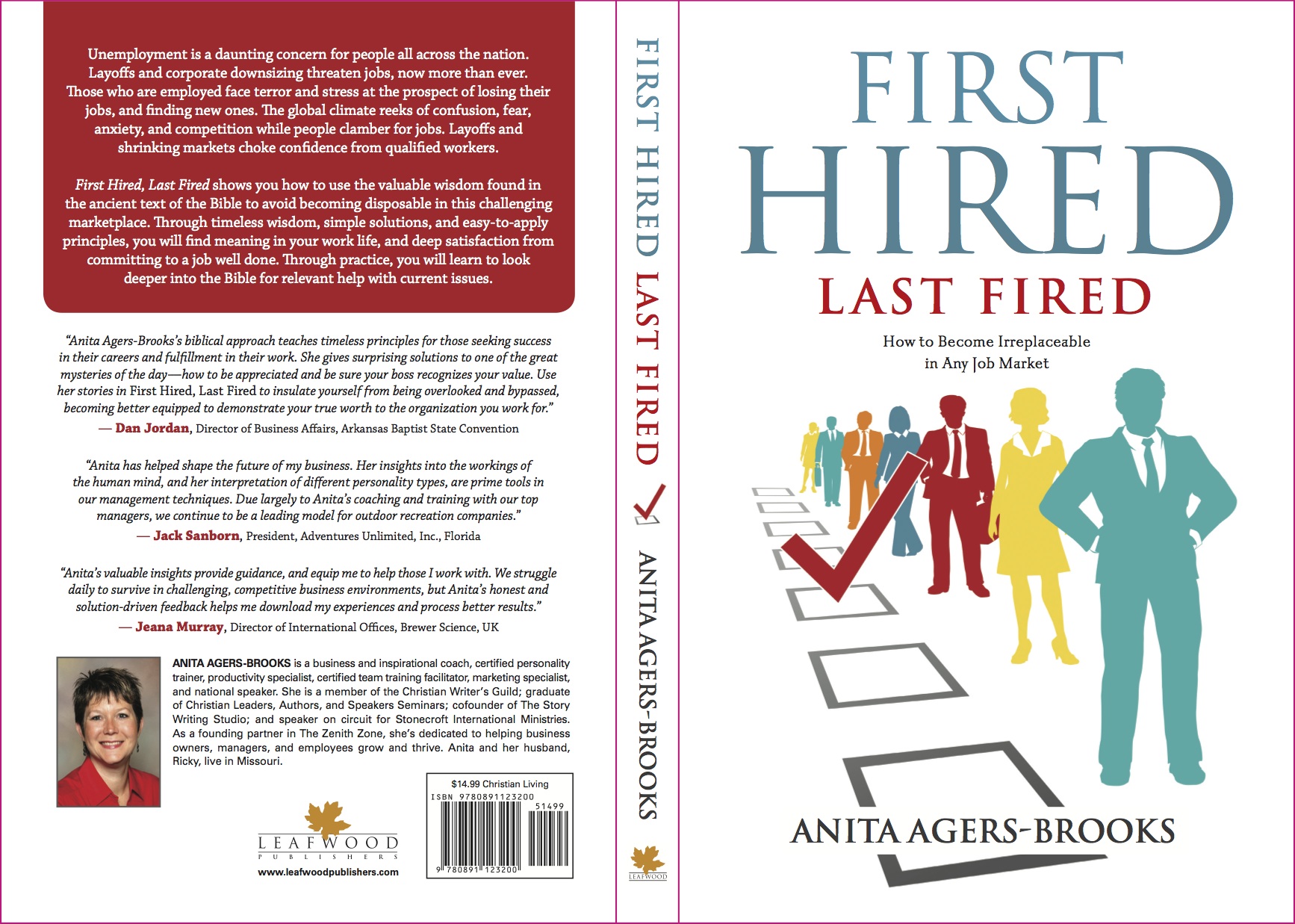
First Hired Last Fired BookAuthors take risks when they try a new style. I did this with my nonfiction book, First Hired, Last Fired — How to Become Irreplaceable in Any Job Market. I patterned short stories in each chapter, using strong fictional elements to demonstrate my hypothesis. It wasn’t something I’d seen done in exactly that way before, but I decided to take the risk. So far, it’s working well.

Into the Free

Many WordServe authors have taken their own style risks suited to particular genres. Reading their books infused me with courage when I battled fear.

It’s a risk when authors write about difficult subjects. Our own Julie Perkins Cantrell did this in her amazing novel, Into the FreeWhy is it an award-winning best seller? Because it hits the heart with readers. Even if they don’t relate to the circumstances in the story line, they can relate to the gut-wrenching feelings Millie experiences. I expect much of the same in the sequel, When Mountains Move

Authors risk when they get out of bed at 4:00 a.m., versus sleeping until 7:00. Who wouldn’t prefer a few extra Zz’s, but trusting the rewards will outweigh the sacrifice keeps dreams alive.

Investing time and energy in the elements that make up your writing business is a risk. After all, you can’t recycle either one. But every web page, blog post, article, social media blast, and book proposal are like laying pieces down in a jigsaw puzzle. Not until you’ve placed a string together, does the picture of your writing career finally start to look appealing. The key is not to give up before the last piece is in place.

But I would be remiss if I didn’t mention some risky moves that don’t typically work for authors. 

  • Avoiding education and research, in hopes you’ll get lucky, and success will come with little effort on your part.
  • Assuming you know how your writing comes across without getting feedback from unbiased sources.
  • Joining negative media frenzies on social media when they involve putting others down for political views, personal choices, or religious beliefs.
  • Reacting to professional guidance with an unteachable spirit.
  • Giving up on writing, and spending the rest of your life wondering, what if . . .

There are many risky writing moves, but envisioning worst case and best case scenarios can help you decide which ones are worth taking. Most are reasonable, and even if you don’t get the outcome you hope for, be willing to brush yourself off and dream again.

After all, if you risk and fail, are you any worse off than you are now?  

And God Said . . .

maypoproadside flowersLast month, inspired by a woman at a conference whose phone told her where we could get a hotdog, I decided to replace my dinosaur of a cellphone.

My daughters were delighted. They soon had me instagramming photos of their dogs, whom they rarely get to see, being off at college and internships much of the year. Before long, I was posting all the time: my garden’s amazing abundance this summer, pies about to go in the oven, snakes and spotted fawns and wildflowers I see on my runs.

Then, a visiting former student and I entered into a psalm-memorizing pact, and she downloaded a Bible app onto my phone that she said would help me, and soon I was listening to scripture as I ran, the voice of God booming forth from the net pouch I wear on my stomach—I hate earphones—to the astonishment of cattle, dogs, horses, and the occasional human passersby.

Almost immediately, I ditched the psalms for the gospels and soon settled on John—now esoteric, now fatherly—as my favorite voice. On one long run, I listened to everything we have of John’s writing. His three odd little letters I’d never paid much attention to before (one addressed to a woman, who knew?!) His gospel, with its baffling beginning:

In the beginning was the Word, and the Word was with God, and the Word was God. He was in the beginning with God. All things were made through him, and without him was not any thing made that was made. (Genesis 1.1-3 ESV)

And Revelation, for me always an unsettling narrative, in which heaven seems such a strange and off-putting place.

Listening to John’s whole opus read aloud in one go was transformative for me. His wise, kind voice pulled everything together in a new way: the creation, the fall, Jesus’ life on Earth, the struggles and successes and sheer realness of the early church—so recognizably the church of today—and the resolution of everything in the end.

After my run, I stood sweating in my driveway and listened to the beginning of Genesis and had new thoughts about it all. The creation was a work of words:

“And God said . . . And God said . . . And God said . . . And God said . . . And God said . . . And God said . . . Then God said . . .” (Genesis 1.3, 6, 9, 11, 14, 20, 26 ESV).

God spoke everything into being. And speaking being a communal act, involving a speaker and a listener, God would have been speaking to someone. So, not only the Spirit hovering over the waters but the Son—or, as John calls him, “the Word”—was present. And, if John is right that the world was created through Jesus, a narrative of the conversation preceding the creation might have had Jesus speaking with his Father, making suggestions, perhaps coming up with the whole idea.

volunteer arugulaI imagined it so:

“Hey, Dad, let’s make a world swarming with swarms of creatures—live creatures like us. And in it, a beautiful garden full of people just like us that we can love, and they can love us back, just as you love me and I love you.”

And the Father, besotted with love for his Son and surely impressed by his good ideas, spoke, the very words from his mouth giving flesh and movement and life to the words of the Son.

running shadowI didn’t let myself think about what happened afterwards—when, as John tells it, Jesus “came to his own, and his own people did not receive him” (John 1.12 ESV). It was too horrifying. Instead, I stood there in the driveway, teary-eyed about that unwritten conversation into we’ve been invited, not only as people made in God’s image but, the more so, as Word-mongers—God-lovers in the business of inviting still others into the same conversation.

What a responsibility.

What a delight!