You’ve Been “Notebooked”

Screen Shot 2013-10-02 at 10.59.37 AM

Have you ever read or watched a scene that gave you chills? The guy says all the right things, the girl responds accordingly, and the scene ends in an epic kiss that you feel down to your toes because you know that these two are meant for each other.

Those are the kind of scenes I like to write. And I’m still learning. Several years ago, I would have laughed at anyone who told me I would write romance. Don’t get me wrong…I’m definitely a romantic, but I’m more of a closet romantic who only expresses it if the situation allows. As I write, I’m learning to tap into that closet romantic side of myself. To do so, it helps to understand why people love the romantic pop culture hits.

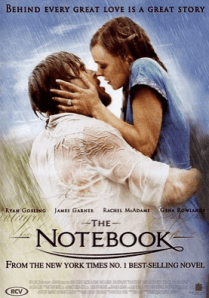
Let’s face it: You can’t talk pop culture romance without talking The Notebook.

People mock it. Chicks dig it. He’s hot, and she’s girl next door gorgeous. Guys groan when their girlfriends “Notebook” them. But there’s a reason that The Notebook and other movies based on Nicholas Sparks’ books do so well. If you can move past your bias, you’ll identify the attracting factor.

It’s all about love. Those are the moments in the movie/book most remembered and most quoted. Think about it. You remember what Noah said to Ally. You remember the passion and tears. You remember the words, the heartache, and the victory.

You root for this couple. So what can we take away that will help us write memorable romance?

1. The scene becomes another character and sets the mood.

Whether it’s the sweeping southern scenes that make you long for small towns, front porches, and handsome gentlemen, or the throes of war that make you cheer for the soldiers on the battlefield, Sparks (and others) knows how to give the scene a personality all its own. The scene definitely sets the stage of the romance, tugging at your sympathies.

2. The characters are three dimensional.

I love following Noah’s story in The Notebook. And no, it’s not just because he’s good looking. I love watching his growth. He starts out as a gutsy teenager who works to help his family and experiences summer love. Only he doesn’t let go when the summer comes to a close. He writes, growing in the midst of recording his heart to a girl who left. Then he heads off to war with his best friend, loses him, comes home, buys a home, loses his dad, and spends some time refurbishing a house. He is no longer the gutsy teenager out to charm the girl. He’s experienced heartache, loss, success, regret, and loneliness. But then Ally comes back. He’s the same romantic guy, but more mature, calm, confident in what he wants. By the end of the movie, he is an old man still set on charming his one and only love and fully confident in their love story. Who doesn’t like to watch love conquer all?

3. The dialogue is memorable and passionate.

Screen Shot 2013-10-02 at 10.58.56 AM

Once again, I love Noah’s dialogue. This country boy is deep. Why? He realizes the cost of love, the difficulty, the pain, the joy, and he’s willing and ready to weather it all. He believes it’s worth it. And he makes us believe it, too.

4. Good, bad, or indifferent – it doesn’t shy away from cultural issues or trends.

We live in a culture of sex, drugs, and whatever you want goes. Don’t shy away from the issues. Be in the world but not of it with your writing. Some writers define love by physical relationships. We have to address how Jesus defines life and love in the midst of our romance.

5. It relates to our desire to be known, loved, and belong to something greater than ourselves.

Why is this a big deal? Because God created us for relationships, set eternity in our hearts, and said it isn’t good for us to be alone. Tap into your emotions. Let them flow on the page with every word. And in the midst of the character romance, point people to the romance they can have with Jesus.

What tools help you when writing romance?

Want to Write a Memoir? Read These Books . . .

????????????????


Now that I published my memoir, I’ve received a few inquiries about how I accomplished my goal.

Good question.

The genre of memoir is tricky. I worked on Sun Shine Down for four years and then spent another two years writing the book proposal, finding an agent, and landing a publisher.

Here are a few questions I get about writing memoir.

“I have a story to tell, but how do I get started?”

“What is your advice about writing?”

“Any words of wisdom regarding the publishing world?”

I am by no means an expert, but here is my best and most basic advice for those who want to write memoir (this goes for breaking into the publishing world as well because if your book isn’t at its best, you won’t break in): 1) Read a lot 2) Write a lot and 3) Find a class or a group of people to read and critique your work.

In this post, I’d like to tackle my first piece of advice: read a lot. Here are three books every budding memoirist must read.

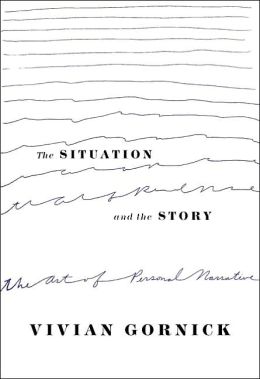
Situation and the story

In “The Situation and the Story: The Art of Personal Narrative“, Vivian Gornick explains the art of writing personal narrative by reviewing key elements like the persona (or narrator) of the writer, her writing voice, and the importance of knowing who she is at the point of writing. The book is broken up into four parts: Intro, Personal Essay, Memoir, and Conclusion. Gornick draws examples from famous books and essays, explaining the situation and story of each, thus causing the reader to pause not only to appreciate beautiful words, but also to break down and understand what makes a memoir or essay sing .

“Every work of literature has both a situation and a story,” Gornick writes. “The situation is the context or circumstance, sometimes the plot; the story is the emotional experience that preoccupies the writer: the insight, the wisdom, the thing one has come to say.” (page 13)

My copy is covered in red notes and underlining. There is just so much good stuff in this book.

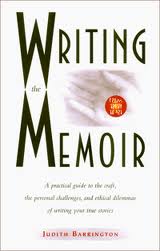
writing the memoir

If your not certain about the ins and outs of memoir, this book is for you. On the cover of Writing the Memoir: From Truth to Art by Judith Barrington, it states the book is “A practical guide to the craft, the personal challenges, and the ethical dilemmas of writing your true stories.” My writing instructor at Story Studio Chicago, where I participated in an advanced memoir workshop for two years, uses this book with her beginners class. In my opinion, it is a book even the most seasoned writer can glean knowledge from. The table of contents includes chapters on finding form, dealing with the truth, writing about living people, and getting feedback on your work. It also has short writing exercises at the end of each chapter.

“Telling your truths — the difficult ones and the joyful ones and all the ones between — is a big part of what makes for good writing. It is also what brings you pleasure in the process of writing.” (page 74)

If you write memoir or want to write memoir, this book must be in your library.

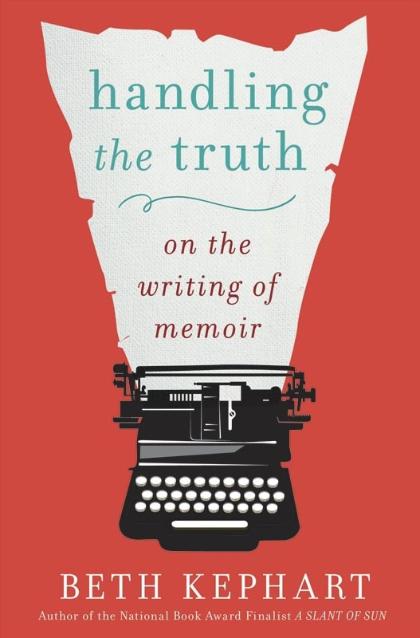
Handling the truth

Handling the Truth: On the Writing of Memoir by Beth Kephart just came out this year and I picked it up a couple of weeks ago. This book is not so much about the ‘how to’ of memoir, but more about the value of the genre of memoir. It is broken up into four parts: Part I: Definitions, Preliminaries, and Cautions, Part II: Raw Material, Part III: Get Moving, and Part IV: Fake Not and Other Last Words.

“If you want to write memoir, you need to set caterwauling narcissism to the side. You need to soften your stance. You need to work through the explosives — anger, aggrandizement, injustice, misfortune, despair, fumes — towards mercy. Real memoirists, literary memoirists, don’t justify behaviors, decisions, moods. They don’t ladder themselves up — high, high, high — so as to look down upon the rest of us. Real memoirists open themselves to self-discovery and, in the process, make themselves vulnerable not just to the world but also to themselves.” (Page 8)

See … you need to buy this book.

Attempting to write and publish a memoir is an arduous task. Start by writing, sharing your work, and reading these three books.

“Penetrating the familiar is by no means a given. On the contrary, it is hard, hard work.” (page 9)

Right on, Vivian.

I would add that it is worth it, if you are up to the task.

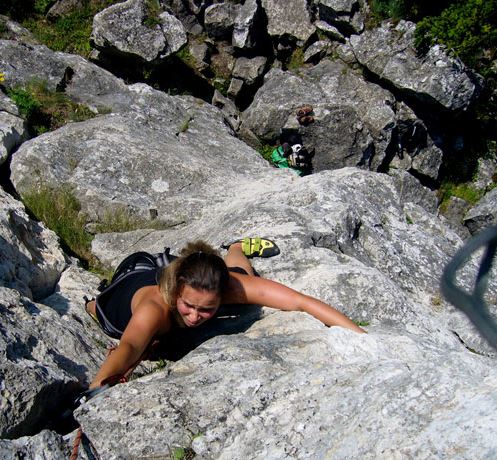
When Writers Face a Constant Climb

Photo by Anna Langova

Sandstone boulders and harnesses and ropes, not really what I had envisioned when the new guy picked me up and we headed out for the afternoon—our first date together.

Girlie-girl me had somehow landed in a ragtop Jeep headed for some serious rock-climbing. Or so Mr. New Guy thought—what actually happened was girlie-girl watched some cute guy scale the side of a cliff, up, down, and sideways.

But getting to the top wasn’t his end-all plan. He seemed most challenged {and the proudest} when he slipped and then recovered. The catch and the readjustment seemed just as exciting to him as the time he stood at the top and waved high from the completed climb.

It’s been a few years since I sat in that ragtop and watched that guy climb. Seems I was about as interested in him as I was in climbing those rocks myself.

Why would we pull ourselves up the sheer face of something just so we can?

We do it more than we think, though, us writers. This writing for publication can be slow and hard. I have a {very thick} notebook full of rejections to prove it. Countless queries I thought would please never flew, never left their cage. And I mourned their loss. Made untold threats to quit, to lay down my pen.

Doubt can eclipse a budding hope if we allow.

But finally came my first assignment: a book review. I landed a column as a book reviewer, and my name held a place on a website that traveled the world. No matter there was no pay, I was writing. And I simply had to write.

Funny thing, though: that column landed me my first paid gig as a columnist for an established online magazine. With pay. This I celebrated. I framed a copy of the paycheck and then headed to my local electronics stores and nabbed a digital camera I’d had my eyes on for months.

From there, I secured an interview with a leading Christian author and sold that query to an international publication, and that one article led to contacts with other magazines and freelancing for the next few years. Meanwhile, my notebook of rejections grew thicker. Another brilliant idea shelved. Another dedicated period of grief. Another resolution to pack it up, find something else to do with my time.

Why do we allow fear and hurt to cloud our hope? To stall our dreams?

Looking back I realize that much like my rock-climbing friend from earlier years, my greatest sense of accomplishment came from those very moments I slipped, those critical steps I took to recover. I made my way to a writer’s conference where I could improve my craft, which led to securing an agent, which eventually led to a book contract, and that led me to my debut book. But there’s so much more to come. And to get there, I have to be willing to slide sideways when my quickdraws don’t connect just right, ready to race ahead when the space opens wide, or even to fall with grace when the fall comes {and they always come}.

There’s something that happens when we surrender to the process, when we climb for the sheer sake of the climb. I’m learning there is no end. If my sole focus was waving high from the top, I imagine I may be disappointed should I ever stand there. It’s been said before in countless ways, but in the life of a writer I’ve experienced it true, “the journey is the reward.”

Deeper Still: What setbacks have you faced on your writing journey? What readjustments have you made, or do you need to make in order to continue the climb?


Artist Sharpening Artist Series: Part One

The City Harmonic, My God

(Please watch the video here when you get a chance.)

I admire singers and musicians. They can sing and I cannot. They can play instruments and I just stare at stringed things and suffer the fear of the unknown. Many of us here are storytellers, are we not? And songwriters, well, they just tell shorter stories. It makes us sort of brethren. Except they wear skinny jeans and shake their tushes, while we stay in our pajamas as long as possible and watch our ankles swell.

Skinny jeans, check!
Skinny jeans and tush-shaking all rolled into one.

Lately, I’ve discovered I need these Christian tush-shakers while I work things out in my head because more and more often, I find myself up against walls in my writing.

Take the song My God by The City Harmonic, for example. I really got into this song when I was at the gym one day, riding one of those accursed stationary bikes. Maybe it was because I had to suffer through a really hard bike seat, maybe because it’s a really good song, or maybe it was because I really needed it that day, but whatever it was, the song struck me in a multitude of ways.

I lift my eyes up,
in these days of trouble.
Will my help come from You?
And if I stumble,
will You pick me up?
What else could a father do?
Well, You know just where I’m going.
You made the open road.
So take my hand, Lord, and lead me home.”

Yes, God, I would like to ask You that: Will You pick me up if I stumble, if I fall, if I just generally suck at this writing thing? Oh yes, what else would a father do?

Oh, my God.
Oh, my God.
I lift my heart up,
whether it’s whole or broken,
good God I know You’re gonna work it out.
So on my heart beats
to a beat that I put my hope in
the love of my God pouring out.”

God, I have to be honest here. I’m already coming to the table broken, and writing . . . well, sometimes it feels like it requires things of me that I don’t think I have left. Oh, but, okay . . . I see . . .You’re gonna work it out.

Yeah
Oh, my God.
Oh, my God.
I will sing, sing, sing and You will be my song.
Yeah.

But, people’s ears hurt when I try that, so I think I’m going to write, write, write and You will be my page.

I’m gonna [write] it like it’s everything to me,
I’m gonna [write] it like the deep calling out to deep
I’m gonna [write] it like it’s all I’ve got
‘Cause all that I want is to [write] for the love of God.

I’m gonna [write] it like it’s everything to me,
I’m gonna [write] it like the deep calling out to deep.
I’m gonna [write] it like it’s all I’ve got
‘Cause all that I want is to [write, write, write].”

iPod shuffle: the poor man's iDevice.
iPod shuffle. It may be the poor man’s iDevice, but it packs a bunch of awesomeness on it for me.

And then there’s a clash of cymbals and the beat hastens. My iPod shuffle is cranked so loud that I don’t notice I’m singing. I don’t notice the RPMs on my exercise bike are over 100 or that everyone around is staring at me, but by goodness, I’m singing, singing, singing about writing, writing, writing. And the world is good and meaningful and suddenly I have strength.

All from one little song.

And then I wonder, can I make someone feel the same thing from my words? Hmm, it doesn’t really matter, does it? All that matters is we’re doing it for the love of God.

Thank you, The City Harmonic. You’ve sharpened me. I hope I can return the favor one day.

“I Believe in the Power of STORY”

When I read, I want a book that makes me stop and think. That’s why I put a study guide in the back of my novels. But I agonize over what type of questions to ask.

Taking notes helps us remember what we read.

Could the questions guide readers to thinking about a character’s growth during the story? Possibly the themes the story is dealing with. How a reader might relate personally to the character’s trials. What repercussions one decision might have had on the story’s outcome had it been different.

The novels I checked for discussion questions had between 7 and 13 questions. Here are some of the likely candidates:

I believe in the power of story.

31 Questions for a discussion guide:

1. What is the significance of the title? Would you have given the book a different title? If yes, what is your title?

2. What were the themes of the book? Do you feel they were adequately explored? Were they brought to life in a cliché or in a unique manner?

4. What scene was the most pivotal for the book? How do you think the story would have changed had that scene not taken place?

5. What scene resonated most with you personally in either a positive or negative way? Why?

6. Has anything ever happened to you similar to what happened in the book? How did you react to it differently?

7. What surprised you the most about the book?

8. Were there any notable racial, cultural, gender, sexuality, or socioeconomic factors at play in the book? If so, what? How did it effect the characters? Do you think they were realistically portrayed?

9. How important is the setting & time period to the story? How would it have played out differently in a different setting? What about a different time period?

10. Were there any particular quotes that stood out to you? Why?

11. Did any of the characters remind you of yourself or someone you know? How?

12. What motivates the actions of the characters in the story? What do the sub-characters want from the main character and what does the main character want with them?

13. What were the dynamics of “power” between the characters? How did that play a factor in their interactions?

14. How does the way the characters see themselves differ from how others see them? How do you see the various characters?

15. How did the “roles” of the various characters influence their interactions? ie. For a woman: Mother, daughter, sister, wife, lover, professional, etc.

16. The main character’s adherence to social customs can seem controversial to us who come from a different culture. Pick a scene where you would have acted differently. 

17. If you could smack any of the characters upside the head, who would it be and why?

18. Were there any moments where you disagreed with the choices of any of the characters? What would you have done differently?

19. If you were in the main character’s position at this point, how would you respond?

20. What past influences are shaping the actions of the characters in the story?

21. Did you think the ending was appropriate? How would you have liked to have seen the ending go?

22. How have the characters changed by the end of the book?

23. Have any of YOUR views or thoughts changed after reading this book?

24. What do you think will happen next to the main characters?

25. Are there any books that you would compare this one to? How does this book hold up to them?

26. Have you read any other books by this author? Were they comparable to your level of enjoyment of this one?

27. What did you learn from, take away from, or get out of this book?

28. Did your opinion of the book change as you read it? How?

29. Do you feel as if this book changed your views on the primary subject of the story? Why?

30. If you could change something about this book, what would it be and why?

31. Would you recommend the book to a friend?

Q4U. What questions would you add to this list?

Give Me A Hint: The Use of Foreshadowing

I was at work discussing books with a physician who is an avid reader as well of Robin Cook’s novels. Cook could be considered the grandfather of the medical thriller with his ground breaking The Year of the Intern, which highlighted the training physicians go through.

Cook, for me, delved into what a medical thriller should be. Take something medical in nature (like organ donation) and put a twist on it (genetically engineered individuals being used for spare body parts). That novel was Chromosome 6. What my physician friend said was, “The great thing about Robin Cook was he grounded you in the science before he took that leap, so when he did go over the cliff with his theory you were able to buy it hook, line, and sinker.”

Book #3 Bloodline Trilogy

This conversation got me thinking a lot about my third novel, Peril, which just released. I’m asking the reader to take a big (HUGE really) theoretical leap, but had I spent time grounding them in how this medical theory could really play out?

That question led me to rewrite the first third of my novel.

Some people view foreshadowing as the scary thing suspense novelists do to readers to get the hair to stand up on the back of their necks. Truly, this is part of it. The scary music cuing up before the axe falls on the victim.

More importantly, though, foreshadowing could be viewed as the details we plant for readers so that when the character does something unbelievable, the reader won’t be rolling their eyes in a jump-the-shark moment.

In my first novel, Proof, I needed there to be a instant in time where one character could place a lethal (or was it really?) shot to the villain. In order to do that, I had to paint a picture for the reader of the character being capable of doing it mentally and physically when that moment came.

Step One: Show that she is comfortable with weapons–and maybe a little too psychotic about her safety.

Step Two: Show that she is a good marksman. This scene included her taking a close friend to an indoor shooting gallery. Let’s just say that girl had some skill even with a little bit of alcohol on board. Plus, she had purchased another weapon, which increased the probability of one of them being used. Don’t give the character a weapon and then never have her use it.

Step Three: Show that she will use a weapon when in a dangerous situation. At one point in the book, the villain is giving chase and she fires at him from a moving vehicle.

Step Four: The ultimate showdown must take place. Don’t plant any seeds that aren’t eventually harvested.

Does anyone remember the Laura Croft Tomb Raider movies? In one, it dealt with her finding Pandora’s Box. The whole two hours is devoted to the adventure of discovering ancient clues that would lead her to the ultimate treasure. At the end of the movie, she has the box in her hands and . . . she doesn’t open it.

Huge let down.

What do you think about foreshadowing? How do you think it’s been used effectively or poorly in books and movies?

WordServe News: September 2013

Exciting things have been happening at WordServe Literary!

On the final post of each month you’ll find a list of Water Cooler contributors’ books releasing in the upcoming month along with a recap of WordServe client news from the current month.

New Releases

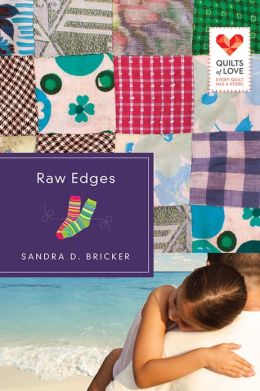
RawEdgesSandra D. Bricker releases Raw Edges, a book in the “Quilts of Love” series with Abingdon Press.

****************************************************************************************

AnniesChristmasWishBarbara Cameron releases Annie’s Christmas Wish, a book in the “Quilts of Lancaster County” series, with Abingdon Press.

****************************************************************************************

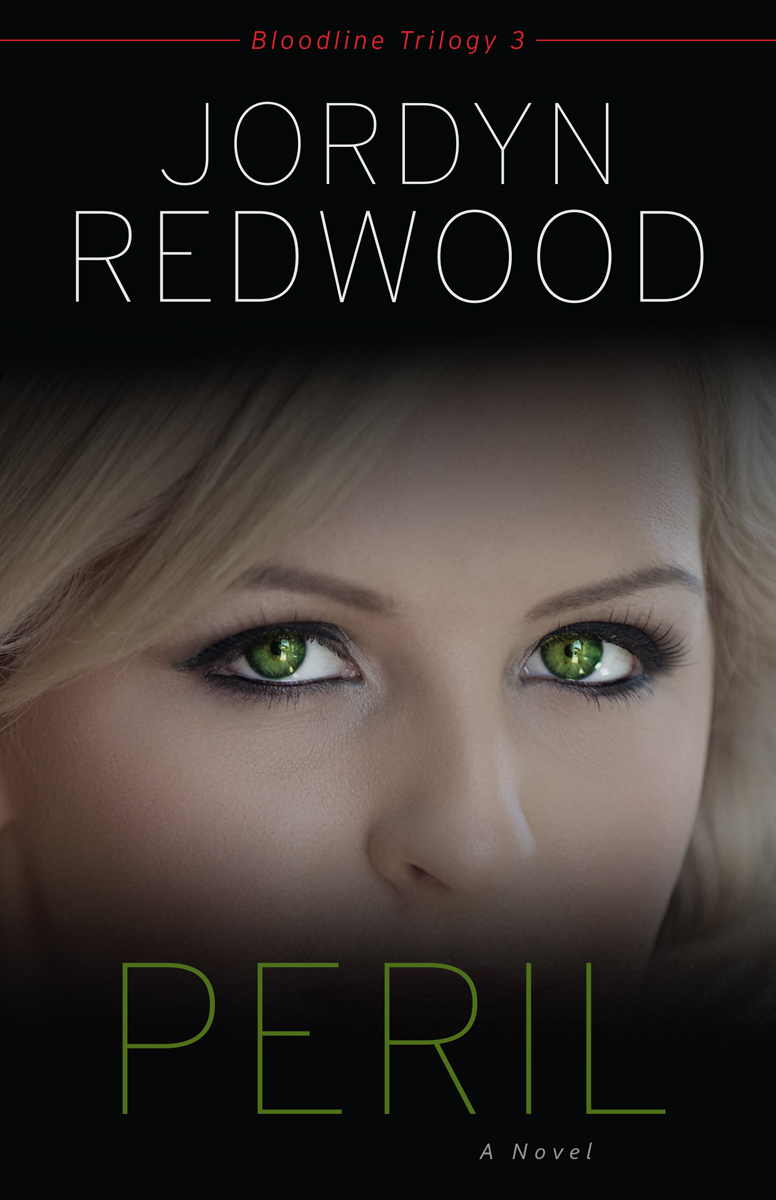
4213 cvr1 CS6.inddJordyn Redwood releases Peril, the final book in her “Bloodline Trilogy” with Kregel Publications.

****************************************************************************************

TheBargainStephanie Reed releases, The Bargain, the first book in the “Plain City Peace” series with Kregel Publications.

****************************************************************************************

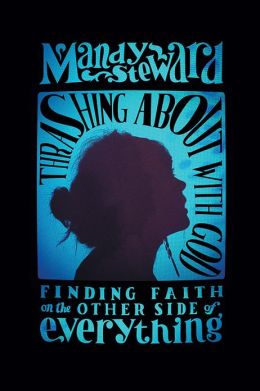
ThrashingAboutMandy Steward releases her debut book, Thrashing About With God: Finding Faith on the Other Side of Everything, with David C. Cook.

****************************************************************************************

Christmasinmyheart22Joe Wheeler releases Christmas in my Heart #22, another heartwarming collection of Christmas stories, from Pacific Press.

****************************************************************************************

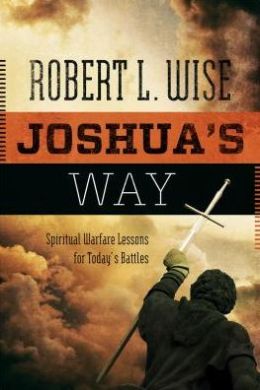
Joshua'sWayRobert Wise releases Joshua’s Way: Spiritual Warfare Lessons for Today’s Battles with Leafwood Publishers.

****************************************************************************************

New WordServe Clients

Jeff Calloway signed with Alice Crider. He’s writing about clearing spiritual clutter so you can clearly see God’s vision for your life.

Kate Hurley, a singer-songwriter who self-published a spunky memoir titled Getting Naked Later, signed with Alice Crider.

Mike Fechner, a Dallas-based missionary to the inner-city, will write his story with Marcus Brotherton.

New Contracts

Marcus Brotherton has signed with Moody Press for his first novel! Rev Rowdy is the post WWII story of a soldier coming home from the war who finds trouble, but then is convinced by the local sheriff to become the town preacher. Sort of a “Band of Brothers” meets “Mitford” for men.

Joe Wheeler signed a three-book deal with Pacific Press to compile and anthologize miracle and angel stories.

What can we help you celebrate?

Ambition, Aspirations, and Obsession: Part One

Are you in a season of fresh aspirations?

WomanCliffWSSeveral years ago I had aspirations. (Or, perhaps it is more accurate to say, they had me.) I was obsessed. I’d stay up late at night, sadly, on my computer, surfing…dead relatives. That’s right, I had an Ancestry.com obsession. I aspired to know everything about all of the branches of my family tree. Soon I had more than 4000 strangers (and a few hundred names I actually knew) attached to my electronic tree, many with pictures and whole histories about their life. Fun and time consuming, but now it’s done.

After 20 years as an agent, I’ve seen literally thousands who have writing aspirations. It starts with an ambition, “Gee, I think I could write a book.” They give it legs by feeding their aspiration, “Wow, I really need to write this book, so I’d better learn how to do it—and then spend weeks doing it.” But oftentimes a good desire to write turns into an obsession, “I have to get this book done and in print if it’s the last thing I do.”

And oftentimes they throw God in the mix as Supreme Instigator.

“I’m so excited about this manuscript, it must be God’s will that I become a famous novelist. Therefore, I will do everything possible to make this God-given dream come true.”

Ambitions and aspirations can certainly be clues to God’s will for us, though ambition alone is not enough to discern God’s calling. My own history of aspirations has had mixed results, with joys and dangers along the way.

The Joys of Aspirations:

1. They Bring Energy.

I’ve got some aspirations about a new project/business I’m working on that will help my authors and, hopefully, help the Kingdom for years to come. As my wife Becky would attest, it’s brought me more energy and motivation about work than she’s seen in a long time. I love being an agent, but with the changes happening in publishing, I’ve been restless. I’ve seen too many great books go unpublished because some publishers are concerned about the lack of social networking tribes in an author’s portfolio. I aspire to do something about that (more on that in a later post).

2. They Bring Focus.

The Apostle Paul had ambitions and aspirations. “…This one thing I do, forgetting what is in the past, I press ahead to the goal of the upward call…”. He wanted to live in the moment and not be hamstrung by his past: a helpful goal that brought focus to his day-to-day life. One of his other aspirations was “…to see Rome…”. He eventually did, and was able to preach the Gospel to likely hundreds.

3. They Bring Fruit.

Aspirations to write books gave me hope that perhaps my life could count for something; that my words on paper could outlive me. That’s what books do. They allow God to use our stories and life lessons in ways that bless others. And with digital books, our stories could live forever on Amazon and other platforms. Granted, they might be ranked at four million, but at least our books are there!

4. They Bring Passion.

About 20 years ago when I was writing as a hobby and working a day job, my routines were to get up at 5 a.m. and write for two hours before work. Then after the kids were in bed, I’d write for another hour or two. That’s what aspirations do; they give us so much passion that we’d rather not sleep.

Next time I’ll discuss some of the dangers of aspirations. What about you? How does having dreams and aspirations affect you in a positive way?

Don’t Quit Your Day Job

Writing is one of those creative aspirations that typically accompanies another salaried job. Few can sustain a living simply from writing. If you ever start to feel down about not being able to make ends meet via your writing career, don’t fret. You are in good company. Here are just a few famous authors and the jobs they maintained in order to pay the bills:

Large group of diversity workers peopleJ.D. Salinger was employed as the entertainment director on the H.M.S Kungsholm, a Swedish luxury liner.

Stephen King was a janitor, as well as a high school teacher.

William Faulkner went to Ole Miss for three semesters, then dropped out and became the school’s postmaster.

John Steinbeck ran a fish hatchery near Lake Tahoe. He would also give tours of the facility.

Harper Lee was a ticket agent for Eastern Airlines.

Jack London was an “oyster pirate.” During the night, he would steal oysters from the oyster beds  of the most successful farmers and then sell them.

If these famous writers had to have other means of making a living, then we shouldn’t consider ourselves immune. In fact, it is precisely these day jobs that often fuel our creativity, providing content for stories to make them more realistic.

Some authors are able to find jobs that support their writing. If you can find a way for your job to complement and sustain your writing, then so much the better. Perhaps you are a chef and like to write about restaurants. Maybe you are a nurse who writes about life in the medical field. Keep a diary of your daily experiences and the emotions they elicit (happy, sad, mad, surprise, fear, love) as each can similarly move your audience in the future. People enjoy writing that is insightful and allows them to visit places they wouldn’t have known about otherwise. Isn’t that part of the fun, to enjoy vicarious adventures? So, as a writer who often lives in the career world, why not incorporate subject matter expertise into your writing? It will bring a three dimensional quality to each story.

Maybe you won’t give up your day job because it’s a significant part of your life and who you are. Did you know Wallace Stevens declined a prestigious professorship at Harvard because he didn’t want to leave his career (forty years in the making) with an indemnity company? Getting paid for writing is not always steady and consistent. You may have great book sales in August from a successful marketing push, and then watch sales decline in September. Maybe you sell one story and have to wait for years until selling another one. With creative careers, it is prudent to wait until making two or three times the salary of your day job before taking the plunge. Why? Because you will probably no longer have an employer who is helping to share or pay the expenses of benefits, such as health insurance, company profit sharing or a 401(k) match. Many employees do not adequately count the value they should be contributing to their current employer, so be sure and calculate the indirect earnings of any and all company perks (even gym memberships, mileage reimbursement, car allowance, et cetera).

It is the easiest thing in the world to allow the burst of enthusiasm from a great day in writing overshadow your career as a banker, doctor, lawyer, or teacher. There’s nothing like getting rewarded for what you love to do. If you can, enjoy what you do as much as possible, so it can feed and sustain your writing life.

What do you do as a day job?

With writing, how do you maintain a work / life balance?

Promotional Items: The Good and Bad

I recently returned from the ACFW conference held in Indianapolis. This is an annual gathering of the largest membered group of Christian fiction authors. It’s a great time to connect with fellow writers and hope some of the writing genius from authors like Dan Walsh, Tosca Lee, James Scott Bell, and Frank Peretti infuses life into my writing cells.

Promo1Most conferences have a “freebie” table where writers are allowed to leave promotional items to get the word out about their product. This year I thought I’d give you my take on them. The good and the bad.

Think of a promotional item with a goal in mind. What do you want it to do for you? Consider the return on your investment and what you hope to achieve. I think most people view a promotional item as a chance for exposure. Most marketing types will tell you it takes six-ten exposures for someone to buy your product. So a good promotional item is something a person will keep and look at over and over.

I’ve determined that giving away bookmarks is not a good idea. EVERY author/writer does this and last year when I had bookmarks I ended up taking most of them home. They are not unusual enough anymore and with the advent of e-readers I think many do not need them anymore either.

One way bookmarks could work is if you are a very popular, well-known author and they are signed. But, sigh, that is not me. Yet.

RedwoodNewsletterQRMy goal was to get people to subscribe to my forthcoming newsletter. I gave out full-size Hershey Bars and packs of gum with the stickers you see on the first photo. The sticker includes this QR code that links to a newsletter sign-up form where I’m giving away a prize worth over $75.00. It includes all three books of my Bloodline trilogy, a $25.00 Amazon gift card, a $25.00 Starbucks gift card and some fun Halloween items (yes, this is still happening, so sign up!) and goes on until October 1st, 2013.

I brought 108 chocolate bars (okay, I did eat ONE) and 36 packs of gum. I didn’t have to bring any home, which was great. People were interested enough to pick them up but, thus far, I’ve only gotten about six new newsletter subscribers, making it a very expensive venture with few results. Perhaps the QR code is not intuitive for people yet.

Other promotional items and my thoughts.

promo2 promo3 promo4 promo5 promo6 promo71. Luggage Tag: This is a good idea because not only do you use it but also other people along the way can see it.

2. Small button flashlights for key chains: I’m iffy on these. The writing on one is hard to read and the light is weak. They are fun to have but I don’t know if I would use them.

3. Ribbon bookmark: I’m personally not a fan. I am a no-wrinkle-on-the-pages kind of girl and putting a large plastic paper clip on pages would wrinkle them. Plus, it was not very intuitive to me what it was at first because it was attached to a business card.

4. Pack of sticky notes: This was given out by a publisher. Nice, as most authors love office supplies.

5. A bag of tea: This one I liked because I’m a tea lover. I think this would also be more economical than what I did, as mine ran about 50-60 cents apiece. I think it’s a good tie-in for some genres (romance, cozy mystery, historical set in England) but not so much for suspense. It might not work for my books.

6. Grippie lid opener: Someone can post in the comments what the real name of this is. I like this one for its durability. It’s something I’ll keep on hand and use and therefore will expose me to this author’s name multiple times.

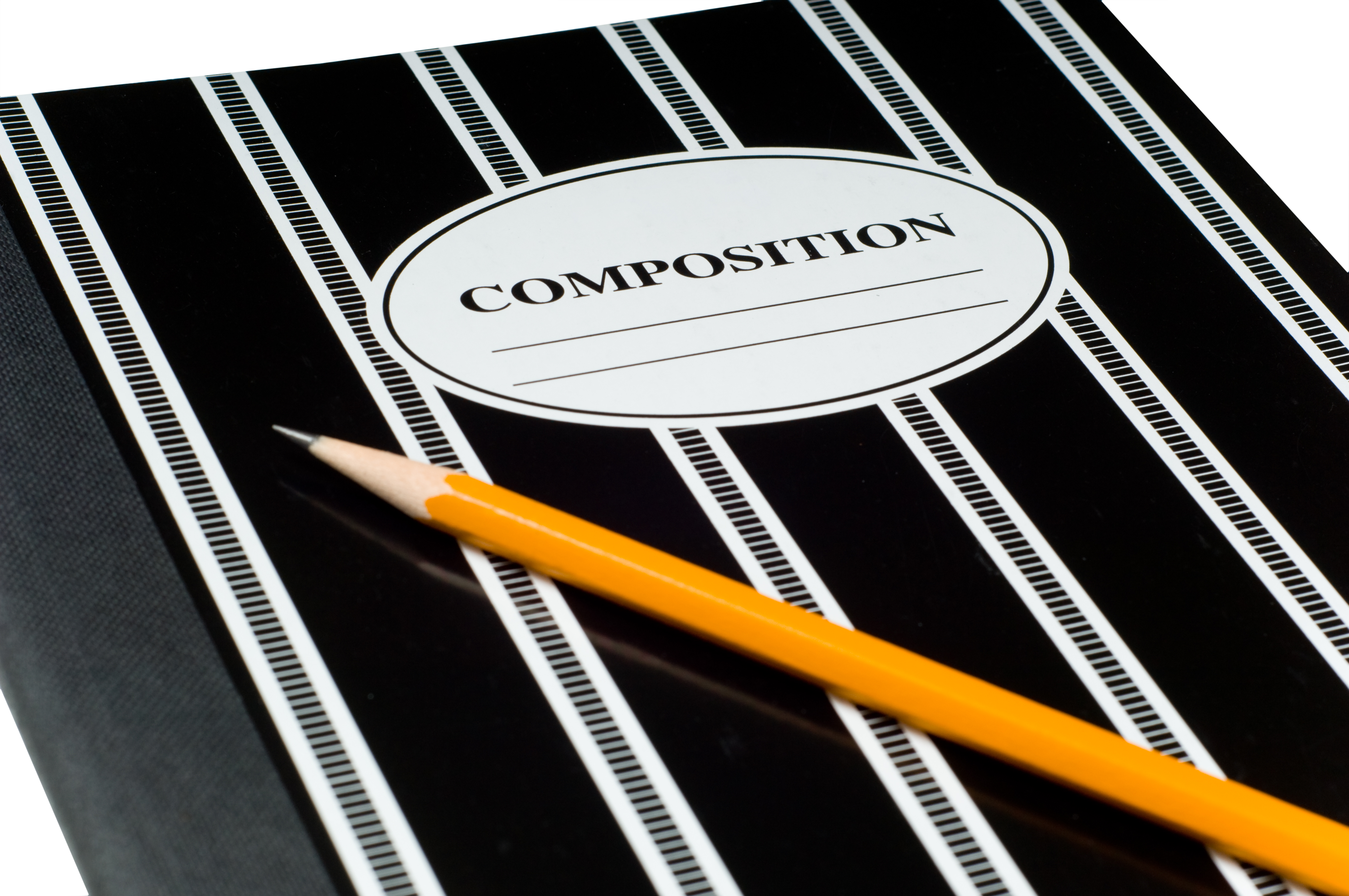
7. Small composition notebook: This one I’m actually giving a gold star and I’ll tell you why. I still have the one from last year in my purse. Every time I pull it out, I see that author’s name. I actually looked into doing this myself but they run (at the cheapest) about $1.00 apiece and that was too spendy for me.

What about you? Which promotional items do you like? Which do you think you’d actually pick up and keep? What have you used as a promotional item and did you appreciate the return on investment?