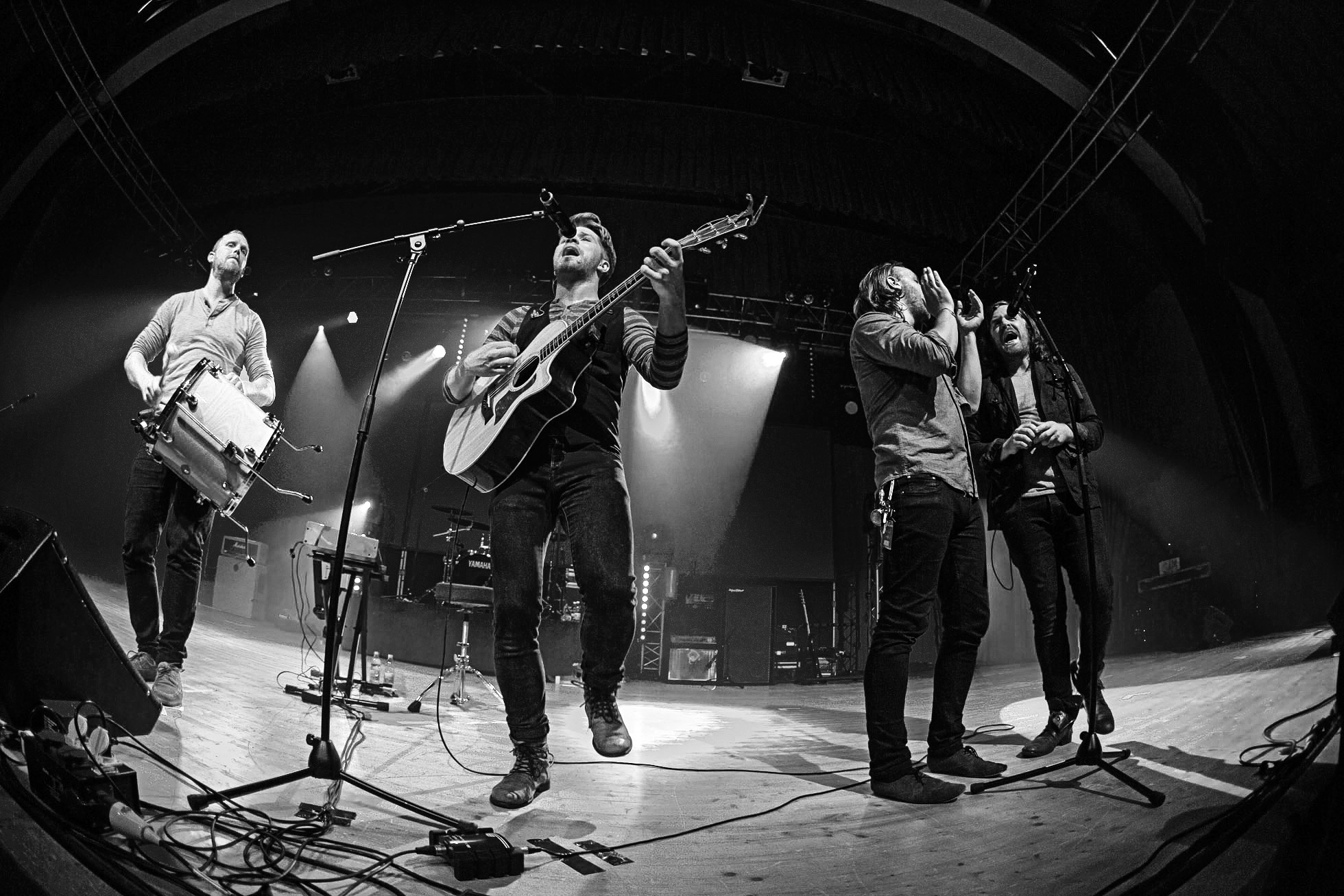
What I learned from Leo Kottke

GuitaristLast month, my husband and I enjoyed an evening concert at Big Top Chautauqua outside Bayfield, Wisconsin. Leo Kottke was the featured performer, and while I wasn’t particularly familiar with him and his music, he has long been a favorite of my husband’s. The concert took place under a big tent on a beautiful September night, very near the shore of Lake Superior, and Kottke did not disappoint, either as a guitarist or an entertainer. I came away a fan…and with a new perspective on what I do when I give a book talk.

I realized that the key word is entertain.

While the need to entertain my audience remains uppermost in my mind when I write, I haven’t always kept that focus during speaking engagements. Sometimes, I get too bogged down in the details of crafting a narrative when I talk with writers’ groups, or my presentation begins to sound stale when I answer the same questions over and over from audiences of readers. If I’m getting bored with repeating the same “this is my book, why I write, how I write,” then I expect my listeners are getting bored with the same old book talk they hear from every writer.

Enjoying Kottke’s performing style convinced me I needed to think of myself as a featured entertainer when I speak, not as the featured author. Yes, the man could play amazing guitar pieces, but it was his in-between chatter that tied it all together into a neat package of entertainment. Too much chatter and it would not have whetted my appetite for his music; too much music and I wouldn’t have formed a connection to the man. Instead, he balanced the two pieces and sold me on his entertainment value – which is exactly what I need to do to find new fans of my books.

After our evening at Big Top Chautauqua, I revamped the way I approach and present a book talk.

Instead of focusing on what goes into the book when I speak to groups, I now read short selections from several of the books – selections that are particularly meaningful or funny for me – and explain where in my own life those passages came from (and I always tell it with humor!). The result has been increased active engagement with my listeners, and they become more intrigued with the books, which results in more sales after the presentation concludes. I’m getting more comments about how enjoyable/entertaining the talk was, which not only makes it fun for everyone, but also leads to a greater number of speaking referrals for me! After all, if you’ve enjoyed an event, you’re likely to come back for more – whether it’s another book by the same author, or a CD recording of a musician – because you want to tap in again to that source that gave you an entertaining experience.

Authors need to think of themselves as entertainers – both in print and in person – and then present themselves that way, too.

How do you craft your talks for entertainment?

The 15-Minute Writer: Writing for Regional Parenting Publications (RPPs)

(This post is part six of a series. Read the other posts here.)

Do you write primarily for parents, teachers, or grandparents?

If so, you might try selling articles–especially book excerpts or reprints, which take very little time to pitch in an email–to RPPs, or regional parenting publications. RPPs are the free magazines offered at the front of bookstores, family diners, and kids’ clothing retailers in medium-to-large cities.

file000612565099My area has one central office which publishes several magazines, including Dallas Child, Fort Worth Child, and Dallas Teen.

Because these colorful publications come out each month, the editors need a lot of material. However, they rely on advertising dollars instead of subscriptions, so they don’t pay much (usually $25 to $75 per piece). But every little bit, both money and exposure, helps in this publishing climate!

I’ve made a few sales over the years by sending out emails to editors about two/three months before major holidays, telling them about my seasonal articles. The large audience is nice–especially if you think about how many parents (who wouldn’t otherwise know about you) will see your byline.

How to find these gems? Parenting Publications of America lists its members on its website. They offer a writer’s directory, which is searchable by topic, for their members for only $40/year. Here’s an excellent article on how to market your excerpts to RPPs. Also, you can list reprints on a page on your author site. Most of the magazines also offer book reviews…something to think about when you get to the galley stage.

Writers Kerrie McLoughlin and Christina Katz both have e-books on writing for RPPs, for under ten dollars. I haven’t read either, but they look helpful.

One caution: many of the RPP editors use local writers (or insist on having a regional angle in each article). Be sure and check guidelines, just like you would for any national magazine, before sending off a query or manuscript.

Have you already been published in RPPs? If so, leave a comment below detailing your experience and any advice you’d give to other writers.

Takeaways fom the Writer’s Digest Convention West 2013

I just attended my first writers convention, which turned out to be among the most interesting and informative experiences of my life. Never before have I received so many insights into the craft of writing. The Writer’s Digest Conference West in Los Angeles took place at the end of September. During that time, I was able to meet people I never would have otherwise, such as journalists who have been working in the writing field for ages. There was so much great information it was hard to capture it all, but here are a few points that that definitely resonated:

1) Writing, editing and marketing are totally different competencies, so bucket them, don’t batch them. In a discussion led by Ivory Madison, CEO of redroom.com writers community, writers were advised to keep those activities separate, as they engage different parts of the brain. I’ve been trying out the Red Room Method and can see a positive difference in my writing. It staves off the frustration of trying to do everything at once, and only producing one paragraph an hour. She suggested not to combine the three buckets of writing, editing and marketing. In this way, you end up not only being nice to yourself, but also more efficient as well. Writing is about your relationship with yourself. Marketing is an expression of everybody else. Take one book, make it as great as you can, and then worry about marketing. Don’t wear multiple hats at the same time.

WDCW132) Read your work aloud. You will find a great deal of errors that you might not have otherwise by reading aloud. When you do write, be authentic. Your readers want to be able to get to know you and trust you. Find great people to make your book as good as it can be. Don’t jump the gun just because you want to get it out there. Make your book easy to find and as accessible as possible.

3) Growing scope of the literary agents. Gordon Warnock, Founding Partner of Foreward Literary, has a vision of literary agents taking on a similar role as the agents of actors and songwriters. The future literary agents, he thinks, will manage the author’s entire career. The job scope would become more like an umbrella for their representation overall. This would include creative directing over the author’s website, branding, image, et al.

And above all else – write an outstanding book.

Resting from Writing

Rolling Mississippi
Working Through Fatigue is as Easy as Swimming Across the Mississippi

We become consumed with the writing life. Work…work…work, type…type…type, we push ourselves to meet the demands and deadlines set before us. And then we wonder why we hit mental brick walls — taller than mountains, and wider than the rolling Mississippi.

But what does God say about the pressures we endure? Is this really the plan?

I knew when I jumped into the throes of writing, I’d encounter the temptation to break a personal and, for me, very important value principle. One honored not merely out of duty and obedience, but because I recognized the benefits and blessings. It’s an overlooked command in today’s hustle-bustle culture. Over the past three decades, we’ve slowly become conditioned to push ourselves 7/365, until we’re flat-nosed against that mental wall.

National Speaker Anita Brooks
Juggling Jobs Pressure

I refer to taking a sabbath rest. It goes against the grain of our writing demands.

  • For instance, we are urged to write every day, so we don’t lose momentum, or allow our skills to cover in rust.
  • As writers, many of us pull double-duty as speakers. This requires even more time while we juggle between the work itself and the marketing of writing and speaking.
  • Most of us hold down a day job, and it lessens the amount of time we can devote to writing. The weekends are promoted as time to buckle down and focus.

But I offer an alternative mind-set, about the benefits of taking our weekly Sabbath.

  • If we continually push ourselves in a fatigued state, we are subliminally distracted by the influx of pin-pricking, achy feelings, and heavy muscles brought on by exhaustion. Rest diminishes painful symptoms.
  • While the body rests, so does the mind. Science has proven that in a state of rest we heal, regenerate, and restore. Rest provides the much-needed medicinal touch when our words run stagnant and our minds run dry.
  • God promises blessings when we honor the Sabbath.

Resting in a HammockConsistently allowing ourselves a whole day of rest, with permission to nap, relax, to enjoy life, can  free us to produce powerful words that will inspire, encourage, teach, and exhort. And I believe God’s example of resting on the seventh day is one worth following. After all, He is the best-selling author of all time.

When I wrote my first book, while holding down a demanding day job as General Manager at a large river resort, the temptation to write on Sunday pressed on me week after week. But I determined to give myself the gift of a weekly sabbath. To this day, I can’t fully explain how I wrote that book while working insane hours during our peak season.

The only answer to my accomplishment is that it was supernatural. I believe honoring the sabbath and keeping it holy played a part. Don’t get me wrong, I’m not perfect (that would get a bah-ha-ha from my family and friends), but I’m doing my best.

For me, the importance of placing God and His ways above everything, including my writing and speaking, is the real secret to my success. You might try it — resting from writing to find the inspiration you’re looking for.

Do you rest from your work?

You’ve Been “Notebooked”

Screen Shot 2013-10-02 at 10.59.37 AM

Have you ever read or watched a scene that gave you chills? The guy says all the right things, the girl responds accordingly, and the scene ends in an epic kiss that you feel down to your toes because you know that these two are meant for each other.

Those are the kind of scenes I like to write. And I’m still learning. Several years ago, I would have laughed at anyone who told me I would write romance. Don’t get me wrong…I’m definitely a romantic, but I’m more of a closet romantic who only expresses it if the situation allows. As I write, I’m learning to tap into that closet romantic side of myself. To do so, it helps to understand why people love the romantic pop culture hits.

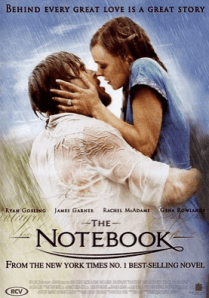
Let’s face it: You can’t talk pop culture romance without talking The Notebook.

People mock it. Chicks dig it. He’s hot, and she’s girl next door gorgeous. Guys groan when their girlfriends “Notebook” them. But there’s a reason that The Notebook and other movies based on Nicholas Sparks’ books do so well. If you can move past your bias, you’ll identify the attracting factor.

It’s all about love. Those are the moments in the movie/book most remembered and most quoted. Think about it. You remember what Noah said to Ally. You remember the passion and tears. You remember the words, the heartache, and the victory.

You root for this couple. So what can we take away that will help us write memorable romance?

1. The scene becomes another character and sets the mood.

Whether it’s the sweeping southern scenes that make you long for small towns, front porches, and handsome gentlemen, or the throes of war that make you cheer for the soldiers on the battlefield, Sparks (and others) knows how to give the scene a personality all its own. The scene definitely sets the stage of the romance, tugging at your sympathies.

2. The characters are three dimensional.

I love following Noah’s story in The Notebook. And no, it’s not just because he’s good looking. I love watching his growth. He starts out as a gutsy teenager who works to help his family and experiences summer love. Only he doesn’t let go when the summer comes to a close. He writes, growing in the midst of recording his heart to a girl who left. Then he heads off to war with his best friend, loses him, comes home, buys a home, loses his dad, and spends some time refurbishing a house. He is no longer the gutsy teenager out to charm the girl. He’s experienced heartache, loss, success, regret, and loneliness. But then Ally comes back. He’s the same romantic guy, but more mature, calm, confident in what he wants. By the end of the movie, he is an old man still set on charming his one and only love and fully confident in their love story. Who doesn’t like to watch love conquer all?

3. The dialogue is memorable and passionate.

Screen Shot 2013-10-02 at 10.58.56 AM

Once again, I love Noah’s dialogue. This country boy is deep. Why? He realizes the cost of love, the difficulty, the pain, the joy, and he’s willing and ready to weather it all. He believes it’s worth it. And he makes us believe it, too.

4. Good, bad, or indifferent – it doesn’t shy away from cultural issues or trends.

We live in a culture of sex, drugs, and whatever you want goes. Don’t shy away from the issues. Be in the world but not of it with your writing. Some writers define love by physical relationships. We have to address how Jesus defines life and love in the midst of our romance.

5. It relates to our desire to be known, loved, and belong to something greater than ourselves.

Why is this a big deal? Because God created us for relationships, set eternity in our hearts, and said it isn’t good for us to be alone. Tap into your emotions. Let them flow on the page with every word. And in the midst of the character romance, point people to the romance they can have with Jesus.

What tools help you when writing romance?

Want to Write a Memoir? Read These Books . . .

????????????????


Now that I published my memoir, I’ve received a few inquiries about how I accomplished my goal.

Good question.

The genre of memoir is tricky. I worked on Sun Shine Down for four years and then spent another two years writing the book proposal, finding an agent, and landing a publisher.

Here are a few questions I get about writing memoir.

“I have a story to tell, but how do I get started?”

“What is your advice about writing?”

“Any words of wisdom regarding the publishing world?”

I am by no means an expert, but here is my best and most basic advice for those who want to write memoir (this goes for breaking into the publishing world as well because if your book isn’t at its best, you won’t break in): 1) Read a lot 2) Write a lot and 3) Find a class or a group of people to read and critique your work.

In this post, I’d like to tackle my first piece of advice: read a lot. Here are three books every budding memoirist must read.

Situation and the story

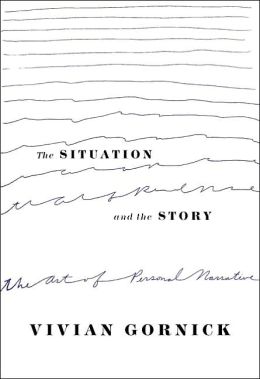
In “The Situation and the Story: The Art of Personal Narrative“, Vivian Gornick explains the art of writing personal narrative by reviewing key elements like the persona (or narrator) of the writer, her writing voice, and the importance of knowing who she is at the point of writing. The book is broken up into four parts: Intro, Personal Essay, Memoir, and Conclusion. Gornick draws examples from famous books and essays, explaining the situation and story of each, thus causing the reader to pause not only to appreciate beautiful words, but also to break down and understand what makes a memoir or essay sing .

“Every work of literature has both a situation and a story,” Gornick writes. “The situation is the context or circumstance, sometimes the plot; the story is the emotional experience that preoccupies the writer: the insight, the wisdom, the thing one has come to say.” (page 13)

My copy is covered in red notes and underlining. There is just so much good stuff in this book.

writing the memoir

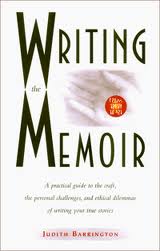
If your not certain about the ins and outs of memoir, this book is for you. On the cover of Writing the Memoir: From Truth to Art by Judith Barrington, it states the book is “A practical guide to the craft, the personal challenges, and the ethical dilemmas of writing your true stories.” My writing instructor at Story Studio Chicago, where I participated in an advanced memoir workshop for two years, uses this book with her beginners class. In my opinion, it is a book even the most seasoned writer can glean knowledge from. The table of contents includes chapters on finding form, dealing with the truth, writing about living people, and getting feedback on your work. It also has short writing exercises at the end of each chapter.

“Telling your truths — the difficult ones and the joyful ones and all the ones between — is a big part of what makes for good writing. It is also what brings you pleasure in the process of writing.” (page 74)

If you write memoir or want to write memoir, this book must be in your library.

Handling the truth

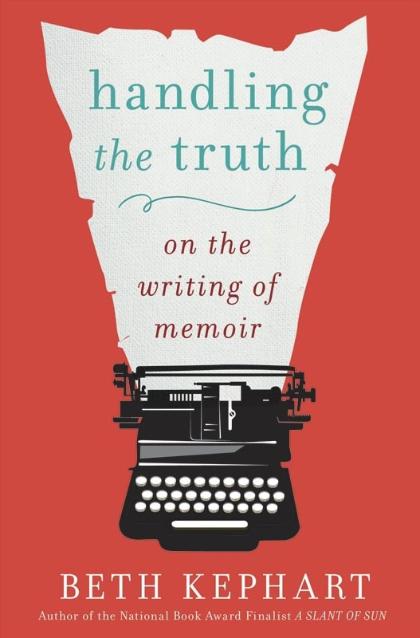
Handling the Truth: On the Writing of Memoir by Beth Kephart just came out this year and I picked it up a couple of weeks ago. This book is not so much about the ‘how to’ of memoir, but more about the value of the genre of memoir. It is broken up into four parts: Part I: Definitions, Preliminaries, and Cautions, Part II: Raw Material, Part III: Get Moving, and Part IV: Fake Not and Other Last Words.

“If you want to write memoir, you need to set caterwauling narcissism to the side. You need to soften your stance. You need to work through the explosives — anger, aggrandizement, injustice, misfortune, despair, fumes — towards mercy. Real memoirists, literary memoirists, don’t justify behaviors, decisions, moods. They don’t ladder themselves up — high, high, high — so as to look down upon the rest of us. Real memoirists open themselves to self-discovery and, in the process, make themselves vulnerable not just to the world but also to themselves.” (Page 8)

See … you need to buy this book.

Attempting to write and publish a memoir is an arduous task. Start by writing, sharing your work, and reading these three books.

“Penetrating the familiar is by no means a given. On the contrary, it is hard, hard work.” (page 9)

Right on, Vivian.

I would add that it is worth it, if you are up to the task.

When Writers Face a Constant Climb

Photo by Anna Langova

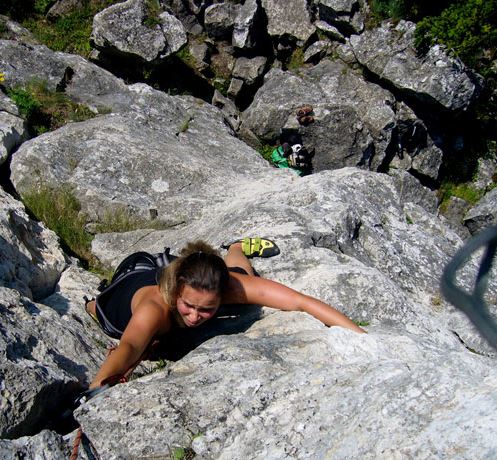
Sandstone boulders and harnesses and ropes, not really what I had envisioned when the new guy picked me up and we headed out for the afternoon—our first date together.

Girlie-girl me had somehow landed in a ragtop Jeep headed for some serious rock-climbing. Or so Mr. New Guy thought—what actually happened was girlie-girl watched some cute guy scale the side of a cliff, up, down, and sideways.

But getting to the top wasn’t his end-all plan. He seemed most challenged {and the proudest} when he slipped and then recovered. The catch and the readjustment seemed just as exciting to him as the time he stood at the top and waved high from the completed climb.

It’s been a few years since I sat in that ragtop and watched that guy climb. Seems I was about as interested in him as I was in climbing those rocks myself.

Why would we pull ourselves up the sheer face of something just so we can?

We do it more than we think, though, us writers. This writing for publication can be slow and hard. I have a {very thick} notebook full of rejections to prove it. Countless queries I thought would please never flew, never left their cage. And I mourned their loss. Made untold threats to quit, to lay down my pen.

Doubt can eclipse a budding hope if we allow.

But finally came my first assignment: a book review. I landed a column as a book reviewer, and my name held a place on a website that traveled the world. No matter there was no pay, I was writing. And I simply had to write.

Funny thing, though: that column landed me my first paid gig as a columnist for an established online magazine. With pay. This I celebrated. I framed a copy of the paycheck and then headed to my local electronics stores and nabbed a digital camera I’d had my eyes on for months.

From there, I secured an interview with a leading Christian author and sold that query to an international publication, and that one article led to contacts with other magazines and freelancing for the next few years. Meanwhile, my notebook of rejections grew thicker. Another brilliant idea shelved. Another dedicated period of grief. Another resolution to pack it up, find something else to do with my time.

Why do we allow fear and hurt to cloud our hope? To stall our dreams?

Looking back I realize that much like my rock-climbing friend from earlier years, my greatest sense of accomplishment came from those very moments I slipped, those critical steps I took to recover. I made my way to a writer’s conference where I could improve my craft, which led to securing an agent, which eventually led to a book contract, and that led me to my debut book. But there’s so much more to come. And to get there, I have to be willing to slide sideways when my quickdraws don’t connect just right, ready to race ahead when the space opens wide, or even to fall with grace when the fall comes {and they always come}.

There’s something that happens when we surrender to the process, when we climb for the sheer sake of the climb. I’m learning there is no end. If my sole focus was waving high from the top, I imagine I may be disappointed should I ever stand there. It’s been said before in countless ways, but in the life of a writer I’ve experienced it true, “the journey is the reward.”

Deeper Still: What setbacks have you faced on your writing journey? What readjustments have you made, or do you need to make in order to continue the climb?


Artist Sharpening Artist Series: Part One

The City Harmonic, My God

(Please watch the video here when you get a chance.)

I admire singers and musicians. They can sing and I cannot. They can play instruments and I just stare at stringed things and suffer the fear of the unknown. Many of us here are storytellers, are we not? And songwriters, well, they just tell shorter stories. It makes us sort of brethren. Except they wear skinny jeans and shake their tushes, while we stay in our pajamas as long as possible and watch our ankles swell.

Skinny jeans, check!
Skinny jeans and tush-shaking all rolled into one.

Lately, I’ve discovered I need these Christian tush-shakers while I work things out in my head because more and more often, I find myself up against walls in my writing.

Take the song My God by The City Harmonic, for example. I really got into this song when I was at the gym one day, riding one of those accursed stationary bikes. Maybe it was because I had to suffer through a really hard bike seat, maybe because it’s a really good song, or maybe it was because I really needed it that day, but whatever it was, the song struck me in a multitude of ways.

I lift my eyes up,
in these days of trouble.
Will my help come from You?
And if I stumble,
will You pick me up?
What else could a father do?
Well, You know just where I’m going.
You made the open road.
So take my hand, Lord, and lead me home.”

Yes, God, I would like to ask You that: Will You pick me up if I stumble, if I fall, if I just generally suck at this writing thing? Oh yes, what else would a father do?

Oh, my God.
Oh, my God.
I lift my heart up,
whether it’s whole or broken,
good God I know You’re gonna work it out.
So on my heart beats
to a beat that I put my hope in
the love of my God pouring out.”

God, I have to be honest here. I’m already coming to the table broken, and writing . . . well, sometimes it feels like it requires things of me that I don’t think I have left. Oh, but, okay . . . I see . . .You’re gonna work it out.

Yeah
Oh, my God.
Oh, my God.
I will sing, sing, sing and You will be my song.
Yeah.

But, people’s ears hurt when I try that, so I think I’m going to write, write, write and You will be my page.

I’m gonna [write] it like it’s everything to me,
I’m gonna [write] it like the deep calling out to deep
I’m gonna [write] it like it’s all I’ve got
‘Cause all that I want is to [write] for the love of God.

I’m gonna [write] it like it’s everything to me,
I’m gonna [write] it like the deep calling out to deep.
I’m gonna [write] it like it’s all I’ve got
‘Cause all that I want is to [write, write, write].”

iPod shuffle: the poor man's iDevice.
iPod shuffle. It may be the poor man’s iDevice, but it packs a bunch of awesomeness on it for me.

And then there’s a clash of cymbals and the beat hastens. My iPod shuffle is cranked so loud that I don’t notice I’m singing. I don’t notice the RPMs on my exercise bike are over 100 or that everyone around is staring at me, but by goodness, I’m singing, singing, singing about writing, writing, writing. And the world is good and meaningful and suddenly I have strength.

All from one little song.

And then I wonder, can I make someone feel the same thing from my words? Hmm, it doesn’t really matter, does it? All that matters is we’re doing it for the love of God.

Thank you, The City Harmonic. You’ve sharpened me. I hope I can return the favor one day.

“I Believe in the Power of STORY”

When I read, I want a book that makes me stop and think. That’s why I put a study guide in the back of my novels. But I agonize over what type of questions to ask.

Taking notes helps us remember what we read.

Could the questions guide readers to thinking about a character’s growth during the story? Possibly the themes the story is dealing with. How a reader might relate personally to the character’s trials. What repercussions one decision might have had on the story’s outcome had it been different.

The novels I checked for discussion questions had between 7 and 13 questions. Here are some of the likely candidates:

I believe in the power of story.

31 Questions for a discussion guide:

1. What is the significance of the title? Would you have given the book a different title? If yes, what is your title?

2. What were the themes of the book? Do you feel they were adequately explored? Were they brought to life in a cliché or in a unique manner?

4. What scene was the most pivotal for the book? How do you think the story would have changed had that scene not taken place?

5. What scene resonated most with you personally in either a positive or negative way? Why?

6. Has anything ever happened to you similar to what happened in the book? How did you react to it differently?

7. What surprised you the most about the book?

8. Were there any notable racial, cultural, gender, sexuality, or socioeconomic factors at play in the book? If so, what? How did it effect the characters? Do you think they were realistically portrayed?

9. How important is the setting & time period to the story? How would it have played out differently in a different setting? What about a different time period?

10. Were there any particular quotes that stood out to you? Why?

11. Did any of the characters remind you of yourself or someone you know? How?

12. What motivates the actions of the characters in the story? What do the sub-characters want from the main character and what does the main character want with them?

13. What were the dynamics of “power” between the characters? How did that play a factor in their interactions?

14. How does the way the characters see themselves differ from how others see them? How do you see the various characters?

15. How did the “roles” of the various characters influence their interactions? ie. For a woman: Mother, daughter, sister, wife, lover, professional, etc.

16. The main character’s adherence to social customs can seem controversial to us who come from a different culture. Pick a scene where you would have acted differently. 

17. If you could smack any of the characters upside the head, who would it be and why?

18. Were there any moments where you disagreed with the choices of any of the characters? What would you have done differently?

19. If you were in the main character’s position at this point, how would you respond?

20. What past influences are shaping the actions of the characters in the story?

21. Did you think the ending was appropriate? How would you have liked to have seen the ending go?

22. How have the characters changed by the end of the book?

23. Have any of YOUR views or thoughts changed after reading this book?

24. What do you think will happen next to the main characters?

25. Are there any books that you would compare this one to? How does this book hold up to them?

26. Have you read any other books by this author? Were they comparable to your level of enjoyment of this one?

27. What did you learn from, take away from, or get out of this book?

28. Did your opinion of the book change as you read it? How?

29. Do you feel as if this book changed your views on the primary subject of the story? Why?

30. If you could change something about this book, what would it be and why?

31. Would you recommend the book to a friend?

Q4U. What questions would you add to this list?

Give Me A Hint: The Use of Foreshadowing

I was at work discussing books with a physician who is an avid reader as well of Robin Cook’s novels. Cook could be considered the grandfather of the medical thriller with his ground breaking The Year of the Intern, which highlighted the training physicians go through.

Cook, for me, delved into what a medical thriller should be. Take something medical in nature (like organ donation) and put a twist on it (genetically engineered individuals being used for spare body parts). That novel was Chromosome 6. What my physician friend said was, “The great thing about Robin Cook was he grounded you in the science before he took that leap, so when he did go over the cliff with his theory you were able to buy it hook, line, and sinker.”

Book #3 Bloodline Trilogy

This conversation got me thinking a lot about my third novel, Peril, which just released. I’m asking the reader to take a big (HUGE really) theoretical leap, but had I spent time grounding them in how this medical theory could really play out?

That question led me to rewrite the first third of my novel.

Some people view foreshadowing as the scary thing suspense novelists do to readers to get the hair to stand up on the back of their necks. Truly, this is part of it. The scary music cuing up before the axe falls on the victim.

More importantly, though, foreshadowing could be viewed as the details we plant for readers so that when the character does something unbelievable, the reader won’t be rolling their eyes in a jump-the-shark moment.

In my first novel, Proof, I needed there to be a instant in time where one character could place a lethal (or was it really?) shot to the villain. In order to do that, I had to paint a picture for the reader of the character being capable of doing it mentally and physically when that moment came.

Step One: Show that she is comfortable with weapons–and maybe a little too psychotic about her safety.

Step Two: Show that she is a good marksman. This scene included her taking a close friend to an indoor shooting gallery. Let’s just say that girl had some skill even with a little bit of alcohol on board. Plus, she had purchased another weapon, which increased the probability of one of them being used. Don’t give the character a weapon and then never have her use it.

Step Three: Show that she will use a weapon when in a dangerous situation. At one point in the book, the villain is giving chase and she fires at him from a moving vehicle.

Step Four: The ultimate showdown must take place. Don’t plant any seeds that aren’t eventually harvested.

Does anyone remember the Laura Croft Tomb Raider movies? In one, it dealt with her finding Pandora’s Box. The whole two hours is devoted to the adventure of discovering ancient clues that would lead her to the ultimate treasure. At the end of the movie, she has the box in her hands and . . . she doesn’t open it.

Huge let down.

What do you think about foreshadowing? How do you think it’s been used effectively or poorly in books and movies?