Six Keys to Writing a Story with Spiritual Content


1. Hook the reader. Every good story neceltic crosseds a hook, including the spiritual story. Set up the spiritual story with an intriguing question and a clear goal. In The Sparrow, by Mary Doria Russell, we are first introduced to Father Emilio as a man who narrowly missed sainthood. He now lies in a hospital bed, sullen, uncommunicative and suspected of a terrible crime. The reader is left wondering how a godly man came to be in such a place and what his future holds now.

2. Lay the foundation for the spiritual resolution. Miracles and sudden moments of salvation may happen in real life, but will feel contrived in fiction. Not only that, but they can also be hurtful to those with unanswered prayers or who have had to work through long, hard years of healing. Build the steps toward a satisfying spiritual conclusion into the structure of the novel at every turn. The story has to earn its ending, so that when it comes, the reader will feel as if it couldn’t have worked out any other way.

3. Dig for deeper themes. As important as it is to show characters accepting the gospel or to ask where God is when it hurts, those themes are common. Most likely, your novel is preaching largely to the choir, so you need to find themes that speak to the deeper struggles and goals Christians are working on as well. What does it mean to live in the light of eternity? How does prayer shape us? How do you love your enemy? How do you love your neighbor as yourself? What does a character look like who has lived out the gospel daily? And so on. When you get those rare non-Christian readers, those themes might just speak more deeply to them about the gospel than the message they’ve likely heard before.

4. Be fair and truthful. I once heard a theologian say that we needed to compare the best of Christianity with the best of other religions, and if you’re going to look at the worst of, say, Islam or atheism, you need to be willing to look at the worst of Christianity. In the movie God’s Not Dead, when the atheist professor breaks down and admits that he’s a bitter atheist because God let his mother die, it didn’t ring true. The fact is, there are many atheists who have arrived at their worldview based on careful thought, however misguided we may believe them to be. They may also happen to make decent citizens and neighbors. And we’ve all found our share of gossips and control freaks in church. Don’t be afraid to mix it up. If you dig deeply, the light of Christ will show through all the more clearly because you’ve been honest.

5. Show the Sacrifice. From A Tale of Two Cities to Titanic, audiences have always stuck by a story that involves a heartfelt sacrifice. But it’s the core of a Christian story. Whether it’s an act of utter courage such as Hadassah going willingly to the Roman arena in Voice in the Wind or something more ordinary like Will laying down his pride to admit the ways he wronged his Amish relatives in Levi’s Will, it’s the sacrifice that makes the story work.

6. Show the Beauty. Sometimes writers take for granted that the resolution is what the readers want. Don’t forget to show them why they want it. Davis Bunn shows how a prayer that has been prayed for over two thousand years comes alive when his modern character prays it in Book of Dreams, as if the leaves overhead were chanting the prayer with the character. Stephen Lawhead describes an old saint lit from the inside out with God’s love in Merlin. These little moments that show the beauty of God’s ways clarify the spiritual goal all the way through the book.

Renewed Faith

full-moon-in-night-sky-over-waterI have a beautiful picture on my bedroom wall of a full moon rising over a clump of trees. The caption on it reads: “Love is like the moon, beautiful and ever new.” I’ve been married for going on forty years and one thing I’ve learned is the truth of that statement. One day I feel like I’m still on my honeymoon, and the next? Yeah, well, we won’t go there.

I believe the same is true of our faith. Some days we feel like we are standing on the mountain top, drinking in God’s blessings, our faith so strong we can conquer the impossible. Other days we find ourselves so wrapped up in life, in the demands of our daily routines, that it drains us of our strength and spiritual stamina.

Then the road of life turns rough, filled with potholes—our kids are sick, the Sunday school teacher calls at the last minute and asks us to bake an extra dozen cupcakes for class, or we have an argument with our spouse. Soon we find our faith careening off the edge of a cliff or at least being stuck in a rut.

It’s not to say we’ve lost all faith in God. It’s because we’re so overwhelmed, our faith feels as far away as the stars.

Deuteronomy 7:9 says: “Know therefore that the Lord your God is God; he is the faithful God, keeping his covenant of love to a thousand generations of those who love him and keep his commands.”

God has promised us that we are His, the sheep of His pasture, and that He is faithful. We can bask in His promises knowing His love is patient and kind. That He will never let us down. That is when we step into His grace and find ourselves back on the mountain again.

We may struggle from day to day, but He knows the child that loves Him. And He is faithful to keep us and provide for us renewed faith in Him. It is a gift, freely given as stated in Galatians.

Faith is not hoping God can—it is knowing He will.

40-Day Challenge: Telling the Stories That Matter Most

Photo/KarenJordanIn your busy life, how do you determine which things matter most?

A close examination of our priorities helps a lot. But often in the process of prioritizing, we realize that we’ve neglected some of our greatest concerns—like our health, marriage, children, or faith.

Priorities. As a writer, I have dropped the ball on some of my most important projects. I rationalize my failure to follow through with lame excuses. But I sometimes struggle staying focused on my main objective—telling the stories that matter most.

My daughter Tara phoned me with a similar complaint about her home life. “I can’t seem to get to the things that matter most to me.”

As Tara voiced her frustration, I understood her dilemma. Day after day, she faces the impossible task of meeting her family’s needs, having four small children in her home.

Prayer. The same issues haunt me, even though we have an empty nest. And I know that I must choose prayer as my first step to address any problem or decision.

James 1:5-6 promises, “If you don’t know what you’re doing, pray to the Father. He loves to help … Ask boldly, believingly, without a second thought” (MSG).

Like Tara, I frequently ask advice from someone who will give me honest input. My husband Dan offers ideas about my organizational problems. But I also consult other reputable resources, like online links, book, or professionals.

40-Day Challenge. Do you need to reboot your writing life, too? I challenge you to accept this 40-day challenge to tell the stories that matter most to you. I’m working through this process myself.

  • Identify the “real meaning” of your work—your purpose, your audience, and the context for your stories. This evaluation process includes answering several vital questions. Why do I do what I do? Who will be reading or hearing my stories? What do I plan to do with my stories? Will I submit them for publication? If so, where?
  • Define some SMART goals and write them down. Goals help guide our decision-making. Without goals, we often neglect to do the things that matter most.

    • S – Specific (or Significant)
    • M – Measurable (or Meaningful)
    • A – Attainable (or Action-Oriented)
    • R – Relevant (or Rewarding)
    • T – Time-bound (or Trackable)
  • Set up tasks for attaining your goals. Write down several reasonable and do-able steps for achieving your goals to help you plan and focus on the right things.
  • Compose a “to do” list, prioritizing all of your tasks. Schedule time on your calendar to work on your goals. This will help you stay on track with your deadlines and defend your time boundaries. It also helps communicate your goals to the people who matter most to you.

I hope that you will join me on this 40-day challenge because when we begin to tell the stories that matter most, lives change and hearts heal.

What goal-setting techniques help you tell the stories that matter most to you?

What’s YOUR Holiday Plan?

balloons-25737_150Do you know what today is?

It’s National Black Dog Day! Roll out the carpet, crank up the tunes, and open the bags of doggy treats!

In celebration, I’m doing a radio interview, guest posting on several blogs, making a couple of store appearances, and managing a schedule of entertaining tweets, updates, and posts on my own social networks. It’s not only a nationally-named observance, but it’s the perfect opportunity for promoting my very own black dog who stars in my humorous girl-meets-dog memoir, Saved by Gracie. Never mind that the book was released last April – today is the day to hit the spotlight again.cropped Jan and Gracie

In other words, I found a holiday tailor-made for my book, but without all the noise other holidays involve. I don’t have to compete with Halloween costumes or décor, Black Friday shopping madness, Santa, New Year’s Eve bashes, romantic getaways, or fireworks displays. As a black dog owner, I have the stage all to myself!

How about you? Have you found your tailor-made holiday for book promotion yet?

As every author knows, timing is one of the best assets you can find in publicity. Sure, we all wish for something of national importance or interest to pique everyone’s interest in our books when they launch, but few of us have any control over those larger scenarios. The key to keeping your book release momentum, then, is to continue to find reasons that your book is timely. Here are a few suggestions for doing just that:

  1. Re-examine your book content for additional audience appeal you may have missed during the initial book launch. For instance, when my memoir came out, my publisher focused on Christian readers, since it’s a tail (I mean tale) of spiritual healing. After that first wave of publicity, I began to expand my reach into dog-lover territory by hooking up with animal rescue groups, veterinarians, and dog boutiques. I’m now moving into a third wave of audience strategy by networking with health and wellness groups. Handling all three markets would have been too overwhelming for me to manage at first, but by adding audiences incrementally, I’m better able to market and direct what I need to do next to continue sales.
  2. Pay attention to national news and trends, and see if you can’t jump on those trains. Whenever environmental topics (like wind power vrs. natural habitat) are hot, I try to build on those conversations with my own links and commenting, because my Birder Murder Mystery series deals with the same topics. The more I engage in the conversations, the better my visibility to my readers, which translates into continued sales, even for older books in my series.
  3. seafood fettuciniFind your perfect holiday. Does your hero cook Italian food? National Fettucini Alfredo Day is Feb. 7. Does your book discuss holding onto memories? National Scrapbooking Day is the first Saturday in May. If you write about it, I bet you can find a ‘holiday’ to connect with it.

What ‘holiday’ is in your future promotional plan?


WordServe News: September 2014

Exciting things have been happening at WordServe Literary!

On the final post of each month you’ll find a list of Water Cooler contributors’ books releasing in the upcoming month along with a recap of WordServe client news from the current month.

New Releases

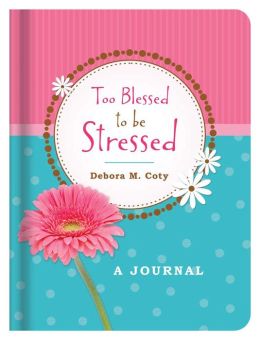
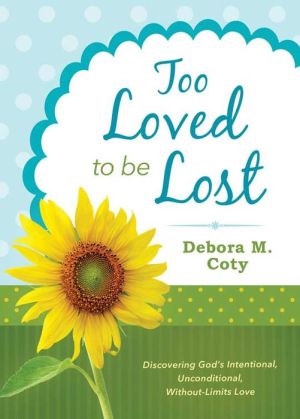
Deb Coty’s popular devotional Too Blessed to be Stressed with Barbour publishing 9781628369670_p0_v1_s260x420released a companion journal. Also released this month is Deb’s new devotional Too Loved to be Lost. 9781628369694_p0_v1_s300x


***************************************************************************************************

Barbara Cofer Stoefen released her debut nonfiction title with Zondervan Publishers. A Very Fine House is now available. 9780310344414_p0_v2_s300x


***************************************************************************************************

New WordServe Clients

Sue Detweiler signed with literary agent Alice Crider.

New Contracts

Sam Metcalf signed a contract with Intervarsity Press (IVP) for a project tentatively titled Unleashing Apostolic Movements: Missionality Beyond the Local Church. Greg Johnson, agent of record.

Bill Myers signed a contract with Barbour publishing for a nonfiction title tentatively titled Jesus Experience. Greg Johnson, agent of record.

What We’re Celebrating!!

Leslie Haskin and her 9/11 memoir Between Heaven and Ground Zero hit the New York Times bestseller list!

Rachel Phifer is a finalist in the 2014 ACFW Carol Awards along with Wordserve author Julie Cantrell. Winners were announced September 27th at the national conference in St. Louis. A list of the winners can be found here.

Sarah Varland’s Tundra Threat with Love Inspired Suspense has been printed in Large Print!

To Write a Book Someday, Share Your Writing Now

8139708904_9a1d1783d4_bSome people will tell you the defining characteristic of a writer is that he or she is someone who writes. There is truth to that perspective, but it fails to offer a complete picture. It also gives many “aspiring writers” an excuse to be nothing more than journal keepers: diligently plucking away at Moleskine memoirs or first-novel manuscripts that have zero chance of getting published, ever.

The point here is not a matter of quality. It’s about privacy.

The reason why many written works-in-progress will never see the light of publishing day is that they are stowed, always and forever, in a drawer or on a hard drive where they have no risk of being evaluated by a second person. The writers of these works will never be writers because they will never have readers. They exist completely outside the writing market, and the only critical eye they allow to view their work is their own.

If you think that one day you’d like for people to read your writing, then you should begin by inviting people to read your writing now. Here are five ways readers can strengthen your writing and make it even more worth reading:

Readers help you get over yourself. It’s not uncommon for writers to feel uncertain or insecure about what they’ve written. Will this technique work here? Am I being clear? Am I using a marketable concept? Does anybody else care about the subject? Without readers to help confirm where and how a piece of writing is hitting its target (and where and how it’s missing its mark), these uncertainties and insecurities often grow and fester. But when you prioritize feedback, typically you get it. As a result you might find that your sinking suspicions will be confirmed. Some of your assumptions might be challenged. Maybe you’ll be pleasantly surprised by rave reviews. Whatever the case, you won’t be stuck wondering anymore, and that will help light a clear way forward.

Readers identify strengths in your work. Encouragement and affirmation give extra fuel when you’re trying to produce a manuscript. So ask your readers to note the places where they laugh out loud, hold their breath with anticipation, get caught by surprise, can’t stop turning pages, or are struck speechless. That paragraph you’re thinking about deleting? It might be your readers’ favorite part. Give them a chance to tell you so.

Readers identify weaknesses in your work. That poetic metaphor you’ve taken days and months to craft? It might be so complex that it’s confusing your readers. The story you’ve built a whole chapter around? Your readers might be bored out of their minds.

As the writer of a work, you will undoubtedly feel more attached to it than your readers will. Because of your heightened emotional attachment, you’ll probably miss seeing some of your writing’s flaws. You might even be blind to enormous holes in the work. Let your readers open your eyes to the problems you don’t see, so you can take the opportunity to fix them.

Readers expand your perspective. You are only one person, so your outlook on the world is limited and skewed. You have strange views about certain things, and some of your views simply haven’t been challenged in a way that forces you to clarify them well or charitably. Readers can help you identify the odd little points in a draft, the ones that either are or seem arrogant, stingy, dismissive, hyper-emotional, you name it. Points like these will jut out in unseemly ways, always subtracting and distracting from good work, unless someone will be so kind as to call your attention to them, so you can know to improve them.

Readers make the process realistic. If your writing aspirations are real, then you’re going to have to accept the reality of readers at some point. Get used to feedback now, and critiques won’t make you crazy later. Write with readers in mind now, and it won’t feel strange when they’re a part of the process later. Start learning what readers are interested in now, and then when your defining moments as a writer come, you’ll be prepared to deliver for your readers.


YOUR TURN: Respond in the comments: How have readers helped your writing? What kind of readers give the best feedback? What keeps you from pursuing readers?


Photo credit: cogdogblog cc

Personal Best

I’m not overly competitive but I am talented at comparison. And I’ve heard comparison is the thief of joy. It’s true.

I look at other writers and wish I could be where they are in their careers. I forget they had to work for it, too. I forget they were once new authors. I forget the Lord hands us all different stories. But I still admire them for their success, creativity, and influence. Who of us doesn’t want to write something that matters?

These authors fall in the category of “hero” to me – people who identified their dream and calling and continue to see it through. I once heard it said that we should look to our heroes for inspiration and then set out to surpass them. Have you identified your hero lately? I’m talking about a person in your life, your profession, or your history that encourages, inspires, or challenges you to be better.

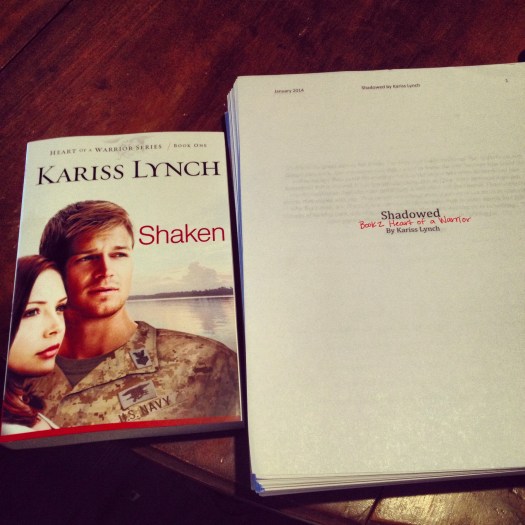
Better yet, I challenge you to look at beating someone a little closer to home.Kariss manuscripts

In high school, my band director told us that we should only purpose to beat one competitor…ourselves. If we continued to improve every time we stepped on the field, we could hold our heads up.

I took that to heart. I trained my fingers to fly over the keys until I could play the music in my sleep. I trained my lungs to handle running while playing in various weather conditions. I trained my muscles to walk backwards, forwards, and sideways without ever turning my torso from the sidelines. I trained my mind to keep pushing when I was tired and encouraged those around me rather than complaining. And every day, I was better than my previous day’s best.

The same is true in writing. I can’t compete with these other writers I admire. The truth is the Lord has given us different platforms and different voices. But I can learn from their journeys, their successes, their failures. Then I make my own mistakes and score my own victories and learn from those.

The first time I handed Shaken off to my editor, I emailed my mentor in a panic. I could almost hear her laughing over her emailed reply. “Oh, Kariss. You are a writer. Your second book will be better than your first book. Your third better than your second. Be proud of what you accomplished on this one, then move on.” She said it so well. The competition is against myself and yesterday’s personal best.

Kariss - band 1

“Give it all ya got but don’t give it more than you have,” my band director would tell us. There was something to his football field logic. Work hard. Push myself to the limit. But don’t overextend. It won’t happen all at once. But that’s the beauty of the journey. I just work to be better than yesterday.

Satisfaction today comes from knowing I met the demands of the day with my best. Contentment tomorrow means embracing the day before and diligently working to improve. I best pursue my dreams when I focus on who the Lord has made me to be and what He has purposed for me to do in my short time on earth. There’s no room for comparison in that kind of life.

“Whatever you do, work heartily, as for the Lord and not for men.” Colossians 3:23

What is one area you can work to improve so that six months from now, you are better than you were yesterday?

Leadership Insights for Writers

When you think of a leader, you may envision the executive of a large corporation swiveling in a luxurious leather chair behind a large mahogany desk, or a speaker delivering a keynote address behind a podium. Perhaps you think of a coach motivating a football team to persevere after a tough first half of the game or an inventor changing lives through technology. You probably won’t think of the writer quietly typing words in an unseen office early in the morning or late at night. But maybe you need to think again.

Creating art wallpaper

Writers can lead with ideas, and history provides examples. Science fiction writers have shown us the future long before engineers drew the designs and filed the patents. Nonfiction writers have changed how we do business, emphasizing the importance of trust and emotional intelligence. As a writer, even if you do not see yourself as a leader, you can benefit from applying leadership insights to your work. Consider using the following three concepts to improve your writing:

Know Your Mission

Successful leaders know why they are doing the job they do. They know their mission and communicate it effectively to their followers.

In the writing world, every book carries a theme. Whether you are writing a guide to preparing salads from locally-sourced ingredients or a historical novel describing life in rural America in the mid-nineteenth century, your book has the opportunity to fulfill a mission based on its theme. Even books written primarily to entertain teach life lessons through the way the plot unfolds.

As you work your way through the chapters of the book you are writing, keep the mission of your book foremost in mind. Ask yourself how the passage you are writing today furthers that mission. Arm yourself with a red pen so you can edit out material that detracts from the central theme of your book.

Create the Necessary Structures

Leaders who build companies from small start-ups to large, stable corporations understand the value of creating structures. They find the best ways to do something and embed those methods into the company culture. Perhaps they teach employees specific phrases to use when interacting with customers. Maybe they develop a certain philosophy that guides corporate policies, such as the importance of giving back to the local community. Without the necessary structures, the leader’s ideas will become diluted and diffuse as a company grows, with employees far from the leader on the organizational chart losing sight of the vision.

Writers who hope to influence others through their writing need certain structures as well. One way to maintain a consistent message throughout a book is to break the book into parts, with each part developing the theme in a certain way. Fiction writers might want to consider how plot development furthers or detracts from the main theme.

Writers need structures in place for marketing once the writing phase is finished. By strengthening relationships with key people who will understand and promote the message in your book, you are creating structures that will expand your influence as a writer. A column in a magazine related to your book, a web presence through a blog or social media, interactions with local bookstores, and a network of places to speak all serve as necessary structures for the writer who wants to make a difference by leading with ideas.

Paint an Image of the Future

One of the key tasks on the to-do list of all leaders is sharing their vision. People like to follow individuals who can paint an attractive image of the future. We buy products that we feel will improve our lives and make tomorrow a little easier than today. Even if you are writing a book set in the past, provide your readers with life lessons that will move them forward into a better future. Help them imagine how the world will be better if more people invested in the theme expounded in your book. Throughout my book, Questioning Your Doubts: A Harvard PhD Explores Challenges to Faith, I invite people to imagine a world where individuals take the time to build bridges to one another instead of dismissing the insights of those unlike themselves. I apply the theme to faith and reason, feeling and thinking, and theology and science. However, the overall theme works beyond the scope of the book. My hope is to persuade people to improve the way they relate to others, leading them to live more fulfilling lives. I want my words to make a practical difference for my readers, bettering their everyday lives.

In what ways do you hope to influence people through your writing?

Can We Talk? Joan Rivers, Marketing Genius

Joan Rivers
Image via Wikipedia

Lately, it’s been a tough run of celebrity deaths. Robin Williams, Lauren Bacall, Richard Attenborough, and Phillip Seymour Hoffman, to name a few. The news media uses these events as a life review. Joan Rivers, the acerbic comedian, who recently died as the result of complications during a medical procedure, is one that has had a few “news specials” about her life.

I wasn’t a huge Joan Rivers fan but the pitiful side of my character did enjoy her taking down a celebrity or two when they dressed in something expensive and awful that might have been more fitting to clean up dog vomit (there’s my toast to you, Joan!). What I found interesting in these biographies on her life is just what a brand/marketing genius she was. We writers could learn some valuable lessons from her.

1. She triumphed through dark times. When her husband committed suicide, Joan was now not only a single mother but she was reportedly also left with quite a bit of debt. Yet we know she didn’t die penniless. She was a wealthy woman. In writing, there are definite valleys. Will I make any money with this novel? Will I make any money ever in publishing (indie or traditional)? Sometimes, we can only answer these questions by pushing forward through the next day and taking the next step even when we can’t see the answer in the distance. If you don’t try, the answer will definitely be no.

2. She didn’t hold public grudges. One of the pervasive stories of her life was when Johnny Carson chose never to speak to her again when she left being his “permanent guest host” for her own talk show. I don’t know what she said in private, but publicly, even though their friendship ended over this perceived slight (which really was a business decision), she always spoke very positively and gave him great credit for giving her a start. We all need to keep in mind publishing is a small industry. If you say something bad about an editor or agent, it will likely get back to that person. Keep in the forefront of your mind that a “no” is about your work and its fit for a company–it’s not a personal slight against you as a person.

3. She had a brand. Whether or not you like Joan Rivers, you knew what she was about. She had a clearly defined brand.

4. She branched out. Joan didn’t make her money doing only stand-up comedy. She also sold fashion items on QVC. What else? Reality TV. She authored several books. What can you do in publishing that maintains your brand but gives you additional income? Can you do non-fiction? Can you write in your genre for another age group? Consider not having all your eggs in one basket.

5. She was willing to try anything. In one interview, she compared herself to, putting it nicely, a lady of the night. “I’ll try anything at least once.” In publishing, there are so many things you can do but fear may be holding you back. Reconsider and take a chance at learning something new. Marketing definitely means stepping out of your comfort zone. M

Thanks for the laughs, Joan. Rest in peace.

How to Write a Page Turner Using Movie Trailer Tips

How to Write a Page Turner Using Movie Trailer TipsAn editor once commented in a pitch session I attended that writers should learn to write better pitch sentences from analyzing how movie trailers grab viewers. The remark stayed with me. Isn’t holding a reader’s attention all through a novel what writers hope to do? While acknowledging the importance of sales and awards, I’d argue that authors measure a story’s real success in whether readers stay up past their bedtimes while flipping pages.

With an eye toward fostering more sleep deprivation, then, let’s take a look at what makes movie trailers so compelling.

Movie trailers have the advantage of being visual whereas books can only use words, so comparing them isn’t fair, right? Yes and no. It’s true that moving pictures can grab attention with ease. However, readers use their imaginations to create mental images. It might even be argued that these self-generated images have more charm for them. Storytelling is always a partnership between the writer and readers, with the writer initiating storytelling and readers carrying it through. How well the writer does her part determines how fluently readers can do theirs.

How to Write a Page Turner Using Movie Trailer Tips

To make my points, I’ll be referring to the movie trailer for The Hobbit 3.

  1. Prompt the reader. In the Hobbit 3 trailer, we are given to understand that both war and a dragon threaten, and that some characters will survive and others will not. The viewer is cued with enough information to spark the imagination but no more than is needed. Doling out the right amount of information in just the right timing is an art that leads your reader effortlessly through your story. This is an acquired skill that must be practiced. As you get the feel for this, ask for feedback from a critique group to help you gauge the results of your efforts.
  2. Involve the senses. In vivid color and with Celtic music setting the mood, the movie trailer evokes more than sight and hearing. Can’t you smell the sulphur from the fire-breathing dragon’s flames, feel rough stone beneath your bare feet, taste fear as the hobbit faces the monster?
  3. Surprise readers. The trailer starts in a meditative mood that immediately gives way to surprise as the dragon sweeps through the village. Having something unexpected happen right off the bat in each chapter will carry your reader from surprise to surprise. This must be true to the story and not manufactured to gain attention or readers will know.
  4. Pack your story with emotion. The trailer brings us into emotions of fear, tenderness, grief, watchfulness, sadness, uncertainty in leadership, and fierceness, and all in the space of a minute and a half. Emotions must evolve from the organic story, not trumped up.
  5. Minimize backstory. In the trailer, someone (Bilbo) who has come all the way through the story looks backward to tell it. Within the framework of the story, however, you will notice that the characters don’t go into backstory. They are too busy dealing with events going on around them. In your novel, if you have enough happening, you won’t have much time for much backstory either.
  6. Employ pithy dialogue. Apart from the words of the song, the trailer has only six sentences, with three at the beginning that establish the story. Dialogue that conveys a wealth of meaning in a few words helps maintain a rapid pace. Use slower dialogue at points of rest, but don’t linger.
  7. Hook the reader. The trailer’s last sentence, with Gandalf challenging the characters to follow him one last time, is a hook and invitation designed to draw viewers into theaters. In the same way, leaving readers with a question at the end of each chapter will propel them into the next. I’m not suggesting ending on a cliff hanger. That becomes melodramatic and tiring. Rather, engage readers with the intriguing story you are telling.

What other things do you think writers can take from movie trailers and/or movies to enhance their stories?