Power in Numbers

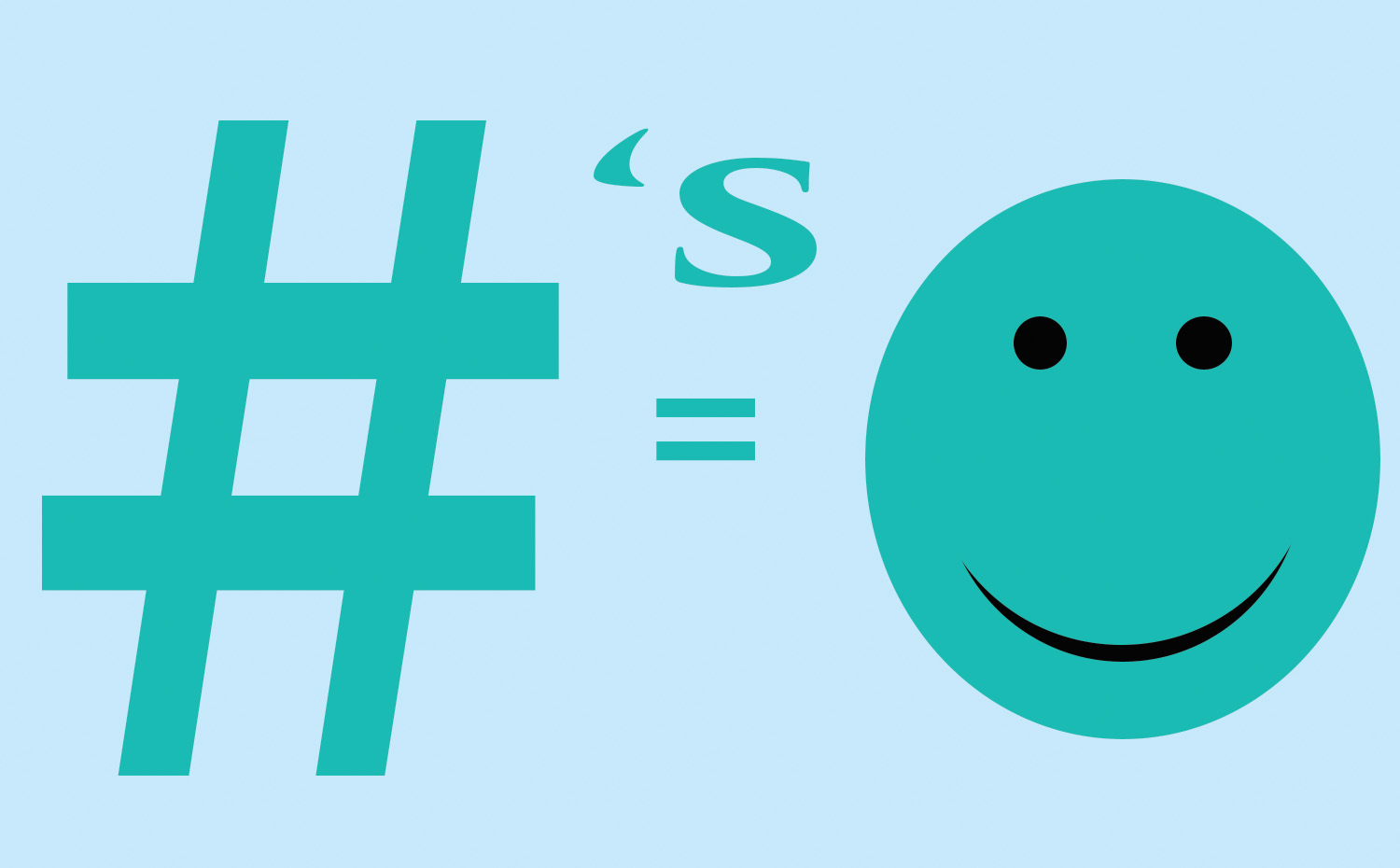
Inumbersequalsmile‘m an odd duck.

I’m one of those writers who, while I love crafting words to make a story, also have this strange love of all things numbers.

About 90% of you just had an icky shudder run down your spine.

I was chatting on the ride home from ACFW a month ago with Carol Award winner Patrick Carr. Patrick is a fellow numbers lover, a math teacher by day and former engineer.

In our chat, I finally found someone who does the same thing I do — follow the numbers!

Granted, the numbers can royally stink. I’ve known a lot of authors who purposely do NOT look at their sales numbers or Amazon rankings because it is depressing.

I get this. Oh BELIEVE me, do I get this.

But the thing is, there can be power in numbers if you use them correctly and don’t overly obsess.

Any savvy business person knows the key numbers of his business off the top of his head. In a previous career, I was a corporate payroll manager for a billion dollar company. (Yes, I knew their annual sales numbers…). One thing our executives required was that all corporate managers know their numbers. At any time, I needed to be able to spout off total annual payroll dollars, number of employees (and by company too, as we had 16 of them…), and a host of other metrics related to my department. The point was to be an expert on your area of influence, and an expert knows their numbers.

Numbers matter. They tell us a host of facts and help us make wise, educated business decisions.

Below is a list of numbers I think would be useful and necessary to all (published) writers who are treating this whole publishing thing as a business. (Because not all of us are… and that’s okay!)

1.) Profit and Loss. Basic accounting here. Income minus expenses = profit. If that number is a negative, it’s a loss. If you’re operating at a loss, two things to do: Increase income and/or decrease expenses. I suspect many of us operate at a “loss” for the first few years. It’s our start-up cost, if you will. But keeping an eye on profit and making sure you’re not overspending is a sign of a good business-savvy writer. Don’t wait until the end of the year when you do your taxes. At least once a quarter, do the math. Make a plan for the next month. You’ll be more fiscally responsible for it.

2.) Trends. I tread lightly here. Paying TOO much attention to trends (i.e. checking our Amazon Sales ranking on a daily or *ahem* hourly basis, not that I would EVER do that…) can be counterproductive, because you waste WAY more time than it’s worth. But following trends, especially after particular marketing events you’ve done, is super useful. You can get an idea of the value of your marketing dollars, whether spending $X amount of money for an ad on that blog was worth it or not-so-much. I’ll be the first to say, I am a firm believer that marketing value is about more than the immediate hard-dollar sales impact. It’s about building your brand and getting your name out there, and a GOOD marketing campaign will have worth beyond anything you can see on immediate sales trends. BUT! If you have little or no impact on the short-term, chances are you’ll have little or no impact on the long term either. So check those numbers, know what they mean, know what your “normal” is. Then use that information when formulating your marketing plan.

3.) Goals. In the accounting world, you have “sales budgets” but in the writing world, I call these sales goals. What numbers do I WANT to hit and NEED to hit? Personally, I usually set my goal number really high, but not so high it’s unattainable. Mostly because for ME, I like to hit goals. I don’t always do it, but if I have a good, high goal, some internal oomph in me says, “Hey, I’m lagging, I need to step it up!” Other people need smaller goals, and that’s good too. Set that goal, and when you achieve it, set a higher one. Regardless your method, set sales goals and work to achieve them.

4.) Platform numbers. At ACFW, I sat down in a pitch session with an editor from a publishing house and in our talk, we chatting about social media. I rattled off a few of my numbers…total fans on my FB page, total friends, etc. She wrote the estimates I gave her in a notebook and nodded, saying, “Good. I was just going to ask you that.” Publishers want to know your numbers too. What is your reach? Even if it isn’t as big as you like, know your numbers. Be proud of them, because you’ve worked hard on your platform building. (Then see #3 about setting goals to achieve that next level!)

5.) Your agent’s phone number. Just sayin’. It’s a nice number to have for when you get overwhelmed at the numbers and need to be talked off of the ledge! (Not that I’d ever do that to Sarah…) Oh, and your accountant’s phone number would be helpful too if you have a little tic in your neck after reading all this!

A few numbers to not worry about….

– Hourly rate. I’ve known a few people who log their writing hours and then once they are published, calculate out how much they “made” per hour on that book. My advice: Don’t do it. If your sales numbers don’t depress you, THIS number surely will! It has no intrinsic value, because it’s hypothesizing that you wouldn’t have written those same hours at a rate of zero. And let’s face it: We probably still would have.

-Nitty-gritty details. Number of blog comments per year, number of Facebook likes on comments, number of tweets, number of gross sales vs net sales (really, you only care about the net). So borrow from the Bible… Meaningless, meaningless, they are all meaningless. Only spend your time on the numbers that have value in knowing them.

Let’s chat: How you do look at your numbers? Do you study them or just leave them alone, figuring they are what they are? Any interesting ways you’ve put your numbers to work for you and used them?

How Many Words to Paint a Picture…?

Writers, editors, and agents like to talk about voice. That elusive thing that gets you published or doesn’t, that sets you apart from others. Much as people have tried, it’s a concept that’s difficult to boil down to a sentence or two.

One of the aspects of voice is how you write descriptions. This is one of the unique fingerprints of your writing that makes it possible for people to tell you apart from another writer. It’s part of your unique gift for storytelling.

Honestly? Descriptions are hard to get just right. If only we could attach pictures to our stories. It wouldn’t be such a bad idea, really, having a nice photo or rendering of what we pictured every hundred pages or so in order to assure ourselves that our readers got it, that the scene we so carefully tried to describe was fully absorbed by them, no room for communication errors. Unfortunately (or maybe not. Haha), the picture thing isn’t an option, so we have to keep practicing using our words to create a picture in our readers’ minds that bears some resemblance to what we were seeing when we wrote it.

Mucho Lake

How would you describe this picture? Are you a writer who would write long paragraphs about the blues and greens? Would you make an effort to explain the way the road curves around the lake, without so much as a guardrail? Would you try to capture the wilderness feeling of the picture? Write about the trees? Or would you just tell your reader that it’s a mountain lake straight out of a fairy-tale and leave them to fill in the blanks?

If everyone reading this post wrote about the scene above, even if we set strict limits on the number of words you could use, every single example would be different. Every. Single. One.

Here’s what I do think writers need to know…there are generalizations about readers’ preferences that are true. And while writing isn’t all about some set of imaginary “rules,” reader preferences are things to pay attention to if you ever want to have readers (or if you want more readers). If you’re a Hemingway-esque describer and you think less is more…readers of historicals might feel like you’ve robbed them of one of their favorite parts of the story. If you describe the interior of a house and take several pages to do so in a suspense novel…you’ve lost that target reader (you know, unless there’s blood on the furniture or something, but still…).

Use your words to help us feel part of the setting, to help us see it. But use them appropriately for your genre. Also use the words you enjoy reading. Do you skim long description paragraphs? Are they your favorite part? Or are you somewhere in between? How you answer those questions should have some bearing on how you write.

Know your reader.

Know yourself.

And make your setting come alive with your words in the unique way that is yours alone.

I Didn’t Sign Up For This!!!

Babies CryingSometimes I wonder if I’m a masochist, because a writing career is a mixed bag of blessings and curses.

The blessings are many. You finally get to hold in your hands your words published in a book (yes, electronic versions count!). You have the satisfaction of knowing others are reading your work. You get your name in the local paper for doing a booksigning, or you’re a guest author at a local book club. You might even get paid to speak to an audience!

And then there are the curses. A reviewer hates your book. You knock on the doors of the local media till your knuckles are sore, but no one answers. Your great idea for marketing falls flat. You check your Amazon.com sales numbers on your author central page, and it’s like getting slapped in the face with the wet towel of reality. (“What? I’ve only sold 17 copies of my book in the last six months? That CAN’T be right!”)

The fact is that for us writers, who pour our heart and soul into our writing, all those negative responses drip, drip, drip onto the rock of our confidence, until the sharp edges of our desire and motivations (those things that enabled us to set out on the road of writing in the first place) become worn down, replaced by recesses of self-doubt and exhaustion. It takes a lot more energy and perseverance to repair that accumulating damage than it does to bask in the sunshine of the blessings we experience.

This, then, is why a writer needs a talent to forget.

As Philippians 3:13-14 instructs us, “Brothers and sisters, I do not consider myself yet to have taken hold of it. But one thing I do: Forgetting what is behind and straining toward what is ahead, I press on toward the goal to win the prize for which God has called me heavenward in Christ Jesus.”

Every writer I know acknowledges that they have been called to write. The thing we don’t like to acknowledge is how hard it can be at times to do that very thing. None of us embraced our call to write with a joyful shout of “I can’t wait to experience frustration, misunderstanding, isolation, and a hundred painful book signings in almost deserted bookstores!”

At least, I know I didn’t.

And yet the promise remains for us as powerful as it did for St. Paul. We might not have to endure blindness, or imprisonment, or persecution like that famous evangelist, but we can still ‘strain toward what is ahead’ when we fix our eyes on the prize that is Christ Jesus, and not on the obstacles we have to surmount to get there. Like St. Paul, we need to consider ourselves ‘as yet to take hold of our goal,’ no matter how accomplished we might feel when our names are in the local events calendar, or someone contacts us to speak at a program.

Forget what is behind, then, and press on, because that mixed bag you’re holding is well worth the prize.

What is your favorite way to forget and then press on?

WordServe News: October 2014

Exciting things have been happening at WordServe Literary!

On the final post of each month you’ll find a list of Water Cooler contributors’ books releasing in the upcoming month along with a recap of WordServe client news from the current month.

New Releases

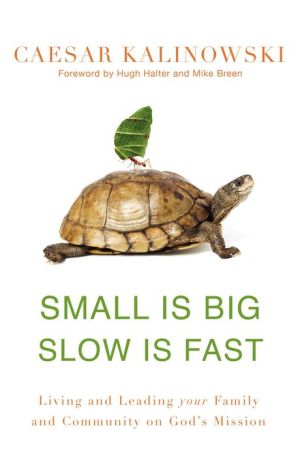
Caesar Kalinowski released, with Zondervan publishers, his second book: Small is 9780310517016_p0_v1_s300xBig, Slow is Fast.

**********************************************************************************************

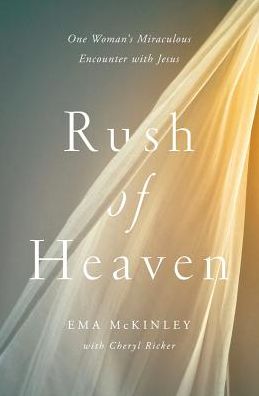
Ema McKinley with Cheryl Ricker released her debut nonfiction, Rush of Heaven. A 9780310338901_p0_v1_s300xtrue accounting of her miraculous healing. Zondervan publishers.

**********************************************************************************************

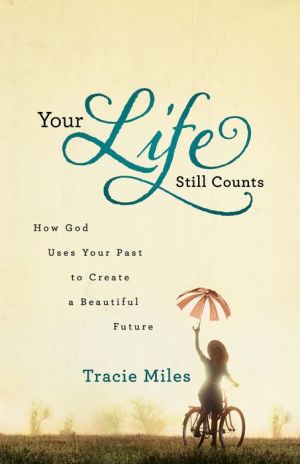
Tracie Miles of Proverbs 31 Ministries released her second book, Your Life Still 9780764211997_p0_v2_s300xCounts, with Bethany House Publishers.

**********************************************************************************************

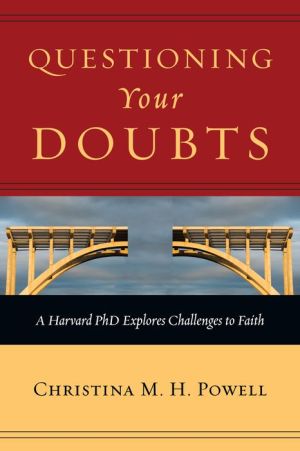
Christina M. H. Powell released her debut nonfiction title with IVP,Questioning Your 9780830836789_p0_v2_s300xDoubts.

**********************************************************************************************

Stephanie Reed released her latest Amish fiction novel The Bachelor with Kregel 9780825442162_p0_v1_s300xpublishers.

**********************************************************************************************

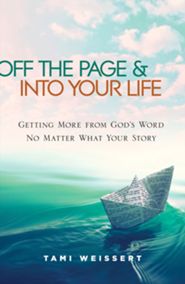
Tami Weissert released Off the Pages & Into Your Life with Authentic publishers.781167

**********************************************************************************************

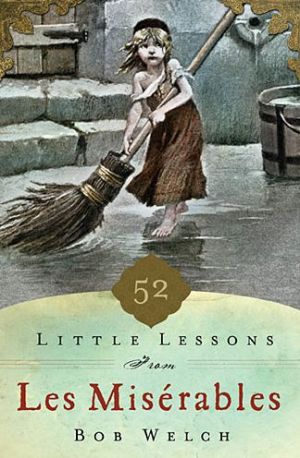
Bob Welch released a devotional with Thomas Nelson: 52 Little Lessons from Les 9781400206667_p0_v1_s300xMiserables.

**********************************************************************************************

Joe Wheeler released the 23rd book in his Christmas in My Heart collection with Pacific Press.

New WordServe Clients

Emmanuel and Veronica Chan signed with Alice Crider.

Judy Joy Jones signed with Greg Johnson.

New Contracts

Steve Addison signed a contract with IVP for his next book Movement Pioneers. Greg Johnson, agent of record.

Dena Dyer signed a contract with Barbour Publishing for a Christmas devotional called “25 Christmas Blessings”. Greg Johnson, agent of record.

Linda Kuhar signed with Leafwood for her nonfiction book tentatively titled Worthy of a Miracle. Alice Crider, agent of record.

Melissa K. Norris signed a contract with Harvest House publishers for a nonfiction book to release next year. Sarah Freese, agent of record.

What We’re Celebrating!!

Julie Cantrell won the ACFW Carol Award in the Historical category for When Mountains Move!

Barbara Stoefen was interviewed by her local news station in Bend, Oregon regarding her debut nonfiction release A Very Fine House. Watch the interview here. 

Marketing: Sharing the Treasure You Discovered

Sharing the Treasure

In a charming café tucked in the corner of an eclectic bookstore not far from the center of town, you stare into your latte, mesmerized by the heart-shaped swirls of steamed milk. This peaceful instance of solitude is so perfect you decide to share it on Instagram.

After venting the domed lid of your new Big Green Egg backyard cooker, you reach for tongs to lift ribs dripping in a tangy barbeque sauce onto your plate. Your friend, sensing the momentous nature of this occasion, captures the moment for Facebook with her smartphone.

You weren’t trying to market a bookstore or a cooker. You simply found a treasure and you were sharing it with friends.

Draw A Treasure Map
As I prepare for the launch of my first book, Questioning Your Doubts: A Harvard PhD Explores Challenges to Faith, I am learning how to assist in the marketing process. Buried treasure helps no one. A book cannot fulfill its purpose unless readers find it. So I have begun to view marketing as the process of drawing a treasure map to help potential readers locate my book.

Everyone draws a map unique to a particular treasure, but here are some ideas:

  • Have your social media bio mention your book and link to your website.
  • On your website, include links to a variety of online retailers and bookstore websites that are selling your book. Use a pull down menu of retailers if the list is long.
  • Mention your book in bylines to articles you write.
  • Blog and guest blog, mentioning your book in your post or your bio.

Supply the Digging Tools

Once the map leads you to the buried treasure, you need tools to dig it out so you can enjoy the treasure and share it with your friends. In the same way, marketing involves not only drawing a treasure map for potential readers, but also supplying the digging tools so others can unearth the treasure and share it with others. Here is a list of a few tools I am using to help others spread the word about my book:

  • Bookmarks
  • Flyers (both paper and PDF format for sharing by email)
  • Publicity photos
  • Link to discussion guide for book
  • Social media page for each book

Prepare to Celebrate!

What are some things you’ve found helpful for marketing your books?

Do I HAVE to Be a “Christian Writer”?

confused woman--question marks

For my first eight years as a publishing writer, I had a hot New York agent. She hung with me through high times and low—until the day I sent her my new manuscript, which was overtly faith-based. She dropped me like a potato on fire. I knew that would happen. But I had to obey God and offer explicit Scripture-based hope. Most of my subsequent books have done the same.

I never wanted to be a “Christian writer.” I never wanted to be confined to “Christian readers.” I wanted to write for ALL people, and I still do. But I also know my faith can turn people away. Here is our dilemma: how do we write the truth with integrity, yet speak to all people, regardless of faith? Here are some thoughts that guide me through the thorny “Christian Writers” thicket.

We need not tell all the truth about anything at any one time (even if we thought we knew it). Life, issues, experiences, even under the purview of God, are all complex, multi-layered, paradoxical. Communicating Truth and truths is a process that we engage in over a lifetime, encompassing many possible stages: plowing, sowing, watering, reaping. We need never feel that we have to roll out the entire plan of redemption in any one novel or memoir to make it “Christian.” There’s time. Think of your work as a body of work over your lifetime.

old books on shelf

Though I want all people to know Christ, more, I want Christ to be made known.
Because he is found everywhere in life, in all places, in all things, I am not only freed but compelled to discover Him and make some aspect of His being known through twig, creek, moonrise, miscarriage, forgiveness, cyclone, salmon, burial, and supper.

Belief in Christ’s truth-claims do not narrow our art. Christians are accused of being “narrow-minded” because they subscribe to Christ’s radical and exclusive truth claims (“I am the way, the truth and the life. No one comes to the father but by me.”) Belief in this claim does not confine, exclude, or narrow our art: nothing and no one is more capacious, more inclusive, more imaginative, more original than Christ himself, who created all things, who is before all things, who binds all things together, who can be found in every cell of creation.

Pacing in Writing | Wordserve Water Cooler

I intend to write only out of calling and passion. I seek that from God, not my agent, not the market, not editors, or even my publisher. This guarantees a wobbly path rather than a sure career. But, face it: there is no sure career in writing except the career of writing from faithfulness, obedience, and joy.

God’s truths are not just propositional and communicable by language: they are experiential, relational, incarnational. I desire to write from a faith that I am trying to live in and out of, rather than a faith I am simply pronouncing. Without lived-in faith, our words truly are noisy gongs. As Joy Sawyer has so brilliantly written,

“ . . . without an ever-increasing, tangible portrait of our God engraved upon our hearts, we reduce our proclamation of the gospel to the “clanging symbol” of language alone. Maybe that is why our message suffers so much when we rely upon mere rhetoric to communicate our faith: it’s simply bad poetry. Just as a poem can scarcely exist without images, we most fully express our poet-God by daily allowing ourselves to be crafted into the image of Christ.

I end here. I believe that writing is a calling, a kind of pilgrimage that takes us, like Abraham, from one land to another, through, of course, wastelands, where the promise of a promised land appears invisible and impossible—-but the writing inexorably, day by night, moves us closer to the city of God. And if we write well and true, we will not be traveling there alone. Others, at first reluctant, will slowly move with us, following our own feet and our words, drawn to the brightness of a city with open gates and lights that never dim.

Open gate--stone wall

Laying Your Worries at God’s feet

worry

Matthew 13:22 “What was sown among the thorns is the man who hears the word, but the worries of this life and the deceitfulness of wealth choke it, making it unfruitful.”

The other day I sat in my garden, basking in the sun and singing Great is Thy Faithfulness. Soon my song faded, and my thoughts slipped to family concerns—my family, our future, my job. I found myself fretting over things I couldn’t control. Not only was I worrying about today, but I was also borrowing troubles from tomorrow, the rest of the year, and the future. It was piling up on my shoulders one large boulder at a time, and I let the stress steal my joy and the message in the song.

Rather than praying, I worried. I let my fear grow, making me weak and afraid.

Elizabeth Charles once said, “When we call on God, He bends down His ear to listen, as a father bends down to listen to his little child.

That day, I turned my cares over to Him. Like a small child I walked into my father’s arms, feeling the warmth of His embrace. I told Him about every worry—and He listened. He is faithful to all His children despite our faults, despite the times we want to pull our worries back from where we’ve laid them at His feet. He loves us, and promises to provide for our needs.

Will I find myself again someday worrying needlessly? Yes, I probably will. Thankfully, I have a Savior who understands me and has abundant grace.

Stitching Your Story

We were almost ready to begin our ladies’ Bible study the other night when Sandi asked about my writing. I told her about the revisions I’m working on, and how they’ll make my story better.

Then she leaned back in her chair, shook her head, and said, “I don’t know how you do it. I don’t know how you write books like you do!”

I knew I had the perfect analogy for her. Sandi is a quilter, and she’d understand: Writing a book is like making a quilt. 

First you select a design, the “big picture” of your finished quilt.

For a book, the “big picture” is the genre and basic plot.

As you make the design of your quilt your own, you choose colors and patterns. You spend hours selecting just the right fabrics to fit your design.

As you plot your book, you develop characters with goals, motivations, and conflicts. You choose a setting that will complement the plot. And you work on your story structure, plotting or outlining the way it works best for you.

Elliza Mummert Sherck's quilt

When you start constructing your quilt, you work on one block at a time, stitching each piece into place.

When you start writing your novel, you work on one scene at a time – beginning, middle and end – stitching with words rather than thread.

Finally, you lay all your quilt blocks out on the floor to see how the finished project will look – and then you revise the design by moving blocks around and creating different color combinations.

And your novel? Revisions are part of the process! Switch that scene to a different character’s point of view. Rearrange the chapters to bring your antagonist into the picture earlier. Ramp up that happily-ever-after ending!

And last of all, when everything else is done, you finish your quilt by stitching the layers together and binding the edges, sealing the work you’ve done.

With your novel, it’s the work of editing and polishing that puts the final stamp on the story.

006

But the thing quilting and writing have most in common? The finished product is a work of your heart that you share with others.

 Mark and Karen's Quilt

How to Avoid White-Noise Marketing

new-143095_640We were talking as a staff in our FaithHappenings.com meeting about marketing and social media and how much white noise is filling up Facebook and Twitter especially. Everyone wants a chance for their voice to be heard, but none of us really want to pay attention. As consumers we are constantly bombarded with deals we should take advantage of, the latest giveaway to enter, the newest site to sign up for (though, please, please go sign up for our FaithHappenings.com site—I promise you will not be disappointed. 😉 ), the latest and greatest constantly in giant all-caps and flashy billboards. Unless something truly captures our attention, most likely we’re going to just keep on scrolling.

I know I am guilty of this habit.

So how do we grab the attention of the consumer we are trying to reach? Each platform is going to be handled a bit differently, but I’ll tackle Facebook and Twitter with a side of Pinterest and Google+ thrown in.

Facebook: DON’T post your agenda all the time. In fact, I only post on Facebook a couple of times each week—not a couple of times per day. When you post less often, you actually become something of a novelty when you do finally post. You’re a fresh face in a sea of constant posters and most likely people are going to pay more attention. (Note: this concept is a good idea for personal profile pages. Fan pages require a different strategy and more frequent postings to avoid falling off your fans’ radar)

Twitter: DO post your agenda more often. Don’t, however, push a constant promotion. Twitter feed is constantly changing and moving so it’s a good idea to keep your face and fresh content in front of your followers. For every 1-2 tweets about your product, be sure to share 3-4 either retweets and content that is not pushing one particular point or agenda.

Pinterest: If you are a business or an author who is trying to promote reviews, products, etc., keep it to one or two pins per day of that particular felt need. Too much of the same thing will just annoy the follower and they will scroll faster–or worse, unfollow you.

Google+: Chances are you are going to have many crossover followers on Facebook, as you do on Google+. If you have a gmail account, you automatically have a Google+ account. Build your circles, find material you can share publically. You can share the same information as you did on Facebook and Twitter, but find a different way of sharing it. And remember to vary business with pleasure/personal. People want to get to know you, not just a promotion pusher, ie: white noise creator.

Need some other ideas to avoid being social media white noise?

Be funny. Have a sense of humor. Don’t post long updates. The shorter, the absolute better. Don’t carry a negative point of view on all your posts. Be positive. Avoid links.

Yes, I am telling you to include fluff in your marketing campaigns. We are a society surrounded by depressing worries. If you truly want to be noticed, be encouraging. Speak into people’s needs. Make them laugh. Build a brand awareness around who you are and what you’re offering that is unique, brief, to the point, and meaningful.

Seems like a tall order to fill!

But once you get the hang of it, it becomes more second nature than something that has to be over-thought.

Remember the key points: Facebook—don’t post all the time. Twitter—you have more freedom, so share and have fun. Build a rapport with your followers. Pinterest—let this become an extension of who you are. Google+ –provide fresh content separate from what you post on the other social media platforms as chances are, you will have many of the same followers across all platforms.

Is Writer’s Block Real?

OLYMPUS DIGITAL CAMERA

Ernest Hemingway fought bulls in Spain, dodged bullets as a war correspondent, and hunted big game in Africa . . . but when he was asked to name his scariest experience, he said, “A blank sheet of paper.”

Recently I received an email from a buddy of mine who’s convinced she’s got writer’s block. Convincing me, though, is a tough sell. You can quote Hemingway all you like, but I think writer’s block is a scam.

Hold on. Before you sharpen your pitchforks and/or chastise me for being a heartless friend, allow me to explain.

Just because you can’t pump out fifty words to save your life doesn’t mean you’ve contracted the dreaded Writer’s Block Virus. It simply means you’re going to have to work. Yes, indeedy, welcome to Realsville. More often than not, writing is work. Grunt work. The kind that makes you sweat.

Oftentimes when one thinks they might have writer’s block, it’s simply a case of having to search deep inside to come up with a sentence or two. Sometimes that’s super hard, but it’s never impossible . . . unless of course you’re in a coma and/or your fingers are broken.

Granted, you might not have a clue what to write on your current work in progress (WIP), but writing isn’t just about a WIP. You could write a letter to a friend, an encouraging note to your pastor, a measly shopping list for crying out loud. Writing is writing. It all counts.

I hear you, though. You want to make progress on your Great American Novel, yet you’ve all of a sudden skidded to a stop. Instead of throwing your hands in the air and crying, “I’ve got writer’s block!” give one of these ideas a whirl:

• Write something completely different. A sonnet. A piece of flash fiction. A rebuttal to a letter to the editor.
• Walk away and refuse to think about your story for a day, a week, or two even.
• Kill off a character (one of my personal favorites).
• Add in a new character.
• Do something creative with your hands. Paint a poster. Bake bread. Color with your kids.
• Begin work on another scene.
• Go to a mall and eavesdrop on conversations.
• Write the last scene.
• Think of an event that would make your protagonist weep. Write it.

What do all of these ideas have in common? They put your mind on something other than the spot you were stuck in so that hopefully when you do eventually come back to it, you’ll have a new perspective.

But what if you’re still stuck?

That’s when you need to pull out the big guns. Call a trusted writer buddy and cry on their shoulder, then brainstorm like nobody’s business.

I refuse to believe that writer’s block is real. Is that naive? Cold-hearted? Ignorant? Perhaps, but those are the least of my sins. I serve a pretty big God. If He wants me to write, I will, block or no block. Therein lies my confidence.