Writing Through the Storm

No author in her right mind sets out to write a novel in the middle of the craziest year of her mid life. But every author knows that life happens regardless of deadlines, contracted or self-imposed. A year ago I hit the keyboard at the end of December with ACFW in September as my self-imposed deadline. Thankfully I didn’t know the hurdles I’d have to leap to arrive the the finish line, or I may not have tried. Thankfully, God knew better.

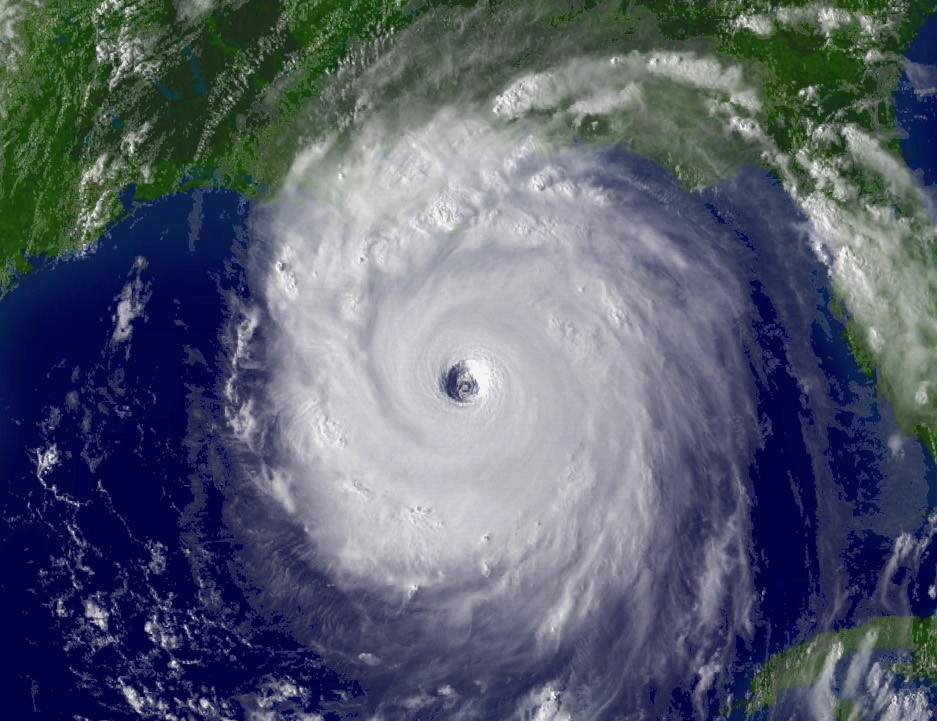
Little did I know my day job would test my new revelation that I am bi-vocational. Little did I know life would swirl around me like the outer bands of Hurricane Katrina, or I may not have tried. Thankfully, God knew better.

Every writer has a well-rehearsed list of real-life waves that sabotage word count, goals, edits, and plotting. I was well acquainted with the pitfalls of Twitter, Facebook, and my favorite procrastination tool, Pinterest. For others it’s childcare, homework, housework–the list is long. I’d hit mid point of 50K when the waves mounted and crashed. My day job work partner went on vacation in March, leaving the office in my care for two weeks. I was planning my youngest’s graduation. My husband was in the midst of a new job and we spent an April stay-cation wading through twenty years of classroom supplies stored in our garage between his classroom moves. In the midst of wading through college applications, taxes, FAFSA forms, college visits, and open house planning, my nurse and prayer warrior retired two weeks after receiving a bad diagnosis in May (she is currently well).

My critique partners knew I was floundering with my writing by July, when my work partner had major surgery and was out of the office for six weeks, turning my usual full-time weeks into forty-hour-plus work weeks. They prayed and kept to themselves their worry that I’d just quit writing and give up on ACFW. That’s when my mother became seriously ill. On the way from the office to the emergency room, I stopped at a long red light, and I felt the world swirling around me. But God’s whisper came as clear as it had for Elijah–“I’m not in the storm.” And I could breathe again. The light turned green.

Ed5_Fig4_1

My mother made a miraculous full recovery, and the weeks that followed brought four funerals of family members of my coworkers by August. ACFW was breathing down my neck and I questioned if I could do it. But as miraculous as my mother’s recovery, I put my heart on the keyboard and my measly 50K turned into 80K in six weeks.

I was pinching myself. I stood in the elevator shaking on the way to my room at ACFW with my dear friend and critique partner. I felt I’d finally been spit out of the swirling storm and come up for air. I didn’t even have a pitch, but I’d been given four pitch slots, the last with WordServe. I was sure I was an impostor. I wasn’t really a writer. It wasn’t really me who’d just poured those words on the page. Thankfully, God knew better.

Life happens. Life will happen again, with or without self-imposed or contracted deadlines. But what I’ll take with me this time is a toolkit to survive it. I will remember:

1. God knows better than me. He’s not in the storm. He is sovereign and so is His work.

2. Even though I’m a hybrid plotter-pantser, pre-planning saved me in the end.

3. Critique partners are a life-line for friendship, prayer, counsel, hand-holding, dope-slapping, and yes, last minute pitch preps!

4. Being bi-vocational means God will supply enough for each calling. I’m not betraying one calling to fulfill the other. Like a mother with multiple children, her lap is fuller, but she has enough love for all.

5. Knowing my story, believing in it, and loving it, kept me from giving up.

I offer my work back to my Maker. Thinking of the future publishing possibilities, I tremble with excitement and fear. But I know He’s not in the storm. I entrust He knows the future best.

Looking for Direction and Peace?

Photo/KarenJordan

Overwhelmed? Drifting above the landscape of your work like a hot air balloon?

Lost your sense of direction? Fear your approaching deadlines?

Searching for answers. When life seems overwhelming, it forces us to look for answers and direction. And it’s important to know where to seek help.

At times, I’m tempted to rely on guidance and encouragement from the resources the world offers me, like the evening news. Instead, it breeds confusion and discouragement, revealing more signs of the ultimate demise of our culture and way of life.

In Matthew 24, Jesus described signs of the end times. And His disciples asked, “Tell us … when will this happen, and what will be the sign of your coming and of the end of the age?” (Matt. 24: 3 NIV)

Jesus explained that He didn’t know when the end would come—only His Father knew the answer to that question (36). But He encouraged His disciples to always be ready (44).

How can we “be ready”? Most of the time, I can’t keep up with the pace of my life, much less worry about the future—especially the last days.

Jesus offered a story to encourage His disciples to focus on the things that matter most. He described a servant who had neglected his responsibilities during his master’s absence, as if he expected him never to return. But when the master returned, he held the servant responsible for his disobedience and disrespect.

Facing the truth. Once again, the mirror of God’s Word forces us to look at ourselves—not to shame us, but to confront us with the truth.

Am I living as if He’s not coming back? What responsibilities am I neglecting?

When I come to my senses and examine God’s Word, I’m reminded, “Instead, be concerned above everything else with the Kingdom of God and with what he requires of you, and he will provide you with all these other things” (Matt. 6:33 GNT).

What does God require of me? Am I taking care of the things that He’s entrusted to me? My home? Spouse? Children? Relationships? Work? Gifts or talents?

As I examine this verse in The Message Bible, I find the specific direction I need.

Steep your life in God-reality, God-initiative, God-provisions. Don’t worry about missing out. You’ll find all your everyday human concerns will be met.

Give your entire attention to what God is doing right now, and don’t get worked up about what may or may not happen tomorrow. God will help you deal with whatever hard things come up when the time comes. (Mt. 6:33-34 MSG).

Practicing our faith. How can I focus on God’s presence, guidance, and provision? Once again, I turn to God’s Word for help.

Jesus, help me to discern Your presence, guidance, and provision. What do I need to focus on right now? Give me the courage and strength to trust you with my future and to listen and obey Your Word. Amen.

What do you need to give your attention to right now? Where do you sense God’s presence, guidance, and provision in your life?

Cover Stories

Today is a big day.

I received an e-mail this morning from the head of marketing at the University of Nebraska Press … and attached was what should be the final version of the cover for my next book, Go, Flight! The Unsung Heroes of Mission Control. After what had become a little bit of an odyssey to determine an appropriate image, it looks marvelous. I love it.

If your manuscript is an unborn child in the womb, that first glimpse of the cover is similar to one of those amazing 3D sonograms that allows you to begin imagining what the youngster will look like. It’s a stunning moment and one that never, ever gets old. After all that time and expectation … this … is … getting … real.

Race To The Moon Sept 2009 006
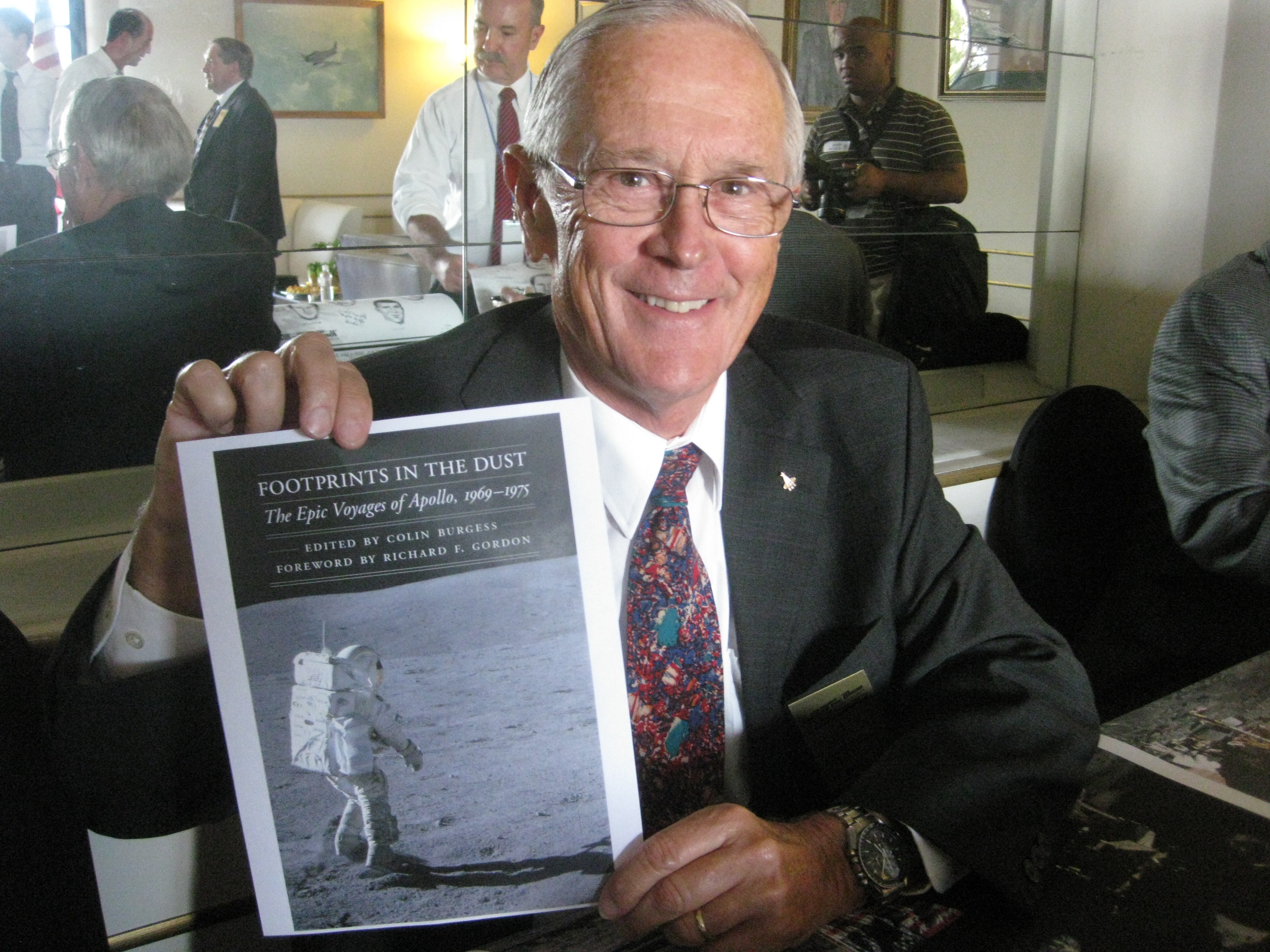
Apollo 16 moonwalker Charlie Duke holds a copy of the cover for Footprints in the Dust, which features a photo of Duke during one of his explorations of the lunar surface. I contributed the lead chapter to the book.Fourteen years ago — not long after the birth of our twin sons, as a matter of fact — I got the cover and first color proof pages of my first book, Second to None: The History of the NASCAR Busch Series. It was a day neither I nor my wife, Jeanie, will ever forget.

Today’s e-mail brought back a lot of memories. Fourteen years ago — not longer after my twin sons were born, as a matter of fact — I received the cover and first proof pages for my first book, Second to None: The History of the NASCAR Busch Series. It was a day neither I nor my wife, Jeanie, will ever forget.

Jeanie is a district court judge here in North Carolina, and that particular week, the boys and I had tagged along to a conference she was attending. She had already left for that morning’s first session when the call from the front desk came.

Mr. Houston, a package just arrived for you if you’d like to come get it.

I knew exactly what it contained. I had not showered or shaved yet. The boys were just beginning to stir and had … well … very, very full diapers. I didn’t care. I pulled on a pair of ratty shorts and threw the kids into their monstrous side-by-side stroller. We must’ve made for quite the pitiful sight, but off we went nevertheless.

To get to the lobby, we had to go down a long hallway with large banquet rooms on either side. We made it to the front desk without being seen and tried to sneak back down the hallway to return to the safety and anonymity of our room.

We weren’t as lucky the second time.

At that exact moment, Jeanie’s conference took a break. Out of the rooms streamed every district court judge in the state of North Carolina. There I stood in the T-shirt I’d slept in, gym shorts, unshaven and sporting hair that might or might not have been combed, with boys whose diapers were already stinky … and getting stinkier by the second.

Oh … hey, Honey.

Jeanie forgave me. I had my cover and my color proofs. They were beautiful. So were Jeanie and the boys, dirty diapers and all. This is my most memorable cover story. What’s yours? If this is your first book, what are your expectations for the cover?

I’m Hooked on LinkedIn

hooked onAfter three years of experimenting with social media networking, I’m finally closing in on what works best for my marketing needs at this time.

But before I share with you what I’ve discovered, I need to make some qualifications of phrases in that first sentence.

  1. ‘Experimenting’ – I’ve had no formal training in using Facebook, Twitter, LinkedIn, Google+, or Pinterest. Instead, I’ve read countless books and blog posts about using them, taken online webinars and asked others what they do. I’ve tried some ideas (mostly the ones I understood how to do) and rejected others (the ones I had no idea how to do). My experimenting has truly been all over the net, kind of like sampling all the flavors in an ice cream shop – a small bite at a time.
  2. ‘Works best’ – I define this as ‘what I can successfully manage, given limited time and ability because I am not a social media guru, nor do I aspire to become one.
  3. ‘Marketing needs’ – For me, this is publicity and audience building. I don’t sell books myself; I focus on branding myself to create the desire in my audience to go to vendors. Ultimately, I want my audience to become my sales team to sell my books to others, since there are a lot more of them than there is of me!
  4. ‘At this time’ – Marketing needs change over time, as do the ways different media platforms function. I dread every announcement that a social site has made ‘changes,’ because it means I have to learn/relearn how to use it.

All that said, I have found MY most successful audience builder to be LinkedIn. That’s because I focus there on connecting with others who work professionally in the fields in which I write: dogs, birds, health and wellness.

Yes, you read that right – my Birder Murder Mysteries and girl-meets-dog memoir appeal to three audiences, yet they overlap because my overarching brand is about getting outside to get healthier and happier. My contacts are working professionals at state parks, dog or bird-related businesses, wellness advocates, animal rescue groups, and ecotourism, to name a few. My strategy is to strengthen my social relationships with those contacts by engaging in conversations with them individually and collectively, which is what LinkedIn shines at. I see my contacts as distribution points – when I engage them meaningfully, they share my brand/message/content with their own networks. And LinkedIn makes it easy for me to find people who already care about my topic(s) with their group listings and recommendations.

My marketing strategy will continue to evolve, as healthy marketing strategies do, and I know that my experimentation with other networks is far from over. For now, though, LinkedIn is the backbone of my social networking strategy since it yields me the most new contacts, opportunities to market, and book sales numbers of all the platforms.

Which social media platform is working hardest for you? How do you measure that?

Five Possible Reasons Why I Didn’t Endorse Your Novel

This title could also be used for a few other things. Why I didn’t influence for your novel. Why I didn’t review your novel. I’m going to go from the most important reason to the least.

Writing1I think it’s helpful to give actual reasons for this. When I first started in publishing, I felt sad and perhaps a little rejected when someone didn’t review my work or fulfill a promise they made. Now that I have 1 1/2 feet in the publishing industry (I’m one of those authors still working a “real” job on the side) I have a lot more insight into why people may opt out of my request.

#1: Time. This is definitely the number one influencer on whether or not I do any of the things listed above. It’s a reality for most authors that they are working a “real” job to support their family. It is an expectation of publishers that you build a platform, build a social media presence, and market your novel. That’s a learning curve for most so our “extra time” is spent working on learning, doing and perfecting these things. Reading for fun and helping other author’s promote their work falls to the bottom of the time consumption list. In reality, if an author did take the time to do any of these things for you, they gave up something else to do it. Be grateful . . . always.

#2: I didn’t like it. Reading is art and art is subjective. I’ve read novels by people I really liked but I didn’t love their work. If I’m good friends with them, I’ll probably provide an explanation. We as writers need to learn to emotionally separate what we put on the page from a personal attack against our person. Just because I didn’t like your book doesn’t mean I don’t like you. Also, this doesn’t hold true for all the author’s work. A good friend of mine chose not to endorse the first book of my trilogy. She kindly reviewed the subsequent books and gave glowing endorsements. If I don’t say anything to you, it’s likely because I think you can’t take criticism in a healthy way and I don’t want to deal with the fall out.

#3: The book went against my platform. This is different than #2. There are some books I’ve liked, but I couldn’t support because of the platform I’ve built– which is medical accuracy in fiction. My blog, Redwood’s Medical Edge, deals with how to write medically accurate novels. If your book has something entirely medically inaccurate, even if I love the story, I can’t endorse it. It would make me look foolish. It would be like a pro-life person endorsing a pro-choice book. In this instance, it doesn’t mean I won’t review it or even influence for it but I’ll generally comment on the medical details falling short in those cases.

#4: You sent me the book without asking. This drops you to the bottom of the list pretty quickly. If I get a book in the mail and didn’t accept a request to review it, I’ll likely not get to it. Often, it’s not something I would read anyway and I’m very picky about what I read because my “fun” reading time has been drastically cut short.

#5: The first five pages didn’t engage me.  There are plenty of books I start that are good in the beginning but leave me feeling ambivalent in the end but I do end up finishing them. However, if you don’t grab me in the first five pages, I don’t have time to get through the rest. I was recently asked to review a book that was published by a smaller press and the novel was edited (because the author credits two editors in the front of the novel) but the novel was difficult to read. Meandering, no conflict, no idea where the story was headed.

If you’re a published author (indie or traditional)– what are some reasons you’ve chosen not to read, review, influence or endorse a book?

The Making of a Masterpiece

“In every block of marble I see a statue as plain as though it stood before me, shaped and perfect in attitude and action. I have only to hew away the rough walls that imprison the lovely apparition to reveal it to the other eyes as mine see it.” Michelangelo

I’ve spent the past month living as a hermit while I finished a manuscript. (Insert sigh of relief here.) I spent countless hours after my day job writing and fine-tuning every detail. Some days, I couldn’t wait to share the story with the world. Other days? All I saw were flaws, flaws that sent me running to fast food and the newest Netflix series while I processed what to do next.

That’s one of the many fun aspects of writing, though, isn’t it? I’m making the manuscript, but in the process, the Lord is making me. As my character wrestles through a growth point, I wrestle with it, too. Often what my character is learning is a lesson the Lord has spent months instilling in my own heart. From the overflow of my heart to the page…I think the story of The David illustrates this perfectly.

In the late 1400s, a group called the Operai provided blocks of marble for several prominent sculptors and artisans to create twelve statues of characters from the Old Testament. Work began on The David in 1464 but after initial carving, the piece was abandoned to the elements for twenty-five years. Then Michelangelo begged the Operai to allow him to complete The David. For three years, he carved the statue, shaving away the damaged parts and shaping features in great detail.

Kariss Lynch creating a writing masterpiece

If you hate history, I hope you stuck with me because none of that is the reason I love The David statue. Michelangelo took a wrecked, abandoned piece of marble and he turned it into a MASTERPIECE. Where everyone else saw a useless block, he saw potential and beauty, a story waiting to unfold.

I think the writing process is a lot like this. A story idea with little initial substance becomes a piece of art with a lot of effort. Over time, the author chips away the unnecessary and ugly pieces until a beautiful story is left.

I believe that’s what Jesus does with the author as he/she writes. Just as Michelangelo labored over The David and you labor over your manuscript, so the Lord labors over you, writer friend. He is in the process of creating a masterpiece that lasts for eternity, and he wants to do that with your writing, too.

Yours is a message of truth and hope. As you identify impurities and polish your writing to perfection, know the Lord wants to do that with you. He wants your voice for his glory. Sometimes the polishing and chipping are painful. With every bit you allow him to remove, you enable him to speak more clearly through you.

Keep chipping away at that novel while the Lord chips away at the excess around your heart. The beauty becomes more evident with every fallen piece.

Give Your Characters a Life!

We’ve all been there.

You’re sitting at your desk, fingers flying across your keyboard. Your hero and heroine are in the middle of a conflict and…wait. How does he react when she turns to walk away from him?

Every action our characters make is determined by their background. Their backstory.

Let’s look at the hero in my September release from Love Inspired as an example.

Nate Colby is a Civil War veteran. He had been part of the Union Cavalry during the last couple years of the war. During one campaign, he was ordered to move a wagon load of explosives out of a burning barn. He hitched a team of mules to the wagon, but the mules balked. They refused to pull the wagon out of the barn.

The explosion nearly killed Nate, but more importantly, the experience was the beginning of a series of events that convinced him he lacks something in his makeup that other men possess. Something inside him causes him to fail every time he attempts something important.

It also caused him to hate and distrust mules.

Fast forward twelve years. During the intervening time Nate’s view of his shortcomings has been reinforced over and over. His parents died while he and his brother were in the army. His sister disappeared into the west and became a prostitute. His brother’s children were left orphans when Nate wasn’t able to save his brother and sister-in-law from the 005house fire that killed them.

And his nephew’s favorite friend is his pet mule, Loretta.

Now Nate is left with his nephew and nieces to care for, but the past still haunts him. It affects every move, every decision. And as the story progresses, the reader gets glimpses of Nate’s backstory. It unfolds when it needs to in order to give Nate’s character depth.

But Nate’s backstory is so much more important than to make his character interesting to the reader.

Without knowing his backstory, I would be at a loss whenever he appears in a scene or when there is a plot twist.

For example, the heroine, Sarah, is a crusader, seeking to save the poor lost prostitutes in Deadwood. She is extremely naïve and idealistic at the beginning of the story, and enthusiastically recruits Nate to help her.

How does he respond? We – as readers – already know this part of Nate’s backstory. Remember the sister who disappeared twelve years ago? Nate’s experience with his sister gives him an insight into the life of a saloon girl that Sarah doesn’t have. He not only keeps her enthusiasm grounded in reality, but he agrees to help her, even though he’s afraid the plan is doomed if he has any part in it.

001Nate’s backstory drives his decision to help Sarah and his feelings about that decision. It affects all of his actions as they carry out Sarah’s plans to help one of the soiled doves in the mining camp. And it provides the starting point for the change his character goes through in the course of the story.


Writing my character’s backstory is a major part of getting to know my characters before I ever start writing my stories. It gives them life!

What about you? How far into your characters’ back stories to you go when you’re developing your next book?

Should Indie Publishing Be For You?

stack-letters-447578_640The average writer is no longer required to only do one form of publishing these days. When I started to investigate the literary world ten years ago, publishing houses just a few years before had started taking queries exclusively from agents and to publish your book without a publishing house was a frowned-upon shortcut for those who didn’t want to do the work on their book to make it publishable. Getting an agent to represent you was difficult as there were only a handful in the industry, but publishing houses wouldn’t look at your work without an agent and agents wanted you to come to them with a contract in hand.

Now, there are more agents than editors—all of them with projects they want to pitch to the handful of remaining houses, hoping their well-known or debut author will strike the fancy of the over-worked editor on the other side of the desk.

In consequence, agents are finding it increasingly difficult to land their talented authors and those that are landed are getting smaller deals or having to settle (which isn’t always settling depending on the author’s attitude) for a smaller house.

Publishing is far from what it used to be. Even as a reader, you can’t help noticing this fact.

So where does this leave the writer who is struggling to get picked up, is consistently being told that their product is good and has interest, but no publishing house is up for actually buying it? Are you settling to indie publish or are you giving yourself a leg up in a vastly changing industry?

First: It depends on the type of writer you are. Are you a go-getter? Are you fascinated by the publishing process and like having the control in your hands over the cover design, interior layout, editorial, content, price and release dates, just to name a few? Then indie publishing could quite possibly be for you.

Second: Indie publishing should not be your choice just because you haven’t been able to sell in a larger market. While it is often the #1 reason writers investigate this avenue, it shouldn’t be your only reason. Why? Because in our impatience to have a book published, oftentimes we can overlook the major flaws that have caused us to be rejected.  Which leads to my third point.

Third: Find out why you’ve been rejected as best you can. Is it because the publisher doesn’t think your topic will sell right now or is it a structure/voice/grammar/ability to write issues? To succeed at indie publishing, you’re still going to have to do the work, which means you better have a darn good product to release. Readers aren’t going to care if you’re publishing with a Big Five house or your own press; you write a poor story, that baby ain’t going anywhere.

Fourth: Be prepared to do the work. There aren’t any shortcuts about this: indie publishing is hard work. But then again, so is traditional publishing. There should be much wisdom taken into the decision to self-publish. If this is for you, I absolutely encourage you to get out there and get it done and I’ll be the first in line to buy your well-done product.

Self-publishing is all about the research. Research is King in this industry and knowing what you’re getting into beforehand, as best you can, is definitely Queen. Do your homework, ask those who have gone before you and succeeded and failed. On both sides of the fence. In doing this, you’ll be best prepared to make the right publishing decision for you.

Question: would you ever indie publish your books? What do you see are the pros and cons? And if you are a published indie author, what do you love or hate about the process?

Conquering the Blank Page

For most professional writers, the incessantly blinking cursor on the computer screen functions like the blank sheet of paper reminiscent of unfinished homework. This nagging reminder of the writing task awaiting completion dares the writer to rise to the challenge. On days when the needed word count looms large and inspiration falls short, I have learned to pull out my writing bag of tricks to make progress. In this bag, I keep different elements of writing. Selecting the right elements helps me conquer the blank page.

iStock_000027717935Medium

Here are the elements I keep handy in my writing bag of tricks.

Factual Information

When I am not sure how to begin writing a particular passage, I start by listing the factual information relevant to what I will be writing. Often when creating this list, I discover that I need to check a source or gather additional information. Once I have the information entered onto the page, I create an outline and sort the information into its proper place.

Dialogue

While the importance of dialogue in creative writing goes without question, nonfiction writers also should consider the place of dialogue in their passages. Dialogue between two characters adds action and excitement to a scene, drawing the reader into the story more effectively than descriptive language alone. Dialogue also forces shorter paragraphs, helping the reader move forward rapidly and read with greater ease.

When you need to illustrate a point, consider using dialogue, even if the dialogue simply conveys the thoughts going through one person’s mind. A few sentences of dialogue can serve as an ice-breaker for a section of nonfiction writing explaining a concept or offering instruction. Pepper sections of factual information with a few tidbits of dialogue and the blank page will begin to fill!

Sensory Language

Long sentences filled with too many adjectives and adverbs can bog down a reader, but a few well-chosen words that appeal to a reader’s senses can make a paragraph come alive. In everyday life, we form memories that encode the sights, sounds, smells, tastes, and textures we experience. Help your readers enter into the world of your book by supplying them with information that appeals to more than one sense. Instead of appearing dull, your factual information will sizzle with delectable style.

Transitional Phrases and Structuring Elements

By now, your blank page is nearly full. To polish what you have written, make sure that the connections between the various elements of writing are clear and smooth. Use words that convey a sense of order such as first, second, and finally. In addition, weave your thoughts together by picking up a key phrase from one paragraph and carrying it into the first sentence of the subsequent paragraph.

Each project and style of writing requires a different combination of writing elements, but if you think in terms of adding these elements one by one and then stitching them together, you will be well on your way to completing the writing task of the day.

What approaches work for you when you need to conquer the blank page?

Enjoying Life

For the record, there is no eleventh merritt, john FINAL19commandment that says: “Thou shalt not enjoy life.” Nor does God ever say, “My plan for you is to be miserable on earth until you arrive in heaven.” What the Bible does say is that God “richly provides us with everything for our enjoyment.” (I Timothy 6:17b) In other words, God has given us an amazing world to enjoy—so what’s holding us back from living a life that’s deeply satisfying?


A major misconception we must debunk is that when you become a Christian, you are required to give up much of what you find satisfying and your fun is over. Truth is, God maximizes our ability to enjoy life and gives us unlimited freedom to live the most fulfilling lives possible. If there is any sin in this, it is in our reluctance to consider how God can raise the quality of our lives to new levels of fulfillment and joy.

For Reflection: What false limitations have you imposed on your God-given freedom to enjoy life? How do you think living life with God could serve to elevate your satisfaction and joy?

Previously published on John Merritt’s blog.