Assets Versus Liabilities

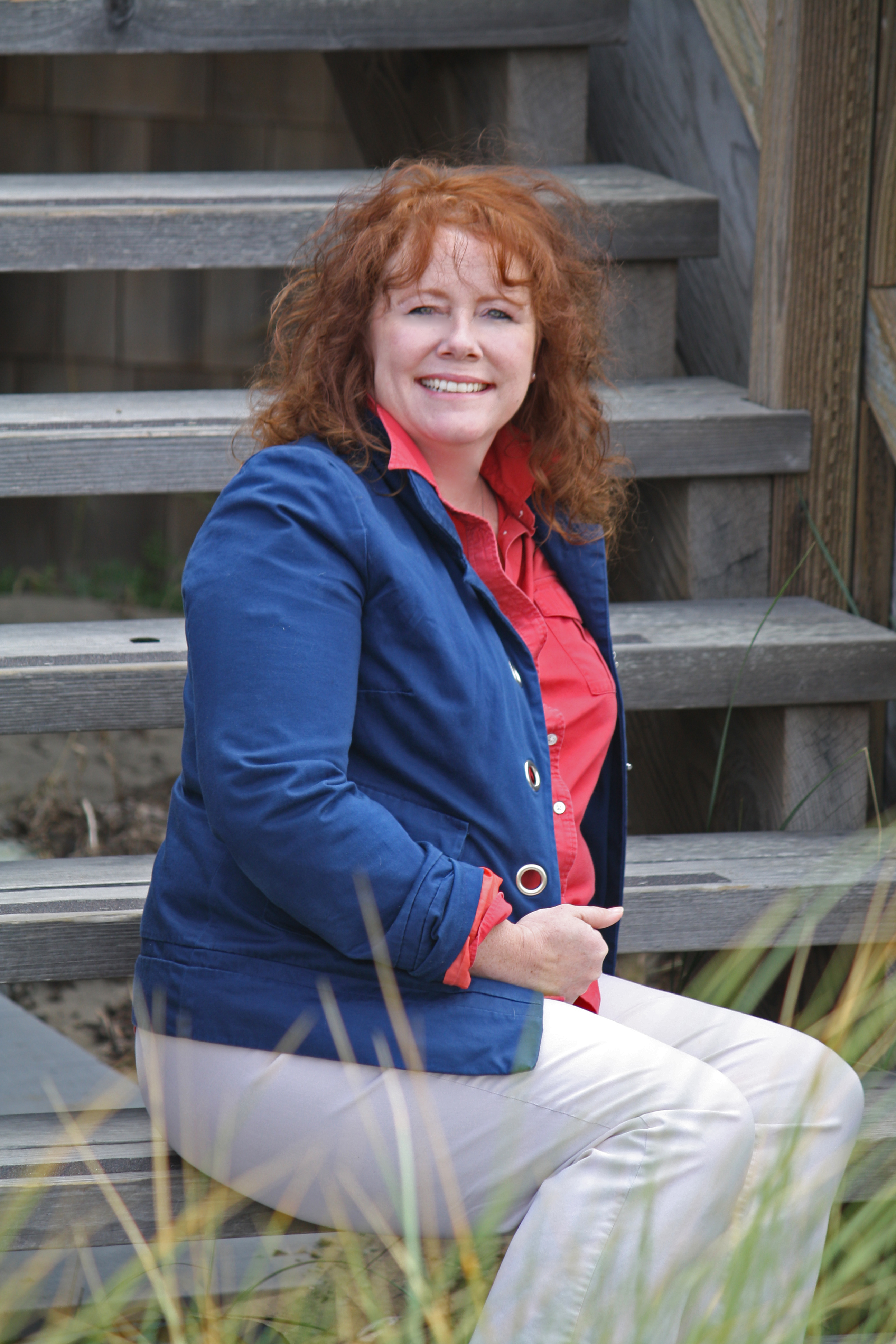
photo by Shelley Hendrix

After months of working my way through the maze of confusion regarding a giant leap of faith into the world of writing and public speaking, I confided this unexpected journey to a trusted friend and mentor. In addition to wise counsel and prayer, as well as encouragement to pursue this dream, Jim said that I needed to write a bio.

*Gulp*

I don’t know about you, but this project was the hardest writing project I think I had ever been given up to that point in my life. (Truth be told, I still don’t like to write my own bio.) For one thing, I hadn’t really done much of anything at that point. I was a shy, behind-the-scenes, let others decide, kind of gal until I went through what I call “God’s Merciful Unveiling” in my life: a season of deep pain, but tremendous spiritual renewal and personal growth. It was through that experience that I began to sense a call on my life to share truth with others that would set their hearts free, too.

I decided to research the bios of other authors and speakers to see what kind of information they included – kind of a template to help me start my own.

Big Mistake.  Or maybe not. It sure felt like one in 2004! The bios I found online were so impressive. These authors and speakers had done so much with their educations, lives, ministries, writing, and families that I began to question whether or not I had actually sensed God’s call on my own life correctly. Who am I to jump into this field when there are so many more qualified and capable people already doing this?

Who would want to hire a mostly-stay-at-home mother of three just because she believed God had called her to step out in faith to share grace and truth with others? I began to feel sick to my stomach as I spent several days wrestling with the seemingly small task of writing my bio. If I have trouble writing my own bio, how in the world am I going to write something people want to read?

I put a rough draft together and apprehensively showed it to a close friend for her honest feedback. I left a copy with her at her house and left before she had a chance to read it in front of me. I imagined her being too kind to tell me what she really thought, which would be, “Who in the world does she think she is?”

It wasn’t too long before she called me. In fact, she called me on my cell phone before I had gotten back home. She told me that soon after I left, her mom called. Her sweet mother was struggling with an unwanted divorce and the painful ripple effects of her former husband’s decision to move into a new relationship after 30+ years of marriage.

My friend said she told her mom that God wasn’t done with her just because a man was. And then she shared my bio with her! My unimpressive, rough draft of a bio. I was perplexed; it seemed like an odd thing to do in such a situation. And she said she told her mother, “Mom, if God can give Shelley new dreams to pursue after what she’s been through, I know God has new dreams for you as well.”

Jaw. Drop. 

I was nearly in tears. She told me this and we chatted briefly and then we hung up. I sat in my car completely overwhelmed with the idea that God could use even my feeble attempt at writing a bio to encourage and strengthen someone else. I thought about Paul’s words in Philippians when he wrote:

“But whatever things were gain to me, those things I have counted as loss for the sake of Christ. More than that, I count all things to be loss in view of the surpassing value of knowing Christ Jesus my Lord…” Philippians 3:7-8

And, then, in ways only the Holy Spirit can do, I realized:

If I give God and others my absolute best qualities and go after it with all my gusto and all my energy, those very assets can turn into my greatest liabilities. But, if I entrust God with everything–and especially what I see as liabilities (like a lack of experience, for example) — and allow Him to live His life through me, He will use them in such a way as to turn them into my greatest assets for Kingdom work. 

I can say now, after over a decade of writing and speaking that I have seen Him do just that – so many, many times!

Like Donald Miller says, “We impress with strength, but we connect at weakness.” It’s almost always those things we view as weaknesses, or liabilities, that God’s light beautifully shines through to brighten another person’s life.

What about you?

What has been the greatest obstacle you’ve faced in your career/calling as a writer?

What helps you overcome insecurities in your calling to be a writer?

How can you help others overcome their fears by sharing your story?

I’m a Glutton for Information!

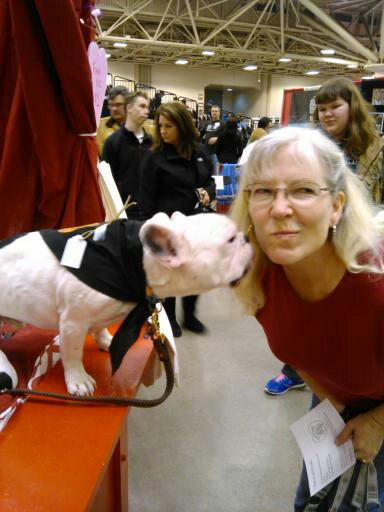
French bulldogSelling books and signing them is a happy experience for any author, but if I had to name my favorite part of the writing process that leads to publication, it would be doing the research that goes into my books.

I love doing research. In high school and college, I was the student who jumped for joy when the instructor assigned a research paper. I couldn’t wait to dig through the library for books, or hunt down obscure magazine articles. These days, research is even more expansive (unending, even!) thanks to the internet, but I love it, along with the hands-on research I encounter in the course of writing manuscripts. I’m just a glutton for information, I guess.

In celebration of that nerdy writerly trait, here are a few of my favorite research moments.

  1. I got a personal, private tour of a donut shop. Need I say more?
  2. I spent hours in the dark one night with some good friends checking nets for owls to band. We never got one, but I did get to wear a really cool headlamp while we strung up nets in the woods and told funny stories to pass the time.
  3. I took a firearms safety course and learned how to shoot a gun. I put 19 of 20 shots into the center of the target, so you can call me Eagle Eye from now on!
  4. I puckered up for a kiss from a French bulldog at a Pet Expo and posed with rabbits running an obstacle course. (Yup, that’s me and the bulldog above.)
  5. I spent a week in January at one of the world’s premier birdwatching areas in southern Texas. It was sub-zero and snowing back home in Minnesota at the time, which taught me the critical importance of timing when it comes to planning research trips.
  6. I took my husband on a very special summer date night to watch 300+ Chimney Swifts go to roost in an old chimney stack at dusk. It was a breathtaking aerial display and possibly a once-in-a-lifetime event as the populations of these birds dramatically decline.
  7. I met a World War II veteran who worked as an ordnance officer, which led to learning about camouflaging British air bases to hide them from Nazi bombing raids.
  8. I got to sit in the mixing booth of Prince’s Paisley Park Studio while interviewing a pre-eminent Christian composer as he completed mixing his musical tracks for a new CD.

Do you count your research as one of the best parts of your writing pursuit? What is your favorite research moment?

Linking Your Social Media Platforms

tree-200795_640

We’re told to be on as many platforms for social media as we can get our fist around. Not every social media is for every person and I would more encourage you to find two or three you really love and connects you with different people through each platform.

Are there ways to maximize your time?

Absolutely.

In this post I’m going to cover several of the larger social media platforms and how you can link each one to reach your audience in each market.

**Note: (and this is purely my personal opinion) if you have crossover audiences between your social medias that you’re sharing the same content on, I would advise against this. Seeing the same thing over and over, weakens your audience’s interest in what you’re offering. Just keep this in mind.**

**ALSO PLEASE NOTE: in offering these multiple ways to link your platforms, you stand the potential for limiting your reach, especially due to Facebook algorithms. This should never be a total substitute for going in and posting real time updates directly to your social medias, especially Facebook. Take this information with a grain of salt and don’t assume that all your work will now be taken care of. :)**

Linking Facebook:

To send Facebook updates to Twitter see this link: https://www.facebook.com/twitter/ this will give you instructions for linking your profile page and each of your public fan pages you might have.

Linking Twitter:

Login and navigate to your settings (under edit profile which is found by clicking on your profile picture). Go to apps and it’s as simple as choosing an account and loading your password.

Linking Instagram:

You’ll have to do this from your phone’s app. Go to your profile and click the three dots in the upper right hand corner. Under settings choose Linked Accounts. Here you can connect Facebook and Twitter. If you have a picture you don’t want to post to one of these medias, just click off those options before it posts.

Linking Google+:

This topic is more complicated. But it can be done! I’m directing you to this resource that I found online for linking your Google+ updates into Facebook.

Linking Goodreads:

Go to the edit profile function. (Found under the drop down arrow next to your picture in the upper right hand corner). Click the “apps” tab and connect the social medias you want linked. Goodreads also has widgets you can add to your blog that are customized to your book lists.

Linking Pinterest:

Log into Pinterest. Visit your profile page—this is where you’ll see all your boards and pins. Click on the “wheel” in the upper right hand corner and choose account settings. Scroll until you see “Connect Your Social Networks”.

Linking Your Blog:

The easiest form of promotion. You write a blog post. It posts to Facebook. Get started here: http://www.networkedblogs.com/ But note: when you accidentally hit publish it does show up on Facebook, but you CAN remove it. 🙂 If you have hooked your Facebook to Twitter, it will also automatically post there. However there is a pretty big BUT with using Network blogs and you can read that more fully here. You can do this, but be aware, that Network blogs does diminish your reach, especially if you’re using the free version. If you pay a high enough price, Network Blogs won’t route through their platform just to boost their own numbers (what they do on the free option plan). Facebook also limits your reach in using this platform to their social media as only Facebook can. There are positives: posting your blog automatically to Facebook and other social medias. But there are negatives, so weigh both carefully, before handing your blog link over.

Host platforms for scheduling social media updates:

You can schedule updates across multiple platforms so you only have to load an update once and pick the publish time. A couple different options to research for which one best fits your needs are: Buffer, TweetDeck, Hootsuite, Edgar (though not free) to name a few.


So there you have it! A few tips to connect each of your social medias. Don’t be daunted by this, take it one at a time. And let me know of your success or failures. Of which I hope there is many of the first and none of the last!


Writing With Style

All writers want to write with style. However, your publisher thinks of style less in terms of crafting words with fashion and flair and more in terms of communicating with good grammar and consistency. iStock_000003403361MediumHere are a few resources you will need as you polish your prose for publication:

1. Manual of Style:
A manual of style (MOS or MoS) is a comprehensive guide to editorial style and publishing practices. These thick books cover industry-wide or profession-wide guidelines for writing. If you are writing a book for general readership, you probably need to follow The Chicago Manual of Style. For both UK and US usage, you can turn to the New Oxford Style Manual.

If you are writing articles for newspapers or magazines, you may need The Associated Press Stylebook. If you are writing for a scientific or medical audience, you will need to use the AMA Manual of Style. Other academic fields and professions have specific manuals of style. I keep several manuals of style handy on a bookshelf near my writing desk. All of these reference books provide guidelines for grammar, citing sources and use of terms specific to that writing style. They also help you better understand the publishing process and the final layout you can expect for the piece you are writing.

2. Publisher’s Style Guide

The publishing house for your book may have its own style guide that serves as a supplement to an industry-wide manual of style. InterVarsity Press, the publisher of my book, Questioning Your Doubts: A Harvard PhD Explores Challenges to Faith, provided me with an editorial style guide that addressed how they format parts of a book and answered specific questions about grammar, punctuation, word usage and appropriate choice of abbreviations. Remember that your publisher’s style guide can overrule a more general manual of style, so always follow your publisher’s editorial direction.

3. Style Sheet

While writing a book or an article, you might find that certain words or phrases could be spelled, capitalized, punctuated, abbreviated or used in more than one way. To keep your writing consistent, create a style sheet that tracks your own or your editor’s rules for these words and phrases. This style sheet will take precedence over the more general publisher’s style guide and the industry-wide manual of style. Make a simple template with two columns: one that lists each word or rule and one that defines the style. Fill in the template as you write or receive comments from your editor.

A style sheet also can help you achieve consistency across a series of articles for the same magazine or for each book in a trilogy. It can save you time when editing your final draft by eliminating the need to look up a given rule in a larger reference work or trying to locate a particular email from your editor. With style sheets, guides and manuals helping you handle the mechanics of writing, you will have creative energy left over for the fun part of writing, such as choosing great literary devices and playing with the rhythm of a sentence. Within the constraints of proper style, your own writing voice will emerge.

Which resources have you found most helpful for keeping your writing in style?

4 Powerful Strategies for Claiming Your Promised Land

” … Now you and all the people prepare to cross over the Jordan to the land I am giving …” (Joshua 1:1)

Photo/AnitaBrooks
Photo/AnitaBrooks

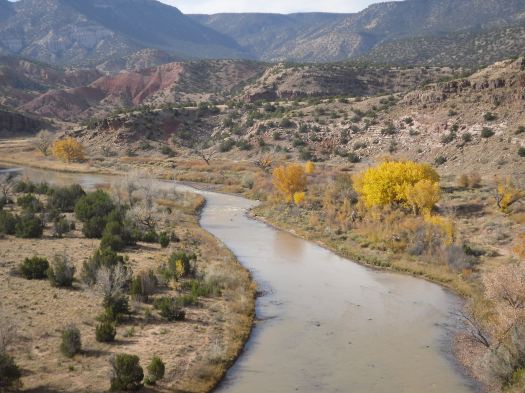
Standing on the banks of the Jordan, I look across to the other side, gazing at my “promised land.”

Perhaps you’ve been here, too. You’ve been given a vision. And you’re waiting to see your dream become a reality.

I remember the years that I spent wandering through the wilderness on the road to publication, wrestling with my doubt, fear, and unbelief. I recall the first time that I considered writing a book. It seemed impossible, doubting that I would ever see my dream fulfilled. Now, I find myself on the shore, looking across to my promised land.

But wait! How can I navigate the rough waters in front of me? The manuscript deadline? The marketing? The on-going platform challenges? What other obstacles will I face as I try to ford the river to my promised land?

I sense the enemy of my soul preparing for another onslaught of roadblocks and dead ends.

Lord, help me!

I inhale slowly—one, two, three, four. Then, I exhale, counting to seven. I inhale again, counting to eight. As I repeat this focused breathing, trying to avoid another panic attack, I relax.

An encouraging promise from God’s Word dispels my fears, “I will be with you; I will never leave you nor forsake you. Be strong and courageous …” (Josh. 1:5-6 NIV).

When I read through this passage, Joshua affirms the promise of the Lord’s presence. He also repeats an exhortation: “Be strong and very courageous.”

Be strong and very courageous. Be careful to obey all the law my servant Moses gave you; do not turn from it to the right or to the left, that you may be successful wherever you go. Keep this Book of the Law always on your lips; meditate on it day and night, so that you may be careful to do everything written in it. Then you will be prosperous and successful. Have I not commanded you? Be strong and courageous. Do not be afraid; do not be discouraged, for the Lord your God will be with you wherever you go. (7-9)

Joshua calls attention to four powerful strategies for claiming our promised land.

  1. Obey God’s Word. After the Lord assured Joshua of His faithful presence, He also instructed him to warn the people of the importance of obeying everything He had commanded them to do.
  2. Meditate on God’s Promises. The LORD also reminded Joshua of the importance of lifting up His Word—meditating on His truths and confessing His promises day and night.
  3. Surrender fears to God. The LORD instructs Joshua to encourage the people to surrender their fears and discouragement to Him, promising to always be with them.
  4. Prepare for battle. As I look across the deep waters of the Jordan into my promised land, I read another warning about impending warfare.

Get your provisions ready. Three days from now you will cross the Jordan here to go in and take possession of the land the Lord your God is giving you for your own … the Lord your God will give you rest … but get ready for battle … (11-14).

Will I still have battles in my promised land of rest? I think this scripture gives me a clear answer to this question.

We must always be aware of our weaknesses, vulnerability, and dependence upon God. As Christian writers, we are called to lead others to claim God’s promised land, too.

So, get “ready for battle … You are to help them until the LORD gives them rest, as he has done for you, and until they too have taken possession of the land the Lord your God is giving them” (14-15).

Are you prepared to claim your promised land?

Photo/AnitaBrooks

How to Write a Nonfiction Book that Sells — Part 1

Nonfiction Readers Want in a BookYou can have the greatest book idea in the world, but if it won’t sell, what’s the point in writing it? Unless you simply want to leave a legacy for your family and friends with no concern for sharing the message with anyone else.

As a Christian author, I’m driven to offer lasting hope to those who might read my words. So it’s important I wisely choose the subjects, the titles, the content, the marketing plan, and the future books listed in my proposals. There’s a lot I still don’t know about this process, why some titles are purchased while others languish, but I’ve certainly picked up a few secrets. Some of them, I wish I’d known earlier. Maybe what I’ve learned will help someone else in the place I was a short time in the past.

  • The first and most important thing is choose your subject(s) wisely. But with so many books in existence, and a plethora of authors scrambling for attention, how do you find a fresh subject to write about? Here’s one of my secrets. I listen to others, but I also listen to myself. Both of my initial book titles came about that way. With First Hired, Last Fired, someone said to me, “Anyone can be replaced.” I automatically replied, “Is that really true?” Voila, the subtitle, How to Become Irreplaceable in Any Job Market was born as Greg’s variation from my first take on the idea of being irreplaceable at work. My second title happened when I heard myself say to someone, “You know, there are things in life we learn to get through, but no matter what anyone says, we just won’t get over.” A little tweaking and tightening later, Getting Through What You Can’t Get Over became a book that a lot of people say they or someone else needs to read.Getting Through What You Can't Get Over Book Cover

Listen to your own conversations. What scares us? What are we complaining about? What confuses us? What aha moments do we encounter and why? What works and what doesn’t? How have we discovered hope and healing? For Christian authors, what does the Bible say that’s relevant to 21st century issues, in the here and now?

  • The second most important thing is titling. I’d say the process you use to choose a topic works as well for picking a title. What grabs you? Can you turn a cliché upside down? Is there a pithy quote you can tweak to make your own and spread the message in your topic? What do you hear yourself and others say?

For subtitling, follow the advice of Alice Crider, my former coach and agent with WordServe, “Make a promise you can keep to the readers in every subtitle.” Anytime someone offers us a solution to a big problem, we’re interested. Right?

  • For this segment, I’d conclude with the power of valuable content. Slapping a few words together will not provide opportunities to grow your career as a professional author. Do your homework by reading books on writing well. Hone your craft constantly. Connect with other professionals and barter for editing/critiquing services; look for that rare mix of honesty and encouragement. Karen Barnes Jordan deserves credit for every book of mine that’s sold. You can have the best concept in the world, but if you can’t communicate it clearly, it’s lost on potential readers and they will tune you out.

In part two, I’ll share insights about marketing and future books. No proposal worth its words will sell without showing you have great message promotions in the hopper. There’s a basic formula to writing a non-fiction book that sells, the key is in following it all the way through.

What obstacles are you hitting in your efforts to sell your projects?

Creative Marketing Ideas

The WordServe Water Cooler would like to welcome guest blogger Charise Olson sharing some of her unique marketing ideas for her novel.

Welcome, Charise!

LC_TheRoaringRedwoods_compressedOne Saturday over two decades ago, I straggled into a church clutching my Diet Coke because it was way too early to do such a thing on a Saturday and I didn’t drink coffee yet. I was there for a marketing workshop. The audience members were all folks like me— working in social services and non profits, needing to promote our services.

Marketing isn’t what I went to school for and I saw it as something that had to be done, rather than a true essential part of my real work.

Sound familiar?

But that workshop all those years ago, gave me a great foundation to further serve my clients and now, as a writer, my readers.

The presenters talked about creativity and making natural connections—more than worrying about strategy or manipulation. They talked about using your passion for your cause as a launching point for your campaign. Here are two key points and some specific applications to our books:

Focus on Adding Value: Try to think about what you can offer, as opposed to what you hope to receive.

Application:

1.  I approached a local historical museum and suggested we cosponsor a book event for The Roaring Redwoods (my historical fiction set in the area). This appealed to them because it was no cost/work for them and offered something different on their calendar. This appealed to me because my event would get out to their extensive mailing list.

2. I belong to a Facebook group celebrating the time period of my project (1920s). These are all people who love my time period. Instead of posting links (“buy my book!”), I have posted pictures from my research to share. For Christmas, at my fictional Riverwood Lodge, I invited group members to suggest menu items. My project got “out there,” but in a way that was engaging and fun for the whole group. Bonus: one of the group members provided invaluable help with a plot line involving race cars.

3. Newspapers now have fewer reporters, shorter deadlines, and a need for more content. However, many are cutting their book columns. When I contact a paper, I have an article ready for print. I write the article as a feature, not an ad. Find the unique angle (local author, clever research, entrepreneur spirit) and help make their job easier.

Go to Where Your Target Audience Goes: The example from the workshop was for a group finding it impossible to reach people about good nutrition. The suggestion was to go to Farmer’s Markets and Food Banks to find people already seeking food and then share the nutritional project info.

Application:

1. Any time I see readers, I spend time trying to find a way I could market my writing in that venue. I noticed that a local coffee shop chain displays art work by local artists on a rotating basis. I asked how artists are selected, and the process was easy. I suggested that I and other local authors use our covers as an exhibit. It was then suggested we could have a reception or related event at the shop, too. Um, okay, if you insist . . .

2. My book’s setting is near a high tourist area, and what do we do on vacation? Read. So, in seeking those reading vacationers, I am placing business cards and, where possible, copies for sale at gift shops and hotel lobbies.

While these ideas may not work precisely for you and your books, I hope they illustrate how we can use our creativity and powers of observation to find new and interesting opportunities to share our work with readers. All in a way that might not feel like quite so much work for us.

What have you learned about marketing that made it easier? What unique/creative efforts have you tried? Anything you’ve wanted to try, but haven’t yet?

*************************************************************************************************

Olsen-Image-56Charise Olson writes California fiction. It’s a lot like Southern Fiction, but without all the humidity. Her historical fiction is published under the pen name Leo Colson. The Roaring Redwoods* is now available in episodes. A collection of the first five episodes will be released March 2015. It is set in 1920s California with an ensemble of characters. Love, Honor, Money…and the laws we break to keep all three.

Olson’s contemporary fiction (under her own name) will release in Spring 2015. More info and her blog Prayers and Cocktails can be found at chariseolson.com

*The Roaring Redwoods is written for the general market and does contain strong language and adult situations.

Let’s Get Serious About Serials

The WordServe Water Cooler is pleased to host guest blogger Becky Doughty.

Welcome, Becky!

When I finally decided to “get serious” about my writing, I quickly discovered I had to have a platform. As so many new authors learn, platforms are hard to build, especially with fiction.

I created a website and started a blog. I found a small circle of authors who opened their ranks and let me squeeze in. We traded guest posts and gained a few more followers from each other. I blogged about my family, about my writing. I blogged about my past sins—you know, the good stuff, like witchcraft and broken marriages. That should have brought them flocking, right? I blogged about gardening and chickens and making bread and home schooling and prayer and whether or not one should blog….

EC-Collection-Cover1I created a Facebook Author page and set up my blog to automatically post there. I linked everything to Twitter, too, and created Pinterest pages with images of what my characters might look and dress like, where they might live and work.

But because I had no books published at that point, I was essentially inviting people to my fancy new restaurant and handing them menus of what they could expect to order on some ambiguous day in the future…. Then I wondered why they didn’t come back every time I announced a new dish being added to the menu.

I needed a way for my visitors to actually “sample” my wares. A serial novel.

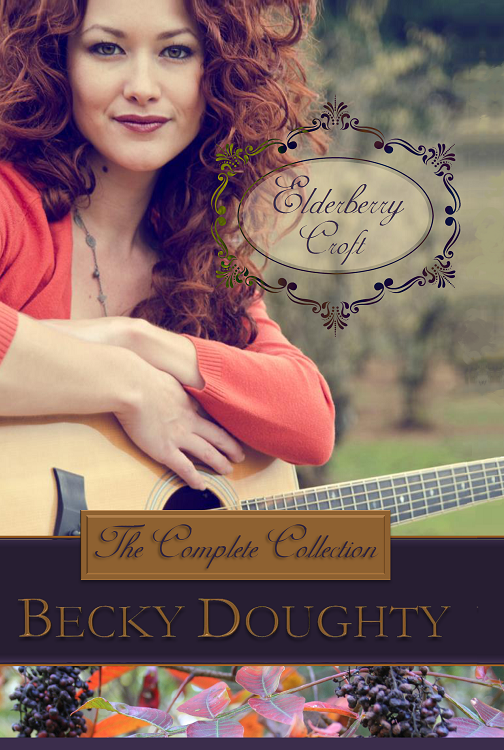
For one year, around the 10th of each month, I blogged a 10,000 word episode of my serial novel, Elderberry Croft. Readers could “taste” my fiction for free, with a promise of more to come every time they visited.

Well, Elderberry Croft has turned out to be more than just a sampler platter on my website. It has remained one of my bestselling series and books (it now comes in a complete collection and there’s a holiday sequel, Elderberry Days) since I began publishing the episodes. It’s been my most productive method to building an eager and faithful readership.

Six Suggestions for Serious Serialists:

  1. A serial novel is not simply a novel broken up into parts. That often frustrates readers. A serial novel should be written like television episodes, each episode essentially a short story with a beginning and an end, but linked to the other episodes by a foundational storyline told over the duration of the serial, one that culminates in the final episode.
  2. Your serial novel should be the same genre in which you primarily write. It’s an excellent way to gain readers, but if you usually write historical romance and your serial novel is a dystopian sci-fi thriller, you’re going to have some disgruntled readers who come looking for more Katniss and only find Sir Liam Drake and the White Rose of Kilarney County.
  3. Write ahead. I did not always do this. Translate: There were many months I lost sleep and suffered great anguish over how I was going to pull it off.
  4. Create memorable characters and storylines, especially the main characters whose stories link the episodes. If your readers don’t care about the foundational story, one “off” episode will send them running.
  5. Post a few “extras” in between episodes to keep readers happy. In Elderberry Croft, Willow Goodhope has a thing for elderberries (imagine that!). I posted elderberry recipes and home remedies, elderberry body care products, crafts, and elderberry lore.
  6. Listen to your readers’ comments. I’m of the mindset that authors should steer clear of reviews. Reviews typically tell us more about the reader than they do about the author’s work. However, in the case of serial novels, this is a perfect opportunity to get to know what your readers like, what they want to read about, and then adjust your story accordingly!

This is a great way to publish a book. When you’ve written the final episode, gather them all up and release them in one complete collection. Voila! You have a full-length novel!

And don’t forget to take a break from “serious” now and then, and simply enjoy the journey!

What are your thoughts on serial novels? Have you ever tried to write one?

************************************************************************************************

becky-doughty-author1 Becky Doughty is the author of the best-selling Elderberry Croft series, the controversial Waters Fall, and the voice behind BraveHeart Audiobooks. Raised on the mission field among the indigenous tribes of West Papua, Indonesia, Becky’s ministry is through the written word. Her heart is for people living on the edge–that fine line where grace becomes truly amazing. Married to her champion of more than 25 years, they have three children, two of whom are starting families of their own, and they all live within a few miles of each other in Southern California. You can connect with Becky via her website, Facebook, Twitter and Pinterest.


Dig it Up

Dig it outThere is a verse in the Psalms that expresses this priceless bit of wisdom and truth. It says, “I praise you because I am fearfully and wonderfully made, your works are wonderful, I know that full well.” (Psalm 139:14) If you study the Hebrew here in this verse, the word for wonderfully carries with it an undertone of “separated” or “distinct.” In other words, this can be read as, “I am wonderfully different, separated, distinct, set apart.” Or another way of saying this: “God, I praise you, because I was made to wonderfully not blend in – you made me to stand out.”

The word fearfully means your uniqueness was designed so well it could produce fear or reverence or awe. Think about this. Think about a time when you saw something so amazing that it scared you. I think of times when I’ve been on a wild ocean, or rafting in white water through the Grand Canyon, or on looking over the edge at the top of Half Dome, or being caught in a blinding snow storm…So what this word “fearfully” means is that you were made in such a way that it should inspire awe and wonder.

The point is, when you choose to blend in, you are robbing us from the wonder and awe we would get from seeing a unique you. Imagine the Mona Lisa being put in a closet forever because she didn’t have the same smile as everyone else. Or like a Beethoven Symphony being thrown away because there was too much passion in it. The truth is that when you to try to blend in, trying to be someone you’re not, that is far weirder than to be who God created you to be.

The bigger tragedy of losing who you truly are is that your heart starts to feel numb, and your life feels less and less alive because you’ve buried the uniqueness that God made you to be—and that is a soul-killer. So, if I may do a little digging around, even a little prying into your soul—what do you think you’ve buried in terms of the amazing person that you are? What talents, desires, dreams, passions, interests or pursuits have you given up on because someone discouraged you, or said you couldn’t do that, or be that? Or how have you decided that conforming and blending in is better than being true to your unique God-fashioned self?

For Reflection: In what way has your passion for life been reduced to a mundane routine of conformity that you hate more than you love? What needs to be dug up, woken from its slumber, and come alive in you again?

Previously published on John Merritt’s blog: this day

Writing Off The Leash

11021249_10205885141785471_6207685168227967330_nToday was the first day above 32 degrees Indiana has seen in forever, so I went gallivanting with my gaggle of golden retrievers. They haven’t had a real walk since the extreme cold came around, so they were giddy. The oldest one (the darkest brown) literally skipped down the street and back. They held their noses high and curled their tails and could hardly keep from tearing themselves from their leashes and running free.

Prior to the walk I’d been at my women’s Bible Study where we talked about 1 Thessalonians 2 and how Paul, Silas and Timothy had to press on with their mission and message despite often overwhelming suffering and odds. In verse 2:2 Paul writes, “Yet our God gave us the courage to declare his Good News to you boldly, in spite of great opposition.”

While not necessarily a Paul-worthy struggle, writing novels does not come easy to me. I write, delete, and rewrite several times over before I get a scene–let alone a plot–to come out right. I question my calling, my ability, my gumption. I call my agent and freak out. I call my husband and freak out. I freak out to my friends on Facebook. But the longer I write, the more I realize that often what hinders me are my own doubts and hang-ups and attempts to write something perfect instead of just…

…writing.

Ray Bradbury, in his book, Zen and the Art of Writing, says as writers, “What we are trying to do is find a way to release the truth that lies in all of us.”

Truth is hard to find. We have to dig for it in the places of our hearts which would rather be left alone. We have to hack through icy corridors of our soul which would rather remain frozen shut. We have to distance, if not remove ourselves, from a world which begs us to tidy up, straighten up, and shut up. Because we can’t release truth into our writing unless we allow ourselves the permission to write poorly, the wisdom to write something wrong, the unencumbered freedom to write the worst thing the world has ever seen.

Beautiful writing, like truth, only emerges when we allow words to roam unhindered across our screens, when we throw off the baggage of perfection and tune out the voices which tell us we are not capable of the task before us.

If you’re called to write, you probably already know the process is a battle, and that you have to be prepared to stay the course despite the worst of odds, the cynicism of the marketplace, and the opposition–whether self-inflicted doubt or another rejection.

My challenge to you is to write off the leash.

Don’t give up.

Spring is coming.

And the words will, too.