Writing about Thanksgiving and Food

Photo/Jordan

If you decide for God, living a life of God-worship, it follows that you don’t fuss about what’s on the table at mealtimes … (Matthew 6:25 MSG).

Food, food, food! Why does everyone make such a big fuss about food during the holidays? I’m always focused on food! Either I’m overeating, dieting, or trying to feed someone else. I can’t remember one day of my life that I didn’t focus on food at some point.

So, how can my worries about food help my spiritual focus? Over the years, I’ve discovered that my hyperfocus on food is often a warning sign for a much deeper problem than just trying to meet my physical needs.

Needs. While we were seminary students, I first learned how my own worry about food could actually motivate me to seek deeper spiritual insights.

At seminary, we lived on a much lower income than most of our family and friends. Often we didn’t have enough money for the food we needed for our family.

Miracles. God used that problem to capture my attention, and I saw Him provide in miraculous ways for some of my friends. Groceries would be left on their doorsteps. Money for food would arrive in the mail. Or they would discover some random source of free food, like day-old bread or vegetables discarded from the grocery’s produce department.

Tips. Intrigued by my friends’ stories, I began to ask to God to help me find ways to deal with our food needs. And I discovered many tips for stretching my food budget with recipe ideas and coupons. My friends and I found that we could all stretch our food budgets by sharing our resources. When we gathered together for a meal, each family would bring their menu contributions.

Manna and quail. In Exodus 16:4, “God said to Moses, ‘I’m going to rain bread down from the skies for you. The people will go out and gather each day’s ration. I’m going to test them to see if they’ll live according to my Teaching or not’” (MSG).

I joked about identifying with the Israelites in the wilderness as God provided manna and quail for them to eat. But as I experienced God providing for my own family, like He did for His children in the Old Testament, I searched for more answers to my everyday problems in the Bible.

Traditions. Before my seminary days, I never thought about asking God to provide for my family’s needs, especially our food. Yes, we taught our children to express their thanks before our meals. But my prayer of thanks usually came after I had purchased groceries and prepared our meals.

So, I examined our mealtime prayers and Thanksgiving blessings. Could they simply be a family or religious tradition? Had I ever offered my mealtime prayers with a heartfelt gratitude for God’s blessings?

Diets. I still struggle with worry and my spiritual focus on food from time to time. Even now, as I try to eat a healthier diet, I realize that I must stop and ask God for direction every day–sometimes moment-by-moment–as I seek answers to my problems and needs.

As I prepare to enter into this season of Thanksgiving once again, I pray that I will remember this promise from God’s Word.

… The Lord is near. Do not be anxious about anything, but in every situation, by prayer and petition, with thanksgiving, present your requests to God. And the peace of God, which transcends all understanding, will guard your hearts and your minds in Christ Jesus. (Phil. 4:5-7 NIV)

What stories about food come to mind as you prepare for this Thanksgiving season? Have you recorded them?

When is it Good to Indie Publish?

When I first began going to writers conferences around 2003, vanity publishing (where you pay someone to produce your book) was considered only a dire writer’s avenue to get his poorly written manuscript to the public. These novels were not given any credit by publishing gatekeepers (such as editors, agents and book reviewers.)

PublishVanity publishing morphed into several forms to what is now the indie industry. There are still vanity publishers who will take your money and produce your book. However, indie publishing is where the author becomes publisher– hiring freelance people for all facets of book production but they remain in control of their product.

Over a decade later and the attitude surrounding indie publishing has changed a lot. Though some still hold the above attitude, it is diminishing, and self-publishing is no longer considered the last nail in a writer-wanting-to-be-an-author coffin.

A few years ago, I attended a talk given by well respected literary agent Rachelle Gardner, a self-published author herself whose book highlights traditional vs self-publishing. She gave a talk touting some of the benefits of pursuing self-publishing and in some instances considered it a bonus to an author’s career.

What?!? Yes, that screeching sound was both my feet hitting the brake pedal.

The dizzying pace of these changing attitudes in publishing can leave an author scratching his/her head.

Personally, I’ve seen several close friends pursue indie publishing and have moderate success. By this I mean they earned back the money they invested in preparing the manuscript (for editing, the book cover and interior design) and perhaps have earned a couple of thousand dollars. A smaller minority had great success and went on to further get traditional publishing contracts.

What I’ve determined is that there is a good time and place to consider indie publishing as an author, and here are some of those situations to consider.

1. You have a polished manuscript but it can’t find a home with a publisher. First, I want to qualify what I mean by a polished manuscript. This is much, much more than finishing a rough draft that your mother and friends slobber over. They’re not good book critics because they love you and don’t want to hurt your feelings. It means that it’s been professionally edited, at least twenty people outside of family (and are familiar with books, genre, and good writing) love it, and maybe your agent even shopped it around but it couldn’t find a home. An even better indicator of this caliber of manuscript is that it has finaled in a well-respected writing contest like the Genesis Contest sponsored by ACFW. It takes six to ten years to learn the writing craft and a couple of written books under your belt to fit this definition.

2. There will be a delay in books releasing between your traditional publishing contracts. What I’ve heard and read is that it also takes six to ten years to build a readership. During that time frame, it’s wise to have a book releasing no longer than once a year. Some authors do more—some do less but you want a predictable stream of novels to keep readers’ interest piqued.

3. You are a control freak. Creatives like control over their product. Publishing is not that way. It is a collaborative effort so some of what you love about your creation is going to change. Some people enjoy all aspects of the book publishing process and want to have final say over every aspect—going strictly with their vision. Self-publishing is the best venue for the author to maintain total control. You also have to front all the cost and carry the entire burden as well for marketing and distribution.

4. You want to maintain your rights. When you sign a traditional publishing contract, your book is no longer really yours—in a sense. The publisher owns it in certain formats (maybe even all formats) and most often times will have clauses in your contract on other avenues they have the option to pursue—like hard cover large print rights. Some authors don’t want to give this up but then, as in the above, you’ll also be the one to try and negotiate selling the rights in different formats if you choose.

5. You want to write in other genres. Most often, an agent and traditional publisher are going to encourage you to stick with one genre but few authors I know really want to do that for their entire writing career. These might be good novels to self-publish under a pen name. Even this attitude is changing as well. Many authors I know are writing in multiple genres using the same name and don’t seem to be suffering for it.

6. You want to build volume more quickly to increase income. The flip side of building a readership is how much material you have to offer. When my first novel released, if the reader loved it, there was nothing else for them to read. Now, if they love any one of my books—they have at least two others to choose from. The more books you have, the more options a reader will have to choose and buy another book of yours to read—thus increasing your potential earning income.

What do you think? Have you indie published? Did you consider a success? Would you do it again?

This blog post first appeared at Novel Rocket. Hope you’ll check their blog out!

Three Things I Wish I Would Have Known When I Started Writing

I still remember sitting in that very first session at my first writer’s conference. Nervous. Insecure. Excited. Then the instructor shared that dreaded statistic. It wasn’t good news.

“About one percent of writers succeed in getting published. Because most give up and drop out of the race.”

I felt liking running out of the room into the brisk autumn air. But instead of following my instincts, I stayed — and made a vow to become one of the one percent. I tell that story here.

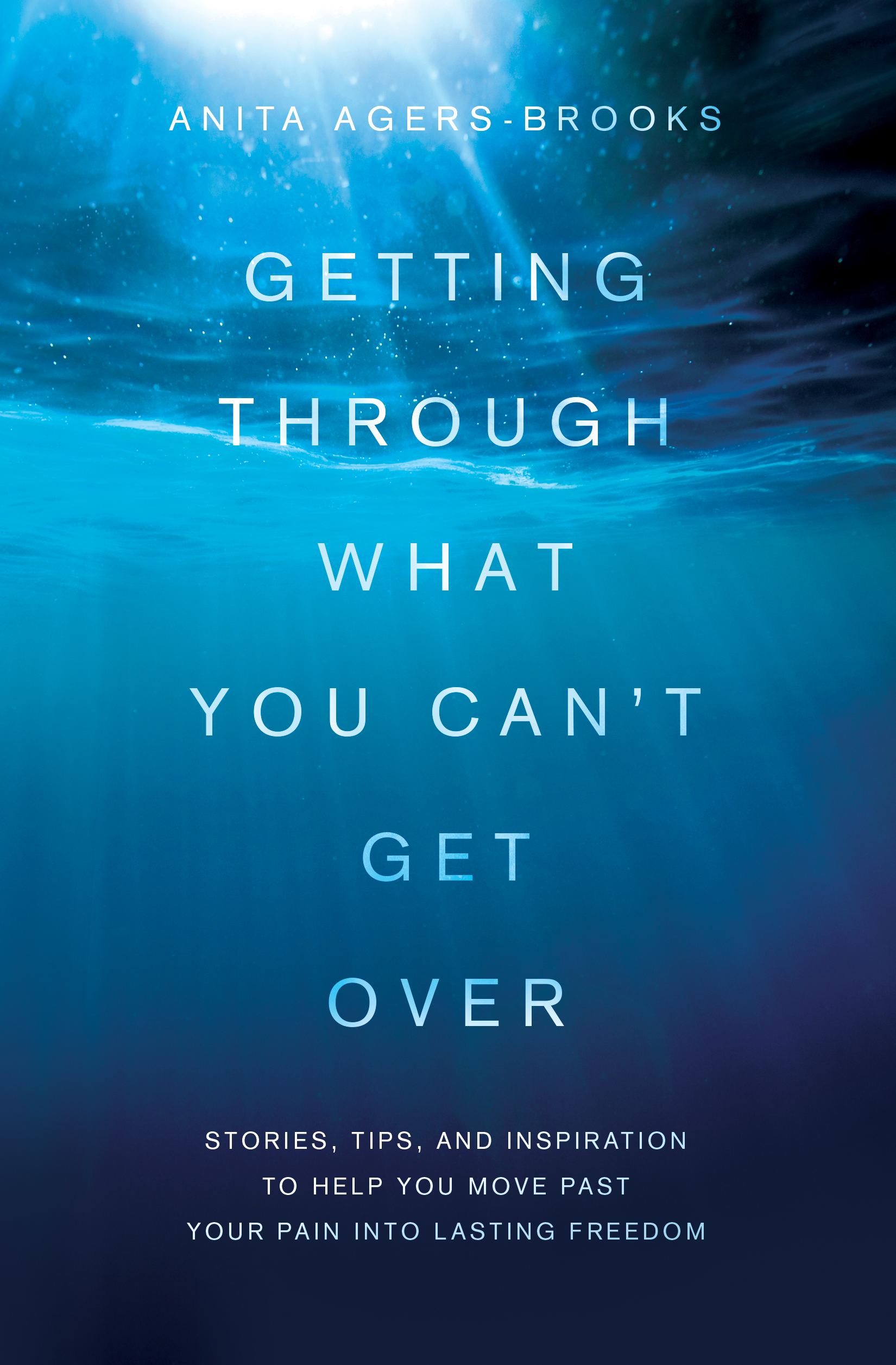
Extra ExtraSeven years later, I can report good news. I have two published books, First Hired, Last Fired: How to Become Irreplaceable in Any Job Market by Leafwood Publishing, and Getting Through What You Can’t Get Over by Barbour Publishing. A third, (one I was hired to write for someone else), will release in the spring of 2016, a new proposal is on the market, and I’ve contributed in two others. No one is more surprised than me.

Sometimes I still shake my head and give myself a pinch. Am I really a professional author and speaker now? Those dreams I journaled, those goals I put in black and white — are they truly my reality? Why, yes, they are.

It’s hard to believe only a few short years ago I seriously began to pursue my most secret desire. When I started this journey, I didn’t believe in my abilities. If I had, I wouldn’t have waited so long to get serious.

  1. What you have to contribute is just as valuable as what anyone else has to offer. Trust God’s call to write more than you trust your fears and comparisons. Dare to believe.
  2. Do something in regard to writing every day, (except your Sabbath). Research, blog, write articles, outline new proposals, brainstorm titles, interview someone, whatever it is, make sure that six days a week you are making forward motion in your writing career. But don’t discount any of it. Sometimes you will feel as if you didn’t accomplish anything because you didn’t type words into your computer, but if you conducted a new interview, or outlined a proposal, you were productive in your writing. So quit beating yourself up!
  3. Analyze all of the things you learned in past career fields, much of it will transfer to your writing career. I’m amazed at how my background in banking, accounting, marketing, and even manufacturing have given me insights and understanding about the business of professional writing. Nothing is wasted — including the time you spent doing those things. Don’t begrudge your past, express gratitude for its benefits.

Getting Through What You Can't Get Over Book CoverEach day that passes I become more comfortable in my own writing skin. I realize what I am compelled to put on a page can really help others. For instance, we’re now in the most depressing three months of the year, November through January. Getting Through What You Can’t Get Over will make an ideal gift for those who don’t know what to get someone suffering from anxiety, grief, PTSD, or depression. I can now make that statement with confidence, whereas three years ago, I wouldn’t have dared.

I guess what it all drills down to is something we hear many times as authors. It takes perseverance, tenacity, and determination to make it. If I could go back to the beginning of my career, I would encourage my newbie self to keep on keeping on every day. And there’s one particular thing I would add. I’d lean in close, cup my hand over her ear, and then I would whisper, “Never give up, buttercup. In the end, you’re going to make it. You become one of the one.”

Writing and Publishing for a Purpose

John Merritt: Writing and Publishing for a PurposeYEAH!!! There were times when I never thought my book would actually be on bookstore shelves or available online as it is today! It’s been a long and sometimes arduous journey to get Don’t Blink in print. Now that it is, I hope and pray that God will use this book for the purpose intended—to inspire Christians to live life to the fullest, and as a gift to our non-Christian friends who could use a different perspective on what the Christian life looks like.

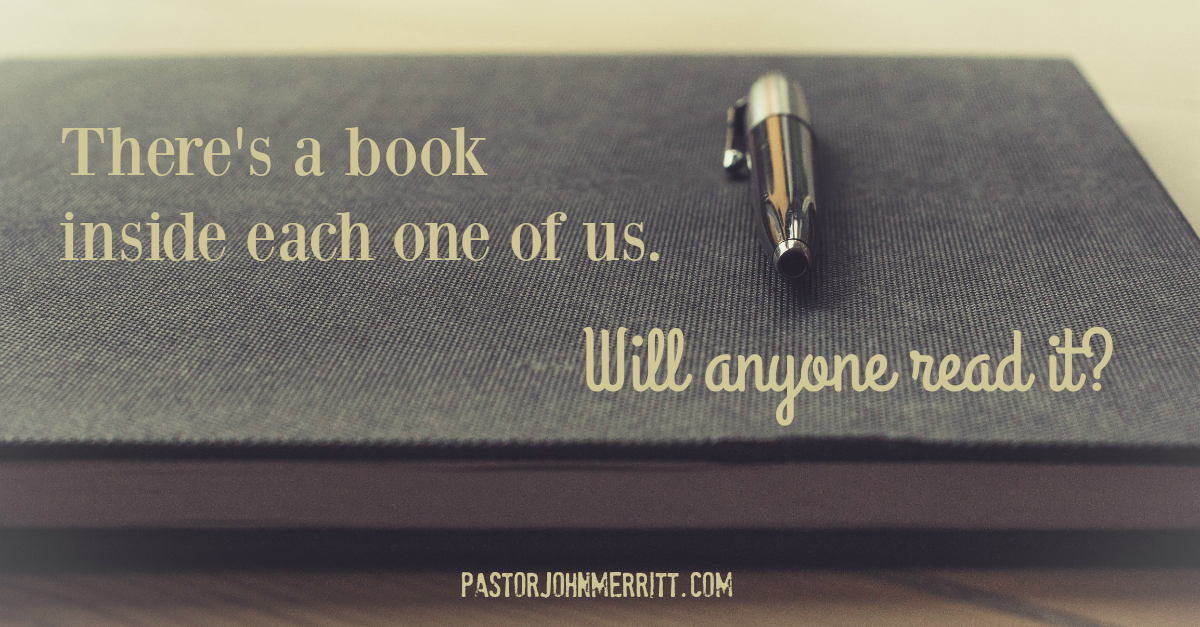
It’s been said that there’s a book inside each one of us. And while this is no doubt true, the big question is: Will anybody read it? I wondered that of my own book. And how do you know if people are reading it and benefiting from it? Ah, this is where social media provides some answers.

I’ve been transparent about my lack of passion for social media—especially my own! And yet, I am finding that this is not only where you get honest feedback but also transparent testimony of the effectiveness (or not) of what you are putting out there. In fact, reading some comments about Don’t Blink on the internet has provided confirmation that God is using this in ways that I had hoped and prayed for.

Here’s an example: After reading the first five chapters of your book, I have to say thank you for rekindling my sense of adventure! I have been dreading writing my company mission statement and personal bio, etc, for my website. You reminded me of my passion for life and to just go for it, with Jesus by my side! What could be better? I think I was getting a little stagnant or complacent. What an invigorating breath of Christ-filled air! After reading “Don’t Blink” poolside this hot afternoon, I dove in for a swim and it was GOOD TO BE ALIVE! I plan on purchasing copies for my father and my friends. Thank you!

I’ve been asked why I wrote a book, and responses like this provide the answer. I knew going into this project that 80% of men don’t read books. While my book has both a female and male audience in mind, I wanted men to find the book readable. So each of the 23 chapter starts with a captivating short story followed by a down-to-earth, real-life application. Seems like the book is keeping the short male attention span engaged—and I love that!

To all of you who have read or plan to read Don’t Blink: The Life You Won’t Want to Miss I thank you. And remember, I wrote it with your non-Christian friend in mind—so please share it. Would make a nice gift for someone you care about this holiday season that is almost upon us.

God’s best to you!

John

How to find your best influencers

Jan and Ron vertThe longer I’m in the writing business, the more I appreciate the importance of influencers in helping me build my audience and increase sales. What’s tricky for many writers, however, is figuring out just who and where those influencers can be found.

Unfortunately, after eight years and eight books of being a published author, I still don’t have a magic formula for identifying and recruiting those valuable assets for my marketing efforts. All I can offer you is my own experience and insights, so here goes:

  1. It’s great to have known experts or writers give you an endorsement for your book, but unless they are truly excited about your book and independently give it exposure in their own networks, the endorsement is just nice copy for your back cover, and won’t produce momentum in sales. Those experts are busy with their own marketing and projects, and the truth is, they give endorsements widely as a courtesy, rather than out of commitment to your publicity goals.
  2. The best influencers have a stake in your sales. Although my books sell around the world, my strongest sales come from a local gift shop because the store owner enjoys my books so much, she talks them up to customers and regularly features them in store promotional materials. Because of her enthusiasm, I’ve had more press coverage in local media than I could procure by my own efforts and a consistently growing word-of-mouth readership. As an influencer, she’s one of my best!
  3. You need to continually cultivate relationships with potential influencers. This means reaching out via social networking and/or physically traveling to meet people in your field of interest who might find your books of value in their own professional goals. To market my girl-meets-dog memoir, I make a point of connecting with animal rescue groups/animal humane societies online, and when possible, I attend their conferences/events as a vendor. I often give free copies to keynote speakers or other passionate animal lovers I meet, in hopes they will read and enjoy the book so much, they will mention it to others. Yes, this is basically a hit-or-miss method, but so far, I’ve always made a few excellent contacts and found one or two awesome influencers at such events. It’s well worth my time and money to break into a new group of potential reader-buyers.
  4. Connect with bloggers with big audiences in your target market and ask to send them a copy of your book in return for a review. Offer them additional copies to use as giveaways when they publish a review of your book, or whenever they might have a contest going on. Doing this gives you a reach well beyond your own social networks and local geographic area. I’ve met several significant influencers in this way, and they continue to give me promotional value with each new book.

What tips do you have for identifying and recruiting influencers for your marketing efforts?

Writing: Dreamers, Please Apply

Writers are dreamers. The two activities – dreaming and writing – work together. Of course, writers can be incredibly practical, churning out how-to manuals or crafting detailed textbooks. Writers can plan, strategize and develop logical plots within their stories. At their best, dreamers are innovators and so are writers. They are grounded in reality, even as they reach for what could be. Consider the following three characteristics of writers, and you’ll understand why dreamers need to apply for this job.


1. Idealistic – Even the cynical writer spewing a critique of society on the page is an idealist at heart. If you desire to express your ideas to change the world in some way, if you hope to educate or inspire your readers, if you think you have an insight to share, then you possess at least a touch of idealism.

When you hope to capture the attention of people with the force of your ideas without the benefit of the sound of your voice or the expression on your face, you must be a little idealistic or else you would not bother to try.

2. Futuristic – Writers look to the future even when they write about the past. Of course, science fiction writers take us to the future we have yet to create, often inspiring inventions once technology catches up with their imagination.

However, all writers reach into the future, crafting words to entertain and exhort readers years after the ink is dry on the page. Words can live on as text on the screens of tomorrow and as quotes on social media platforms not yet developed.

If you dream of a better tomorrow and believe you have a positive contribution to make, you just might be a writer.

3. Optimistic – You need faith to be a writer. You must believe that your manuscript will find a publisher, and your book will find an audience. You need to believe you are making a difference when you are spending quality time typing words in solitude.

Writers stay motivated with little feedback, persevering against the odds for the privilege of spreading their thoughts, beliefs and knowledge with others. Writers concern themselves less with making a living than with sharing their life with others.

Writers find the ray of sunshine on the cloudiest of days. They keep a spring in their step even when they feel at a loss for words. They believe in their dreams and the best of writers help others believe in their own dreams, too.

Are you ready to become a writer?

Creating a Vision for Your Writing Career

No doubt you have a vision for your writing career, but have you ever put it down in black and white? Taking some time to sort through and pray over your writing objectives can provide focus and direction for a solid future. If you do create a vision, here are a few pointers to help you brainstorm.map

Why Do You Write?

Make a list of all of the reasons you write. Write about the joys that come with writing – the way your senses sing when you’re in writing mode, the enchantment of building a story world, and the satisfaction of carving away the dross as you edit.

What does writing do for you as a person? Has it strengthened your work ethic or made you a better communicator, for example?

What does writing do for your loved ones? For a long time, I struggled with whether I should write when I had a family to take care of. But I finally accepted that though I have more time when I don’t write, I’m a more satisfied and centered mother when I do. Likewise, how does your writing impact your spouse, your siblings and your parents?

What does writing do for your readers? Even if you’re not published, maybe you’ve touched others through a blog entry or devotional. If you are published, think of some of the reviews and reader emails you’ve received.

Writing about your motivation might not seem essential, but it gives you something to come back to when you’re feeling discouraged, especially if you tend to second guess yourself. And it’s a good way to count your blessings.

What Holds You Back?

List everything that gets in the way of writing – other priorities, fear of failure, dry creative well, etc. Evaluate the obstacles and work out ways to overcome them, whether with self-talk to overcome doubt or jump-starts for writer’s block. Also, think about how you can honor your other God-given priorities, such as family and health, while being true to your calling as a writer.

What Is Your Writing Style?

Set out some basics, such as genre and style. List authors you admire and would like to emulate. Do you want to write spare or with a literary bent? Are you writing to the masses or to a niche? What kind of topics do you want to engage?

But don’t simply stick to the descriptions that define your writing for the market. In your heart of hearts, what do you want your writing to be about? Think of the nerve you want to touch in your readers. Bringing beauty alive, illustrating aspects of God’s character, or simply entertaining people in their harried lives can all be things that could go on your list.

What Are Your Goals?

Think of goals that are measurable and within your power, goals you can clearly illustrate that you’ve met. For example, finish a novel in a year or submit a proposal to twenty agents by March.

This is also the place to plan over time. How much writing will you do in a given period?  If you’re not published, what are you going to do to move toward that end? If you are published, what actions are you going to take to develop your career in the next year, over the next five years, the next decade? This is where plans for your future get laid out, so the more specific you can be about writing, marketing and networking, the better.

What Are Your Hopes?

In the writing world there is so much beyond our control. As long as you realize that there are no guarantees for some things, it’s okay to set your hopes out too.

So write out the dream agency and publisher you want for your career. Talk about the kind of sales numbers you’d like to see and whether you’d like to write full time as your only career. Write about how you’d like your books to be remembered. Then plan out ways you can encourage those things to happen.


WordServe News: October 2015

Exciting things have been happening at WordServe Literary!

On the final post of each month you’ll find a list of Water Cooler contributors’ books released this month along with a recap of WordServe client news.

Welcome, Nick Harrison

NHarrison-9

Greg Johnson is pleased to announce the hiring of Nick Harrison as a new literary agent for WordServe Literary. Nick has been an author and collaborator on multiple books, but the last 15 years he has been Senior Editor at Harvest House Publishers responsible for acquisitions of both fiction and nonfiction.

“Nick will add a depth to the team that the whole agency will appreciate,” says Greg. “He’s worked with top authors for many years, has seen first-hand how the industry has changed, and is well-equipped to serve new and established authors to help them meet their ministry and personal goals.”

Nick adds, “WordServe Literary was my first choice to work with after I knew my time at Harvest House was nearing its end. Their reputation in the industry, the broad list of authors they’re working with, and the company mission ‘to serve authors of faith in all of their creative endeavors,’ made this the right decision.”

Nick will continue to write and edit on occasion, but will be primarily building a client list of established and up-and-coming authors to represent. If you know of someone ready for representation, have them contact him directly at nick@wordserveliterary.com.


In Memoriam

51ODJUNvR9L._SX331_BO1,204,203,200_It’s not often a literary agent gets the chance to represent a real American Hero, but Jerry Parr certainly was. He died this month at age 85. After President Ronald Reagan was shot, Jerry was the Secret Service agent who shoved him into the car and checked the president for wounds. He made the split second call to get him to a hospital. Those split seconds saved the President’s life. He wrote a book that WordServe represented called In the Secret Service (Tyndale).  To read more, check out this link.


New Releases

51WEfKl9jvL._SX331_BO1,204,203,200_

Terry Brennan released The Aleppo Code with Kregel. It is the third book in The Jerusalem Prophecies series, following Tom Bohannon’s band of adventurers as they gather again in Jerusalem to examine a copy of the tenth-century Aleppo Code, the oldest complete text of Jewish scripture. Unfolding against the backdrop of an Israeli/U.S. strike against Iran and the planned economic overthrow of the European Union by the sinister head of the international Muslim Brotherhood, The Aleppo Code  is an epic conclusion to Brennan’s heart-pounding series.


41vFxYzYBNL._SX355_BO1,204,203,200_Greg Johnson released 101 Family Meal-Time Devotions with goTandem.

Each of the 101 five-minute readings in this book helps bring family devotions to life so families can make more of their time together at the dinner table. Relevant scripture passages and thought-provoking questions are included to spark meaningful family discussion and help children (ages 6-12) develop important Christian values.


41W-Tw5xKPL._SX355_BO1,204,203,200_


Paul Kent released The Real Force: A 40-Day Devotional with Worthy Publishers.

Many of the themes central to the Star Wars story reflect the same beliefs and core values of Christianity, as Paul Kent reveals in this engaging devotional. Each reading discusses a scene or character from the Star Wars universe, relates it to a contemporary life challenge, and connects it with relevant scripture.


41paoh06eEL._SX355_BO1,204,203,200_


Pam Ovwigho released Better Relationships, Better Life: Encouragement & Hope for Improving EVERY Relationship with goTandem.

Guiding readers through Colossians 3, Pam Ovwhigho helps readers put relationship builders into practice to help change the way we relate to others in every part of our life.


51ISI7aWHRL._SX331_BO1,204,203,200_


Wintley Phipps, with James Lund, released Your Best Destiny: Becoming the Person You Were Created to Be, with Tyndale Momentum.

Vocal artist and pastor Wintley Phipps unlocks eight secrets that reveal readers’ unique characters and help them grow stronger, overcome obstacles, and achieve what God has in store for their lives.


41PrHxpUdBL._SX355_BO1,204,203,200_


Tiffany Ross released A Servant’s Heart: 180 Encouraging Thoughts for Church Volunteers with goTandem.

Filled with 180 encouraging scriptures, prayers, and quotes that honor the ordinary heroes in our churches–volunteers–this book is an ideal gift, the perfect way to celebrate volunteers, and maybe even recruit new workers to step up and accept God’s call to care!


51Ry0h1ZHjL._SX331_BO1,204,203,200_


Jonathan Sandys & Wallace Henley released God & Churchill with Tyndale.

God and Churchill tells the story of how one man, armed with belief in his divine destiny, embarked on a course to save Christian civilization when Hitler and the forces of evil stood opposed. It traces the personal, political, and spiritual path of one of history’s greatest leaders and offers hope for our own violent and troubled times.


419PszQMIqL._SX355_BO1,204,203,200_Susie Shellenberger released 40 Days to Complete God Confidence with goTandem. Complete God Confidence shares forty engaging stories that illustrate the liberating assurance of 1 John 5:13-15: “I write these things to you who believe in the name of the Son of God so that you may know that you have eternal life. This is the confidence we have in approaching God: that if we ask anything according to his will, he hears us. And if we know that he hears us–whatever we ask–we know that we have what we asked of him.” Regardless of our struggle, we can have confidence in Christ.


51ofpet3AqL._SX331_BO1,204,203,200_


Karen Witmeyer released Brides of Texas with Bethany House.  A 3-in-1 collection, this volume brings together Karen’s bestselling and beloved books A Tailor-Made Bride, Short-Straw Bride, and Stealing the Preacher. Offering the best of inspirational historical romance, each story is set in a different location in Texas and contains plenty of adventure and humor with feisty heroines and rugged cowboy heroes.


New WordServe Clients

We’re pleased to announce that Bertram Hayes-Davis and Mark Affleck signed with WordServe Literary this month.

New Contracts

Stephen Arterburn and David Stoop signed a contract with Tyndale for 3 books: My Side of the StreetMy Side of the Street 365-Day Devotional, and Recovery of the Soul. The books will focus on moving towards relational health and on helping people in recovery find the spiritual strength they need by focusing on the four absolutes of soul recovery: honesty, purity, unselfishness, and love.

Jim and Lynne Jackson signed with Bethany House for their new book, Discipline That Connects With Your Child’s Heart, offering a Biblically informed approach to corrective disicpline that puts God’s purposes for parents and their kids at the forefront.

Jordyn Redwood signed a contract with Love Inspired Suspense for a new book, Fractured Memory, to be published July, 2016.

Kara Powell, Jacob Mulder, and Brad Griffin signed a deal with Kregel for the publication of Current Church, a research-driven book exploring how churches can effectively assimilate and attract younger-generation Christians.

Kara Powell also signed a second contract with Baker for an untitled non-fiction book to be published in 2018.

Angela Strong signed a 3-book deal with Mountain Brook Ink for her “Finding Love In” series. Finding Love in Sun Valley, Idaho will publish in early 2016; Finding Love in Big Sky, Montana will publish in fall 2016, and Finding Love in Park City, Utah will publish in spring 2017.

Janalyn Voigt signed a 3-book deal with Mountain Brook Ink for her new series, the Montana Gold Series. Tentatively titled Hills of Nevermore, Cheyenne Sunrise, and Stagecoach to Liberty, the books will be published in 2017 and 2018.


balloons-25737_640

What We’re Celebrating!

God & Churchill  by Jonathan Sandys & Wallace Henley reached #1 on Amazon in religious leader biographies!

Too Blessed to Be Stressed Cookbook by Debora Coty was named a 2015 Fall Okra pick, an honor given by SIBA (Southern Independent Booksellers Alliance) for “Great Southern Books, Fresh Off the Vine.”


The Heart of the Matter

Nothing is scarier for a writer than to feel that they are out of words. It happens to me, alarmingly often, and from what I hear I’m far from the only one. The condition is akin to a fireman turning his hose onto a blazing fire only to realize there’s no water. Except, of course, that would matter.

firefighter

It is the lot of writers, I believe, to constantly question themselves and their ability to produce anything anyone will ever want to read. And that’s what’s at the heart of what I feel on those melancholy occasions when I start to think I can’t produce such a thing. Does it even matter? If I never write another word in my life, would anyone care?

Two different questions, actually. I’m not entirely sure anyone would care, but I am fairly certain that it would matter. The reason for that is, while there is very little that my finite mind can comprehend about a holy, infinite God, I have come to realize something as I have written my novels. He is the giver of the stories. He is the creative source. I don’t think anyone who writes, or paints, or creates or plays music, can deny that there is a power outside of himself providing the inspiration.

And we are created in his image. Which means that we are creators too. Genesis contains no record of Adam and Eve writing or drawing or sculpting, but I’m sure they exhibited their creativity in many ways. Certainly they were the first witnesses to our wildly creative God in the plants and trees around them, and the endless parade of animals and birds and sea creatures passing before them to be named.

Thankfully, creativity continued to flow after the fall, a kind of compensation maybe, a gift from the Creator. So that yes, there would be pain and suffering and sickness and disease in the world now, but there would also be music. And the music would lift us, if only for a while, out of the pain and sorrow and give us the strength to go on.

And there would be ugliness, and destruction, and the gradual disintegration of the planet, but there would be beauty too, in paintings and sculptures and stained glass and architecture. And that beauty would remind us that the God who painted the sunsets and sculpted the mountains and formed the stars is near to us even when he feels far away.

And work would be hard and we would struggle to survive and there would be war and conflict and death, but when we needed to escape the harsh reality of the world around us, we could pick up a book and get lost in a story, or be swept away by words of poetry, and remember that there is another world, and that we are only temporary sojourners in this one, and that, even here, we are never alone.

So it matters. It matters that we accept the gift from the creative God who calls some of us to paint, or to play an instrument, or to write. And if I feel like I don’t have any words of my own, it’s because I don’t. But I can trust the keeper of the words to give them to me when they are needed–to bring joy or offer comfort or provide hope.

And that is all that really matters.

A Writing and Publishing Journey

So John, tell me about the writing of your book. How long did it take? What did you learn about publishing? What was the most enjoyable and most the difficult part of the process?

Pastor John Merritt, Discover. The Writing Journey

I’ve been asked questions like these numerous times in recent months. And since my first book, Don’t Blink, ready to be released in November (EBook is already available)—I thought I’d share what I loved and what I did not love about becoming an author (things you may consider if you have thoughts of becoming an author yourself).

What I loved: The actual writing of the book that took place during a six month sabbatical. I’ve always enjoyed writing, telling a story and making biblical application out of real life experiences. What I didn’t know was that writing the book was the easy part—let me tell you about the hard part.

Don’t Blink is for procrastinators, dreamers, and would-be adventurers who wish to grab hold of life this day, knowing there are no guarantees about someday. From Alaska to Argentina to the Amazon―in situations ranging from dangerous to humorous―John Merritt takes you on a daring pilgrimage revealing what living in the moment looks like. John demolishes the notion that once you become a Christian your freedoms are gone and your fun is done. Life is an extraordinary adventure elevated to audacious heights when God is leading the charge.

What I didn’t love: The first thing I didn’t love was when I was advised to hire a professional editor who proceeded to get out her electronic red pen and essentially let me know how unaccomplished my writing was. In the end I was thankful for her coaching because the result was her finally telling me, “John, you’ve found your writers voice.” But that required many tedious rewrites that took longer than the initial draft.

A second thing I didn’t love was the realization that unless I was able to find an agent willing to represent my project I had no chance of getting a publishing house to even consider my work. Finding Alice Crider (then with WordServe, now with Cook) was a God-send and was not easy. (Note: Because of the difficulty in getting an agent to represent you, self-publishing is sometimes your best option.)

A third thing I didn’t love is the months it took for my agent to find a publisher who was interested in my book (took an entire year). There are many reasons why a publisher says no to a writer but the main one is market share. Publishers are in the business of selling books, and if you are not able to prove that you have a large audience who will buy lots of books, it really doesn’t matter how good your content is.

A final thing I don’t love is all the marketing of the book I must personally do because no one else is going to do it (not even most publishers these days). Because I’m not good at social media I’ve employed a person who I’m greatly indebted to (Leah Apineru with Impact Author Services, Colorado Springs) who built and maintains my website and posts my blogs. But I’ve always hated self-promotion and leaning on my friends to get the word out—sorry!

Why I wrote it: Given that being a published author is much more difficult than I ever imagined, why did I hang in there and spend lots of my own dollars in order to get my book out there? Simply because I think it will help Christians like yourself discover that God has an adventure designed just for you that will elevate your life each day. And what elevates the purpose of the book for me is if people like yourself find the book to be a good one to pass along to your non-Christian friends who could use a different perspective of the Christian life. If the publishing of “Don’t Blink” results in spiritual explorers becoming followers of Jesus then all that I didn’t love about publishing will be worth it!

John Merritt's Don't Blink TribeToward that end, I’m looking for friends who share that same passion and will help me by reading the book and then sharing it with your friends and family members. Currently Don’t Blink is available in EBook form through Amazon, Kindle, iBookstore and Barnes & Noble Nook. The paperback is due to be released November 10 and you can pre-order a book now. If you would like to learn more about joining the tribe, email: impactauthor@comcast.net.

Please connect with me on Facebook
Google+
Twitter

Thanks everyone!
John