Don’t ride . . . DRIVE the train!

trainAbout fifteen years ago, while taking a graduate course in Spirituality and Leadership, I had a professor who presented me with one of the most motivational sayings I’ve ever encountered: “Don’t just ride the train, be the engineer!”
Okay, maybe not the most theological statement I heard in the course of my graduate program, but it lit up my brain in ways I’d rarely experienced since finishing my undergrad degree decades earlier. Knowing myself to be an introvert and nonconfrontational, I’d always preferred to have someone else take the lead in projects at work; the only role in which I felt confident enough to be in charge was as a mother to my children. (Looking back, I can only say that ignorance was truly bliss, but that’s another post or two or a thousand.)

But the moment my professor uttered that directive, I had an epiphany that any writing career I wanted to pursue was going to demand that I drive the train, and not just ride along on whatever might come my way. As a result, I began to view writing as a vehicle I would steer, and, when necessary, refuel with energy and hard work. I also accepted that no one else cared as much as I did whether that train finally arrived; not even the support of spouse, family and friends (as important as that is!) would bring that train into the station if I didn’t commit myself to being the engineer.

I share this story with you because every writer needs to know that writing requires you to make that train your own: if you want to be successfully published, you have to learn the business, and these days, that means EVERY aspect of the business: writing craft, understanding your audience, marketing, platform building, travel requirements, publishing trends. Gone are the days when your publisher says, “Thanks for writing this swell book. We’ll take it from here.” Even your agent – if you’re fortunate enough to land an agent – can’t hold your hand through every stage of book development, because she or he is swamped just trying to navigate a path to publishers through all the layers of the industry – layers which can shoot down a book proposal for reasons of marketing or audience or numbers of your social followers, which may have nothing to do with the actual value of the book you’re creating.

You have to take ownership of your career. You have to drive the train to where you want it to go.

And that may be the biggest plus of being the engineer – you can CHOOSE where you want your career to go. It will take hard work and learning from the experience itself, but if you find you’re being called to write romance instead of devotionals, or humor instead of profiles, or politics instead of fiction, you can steer that train of your writing career onto different tracks, and see where it takes you. Maybe it will only be a short detour and you’ll end up at your original destination. That’s great! Then again, it may be a whole new journey on the writing rails.

Are you ready to drive the train?

The Splash-Launch vs. the Slow Build

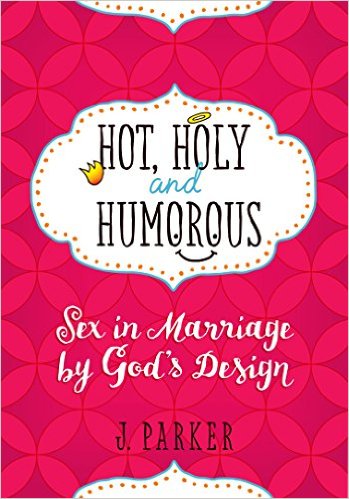
51L8nL3LvpL._SX347_BO1,204,203,200_My new book, Hot, Holy, and Humorous: Sex in Marriage, released the same week that my oldest son graduated from high school. Although I was excited to finally see my book out, this was not excellent timing for me and my family.

Consequently, I didn’t do a lot on day one, day two, or even a few days after the release to promote my book. I was too busy pulling together the final details of the cap-and-gown experience for my son. The way I figured, I’d spent a few years working on my book, but eighteen years working on the kid – so the latter won out.

But all that is okay, because I’m not a big believer in the splash-launch. Not that I’m against it in the least! It’s wonderful when a much-anticipated book hits the shelves with well-deserved fanfare. Seriously, a book is not easy to birth, so cue the fireworks! However, a big splash isn’t what really matters for the long-term success of a book.

fireworks-227383_960_720

In the music world, we all know about the one-hit wonders who burst forth on the scene with as much hoopla as Mardi Gras in New Orleans. And then…they were gone. Sure, the splash rippled outward, but eventually the waters calmed.

Meanwhile, Aerosmith’s first album only hit #21 on the charts. But we all still know who they, and lead singer Steve Tyler, are. This rock-and-roll band caught some attention right out of the gate, but they built that into a legacy.

I’m looking toward the slow build for my book, snowballing interest and excitement into long-term sales and a devoted readership.

How can you take the long view of book sales?

Spread out your marketing efforts. Rather than focusing all of your efforts upfront, choose strategic activities for your launch and hold off on tasks that can be effectively pursued later down the road. Maybe you need to focus on interviews now and delay the blog tour, or do giveaways at the beginning but hold a larger contest later in the year.

Create a marketing plan calendar. I’m blessed to have a writer friend of mine who sat down and developed a marketing plan for me that goes for a full year. Among her wonderful ideas were capitalizing on special days throughout the year—linking my book and sales specials to appropriate holidays or awareness days. Also look for local events, conventions, and ministry conferences that suit your goals.

Engage regularly with your audience. Some authors inundate social media with news, pictures, updates, etc. all around release time, and then it’s crickets-and-cicadas for the next six months. Continue to interact with your readers and potential readers! Those who’ve already read your book will feel more comfortable recommending it to others if you are less spambot and more real person. And potential readers will get that nudge from time to time and may finally buy your book – the one from that nice author they keep seeing.

Write more quality books. Of course, the best long-term approach to selling books is to write more quality books. Having more offerings gives you more shelf space, raises your discoverability in online bookstores, and makes you a brand in readers’ minds.

Indeed, I’ll be marketing Hot, Holy, and Humorous from now until it goes out of print, but I’m also working on the next book. And let’s hope that one doesn’t release in the same week my other son graduates.

WordServe News: June 2016

Exciting things have been happening at WordServe Literary this month!

On the final post of each month you’ll find a list of Water Cooler contributors’ recently released books along with a recap of WordServe client news.

New Releases

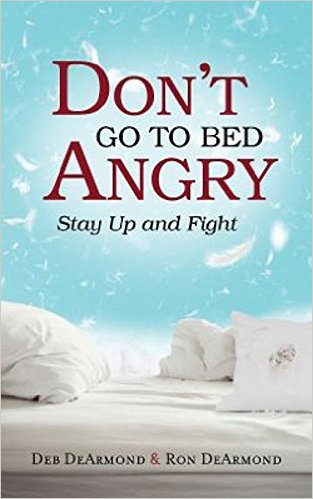
dont goDeb and Ron DeArmond released Don’t Go to Bed Angry: Stay Up and Fight with Abingdon Press. Combining a healthy dose of personal experience with relationship-affirming biblical wisdom, Deb and Ron demonstrate how communication through conflict can lead to greater insight and understanding of thoughts, feelings, and perspectives that can safeguard–and even strengthen–your relationship.

jordan


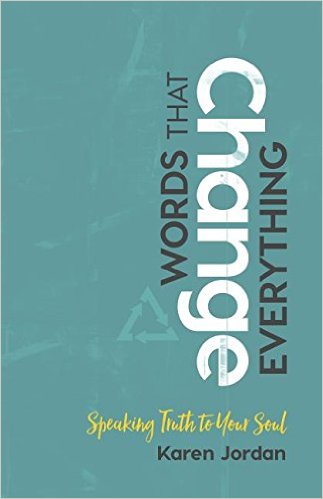
Karen Jordan published Words That Change Everything with Leafwood Publishers. With true personal stories and Biblical applications, Words That Change Everything offers hope and practical strategies to help women speak God’s truth to their unbridled and often debilitating emotions.

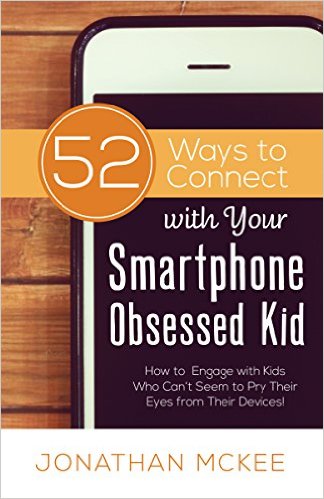
mckeeJonathan McKee released 52 Ways to Connect with Your Smartphone Obsessed Kid with Shiloh Run Press. Drawing from his 20-plus years of experience working with teenagers, studying youth culture, and raising three teens of his own, Mckee provides an abundant supply of useful tips and creative ideas to help parents have meaningful interaction with kids hooked on their devices.

51pSKRR-6ZL._SX322_BO1,204,203,200_

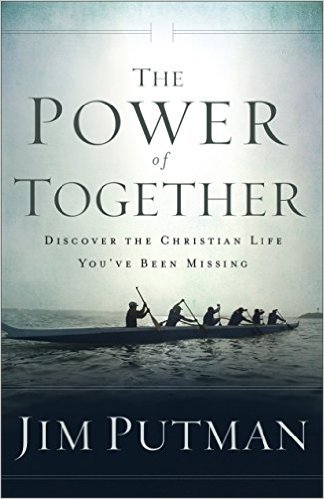
Jim Putman published The Power of Together with Baker Books. An in-depth, biblical look at the critical importance of doing life in close fellowship with other believers, this book draws readers closer to their spiritual family and to Jesus than ever before.


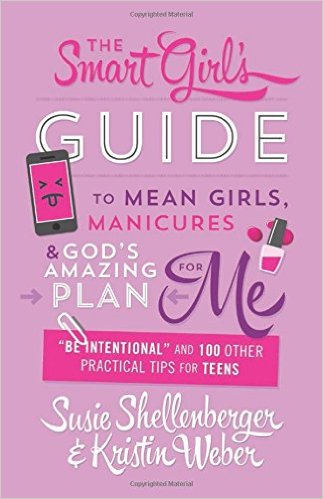
51+ISQJmp1L._SX321_BO1,204,203,200_Susie Shellenberger and Kristin Weber released The Smart Girl’s Guide to Mean Girls, Manicures & God’s Amazing Plan for Me.  Melding spiritual and practical advice with humor, this guide offers 100 practical tips to help teen girls navigate the ups and downs of life with grace and confidence.

New Contracts 

Carole Engle Avriett signed with Tyndale to publish Under the Cover of Light, the true story of Col. Thomas Jerry Curtis, whose helicopter was shot down in Vietnam and who spent 7 years in Hanoi as a POW.

New Clients

Tim Riter, Frank Sievert, and Naomi Overton signed with WordServe this month. Welcome!

What We’re Celebrating

Terry Brennan‘s book The Aleppo Code is a finalist for the 2016 Carol Awards! Winners will be announced August 27.

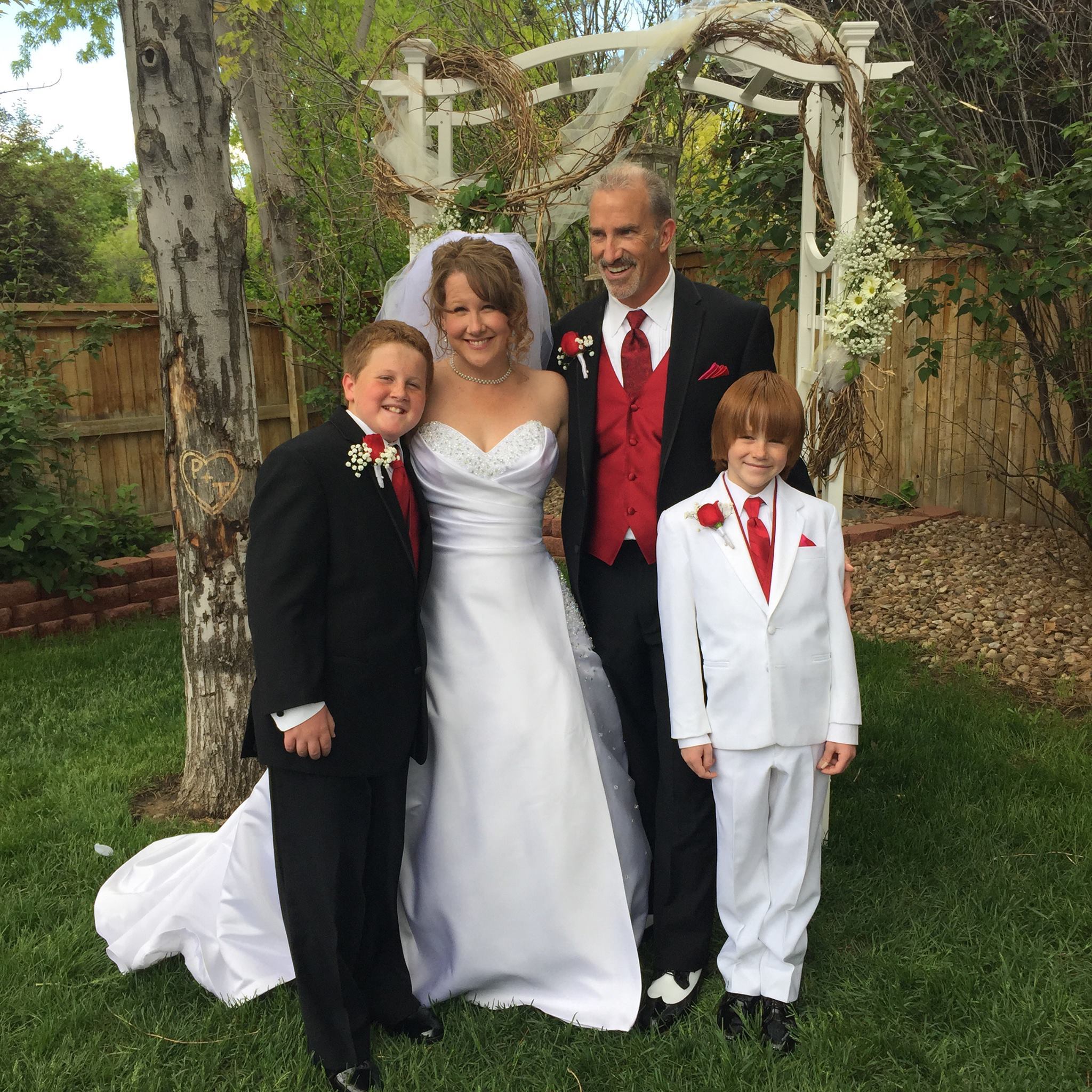
Tricia Lott Williford was married to Peter Heyer on May 28. Life and Love took some time, but they did come back. Congratulations, Tricia and Peter!tricia

How to make your readers SUPERfans!

supermanWhen you have a book published – be it in print or ebook – you want to get as much publicity as possible to sell copies, right?

Right!

Do your fans know this?

Well, yes, I think they do.

You THINK they do?

Here’s my suggestion: tell them you need their help to generate that publicity. You need their word-of-mouth to help your book get launched amidst the thousands of books that are available.

You need to give them the 3 Rs of superfans: Read, Review, and maybe most importantly, Rave!

With the launch of my newest suspense novel, Heaven’s Gate, I put together a launch team of thirty readers who agreed to read and post a review on amazon.com and whatever other social networks they had, along with any word-of-mouth recommendations they might be able to give. Like many writers, I’m not especially fond of online marketing because it takes a lot of my time, but the fact is, writers in the 21st century need to cultivate their presence on it. (I, personally, have had varying success with different networks, but I continue to learn and work at it because I’ve seen its value at different times. Let’s face it, if there’s a gathering of readers anywhere – even online – don’t you think an author would be remiss to ignore it?) What I’ve discovered since my book debuted last month, however, has added another piece to my formula of reading and reviewing: you need readers to RAVE about a book to influence others to buy.

So far, maybe this seems evident to you, but this next comment might catch your attention: I learned that you need to tell your readers what to write. I don’t mean give them a script – you  want their honest reaction. But what you need to do is empower your readers to write raving reviews, which result from two things: an awesome reading experience (which you have crafted with your book!) and a vocabulary that will reinforce what you want them to say.

Simply suggest key words you’d like your reviewers to use.

At first, I felt odd suggesting words to my readers to use in constructing their reviews. Then I realized that key words are…well…key. Keys, actually, to triggering the all-important call-to-action that every author needs to make to potential readers: You Need To Buy This Book Now. And guess what? Your reviewers are often very grateful to have your suggestions, because they want to write a strong review for you, but are often lacking in promotional experience and don’t know how to best help you with their review. I asked my reviewers to use the words suspense, supernatural, Archangels series, faith and science, String theory, fast ride, and thriller. They did, and as a result, the reviews for Heaven’s Gate present a consistent rave of being a book you can’t put down, which has cued new readers to order the book.ebook

Remember, your fans want you to succeed. Making it easier for them to help you is the least you can do!


What Actors and Authors Have in Common

Writing is a Personal JourneyI was watching Jimmy Fallon’s Tonight Show when it struck me. Jimmy greeted the actor with a cheek-to-cheek kiss, before ushering her to the comfy studio couch so they could share a cup and a chat.

After some banter about a recent encounter they’d had at the party of a mutual friend, they discussed some morsels about their personal lives, focusing on commonalities they shared. Then they got to the real reason for the staged visit.

Fallon gushed, as he introduced the new movie title. “Gosh, it’s so, so good. I just love it. I mean when you… Oops. I almost spoiled it, but it’s just that good.”

Listen So Others SpeakThe actor giggled. “Thanks, Jimmy. I was honored to play this role, I know I’m supposed to say I love it too, but I really mean it. This is probably my favorite project so far. I only hope the people who watch it are touched as much as I was making the film.” She raised her hands in the global prayer pose symbolizing humility.

As I watched their interchange, I reflected on other shows I’d seen her on, and her other movies. It seemed every year she was cast in a new release, some blockbusters, some with a cooler audience embrace. That’s when it hit me — how similar a successful author’s experience is to that of an actor.

My third published book just released, and as I promote it, pursue the next big project, while juggling my personal life in the process, I realize the importance of strategic planning. I wish I had the resources, connections, and energy of a Hollywood public relations machine behind me, but even without, I can learn from their methods.

7 Common Factors Between Actors and Authors:

  • Getting Through What You Can't Get OverThe actors are the face of the movie, so no matter what anyone else does behind the scenes, it is the actor who must make public appearances and visit shows on the interview circuit. An actor’s passionate voice, joined with an intriguing movie trailer, is what drives audiences to theaters and streaming sites. For authors, it’s no different. We are the face of our books. Our passionate voice about our message, mingled with intrigue about our book’s content, is what drives readers to want to know more.
  • Each actor brings their own distinct personality to promotion. Some outgoing and bubbly, some serious and reflective. Both work, they will simply attract those of similar taste. Be who you are as an author, and allow natural attraction to draw people.
  • A fresh movie release shifts the actor’s focus to a new message. As authors, I think hearing the branding mantra sometimes makes us sound stale and boring — think broken record. Personally, I believe it’s not only acceptable, but interesting, if we moderately mix up our messages, while staying true to who we are.
  • Getting Through What You Can't Get Over EndorsementA good actor hunts for new scripts and contracts — sometimes preparing for years before they can make a movie they are excited about. Successful authors should do no less. Keep your ears open for hot topics, and drop ideas, research information, quotes, and more for future books into a program like Scrivener — Getting Through What You Can’t Get Over started this way.
  • Most actors would prefer to spend more time on their craft than on marketing, and many authors feel the same. However, actors and authors both know that without solid marketing, we won’t get the opportunity to do another new project.
  • No matter how many shows an actor guests on, if the movie is lousy, sales will spiral. The same is true of our books. We can’t get around it. Good content is, and always will be, the marketing king.
  • Actors cannot produce inspiring art alone. They require support people like agents, fellow actors, experts in PR, producers, directors, etc. Authors also need a group like this to expand their message reach.

The more I reflect on what it takes to release a successful movie, the more I see the connection to releasing successful books. The Hollywood model has worked for decades, which tells me that as much as things are changing, some things stay the same.

What commonalities between actors and authors do you see that I failed to mention?


Question Everything

4835f5cfdc4709cbd181840ec9e16f16

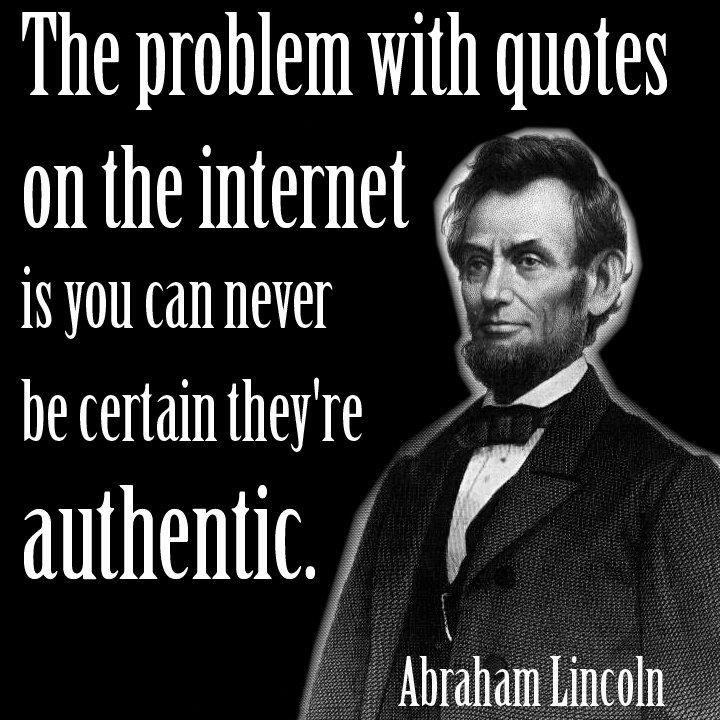
I wish I could take credit for the internet quotation, “The problem with internet quotations is that you can never be certain they’re authentic.” And who gave us this helpful reminder? If you Google it, you’ll find it was Abraham Lincoln.

Yeah, that’s ironic, doubly so when the quote and attribution are laid over an image of Benjamin Franklin. I’m hoping that second irony was intentional as well.

Some inaccuracies are funny. But bloopers, blunders, and blatant boo-boos in our Christian books aren’t. Certainly in our non-fiction, but even in the background details of fiction, we have a responsibility to our readers to provide accurate, correct information. (We do serve Jesus, who described himself as “the Truth.”)

Today, I encourage you to “question everything.” Why? Well, if you happen to Google that phrase, you’ll see it attributed to Euripides . . . no, wait, it was Albert Einstein . . . no, Socrates . . . or maybe Maria Mitchell. (Who’s that? Let’s see . . . Wikipedia offers two possibilities: an American astronomer or an Australian actress and singer.) There’s even an online forum discussing the question, “Isn’t there a Bible verse that says, ‘Question everything’?”

My point is simply this: Writers have a world of information at their fingertips, and it’s very easy to find an online quotation, fact, date, or story that fits their manuscript perfectly. Unfortunately, a certain amount of that information is just going to be wrong.

I could offer countless examples I’ve run across in my day job as a copy editor. But here are just a few, under two troublesome categories:

Questionable quotations:

Mark Twain was right: “Kindness is the language which the deaf can hear and the blind can see.”

Sixteenth century French theologian and pastor John Calvin wrote, “To make intercession for men is the most powerful and practical way in which we can express our love for them.”

Question every quote attributed to a famous person, especially if you found it on an internet quote site. Or, to put it another way, don’t believe everything you see on BrainyQuote, Goodreads, et al.

Here’s a well-researched article describing the “Mark Twain quote” above: http://quoteinvestigator.com/2013/10/26/kindness-see/. And if you search that “John Calvin quote” in Google Books, you’ll find it’s not actually from Calvin, but from a book about Calvin.

Google Books and Amazon’s “Look Inside” feature are indispensable tools for verifying quotations. But even if you determine a quotation is correctly worded and attributed, you should still question its context. Elaboration follows, after this link to a pretty funny article on internet quote sites in general: http://www.slate.com/articles/arts/culturebox/2014/05/quote_websites_are_frequently_inaccurate_but_we_use_them_anyway.html)

Concerns over context:

So you’ve found and verified a great quote for your manuscript . . . now take a few moments to “read around” that quote and to look up the author. You may find that the words come from a volume of unorthodox theology, a racy novel, or the pen of a white supremacist (all real-life examples). Those facts don’t necessarily disqualify the quotes, but you should be aware of their source—do you want, however unwittingly, to appear to endorse these writers?

Bible quotations should always be scanned for their larger context, too. What do you think of this one, from Jeremiah 26:14?

 “As for me, I am in your hands; do with me whatever you think is good and right.”

One author used these words as a beautiful example of Jeremiah’s surrender and submission to God. In actual context, the prophet was speaking to the priests and prophets of Judah, who hated his message and were threatening to kill him.

It’s incumbent on writers (and later, editors like me) to ensure every assertion in our book is accurate. And that may take a visit to two, three, or a dozen web pages to get to the actual story. (Not just Wikipedia . . . it’s a good starting point, but double check what you find there too.) If there’s one thing I hope you take away from this post, it’s this: Don’t believe everything you read online.

Why? There are three big benefits to you as a writer. First, you’ll keep your editor on your side. Second, you’ll keep your readers on your side. Third, if you accomplish the first and the second, there’s a greater chance you’ll keep your publisher on your side (and maybe get future contracts).

As an author, you are putting yourself forward as an expert on your topic. Don’t hurt your credibility by believing the first internet page you open. For everyone’s sake, dig deeper. Question everything.

Trends in Book Discovery

infographic-v2

What is publishing all about these days?

  • Writing?
  • Editing?
  • Packaging?
  • Posting an ebook?

Nope. None of the above.

It’s about FINDING READERS!

The loss of retail, magazines, religion sections in newspapers… the discoverability factor has greatly decreased. Which is why publishers are so dependent on authors to find readers (through author tribes) and on their ability to social network their way to a best seller. Which, in case you haven’t already experienced, happens about .01% of the time.

So when I saw some data about my favorite topic—FINDING READERS—I thought you ought to see it.

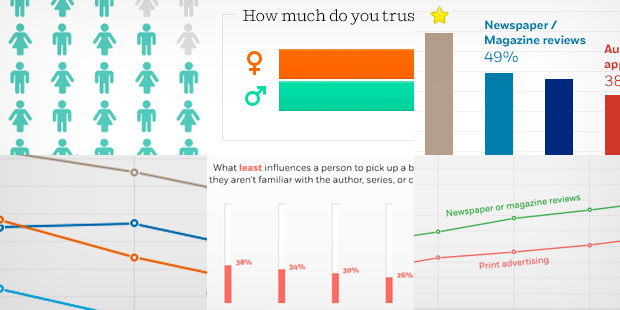
The following is based on data compiled by the Penguin Random House consumer insights team, which polled more than 40,000 readers about their reading and buying choices.

  • When asked what is most influential to readers when deciding what book to read next, 81% said recommendations from friends and family. Word of mouth, whether about movies, agents, or book sales, is always the key deal.
  • How do readers discover books? 70% said they use Goodreads; 49% said newspaper/magazine reviews; 46% said Facebook; 38% said author interviews/appearances; 37% said blog reviews; 23% said print ads; 15% said Twitter; and 14% said another form of social media. I’m wondering if the 40,000 readers they polled were from Goodreads. Still, this was more eye-opening than I would have guessed.
  • The survey found that as readers age, blogs and social media become less relevant as a way to discover books. Among survey participants under the age of 40, more than 80% use Goodreads and more than 60% read blog or web reviews. This steadily decreases with age; for readers in their 50s, 75% use Goodreads and 40% read blog and web reviews; for those in their 70s, the numbers drop to under 60% for Goodreads and only 20% for blog and web reviews. I guess we realize with age that there isn’t much time to read all of those books we bought but haven’t read, so we don’t need anyone else telling us what to read.
  • Conversely, print reviews and advertisements become more relevant with age. For readers under 40, 40% read newspaper and magazine reviews; for those in their 50s, the number is closer to 60%, and for those over 70, the number who read newspaper and magazine reviews is 70%. Print advertising follows a similar trajectory, with 20% of those under 40 relying on print ads to discover books, as opposed to 30% of those in their 50s and nearly 50% of those in their 70s. It must be the fact that there are pictures and not very many words. Easier on the eyes.
  • When it comes to gender, women are more likely than men to trust recommendations from friends and family (79% of women trust the recommendations, while only 66% of men do). The same is true of recommendations from Goodreads, 70% of which women trust, compared to only 57% of men. Men don’t gravitate toward asking for directions when driving, and evidently on book buying. What’s wrong with us?
  • Men are, however, more likely to read newspaper and magazine reviews; 54% of men trust such reviews, as compared to 49% of women. When it comes to print advertising, 26% of men trust it compared to 23% of women.
  • When asked what most influences them to pick up a book if they are not familiar with the author or series, readers said that they are likely to do so if they like the subject (88%), read a good book review (87%), or get a friend’s recommendation (86%). Slightly less influential are reading an excerpt (76%) or an online review (76%). Least influential are the recommendations of a salesperson (38%); the publisher’s reputation (34%); seeing an ad (30%), recommendation by media/personality (26%); and needing a book for school or work (25%).

As Mark Twain once lamented, “There are lies, damn lies, and statistics.” While I applaud Penguin Random House for spending the money on this survey, some of which was eye-opening, I’m not sure what it all means for authors except they will be even more encouraged to do their own marketing than ever.

Here is the one truth that everyone agrees with when it comes to author marketing: email addresses.

If you have them, you’re golden. How many? 5,000 is nice, 10,000 is better. Time to check out MailChimp, time to offer free stuff, time to really focus your brand and what felt need you’re meeting, and time to become an expert in direct mail to your audience.

Another Sacred Moment: Launching My First Book

Photo/KarenJordanIn my first post on the WordServe Water Cooler blog few years ago, I wrote about “Embracing Sacred Moments” in our lives. In that short piece, I mentioned a couple of writing firsts for me—my first contract to write an article for a well-respected publication and my first call from a WordServe agent, signing me as a client.

This month, I’m experiencing another first—the launch of my first book.

But as I prepared to write this book, a sudden and disturbing vivid memory emerged from a time when I stepped out of my comfort zone to serve. I still feel the embarrassment of that day when I helped prepare the noon meal after a revival service in my hometown church.

A million doubts and fears raced through my mind that morning. Was my skirt too short? Were my heels too high? Were my clothes too tight? Would someone ask me too much about my personal life? Why did I even come here in the first place?

Since I was the youngest and newest member of the ladies’ group helping that day, someone nominated me to pass out rolls to everyone.

I stacked the rolls high on a large platter, hoping to avoid a second trip to the kitchen. But as I pushed the swinging door open with my back, I tripped and fell to the floor, propelling everything across the room.

I can still recall everyone in the room gasping at the spectacle I had made of myself.

BookCover/WordsThatChangeEverythingAs I wrote my first book, Words That Change Everything, my old fears and worries resurfaced, reminding me of that humiliating experience. Do I dare expose more of my failures, worries, and vulnerabilities with an even larger audience? What if I make a total fool of myself again in front of my friends, family, and total strangers as they read some of my life stories?

Then, I remembered what I learned from my earlier failed attempt in serving others. Forty years after I humiliated myself in my home church, the pastor’s wife invited me to speak in that same fellowship hall at a women’s ministry event. And I shared my humiliating “tossed roll” story, revealing some of my own worries and vulnerability.

God gave me an opportunity to revisit and overcome a moment of failure in the same context and venue, four decades later, as I stood on this promise from God’s Word: “My grace is all you need. My power works best in weakness” (2 Cor. 12:9 NLT).

So, even though I’m a little apprehensive about revealing some of my most intimate stories in my first book, I’m excited to share my story with the world—Words That Change Everything: Speaking Truth to Your Soul.

Why? Because I also believe in the power of story—as we share the stories that matter most, lives change and hearts heal.

Did my story remind you of a story in your own life?

Why Marriage (and writing) Needs a Third

Why Marriage(and writing)Need a Third

“Two’s company, three’s a crowd,” we are told. But sometimes that is not true. Both in marriage and in writing.

Writers can’t just write about writing. It’s tedious. Not to mention boring to the non-writer.

Nouns, verbs, and prepositional phrases can only interest a person for so long, but put those same words in a story, and a writer has the ability to capture imagination.

Writers need a third thing–something “to gaze out at” according to author Natalie Goldberg in her book, Old Friend From Far Away: The Practice of Writing Memoir.

Sometimes the writer has no plan or control of what that third thing will be.

“We must find the third thing,” Goldberg writes. “And we cannot afford to be fussy. How a pothole is formed holds our interest. A kind of cheese, a license to own a beauty parlor, a felt slipper, someone’s toothache, all are fodder for our pen….”

Or staples. Staples can be the third.

This week I decided to re-do my kitchen chairs. I can’t remember what fabric originally covered the chairs when my grandmother owned them. After my mom inherited the chairs, she covered them in a cream-colored fabric, material that was now showing years of stains:

  • Stains from family dinners of scalloped potatoes, ham, frozen peas, and orange jello served in goblets Mom and Dad received as gifts at their wedding in 1957.
  • Stains from years of grandchildren learning to eat cheerios with a spoon, but invariably milk dripped down toddler chins and pooled on the fabric.
  • Stains from card games around the table, with fingers needing to be wiped of popcorn grease, and the cushion serving as a giant napkin.

Decades of stains.

I flipped over the first chair, a testament to the importance of life around the table, to begin removing the material from the cushion. I encountered staples.

Many, many staples.

As I pulled them out, I began counting. Twenty…thirty…forty.

The kitchen table was soon covered with flying metal projectiles. Sixty…seventy…eighty.

recovering a kitchen chair

I began to laugh. I knew, without being told, that although my mom selected the fabric, my dad was the one who stapled the material in place. Although neither was alive to ask, the unseen surface of the bottom of the cushion told the tale of a man who was legendary for taping the wrapping paper around Christmas presents so securely, that a knife or scissors was needed to open the package.

Mom was the project idea person. Dad was the implementer of the plan. 

Like writers, Goldberg contends, couples also need something “to gaze out at” for time cannot always be spent looking face to face, but rather, also, side by side.

Projects were my parents’ third. As was family. And faith.

I pulled out the last remaining staples holding the dingy cream fabric. Eighty-five. Did the chair cushion really need eight-five staples to hold the material in place?

“What are you doing?” my husband asked, walking into the kitchen.

“I’m re-counting the staples,” I replied, a bit distracted as I remembered yesterday moments around a Christmas tree. (To his credit, he did not ask why I was re-counting staples.) “I wonder if I can write a blog about staples?”

“I think you have proven that you can write a blog about anything,” he said.

I smiled at the compliment, from a man who has lived with my writing third, not an interest he shares, but a gifting he gives me space to pursue–which in itself is one of our thirds.

Family. Faith. And applauding one another’s dreams. Each has given us something “to gaze out at.”

Eighty-five staples do not hold us, yet we walk side by side.

What is your third?

Fitting the Words to the Occasion

Global business strategy
Solving globe puzzle by finding the correct puzzle pieces

In elementary school, I discovered the joys and complexities of writing. Through a summer creative writing class, I learned how the right word choice can make a poem memorable, dialogue meaningful, and a setting realistic. As a graduate student at Harvard University writing scientific research papers and a doctoral thesis, I revisited the importance of precision in writing. Medical and scientific writing employs a special vocabulary of scientific terms, abbreviations known only to others within the field, and a careful, well-organized tone.

Whether you are a professional writer creating highly technical and specialized documents, a journalist, an academic researcher writing for a scholarly audience, a novelist, or an author of a non-fiction book, you need to select the correct words to create clear and effective communication. Here are some ideas that have helped me fit the words to the occasion:

  1. Choose precise words. Resist the temptation to embellish your writing with multiple adjectives and adverbs. Choose “sprinted” over “quickly ran” and “coral” over “deep orangish pink”. Concise, clear writing makes it easier for your reader to follow your message. When you do insert an adjective, make sure it enhances the thought you want to convey. Even in a novel or memoir where you must describe the setting of your story to capture your reader’s interest, edit out superfluous sentences that do not advance the plot.
  2. Listen to the rhythm and flow of your sentences. Writing poetry teaches you to pay attention not only to the meaning of words, but also to the sound of words. Some lessons from poetry can improve prose. If you are deciding between two words that both carry a similar meaning, choose the one whose syllables improve the rhythm of your sentence. To draw your reader into a scene where characters experience fast-paced action, keep your sentences short. To transport readers to a bucolic setting in an historical novel, indulge in writing an opening paragraph of long sentences with descriptive clauses.
  3. Create a consistent tone. Scholarly writing has a consistent tone with logically structured paragraphs and a detached viewpoint creating a sense of objectivity. A “How To” book reads quickly, dispensing friendly advice on a given topic. A chapter in a novel or memoir describing a difficult time in a person’s life usually carries a somber, reflective tone. Pay attention to the connotations of words to create the right tone for your article or book chapter. When writing dialogue for a character, choose words that let the personality of the character shine through. As the character develops and grows throughout the book, allow his or her word choice to reflect those changes. In a non-fiction book with an overall formal tone, you can intersperse illustrations that carry a lighter, informal tone to break up the reading difficulty and keep your reader engaged. Think about what tone is appropriate for your writing in the early stages of your project as you are developing your outline.

What techniques do you use to fit the words to the occasion?