The Good Editor

typewriter-584696_640 Every writer needs a good editor. There are no exceptions. Typing away at the computer may be a solitary adventure, but bringing a well-rounded story to readers is a collaborative effort with a lot of players on the team. One of the most necessary players is a good editor. This is so much more than catching a typo or fixing a sentence that ends in a preposition or realizing you meant effect and not affect. It’s more than knowing what AP Style or Chicago Style is and when to use what, where.

Keely Boeving, a freelance editor who has worked with me on one of my novels, said, “I consider myself an advocate for the reader. My goal is not to change a writer’s style or intent, but rather to draw it out—to help them say what they truly want to say in a way that resonates with readers. Translating what a writer conceives in their creative mind into words on a page can be tricky, and an external observer—an editor—can help facilitate the translation in order to help writers achieve their intent.”

A good editor gets you and can see where the story is going without the need to add in their own two cents’ worth. The really good ones are part fan who write notes about the parts they really like, part brave hero who can tell a writer they need to take out that beloved chapter, and part mind reader who can ask just the right question about that part you thought was clear.

Taking the time and investing the money in an editor can help you get an agent or a publisher to read past that first page. Not taking that step may mean a lot of rejections for a good story that just needed a little more work.

Some tips when looking for the right editor:

  1. Gather information. Ask for the editor’s background and do they specialize in your type of work. Ask them for names/emails of writers they’ve worked with before. Write a short email to the writers asking them about their experience. See if the editor has ever worked with your genre. Keely worked in New York for over four years and is now a part of the WordServe family, as well as working as a freelance editor.
  2. Be clear about your expectations. Talk about cost and when payment is expected. Be true to your budget and keep searching if someone is out of your price range. Talk about your timeline and whether the fee includes second or third rounds of edits. If you have a deadline that can’t be missed, say so up front and take no for an answer if you hear ‘maybe’.
  3. Talk about how you expect to receive the edits. Some editors and some writers still use the printed page. I prefer Track Changes and comments but I still run into people who don’t and prefer mailing that manuscript back and forth.
  4. When you get the edits back, read over them briefly and put the manuscript down. Go find something fun to do and let it go for a day. On my initial read there’s always one or two things that I don’t agree with at all… until the next day. Often, those are the changes that fixed something that would have tripped up a lot of readers but was pretty easy to fix. Don’t let that become the reason you don’t sell a work.
  5. Take what you like and be willing to leave the rest. There will be moments when a suggested edit changes the intention of a scene or the voice of a character. Have some confidence in your idea and know when to say no. Reason it out with the editor, as well. It could also be that the setup isn’t fully there but with some tweaking, your story gets stronger. If you don’t feel like you’re being heard, you have the wrong editor.

One last thing. Celebrate every part of the journey as a writer, including this one. You took an idea from your mind and put it down on paper. That’s a big accomplishment. Now on to the next step.

How I boosted my book to 30x more people

ebookI finally bit the bullet. I boosted a post on Facebook.

For years, I’ve seen that annoying little message you get on your author page about paying to boost your posts. Because I’m cheap (and still suspicious of social media’s REAL intent, i.e. who needs to know what I buy, who I connect with, and what I like? Creepy…), I refused to give it a try. If my books can’t make it on their own merits, so be it – I’ll be content with small audiences, extremely limited financial reward, and the personal gratification that I haven’t caved to crass commercialism.

And then last month after I started getting consistent raves about my new thriller “Heaven’s Gate,” I thought, “What the heck. It’s only $20.”

Actually, it ended up being $60, since I decided if I was going to experiment, I wanted to see what a week of boosted posts could do rather than one day, which is what $20 will buy. Knowing that most buyers need to be exposed to a product seven times before they buy (do you know the Rule of Seven?), I figured one day of boosting was throwing away cash, but seven days might just convert into some sales. I can now tell you, without reservation, that $60 worth of boosting on Facebook can go a long way in giving your book exposure and building your audience, and now I can’t wait to give my other books the same treatment.

Here are the numbers from my week-long experiment:

  1. Organic reach peaked at 305 on Day 7, while paid reach was 9045. That’s 30x more people reached than my normal posting! Not only that, but thanks to my OCD tendencies, I checked one last time on Day 10 (remember I only paid for 7 days of boosting) and was happy to see a new total of 9432. The post was still being shared after my paid boosting! Score!
  2. I monitored my book’s print and ebook rankings on my amazon Author Central page (you do have one of these, right?) for the boosting’s duration. By Day 6, my ebook ranking had reached 924 in the Paranormal category after starting on Day 1 at 3366; the biggest jump was from Day 1 to Day 2, which tells me that first burst of posting made an impact that powered the rest of the week. Recalling the Rule of Seven and the impact of repeated impressions, though, I looked again on Day 18, only to find my ebook ranking better than ever at 831!
  3. As for print, my book moved from its initial 76,331 ranking to 8535 on Day 5. Clearly, somebody was paying attention.

Even knowing that rankings are a superficial measure (rankings don’t equal sale units), I decided that post boosting may not be such a bad idea for marketing after all. While the actual sales numbers are still in question, I know for a fact that more people have seen my book’s cover thanks to post boosting than would have otherwise. And that’s one step closer to buying my book.

Have you tried Facebook post boosting? What was your experience?

WordServe News: August 2016

Exciting things have been happening at WordServe Literary this month!

On the final post of each month you’ll find a list of Water Cooler contributors’ recently released books along with a recap of WordServe client news.

New Releases

dyerDena & Carey Dyer released Love at First Fight with Shiloh Run Press. Offering 52 devotional meditations written by the husband and wife team, it promises to help couples discover that a fun, resilient, and fulfilling marriage can be realized through hard work, forgiveness, God’s grace–and a sense of humor.

cover JPGJan Hettinga released The Safe King with FaithHappenings Publishers. The Safe King explores the roadblocks that keep many of us from following Christ, including our deep distrust of authority, our fear of giving up control, and our reluctance to let go of our kingdoms in order to embrace His—and offers ways to move past these roadblocks into a life of full discipleship.

Cover 1Joe Wheeler released Lew Wallace and the Story of Ben-Hur, Book 1 of the Classic Author Biography Series, with FaithHappenings Publishers. Featuring a biographical sketch of Wallace, an in-depth introduction to the text, vintage illustrations from the 1908 edition, and thought-provoking discussion questions to help readers get the most out of the story, this companion book will add richness to the experience of reading an American classic.

znachkpLinda Znachko will release He Knows Your Name with Kregel next month. When the evening news reported a dead baby abandoned in a local dumpster, Linda Znachko’s comfortable life changed. She was suddenly convicted—God was asking her to provide a dignified burial for this tiny lost child. Linda said yes. She had no idea where that first small yes would lead, or how wide the ripple effects would spread.

New Contracts 

Anne Love signed with Barbour for her work The Gardner’s Daughter, which will be included in the Of Rags and Riches Romance Collection set to publish next year.

New Clients

Craig Chapman, Heidi Gaul, and Jason & Shelley Martinkus signed with WordServe this month. Welcome!

balloons-25737_640

What We’re Celebrating

Laurie Short appeared on Focus on the Family to discuss her book Finding Faith In the Dark. You can listen to it here!

Writing with Personality for Introverts

Writing With Personality
Five Fresh Starts for the Living

I’ve studied, trained on, and spoken to audiences about human personality for over a quarter of a century now. But one of my favorite ways to use my education is to help my writing friends.

Recently, one of my author pals described her struggle. “I can’t seem to find my motivation. This summer has flown by with my visiting children and grandchildren. By the time they leave, I’m exhausted and don’t feel like doing anything creative.

“Having a recently retired husband under foot isn’t helping either. I’ve tried moving to several different rooms, but the noise of the TV or his honey-do repairs, not to mention his unrequested input or endless questions, disrupt my thoughts. When I write, I need quiet time to reflect, organized space to prepare, and a break from other people. I also need my family to take what I do seriously — most of them don’t think writing is real work.”

My friend is definitely an introvert. And what she was voicing was permission to work according to her intrinsic, soul-deep needs.

I replied, “It’s okay for you to feel this way. Have you told your family how you feel?”

“Not really,” she said with a sigh. “I don’t want to offend them.”

“I understand, but do you realize they may not grasp what they are doing to you?”

“They should.”

“We often assume other people know what our needs are, but the truth is, unless we tell them, few even think about it. One thing you might consider is coming up with an assertive, yet respectful way to let the people in your life know what’s bothering you. For instance, you could say, ‘I think my writing might have caused some confusion. I know most people don’t realize I’m working, especially since I do it from home, even I forget sometimes. But this is part of my job. I hope you understand if I put a few guidelines in place, to hold me accountable, so my work gets done and I meet my deadlines. It might mean I’m not available as much as you are used to.'”

“I could probably do that,” my friend replied.

I chuckled as I remembered when I first created my Writer’s Cave guidelines with my own family and friends. I had imagined all kinds of reactions, but once I shared my plan, they took it in stride and quickly adapted. It freed me from much writing angst.

I commiserated with my friend. “Dealing with your husband is a different matter — since he does live in your home too.”

Her soft laughter had a tinge of nervousness to it.

“Have you tried scheduling yourself in a closed room for a period of time and asked your husband if he could keep the volume down? Have you requested he wait to do repairs or ask questions until your allotted time ends?”

“Well, no.”

“Silencing ear muffs are another great alternative. I’ve got a set you can borrow.”

Her laughter had a relaxed ring this time. “I’ll have to check into those.”

“If neither of those options work, or if it offends your family, then maybe you could find a quiet coffee shop, restaurant, or other location away from home to help you concentrate. One with few people, since company drains your creative juices.

You can honestly tell your family and friends, ‘I won’t be available from this time to this time, I have a writing appointment.’ They don’t need to know the details, or that your appointment is with yourself.”

“I like that last option. Thanks.”

My introverted friend needed emotional support more than anything. She needed permission to be herself, someone drained of creative energy after an extended period of time with other people, even those she loves deeply. She knew what was necessary, but was afraid to act, she needed a third-party voice to set her free.

It must have worked. The last I heard, she was making good progress.

Know Thyself -- SocratesWriting with Personality is helpful for introverts, and their counterparts, extroverts. (I’ll share some insights about the latter next time.) But wherever you fall on the personality spectrum, as Socrates reminds, know yourself, and allow you to be and do as needed — otherwise, you will struggle to get your writing done. Another great writer and natural introvert, Karen Jordan, shared her insider’s perspective recently — it’s a great read, especially if you don’t want to feel alone.

Are you drained or energized by extended periods of time spent with other people?


Google Docs: A Helpful Tool for Writers Who Want to Collaborate

woman on laptop

Years ago Ethan Pope and I wrote a book together called There’s No Place Like Home (Broadman & Holman). Thanks to email, the phone, and a fax machine, we were able to communicate pretty well back them. But not nearly as well as Karen Jordan and I recently did as we worked together on a book proposal. Our collaboration was so much easier because of Google Docs!

What is Google Docs? It’s a free online word processor available to anyone who has a gmail account (which you can get for free). Like most word processing programs, it makes it possible for you to change the appearance of a document: the size of the text, spacing of lines, paragraph styles, headings, etc.

It also allows you to write, edit, and collaborate with others at the same time. And you can upload a Word document and then convert it to a Google document that can be edited by multiple people from different locations.

Levels of Editing Permission

When you want to share your Google Doc, you can grant three different levels of editing permissions:

  • Can edit: This is the default for sharing with specific people. It allows them to make changes and share the file with others.
  • Can comment: Allows others to view and comment on a file, but they cannot make any changes.
  • Can only view: Gives permission for someone to open a file but not to change it or comment.

The sharing settings can be changed anytime.

Other helpful Google Doc features

Another neat feature of Google Docs is that it allows you to see your revision history. If needed, you can restore a document to a previous version. When you are satisfied with your Google Doc, you can download it in another format such as Microsoft Word, pdf, plain text, etc. And, you can even publish it to the web.

If you would like to email your documents to other people, you can do that, too. And if all of this isn’t enough, you can put Google Docs in your Android or iPhone.

I consider myself to be a novice when it comes to Google Docs, but using it was invaluable to Karen and me! Those wanting to try it out could learn much more about it by visiting Google’s “getting started guide” and the Google Docs blog.

Also, you may want to watch this free webinar given to teachers about how to use Google Drive and Google Docs. I watched it and thought it was helpful.

Yes, a lot has changed in the world of technology in the last decade. One wonderful tool for writers who want to work together is Google docs!

If you have been using Google docs, what tips and suggestions do you have for writers who want to collaborate?

10 Tips For Writing Well

10 writing tips

Some types of communication require writers to string a lot of words together as quickly as possible. (Maybe you have a day job that requires this!) When I’m writing in this way, I don’t pause to weave beautiful phrases or engage the reader with well-crafted sentences. But there are other writing projects in which I want to gift readers with words that shine. For these projects, there are some rules of writing that guide me as I purpose to be as artful and effective as possible.

 1. Be specific.

Use precise language. Not “tool,” but lathe.  Not “hot,” but fiery. Not “fruit,” but mango.

2. Appeal to a reader’s senses.

Appeal to the reader’s senses by including sights, smells, tastes, sounds and textures.

3. Avoid flowery speech.

Overusing adjectives and adverbs makes your speech too flowery. Mary DeMuth exhorts, “Use a better noun instead of a weak one that needs an adjective. Use a stronger verb instead of one that leans on an adjective or adverb for help.”

4. Use active voice.

Employ active voice, rather than passive, to create interest and keep readers engaged.

5. Avoid fancy words.

Don’t use a splendiferous fancy word when a plain one will do.

 6. Eliminate unnecessary words.

If any words or sentences can be removed without changing a text’s meaning, your writing will be stronger if you scrap ‘em.

7. Vary sentence length and structure.

Use simple, short sentences. Also use longer and more complex ones.

8. Choose original combinations of words.

Reach beyond clichés and stereotypes to discover fresh expression. “Never use a metaphor, simile, or other figure of speech which you are used to seeing in print.” (Orwell’s 6 rules of writing in “Politics and the English Language,” 1946)

9. Write to one person.

I’ve heard my wise friend Jonathan Merritt say, “If you try to write a book to everybody, you’ll end up writing a book to nobody. If you try to write a book to somebody, you’ll end up writing a book for anybody.” Identify your target reader—sister? neighbor?—and write to that one person.

10. Show, don’t tell.

Allow readers to discover what you have by painting colorful moments, conversations, conflicts, etc. Writing that “tells” simply informs, like recipe ingredients. Writing that “shows” offers reader a taste of yummy cake.

Cheering you on,

Margot

Of Brussel Sprouts, Broccoli, and Disappointments


OLYMPUS DIGITAL CAMERA

My mother and I didn’t know anything about brussel sprouts the spring we decided to plant them in the family garden, back when I was a girl. We planted an entire row in between the rows of peas and green beans. In the back of the garden we added several rows of tomatoes and pushed cucumber seeds into rounded mounds in the black earth. Mom bordered the garden with zinnias and marigolds and we waited for the fruit of our labors.

We expected the obvious–for the brussel sprouts to appear like broccoli crowns, right up top for all to see.  And because we expected the obvious, we missed the fact that the sprouts were growing.

And growing.

And growing–there under the protecting leaves, hidden from sight.

We finally found them, no longer tender and sweet, but old and bitter. Mom grew up in the Depression, so there was no thought of throwing the brussel sprouts into the compost pit. She boiled them for dinner, where we kids gagged them down with large gulps of fresh milk and tears.

Mom never planted brussel sprouts again.

Which is the danger of disappointments and unfulfilled expectations.

It wasn’t until I moved away from home that I enjoyed the deliciousness of brussel sprouts bathed in olive oil and roasted garlic, an experience I almost missed because of the garden mishap.

This summer I had the grand idea of offering giveaways on my blog during the month of July. I anticipated interest, increased blog traffic, and multiple shares of the posts. Unfortunately broccoli results have yet to materialize. 

But today I boxed up one of the giveaways to mail to a little girl who has brain cancer. I sent another gift to a woman whose husband recently died. She was nominated by a friend for the giveaway. 

Brussel sprouts are growing this summer among the leaves of social media.

So let me ask you:

When things don’t turn out as you hoped, will you continue to plant new ideas? Try new things?

Or will you concentrate so hard looking for broccoli that you miss what may be growing in secret?


Lynne Hartke has her first book coming out with Revell in 2017. She writes about courage, beauty, and belonging to a loving God at http://www.lynnehartke.com. And brussel sprouts. Sometimes she writes about brussel sprouts. She and her husband live in Chandler, Arizona, located in the Sonoran Desert.

7 Tips about the Basic Needs and Stressors of Introverts

Image/karenjordan.netThank you, Jesus—I’m home again!

A few weeks ago, I found myself surrounded by extroverts, enjoying their confidence as they absorbed energy from all who surrounded them at a publishing event for Christian writers.

And all the activity almost sucked the life out of this introvert! I’m still exhausted.

Thankfully, my extrovert travel companion understood the strengths and weaknesses of an introvert, even though I’m sure she tired from dragging me out of my comfort zone.

Ever wondered what makes an introvert tick? I don’t have to look beyond my own mirror to answer that question. So, I hope the following tips help you understand some of the basic needs and stressors of introverts.

1. Personal space energizes introverts. And when we get stressed out, we need to be left alone. Being in crowds drains us, so we often need to find some alone time to recharge our batteries.

2. Extroverts often misunderstand the need for personal space, and introverts tend to be more withdrawn at times. So, they might need to come out of their caves and share their perspective with those who might misinterpret their need for solitude. And sometimes, they might need a little motivation to abandon their comfort zone.

3. Social situations routinely cause grief for introverts, as they struggle with small talk with strangers. They appreciate friends who understand and encourage them in stressful social settings.

4. Networking can frustrate introverts who aren’t prepared for that kind of interaction. Pitching new projects to a publisher at large events can be an overwhelming task for introvert writers. So, practicing their pitches with other writers can boost their confidence.

5. Focus can also challenge introverts since they tend to be distracted in intense environments. They may need to consider taking a few tips about planning schedules and sticking to deadlines from their more organized friends.

6. REST is a basic need for everyone. Facing my own weaknesses proved to be another opportunity to utilize my prayer strategy of REST: Remember, Exalt, Surrender, and Trust, based on Philippians 4:5-7.

. . . The Lord is near. Do not be anxious about anything, but in every situation, by prayer and petition, with thanksgiving, present your requests to God. And the peace of God, which transcends all understanding, will guard your hearts and your minds in Christ Jesus (NIV). (Phil. 4:5-7 NIV)

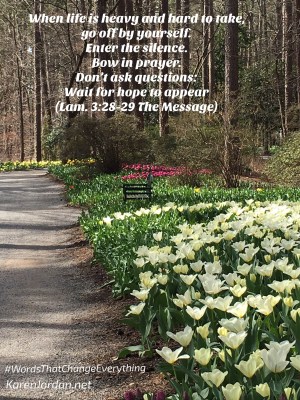
7. Prayer. During my worst moments under the stress of over-stimulating social situations and networking challenges, I searched for some personal space, and put this prayer strategy from Lamentations 3:28-29 into practice: “When life is heavy and hard to take, go off by yourself. Enter the silence. Bow in prayer. Don’t ask questions: Wait for hope to appear” (The Message).

Remembering and focusing on the presence of God enables me to exalt his Word over my circumstances, surrender my weaknesses and burdens to him, and trust him to guard my heart and my mind with his peace.

Are you an introvert, living in an extrovert’s world? What strategies help you when the energy of others is zapping the strength out of you?

And the Tweet goes on…

Red HotA few months ago, I enthused in this space about a book I’d read at my agent’s suggestion. Now I’m going to give you a follow-up, because reading Red Hot Internet Publicity has truly changed my marketing game; unlike a lot of books that sound great and helpful while I’m reading them, RHIP is proving itself to be one of those books that truly make a difference in my career. In other words, its tips WORK and you can actually DO them.

(Or am I the only person on earth who finds it difficult to implement ‘great ideas’ that use apps I can’t understand, or require more financial investment when my writing income is already in the red, or simply involve too many steps to even remember?)

This is what I’ve accomplished since my post “Learning New Marketing Tricks” appeared here two months ago: I’ve more than doubled my Twitter followers from 217 to 500+ by discovering new audiences on this one social network, and my exposure (impressions) has increased tenfold!

twitter-bird-light-bgs.pngThe route I’ve taken involves the RHIP suggestion to engage in group chats, which has introduced me to new contacts with similar interests. Even just a few Tweets back and forth produce new followers, and sometimes that generates ideas for writing posts on other networks. Perhaps even more significant is my new habit of scrolling every day through the topics that are currently trending on Twitter. I find a few to which I can contribute original Tweets, and then comment on others in that stream. Again, it only takes a few minutes, but it always generates new followers.

Finally, I’m insistent on using hashtags with every Tweet I make, and the more hashtags, the more likely it is that I’ll reach into new markets. Before I started focusing on Twitter, my tweeting impact was dismal – maybe making only a couple hundred impressions (read that as ‘your name showing up in the Twitter universe’) a week. These days, I’m getting a thousand impressions a day – that’s a lot of times my name is showing up in the Twitter stream, and that connects me to large groups of people I might otherwise not have encountered. Some of those people have now subscribed to my newsletter and bought my books; by following them back, I’ve found more threads of conversation and topics in which I can engage. Throughout it all, I constantly remind myself of my brand – of my unique voice – and make sure my Tweets reflect that. So far, I’m delighted with the results.

Hourglass --- Image by © Royalty-Free/Corbis
Hourglass — Image by © Royalty-Free/Corbis

So delighted, in fact, that I’m thinking I should double my time on Twitter…from 30 minutes a day to 60 minutes.

That’s right – 30 minutes a day have yielded me a breakthrough in exposure, and since getting my name and brand ‘out there’ is so important for making sales, those 30 minutes pack more of a marketing wallop than any other 30-minute marketing I can do.

Isn’t it great when something you try really works?

Excelling at the Craft of Writing… A New Book!

Here at the Water Cooler, writers are dedicated to helping each other grow in their craft. The community that has grown over the past five-plus years is both practical and essential: it enables writers to make connections with others on similar writing journeys; it encourages creativity, collaboration, and growth; and, perhaps most significantly, it pushes each of you to become better writers.

Who couldn’t do with a little more of that?

Excelling-at-the-Craft-of-Writing-Cover

In order to bring the ideas and content of the Water Cooler to the widest audience, we’ve embarked upon an exciting project: a three-part series of published books, The Best of the WordServe Water Cooler. We’re thrilled to announce that the first book, Excelling at the Craft of Writing: 101 Ways to Move Your Prose to the Next Level, is now available in print and ebook! This collection of 101 easy-to-read, engaging essays covers a range of topics that include organizing and outlining your work; creating vivid characters and dialogue; and fine-tuning your language, style, and voice. With proven advice from more than thirty WordServe authors, Excelling at the Craft of Writing moves from the first seeds of starting your writing project up to the last steps of creating a proposal and pitching your work to agents. It’s going to be a must-have resource for writers at every stage!

Many of you are already familiar with this book, having generously allowed us to include one or more of your posts in the manuscript; many more of you will be contacted for inclusion in the upcoming two books, on marketing and the writer’s life respectively. We hope that you’ll all want to participate in helping to promote the books, which should bring the work of the Water Cooler—and all of you—to a wider audience.

That’s why we’re offering a special promotion for Water Cooler readers. If you’re willing to promote Excelling at the Craft of Writing by advertising it on your site with a widget or dedicated post; tweeting it out to your followers; or posting on Facebook, we’ll send you a FREE digital version of the book to read on your e-reader device.

If you’re willing to help promote, please contact keely@wordserveliterary.com to tell us how and to receive your free book.

We’d also like to take this opportunity to thank all of the writers who allowed us to include their work in Excelling at the Craft of Writing, as well as all of you who have written and continue to write for the Water Cooler each month. We couldn’t do it without the dedicated involvement of so many great writers, and the blog’s success is a testament to your thoughtful, incisive, and intelligent posts each week. Thank you for being a part of this community!

–The WordServe Team