Praying for the Armor of God: A Prayer for Writers

4c62df84a873982a7e0d7d5ea11ce3a4 (1)Dear Lord,

As I come to write today make me bold and fearless. Give me words to make you known in the world. Protect me with the armor you promised in Ephesians as I pray the words from scripture.

Be strong in the Lord and in the strength of his might.

Give me your strength which is so much more powerful than my own strength. And your words which are so much more powerful than my own.


Put on the whole armor of God

Give me your whole armor to protect me as I write today. As I make myself vulnerable to others by sharing my heart and mind, take down my walls and let your armor be my protection.

. . . having fastened on the belt of truth . . .

Help me to stand firm with your belt of truth buckled around my waist. Truth protects me and gives my life and writing integrity. Help me to focus on your truth, not the world’s lies.

. . . having put on the breastplate of righteousness . . .

 Protect my heart with your breastplate of righteousness. As I strive to put my thoughts and ideas on paper I can doubt myself and feel unworthy. But with your righteousness in place over my heart, I have the authority to write.

. . . as shoes for your feet, having put on the readiness given by the gospel of peace . . .

 Make me ready with the firm foundation of the gospel of peace on my feet, ready to go places in my mind or places outside my comfort zone.

. . . take up the shield of faith, with which you can extinguish all the flaming darts of the evil one;

 Lord, negative thoughts assail me like flaming arrows. “What ifs” fly at me. Critics wound me. Give me you shield of faith to stop them before they pierce me. Faith makes me strong and gives me courage to stand firm in my convictions.

 . . . take the helmet of salvation . . .

Protect me from my own thoughts. Let me meditate on things that are worthy and good. Transform my mind and give me the words that you would have me write today.

 . . . and the sword of the Spirit, which is the word of God,

Teach me to take up your sword, Lord, which is Your Word. Your stories encourage me. Your wisdom guides me and gives me discernment. Your promises strengthen me. Your love empowers me.

Thank you for the great honor of writing for you. Thank you for your armor and protection for me.

Amen

Ephesians 6:10-11, 14-20

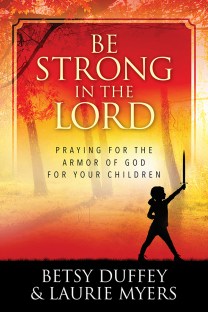
Be Strong In The Lord Front Cover lores FINAL

Praying from scripture has been a powerful tool in our lives. Our latest series of books takes passages of scripture and guides parents and other adults a child’s life to pray God’s promises for them. Our latest is Be Strong in the Lord: Praying for the Armor of God for Your Children, September 2016.

Betsy and Laurie

www.WritingSisters.com

“I Want to Write a Book”: Five First Steps For Aspiring Writers

When folks contact me because they want to write a book, especially someone who hasn’t been writing, I’m often pessimistic. I want to be able to encourage them, but I know this:  An agent or publisher needs to see that a communicator is reaching an audience. So what’s a first-time writer to do?

1. WRITE

Write an article. Online magazines usually have writer’s guidelines available at their sites. (Also google-able)

Pitch articles to magazines that are already reaching the audience who will read your book. If you don’t know what publications those are, ask among your friends on social media: “Moms, what blogs do you read?” “Business people, what magazines do you read?”

Your pitch to an editor—explaining what you want to write, how it will serve his/her audience, and why you’re the best person to write it—needs a hook. No editor will respond well to a pitch from you offering to write on “parenting,” but if they might be interested if your hook is, “What I Learned About Parenting During My Time in Prison.” Give your pitch a strong hook.

Having a number of articles that appear in print or online communicates to an agent or publisher that you’re reaching audiences.

2. SPEAK

Drum up speaking gigs. Ask folks you know to help you find venues where you can share the message you’re passionate about. Start by speaking for free to build your resume.

Speaking builds your audience and helps you hone your message.

skyscraper-1482851_960_720

3. BUILD

Build a website. Do not pass go, do not collect $200.  Before you pitch one article or seek one speaking gig, build a simple site to let others know who you are and what you’re about. Include experience and endorsements to give editors, agents, organizers, and publishers confidence that you have something to say and that others want to hear it.

A website legitimizes your credibility as a communicator.

4. GROW

Grow your audience. Beyond building your website, be intentional about your online presence. If blogging feels manageable—and it might not!—consider blogging regularly. Guest post on other writers’ blogs. Post quotes or memes on social mediate that relate to your message. Don’t always be self-promoting, though: share relevant content, from other worthwhile sources, with your followers.

Providing valuable content builds your audience.

5. LEARN

Attend a writer’s conference. Even if you’ve never considered it, the chance to grow in your craft and network with other writers and folks in the publishing industry will serve you well.


Bottom line: If you’re not willing to start building with one or more of these building blocks, it’s unlikely that an agent or publisher will consider the book you’re holding in your heart.

The exception, of course, is if you are: the President of the United States, the MVP of the NBA, or someone whose face has graced the cover of People magazine. If you are any of these, disregard this post. The rest of us, though, need to be hustling to build an audience.

Your future agent or publisher will thank you.

Reflect: Which one of these 5 made you balk? How willing/unwilling are you to move forward on any of these? What can you learn from your response?

Life on the Blank Page: Why I Keep 3 Journals

Life on the Blank Page- Why I Keep 3 Journals

This is a life-as-a-writer post. Or I could say, the life of a creative — that word that encompasses all types of folks who are constantly creating and inventing and pouring out, whose job it is to fill the blank page, the blank screen, or empty air space.

I am in the middle of edits on a project that takes a lot out of me — that turns my brain to mush by the end of the day. I have disciplines that I do to keep the creative part of me exercised and stretched — similar to the months of short hikes I do to prepare for a longer hike in the Grand Canyon. Being in shape doesn’t just happen. Being creative doesn’t just happen either.

Last week I went journal shopping. I’m a three-journal gal. I used to keep one journal, but as my writing life expanded, it became too difficult to find things all crammed in one notebook. These journals each represent a creative discipline for me as a writer.

First, I use a pocket-size journal for hiking that doesn’t weigh a lot or take up much space. It’s about the size of my cell phone. I added some more sketches to the pages this week as I am exploring nature journaling as a way of alert attentiveness.  I don’t consider myself an artist, so drawing stretches my creative muscles in new directions and makes me look at the desert — which I have seen for 30 years — in a new way.

Boojum Tree nature journaling page
Def need work on the birds. The poor white-winged dove looks so very sad. But I like the boojum tree! I like the fact that boojum is from a nonsense poem by Lewis Carroll. What writer wouldn’t want a tree named from their work?

Second, I have a writing journal that is only used for writing prompts — questions that stir creativity. The prompt might be about mashed potatoes, but soon I find myself writing about my grandmother in her kitchen with a pot in her lap filled with spuds and a conversation we had about heaven when I was twelve years old. Writing prompts have a way of bringing me in through the back door of my brain. I am currently using the book Old Friend from Far Away by Natalie Goldberg. Questions in that book include:

  • Tell me everything you know about jello. Ten minutes. Go. (Can’t wait to do that one!!)
  • Tell me a memory associated with a bicycle. The spokes, the wheels, the narrow seat. Go for ten.
  • Tell me about how a relationship ended. Go. Ten minutes.

My final journal is the one I use during quiet times with God and to explore future writing posts and projects. This is the one I was shopping for last week. I wanted the journal lined, bound, and large. None of those wimpy diary-size journals! I had to go to three stores to find something large enough and I found it at Walmart of all places.

Life is wonderfull journal
Note: the flowers are there for photo purposes only.

I love the front: Life is Wonder-full and Beauty-full.  In life’s hard seasons, having my eyes and heart focused on wonder and beauty has proven essential.

So, now you know all about my three journals. 

Even for you non-writers out there, we all need places that fill our souls with wonder and beauty. We all need practices and disciplines that feed the creative side of us.

What are yours?


Lynne Hartke has her first book coming out with Revell in 2017. This post first appeared on her blog at http://www.lynnehartke.com where she writes about courage, beauty, and belonging to a loving God. She and her husband live in Chandler, Arizona, located in the Sonoran Desert, a place where she lugs around at least one journal.

The Good Editor

typewriter-584696_640 Every writer needs a good editor. There are no exceptions. Typing away at the computer may be a solitary adventure, but bringing a well-rounded story to readers is a collaborative effort with a lot of players on the team. One of the most necessary players is a good editor. This is so much more than catching a typo or fixing a sentence that ends in a preposition or realizing you meant effect and not affect. It’s more than knowing what AP Style or Chicago Style is and when to use what, where.

Keely Boeving, a freelance editor who has worked with me on one of my novels, said, “I consider myself an advocate for the reader. My goal is not to change a writer’s style or intent, but rather to draw it out—to help them say what they truly want to say in a way that resonates with readers. Translating what a writer conceives in their creative mind into words on a page can be tricky, and an external observer—an editor—can help facilitate the translation in order to help writers achieve their intent.”

A good editor gets you and can see where the story is going without the need to add in their own two cents’ worth. The really good ones are part fan who write notes about the parts they really like, part brave hero who can tell a writer they need to take out that beloved chapter, and part mind reader who can ask just the right question about that part you thought was clear.

Taking the time and investing the money in an editor can help you get an agent or a publisher to read past that first page. Not taking that step may mean a lot of rejections for a good story that just needed a little more work.

Some tips when looking for the right editor:

  1. Gather information. Ask for the editor’s background and do they specialize in your type of work. Ask them for names/emails of writers they’ve worked with before. Write a short email to the writers asking them about their experience. See if the editor has ever worked with your genre. Keely worked in New York for over four years and is now a part of the WordServe family, as well as working as a freelance editor.
  2. Be clear about your expectations. Talk about cost and when payment is expected. Be true to your budget and keep searching if someone is out of your price range. Talk about your timeline and whether the fee includes second or third rounds of edits. If you have a deadline that can’t be missed, say so up front and take no for an answer if you hear ‘maybe’.
  3. Talk about how you expect to receive the edits. Some editors and some writers still use the printed page. I prefer Track Changes and comments but I still run into people who don’t and prefer mailing that manuscript back and forth.
  4. When you get the edits back, read over them briefly and put the manuscript down. Go find something fun to do and let it go for a day. On my initial read there’s always one or two things that I don’t agree with at all… until the next day. Often, those are the changes that fixed something that would have tripped up a lot of readers but was pretty easy to fix. Don’t let that become the reason you don’t sell a work.
  5. Take what you like and be willing to leave the rest. There will be moments when a suggested edit changes the intention of a scene or the voice of a character. Have some confidence in your idea and know when to say no. Reason it out with the editor, as well. It could also be that the setup isn’t fully there but with some tweaking, your story gets stronger. If you don’t feel like you’re being heard, you have the wrong editor.

One last thing. Celebrate every part of the journey as a writer, including this one. You took an idea from your mind and put it down on paper. That’s a big accomplishment. Now on to the next step.

How I boosted my book to 30x more people

ebookI finally bit the bullet. I boosted a post on Facebook.

For years, I’ve seen that annoying little message you get on your author page about paying to boost your posts. Because I’m cheap (and still suspicious of social media’s REAL intent, i.e. who needs to know what I buy, who I connect with, and what I like? Creepy…), I refused to give it a try. If my books can’t make it on their own merits, so be it – I’ll be content with small audiences, extremely limited financial reward, and the personal gratification that I haven’t caved to crass commercialism.

And then last month after I started getting consistent raves about my new thriller “Heaven’s Gate,” I thought, “What the heck. It’s only $20.”

Actually, it ended up being $60, since I decided if I was going to experiment, I wanted to see what a week of boosted posts could do rather than one day, which is what $20 will buy. Knowing that most buyers need to be exposed to a product seven times before they buy (do you know the Rule of Seven?), I figured one day of boosting was throwing away cash, but seven days might just convert into some sales. I can now tell you, without reservation, that $60 worth of boosting on Facebook can go a long way in giving your book exposure and building your audience, and now I can’t wait to give my other books the same treatment.

Here are the numbers from my week-long experiment:

  1. Organic reach peaked at 305 on Day 7, while paid reach was 9045. That’s 30x more people reached than my normal posting! Not only that, but thanks to my OCD tendencies, I checked one last time on Day 10 (remember I only paid for 7 days of boosting) and was happy to see a new total of 9432. The post was still being shared after my paid boosting! Score!
  2. I monitored my book’s print and ebook rankings on my amazon Author Central page (you do have one of these, right?) for the boosting’s duration. By Day 6, my ebook ranking had reached 924 in the Paranormal category after starting on Day 1 at 3366; the biggest jump was from Day 1 to Day 2, which tells me that first burst of posting made an impact that powered the rest of the week. Recalling the Rule of Seven and the impact of repeated impressions, though, I looked again on Day 18, only to find my ebook ranking better than ever at 831!
  3. As for print, my book moved from its initial 76,331 ranking to 8535 on Day 5. Clearly, somebody was paying attention.

Even knowing that rankings are a superficial measure (rankings don’t equal sale units), I decided that post boosting may not be such a bad idea for marketing after all. While the actual sales numbers are still in question, I know for a fact that more people have seen my book’s cover thanks to post boosting than would have otherwise. And that’s one step closer to buying my book.

Have you tried Facebook post boosting? What was your experience?

WordServe News: August 2016

Exciting things have been happening at WordServe Literary this month!

On the final post of each month you’ll find a list of Water Cooler contributors’ recently released books along with a recap of WordServe client news.

New Releases

dyerDena & Carey Dyer released Love at First Fight with Shiloh Run Press. Offering 52 devotional meditations written by the husband and wife team, it promises to help couples discover that a fun, resilient, and fulfilling marriage can be realized through hard work, forgiveness, God’s grace–and a sense of humor.

cover JPGJan Hettinga released The Safe King with FaithHappenings Publishers. The Safe King explores the roadblocks that keep many of us from following Christ, including our deep distrust of authority, our fear of giving up control, and our reluctance to let go of our kingdoms in order to embrace His—and offers ways to move past these roadblocks into a life of full discipleship.

Cover 1Joe Wheeler released Lew Wallace and the Story of Ben-HurBook 1 of the Classic Author Biography Series, with FaithHappenings Publishers. Featuring a biographical sketch of Wallace, an in-depth introduction to the text, vintage illustrations from the 1908 edition, and thought-provoking discussion questions to help readers get the most out of the story, this companion book will add richness to the experience of reading an American classic.

znachkpLinda Znachko will release He Knows Your Name with Kregel next month. When the evening news reported a dead baby abandoned in a local dumpster, Linda Znachko’s comfortable life changed. She was suddenly convicted—God was asking her to provide a dignified burial for this tiny lost child. Linda said yes. She had no idea where that first small yes would lead, or how wide the ripple effects would spread.

New Contracts 

Anne Love signed with Barbour for her work The Gardner’s Daughter, which will be included in the Of Rags and Riches Romance Collection set to publish next year.

New Clients

Craig Chapman, Heidi Gaul, and Jason & Shelley Martinkus signed with WordServe this month. Welcome!

balloons-25737_640

What We’re Celebrating

Laurie Short appeared on Focus on the Family to discuss her book Finding Faith In the Dark. You can listen to it here!

Writing with Personality for Introverts

Writing With Personality
Five Fresh Starts for the Living

I’ve studied, trained on, and spoken to audiences about human personality for over a quarter of a century now. But one of my favorite ways to use my education is to help my writing friends.

Recently, one of my author pals described her struggle. “I can’t seem to find my motivation. This summer has flown by with my visiting children and grandchildren. By the time they leave, I’m exhausted and don’t feel like doing anything creative.

“Having a recently retired husband under foot isn’t helping either. I’ve tried moving to several different rooms, but the noise of the TV or his honey-do repairs, not to mention his unrequested input or endless questions, disrupt my thoughts. When I write, I need quiet time to reflect, organized space to prepare, and a break from other people. I also need my family to take what I do seriously — most of them don’t think writing is real work.”

My friend is definitely an introvert. And what she was voicing was permission to work according to her intrinsic, soul-deep needs.

I replied, “It’s okay for you to feel this way. Have you told your family how you feel?”

“Not really,” she said with a sigh. “I don’t want to offend them.”

“I understand, but do you realize they may not grasp what they are doing to you?”

“They should.”

“We often assume other people know what our needs are, but the truth is, unless we tell them, few even think about it. One thing you might consider is coming up with an assertive, yet respectful way to let the people in your life know what’s bothering you. For instance, you could say, ‘I think my writing might have caused some confusion. I know most people don’t realize I’m working, especially since I do it from home, even I forget sometimes. But this is part of my job. I hope you understand if I put a few guidelines in place, to hold me accountable, so my work gets done and I meet my deadlines. It might mean I’m not available as much as you are used to.'”

“I could probably do that,” my friend replied.

I chuckled as I remembered when I first created my Writer’s Cave guidelines with my own family and friends. I had imagined all kinds of reactions, but once I shared my plan, they took it in stride and quickly adapted. It freed me from much writing angst.

I commiserated with my friend. “Dealing with your husband is a different matter — since he does live in your home too.”

Her soft laughter had a tinge of nervousness to it.

“Have you tried scheduling yourself in a closed room for a period of time and asked your husband if he could keep the volume down? Have you requested he wait to do repairs or ask questions until your allotted time ends?”

“Well, no.”

“Silencing ear muffs are another great alternative. I’ve got a set you can borrow.”

Her laughter had a relaxed ring this time. “I’ll have to check into those.”

“If neither of those options work, or if it offends your family, then maybe you could find a quiet coffee shop, restaurant, or other location away from home to help you concentrate. One with few people, since company drains your creative juices.

You can honestly tell your family and friends, ‘I won’t be available from this time to this time, I have a writing appointment.’ They don’t need to know the details, or that your appointment is with yourself.”

“I like that last option. Thanks.”

My introverted friend needed emotional support more than anything. She needed permission to be herself, someone drained of creative energy after an extended period of time with other people, even those she loves deeply. She knew what was necessary, but was afraid to act, she needed a third-party voice to set her free.

It must have worked. The last I heard, she was making good progress.

Know Thyself -- SocratesWriting with Personality is helpful for introverts, and their counterparts, extroverts. (I’ll share some insights about the latter next time.) But wherever you fall on the personality spectrum, as Socrates reminds, know yourself, and allow you to be and do as needed — otherwise, you will struggle to get your writing done. Another great writer and natural introvert, Karen Jordan, shared her insider’s perspective recently — it’s a great read, especially if you don’t want to feel alone.

Are you drained or energized by extended periods of time spent with other people?


Google Docs: A Helpful Tool for Writers Who Want to Collaborate

woman on laptop

Years ago Ethan Pope and I wrote a book together called There’s No Place Like Home (Broadman & Holman). Thanks to email, the phone, and a fax machine, we were able to communicate pretty well back them. But not nearly as well as Karen Jordan and I recently did as we worked together on a book proposal. Our collaboration was so much easier because of Google Docs!

What is Google Docs? It’s a free online word processor available to anyone who has a gmail account (which you can get for free). Like most word processing programs, it makes it possible for you to change the appearance of a document: the size of the text, spacing of lines, paragraph styles, headings, etc.

It also allows you to write, edit, and collaborate with others at the same time. And you can upload a Word document and then convert it to a Google document that can be edited by multiple people from different locations.

Levels of Editing Permission

When you want to share your Google Doc, you can grant three different levels of editing permissions:

  • Can edit: This is the default for sharing with specific people. It allows them to make changes and share the file with others.
  • Can comment: Allows others to view and comment on a file, but they cannot make any changes.
  • Can only view: Gives permission for someone to open a file but not to change it or comment.

The sharing settings can be changed anytime.

Other helpful Google Doc features

Another neat feature of Google Docs is that it allows you to see your revision history. If needed, you can restore a document to a previous version. When you are satisfied with your Google Doc, you can download it in another format such as Microsoft Word, pdf, plain text, etc. And, you can even publish it to the web.

If you would like to email your documents to other people, you can do that, too. And if all of this isn’t enough, you can put Google Docs in your Android or iPhone.

I consider myself to be a novice when it comes to Google Docs, but using it was invaluable to Karen and me! Those wanting to try it out could learn much more about it by visiting Google’s “getting started guide” and the Google Docs blog.

Also, you may want to watch this free webinar given to teachers about how to use Google Drive and Google Docs. I watched it and thought it was helpful.

Yes, a lot has changed in the world of technology in the last decade. One wonderful tool for writers who want to work together is Google docs!

If you have been using Google docs, what tips and suggestions do you have for writers who want to collaborate?

10 Tips For Writing Well

10 writing tips

Some types of communication require writers to string a lot of words together as quickly as possible. (Maybe you have a day job that requires this!) When I’m writing in this way, I don’t pause to weave beautiful phrases or engage the reader with well-crafted sentences. But there are other writing projects in which I want to gift readers with words that shine. For these projects, there are some rules of writing that guide me as I purpose to be as artful and effective as possible.

 1. Be specific.

Use precise language. Not “tool,” but lathe.  Not “hot,” but fiery. Not “fruit,” but mango.

2. Appeal to a reader’s senses.

Appeal to the reader’s senses by including sights, smells, tastes, sounds and textures.

3. Avoid flowery speech.

Overusing adjectives and adverbs makes your speech too flowery. Mary DeMuth exhorts, “Use a better noun instead of a weak one that needs an adjective. Use a stronger verb instead of one that leans on an adjective or adverb for help.”

4. Use active voice.

Employ active voice, rather than passive, to create interest and keep readers engaged.

5. Avoid fancy words.

Don’t use a splendiferous fancy word when a plain one will do.

 6. Eliminate unnecessary words.

If any words or sentences can be removed without changing a text’s meaning, your writing will be stronger if you scrap ‘em.

7. Vary sentence length and structure.

Use simple, short sentences. Also use longer and more complex ones.

8. Choose original combinations of words.

Reach beyond clichés and stereotypes to discover fresh expression. “Never use a metaphor, simile, or other figure of speech which you are used to seeing in print.” (Orwell’s 6 rules of writing in “Politics and the English Language,” 1946)

9. Write to one person.

I’ve heard my wise friend Jonathan Merritt say, “If you try to write a book to everybody, you’ll end up writing a book to nobody. If you try to write a book to somebody, you’ll end up writing a book for anybody.” Identify your target reader—sister? neighbor?—and write to that one person.

10. Show, don’t tell.

Allow readers to discover what you have by painting colorful moments, conversations, conflicts, etc. Writing that “tells” simply informs, like recipe ingredients. Writing that “shows” offers reader a taste of yummy cake.

Cheering you on,

Margot

Of Brussel Sprouts, Broccoli, and Disappointments


OLYMPUS DIGITAL CAMERA

My mother and I didn’t know anything about brussel sprouts the spring we decided to plant them in the family garden, back when I was a girl. We planted an entire row in between the rows of peas and green beans. In the back of the garden we added several rows of tomatoes and pushed cucumber seeds into rounded mounds in the black earth. Mom bordered the garden with zinnias and marigolds and we waited for the fruit of our labors.

We expected the obvious–for the brussel sprouts to appear like broccoli crowns, right up top for all to see.  And because we expected the obvious, we missed the fact that the sprouts were growing.

And growing.

And growing–there under the protecting leaves, hidden from sight.

We finally found them, no longer tender and sweet, but old and bitter. Mom grew up in the Depression, so there was no thought of throwing the brussel sprouts into the compost pit. She boiled them for dinner, where we kids gagged them down with large gulps of fresh milk and tears.

Mom never planted brussel sprouts again.

Which is the danger of disappointments and unfulfilled expectations.

It wasn’t until I moved away from home that I enjoyed the deliciousness of brussel sprouts bathed in olive oil and roasted garlic, an experience I almost missed because of the garden mishap.

This summer I had the grand idea of offering giveaways on my blog during the month of July. I anticipated interest, increased blog traffic, and multiple shares of the posts. Unfortunately broccoli results have yet to materialize. 

But today I boxed up one of the giveaways to mail to a little girl who has brain cancer. I sent another gift to a woman whose husband recently died. She was nominated by a friend for the giveaway. 

Brussel sprouts are growing this summer among the leaves of social media.

So let me ask you:

When things don’t turn out as you hoped, will you continue to plant new ideas? Try new things?

Or will you concentrate so hard looking for broccoli that you miss what may be growing in secret?


Lynne Hartke has her first book coming out with Revell in 2017. She writes about courage, beauty, and belonging to a loving God at http://www.lynnehartke.com. And brussel sprouts. Sometimes she writes about brussel sprouts. She and her husband live in Chandler, Arizona, located in the Sonoran Desert.