Exciting things have been happening this month at WordServe Literary!
On the final post of each month you’ll find a list of Water Cooler contributors’ recently released books along with a recap of WordServe client news.
New Releases
 Mary Davis’s novella, “An Unlikely Hero,” was published as part of The Pony Express Romance Collection from Barbour. Nine adventure-filled novellas revive the period between April 1860 and November 1861 when riders faced daily urgency and danger to get mail across the country via the Pony Express.
 Stephen Kuhn released 52 Amazing Things that Became True of You the Moment You Trusted Christ with FaithWords. Once you accept Jesus, your identity is now “in Christ” — but what exactly does that mean? Stephen helps you fully understand your true identity based on God’s love, enable you to walk in His power rather than your own.
 Tracie Miles released Unsinkable Faith with David C Cook. Offering hope for women who struggle with negativity, each chapter explores Tracie’s and other women’s personal stories, showing how they rose above their circumstances by transforming and renewing their minds. Despite what storms roll in, hearts anchored in God don’t sink.
 Joe Wheeler released My Favorite Life-Changing Stories with Pacific Press. The fourth book in his My Favorite Stories Collection, this volume looks at stories having to do with pivotal moments or powerful experiences in a person’s life.
New Contracts
Dr. Daniel Amen signed with Tyndale for the publication of Stones of Remembrance, a collection of Scriptures for memorization and meditation as well as tips on using Scriptures for meditation, improving memory capacity, and incorporating Scripture memory into one’s life.
Mark Atteberry and Many Harvey signed with Howard to publish Sensing the Rhythm, Mandy’s story of becoming profoundly deaf at the age of 19 and how she learns new ways to “hear” and sing music, as well as her spiritual journey along the way, for publication in 2018.
Kent Hunter signed with FaithWords for the publication of his book, Who Broke My Church?, in early 2018. Based on a survey of 75,000 churchgoers of all denominations and 1-on-1 interviews, the book offers practical directions for Christians to experience the breakthrough impact every church could make on society.
Andy Savage signed a 2-book deal with Bethany House for his books Making Marriage Make Sense, which considers how good marriage can be when we dare to deal with the one thing that erodes perfection: selfishness; and Making Parenting Make Sense, which will speak to the biblical, practical, and sometimes radical high calling of parenting–equipping moms and dads to navigate the journey without the pressure of perfection.
Joe Wheeler signed with PZZ to publish a Polish edition of My Favorite Angel Stories.
New Clients
Judy Thompson, Christy Johnson, Jared Frederick, Lionel Hollins, Remy Maaddi, Andrea Gurney, and Matt Rogers joined WordServe this month.

What We’re Celebrating
Outreach Magazine named two WordServe books as Resources of the Year! Adam S. McHugh’s The Listening Life was named the Christian Living Resource of the Year, and Kara Powell, Jake Mulder, and Brad Griffin’s Growing Young was named Church Resource of the Year. Congratulations to our authors!
Additionally, we are pleased to announce that Joe L. Wheeler’s entire backlist is now available digitally as ebooks! Many out of print titles have also been restored to print with paperback editions. You can find them all on Amazon.com, and find out more on Joe’s website: http://joewheelerbooks.com/.


 One of my favorite definitions is the one for insanity that goes “doing the same thing over and over and expecting different results.” I’ve felt that was an accurate description of many of my book marketing efforts in the past twelve years; sending off press releases to local newspapers and rarely getting even a little paragraph tucked somewhere in the back pages comes to mind. I’m sure every author can add to that list of marketing insanity.



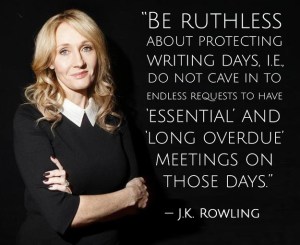
 Maybe you can relate to days like I’ve had. Where you need a dose of inspiration to get you moving — or a swift kick in the fingers. When this happens, I’m grateful for quick, motivational, and uplifting thoughts from other experienced writers.
 “First drafts are always horrible and ugly. Don’t worry about that – it’s the same for everyone. Just remember that the first draft is as bad as the book is ever going to be, and if you keep redrafting, one day you will look at your horrible book and realise that you’ve turned it into something actually quite beautiful.” – Robin Stevens, author of the Murder Most Unladylike series
 “Write what you want to know more about — the teacher always learns more than the student. Become passionate about the stories you tell and the people you are writing about. Finish your writing day with something that makes you want to know what happens next. Give yourself periods of rest — mental breaks sharpen the mind. And keep writing, especially when you don’t feel like it.” — Anita Agers Brooks, author of Getting Through What You Can’t Get Over and other titles

 Outside my window a bird is singing. So long and loud for a tiny bit of feathers. The song is varied and the notes rise and fall, fluid and melodic. Truly he is singing his heart out. Simple and beautiful. The night is gone and the sun is rising. As he sings, I type.