
 I remember when my pulse quickened and my heart thumped at the thought of “making it” as a writer. The first time I gingerly brushed the soft cover of my first book, flicked through its pristine pages, I felt awed. The young girl inside of me, who’d always dreamed of seeing her name on a book, shed a happy tear.
Now that I’ve succeeded in publishing multiple books, with more on the way, I’ve found myself in a reflective mood. Recently, I pondered some of the more surprising things publishing success has taught me — boiling them down to my top five.
***
5. Your need to learn will never diminish. Culture shifts, technology advances, headline focuses, and global changes necessitate a writer’s dedication to ongoing education. Solid research and investigation are bedrock pieces in the foundation of any great written work. New information equals fresh content.
4. Fear will not subside — although fear can change as your writing career progresses. Early on, many aspiring writers fall prey to the paralysis of fear, while professionals know that fear can prove a driving motivator. When you consider the greater loss of missing potential success, the emotion of fear propels you to action. If you fail to try, your failure is guaranteed.
 3. The writing life is not a solitary endeavor. It takes a team to successfully publish. Critique groups, writing peers, or advance readers help us delve deeper into our subject matter, and pick up on flaws we often miss. Agents, publishers, and editors polish our projects and help promote them to reach a bigger audience. Readers become fans who sometimes become friends — if we are so blessed.
A wise writer intentionally and consistently builds their audience. When much in the world changes, one thing does not: word of mouth is still the most powerful marketing machine.
2. Story, whether written in the entirety of a book, or a short paragraph to example a point, draws readers deeper into your world. Few people appreciate being talked at, while most love being drawn into a good story. Whether they author novels or non-fiction, the skillful writer paints pictures with their words.
1. Human curiosity is king. Write cliff-hangers, page-turners, and chapter-leads to keep your reader wanting more. As you resolve or answer each inquisitive sentence you craft, replace it with another, until ultimately, you tie it all together at the end. A satisfying conclusion after creating ongoing curiosity makes a reader say, “I wish this book hadn’t ended.”
 I’m still working on all of these areas in my own writing, and anticipate the need to keep them in mind until the day I type my very last word. I don’t simply want to write, I want to use my words well.
Most writers I know would agree — we start out writing for ourselves — until we discover the real gift is in writing for others. The dream we live is the dream we share.
 I’ve learned a lot about waiting and watching as a writer. So, I wanted to share this excerpt from my book,
  Karen Jordan.
 Are you using your Amazon Author Page to increase your visibility and grow your audience?



 Have you chosen your “OneWord” for 2017?
 Enter three colleagues, women who also write about sexual intimacy in marriage on their blogs. This past year, we sprouted the idea to put together a group podcast. Call it a round table, but we prefer kitchen table. Because that’s what it feels like to us—sitting around a kitchen table with our cups of coffee and talking about one of our favorite subjects, God’s gift of sex in marriage.
 I think every published author wishes they could go back in time to whisper in their younger self’s ear. Doing so would certainly save volumes of time and energy. I’m sure five years from now, I’d wish for the opportunity to tell today’s me something I need to know right now.
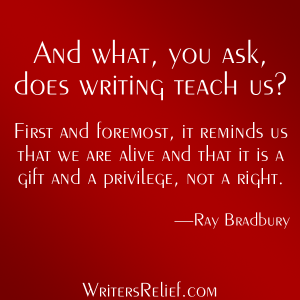 Read as much as you can. Phrases such as, “Great writers are great readers,” hold a wealth of truth. The more we study, the more prepared we are to succeed. Reading teaches us the subliminal art of sentence flow, heart tugs, and scene staging. It also shows us what to avoid, as we learn from the mistakes of others. It’s the best motivator I know.
 Set time-stamped writing goals. I’ve really let this one slip lately, and my work is showing it. But my One Word is Reset, so I am resetting my goals. The difference between a dream and a goal is a measurement. So my refreshed writing goals include a minimum of 5,000 words per week. This reasonable number allows for flexibility, while pushing me beyond a normal comfort zone. It’s doable.
 I can write until my fingers are numb. I can start writing at dawn’s break, pushing until the wee hours of the next morn, but if I am not inspired, it’s all for nothing. My personal inspiration come from prayer, provision, and praise for my Maker. He’s the one who gifted and called me. This is my most powerful secret.
