
A few days ago, I actually thought it, I even dared to speak the words out loud to God. “Maybe I just need to quit.”
 I was referring to writing.
But two things happened that set me straight — one I call a Divine encouragement, the other, a practical review.
In case you are interested in the motivational things that made up my practical review, I’ve listed them in a top ten format. None of these came to mind however, until my moment of Divine encouragement.
Early this year, for six busy weeks, I traveled across five states speaking, in addition to several in-between events in my home state. I enjoyed getting to meet many new people and personally share the messages I’m so passionate about.
Within two weeks of finishing my speaking circuit, my oldest son got married. But his joyous event was tainted by the flare up of a severe back injury. So much so, that he fell during his ceremony. It broke my mother’s heart to see him push through the pain and sweat through the rest of his vows, to determinedly marry our new daughter-in-love.
After a month and a few more falls, he had improved little, and was becoming frustrated. All medical efforts lacked real results. I took turns with other family members who stayed with him during the day, helplessly watching my son suffer, and feeling my writing hours slip away.
But something new was about to occur.
I woke up shortly after five in the morning to my husband’s groans. I asked, “Are you all right?”
When he said, “I don’t think so,” I popped off of my pillow on full alert.
I interrogated, “Do you have any other pain? Are you sweating? Do either of your arms hurt?”
“I took a shower, so I’m not sweating now,” he said. “And my left arm is sore, but I think I must have pulled something when I was carrying my boat batteries yesterday.”
I’d heard enough. “Get ready. We’re going to the hospital.”
On our way out the door, I gave him three baby aspirin. An attending physician later told me they could have saved his life.
A heart cath revealed a 95% blockage in one artery, and 40% in another area. He’d had a heart attack. Thankfully, the two stents they immediately placed in him, along with a complete lifestyle transformation, have drastically improved his health. But the hits weren’t over.
Four days after his release, my genetic eye disease triggered, common after periods of heavy stress. For days, I couldn’t see clearly and all light felt excruciating. Watching TV, reading, or looking at a computer were impossibilities. All I could do was lay helplessly in bed, where I thought and prayed.
I confess to holding multiple pity parties, where fleeting thoughts of giving up on my writing career came and went. When I finally began to feel improvement in my body, but felt overwhelmed by how far behind I was, I spoke out loud, “Maybe I just need to quit.”
As I said it, I had no idea I would get a clear response so soon. God used her to provide Divine encouragement.
My cell phone rang. I recognized the name of a woman from an audience I had spoken to the month before. She was on the organizational team, and they had invited me and my fellow WordServe authors Karen Jordan and Kathryn Graves to bring our Untangled Conference to their city in September. I assumed this was her reason for calling. I was wrong.
“Hello,” I said.
 “Oh, Anita. I’m so glad you answered. I had to call you. I just finished reading your book, Getting Through What You Can’t Get Over, and I have to tell you, it’s the best book I’ve ever read. I’m getting a copy and sending it to my sister tomorrow. So many people need this. Thank you so much for using your talents to write and speak.”
Only God had known my inner wrestlings before she called. The confusion bound in physical and emotional fatigue that pummeled my brain. Maybe you can identify.
If writing professionally were easy, more people would stick it out, but especially when life blindsides you, it can get tough. However, the hard days are what make us real people — realistic, relatable, and relevant.
As I think about it, aren’t those the qualities that make good writers flawed but great?


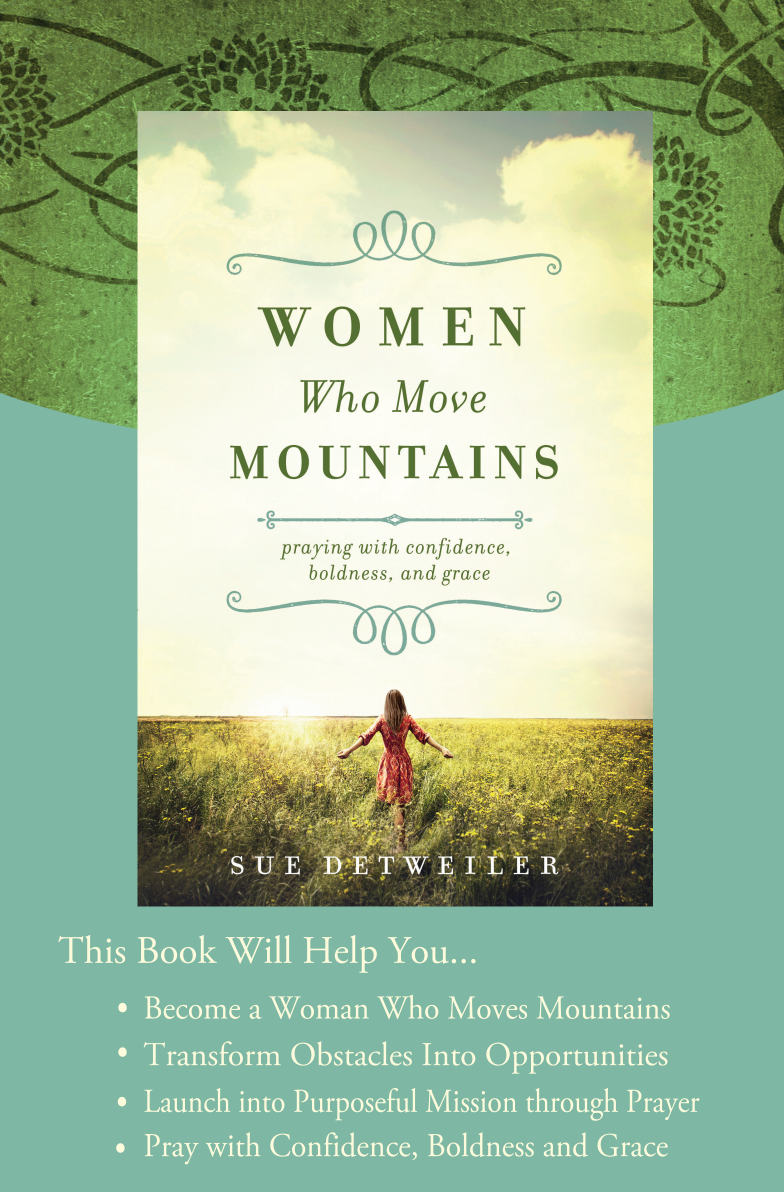 re doing. Who are you kidding? Have you ever had some version of negative thoughts? I tried praying (after all the book is about prayer). However, I didn’t have a breakthrough in terms of peace, until I forced myself to just do it. In prayer, God gave me a picture of an acorn that I was holding in my hand, but if I would plant that acorn in good soil, and provide nurture, it would grow to be a strong a mighty tree whose leaves would provide healing for all who read it. After writing these words down in a journal, I took my computer and I sat in my 80-year-old mother’s room and I began to type. (If you read chapter 1 of Women Who Move Mountains, you will learn that my mom has been my main role model for prayer.) (Click the Picture of the book to immediately download the Introduction and Chapter 1).


 Hurray! You’ve got a publisher for your book! Congratulations! Cross another task off your writing to-do list!

 Where do you need some white space in your life? I hope this excerpt from my book,
  “You can have everything in life you want, if you will just help other people get what they want.” Zig Ziglar, the ultimate motivator, knew that when we authentically and unselfishly support other people, great things happen. I’ve experienced the truth of this principle many times in my life, but especially recently, when I joined forces with two other WordServe authors.
 One of our most exciting accomplishments came from developing a women’s conference based on our book’s title and message. We outlined options for a one-day conference as well as a two-day event. We came up with a suggested ticket price and estimated income from the event based on a variety of attendance number ranges. We brainstormed ideas for other creative ways to support the Untangled Women’s Conference. And we reviewed different expense scenarios, weighing convenience against cost.


