WordServe News Update and New Releases

Exciting things have been happening at WordServe Literary!

On the final post of each month you’ll find a list of WordServe clients’ books releasing in the upcoming month along with a recap of WordServe client news from the current month.

 • • •

November New Releases

The Encounter: Sometimes God Has to Intervene

by Stephen Arterburn, with WordServe collaborator James Pence*

Contemporary Fiction

Thomas Nelson Publishers

• • •

His Grace is Sufficient…But Decaf is Not

by Sandra D. Bricker* with Loree Lough, Trish Perry, and Cynthia Ruchti

Devotional for Women

Summerside Press

• • •

Paper Angels

by Billy Coffey*

A Novel

FaithWords

• • •

Lakeside Reunion

by Lisa Jordan*

Contemporary Romance

Harlequin Love Inspired

• • •

As Sparks Fly Upward

by Gilbert Morris

Historical Romance

Howard/Simon and Schuster

• • •

The River Queen (Book #1 in the “The Water Wheel” series)

by Gilbert Morris

Historical

Barbour Publishing

• • •

Playing with Purpose: Basketball: Inside the Lives and Faith of Top NBA Stars

by Mike Yorkey

Sports biography

Barbour Publishing

 • • •

Contest News

The 2011 INSPY Award

On the Romance Shortlist:

The Preacher’s Bride by Jody Hedlund*, Bethany House, October, 2010

Yesterday’s Tomorrow by Catherine West*, Oak Tara, March, 2011

On the Speculative Fiction Shortlist:

The Resurrection by Mike Duran*, Realms, February, 2011

• • •

New Clients

Susan Scott Krabacher: Haiti Orphan advocate and ministry leader, author of Angels of a Lower Flight: One Woman’s Mission to Save a Country…One Child at a Time (Touchstone, 2007) (www.haitichildren.com).

Jeff Nesbitt: Summerside novelist.

Mandy Steward: blogger at www.messycanvas.com.

Shellie Tomlinson: the creator of www.allthingssouthern.com, blogger, speaker, radio host.

• • •

Contract News from Greg

Valor Studios head Adam Makos and all-star collaborator Marcus Brotherton* are writing Voices of the Pacific, a compilation of alive (and very old) marines who served in the Pacific Theatre during WWII. Many were featured in the HBO mini-series “The Pacific.”  Signed by Berkley Caliber (Penguin).

Dr. Rita Hancock, Total Wellness Now, a medical approach to emotional healing and weight loss. To Charisma Publishers.

Adam Makos and Larry Alexander are writing A Higher Call, the true story of American B-52 pilot crippled after a bombing run, and the German fighter pilot who, instead of shooting the bomber down, escorted it safely to British airspace so other German pilots wouldn’t shoot it down, and their meeting, faith, and friendship after the war. Signed by Berkley Caliber (Penguin).

(* = WordServe Water Cooler Contributor)

• • •

That’s our good news for the month.

Please share yours in the comments so we can celebrate with you.

• • •

Post Author: Keli Gwyn

I write inspirational historical romance. My debut novel, A Bride Opens Shop in El Dorado, California, will be released July 1, 2012. I live in the heart of California’s Gold Country. My favorite places to visit are my fictional worlds, the Coach factory outlet store, and Taco Bell.

Good News! We Are Not Alone!

Don’t you love Saturdays? I do. And today, because it’s the weekend and I thought we could all use a little good news, I’ve got a treat for you. If you’re reading this blog, you’re probably a writer. You may already be published or still waiting for that day, but you’re writing away, studying your craft and just hoping that soon and very soon, all your hard work will pay off in a nice three-book deal.

Will you be ready?

How many of you, (ahem, like me), were so focussed on reaching the almighty goal of becoming a published author that you gave little thought to what you were going to do when you got there?

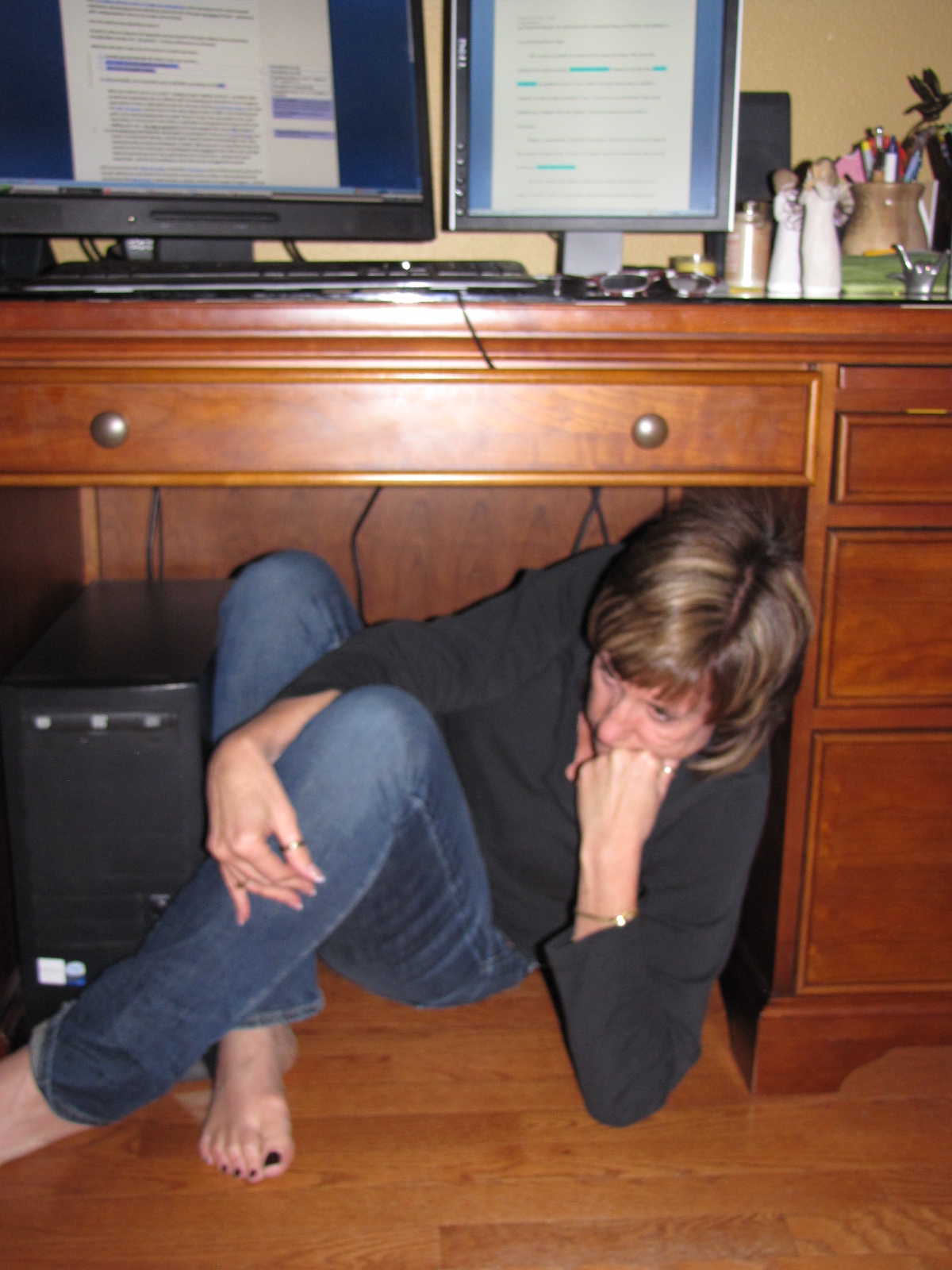
Shortly after my first novel, Yesterday’s Tomorrow released, once the bubbles in the champagne fizzed away and I stopped grinning and pinching myself, I admit to being completely overwhelmed and hiding under the covers for several days once I realized Oprah wasn’t going to call  reality set in.

Oh, I know. That won’t be your story. Your book will skyrocket to #1 on the NYT Bestseller List. Of course it will. But, just incase it doesn’t, at least not right away, you’re probably going to need a little help getting it into the right hands.

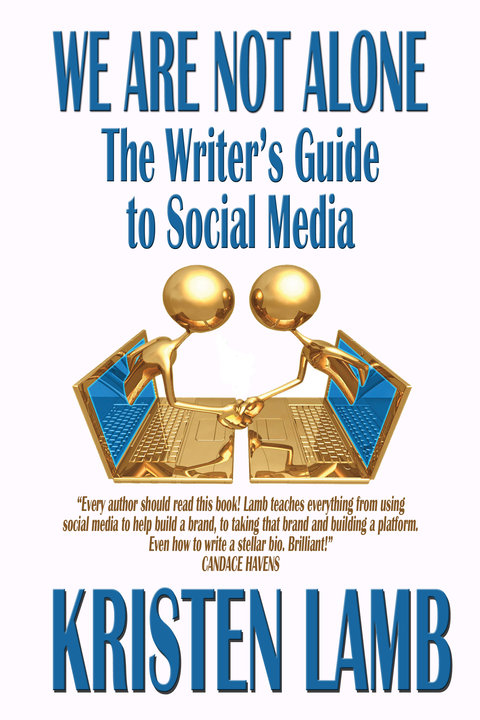
SO I’m really excited to introduce you to Kristen Lamb, the author of two books every published or not quite published author should rush out and buy – We Are Not Alone – The Writer’s Guide to Social Media, and, Are You There Blog? It’s Me, Writer.
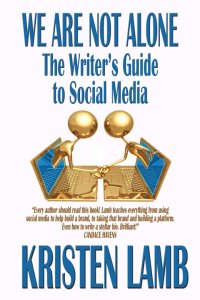
       

If you’ve been at this gig for a while, I’m sure you know Kristen. If not, I hope you enjoy meeting her today. Watch Read and learn.

Kristen, I love your tag line, We Are Not Alone… Tell us what this means to you and how you came up with it.

I didn’t start out wanting to be a social media expert. In fact, the words “social media expert” made me feel a tad queasy and overwhelmed. Yet, I kept going to conferences where “gurus” were teaching what I felt was a bunch of garbage. I was a writer first and knew that one couldn’t treat books like toothpaste and writers like tacos. So after a bunch of griping, I decided to own up and write a book. I wanted my book to be different. I wanted it to reflect what social media was really about—people and human relationships.

Too many writers couldn’t see the real advantage. We finally had control over our writing futures. We had help! So when it came time to NAME my book, the publisher wanted to call it something like  “Social Marketing for Writers” and I was like, “Why not just punch them in the face?”

I argued that my demographic played World of Warcraft and collected action figures and had season passes to Renaissance festivals and Trekkie conventions…like me. I knew if I named my book “Marketing for Writers” that writers would be more likely to power drink than buy my book. So, when I told this to my editor Jen Talty, she said, “Well, then what do you want writers to feel  when reading your book?”

And I said, “I don’t know *pout face.* Maybe, um. Hell, I want them to know that they aren’t alone.”

Then Jen said, “Why Not, ‘We Are Not Alone’?”

 I would love to claim that I came up with this brilliant title, but the credit goes to Jen.

You have certainly carved out quite a niche for yourself as a “social-media guru” and your books are extremely popular (and invaluable, I might add) within the writing community and beyond. Give us a glimpse of the journey you took to get here.

I spent way too much time on Twitter than is healthy for any sane person.

Wait…oh yeah. Inside words stay inside.

I hit a lot of buttons and made a lot of stupid mistakes. Then I figured out how to correct those mistakes and do things better and faster. I thank God every day that New York Times Best-Selling Author Bob Mayer let me have carte blanche to experiment on him…um, his platform.  In retrospect it was probably a good thing Bob had no idea what he was signing up for.

Bob was a unique challenge because he had been a best-selling author in FIVE genres and he had more personalities (pen names) than Sybil running around unattended.  It was a real challenge to figure out a way to balance all of Bob’s identities, genres and roles (fiction author, NF writer, teacher, speaker, publisher) without having him spread so thinly that social media was either a time-suck or a time-waste. I leaned A LOT from that experience. ..first and foremost that pen names are evil.

Bob got free social media help so long as he was willing to define “help” loosely…very loosely. Once I really got good at what I was doing, Bob asked me to write a book for Who Dares Wins Publishing and We Are Not Alone was born.

…and I sold ten copies the first month. Most of them to my mother.

I had spent so much time helping Bob build his platform, I kinda forgot my own. I had to buckle down and get to work building a platform and defining myself as a social media expert.

So when I tell you guys I made all the dumb mistakes so you don’t have to, I am really being serious.

What was the one thing you most hoped to accomplish through your book, and would you say you’ve succeeded in doing so?

I wanted writers to become a team, to love each other and support each other. Historically we have worked in isolation. Most people assume it’s because we are loners, weird or socially awkward. The real reason is we don’t want to share our Star Wars t-shirts. There, the truth is out.

I think many writers worked in isolation because, what was the alternative? Now, we have a way to combine our creative energies for good. We are like superheroes who have mad grammar skillz.

Do I think I’ve succeeded? WOW YES! By my calculations, writers WILL rule the world by sometime next year…which might explain why the Mayans predicted it would end.

How important is it for the author not yet published to create an online presence/platform?

Writing a great book is ALWAYS FIRST. But when you land that agent and the three-book deal, you DON’T want to be pulling a social platform out of your…ear. Start early. Slow and steady wins the race. I think a writer with a viable social platform is going to be the new norm in two years. Start now while it is still an advantage.

Fiction authors have a staggering failure rate. According to BEA statistics, in 2004, 93% of books sold less than 1000 copies (traditionally and non-traditionally published). This isn’t to scare anyone as much as it is to give you guys hope that we can finally beat those hellish odds.

There are only two ways to sell books—good book and word of mouth. We always had control over a good book, and had a 93% FAILURE rate. Oh, and those stats are from 2004, before my cat could get published. Lots more competition these days, so we are wise to do what we can to get an edge.

If you think you might want to self-publish or go indie, then you don’t have a choice. You MUST be on social media and do it well (For those who doubt, refer to  Kristen’s first book sales in question above).

What marketing advice would you give to a newly published author?

Don’t. Write more books. Write better and better books. Talk to people. Be authentic. Self-promote too much on social media and we call that spam.

Traditional marketing doesn’t sell books. Total waste of time. Bookmarks and book plates and giveaways might drive a handful of sales, but they are really tactics that make writers “feel” productive. Writers are better off spending that time on writing more books and better books. Spend the money on a massage and wine instead of a book trailer. The massage will do more for your writing career and the wine is wine…HELLO!

What is the best piece of advice anybody ever gave you?

You can have anything you want in life, if you help enough other people get what they want. ~ Zig Ziglar. Serve others first. Don’t worry about you. Focus on others and it comes back.

If you HAD to give up one area of Social Media (Facebook, Twitter, Google+, etc…), which one would you let go, and why?

I don’t care for G+. Maybe it is new, but I don’t see any advantages. Sure it has circles, but Facebook has lists. And I wouldn’t get all giddy about circles anyway. I don’t like sectioning people off based off what I think they might want to know. Hey, I’m a writer and if you don’t want to hear about writing don’t let the digital door hit you in the digital butt.

Thing is, we never know who is watching us. Some of those people you think don’t want to hear about all your writing crap are actually gonna be your biggest fans. The receptionist at my son’s pediatrician has bought three books off me and talks about me to anyone she meets.

I’m the only writer she’s ever met. To her, I’m a celebrity. Okay, so maybe she needs to get out more. But my point is, what if I had put her in a circle of people I thought didn’t want to hear about my writing?

Also, if your mother can’t read what you are posting, don’t post it.

Anything else you’d like to share, personally or professionally?

Learn to have a healthy relationship with failure. If we aren’t failing then we aren’t doing anything interesting. I would love to tell you guys that my books and blogging classes will make you a perfect blogger on Day One, but that would be awesome marketing a lie.

Just Do It

The more we write, the better we get at blogging and writing novels. We try, we fail, we reflect, we try again. The better we get at failing, the faster we will meet with success.

It’s been great having Kristen with us today! So let’s talk.

Do you have any burning questions about social marketing? Do you feel you’ve got a good handle on it or does the whole thing still scare the beejeebers out of you?

About Kristen Lamb:
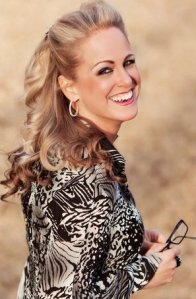
Kristen worked in international sales before transitioning into a career as an author, freelance editor and speaker, and she takes her years of experience in sales & promotion and merges it with almost a decade as a writer to create a program designed to help authors construct a platform in the new paradigm of publishing. Kristen has guided writers of all levels, from unpublished green peas to NY Times best-selling big fish, how to use social media to create a solid platform and brand. Most importantly, Kristen helps authors of all levels connect to their READERS and then maintain a relationship that grows into a long-term fanbase.

Currently Kristen is teaching workshops based off her best-selling book We Are Not Alone–The Writer’s Guide to Social Media at various writer conferences across the country. Stay tuned for a workshop in your area.

Kristen is represented by Russell Galen at Scovil, Galen and Ghosh Literary, Inc in NYC.

Police Work and Writing

For the past twenty years, I’ve worked as a 911 dispatcher. In the beginning of my career, I worked the graveyard shift at a busy California Bay Area police department. I cut my teeth on everything from stabbings to suicidal callers. My husband and I first met over a homicide. I dispatched him to the call; a drug deal gone bad. I know, not your average boy meets girl story.

Over my career, I’ve taken thousands of emergency calls and each one has molded and shaped my dark sense of humor and often cynical-quick-to-judge personality. After all, I get paid to judge in a matter of seconds, type-coding a call that will determine the response of police/fire/ambulance.

As an author, the road to publication twisted and shaped the writer I am as well. I can’t help but see clear parallels between a writer and police work.

It’s not always what it seems. A detective is trained to look for what the untrained eye doesn’t see—things like blood patterns, fingerprints, and previous cell phone activity. A writer’s path isn’t always an obvious three-step plan either. The craft must be studied, worked on, and almost never is how we dreamed it would turn out, with twists and turns taking you places you never thought you’d be. My two-page personal essay became a nonfiction book for moms—who knew?

Friends matter. Whether you’re the suspect or the victim of a crime, who you’ve associated with always comes into play. As a writer, who do you hang out with? Do you network with other writers/authors? Or, do you think your work is so good you’ll be miraculously discovered? If you truly believe this way, you couldn’t be more wrong. Trust me when I say: it’s only a matter of time before you’re a victim of un-success. Writing can be very solitary. Having someone come alongside who understands the ups and downs can make all the difference.

Word of mouth. Home invasions are almost always drug-related, a targeted place where the suspect has planned to regain their lost monies or steal drugs from someone they know. Occasionally, it’s a friend of a friend who bragged to the wrong person about their parents jewelry and non-belief in banks. As a writer, your reputation begins as soon as you share, “I’m a writer.” Once your words are published via blog, articles, or any other venue, your branding begins. Conferences, retreats, writer’s groups, and online relations are where your reputation is formed. Use every connection as an opportunity for helping other writers as well. I like to remind myself, no matter how well I write, I will never rise above the reputation my family, colleagues, and readers have of me.

Are you a victim?  I hate to break it to you…there aren’t as many victims as you think. Tough to hear? It’s true. The media loves to play on viewers emotions. As a writer, are you a victim? Do you suffer from itshouldbeme-syndrome? Do you believe every agent/publisher/editor just doesn’t understand your talent? Are you giving up the writer-ghost while complaining to everyone who will listen? Writer-victims aren’t as common as you’d like to think either. If your work is really that good and you are actively putting it in front of the right people, it will eventually be recognized. So, hang in there!

Writing and police work have a lot in common. After twenty years, my heart still races when I handle a hot call. There’s nothing like calming a woman who’s hiding from an intruder downstairs, encouraging someone to live another day, soothing a child who’s called an ambulance for their sick grandma, or the sound of a baby being born. The same can be said about writing. My heart still races when I submit an article, or speak before a crowd. There have been sleepless nights, anxious calls to writer-friends, and though my first published book is far from the New York Times best seller list—it’s been the ride of my life.

What about YOU? Does your writing journey have anything in common with your paying job?

A Writer’s Life: The Pit of Despair

Whenever I watch The Princess Bride, I skip the Pit of Despair segments. Popcorn, anyone? Maybe rewind to the Fire Swamp?

Sure, the Albino with the needs-to-cough-up-a-hairball voice is a bit of comedic relief before discovering our hero Westley is in the Pit of Despair. His future? Torture — attached to a life-sucking machine. His only escape? Death.

Am I the only one who skips these scenes?

As writers, there are days we are trapped in our personal Pit of Despair, without even a somewhat friendly Albino nearby. Life — our passion — is being sucked out of us, bit by bit.

What does Westley’s trip to the Pit teach us? Consider two truths:

  1. Truth # 1: Enemies get you into the Pit.
  2.  Truth # 2: Friends get you out of the Pit.

What about those enemies?
Inconceivable, isn’t it, how both success and failure dump us in the Pit.

When you succeed as a writer — land an agent, sign a contract — you think: Other people have expectations for me. What if I fail? Overloading yourself with the real or imaginary expectations of others tumble you into the Pit faster than the Dread Pirate Roberts can scale the Cliffs of Insanity.

And then there’s the slippery slope of failure: never attaining your goals, never quite grasping whatever spells “victory” for you. The root problem is the same: expectations. Fear you won’t meet others’ expectations or disappointment in yourself for not fulfilling your own. The bigger question? How do you navigate both success and failure?

At last! It’s time for the friends.
Westley didn’t rescue himself. The heroes? Fezzik and Inigo, who found a “mostly dead” Westley in the Pit. But that didn’t stop his friends from hauling his body out to go looking for a miracle.

When you can’t see the faintest hope of a miracle for the forest of despair surrounding your writing dreams, who searches for you? When you no longer believe in yourself, in your story, who believes in it for you? And — perhaps even more importantly — who do you go looking for when they’ve been dragged off into the Pit of Despair?

We’ve peered over the Cliffs of Insanity, survived the Fire Swamp, and now find ourselves at the Pit of Despair. Which have you found to be the greater enemy: success or failure? How have friends rescued you? Like Miracle Max, I believe it takes a miracle sometimes for changes to happen … so if you have any of those to share, please do!

For Fun: The Princess Bride 25th Anniversary cast reunion

Post Author: Beth K. Vogt

Beth K. Vogt is a non-fiction author and editor who said she’d never write fiction. She’s the wife of an air force physician (now in solo practice) who said she’d never marry a doctor—or anyone in the military. She’s a mom of four who said she’d never have kids. She’s discovered that God’s best often waits behind the doors marked “Never.” She writes contemporary romance because she believes there’s more to happily ever after than the fairy tales tell us.

First Contract Jitters

It wouldn’t happen to me.

At least not full-blown.

After all, I’d written for ten years, penned multiple novels, experienced a myriad of rejections letters, sold a bunch of articles, and met repeated free-lance deadlines.

I would NOT get the dreaded-first-contracted-book-jitters. Or writer’s block. I was a professional, just taking a next step in the industry.

Right?

You know what’s coming. My first book deal was contracted on a chapter and a synopsis. It was time to write to meet my first book deadline.

Only I needed to do more research. Read more widely within the genre.

I read 13 novellas in less than two weeks.

Obviously, it was becoming an addiction, all of this reading instead of writing.

I should quit—and would—as soon as I finished the 400 page novel that just arrived in the mail.

Then my friend brought me her collection of novellas to help with my research.

(Why do best friends feed addictions? Seriously!)

I had to write.

So I tackled every left-brained project I could find. I wrote non-fiction free-lance assignments, submitted proposals, started a devotional facebook page, and spent a bunch of time networking and marketing.

Which made my brain hurt, so I slipped away with a good book . . .

Renewed and with great resolve I went to bed excited for the morrow, when I would do nothing but write my first contracted novella.

I got up earlier than usual—not because I was eager to write, but due to the need to escape nightmares about inadequacy.

Bleary-eyed, I curled in my recliner, grabbed my journal and Bible, and prayed it through. The Lord reminded me of His promise ten years ago to lead me on the best pathway for my life, to guide me and watch over my writing journey (Psalm 32:8).

He asked if He’d done a good job so far. I said yes. He asked why I would think He would stop now. I said He wouldn’t. He promised to be with me.

Buoyed by God’s assurances for this new writing season I told my husband the whole wonderful story. Then promptly burst into tears.

The sweet man tried to hide his chuckles as he reminded me I was living my dream—that I could do this. Then he resorted to an illustration that good, non-fiction reading, left-brained, red-blooded husbands turn to: football.

Quoting Tim Tebow, the Bronco’s new wonder boy, my husband talked about going out there and doing what you love because you love it and because it is fun.

Oh, yeah.

This is what I love to do, this thing I’ve been avoiding for the past month. It’s fun.

No more fear! I’m going to get creative and let this story pour from my fingertips  . . .

Tomorrow.

(How about you? Got a “first contract jitters” story?)

Guest Blogger: Emily Rodmell for Love Inspired Historical

I’m excited to welcome a special guest to the WordServe Water Cooler–Emily Rodmell, associate editor for Love Inspired, Love Inspired Suspense and Love Inspired Historical. She also coordinates the lines’ continuity series. You can find her online at Twitter @EmilyRodmell or at Harlequin.com.

Good morning Wordserve Water Cooler. My name is Emily Rodmell, and I’m here today to chat with you all about a great opportunity for historical romance authors.

As associate editor for Harlequin’s Love Inspired lines, I get to work on inspirational contemporary romance, romantic suspense and historical romance. And it’s the Love Inspired Historical line that I’m here to talk about today.

Love Inspired Historical is a line dedicated to Christian historical romance from any time period before World War II. It started publishing two books a month in 2008, and early this year we doubled the amount of books we put out each month to four. That’s great news for historical romance readers, but it’s also great news for historical romance writers because it means that we need double the amount of authors. Since the expansion, we’ve welcomed around 20 new authors to the group, and we still have room for more.

If you love the days of old, we’d love to see a submission from you. We’re looking for great, emotional love stories set in a variety of settings and time periods. We always welcome Western stories, but we’d also love to see settings such as Biblical, Regency, Amish, Scottish, missionary and other unique eras that you’re passionate about. Make your characters relatable and your plots unpredictable. While we all know that the hero and heroine end up together in a romance novel, it’s the journey to that happily ever after that’s the fun part. Also, make sure your characters have something keeping them apart that they must overcome. Conflict, both internal and external, is vital to a successful romance.

We’re open to both published and unpublished authors. If you’re a published romance author, we accept a submission of a proposal (synopsis and three chapters). If you’re unpublished in romance, start with a query letter and synopsis, but make sure to have a full manuscript ready to send should we request it. I’m also open to submissions for our other two lines: Love Inspired and Love Inspired Suspense. You can mail your queries to my attention at 233 Broadway, Ste. 1001 New York, NY 10279 or have your agents get in touch.

Your Turn: We’re eager to see what you come up with. I’ll be around today to answer any questions you’d like to ask about writing for Love Inspired Historical.

CINCINNATI’S BOOK FESTIVAL

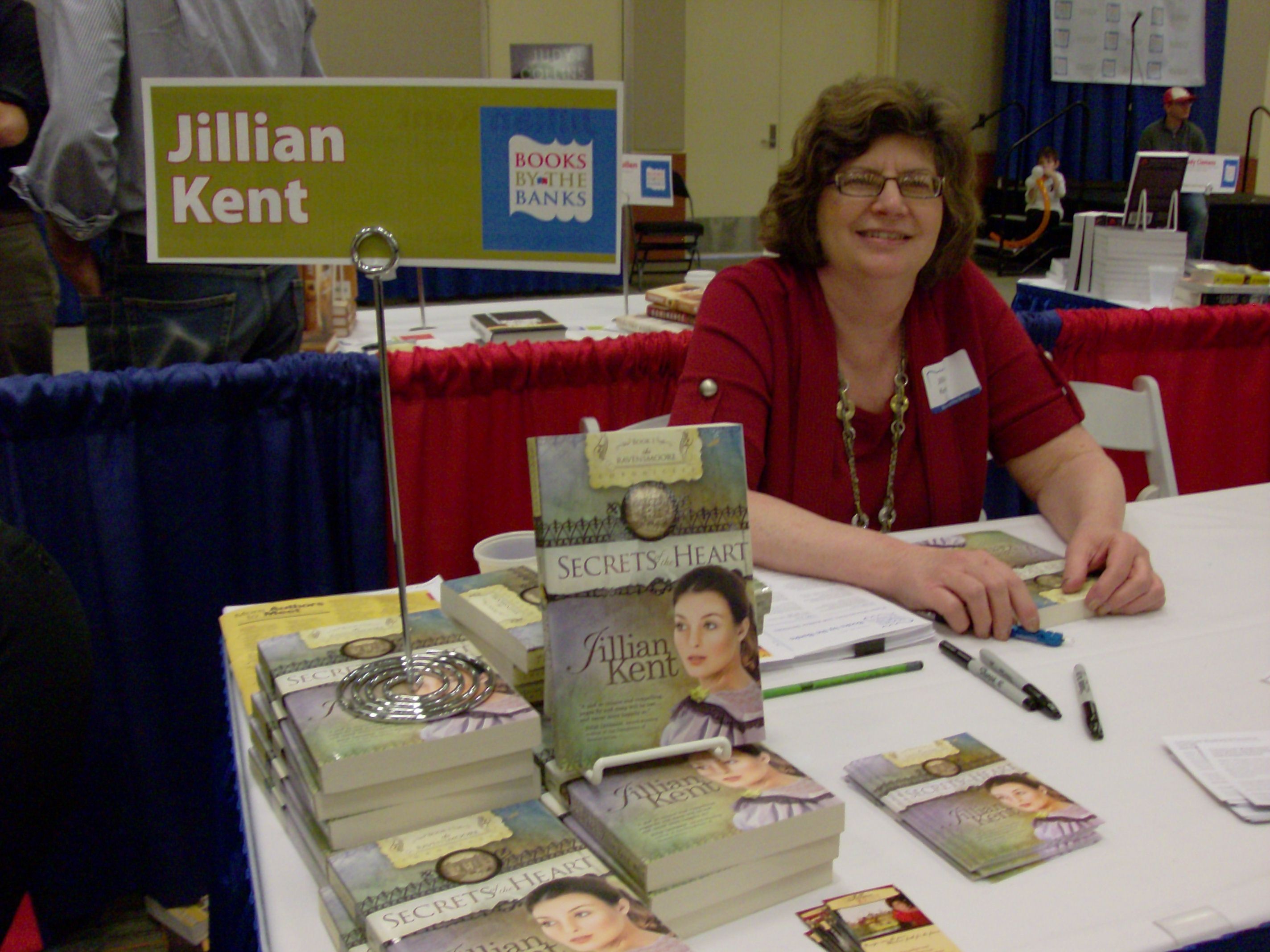
I was very fortunate to have my novel, Secrets of the Heart, Book One of the Ravensmoore Chronicles picked for this awesome event. This year was the 5th year for BBTB and I would have missed the deadline if my librarian friend Betty hadn’t encouraged me to apply earlier this spring.
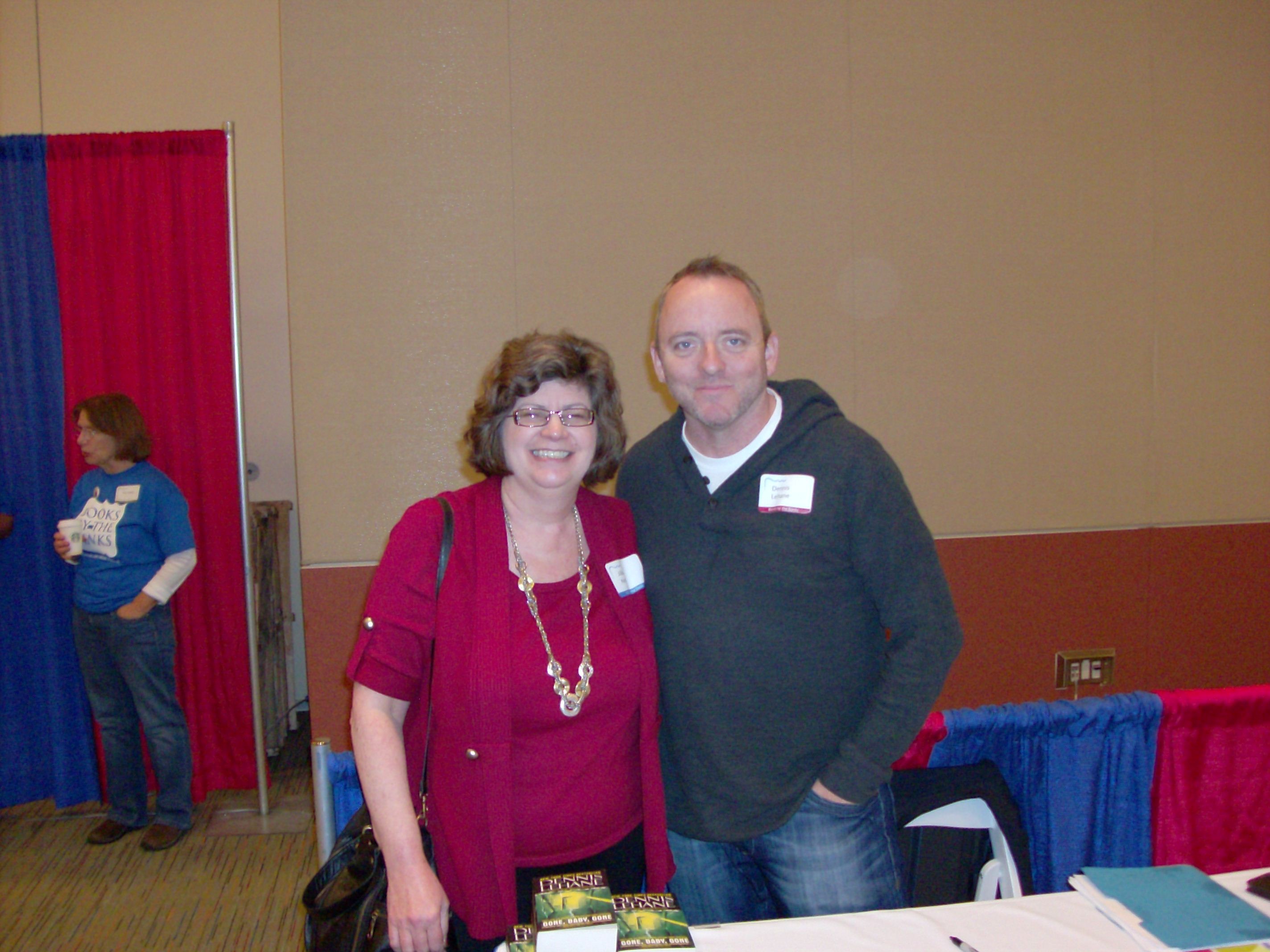
It started off with an author reception on Friday evening. Interesting enough there weren’t many authors in attendance. But I did have an agenda for this evening and that was to see if one of my favorite authors showed up. So I put my copy of Shutter Island in my purse and met my hubby downtown after work. Sure enough, Dennis Lehane was one of the few authors that attended the reception. We were able to meet with him and talk about the next day’s signing and he very graciously signed the book I’d brought with me.

I asked Dennis what to expect the next day since this was a huge event and he’s been to so many book signings  Here’s what he said: 1) Don’t expect to sell a lot of books. He told us stories about signing with other authors in the past where the competition had long lines and he didn’t. That was not the case this weekend. 🙂 2) Don’t sit there with a big grin on your face. In other words, and these are my words, don’t sit there, do something! And I did. I talked and asked questions to as many people as I could, browsers, buyers and other authors that were participating. I did catch myself with a big grin on my face more than once. 3) Have something to do in case it gets slow. It didn’t slow down too much, but I did take a break for lunch and I did take a couple breaks to get a chance to browse. Of course during one of those breaks I had to go buy another Lehane novel, The Given Day.
The points I’m trying to convey here are that you need to make the most of your marketing opportunities and have fun at the same time. 1) Make friends and talk to your librarians if you don’t do that all ready. 2) Look for big events near you that you may have an opportunity to participate in. 3) Don’t be afraid to approach experienced writers like Dennis Lehane and ask questions. That’s how we learn and make friends along the way.

I sold books. Not as many as Dennis but hey I’m just getting warmed up. Joseph-Beth Booksellers were the ones who provided our books for the signing. When we were done for the day they had us sign five more books for the store.

I also talked with the woman who helps organize the future signings for the store and the good news is that Joseph-Beth Booksellers is opening, yes I said OPENING another new store in Northern Kentucky. This is huge with all the closings of Borders and other Independent stores. So some time in the New Year I will be signing again at their store in Cincinnati or the new one in Kentucky.

In addition to all of this I was interviewed by Linda McMaken for an article that will run in RT Book Reviews and she’s also doing a more extensive interview later for Reader’s Entertainment.

I hope this gives you a few marketing ideas and a little nudge that will help you to step out of your comfort zone. You just never know what good things might happen.

So when was the last time you did something to market your current book? What was it? Or have you thought of something you can do that might help you and the rest of us? What kind of book signing experiences have you had?

Post Author: Jillian Kent

Jillian Kent is more than enthusiastic about the release of her first novel, Secrets of the Heart, The Ravensmoore Chronicles, Book One. She’s a full-time counselor for nursing students and holds a masters degree in social work. She’s fascinated with human behavior and thought it would be interesting to explore what might have happened in a lunatic asylum during England’s Regency era, her favorite time period. Jillian hopes you will escape into the past with her and find faith for the future.

What’s Your Klout Score?

I have to admit, I’m a numbers girl, which may strike you as funny because math is certainly not my talent. Likely, it comes from my nursing background and my need for instant gratification. My “real-life” job concerns fixing my patient’s numbers—moving them in the right direction. Lowering temperature, easing difficulty breathing, or bringing back a heart rate when there isn’t one. It’s all about trending in the right direction. Wrong patient trends need intervention.

Recently, I was reading Rachelle Gardner’s blog and came across her discussion on “numbers” and how you could use certain statistics, like blog hits, in your book proposal to help a publisher make a decision to go forward with your novel. Of course, a strong book is paramount but it is foolish to think that a potential employer, your publisher, isn’t looking at your on-line presence as a way to help their decision.

Rachelle mentioned a Klout score and I hadn’t heard of this so off to the website I go.

Klout, in one place, analyzes the effectiveness of your on-line presence. Once you allow it access from your social networking sites—and they do have a lot of them—it performs some genius unknown mathematical calculation so you can get a glimpse of your on-line life in a couple of areas.

First score measures your influence. It’s based on a scale of 1-100. One hundred being the best score you can have. Currently, I’m at 42.23 which places me as a “Dabbler”. Under Klout style, it will show other people you likely know, what their score is and where they land style-wise. That was a fun comparison because I knew several of the people and their on-line presence. Most I admire as something to aim toward.

Then is your true reach score. This measures how many people you influence. My score is currently 404. The site allows you to see other people’s scores as well. I compared myself to a known author and her reach was 877. I didn’t necessarily feel bad about that. She has three novels currently published and a savvy internet presence.

Next score is amplification which is how much you influence people. My score currently sits at 19. Not great but I’m just starting out so a definite growth opportunity—not weakness, right?

Last score is for network. This scores the impact of your network. The more people that comment, share and respond to your content, the higher your score will be. My score here is 51.

Klout also looks at topics you’re influential about. Mine are medical (yeah!), technology (really?), authors (excellent), blogging (surprised!) and childbirth (yikes—don’t ask me how.)

Also, it will list who you influence and whom your influenced by. Fun information.

Overall, I think Klout will be a good way to measure your on-line presence and whether or not it is growing. Sometimes, when I look at my Blogger statistics, I think the information is limited. I can see my stats are increasing but for me, that just may be more people are perusing by. That’s not bad but I like how Klout looks at your influence and overall reach. These are good numbers to gauge. If they are steadily climbing, my efforts are working versus a downturn would lead me to consider changing up what I’m doing.

Are you on Klout? What’s your score? Have you used your scores to change what you’re doing on-line?

For an alternate opinion on how valuable this score is, check out this post entitled: Why Your Klout Score is Meaningless.


Blessings From A One-Star Review

What possible good comes from a one-star review? 

I promised last month that there was more.  That I would explain how the experience of being publically criticized can make us stronger. 

Is the pain worth it?

Absolutely yes.  Here are three reasons why.

No. 1 – Criticism Tests Our Passion

We must be passionate about writing.  We must really want it.  Why else would we subject ourselves to this insane process called publishing? 

Think about it.  As writers, we are either the stupidest people on the planet, or we actually have a dream.  When we count up all the hours we spending outlining, writing, re-writing, editing, and trying to publish (not to mention marketing and networking) we’re earning less than minimum wage.  Throw in some harsh critics, and you’ll meet the ultimate test of your will. 

Criticism brings us to that moment of reckoning.  That moment when we ask ourselves.  Is this gig really worth it?  I have a nice life.  A good job.  A stable family.  Why do I want to upset the apple cart?

It’s a beautiful moment.   A moment when some of us finally feel free.  When we wrestle with passion and look our dreams squarely in the eye and say, “I don’t care what people think!  I am in this race and I am going to finish!”

Boy, that felt good.

No. 2 – Criticism Tests Our Relationships

I need to correct myself.  I actually do care what people think.  Granted, that group is much smaller than it used to be, but there is a core group of people that I don’t want to disappoint.  Like my husband.  My immediate family.  My closest friends. 

Here’s the point.  When we are publically criticized, we learn who our allies are.  We learn who our allies aren’t.  And our closest relationships – the ones we really care about – will likely become stronger. 

The silver lining?  In addition to shoring up my closest relationships, I actually met some new friends in the process – people who came along side me and defended me just because I stuck my neck out there. 

No. 3 – Criticism Starts A Dialogue

Why do we write in the first place?  So that everyone will agree with us?  I think not!  Don’t we want people to wrestle, to debate, even disagree?

In my case, Chasing Superwoman is a faith-based memoir about being a working mom and trying to do it all.  Nothing like hitting a few hot buttons all in one sweep.  Parenting?  There are few subjects we feel stronger about.  The choice for mothers to work outside the home?  Now, I’m really getting personal. 

The point isn’t whether my readers agree or disagree.  The point is that I’ve made them think.  Don’t I want to start a dialogue?

I’d like to introduce you to my Amazon buddies.  Five women I’ve never met before went on Amazon and wrote responses to the one-star review.  Several of these women sent me encouraging notes and personal emails.  One of these women became my Facebook pal, and another started her own blog.  These are the kind of fans writers dream of – all because of a one-star review!

Are you ready to test your passion, test your relationships, and start a dialogue?

Why are we really writing?  Who are we trying to please?  And don’t we want people talking about our work?

My Reader, My Patron: How Authors will Survive in the Brave New Publishing World

I want to tell you about a musician friend of mine from college. The fact that this particular musician is a long-ago friend of mine has given me some serious street cred with my boardgamer buddies. But I’m not telling you about him to increase my geek-chic quotient. Instead, I want you to know that this very smart guy figured out how to make a living in the music industry–even though the industry had changed overnight from a scene dominated by major labels to a fragmented cyberworld of digital downloads. (Sound familiar to anyone in publishing?)

Six years ago, Jonathan Coulton realized that he had to appeal directly to his fans to support his art. He quit his job and started amassing a collection of his music online. He put fans on their honor to pay him for his digital music downloads, even though they could be downloaded free. He recommended a donation of $1 per song. Here’s an article about what he did. You’ll see many parallels in his life to what’s going on for authors in publishing today.

It worked. His determined fan base gathered around his website and sent him money to buy his music, because they knew that without it, he could not continue to make art. Eventually, he moved to a more traditional sales model, but the foundation of his success was appealing directly to his fans and letting them know they were his only patrons.

Writers, we need to support a similar revolution in consciousness among our readers. Right now, readers don’t realize that each one of them is a patron of the arts–that each buying decision determines which writer will survive and which will not. The reader’s power is disguised by the middle men: publishers and booksellers. Readers think that because our books are available in bookstores, someone must be buying them, correct? So what does it matter if they pay for a book or just get one from the library?

We have this new and growing problem: readers who would ordinarily be our most devoted patrons are starting to get our books for free through promotions, especially through e-book giveaways. These valuable readers don’t realize that the cascade of free books will eventually cause the professional demise of the authors they love. It’s not clear to them that they are our patrons, and without their support, we perish.

As a reader, I have my own strategy to support my favorite authors and allow them to keep writing, so I’ll share it with you here as advice for those who also wish to support the novels they love.

Patrons must be selective. When you choose books to buy, make sure you’re buying the books you love most. If you receive books for free, but you absolutely love one of those books, then go out of our way to purchase a copy of that same book. Give multiple copies as gifts, if the book is that good. If you don’t buy it, you can’t count on other people to do so and thereby support the author so you get to keep reading his books. YOU are the patron.

I hold fast to the hope that in the next few years, new models of publishing will develop that strengthen the bond of support between reader and author. I think we’re going to see a resurgence of patronage for writers through these more direct sales channels, and wonderful things will result. But as we move into this brave new world, we’re all going to have to be more conscious that as readers, we are patrons. And as writers in a world where books are being devalued by giveaways, we need to find tactful ways to make it clear to readers that without their financial patronage, our work will not survive.