Celebrate Your Book With a Party!

November 4, 2011 was starred, circled, highlighted and otherwise bolded on my wall calendar, computer calendar, and represented in a countdown ticker on my desktop.

What’s so special about that date, you ask? My book launch party for Lakeside Reunion, my debut novel, which released in November by Love Inspired.

After receiving the call from Rachelle that launched me from an unpublished author into the publishing world, I envisioned hosting a book launch party to celebrate this dream-turned-reality with family and friends.

I set the date, searched online for book launch information, and came across articles by Deborah Vogts and Ava Pennington on the CAN site. Their articles are very informative, so if you’re in the planning stages, check out their great advice.

Following their leads, I created a budget, then enlisted family and friends to help. I chose to host the party at my church because it wouldn’t cost me anything and it would be a good marketing opportunity for our church.

Once I saw my cover, I decided to keep a simple, yet classic theme of leaves. What better symbolizes autumn?
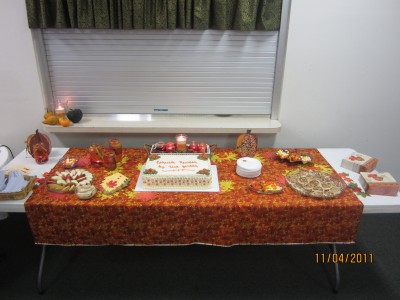
As silly as it may sound, I compared myself to a bride-to-be preparing for her wedding day. If you’ve planned a wedding or helped with one, you know what I’m talking about—budgets, food, décor, and we can’t forget the dress.

I sent out almost 100 invitations to family and friends across the country. I wanted them to celebrate with me (and buy my book)!

I kept the menu simple–cinnamon roll mini pancakes to go with the breakfast theme in the book, apples & caramel dip, candy corn M & Ms, cake, cider, coffee and tea. We had plenty of food leftover so people don’t attend to eat.

The building anticipation created a roller coaster of emotions—would anyone show up, would I sell any books, would I run out of food, what if they hate the book? The day couldn’t arrive fast enough—the day was approaching too quickly. I still had too much to do! What was I thinking having a book launch party anyway?

The weekend of my party, my prayer partner and close friend Reba J. Hoffman flew up from Florida to attend. My friend Carolyn, who was one of the first to read Lakeside Reunion in its infancy ten years ago, drove up from Virginia to share in my special day. My family rallied around me. My Coffee Girls surprised me with a large keepsake box. What I pictured in my head was nothing compared to what played out on that gorgeous autumn afternoon.
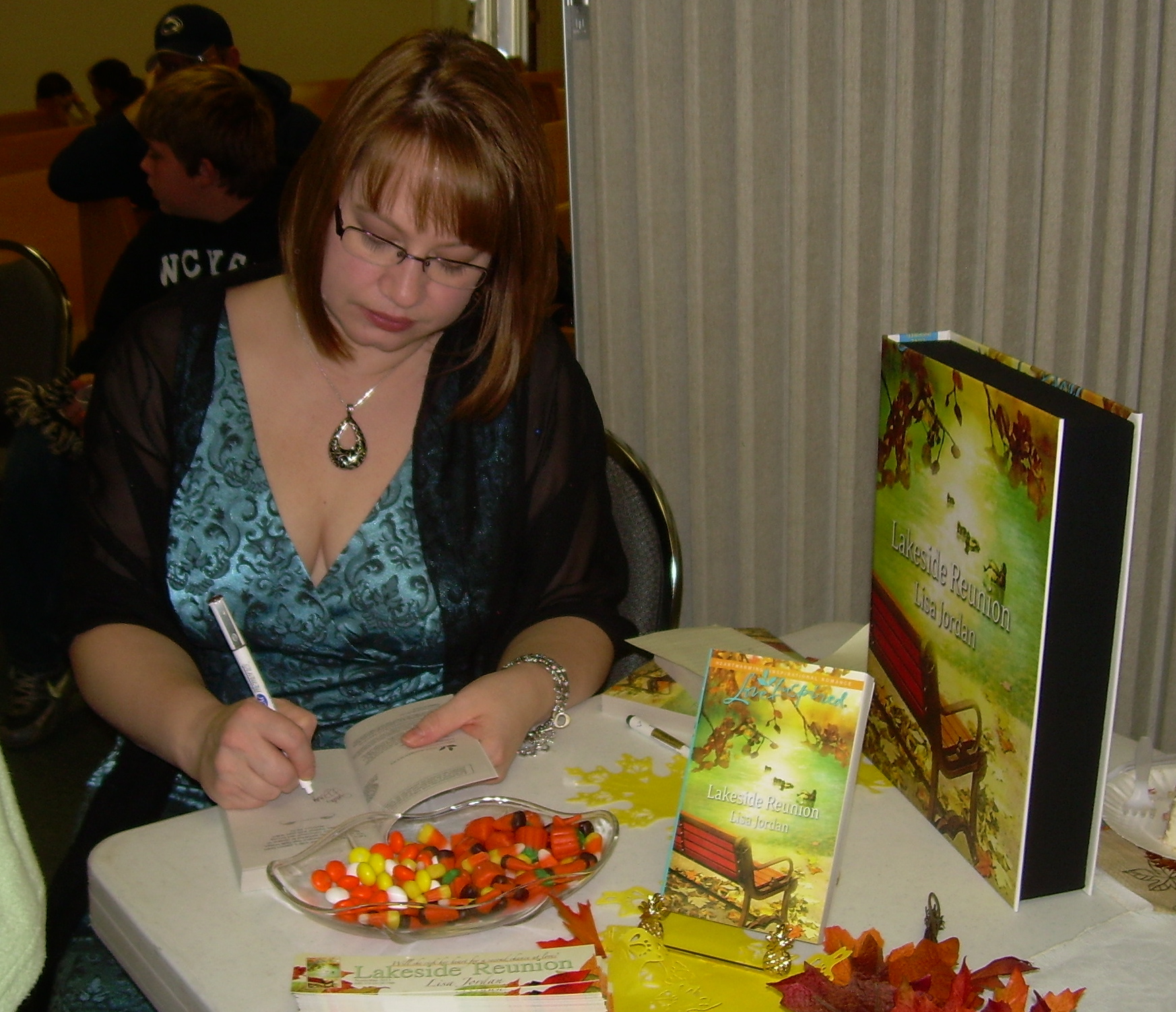
Tears flowed. Cameras flashed. I laughed. I hugged. I signed. God used little ole me to write a story that touched hearts. One of my mother’s friends shared how Lindsey’s story helped her cope with her husband’s recent death. As family members and friends celebrated this milestone in my life, I gave God the glory. After all, had it not been for Him, none of that day would have been possible.

What about you? Did you have a book launch party? What special moment stood out to you? If you haven’t had one yet, are you planning one for your book? What expectations do you have?


Settling the Score in 2012

Photo: D Sharon Pruit

Like lots of writers, I’m goal-driven. Each December I reflect on what I’ve accomplished the past year and what I still want to achieve. I’m not talking New Year’s Resolutions here; my WordServe colleague covered that quite brilliantly here. I’m talking about taking a good hard look at where I currently stack up against where I want to be.

When I started writing, I decided if I did one thing—no matter how small—every day to move toward my goal, I was doing okay. That worked for a while. I sold a couple of novels, completed several new manuscripts and got an agent—all aspirations I’d set out to achieve. Then something changed. People were measuring success in the social media space in a quantifiable, new way.

I knew social media was important for author promotion, so I increased my focus there. I expanded my social networking channels, reached out to make new contacts and endeavored to add relevant content wherever I participated. Eventually, I fell into a nice rhythm, and I’d thought I reached some moderate success.

Until, I discovered Klout.

I understand the importance of measuring the benefit of action against the time (or money) spent taking that action. Klout measures influence based on ability to drive action through social networks. As authors, we want people to engage with us, and we want them to read our books. So, off I went to Klout, armed with the warm-fuzzy I was already doing okay. I signed into my various latest-and-greatest social networks, then eagerly awaited my score.

It came back: twenty. Let me put that into perspective. An average score for someone dabbling in social media at that time was around 22. I had spent the year ramping up my social media presence and was still decidedly below average. The cat-lady next door probably had a higher Klout score than mine. Dismal didn’t begin to describe how I felt.

Being goal-oriented, I’m not one to wallow in my misery, so I looked up people with Klout scores I admired and tried to emulate them. Ten+ tweets a day? Eesh, but if it will make a difference, okay. Post more Facebook content people are likely to like, comment on or share? Let me just dust off my crystal ball…check. I can do that! Get more mentions on Twitter? No clue, but maybe if I tweet more it will help. And it couldn’t hurt to blog more…micro-blog more…get more followers…make more friends…post better content…be more interesting…put more out there…respond more to other people’s stuff…who said less is more? More is more!

I adjusted my program, then went back to check my score. It was now a bright, shiny…24? Still not good enough. I continued to make tweaks and check to see if anything I did made a difference. When someone reblogged my content, what did that do to my score? When they commented on my links, how did that help? What if I un-followed a bunch of inactive Twitter accounts, did that do anything? One day I thought I’d hit on something when my Klout score jumped to the high-thirties, but then I figured out they changed their algorithms and lots of scores had gone up by 10 or more without any outside effort whatsoever.

Then it dawned on me, if Klout can tweak their so-called measuring stick, why can’t I? Who really cared about my score anyway? Would an editor not buy my novel if my score wasn’t high enough? Would my agent drop me if my True Reach wasn’t up to snuff? Would my Yahoo groups cringe to be seen with me? Would my Tumblr pals run away like one of their clever little gifs? Would I never sell another book again?

I’m guessing the answer to most of the above is ‘no’ with the exception of that last one, because if I didn’t stop obsessing about moving my Klout score, I was never going to make time to finish another book again. Ever.

As I look forward to 2012 and set some writerly-type goals, I’ll continue to include author promotion among them, but I’ll be careful what I use to measure my success. Even though Klout is interesting and a great validation for some, I already know it’ll no longer be my personal yardstick.

The only numbers I want to obsess over this year are word count, the number of pages I’ve edited, and possibly the number of adverbs I remove from my first drafts. I may even go back to my old adage: what have I done today to further my writing career? I’ll stretch myself to improve my writing—to dig deeper for character development, to toss out clichés and to make my dialogue sing. I’ll remember why I joined social media to begin with: to interact with friends, readers and other writers.

And when I look back this time next year, I hope I’ll be able to carve another notch in the old doorframe and celebrate 2012 knowing how much I’ve really grown.

What about you? How are you measuring success against your goals?

Holy Deadline, Batman!

Back in November, I received an e-mail from my editor.

My FIRST editorial letter. I was giddy with excitement!

A little while later, she sent a follow up e-mail noting my FIRST deadline of 12/16/11.

Again, excitement bubbled out of this newly contracted debut author! A deadline! And it wasn’t so scary… all those silly published authors who complained about being “on deadline” were going to eat my socks, because I was going to make my deadline and triumph.

That said, I KNEW that someday I’d have that pit-in-stomach at the dreaded deadline. But not now. This was a fun “first” and I was determined to enjoy it!

Then I read my wonderful first (16 page long!) editorial letter. The word “overhaul” was used at least once. That is enough to put fear into the heart of ANY debut author!

I looked back at my deadline and cried.

Then pulled my bootstraps up to my armpits and dug in. For the first week or two, I determined to be organized about my massive rewrite/edit that was going to be needed. I made sticky notes, printed out the edits and manuscript and started to carefully plot a plan.

Then Thanksgiving happened. Read: First time making a turkey for my extended family of 17, at MY house, while my 4 kids were off school. So there blew a whole week.

When I came out of my turkey and Black Friday enduced fog, reality slapped me in the face.

My deadline was fast approaching, and I was still in my planning stages. And I had presents to purchase. Weekends filling up. Doctor and therapy appointments for my special-needs daughter coming out my ears.

I’m here to tell you:

DEADLINES IN DECEMBER STINK!

I tried. I really really did. My house resembles a warzone as I haven’t cleaned it in about two weeks.

I’ve made frozen pizza and frozen waffles for dinner WAY too much.

I made my daughter dig through the dirty laundry on at least two occassions for jeans to wear to school as I had edited instead of doing laundry.

And when I DID do said laundry, folding it was not in the cards. It laid heaped in a large pile covering half of my bedroom floor for a week, and kids were required to dig through it for school clothes. You think I’m exaggerating. I am not.

Deadline-Eve came. And I was still a good ways from being done, and not pleased about the work I had done, mostly because I was in “hurry” mode instead of “quality” mode. So I did the one thing I had refused to allow enter my brain.

I e-mailed my agent and told her how much I hate December deadlines and that if I turned this in on the 16th, it’d royally sucked.

She in turn got me a couple day extension.

So now, today is my NEW deadline. And as I got through the final read through, I fully plan to push send later today and meet my revised deadline.

I am officially a humbled, thankful debut author. Never again will I look at deadlines the same!

Now, I have to go finish my edits. Wish me luck!

Rejection!

Rejection is an ugly word, especially to a writer. But we need to keep it in perspective.

To help you put rejection into perspective, I’d like to discuss my shoes.

I have a pair of lovely leather shoes. I really like my shoes. They are stylish, look good with many types of clothing, and are comfortable to wear for many hours. I love, love, love my shoes.

A few months ago, I noticed my shoes were beginning to look worn out and were no longer attractive to wear with dress pants. I thought about purchasing another pair of shoes, and then I had the bright idea to bring them to a shoe repairman. The repairman put new heels on my shoes, polished the leather, and blackened the soles. After some effort and work, my leather shoes are spiffed up and look as good as new.

Now, if I offered my shoes to someone and they don’t love them like I do, should I be heartbroken? Does their rejection of my shoes make me less of a person? Does it make my shoes less attractive? Does it make me less worthy?

Think about it, I bet my shoes wouldn’t fit just anyone. They wouldn’t be right for a number of people with different tastes and different needs. But that doesn’t make my shoes less valuable or less worthy.

That’s the way I look at rejection. My manuscript (shoes) is polished and ready to go out into the world. But perhaps the agent/editor (consumer) needs a different size or is looking for a different style. It’s easy to look at the situation from this perspective and see that it’s not always personal when your manuscript (shoes) is rejected! Sometimes the rejection is not about the story or craft but for other reasons, some of them simply being reasons of timing.

Rejection is an ugly word, especially to a writer. But we need to keep it in perspective. If we’ve been gifted/called to write, then we should keep writing and polishing our manuscripts. After all, many successful writers have suffered rejection.

Now that you’ve gotten the fear of rejection out of your mind, put your new confidence to the test by planning to attend a writer’s conference this year. Many writers will testify that their career got on the fast track after they attended their first conference. You meet other writers, editors, agents, and learn about the craft and the industry at conferences. Your competence and enthusiasm for your writing gets a great boost by attending conferences.

Don’t stress about rejection, keep moving forward in your career.

How do you shrug off rejection? How do you keep it in perspective?

The Accidental Collaborator

I never intended to be a collaborator.

For the record, my plan was to be a wildly successful, insanely rich novelist. People were going to mention me in hushed, awestruck tones along with other “last name only” fiction writers. You know: Peretti, Dekker, Grisham, Koontz, King, Pence.

I broke into book publishing in 2001 by writing computer books. In 2003, my dream was fulfilled. I was a published—and soon to be famous—novelist. By 2005, (despite excellent reviews) my “career” had pretty much ground to a halt. In fact, in May of that year I hung up my keyboard and joined the prison ministry staff of a large Dallas mega-church, feeling that my grand experiment in full-time freelance writing was a failure.

God had other plans.

James H. Pence and Terry CaffeyJames H. Pence and Terry Caffey, ministering together in Moss Bluff, Louisiana.

In my last post, (Oct. 1, “You Never Know”), I told the story of how God took a single page from my out-of-print novel Blind Sight and used it to change the life of Terry Caffey, a man whose family was brutally murdered. God not only used that page to change Terry’s life; He also used it to change the entire direction of my writing.

In January of 2009, Terry asked me to help him write a book that would tell his story.

I hadn’t written or published in four years and, as I already mentioned, collaboration was not in my long-term plans. However, because I wanted to encourage Terry, I agreed to help him write a book proposal.

Because of the intense media interest in Terry’s story, Tyndale snapped up the proposal and put the book on an accelerated publication schedule. We signed a contract in March of ’09 and the book was set for a September release.

I had to write it in twelve weeks.

The accelerated writing schedule was probably a good thing because I didn’t have the time to give in to sheer panic. I’d never collaborated before, and I had no earthly idea how to go about it. But it was a door that God had opened, and so I trusted Him for the wisdom.

I dusted off my little digital voice recorder and began interviewing Terry. Then I worked at outlining the book, selecting the stories that would go into it, even using my fiction-writing skills to lay out a plot-line.

As I worked with Terry and wrote what would become Terror by Night, I began to notice something unexpected.

I was enjoying myself immensely.

I love telling stories, but I had no idea how much I would enjoy helping other people tell their stories.

And so now I happily call myself a collaborator. I spent most of 2011 writing a book about Nate Lytle, a young surfer who made a miraculous recovery from a massive traumatic brain injury. I also collaborated on a novella with bestselling author Stephen Arterburn. And I’ve got proposals in the works for two more collaborations, one fiction and the other nonfiction.

I never intended to be a collaborator.

But God led me through an unexpected door and down an unplanned path. And in doing so, He changed the direction of my writing ministry.

Has God placed some unexpected doors or unplanned paths before you? I hope that in 2012 you’ll take a chance and go through them.

You never know what God might do.

“A person plans his course, but the Lord directs his steps,” (Proverbs 16:9, NET Bible). 

7 Ways to Do Book Dedications

Ever since I imagined writing a book I imagined my dedication page. I’m not talking about the acknowledgements page where you thank everyone who ever helped you; I’m talking about that mostly blank page tucked in the beginning of a book, after the title page and publishing credits.

Many people give a clear dedication to a spouse for all his or her longsuffering, but some book dedications are cryptic — they proclaim a public thanks while alluding to stories more interesting than the book itself.

I am fascinated with the topic of book dedications because there is always a story behind the story. There’s a reason the author wrote the book in the first place, and there is often intrigue behind the dedication — a story or relationship we may never know. Here are seven examples of book dedictations:

Loving

A.A. Milne’s dedication to his wife in Winnie the Pooh:

To her – Hand in hand we come Christopher Robin and I, To lay this book in your lap. Say you’re surprised? Say you like it? Say it’s just what you wanted? Because it’s yours — because we love you.

Curious

Betty MacDonald to her sister in The Egg and I

To my sister, who always believed that I can do anything she puts her mind to.

Striving

John Steinbeck to his friend Pascal “Pat” Covici. As Steinbeck wrote Journal of a Novel: The East of Eden Letters, he often mentioned the things he was tinkering with or building around the house. At one point, Pat asked Steinbeck to make him a box; Steinbeck joked that the only specification was that Pat shouldn’t be able to fit inside it. When Steinbeck finished East of Eden, he placed his 250,000 word manuscript into a mahogany box he had carved and sent it to Pat. The note he placed on top became the dedication page of the novel.

Dear Pat,
 You came upon me carving some kind of little figure out of wood and you said, ‘Why don’t you make something for me?’ 
I asked you what you wanted, and you said, ‘A box.’ ‘What for?’ ‘To put things in.’ ‘What kind of things?’ ‘Whatever you have,’ you said.
 Well, here’s your box. Nearly everything I have is in it, and it is not full. Pain and excitement are in it, and feeling good or bad and evil thoughts and good thoughts – the pleasure of design and some despair and the indescribable joy of creation.
 And on top of these are all the gratitude and love I have for you.
 And still the box is not full.

Funny

Random blogger to actor Colin Firth in her future, hoped for book

Thanks for playing Mr. Darcy, and for wearing that white shirt in the lake scene.

Touching

J.K. Rowling to Sean PF Harris (the first of her friends to learn to drive and the first with whom she discussed her ambition to be a writer) in Harry Potter and the Chamber of Secrets

For Sean PF Harris, getaway driver and foul weather friend

Sentimental 

C. S. Lewis to his God-daughter Lucy Barfield (age 12 when he began the writing the book and age 15 when it was finally released) in The Lion the Witch and the Wardrobe

My dear Lucy, I wrote this story for you, but when I began it I had not realized that girls grow quicker than books. As a result you are already too old for fairy tales, and by the time it is printed and bound you will be older still. But some day you will be old enough to start reading fairy tales again. You can then take it down from some upper shelf, dust it, and tell me what you think of it. I shall probably be too deaf to hear, and too old to understand a word you say, but I shall still be your affectionate Godfather

Predictable

Dave Cullen to those injured and killed in Columbine

For Rachel, Danny, Dave, Cassie, Steven, Corey, Kelly, Matthew, Daniel, Isaiah, John, Lauren, and Kyle. And for Patrick, for giving me hope.

What are some of your favorite book dedications? To whom will/did you dedicate your book? What will you say? How will you say it? 

A Writer’s Life: Resolved — Ban New Year’s Resolutions

I failed at New Year’s Resolutions.

For years I prioritized my dos and don’ts for forward motion in the new year. I was eager. Determined.

And I always lost my meticulously prioritized list by mid-February.

Sigh.

Now I am all about one word.

One.

The Why of One Word

I’m repeating myself for those of you who have read my other blog posts about my now-seven year commitment to selecting one word for each new year. Pardon the re-run. I want others to discover the benefits of concentrating on a single word for 12 months — or as a friend pointed out, the 366 days comprising 2012.

The How of One Word

I start mulling over my word for the next year in early fall, usually around September. It’s woven into my faith journey. My prayer time and significant Scripture verses play a vital role in directing me to my word for the new year.

I know some of you reading this would say faith isn’t part of your life. At all.

Can we pause for a moment, sit on the opposite sides of the supposed chasm that separates us? What I’d like to whisper across that great divide is this: I respect where you are. I’m not shoving anything at you.

Your “how” will be different from my “how.” Consider the circumstances of the past year. Can you distill down to one word the forward motion you’d like to experience in 2012?

The What of One Word

In previous years, my words were:

  • 2006: gratitude (a gratitude journal revolutionized my glass-half-empty attitude)
  • 2007: simplify (severe illness morphed this word into survival)
  • 2008: content (being content with what I had — and yes, I bought a lot less)
  • 2009 & 2010: forgiveness (had a lot to learn & unlearn)
  • 2011: hope (choosing hope no matter the depth of my heartache)
  • 2012: trust
My words are examples to consider, not a mandatory list to choose from. If you remember nothing else from this post remember this:
Life is complicated enough. We’re writers. We deal with deadlines and word counts and reviews and real life people and imaginary ones (and both are frustrating.) The New Year’s Resolutions habit/guilt trip/expectation is another unneeded complication.
 
Think like a journalist. Or an editor. Or a novelist instructed to cut “x” number of words. Distill your dos and don’ts down to one word and then focus on that for the next 366 days. You’ll be changed when 2013 rolls around. Guaranteed — or your money back!
 
Are you ready to walk away from resolutions and focus on one word in 2012? Are you a one word believer? Have you already pick your 2012 word? I’d love to hear your thoughts!
 

Post Author: Beth K. Vogt

Beth K. Vogt is a non-fiction author and editor who said she’d never write fiction. She’s the wife of an air force physician (now in solo practice) who said she’d never marry a doctor—or anyone in the military. She’s a mom of four who said she’d never have kids. She’s discovered that God’s best often waits behind the doors marked “Never.” She writes contemporary romance because she believes there’s more to happily ever after than the fairy tales tell us.

Surrender Your Dreams to God


I started writing towards the goal of publication eleven years ago. I attended writer’s groups, conferences, read books on craft, and did my best to educate myself on this business of being an author.

All of this was good, except God had called me to be a Christian writer. I forgot about the Christian side of things. Now my books had all the elements of an inspirational story, but I didn’t include God in my plans.

My prayers were, God please let this agent be the one. I want this so badly. Help me to win this contest or let this query be the one that opens doors.

After beating my head against the keyboard, I finally surrendered my writing to God. I asked Him to tell me if I should pursue writing for publication or if I should give it up. If I was to give it up, then I asked for His guidance toward the thing I was supposed to be doing for Him.

I finally trusted Him enough to give Him control of my life and my dreams.

“For I know the plans I have for you,” declares the Lord, “plans to prosper you and not to harm you, plans to give you hope and a future.” Jeremiah 29:11

I was thrilled when He answered that I was to write for Him and to pursue publication. But if He’d answered differently, I was prepared to follow. And it wasn’t until I included Him in my dreams that He could begin to do things I’d never imagined and could have never done on my own.

So, no matter what your dream is, I urge you to give it to God. He will never break His promise, and His promise is good things for us.

Have you given your dreams to God? Has He answered your prayers differently than you expected?

Perfecting Prose – What I learned from being a RITA finalist

Earlier this year, I received a thrilling phone call notifying me that my debut book, A Tailor-Made Bride, had finaled in the RITA®  category for Best First Book. Was I ever excited! Then people started asking me about why I thought my book made it to the finals. My first reaction was – How can I possibly know? Contest judging is so subjective. The more I thought about it, however, the more I realized that even though I didn’t have direct feedback from the RITA judges, I had feedback from other judges—readers. So the tips you’ll find here today, are based on what I have gleaned from the comments of readers and reviewers.

Characters impact readers more than plot.

“What amazing characters… I loved Jericho and Hannah. It was as if they were real people.”

“Her characters live and breathe, not only within the pages but long after the cover is closed.”

“Her characters were flawed in ways that made them endearing and gave you a vested interest in their individual quests for happiness and fulfillment.”

My goal in designing main characters is twofold: have every woman who reads my story fall in love with the hero, and have every female reader wish to be the heroine. In order for me to accomplish this, as an author, I need to do exactly the same—fall in love with my hero and live vicariously through my heroine. If the characters aren’t real to me, they won’t be real to the reader either. So what makes them real?

  • Use Deep POV – Spend time in the character’s head. Express his thoughts directly using language that matches his personality. Show his reactions and emotions instead of explaining them to the reader. Give him a distinct narrative voice.
  • Use Contrast – My hero is a grouchy, set-in-his-ways livery owner, but that crusty exterior hides a soft heart that leads him to perform acts of kindness when no one is looking. His words might sound arrogant, but his actions show his inner goodness.
  • Give them flaws to make them real. Give them quirks to make them unique. Give them noble motivations to make them likeable – Hannah was living her dream of opening her own dress shop, but she struggled with her lack of business savvy when customers were scarce. Her quirk – she’s a 19th century fitness maven with a daily exercise regimen that most folks scoffed at. As for motivation, she wanted to have a successful shop, but not at the cost of being a stumbling block to others. Her ultimate aim was to use the gifts God had given her to serve her community, not simply to support herself by making a good living. Giving her a more noble motivation increased her likeability even when her stubbornness and pride led her into trouble.
  • Have well-developed secondary characters – Many readers have asked me about turning A Tailor-Made Bride into a series because they found themselves so attached to the town and its characters that they wanted more. What a fabulous compliment! Even though secondary characters don’t have their own POVs, make them memorable and real to the reader. Make them quirky and fun, or have them tug on the reader’s heartstrings. Use them to open the eyes of your main character when he/she is struggling to come to grips with a specific truth. But remember, their purpose is to enhance the story of the hero and heroine, not to steal the show.
  • Use dialog as a romance tool – Witty dialog is something I greatly admire in novels and strive to incorporate in my own. My favorite way to use it is between the hero and heroine as they fight against their attraction. Let them tease, flirt, and spar with each other as a way to build romantic tension. Sometimes having a character be audaciously honest can be a delightful surprise. One of my favorite scenes from A Tailor-Made Bride uses this technique. Hannah has learned Jericho’s true name and is teasing him about it.

He prowled forward, jaw clenched so hard, his facial muscles ticked. “The name’s J.T.”

“No,” she said, tapping her chin as if pondering some great mystery. “Those are initials. Your name is Jericho.”

Wiggling his fingers to keep them from curling into fists, J.T. reminded himself that she was a woman.

“Are you purposely trying to rile me?” His voice rumbled with menace, warning her against such a dangerous path.

An all-too-innocent smile stretched across her face. “Why, yes. Yes, I am. Is it working?”

Deepen Your Spiritual Theme with Layers

“Besides a beautiful romance, this story has take-home value in it that made me stop and reflect…The characters grew not only as individual people, and as a couple, but as children of God as well.”

“…you will also find the Lord’s “thumbprint” on every page. Her words ministered to my spirit in such a deep, penetrating way.”

“…while the book is highly readable and enjoyable, it is also thought-provoking. I found myself pausing time and again to reflect on my own life, particularly as it relates to God’s purpose for me.”

  • More than skin deep – On the surface, the key spiritual message of A Tailor-Made Bride seems to entail the issue of beauty vs. vanity. However, if you look deeper, you’ll see that the true message is about balance, unity, and opening yourself to God’s truth even when it goes against long-held beliefs based on personal experience.
  • Complicate things – Another aspect that I believe made my theme unique was that I allowed both characters to be right. Both had a biblical foundation to back up their position, and as I wrote their story, I found myself agreeing with both sides. The true issue is not who is right and who is wrong. The true issue is how can we treat each other with love, even when we disagree? And can we set our dogmatism aside long enough to see if there is any truth to be gained by pondering the opposite perspective?
  • Sprinkle other spiritual truths throughout the story in addition to the main theme – In real life, we rarely deal with one issue at a time. So in addition to the beauty-vanity theme, I also sprinkled in thoughts about running a business as a person of faith, using gifts to serve others even when the service goes unnoticed, and reaching out to the outcasts among us. Remember, however, that story rules. Never incorporate a spiritual thread simply to teach your readers a truth. Everything has to spring naturally from the characters and the plot, otherwise it will come across as preachy.

Question for you: So when you think about your favorite books, the ones that linger in your mind long after the last page is turned, what is it about them that impacted you most? If you were a contest judge, what would you be looking for?

How to Plan a Book Club World Premiere

Image by Salvatore Vuono

As I’ve journeyed to the February 2012 publication date of my first novel, Into the Free, I’ve listened carefully to authors who have “been ‘round this track” a few times before me. One such author is bestselling novelist Lisa Wingate.

Just before her sixteenth novel, Dandelion Summer, hit shelves, Lisa shared the book with a lucky group of ladies from the McGregor Tiara Literary Society. Then she shared their reaction to the book with the world via YouTube.

Book Premiere? That’s Genius!

I’ve always been a member of at least one book club, and I am drawn to books that encourage people to discuss the themes of the story. I was intrigued by Lisa’s idea for a premiere. I figured, Hollywood holds premieres for new movies, right? Publishers have started making trailers for books, just as producers do for films…so…why not follow that line of thinking and host a premiere for my novel? I was convinced Lisa Wingate was brilliant. And I was right.

But Lisa is not just brilliant. She is generous and compassionate and eager to share her talents with others. It’s no surprise she provided a step-by-step tutorial on her Southern Belle View blog for others who might want to plan such an event. There you’ll find detailed instructions on planning, organizing, recording, and sharing the big premiere.

Without her directions, I would have overlooked details about release forms and microphones. I would have struggled using Windows Movie Maker to edit the clips, and I would have been clueless about lighting, length, and little tips to make the event fun for all involved.

Roll out the Red Carpet!

Thanks to Lisa Wingate’s fabulous advice, and Terri Blackstock’s kind suggestion to check out Lisa’s idea, I have since held three book premieres across the country for Into the Free. I’m editing them now and will be sharing them with the public in January, 2012. But just for fun, I have posted some of the photos and comments on my website.

If you’re planning to launch a book in the future, I strongly encourage you to consider a book club premiere. Even if the camera malfunctions (as mine did with the third event) or Skype gets moody (as it did with the group in Colorado), it’s still a ton of fun and very interesting to hear reader feedback before the book ever hits shelves.

Big thanks to the Beach Babes of Baton Rouge, Louisiana; Porch Pals in Longmont, Colorado; and the University Literary Circle from Oxford, Mississippi for playing along with me.

And…be sure to view  clips from Lisa Wingate’s world premiere for Dandelion Summer.