Let’s NOT Kill the Frog

No frogs were harmed in the writing of this blog post.

Something funny happened on my way to write this post… I found that I didn’t want to write it. Because it wasn’t going to be funny. Unlike a post about the time I locked my toddler in the car WITH MY KEYS and the fire department got lost on their way to rescue us. That was FuuuuN-NY (after the police came and unlocked the doors).

Once we try to analyze humor and discuss it seriously, it changes. Most often, it becomes unfunny. Mark Twain said, “The more you explain it, the more I don’t understand it.” Or, even worse: life threatening. EB White said, “Analyzing humor is like dissecting a frog. Few people are interested and the frog dies of it.”

But, I’m going to give it a try anyway. And, hopefully, kill no frogs. Humor has a place in all types of writing. Because I’m a fiction writer, I’ll focus there. Shakespeare, Dickens and Austen all used humor. And let’s not forget our great American Twain. Think about the works of each of those distinguished writers. Huge variety in styles and stories. They all used humor. Differently. And, deftly. Humor can benefit your characters, your case and your career. {Alliteration is one useful literary device to bring levity into your fiction.}

CHARACTERS— No one loves a bore. {Inversion is to take what people know– “everyone loves a clown”–and turn it upside down.} In our fiction, we want characters who seem real. We want our readers to connect. A quality we love in real life? Sense of humor. So be sure to give your characters one. Humor can provide respite from your main character’s drama. As your characters show their full range of emotions and traits- inclusive of laughter and humor- they become more real to the reader. They become more important to the reader.

CASE– Okay, this word is really supposed to be theme, but I was going for alliteration up there and so “case” it is! {Breaking the 4th wall is a technique to try and bring your readers in, like a shared joke among good friends.} Humor can help make your case. If you’re funny, it can penetrate people’s natural defenses and reach in to the deep places. Twain said, “Nothing can stand against the assault of laughter.” Someone else said we laugh when we hear the truth at a velocity that exceeds our normal standards of insight. The classic authors I mentioned earlier wrote about slavery, poverty, murder, heartbreak and greed. And used humor.

CAREER– As writers, we all know we might need to market just a little.{Understatement is another literary device to try.} We need to do interviews, guest posts and meet our readers. Some of us will add speaking engagements as part of our efforts. Most speakers start with something funny and, of course, “leave ‘em laughing” too. Funny is good. Funny is fun. My bookshelves are full and my reading time limited. But if I see a funny interview or meet a funny writer, I follow up to learn more. If it doesn’t come naturally to you, you can work on it. But don’t work on it too hard. Trying too hard is not funny. But humor is bi-directional: if you can laugh, you can make others laugh.

One last thing…

CONSIDER– The most important thing is your humor has to work. Because if people don’t get it—or worse, like it– you will be shunned and have to wear dirty burlap sacks and listen to bad knock-knock jokes for the rest of your life and BEYOND. {Hyperbole can be a way to add some funny.} Before you use humor, consider if it is appropriate. Consider the maturity, culture and location of your humor and your audience. That joke about the frogs may not go over at the PETA convention. Or it might be just the thing.

A frog goes into a bank and approaches the teller. He can see from her nameplate that her name is Patricia Whack. So he says, “Ms. Whack, I’d like to get a loan to buy a boat and go on a long vacation”. Patricia looks at the frog in disbelief and asks how much he wants to borrow. The frog says $30,000. The teller asks his name and the frog says that his name is Kermit Jagger, his dad is Mick Jagger and that it’s okay, he knows the bank manager.

Patti explains that $30,000 is a substantial amount of money and that there will need to be some collateral against the loan. She asks if he has anything he can use. The frog says, “Sure, I have this”, and produces a tiny pink porcelain elephant, about half an inch tall, bright pink and perfectly formed. Very confused, Patti explains that she’ll have to consult with the manager and disappears into a back office.

She finds the manager and says, “There’s a frog called Kermit Jagger out there who claims to know you, and wants to borrow $30,000. And he wants to use this as collateral”. She holds up the tiny pink elephant and says, “I mean, what the heck is this?” The bank manager looks back at her and says…

 “It’s a knick knack, Patti Whack, give the frog a loan. His old man’s a Rolling Stone!”

Post Author: Charise Olson

Charise Olson writes contemporary women’s fiction. She likes to say she writes California Fiction. It’s like Southern Fiction, but without all that humidity. Her characters face serious life situations and cope with humor. Someone always has a smart mouth and Charise claims IM-plausibile deniability as to their origin. Charise is a mom to anyone needing mothering (whether they think they need it or not!) and owns two alpacas. Why alpacas? Because they were cheaper than a lawn mower. The menagerie also includes two dogs and two cats. In addition to her fiction writing and family, Charise has a paycheck career in social services and education.


I Have a Dream Today

Image: Andy Newson / FreeDigitalPhotos.net

Why would a twenty-three-year-old white girl from the midwest clip a newspaper printing of the speech Rev. Martin Luther King Jr. delivered at the Lincoln Memorial in 1963 and tuck it away among her treasured mementos where it remains nineteen years later today?

Because she believed in the power of a lofty dream to drive change? Because she had faith in the unalienable rights of life, liberty and the pursuit of happiness? Because Rev. Martin Luther King Jr. was a compelling writer and speaker who knew how to captivate a diverse audience?

Yes, all of that and more. But, today I want to focus on three reasons I think the reverend’s writing moved me the way it did back when I first clipped that article, and why it still does today.

He created a universal problem and emotional connection. While the reverend’s speech was in no small part directed at those whose rights were being abused, he was brilliant to make it deeply personal for all Americans by invoking a patriotic problem. He speaks of when the ‘architects of our Republic wrote the magnificent words of the Constitution and Declaration of Independence, they were signing a promissory note to which every American was to fall heir.’ If this problem, this refusal of rights can happen to one population of Americans, what keeps it from happening to anyone?

Reverend King Jr. makes us care because most Americans are cognizant of the greatness of the promise of our Constitutional rights. With an increasing global awareness, we’re even less likely to take them for granted. ‘It is a dream deeply rooted in the American dream.’

The writing lesson here: whether writing fiction or non-fiction, give your audience a personal reason to care by creating a problem they can relate to, an emotional connection either to the characters or the cause. Especially in fiction, even though your problem or plot may (and probably should) be extraordinary, your readers should be able to find the common humanity there.

He used powerful language, metaphors and active verbs to show, not tell. Martin Luther King Jr.’s speech did not simply ‘tell it like it is’, he showed it through the use of active verbs and metaphors. While metaphors can be frowned upon in genre fiction today, few could argue they created a unforgettable visual of the plight of 1963: ‘seared in the flames of injustice’, ‘crippled by the manacles of segregation and the chains of discrimination.’, ‘sweltering summer of the Negro’s legitimate discontent’, ‘whirlwind of revolt’, ‘battered by the storms of persecution and staggered by the winds of police brutality’…

And, he also showed it in the vision of his dream: ‘on the red hills of Georgia the sons of former slaves and the sons of former slave owners will be able to sit down together at the table of brotherhood…’, ‘Mississippi, a state sweltering with the heat of oppression, will be transformed to an oasis of freedom and justice…’, ‘every valley shall be exalted, every hill and mountain shall be made low, the rough places will be made plain, and the crooked places will be made straight…’. These are convincing visuals.

The writer’s lesson here: more than simply showing vs telling, try to break from the same worn and weathered words to paint vivid pictures. Scrap those clichés and push yourself to make your language—descriptions and actions—tell their own stories. This doesn’t mean your writing should be thick with purple prose, just that each word should be thoughtful and deliberate. For fiction writers, this also applies to dialog: if your reader can easily predict what your character will say next, it may not even be worth saying.

He leveraged the “Power of Three” and then some. A trick of great speakers—presidents and members of the clergy know this—is the rule of three. What most people remember from a speech is no accident. The key thoughts and takeaways are memorable because they are repeated or weaved throughout, at least three times.

The Rev. King Jr.’s words ‘I have a dream’ were repeated no less than six times throughout his speech. Same with ‘let freedom ring’. But, in addition to those memorable lines, he opened with repeated concepts around ‘One hundred years later’ to describe the state of despair long after Lincoln has signed the Emancipation Proclamation. Then with ‘Now is the time’ to spurn urgency of action, and also with ‘We can never be satisfied as long as…’.

This rule of three can work in your writing too: repeated themes and ideas stick. In fiction this may need to be more shrewdly thought out so you’re not overusing a word or repeating a crutch-phrase, but if there is a key point you want to make sure the reader doesn’t miss, this is a technique anyone can apply.

In respect for the holiday, might I suggest you take a moment to read the Reverend Martin Luther King Jr.’s speech and reflect not only on his great vision but how charismatically he used the tools of language to share that vision with the world?

Linking Arms

Talk about lousy timing! After accepting the position of president for my local writer’s group, HIS Writers, I was shocked when the Lord asked me to stop pursuing book publication. “Why are you asking me to work for writers if you won’t let me write?” I whined.

His answer was tender, “This is for you–a gift.”

And so it was. As chaos swirled in my life friends in HIS Writers linked arms with me and kept me sane. Though multiple family crises didn’t allow much writing time, staying involved kept me learning, growing, and networking as a writer. As the difficult season drew to a close, HIS Writers cheered as I received my first book contract.

There are many practical reasons to get involved in a writing group. Below are some reasons to connect–and also things to look for as you choose where to belong.

Networking

HIS Writers in 2010

There’s great value in finding support among your peers, but there’s also the business aspect of networking. Because of networking in HIS Writers, I received my first free-lance editing job. I’ve also been in the position to sub-contract part of my free-lance writing, and I looked to the people in my group when it came time to hire. It was a joy to offer a first publishing opportunity to some gifted writers. My first fiction book contract came about through a friend in the group. Never underestimate the power of peer relationships.

In many vibrant writing groups, you don’t only network with peers. Through HIS Writers I’ve met people from across the publishing world–authors, editors, even a publisher! Two agents from WordServe Literary spoke to our group. I also networked with the store manager where we meet. He’s promised me a prime spot during the next holiday season for a book signing!

Education

Good writing groups offer you a chance to develop professionally. Advanced writers and speakers teach craft. Critique groups help members develop. Strong groups also educate  about the business of writing.

HIS Writers board with the speaker of our first Novel Crafters Seminar of the Rockies. Left to right: Donna Schlachter, Susan May Warren, Paula Moldenhauer, Linda Abels, and Jill Hups

Cheerleaders

We’ve all watched eyes glaze over when non-writer family and friends are no longer tracking with us. As excited as our loved ones get as they watch us succeed, they often don’t understand the journey. We need cheerleaders who’ve felt the sting of rejection and know how to get up and try again. We need wise counsel from people who’ve been there.

A Chance to Give Back

As Christian writers we’re on the same team, working toward eternal impact. There are many ways to serve in a writing group. While getting involved with a local leadership team is rewarding, giving back can be as simple as cheering on the person seated next to you.

I recently accepted the position of Colorado Coordinator for the American Christian Fiction Writers. My passion is to see others benefit as I have from strong local chapters. How about you? Have writing groups helped you? How have you given back? What do you wish your local group had to offer?

The Middle

First of all,  I’m so sorry this post wasn’t up this morning.  I would blame Friday the 13th but the truth is, I thought today was Friday the 12th and  my inability to read a calendar resulted in the inability to get my post up on time.  Anyway…


Have y’all seen the show “The Middle“?  I love it… and average family from middle America does average things and does them in a mediocre way.  What’s not to love?  (Sidenote:  I read this aloud to my husband and his answer was:  “Sure, it’s great as long as you don’t mind watching people who are poorer than you, uglier than you and less talented than you do things that you do everyday.”  Touché.)

But, as it turns out, talent and wealth aside, when it comes to writing, I am a lot like the Hecks.   I think a lot of writers are.  Yes, getting my book deal was a big deal.  Yes, seeing my book on the bookstore shelf for the first time was an amazing experience.  And, yes, I have sold a fair number of copies of my book.  But I’m not John Grisham.  Or even Ann Voskamp.  I’m a middle-of-the-road author.  And, if we’re honest, most authors are.

So, how do Middle Writers survive– and thrive in “The Middle”?

1.  Being in the middle doesn’t mean settling for mediocrity.  No, I probably won’t sell a million copies of my next book, but that doesn’t mean I shouldn’t write it like millions are going to read it.  I choose to put forth my best work every day– regardless of whether it’s a short essay to be read by three people in my family or a book that will potentially be read by thousands.  Work hard to hone your craft and never settle for less than your best.

2.  Be realistic.  I admit– there are days that I daydream about multi-million dollar sales and huge contracts.  Days that I imagine the “what-ifs” of sold-out audiences and huge second printings.  But, then I get realistic.  And realize that those things would be nice– but they are not essential to my success as an author.

3.  Think about why you write.  I love putting words on paper.  I love making people laugh.  I love telling stories.  I love giving advice.  And, when I really get down to the nitty gritty of why I write, making money and selling books is not at the top of my list.  Which is a good thing.  So, when I find myself getting caught up in sales numbers and money and contracts and all that stuff, I remind myself why I write.  And remind myself that the rest is secondary.

4.  Build your platform where you are.  I write non-fiction, so platform is important.  But, as much as I’d love it, I’m probably not going to get Heidi Klum to endorse my book.  Or Oprah to put it on her book club list.  But that doesn’t mean I can’t work hard to build an awesome platform where I am.  I go to local Mom’s groups and speak.  I am heavily involved in MOPS.  I write for several parenting magazines.  I blog about what I love.  All those things build platform– even for authors in “The Middle”.

5.  Don’t be afraid to dream about “the Top”.  I know I just told you to be realistic but it’s also important to have dreams– and some of those dreams can involve “the Top”.  Set your sights high.  Live the dream.  Write like you’re going to make it big.  And never give up on your dream.
Question for you:  How do you thrive in “The Middle” (Or, if you’re not in “The Middle”, how do you like the view from “The Top”?

The Standalone and the Series

Which is better, a standalone novel or a series?

This is a complex question, given each writing career is unique; but here’s what I’ve learned:

Sequel plots evolve naturally.

Most often while writing a novel, an author gets ideas that can spin into sequels. Sometimes minor characters beg for their own stories. Such inspiration is useful in layering the plot of a standalone or planting leads into the first novel of a series.

Most publishers want sequels written six months apart.

This means a solid eighteen months or more of the author’s time is contracted. With so many unknowns for a writer, this brings a sense of security. Since the advance represents the entire series, the extra money is valuable upfront for marketing purposes.

Usually less research is needed for a series than subsequent standalone novels, which gives the author extra writing time. With successive deadlines, he is forced to write consistently which also hones his skills and productivity.

Series are popular with publishers unless

the first book doesn’t sell.

If the first book doesn’t sell, it makes the sequels harder to sell. By the time the author discovers what went wrong, he’s probably already into the third book of the series and finds the publisher less willing to spend marketing dollars on the sequels.

For newbies, a series leaves little time for conditioning;

you hit the ground running.

The character roster quickly snowballs, yet needs to be worked into the ongoing series. Since each book also stands alone, there is back-story to incorporate. It takes skill to tie it all together. Maintaining consistency makes record keeping imperative from character charts to research files. There’s a struggle against boredom, and if the author gets bored the reader will too.

Deadlines threaten quality and marketing time.

It’s difficult to write quality work with tighter deadlines and also find time to market the first story which is the most important story for the success of the series. Usually the first story is quite detailed in the original book proposal. But one of the sequels may need major time-consuming revisions once the editor sees that story evolving.

Why not write a standalone with a series option?

While it sounds like the perfect solution, it’s always harder to go down a path when you don’t know where it’s leading.  It’s not impossible, but it makes writing the book proposal and novel trickier.

My personal experience – writing a series is like running.

At the beginning, I was excited and fresh. The middle book was written under the most duress. I was struggling uphill because of the increasing time crunch, revisions, and unexpected personal obligations. But the final book was like getting my second wind. It was exhilarating. With writing muscles in peak condition, it was the easiest and most enjoyable to produce. And just beyond beckoned refreshment and reward.

What about you? Are you a sprinter or a marathon runner?

A Writer’s Pains and Gains: A Birthday Perspective

Today is my birthday. I’m 57 years into my journey. I’ve been taking time to look back like so many of us do at the beginning of a New Year and then looking forward with excited anticipation to 2012. I’ve learned a lot! I went through a bunch of blog posts I’ve done since 2009 when I was just learning to blog. Some of them are hysterical. But the important thing is that I learned to blog. Creating blogs and all the rest that comes with such things is no easy task. I’m proud of this achievement because I never considered myself technologically savvy. I”m getting better.

I found an editor, Debbie Marrie, at Charisma Media/Realms who loved my book and shared it with others in the company and asked me if I wanted to sell my series at a time when they weren’t even looking for Regency era novels.  I SOLD MY SERIES! I sold it by myself and then I GOT AN AGENT! I’m following Rachelle Gardner to Books and Such and am very excited about what this year might bring. So if you are reading this and wondering if you’ll ever get published just remember that it’s still possible no matter what you hear.

In the past twenty-two years I’ve attended at least two Romance Writers of America Conferences, multiple American Christian Fiction Writers Conferences, one Mt. Hermon Christian Writers Conference, and two Blue Ridge Christian Writers Conferences. Along with these conferences I’ve attended a zillion local writers meetings.

I’ve been in a critique group, I’ve received help, given help, and I’ve improved my writing craft more than I thought possible and still have so far to grow. I’ve entered more contests than I could count and I’ve judged a few too. I discovered that I’m stronger than I thought I was.

I’ve learned to depend on God. I’ve prayed along with my husband until we had holes in the knees of our blue jeans for our oldest child who has struggled with severe depression and anxiety for the last eleven years, and for her sister who didn’t get enough attention during that time period. She still found her way through our family’s difficulties and instead of going to college when she graduated high school eighteen months ago she travels the world with, Youth With A Mission, serving others.

I’ve had the honor and privilege of making many new friends since I decided to write; some of you here, some from ACFW, some from RWA,some of you I’ve never met in person but I can always find you on-line, on Face Book, on Twitter.  What you’ve given me is so much more than I could ever give back and I’m so grateful for all of you who have helped me and prayed with me and for me and for my family.

So as I’ve said in the past to those who have been discouraged, don’t ever let anyone tell you that you can’t do something. You must not believe them. You must try.

If you get the chance please come celebrate with me at my blog. I look forward to it.

Post Author: Jillian Kent

Jillian Kent is more than enthusiastic about the release of her first novel, Secrets of the Heart, The Ravensmoore Chronicles, Book One. She’s a full-time counselor for nursing students and holds a masters degree in social work. She’s fascinated with human behavior and thought it would be interesting to explore what might have happened in a lunatic asylum during England’s Regency era, her favorite time period. Jillian hopes you will escape into the past with her and find faith for the future.

A Writer’s Life: Waiting for Vizzini

When things go wrong along the writing road, what do you do?

  • When you face writer’s block as formidable as Fezzik (and please, no debate on whether writer’s block exists) …
  • When rejections attack you like a pack of shrieking eels
  • When your plot collapses like Vizzini’s battle of wits with the Dread Pirate Roberts

What’s your go-to plan for getting back on course?

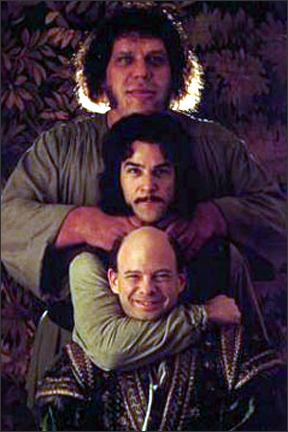
In the much-beloved movie The Princess Bride, Vizzini was the brains, Fezzik the brawn, and Inigo was, well, the swordsman. (Sorry, I couldn’t come up with a “b” word for the guy wielding the sword.) Despite the fact that Plato, Aristotle and Socrates were all morons compared to Vizzini — or so he said — his plan to kidnap and murder Buttercup imploded.

Inigo: bested.

Fezzik: beaten.

Vizzini: plain ol’ dead.

Remember what Inigo did when the plan went south — well, besides drinking himself into a stupor?

He went back to the beginning … and waited for Vizzini.

Smart man, Inigo.

What do you find when you go back to the beginning?

“This is where we got the job, so this is the beginning.”

Inigo may not have been able to see clearly — heck, he couldn’t even stand up straight — but he remembered a fundamental truth: When a plan fails, go back to the beginning.

Are you discouraged? Did that long-anticipated yes turn into an unexpected no? Walk away from it — but don’t abandon who you are. Go back to the beginning and remember your purpose: You are a writer. You have a job to do. Sometimes things don’t go according to plan. You get bested. Beaten. A dream dies.

Catch your breath, renew your heart … and then dream a new dream.

Who do you find when you go back to the beginning?

“I … am … waiting … for … Vizzini.”

Inigo was waiting for someone. For better, for worse, Vizzini was Inigo’s leader — the one he followed.

Going back to the beginning, waiting, doesn’t mean wasting time. Did you round the bend in the writing road and hit a dead end? Don’t be too proud to back up, turn around. Go back to the beginning and remember who you are as a writer. Answer this question: What makes your fingers fly across the keyboard? What keeps you up late and drags you out of bed early because you can’t not write this story?

Can’t remember?

Who is your Vizzini? Who first mentored you (maybe mentors you still)?Who helps nurture your dream? Who believes in you when you don’t? Go back to the beginning and ask them to help you remember.

It’s been fun talking about a writer’s life and the Cliffs of Insanity, the Fire Swamp, the Pit of Despair — and now Waiting for Vizzini. Everyone’s comments have made this more than a blog post — it’s become a conversation. So tell me, what lessons have you learned by going back to the beginning? 

*Just for fun, here’s a YouTube clip of Inigo waiting for Vizzini.

Post Author: Beth K. Vogt

Beth K. Vogt is a non-fiction author and editor who said she’d never write fiction. She’s the wife of an air force physician (now in solo practice) who said she’d never marry a doctor—or anyone in the military. She’s a mom of four who said she’d never have kids. She’s discovered that God’s best often waits behind the doors marked “Never.” She writes contemporary romance because she believes there’s more to happily ever after than the fairy tales tell us.

The One Essential “Ingredient” to Successful Marketing

The closer I come to the release of my first fiction (The Soul Saver, Barbour Books) in May, the more I find myself fascinated with marketing. Specifically, what it all means and how does it all work. Not to mention the endless and overwhelming choices. Where do we start?

I will confess, I’m thankful to have had a nonfiction book (Winning Him Without Words, Regal Books) to market first. Through that journey, I learned that even the most well planned and thought-out marketing plan won’t succeed without one essential ingredient.

God.

Speaking for myself, self-promotion doesn’t come easy and I’m actually glad about that. I have to examine my motivations on a regular basis to make sure prickly pride hasn’t wormed its nefarious self into the scenario. I could easily make it all about me.

However, our marketing is vital to the spread of our message, be it fiction or nonfiction. The thing is, we tend to put it into this category that doesn’t include God because we somehow think it might repulse Him in some way.

I’ve noticed I’ve done this and have recently found Paul to be a great example of an effective marketer. His letters are in the Bible! That’s pretty successful marketing in my book (and God’s obviously).

Paul wrote letters and traveled, “promoting” the message of Christ’s salvation every chance he got. He put himself out there as a teacher, a speaker, a writer and a mentor. He’s a great example for us because even in the midst of his promotion efforts, Paul’s focus remained steadfast on his message.

On Jesus.

Are we any different really? Yes, we want to sell books. Yes, we want our work to reach the minds and hearts of those who need encouragement, strengthening, or just a glimpse of what God’s grace looks like. Doesn’t matter if it’s fiction or nonfiction. God uses whatever He wants to get His Truth out. To share His Son.

So, marketing doesn’t have to be the “necessary evil” of publishing. If we believe in our work and feel God has placed us in such a time as this to share subtly or overtly, through fiction or nonfiction, through articles or Bible studies, then why not start our marketing endeavors with God, seeking His design and will for our efforts? If I’m to believe and trust in His hand, which has brought me to where I am now, what makes me think He won’t be in the marketing mix as well?

How about you? What has your marketing journey taught you about faith? Or vice versa?

Interview with W. Dale Cramer Concludes, Part 4

(see Parts ONE, TWO & THREE)

CE: How much editorial input do you get from your publisher, and how do you like working with a publishing house editor?

DC:  All my books so far have been published by Bethany House, who has always put a lot of editorial work into their books. I like it. Most of my books have undergone major changes due directly to the input of editors, and I have no problem with that. To me, it’s just more sets of eyes—professional book people’s eyes, looking for ways to improve the manuscript. The writer has to get his ego out of the way and learn to see his work objectively, like a lump of clay, sparing no amount of effort to shape it into a work of art. 

Editors are book people. Not only their professional reputation, but their sense of self worth hangs from the quality of books they produce. They want the same thing you do—a good book—and they know what they’re doing. I’ve worked with the same editor on all my books, and it’s been a pleasure. Luke Hinrichs is intelligent, perceptive, articulate, and good-looking (not to mention that he sometimes reads these blogs, if you get my drift.)

CE: What is one critical thing you’ve learned not to do on the publishing journey? (Some of us admit without shame that we prefer to learn from others’ mistakes.

DC: I prefer learning from my own mistakes, but then I don’t mind the scars. What have I learned not to do? Complain. If you absolutely must complain, complain to your agent privately. That’s what she’s there for. You will have complaints, but don’t complain to the publisher, and never, ever complain on the internet. Nothing good will come of it, and you’ll look like a whiner.

CE: Great advice. You’ve just completed a three book series. This is probably the last thing you want to think about right now, but what’s next?

DC:  I have no clue. Isn’t that great? Right now I’m taking time off, doing a lot of electrical work, and enjoying it.

CE: Any last words of advice for the serious, yet-to-be-published writer?

DC:  You have to learn to take the work seriously without taking yourself too seriously. Construction work taught me that it takes a lot of different skills to build a solid house. Take pride in your work, not in yourself, and when it’s done, move on to the next one.

CE: Thank you so much for taking to time to share your thoughts with us this week, Dale. Blessings on all your writing & publishing endeavors!

About Dale: Dale Cramer is the author of six novels including the bestselling and critically acclaimed Levi’s Will, based on the story of Dale’s father, a runaway Amishman. Dale’s latest series, THE DAUGHTERS OF CALEB BENDER is based on an Amish colony in the mountains of Mexico where three generations of his family lived in the 1920s. He currently lives in Georgia with his wife of 36 years, two sons and a Bernese Mountain Dog named Rupert. Visit him on his Web site at http://www.dalecramer.com/

About The Captive Heart (The Daughters of Caleb Bender #2)

Ravaged by disease, preyed upon by ruthless bandits, the Bender family’s second year in Mexico has taken a grievous turn. Faced with impossible choices, the expatriate Amish discover, more than ever before, what it means to live by faith and not by sight

But it’s Miriam who must make the hardest choice as her heart takes her on a new and dangerous course. Domingo. “He is gentle,” his sister said, “until someone he loves is threatened.” Is Miriam that someone?

“Cualnezqui,” he often calls her–the Nahuatl word for Beautiful one. The chiseled native has proven himself a man of principle, grace and power, yet is he the pearl of great price for whom Miriam would sacrifice everything, or is he merely a friend? Tormented by conflicting emotions, she’s haunted by vivid dreams: Dressed in the coarse cotton pants and shirt of a peasant, she stands on the precipice of a sun-washed ridge searching desperately for Domingo. Domingo the fierce. Domingo the protector.

Domingo the forbidden.

Camille’s review of The Captive Heart, is available HERE

Interview with W. Dale Cramer Continues, Part 3

(see Part ONE & TWO)

CE: You’ve said in past interviews that you’re a SOTP (Seat Of The Pants) writer. Has your aversion to plotting and outlines changed at all since you’ve worked on a three-book series?

DC:  It’s not so much an aversion as an inability. I can’t outline. Most of the time I have a sort of vague sense of the overall character arc, a general idea of where I want to arrive in the end, and some of the anecdotal material I’d like to use if and when it fits, but the motivations that get characters from one chapter to the next come from the characters themselves. I can usually find things for them to do that sort of steer them in the direction I’d like them to go, but the characters simply won’t do it if the motivation isn’t there.

I’ve heard it said that writing a book is like driving at night; you can only see so far, but you can make the whole trip that way. Some people are only comfortable when the whole trip is mapped out in detail, and to be honest I’m sure they make fewer wrong turns than I do. Sometimes I get stuck and have to turn around, which costs me time, but I’m also aware that the really breathtaking moments in stories are the unexpected turns. For instance, a writer has to be willing to make room for a walk-on. In every book I’ve written I’ve had at least one character walk onto the stage completely unforeseen. Those invariably turn out to be the most interesting characters, like Domingo in Paradise Valley. He showed up on his own, constantly surprising me with the things he did and said. If a character surprises the writer you can be fairly sure he’ll surprise the reader.

CE: In writing this series, how did you approach weaving the daughters’ shorter storylines in each book in with the father’s overarching series storyline? (Please don’t say it just fell together. Lie if you must.)

DC:  I was concerned about that very thing, so I asked advice from a little guy on the stool next to me in a bar in Darjeeling (long story), four years ago. Turned out he was the great nephew of Tenzing Norgay, and he took me to a wizened old guru in a sacred cave high in the Himalayas. After seven hours of kneeling and chanting I was finally allowed to put my question to the guru, and he answered in a frail, high-pitched voice, “You must have faith, my son. Wing it, and it will fall together.”

 CE: Um, I’m going out on a limb and guessing you went with the lie. Thank you for sharing and for confirming my suspicions.

Back to Summer of Light: There’s a scene that made me drop the book and laugh out loud—Mick with the chainsaw on Aubrey’s front lawn. You built that moment up beautifully. You’re a master of wry humor. How do you incorporate it in a novel? Would you say it begins with being an SOTPer?

DC:  No, I think it begins with being Southern. I really hate to admit this, but here’s the truth: almost all of the really funny stuff actually happened. I got the chainsaw story from a lunatic cousin; I could never have made that up. Or the pretend cigars, for that matter. Or the goat in the house. Or the dog in the tree house. Listen, if you don’t howl with laughter at least once a day, either you’re wound too tight or you’re not paying attention. Absurdities swarm around us like gnats. For a writer, the real trick is in knowing when and how to use one of those stories.

CE: What has been your biggest challenge or roadblock in writing, and how did you overcome it?

DC:  My biggest roadblock is the same as everyone else’s—myself. It’s hard to convince yourself you can write well, that you can write a book, that you can find an agent, that you can actually get a contract with a publisher, that you won’t be humiliated by critics or shunned by readers. Leaps of faith, all of them, with conflicting advice shouted from the sidelines the whole way, and self-doubt nipping at your heels. Ignore them all and leap anyway. Never mind the scars.

CE: How much editorial input do you get from your publisher, and how do you like working with a publishing house editor?

(for the answer to this and the rest of the interview, come back tomorrow for Part 4)