SEVEN TIPS TO MAKE THAT NEW YEAR’S WORD WORK FOR YOU

As a writer, the idea of designating one word for the New Year, in lieu of resolutions, appeals to me. Perhaps it’s because I’ve always been a bit lackadaisical when it comes to actually making those resolutions (not to mention keeping). 

Writers are wordsmiths and so it seems all the more appropriate. But wait. How does a writer select just one word for a whole year when there are myriad beautiful words floating around out there for the picking? Here are seven suggestions:

1) PRAY: After Christmas, I began tumbling words in my brain. I wasn’t sure how I would spot “my word”.  I wanted something with a ring to it. Maybe something catchy. Pretty, musical, a poetic word, I hoped. New Year’s Day arrived and I still didn’t have my word. Every time I gave it some consideration the word “return” popped into my mind. What kind of “word for the year” is that?  

As the end of January approached, I despaired of finding my word. And then I did what I always do when I feel hopeless: I prayed. I read my Bible. Of course, the answer I received was my word was there all of the time. And the lesson well learned? Don’t wait until you are discouraged to RETURN to our heavenly Father. 

2) USE IT: Once you know your word, use it. At least once a day. Include it in your prayer time and if by the end of the day you find you have not used your word try to think of as many ways it fits into a sentence. A favorite of mine is to write a short story, one paragraph long, using my word as many times as I can. How refreshing to give yourself permission to break the rules! 

3) SHARE: Don’t be afraid to tell people what your word is. You don’t really have to know how your word applies to you. Part of the fun is finding out why the word is “your word”. You will find your friends are curious about your progress and provide motivation to continually strive to decipher the meaning of the word in your life. 

4) REFLECT: At the end of each month, think about how the word worked in your life. Or didn’t. Ask yourself questions. Does it have a different meaning for you than it did at the beginning of the month? Did it make a difference in your life? In what way? Does it make you view your world, your writing, your family and friends in a new way? In a positive way? Great! If not, why not? What can you do to change that? 

5) REVISE: Begin each month afresh. Be flexible in your interpretation of your word and what it should mean in your life. That is the power of a word. It will not always mean the same thing to different people. And it won’t always mean the same thing to you. 

6) BE OPEN: This is so much more than being flexible. Embrace the possibilities. It’s amazing how much one little word can mean to you when you open your arms wide and let it flow over you. Sing it, shout it, whisper your word. Think musically, think poetically, draw your story out. Express your word in a way that really moves you. 

7) RETURN: This is your chance to shrug off those resolutions that frequently cause so much regret by the end of January and live your word. Then RETURN often with prayers of thankfulness and give the glory to God.  

I can’t wait to see how my word RETURN directs my life next month! Returning to my roots come to mind. Hmmm, I write historical romance, so maybe. And I really look forward to finding the meaning of RETURN this December. I can’t wait!

What is your word for 2012?

Rebecca DeMarino is a retired United Airlines Service Director and worked as an Office Manager at the Natasha Kern Literary Agency from March, 2008 until September, 2010. She currently works part-time as a Carnival Cruise Line representative from her home office. She recently signed with literary agent Barbara Scott with WordServe Literary.

Live Audience Taping: How Do You Prepare?

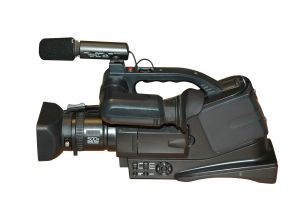
Speaking at an event is one thing. Teaching a Bible class is another. But when you film content to produce on DVD, it’s a whole new ball game.

I just released my first ever 8-lesson DVD Bible study series in November called Your Strong Suit, based on the Armor of God found in Ephesians 6. The live taping took place last May at my home church.

Over the course of 48 hours, we taped eight, 35-45 minute lessons. Gulp.

Believe me when I say I could hardly put a coherent sentence together after that. It was exhilarating, amazing, and absolutely exhausting.

As an author, you may be requested to put some of your content in video snippets. Or perhaps, like me, you plan on producing a series of some kind. I promise I’m not an expert at this. But I hope that my recent experience offers insight and information that may help you.

So how do you prepare?

First of all, writing to speak is vastly different from writing to print. You have a live audience to keep engaged (and hopefully awake), so injecting humor and stories is essential. So here goes:

1) Forget about the cameras.

I was very thankful the production crew suggested a mini run through the night before our live taping officially started. When I walked in the staging area and saw three large television cameras, my heart started going pitter patter. Actually, it was more like POUND, POUND. One of the cameramen would actually be walking around to catch close up shots and audience reaction. My heart came right out of my chest at that point.

Over the course of the run through, the tech team was incredibly helpful in showing me the stage’s walking parameters to ensure consistent, good lighting. They taught me how to slow down my talking rate to make more impactful statements. But most importantly, they reminded me to take several deep breaths, release the tension in my voice, and speak/connect directly with the audience. Their coaching made all the difference.

2) Know your content so well that you barely need notes.

Nothing is more boring than watching someone read. I cannot stress enough how vital it is to thoroughly prepare. I rehearsed each lesson several times in the weeks leading up the taping so that when that weekend arrived, it wasn’t the first time I taught them (so to speak). We were on a tight schedule and budget. Room for error didn’t exist. 

Lesson preparation is essential. We only had 30 minute breaks in between each teaching session and it goes by at lightening speed. After each teaching, I’d head back stage to cool off, hydrate, take a deep breath, sit a minute, go through wardrobe changes/makeup touch-ups, pray, pull out my notes for the next session, read them through, and hit the stage again. If you’re not  properly prepared, you won’t make it.

3)  Put a team, buffers, and boundaries around you.

I cannot say enough about the team that surrounded me that weekend. My ministry assistant and a score of ministry volunteers handled the live audience registration, meals, and anything else an attendee needed. My stage manager (and best friend) never left my side except during taping time itself. She kept me on time and provided a buffer to handle anything that came up back stage. She handled all the technicalities so I could focus on preparing for the next session.

And then there’s the production team. I just can’t thank God often enough for those amazing professionals. They seamlessly ran the worship times, screen content, sound levels, and coordinated camera shots (both stationary and roaming) of me and the audience to produce a top level series. Joel, the Production Manager, even told jokes to keep the audience awake and laughing in between sessions. The main thing is that they are the professionals. Trust them and their instructions.

I hope you found a few helpful tidbits from my experience. What I learned during that amazing weekend put me on my knees in thankfulness, and taught me invaluable lessons that will play an important role in any future series.

If you’d like to see a 90 second snippet of the final series, click here.

Let’s chat: If you’ve done this type of thing before, what would you add or take away from this list? If you’re hoping to produce DVD content in the future, what did you find most helpful?

DIY: Step-by-Step Guide to Making a Book Trailer

What is a Book Trailer?

A book trailer is a brief video used to market a book. Like a trailer for a motion picture, book trailers can make your title stand out among the masses.

Many professionals will produce trailers for a hefty fee, but why not do it yourself?

Four Simple Tools

  1. Computer: The first thing you need is a PC or MAC with decent operating speed. We used a PC with Windows 7.  Older versions of Windows may be slow to process video data.
  2. Camera: Recording in high definition (HD) is not necessary for posting on websites like Youtube.  We used a digital SLR camera (Canon EOS Rebel T2i), but we did not film in HD.  Instead, we used 640 x 480 pixels which created a much more manageable file size. (TIP: Make sure your software will open your video file type before you shoot the trailer.)
  3. Tripod: This is a must. Use a tripod. Always.
  4. Microphones: If you plan to include external sounds/voices, use microphones.

Five Steps and You’re Done!

  1. Setting: Choose locations based on your book’s theme. Obtain permission to film on anyone else’s property, and do not show anyone in the film without their permission (this includes folks in the background).
  2. Shooting: Shoot short segments and paste them together using a video software package.  We used Windows Live Movie Maker which was easy to use and comes with Windows 7.
  3. Editing: Transfer all the video segments into a single folder on your computer.  Decide on the order of the videos in advance (ex: save as Trailer1, Trailer2, etc.). Begin inserting them into the software and trim as needed.  You can use the audio from the original film segments or block it out completely and use a separate audio file. 
  4. Adding Music: While some royalty-free music is available online (http://www.istockphoto.com/audio), my teen daughter composed the music for our trailer. She performed it on our piano, and we recorded it using Microsoft Sound Recorder on our laptop (which is equipped with a built-in microphone). This program is on all Windows computers.
  5. Polishing: Your publisher may be willing to add a little polish and a company logo.  If so, the best way to share video file access with another editor is to use Dropbox.

Share the Love

Finally, save the file to a common format (MPEG-4 or AVI) or upload directly to YouTube from your software. From YouTube, I embedded my trailer on my website, added it to my author profiles on sites like Barnes & Noble and Goodreads, and shared it with friends through my blogsite. To post on Amazon, SheWrites and others, you need a direct file (not the YouTube upload). Many authors include a link to the trailer in their press kit, and some even distribute DVDs to local booksellers.

Have fun, and come back to share your trailer with us here at the Cooler!

The Slow Loris Road to Publishing

I’m what you might call the slow loris of book publishing.

 Are you familiar with the slow loris? I know it sounds like a Dr. Seuss character, but the slow loris is actually a real animal – a tiny primate with big, puppy-dog brown eyes and a round head (so far, nothing in common with me, in case you’re wondering). The slow loris is also described as a slow and deliberate climber.

Yup, that’s me: the slow, deliberate climber.

It took me two and a half years to write my first (and at this point, only) book. In my defense, I also had a toddler and a newborn at the time, as well as a part-time job, so I wrote only in the very early mornings and in the evenings, after the kids were tucked into bed. I wrote every day, slowly and deliberately ticking off chapters one by one until I had a completed manuscript. I marvel at writers who crank out two or three books in a single year. I know people that do this, and they are very good, fast writers. I am not. I am methodical, and my editing is nothing short of painfully laborious.

After I finished writing and editing my book, it took me another two years to land an agent. Again, I was slow and deliberate in the querying process. I purchased The Guide to Literary Agents and The Christian Writers’ Market Guide, and scoured the exhaustive lists of agents, categorizing each with the letters A, B or C. “A” designated a top-choice agent; “B” were the agents I considered good, but second-tier; and “C” was reserved for those I might query in desperation. I researched the agents online and then crafted a personal query letter for each. I queried most of my “A” list and some on the “B” list before Rachelle Gardner (top of the “A” list, by the way) offered me a contract (truth be told, I queried her twice).

 “Whew!” I thought, after I’d finished cartwheeling across the living room the day Rachelle offered me representation. “Now the process will finally start moving along! Let’s roll, baby!”

I assumed once the manuscript was out of my slow loris hands (claws?) that the pace would accelerate.

That was last February.

My memoir has not yet sold to a publisher. I’m not saying it won’t sell eventually. I am simply stating that in the nearly 365 days since I accepted representation from Rachelle, it hasn’t sold. As it turns out, Rachelle chooses the slow loris approach, too, if the market demands it. Sometimes, as she noted in a recent post, publishers aren’t in the market for a particular genre (in this case, memoir), so she puts the manuscript aside and patiently waits for a better opportunity.

I admit, being the slow loris is frustrating at times. I see some of my favorite authors publish one book, and then a second, and I wonder, “What about me? What about my book? Why doesn’t my book sell?” Doubt creeps in. And insecurity. I begin to question my ability as a writer, my story, even my choice to pursue this publishing dream.  I contemplate ditching writing all together and taking up needlepoint.

In the end, though, I continue to stick with it. After all, slow lorises, in addition to their slow, deliberate climbing skills, are also known for their ability to cling to a tree in one spot for an exceptionally long period of time, patiently waiting for the perfect meal to wander into proximity.

“Everything in its own time,” Rachelle reminds me.

I’m patient. I can wait.  I am a slow loris.

{For the record, the slow loris is also the only mammal with a toxic bite. Just saying.}

What animal would you choose as a metaphor for your journey to publishing or your writing style {please don’t say cheetah or I may die a little inside}?

Here Comes the Sun: the Happy Sophomore Novelist

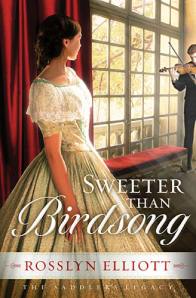
My second novel, Sweeter than Birdsong, is appearing in stores across the nation right now in preparation for its February 7th launch.

I feel much happier and calmer about this second novel’s launch than I did about the launch of my debut novel. That may seem odd if you’ve ever read writers’ blog posts about the sophomore novel blues. Writers often seem to worry more about their second novels than their debuts

I’m the opposite.

Before my debut novel Fairer than Morning launched, I was an anxious wreck. My unprecedented state of nervous anticipation started a full two months before the May 2011 launch of the book.

I knew why I was so wound up. I was about to realize a lifelong dream, with all the emotion that entailed, but very few people in my immediate vicinity had any clue what I was going through emotionally. If I had said “I’m running in the Olympics next week so I’m a little jittery,” most people would have understood the massive understatement involved. But the publishing dream is not as easy to imagine and therefore, not as easy to support. Most of my non-writing acquaintances didn’t realize that I was literally in an agony of suspense. The few times that I hinted at it, I got blank stares, so I found it was more prudent to keep it to myself. Non-writers tend to see publication as a glamorous, ego-pumping event, and they totally would not get it if your response to “So, are you excited about your book?” was “Will you excuse me? I think I’m going to be sick.”

In addition to the tension of awaiting the dream-come-true, I didn’t know what I was doing with PR during my debut.  I had to feel my way through it, with varying degrees of success. Many of the elements of the publication process were so new that they were disorienting.

So now, I am very, very thankful that all those debut-novel storms have passed, and the sun is shining for the launch of my second novel.

I know what I’m doing with PR, and I understand my publisher better.

I’m confident in the novel itself, thanks to my editors and their wise suggestions.

I understand the readers who will read my novel, and how they are likely to react to it. I know that every novel that has any substance will receive at least one or two harshly-critical reviews, so there’s no point in letting it ruffle any of my feathers. I’ve also learned to distinguish which criticism is constructive and which is the result of some reviewer having a really bad day. It happens. No big deal.

So the good news I want to share today is that for some authors, the second novel is going to feel much, much better than the first, when the big launch day rolls around.

I’d love to hear about your experiences with non-writers around you, when you went through a stressful experience in your writing life. How did they react? How much did you decide to share with them?

How to Effectively Use Twitter for Authors

We all know that as successful authors we’re expected to market ourselves and this includes social media sites. Most find Facebook easy to use, but I’ve seen several authors confused or disheartened by Twitter.

I used to be one of them. For basic Twitter use, including #hashtags and follow back explanations, check out 8 Twitter Tips for Authors at the Blogging Bistro’s site. (She’s got great content, search through her archives & consider signing up for her daily tips.)

1. Who are you marketing to? Remember who your target audience is. Every tweet or link you share should provide value to this audience. You should tweet links to your blog posts and website, but here’s a good rule of thumb, for every 10 tweets, only 1 should be about your blog/book/website.

Retweet others, it’s a great way to build report, but remember, only retweet things that you think your audience will find useful in someway.

2. Finding followers. Here’s where #hashtags come in to play. Search for the key words that define your target audience. I often look up #quilting, #crocheting, #cooking, and #christianfiction. Start a conversation with these folks. After all, that’s what Twitter is about. Most times, they will follow you back.

Don’t start a conversation simply for a follow back. Talk with them because you have something in common. People know when you’re being phony. Even if it’s just two folks a day, it adds up over time.

3. Use Lists. I’ve heard the argument that it’s impossible to keep up with hundreds and thousands of friends/followers. Yes, that’s true, but Twitter has the glory of lists. You can make a list and categorize your followers there. I have several, you can make them private if you don’t want people to see how you have them listed, or public and others can follow your list.

For example, I have a list of readers where I put folks who chat about the books they’re reading. I have one for my fellow writer friends. The possibilities are endless and you can pull up your list and chat w/ folks about that subject when you’re in the mood or have time.

Lists are the key to making Twitter work in my opinion.

4. Engage with other users. If you never talk with people, you’ve missed the point of Twitter. It is called Social media for a reason. In fact, if someone follows me and I check out their profile (I always do) if I don’t see Tweets including other people’s @handle, then I don’t follow them. I want to talk w/ people, not have them just talk at me.

Are you a Twitter user? What’s some of your tips or cool people who you’ve found via Twitter?

Follow me on Twitter and let me know if you found me from this blog. 🙂

Just Keep Writing

Photo by Lord Marmalade

There’s a reason I keep writing even though monetary success hasn’t found me, yet. Words strung together in books have always given me the ability to dream of bigger things and even the courage to go out and try.

I’ve been blessed to have three books published and each time there have been plenty of readers who have said that I helped them let go of what no longer worked for them and dream, too.

We talk a lot about our purpose for being here in this life and I’ve come to believe mine is to be of service in whatever ways I can figure out. So far, translating the common man’s dream into something worthwhile, something doable and something that’s even full of a little God-magic has been mine. Not the big, change a country, build a corporation dreams. The smaller moments that stay in your heart.

It’s a message that I took in from the very start.

My first experiences with books and stories are three of the strongest memories I have as a child. The very first one was the first time I walked into a library, the Philadelphia library and found out they let you check out as many as you could carry, my father’s rule, read them all and bring them back for more. My world opened up that day and I found out there were a thousand possibilities when it came to living a life.

The second has to be explained a little bit. We were so poor when I was growing up that my father talked a friend of his who worked at a local bank to lend him a hundred dollars so he could buy us a used black and white television. We screamed with delight when Dad brought the set home. So, when a Reading is Fundamental bookmobile came through our neighborhood and the driver told us we could pick out any new book and keep it, I felt like a little big of magic had settled over us that day. I took my time and tried to choose a book that I could read over and over again. I still have it and read it to my son when he was little.

The third memory is my brother, Jeff and myself when we taught ourselves to read, Horton Hears a Who by Dr. Seuss. We had the book read to us so many times we knew what part of the story went with what pictures and on our own figured out which words went with the sounds. That’s when I understood a secret about books. They have their own power to transform. They don’t know if you’re rich or poor, beautiful or an ugly duckling, a wealthy doctor or a poor cabdriver, and they don’t care. A book will take you on an adventure whenever you’re ready, regardless of how you see yourself and as a bonus may even change the definitions.

Books made it possible for me to envision a way to become someone I couldn’t even define yet. They gave me the faith to set out when I couldn’t find it anywhere else and the hope that somehow things would all work out.

I’ve seen it happen just often enough. A lost human being feels like they’re the only one who has ever felt this much pain. They don’t know how to reach out for help but then, inside of a story some writer concocted out of whole cloth they see every emotion or secret or hope-for happy ending that they’ve kept bottled up inside, acted out, and they start to believe – maybe there’s more to this world.

That’s why I keep writing and that’s why I’m so grateful for every writer out there who struggles to tell a good tale. I’m one of your biggest fans, whoever you are, so keep writing. We need every single exciting, cliffhanger, romance, potboiler, science fiction, political thriller that we can get our hands on because even now, sometimes my dreams need a kick start. So please, just keep writing.

Throw Your Spaghetti

Parents are known for their one-liners, and mine were no exception. “Do it once, do it right, then forget about it.” Wise words tattooed on my heart as my military father explained how to mop the kitchen floor.

Now, with four children of my own, I’ve discovered there are a few one-liners I’ve batted around long enough to stick with my four kids as well. My personal favorite?

Throw your spaghetti!

I use these three words to encourage family and friends. Inspiring them to knock on every door in their path and walk through and follow-thru when that door opens.

This saying originates from the traditional Italian way of testing pasta. The cook throws a handful of spaghetti noodles against the wall and if a few strands stick the pasta’s ready. If the noodles fall to the ground—the pasta remains in the boiling water.

Here are a few life examples of what “Throw Your Spaghetti” looks like:

While attending a writer’s conference, I was surrounded by hundreds of wannabee-authors like myself who dreamed of a coveted publishing contract. When I had the chance to talk with some of them, I was amazed by their talent, awed by their creative ideas, and immediately anxious about ever being good enough.

One of those gifted writers spoke with me, “I just got back my edited manuscript. It’s full of red ink. The editor suggested I talk with another publisher.” She moped.

“So, what are you waiting for? There are lots of publishers here you could talk to.” I reminded her.

“I don’t know. I really had hoped this editor would want it for her publishing house. I’m thinking it’s not meant to be for me.” She mumbled.

“Are you kidding? You have a gift, and you’re going to let a rejection from one publisher hold you back from your dream? C’mon get out there and meet with everyone you can. Throw your spaghetti!”

And then there was the time my college-aged daughter called to share:

“Mom, I just found out about another college that offers a fellowship for creative writing. But, the problem is, I’m not sure if I should stick to my number one school choice in Iowa, or try for this one too?”

“Honey, there are no guarantees you’ll get into your first choice, so I’d apply for both. Throw your spaghetti!”

“Throw your spaghetti” is my own silent mantra from time to time. After flying cross-country to attend a women’s conference, I anticipated sharing my book idea with a few publishing houses. By divine miracle, my late registration didn’t hold me back from appointments with publishers.

I called my husband to share my progress. “Paul, I just met with a gal who taught a workshop about pitching my book idea. She said what I have isn’t good enough for a book.”

“I’m sorry, who told you? Did God personally tell you that?” Sarcasm oozed over every syllable.

“No, God did not personally tell me that!” Irritation got the best of me.

“Well then, I suggest you keep your appointments with the publishers and pitch your book idea. Throw your spaghetti!”

He was right. I kept both of my appointments. Each publisher gave me the green light to send in my full book proposal. Months later, those same publishers emailed rejections. But, I did what I do best—I threw my spaghetti and submitted my work over and over again.

What manuscript have you buried for lack of follow-thru? What gift have you ignored because you believe you aren’t good enough, smart enough, or talented enough? Start working on your follow-thru, and perseverance…then throw your spaghetti!

By the way, that book idea I was telling you about? You can find it on Amazon.

What holds you back from trying one more time?

Who encourages you to throw your spaghetti?

The publishing business: all that glitters

The morning began as usual, checking my twitter, facebook and email accounts before I stuck a toe out of my warm, cozy covers.
 
Did my post post?
 
Did my scheduled tweets tweet?
 
Did anyone RT them? Comment on them? Reply to them? Even see them?
 
Get more speaking engagements. Submit more articles. Write more controversial stuff, like her. Write more edgy stories, like him. Promote more books for people so they’ll someday help promote me. Comment on that-one-blog so the agent notices. Read three more blogs and comment on them, too.
 
My posts and tweets and updates sound stupid. My blog looks outdated. The only responses I ever get are crickets chirping. I shoulda posted a link to that one-really-good-writing-article. Why didn’t I RT so-and-so? People might pay more attention to my writing if I RT someone with a little more Klout. I’m too messed up for that industry professional. I’m not messed up enough for the other.
 
Does any of this stuff matter?
 
And when was the last time I added a word to my manuscript?
 
Oh, yeah, my manuscript. The thing that pulls my heart. The story that makes my gut churn with excitement and fear, possibility and hope.
 
The publishing journey glitters. Veteran authors, publishing houses, editors and MFAs pull us like the sparkling bodice of a circus dancer, flipping and tumbling effortlessly through the air, her partner eagerly waiting to catch her in his arms and raise her into the air for applause.
 
And yet, we who write for publication must be careful. We sit in the dark stands under the Big Top, munching on popcorn, coveting glow-in-the-dark necklaces, lost in the illusion and elusive space between what is real and who we are.
 
Like many of you, I’ve been a hobo on this circus train since my youth, curled in a small, black space under a box car, hoping no one will find out I’m there, spying, watching and mimicking every move . . . while at the same time hoping the Ringmaster will discover me, dress me in the finest costume of tulle and sequins and tights, crown me princess in the center ring.
 
At some point, as each of us steps into the publishing business, we must decide to whom–and for whom–we will perform. I suppose a piece of every life involves some degree of performance. But how big a piece we give up, well that part’s up to us.
 
Good magicians, like good circus performers, don’t tell you their secrets. But I will tell you mine, and it is this: YOU are the main act.
 
You’re it.
 
Because you are the artist.
 
No matter which trapeze the business has you swinging from–commodity or compadre–you’re the one with the words. Anything the business brings beyond that is a side show compared to the talent, skill and gift you bring to the center ring . . . a gift that can’t be enhanced or revealed, covered or consumed by a shiny costume.
 
I re-discovered this recently as I read over pages of a document my grandfather left my grandmother, printed words etching a burning love story into the cold stone of history.
 
My history.
 
The beginnings of another new novel.
 
You have a history too, and from behind the cage bars it scratches and roars to be told. Feeding it isn’t enough. You must let it loose and tame it. Balance the weight of it on a small, round stand. Parade it carefully in front of the masses.
 
There’s a hoop only you can soar through. A tightrope only you can walk. A story only you can tell.
 
Don’t lose it in the spotlight. Don’t let it become ensnared and choked out by the ropes and pulleys, smoke and mirrors.
 
Do this, and you’ll survive–and perhaps even thrive–in the publishing circus.

Because all that really glitters in this great show is you.

What about you? How do you remain true to yourself and be the best possible steward of the gifts (and time) God’s given you, while walking the tightrope of the industry?

Good Writing Comes From a Healthy Soul

Maybe God wants to use my story to help someone else? Perhaps that’s the purpose for the painful life experiences I’ve walked through.

We women feel the need to share story, don’t we? To offer insight and hope, to let others know they are not alone, to debate God’s redeeming hand with Oprah (okay, maybe that’s just me on the last one).

It’s true, though. The sound of story resonates from the caves of ancient culture into the modern storytelling centers of today. Since we could speak, we’ve used our personal experiences to influence, educate, and encourage.

The need for story is primal. It’s part of a selfishly Divine design. God created us for community; we are designed to serve vulnerable slices of our lives, heartrending wedges of emotional pain garnished with sweet slabs of healing. As we do, we nurture the raw places nestled inside of every woman. As others witness God’s transformation in our lives, they want to know more about the Transformer.

Early on I uncovered the need to weave my tale, tragic as it was. Like countless others my back-story is steeped in dysfunction, but it’s also a hope-filled story where God’s grace and mercy run deep. I felt compelled to share that hope and encouragement on a wide scale.

Problem was, as a soul-wounded woman I didn’t have a voice. My own language. I simply regurgitated the style of others, imitating what I imagined my voice should sound like on the other side of emotional wholeness.  Marry that writing style with a need to purge bubbling anger and my early readers cleaned a lot of (emotional) vomit from their computer screens.

Sometimes God calls us to write for publication; other times He simply calls us to write. I had confused the two—telling my story, and selling my story hailed from two different worlds.

I sought the validation of publication while what I desperately needed instead was voice lessons. As a novice writer, I heard much about the importance of voice. My. Own. Unique. Voice. Yet my voice was shadowed by the influence of others; my perspective skewed, buried in pain and not mature enough to be out on its own yet.

But God, in His grace, led me to write through that pain. Sort through the fallout of hurtful life experiences. Cut through the hard stuff. As I wrote I discovered His truth and redeeming principles, while uncovering my voice—my authentic personality. The raw journaling from that journey may never meet publication, but the voice that emerged has since been published nationally and internationally.

Our stories need to be dialogued, written out. An emotionally-expensive tutor, their words often light the path to a whole new perspective of Jesus. One wall of my office holds a well-worn sign to daily remind me, “Good writing comes from a healthy soul.”

What do you want to write about? What story is so important that you must share it?


Jo Ann Fore is an author, speaker, book-freak, and fun friend. She is passionate about making a difference in the lives of women. Most noted for her authentic vulnerability, Jo Ann captivates her audience with faith-filled messages caramelized with a powerful promise of hope. Visit Jo Ann at Write Where It Hurtsa virtual community where women gather for support, encouragement, and practical tools to live a joyful, purpose-filled life.